Two Goats on Yom Kippur and the Cliff at the Edge of the World
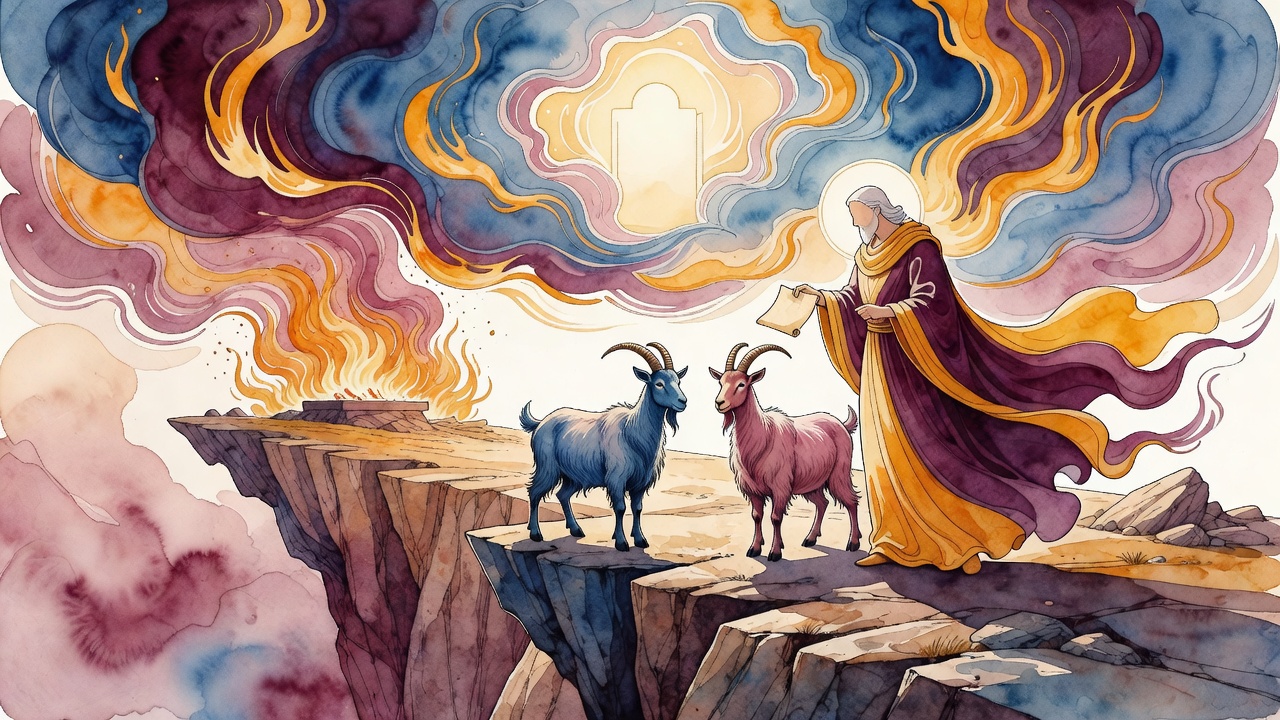
Two identical goats stood before the High Priest. A lot decided which burned on the altar and which walked alive into the wilderness carrying Israel's sins.
Table of Contents
 Click for full size
The Two Goats Before the Lots Were Cast
They were chosen to match. Identical in size, identical in color, identical in value, purchased at the same time so that no one could say one life mattered more than the other. Two goats stood in the Temple courtyard on the morning of Yom Kippur before the High Priest, and the choice of what happened to each of them was removed entirely from human preference. A wooden box held two golden tiles. One was inscribed la-Shem, for God. One was inscribed la-Azazel, for the wilderness. The High Priest reached in with both hands simultaneously and drew without looking. The lot his right hand held determined the animal at his right side. In seconds, two identical animals had completely different fates assigned to them by chance, or by something that looked exactly like chance from the human side.
The lot for God went to the animal that would be slaughtered on the altar. The lot for Azazel went to the animal that would walk out of Jerusalem alive and not come back.
What the High Priest Said to the Living Goat
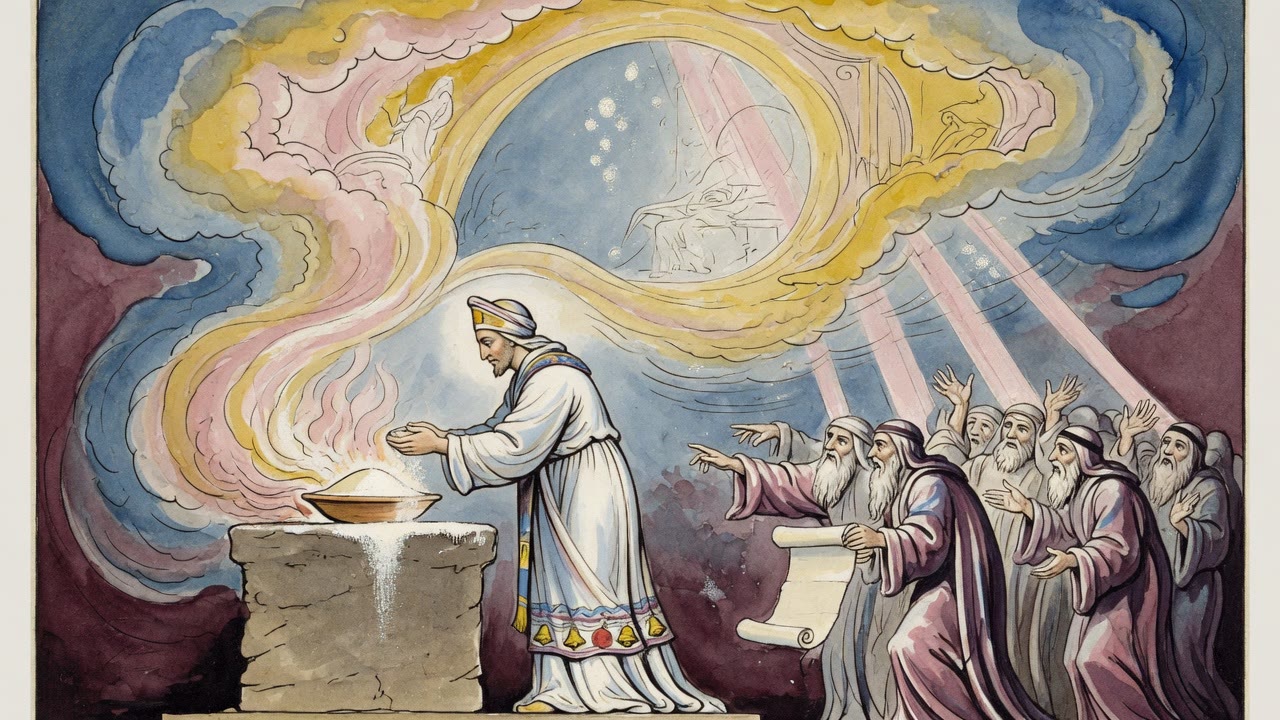
Before any blood was shed, before the slaughter or the sending, the High Priest laid both hands on the head of the living goat and confessed. Aloud. The confession had a structure. First he named the sins of the priests. Then he named the sins of the entire people of Israel. The words were specific: the willful violations, the unintentional ones, the hidden ones. Everything the nation had done in the past year that stood between them and the God whose presence filled the Temple they were standing in. All of it was named and placed on the animal's head by the weight of two human hands and the authority of the confession.
A crimson thread was tied to the goat's horns. The same color thread was tied to the door of the Temple sanctuary. A tradition preserved in the Talmud records that in the years the ritual worked as intended, the crimson thread on the Temple door would turn white at the moment the goat reached the wilderness. The color change was visible proof. White meant the sins had been carried away. Isaiah had said it: though your sins are like crimson, they shall become white as snow. The thread on the door turned. Sometimes it did not. The years it did not turn were years the priests noted in silence.
The Road Out of the City
A specific man was designated each year to lead the goat out. He was not a priest. A group of prominent citizens accompanied him to the first of ten stations built along the wilderness road, where they stopped and provided food and water, because the day was a fast but the man leading the goat was not required to fast. At each station a new escort took over, walking the goat further from the city while the previous group returned. The stations grew sparser as the road went on. The landscape changed. The city fell away behind them.
At the final station, before the last stretch, the escort stopped. The man designated for the actual sending walked the last distance alone with the goat. The location was a specific cliff. He pushed the goat backward over the edge. The tradition in the Talmud says the goat did not survive the fall. The crimson thread, if tied to its horns in some versions, turned white on the way down.
What Azazel Was
The rabbis argued about Azazel for centuries. Some held it was the name of the cliff itself, a place-name for the edge of the wilderness. Some held it referred to the roughness of the terrain, a Hebrew compound meaning something like hard ground. A minority tradition, which the mainstream rabbis rejected firmly, said Azazel was an entity, a power associated with the wilderness, and that the goat was a kind of payment or appeasement sent to that power on behalf of Israel. The mainstream position was categorical: this is not a sacrifice to a wilderness spirit. The goat belongs to God. God commands it sent to Azazel. The sending is an act of obedience to God, not an offering to anything else. The rabbis built a conceptual wall around the ritual's meaning and would not let it move.
← All myths