How Elijah Became the Guardian of Kabbalah
From a cave in Roman Judea to a fiery rock in medieval Spain, Elijah carried Jewish mysticism across a thousand years.
Table of Contents
 Click for full size
Twice Daily in the Cave
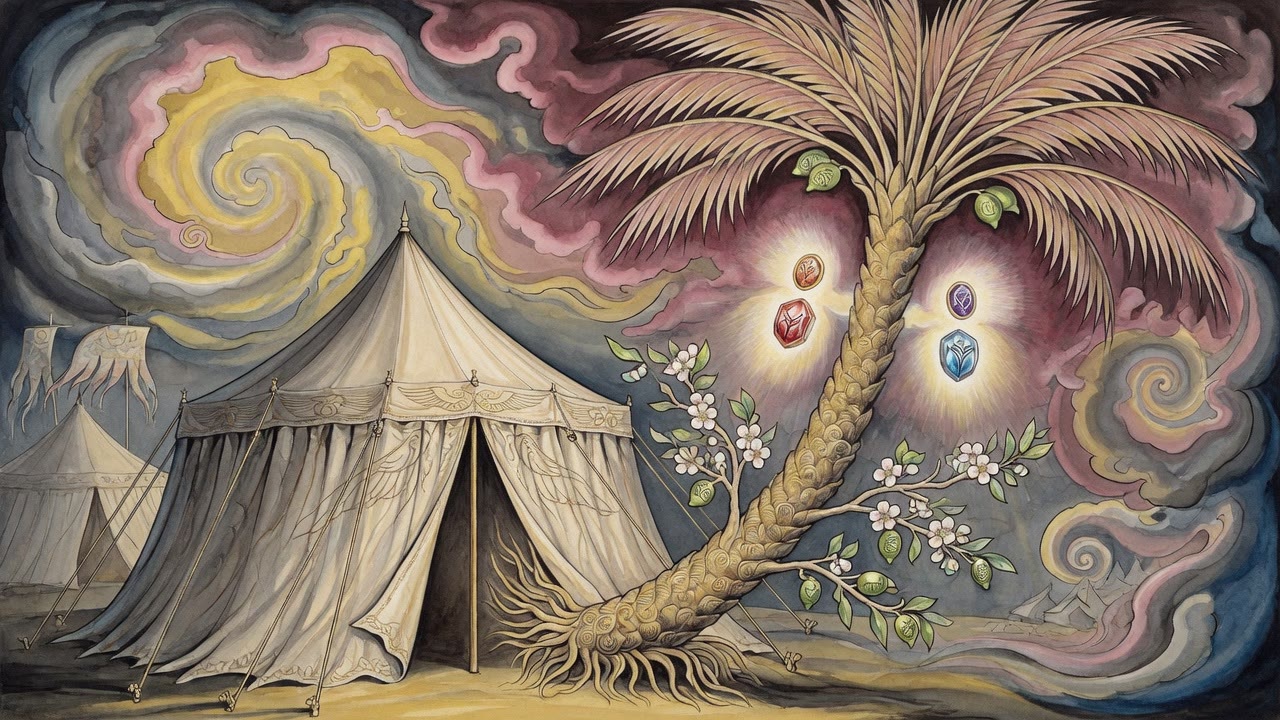
Rabbi Simon ben Yohai and his son Rabbi Eliezer hid in a cave for thirteen years. The Romans had sentenced the rabbi to death for speaking against the empire's authority, and he had no choice but to disappear. They lived in the cave sustained by a carob tree that appeared at the entrance and a spring of water, miraculous provisions for men who could not move through the world openly.
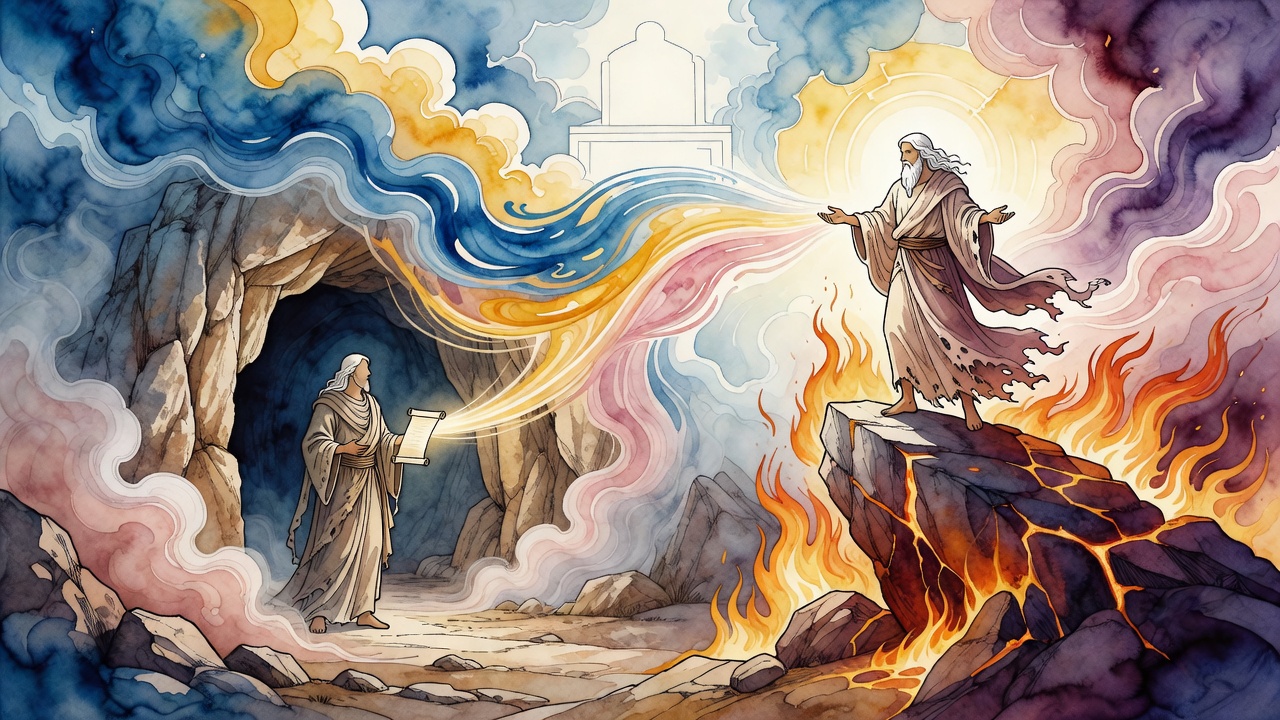
During all thirteen years, Elijah came twice daily. Every morning and every evening, the prophet appeared in the cave and taught Rabbi Simon and his son the secrets of Torah that could not be found in any written text. These were not the outer teachings, the legal reasoning and biblical interpretation that filled the academies. These were the inner structure of creation, the hidden dimensions of the divine, the relationships between the worlds that the visible text gestured toward without explaining.
When Rabbi Simon emerged from the cave after thirteen years, he was a different kind of scholar. The Talmud records that when he first came out and saw people plowing and sowing fields, he was unable to look at them without the gaze consuming what he saw. He had to go back. He spent another year in the cave before he could walk among ordinary people without the intensity of what he carried destroying the ordinary world around him. What Elijah had taught him during those visits had transformed him into something the world outside could barely contain.
Rabbi Simon and the Book That Bears His Name
Rabbi Simon ben Yohai became, in the medieval Jewish mystical tradition, the attributed author of the Zohar, the central text of Kabbalah. Whether the Zohar was genuinely composed in 2nd-century Judea or was written in 13th-century Spain by Rabbi Moses de Leon is a question the scholarly tradition has largely settled in favor of the medieval authorship. But the attribution to Rabbi Simon matters for the present story, because it is the chain Elijah forged. The twice-daily visits in the cave, the transmission of mystical knowledge across a generation of hiding, became the origin story of the entire kabbalistic lineage.
Elijah had seen what the cave would produce. He carried the knowledge into conditions where it could take root in a man whose isolation from ordinary life had prepared him to receive it. The cave was not a punishment. It was a preparation.
The Fiery Rock in Spain
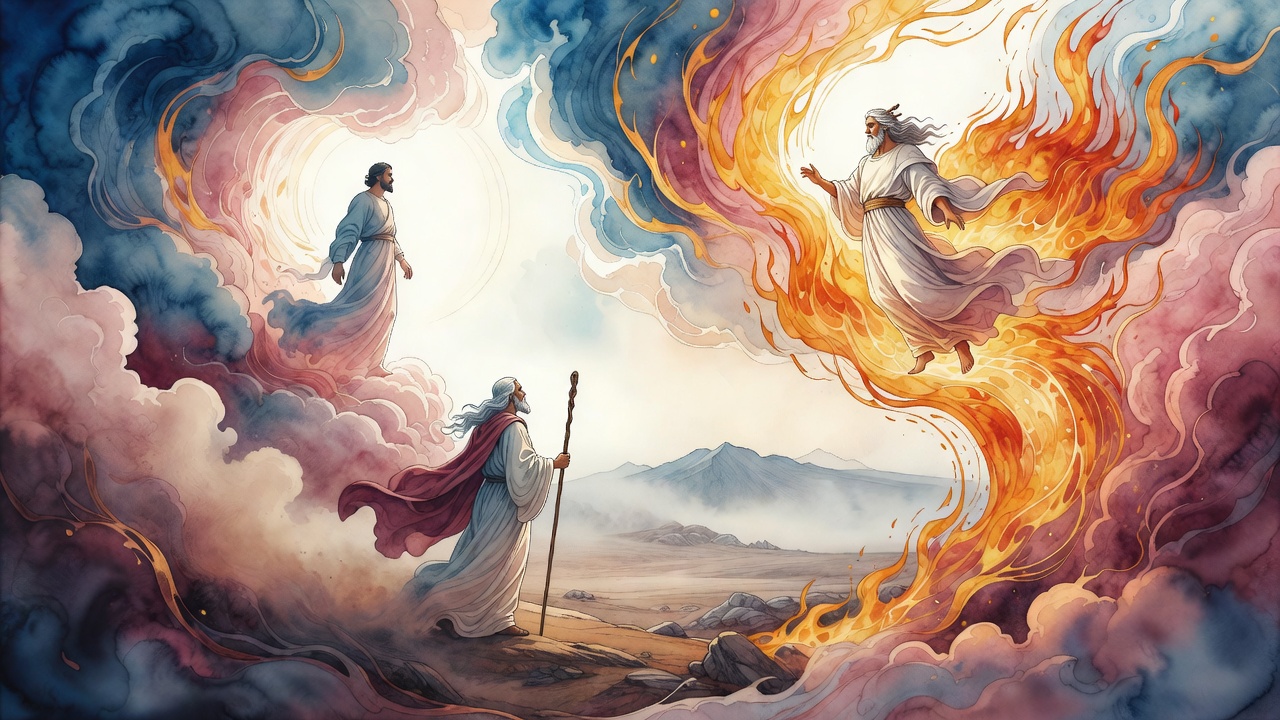
Centuries later, in the kabbalistic schools of medieval Spain and southern France, the tradition of Elijah's appearances to masters of mystical learning continued. The greatest teachers in the tradition reported encounters with the prophet, revelations that came not from study alone but from direct prophetic contact with the being who carried the accumulated weight of all the mystical transmission from the cave forward.
One account places such an appearance at a rock that blazed with unearthly fire, where Elijah appeared to a master of the Castilian schools and spoke the kind of teaching that the written sources could not provide. The fire was not threatening. It was the visible side of a transmission that had been ongoing for more than a thousand years, surfacing again in a new place and a new generation.
What Elijah Carried That No Text Could
The theme running through the entire Elijah-mysticism lineage is that certain knowledge cannot survive in written form alone. It can be written down, as the Zohar and its predecessors were written down, but the writing is only the surface of something that has to be transmitted person to person, in conditions that prepare the receiver to hold what is offered. Elijah was the carrier because he existed in a condition that no human scholar could maintain: continuity across centuries, access to both the visible and invisible worlds, the patience to wait for the right student in the right moment and then appear without warning.
The visits to the cave were not incidental. They were the beginning of a chain that ran from a hiding place in Roman Judea through the medieval academies of Spain to the kabbalistic schools of Safed, with Elijah as the one constant across all of it.
← All myths