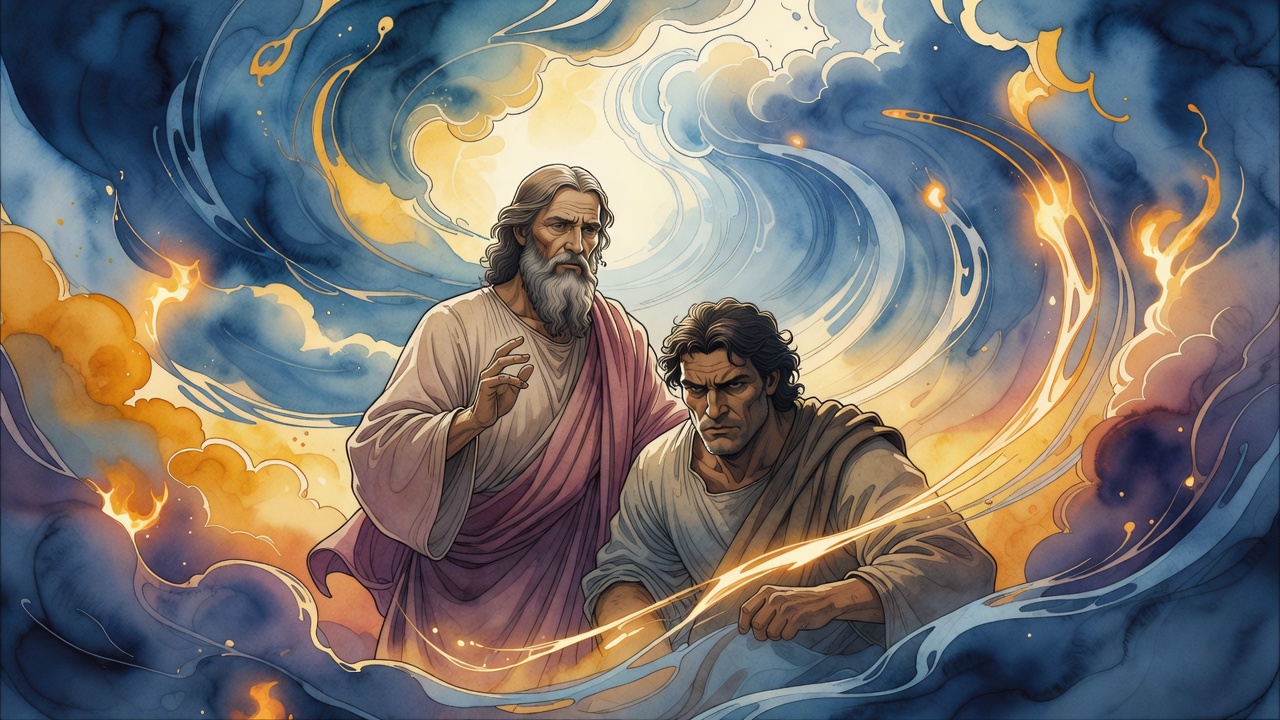
Tamar Was a Daughter of Shem, and the Angel Michael Recovered Her Evidence
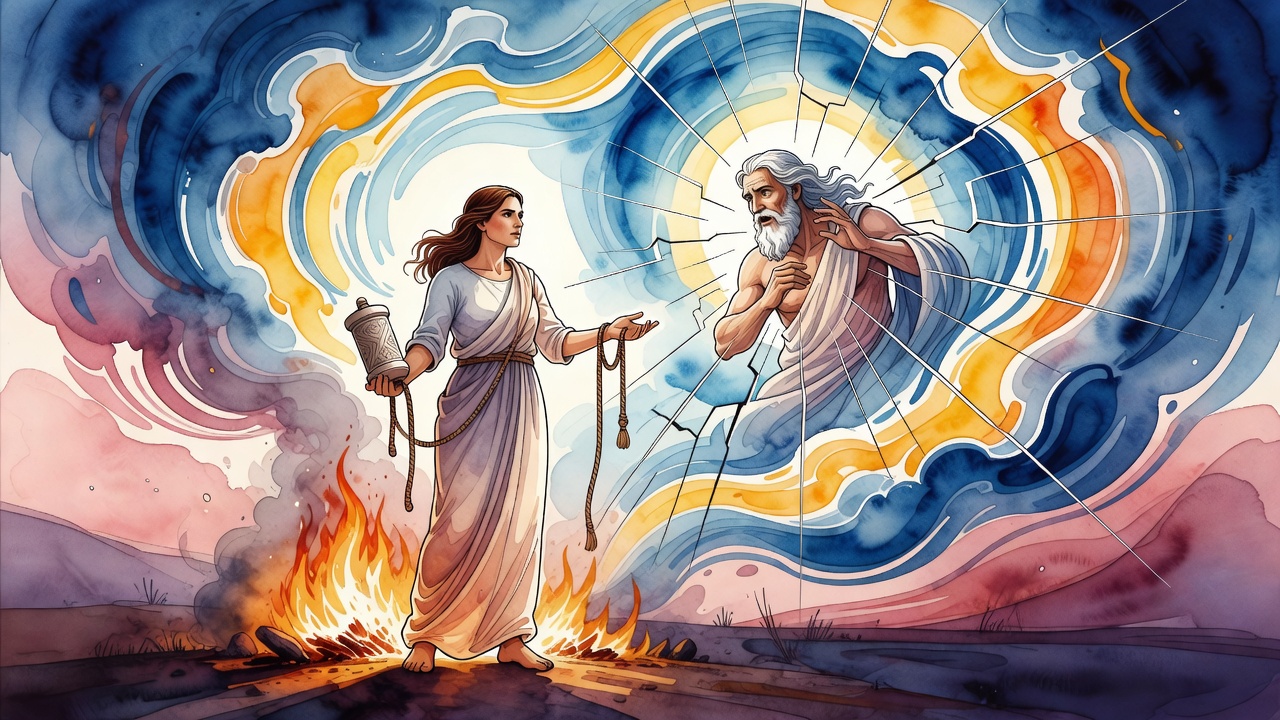
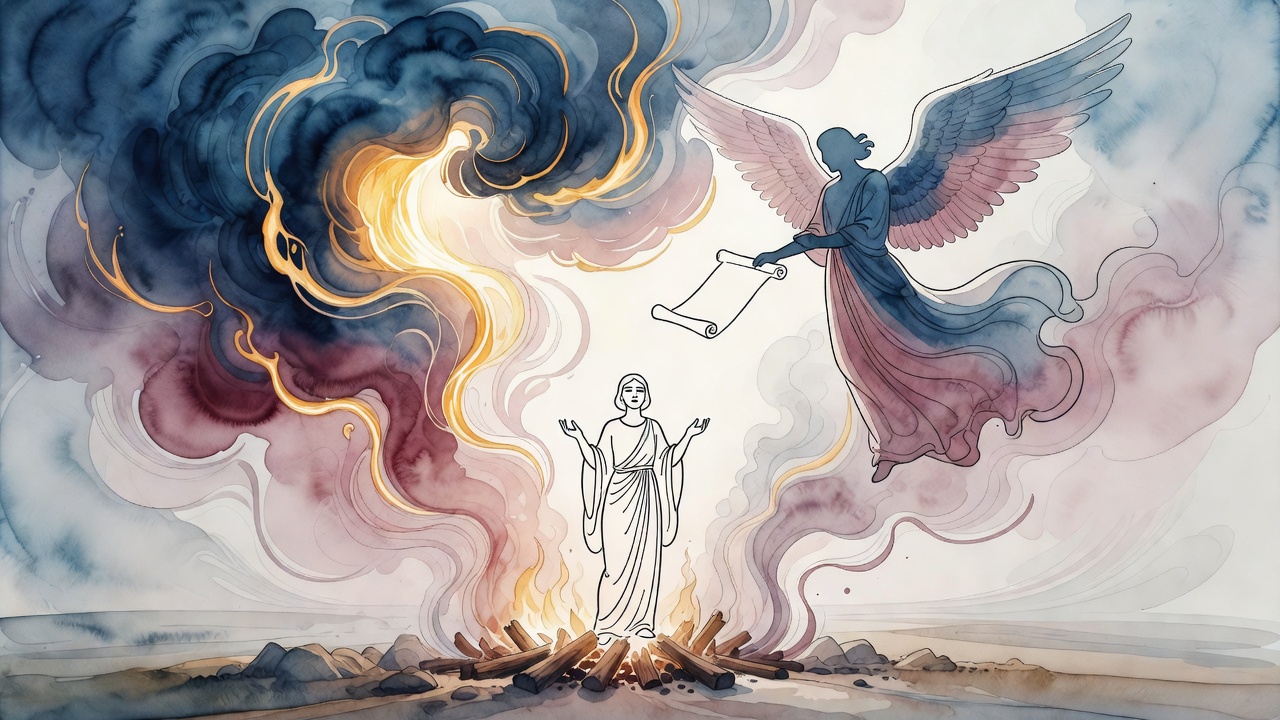
Tamar was about to be burned alive when her evidence vanished. She prayed, and God sent Michael to recover what had been lost before the sentence could fall.
Table of Contents
 Click for full size
The Evidence That Vanished
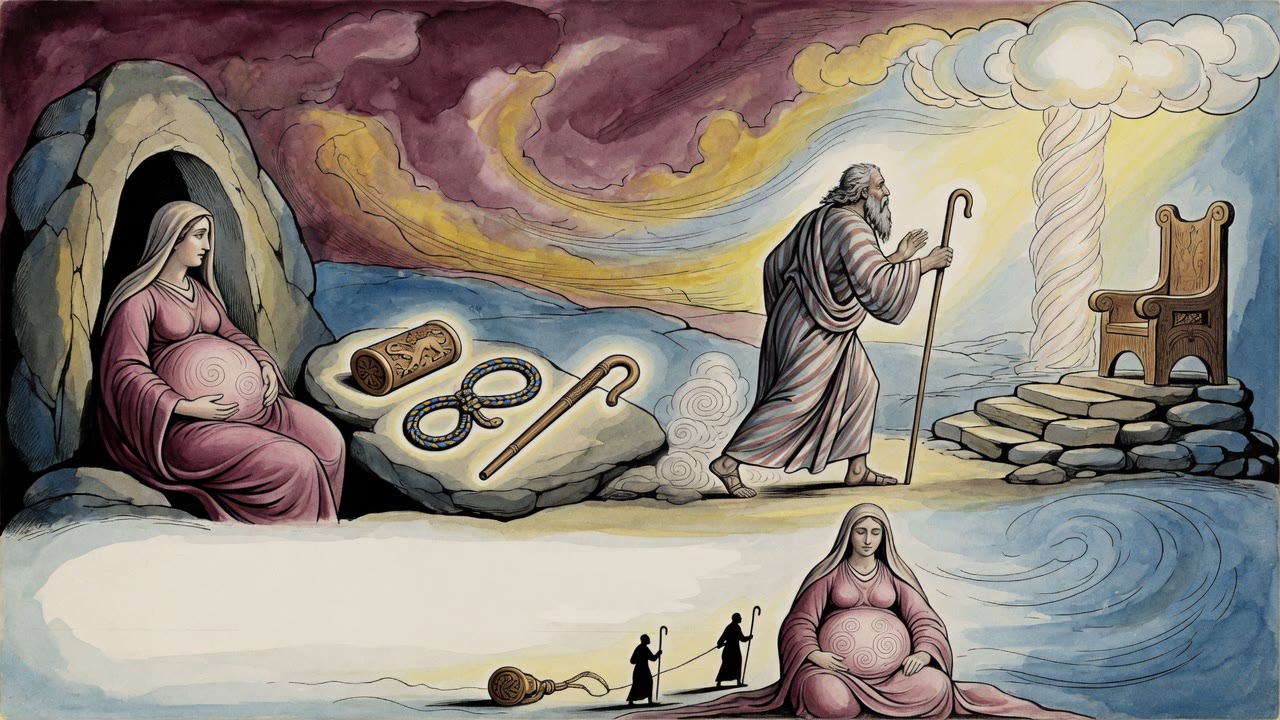
Tamar had sent the seal and the staff and the cord to Judah to prove their origin. They were the identifying objects of the man who had slept with her, the man who was now sentencing her to death for the same act. By the time her messengers returned with his answer, the items could not be found. The text of Genesis 38 moves quickly past this crisis. Targum Jonathan on Genesis 38, the ancient Aramaic rendering compiled from first-century Palestinian traditions, does not move quickly at all.
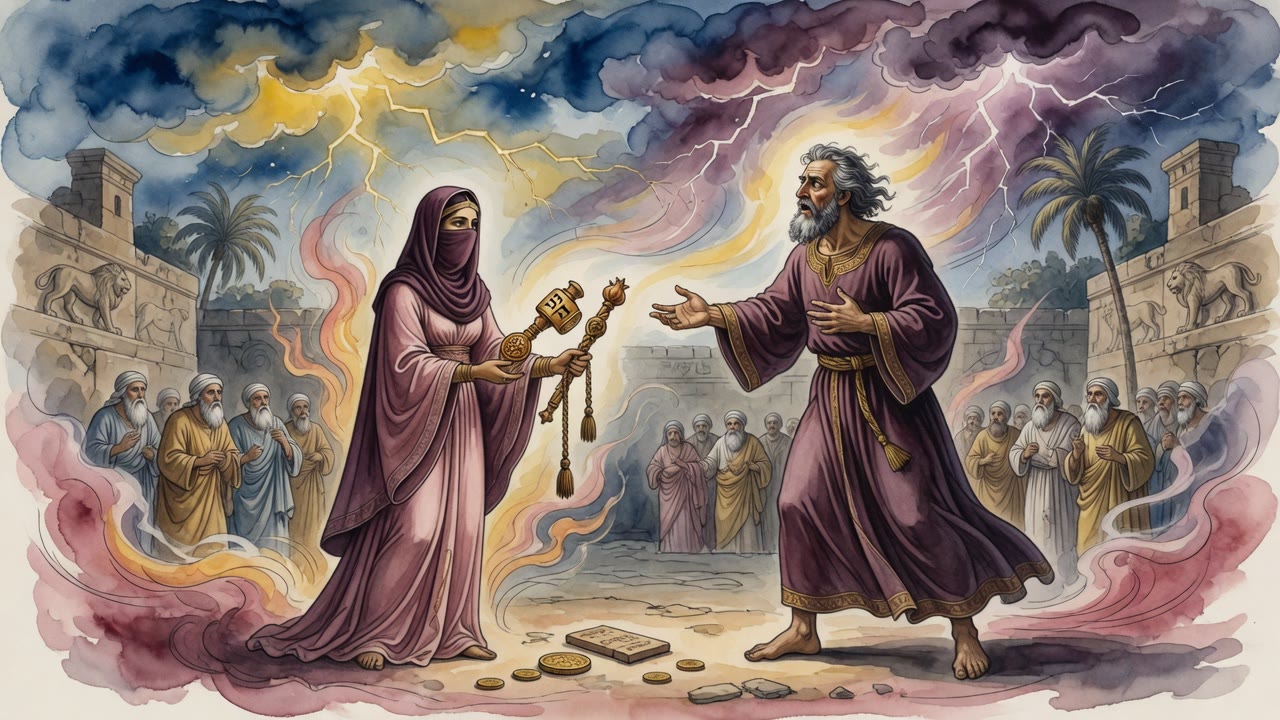
It slows down precisely at the moment when the evidence is missing. Tamar lifted her eyes to heaven and prayed. And God sent the archangel Michael to retrieve the lost evidence and bring it back before the sentence could be carried out. The seal and the staff and the cord were found, Judah received them, and when he looked at what was in his hand he said the words that redeemed everything: she is more righteous than I.
Who Tamar Was
The Hebrew text introduces Tamar with a single phrase: Judah took a wife for his son Er. No lineage, no background. Targum Jonathan identifies her immediately as "a daughter of Shem the great," a descendant of Noah's eldest son who transmitted righteousness through the generations. This is not a minor detail. It establishes Tamar's standing before anything has happened to her.
She is not an anonymous Canaanite woman. She is a woman of noble spiritual lineage, which makes the injustice of her situation all the more severe and the divine intervention all the more theologically necessary. A daughter of Shem being burned alive on a false charge is not simply a personal tragedy. It is a theological problem that requires resolution.
The Targum's tradition of expanding Genesis with genealogical and moral context consistently operates on the premise that the stakes of the narrative are proportional to the standing of its participants. The higher Tamar's lineage, the more urgently heaven is obligated to act when justice fails.
Why Judah Was Punished Through His Own Pride
The Testament of Judah, part of the Testaments of the Twelve Patriarchs, a pseudepigraphic text from the Second Temple period, preserves a tradition where Judah himself narrates the cause of his downfall. He had been proud, he admits. He had boasted that the allure of beautiful women had never troubled him during wartime. He had even criticized his brother Reuben for the transgression with Bilhah. Then "the spirit of passion and unchastity gained possession" of him. The pride became the vulnerability. His contempt for the weakness in others was the precise form in which his own weakness arrived.
Judah warns his descendants: "Do not walk after the desire of your hearts, and vaunt not the valiant deeds of your youth. This, too, is evil in the eyes of the Lord." The warning is specific. It is not against desire in general but against the kind of confidence in one's own virtue that makes a person stop watching themselves.
The Targum's names for Judah's sons add another layer. Er, the Targum notes, was named because he was destined to die without a child. Onan was named because his father would mourn for him. The names were prophetic from birth. Judah named his sons for futures he did not yet know, and the futures arrived as named.
The Archangel and the Missing Evidence
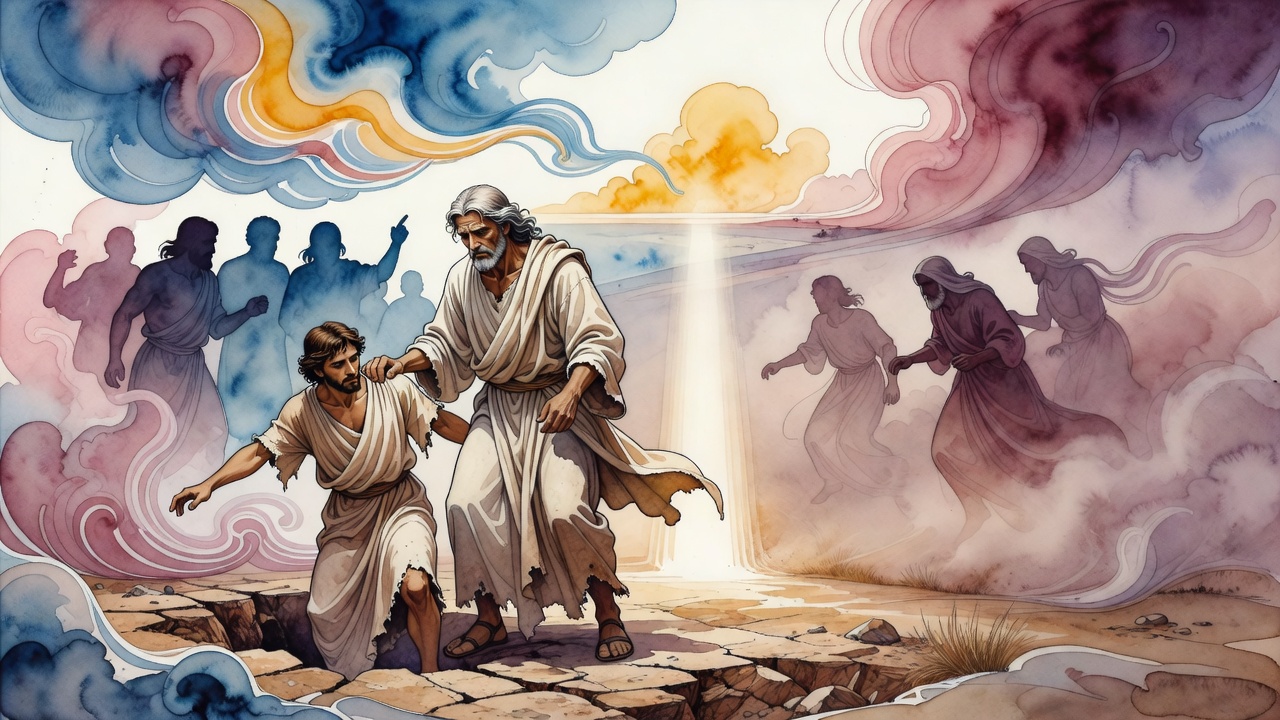
Michael's role in the Tamar story is consistent with his function throughout the tradition. He is Israel's guardian angel, the one who intercedes for the righteous before the divine court, the archangel who acts when human justice has failed and the situation requires something more than human remedy. In the Targum's telling, the missing evidence was not simply mislaid. It was lost in a way that only divine intervention could reverse.
The prayer Tamar offered was what made the intervention possible. She did not attempt to find the evidence herself. She did not argue her case with the people who were preparing to burn her. She turned to heaven. The midrashic tradition, developed in Bereshit Rabbah and related texts from fifth-century Roman Palestine, consistently reads the Tamar story as a case study in the kind of trust that makes divine rescue both necessary and available: not passive resignation, but active appeal to the one authority capable of acting when all human options are closed.
The Confession That Made History
When Judah received the recovered evidence and recognized it as his, the words he said were recorded and preserved. He did not deny it. He did not attempt to suppress the evidence again. He said: she is more righteous than I. And in the Targum's theology, that confession had weight beyond the immediate situation. Judah's willingness to be publicly shamed rather than allow an innocent woman to burn was part of what made him the ancestor of the Davidic line. The act of acknowledging wrong, clearly, in public, when the easier path was silence, is one of the qualifying acts of the tribe from which the tradition says kings would come.
← All myths