Josiah Smashed Every Idol Except the Halves Hidden in the Hinges
The inspectors opened every door in Judah and found no idol. Behind them the doors shut, and two halves met in the dark.
Table of Contents
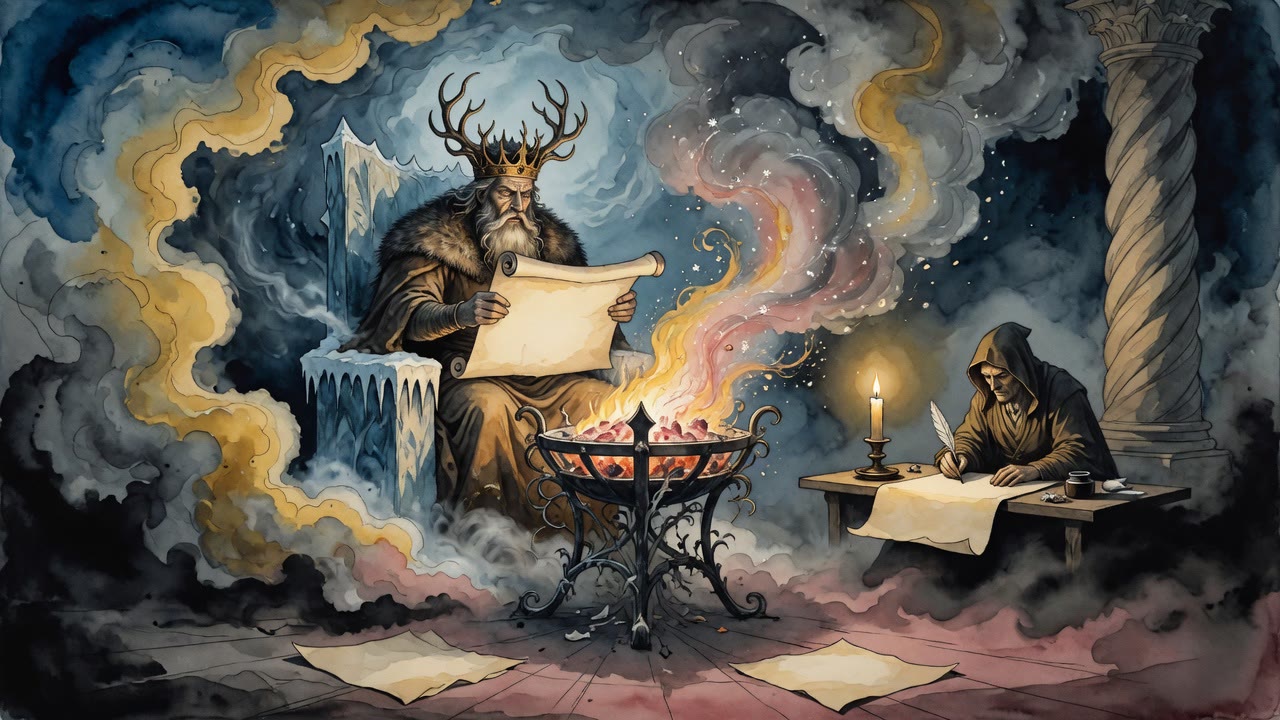
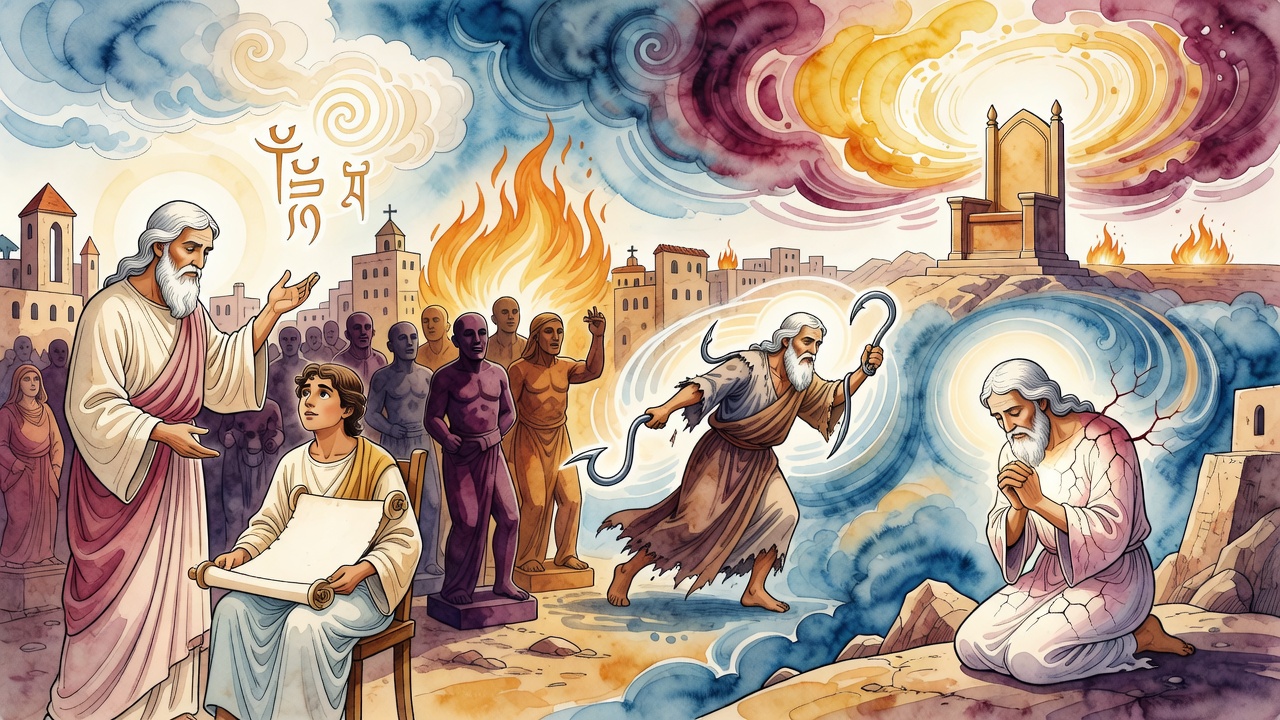
King Josiah's inspectors knocked from house to house across Judah. Their orders were plain. Find every idol. Smash it. They searched rooms, storehouses, courtyards. They opened the front doors and looked at empty posts. They came back to the palace with good news.
 Click for full size
Nothing. The people had complied. The kingdom was clean.
A hinge had beaten them.
The Door Made the Idol Whole
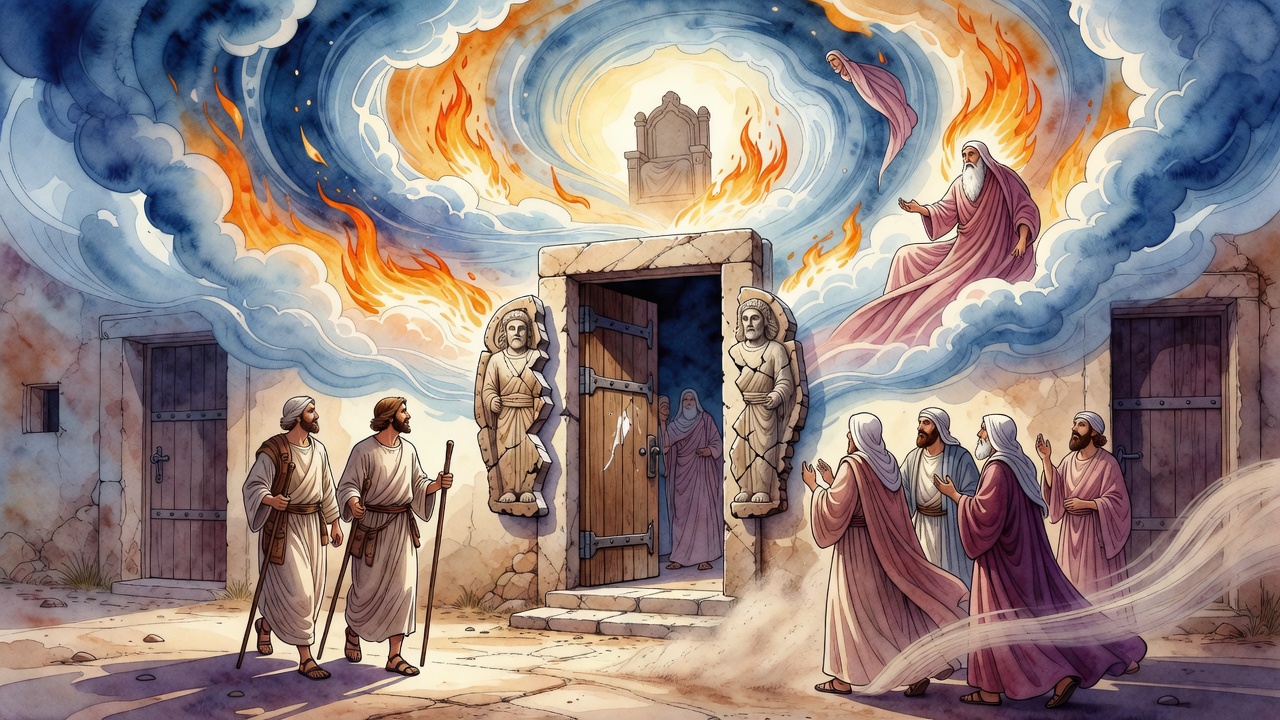
The people of Judah had cut each idol down the middle. They fastened one half to the left wing of the front door and one half to the right. When the inspectors knocked, the door opened. The two halves faced outward, apart, incomplete. No full god sat in the house. The inspectors looked, saw timber, and moved on.
When they left, the door shut. The two halves met. Every night, behind the closed wood, the idol stood whole again, face to face with the family that would not give it up.
Josiah had wanted to believe the reports. He had sent his most trusted, pious men. He had torn down high places in public. He had burned poles and smashed altars. Private houses had been the last test. The houses had learned to pass a test.
Jeremiah Watched the Hinges
Jeremiah was already in the streets. He did not preach triumph. "If you abandon your wicked ways, God will elevate you above all nations. If you do not, He will hand over His house to your enemies, who will do with it as they please." He watched doors open for inspectors and shut on assembled gods. He named what the palace would not: the reform had changed what a visitor could see. It had not changed what a household wanted.
Josiah was eight when he took the throne after Amon was killed by his own servants. His grandfather Manasseh had filled Jerusalem with blood and idols, then repented in chains and come home to tear down what he had built. Amon had learned nothing. Josiah learned everything he could from the outside of a life. He used David as a pattern. By twelve he was already cutting groves and overthrowing altars. He could command a door to open. He could not command what the door did after it closed.
The Scroll Came Out of the Wall
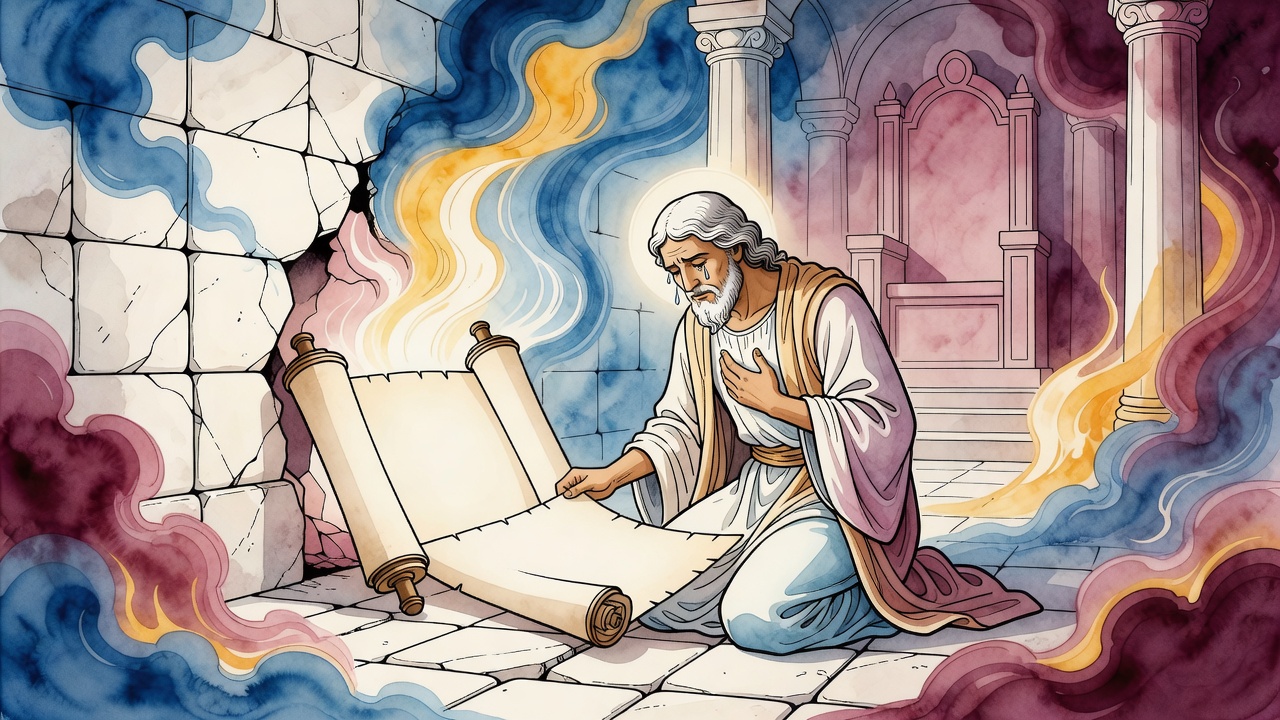
In the eighteenth year the Temple was under repair. The high priest Hilkiah found a lost book of the Torah in the house (2 Kings 22:8). Shaphan read it to the king. Josiah tore his clothes. The nation had strayed so far that the book itself had been forgotten in the walls.
He sent messengers to the prophetess Huldah. She did not soften the sentence. God had already given judgment: destroy the people, cast them from the land. No prayer would set that aside. Because Josiah was righteous, the blow would wait until after his death. After that, the calamities would come.
Josiah gathered priests, Levites, and every age in Jerusalem. He read the book aloud. He stood on a pulpit and bound them by oath to keep the law of Moses. They agreed. They offered sacrifices. He ordered every vessel dedicated to foreign gods thrown out of the Temple and burned. He went into the country and wrecked Jeroboam's old buildings. He searched houses and villages out of a suspicion that somebody still kept a private idol. He took the chariots of the sun from his own palace. He kept a Passover so large that nothing like it had been seen since Samuel: thirty thousand lambs and kids, three thousand oxen.
The inspectors still came back empty. The hinges still closed at night.
The Halves Came Off after Megiddo
Josiah died at Megiddo, struck by an Egyptian arrow at thirty-nine, in a battle he had been warned not to fight. Jeremiah composed an elegy for him. The people mourned many days. Then the reform began to fall apart in the same houses that had passed inspection.
His son Jehoahaz reigned three months before Pharaoh hauled him to Egypt in chains. His brother Jehoiakim took the throne, wicked and ready for mischief. The public altars Josiah had smashed did not stay smashed. The halves came off the doors. Whole idols moved back into the rooms. The king who had forbidden them was in the ground, and the hunger the inspectors had never found sat out in the open again.
Jeremiah kept walking the streets. The Temple was still standing. The doors of Judah had already told the truth, night after night, every time a hinge brought two pieces of a god back together.
← All myths