The Torah Was Written in Fire Before It Was Written in Ink
The nations were offered the law first and turned it down. God stood up and shook the earth, and the world came within one answer of ending.
Table of Contents
 Click for full size
The Offer Nobody Would Take
God carried the law to the nations of the world before He carried it to Israel. He offered it, and one after another they would not have it.
So He stood up and shook the earth. The nations felt the ground move under them and trembled, and the world hung there waiting to be put back the way it had been before anything was in it. The whole thing had been built for the sake of the law. If nobody would take the law, there was no argument for keeping the rest.
Israel said yes. The world was permitted to go on standing.
Fire Consuming Fire
Then it came down, and what came down was not a book.
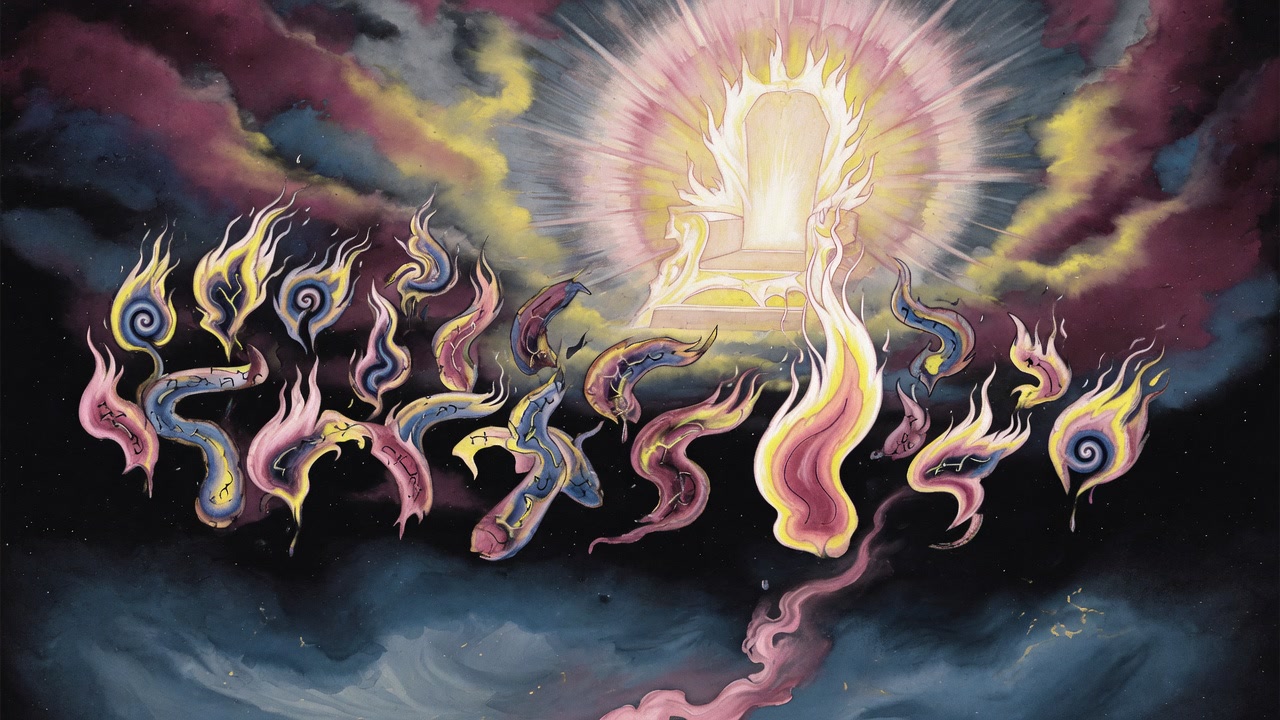
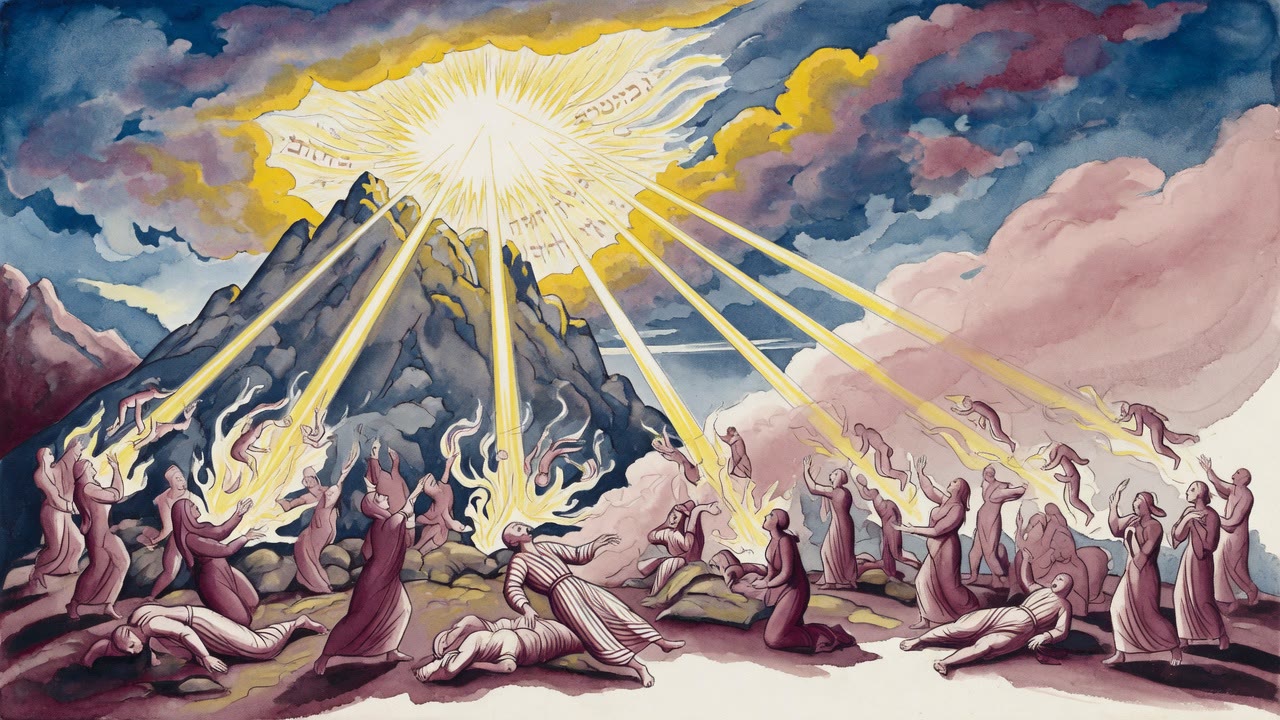
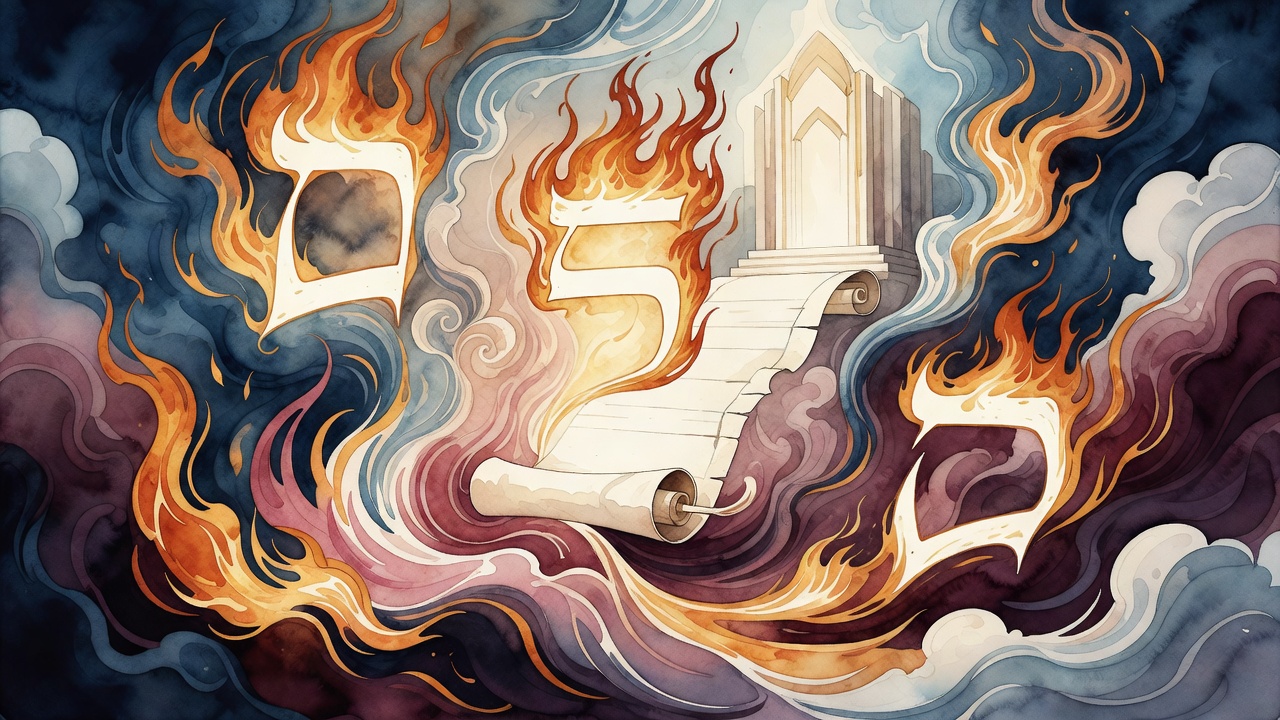
The law was fire. The parchment was fire. The writing was fire. The thread that held the sheets together was fire. No ink. No hide, no linen, nothing in it that a hand could pick up cold.
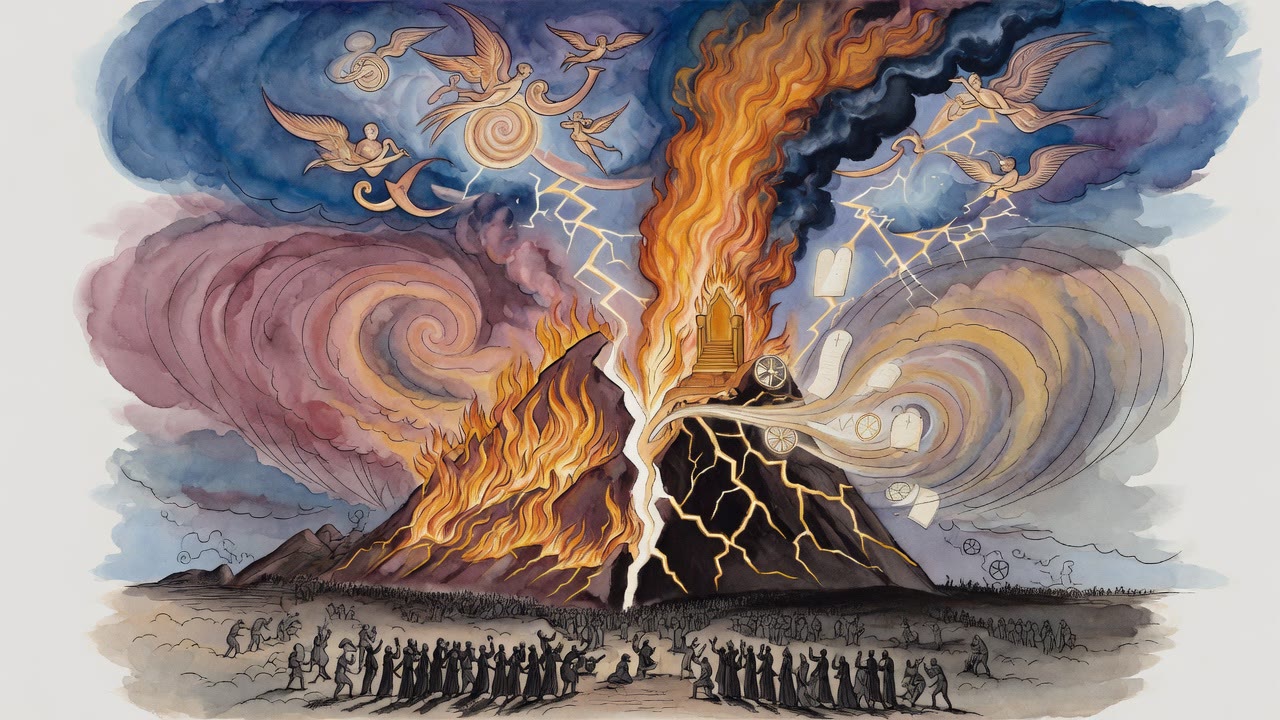
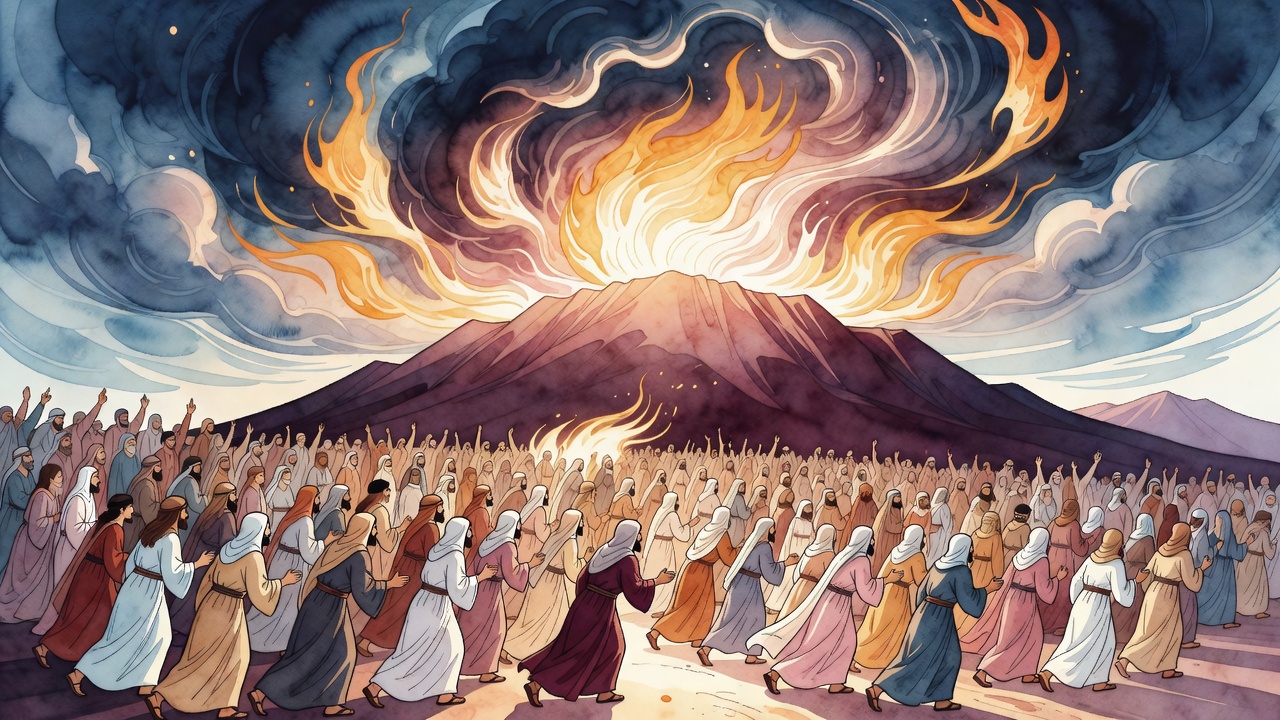
The angels who came down with it were fire, and the mountain under it burned, and the thing was handed over inside a fire that was eating another fire and neither one going out. Moses walked into that and came back with it, and his face had caught. When he came down the slope the people looked at him once and would not go near him.
They kept their distance from a man because of what he had been carrying.
The Gods a Man Melts Down
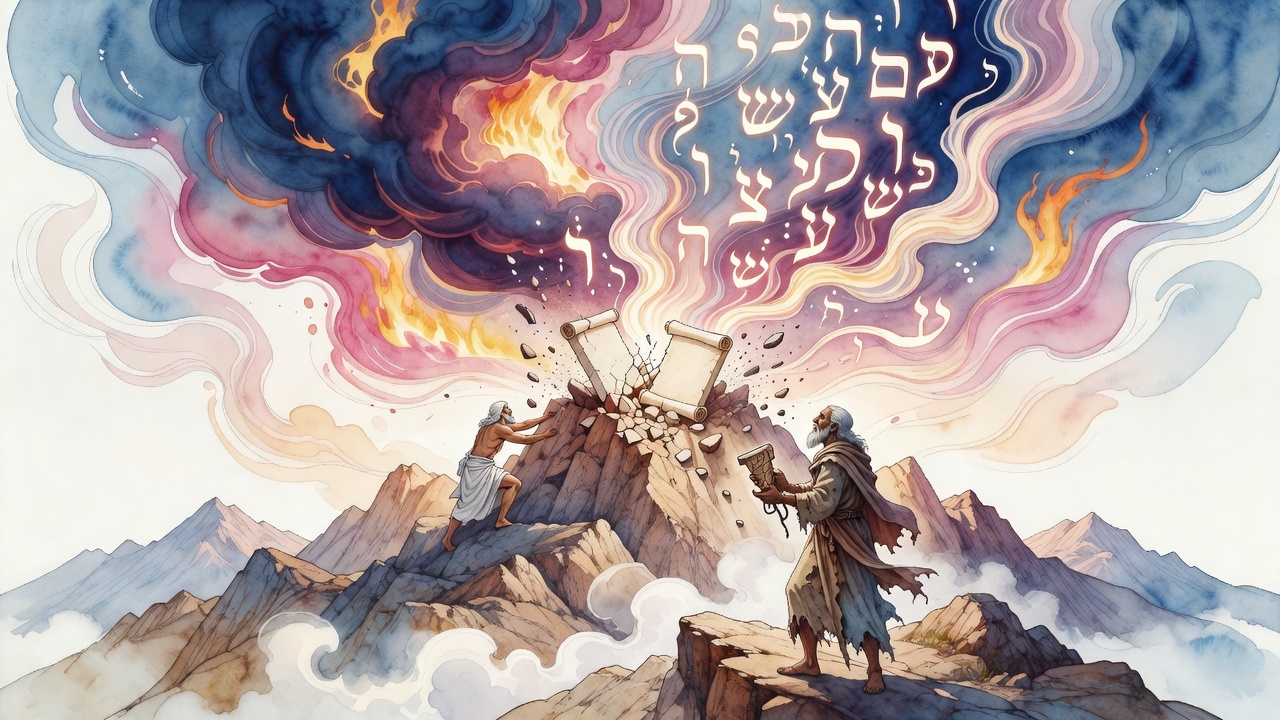
The letters were burning in the air over the mountain and the lightning was going, and the people below were looking up at the other names, the ones they had brought out of Egypt in their heads.
"Do not imagine that they have much power," God said. And then He began: "I am the Lord your God. You shall have no other gods."
Rabbi Eliezer knew exactly why the old ones were called other gods. A man keeps a god of gold in the house. Then he needs the gold for something, so he melts it and makes himself one of silver. Then he needs the silver, so the next one is brass. Then iron, then tin, then lead, and by the end of it he is whittling one out of wood and bowing to that. New gods, made fresh every morning, each one demoted the moment its metal was worth more than its face.
They had no power, and men had put God's name on them anyway. That had started long before, in the days of Enosh son of Seth, when people first began calling things by the name of the Lord. The sea came up over the land that year and swallowed a third of the world.
"You have done a new thing," God said then, "in calling yourselves by My name. So I will do a new thing, and call Myself by My name." He is the one who summons the waters of the sea and pours them out over the face of the earth.
Akiva Would Not Go Up to Read
Generations later, in a synagogue, the sexton called Rabbi Akiva up to read from the scroll in front of the congregation, and Akiva would not go.
His students came at him with his own teaching. "Our master, did you not tell us that it is your life and the length of your days? Why will you not go up?"
"By the Temple service," Akiva said, and that oath out of his mouth stopped them. "I refused only because I have not gone over the portion two or three times to myself. No man may say words of Torah in front of a congregation until he has laid them out two or three times alone."
He had it from the highest authority. Before the voice came out over Sinai, God had seen the thing and declared it and established it and searched it out, and only after all four did He say it to a human being. God went over it privately first. Akiva was not going to be the man who did not.
The House Was Burning on the Sabbath
A house catches fire on the Sabbath. Inside it there is a scroll, and the sacred books beside it on the shelf, and a man standing in the doorway on a day when carrying anything out through that doorway is closed to him.
The masters ruled that he takes them out. All of them, read from or not, out through the door and into the street while the roof goes.
Let them burn and they would look worthless, and they are not worthless, because of what is written inside them. And because of what the writing is. He is running out of a burning house holding the one thing in it that the flames have no claim on, and he is doing it on the Sabbath, and the ruling is that this is exactly right. Fire does not get to eat fire.
← All myths