69 myths · Page 1 of 2
Tabor still had dry shoulders from the Flood. God sent the tall peaks home and chose the small one that had torn itself from Moriah.
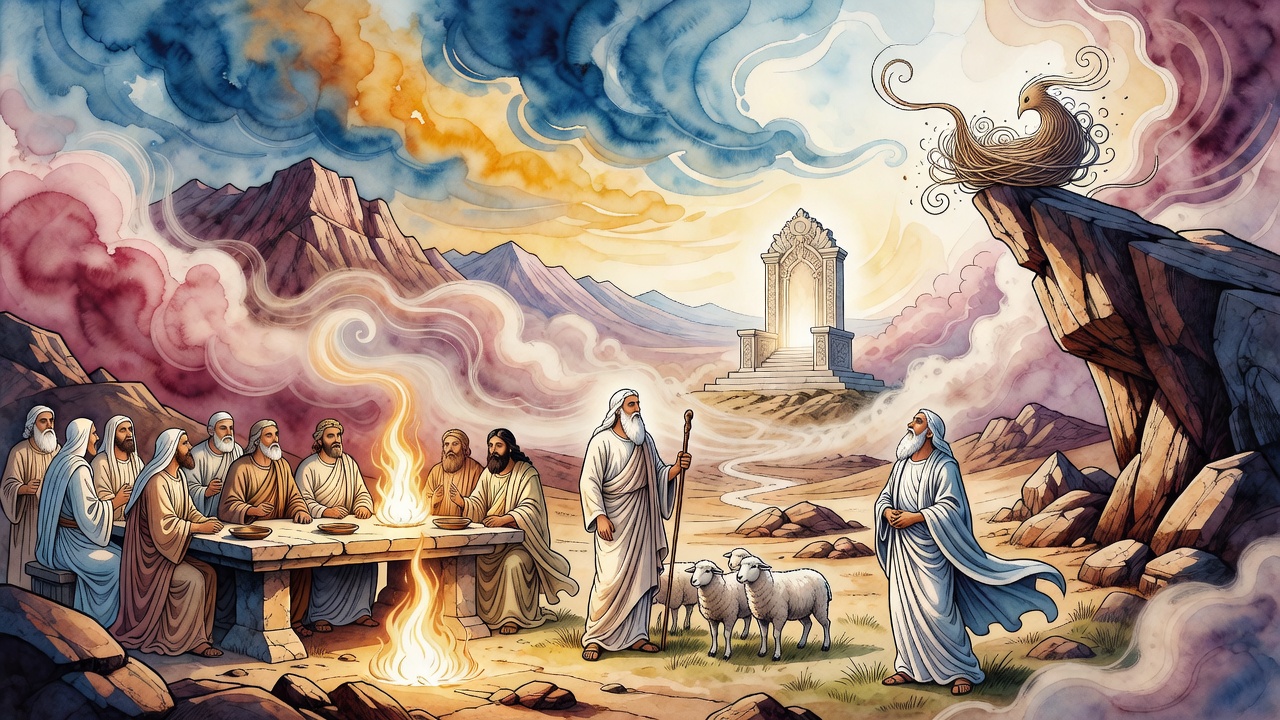
Yitro stood up while the decree was still being written. Bilam stayed in his chair. The river would take the infants.
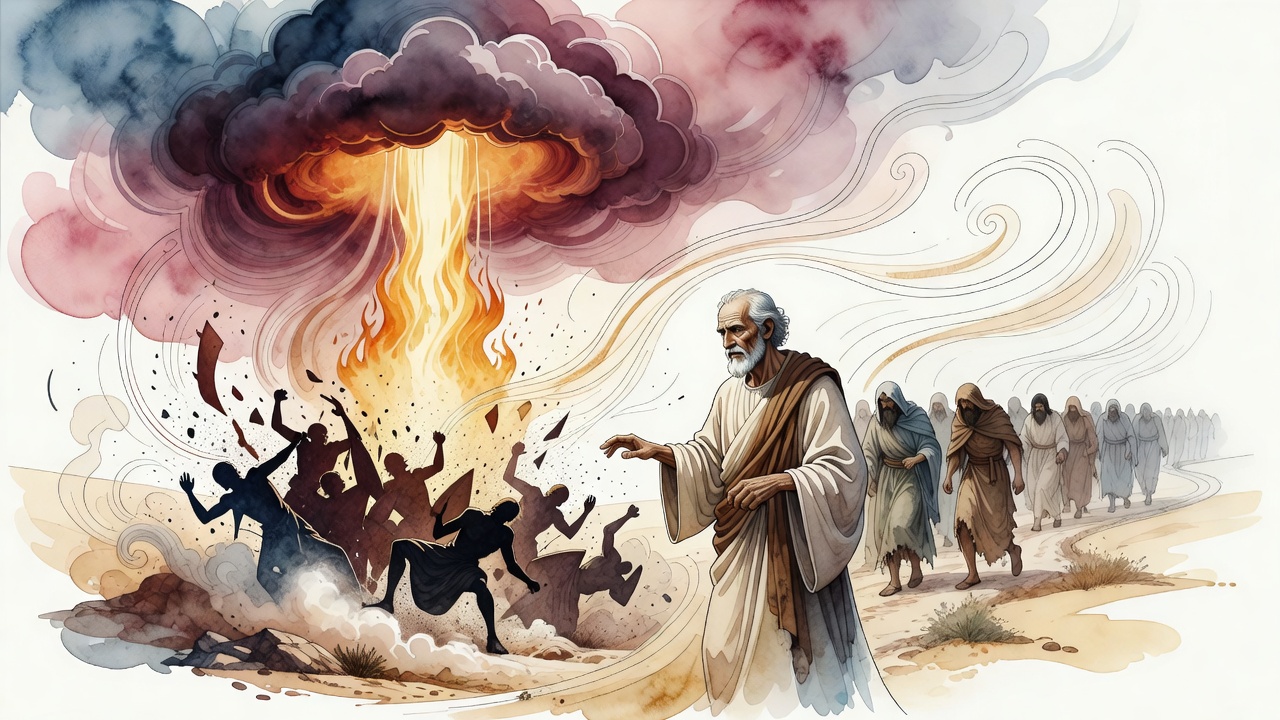
Some in the camp tested God without saying a word: if He knows what we are thinking, we will serve Him. The answer that walked in was Amalek.
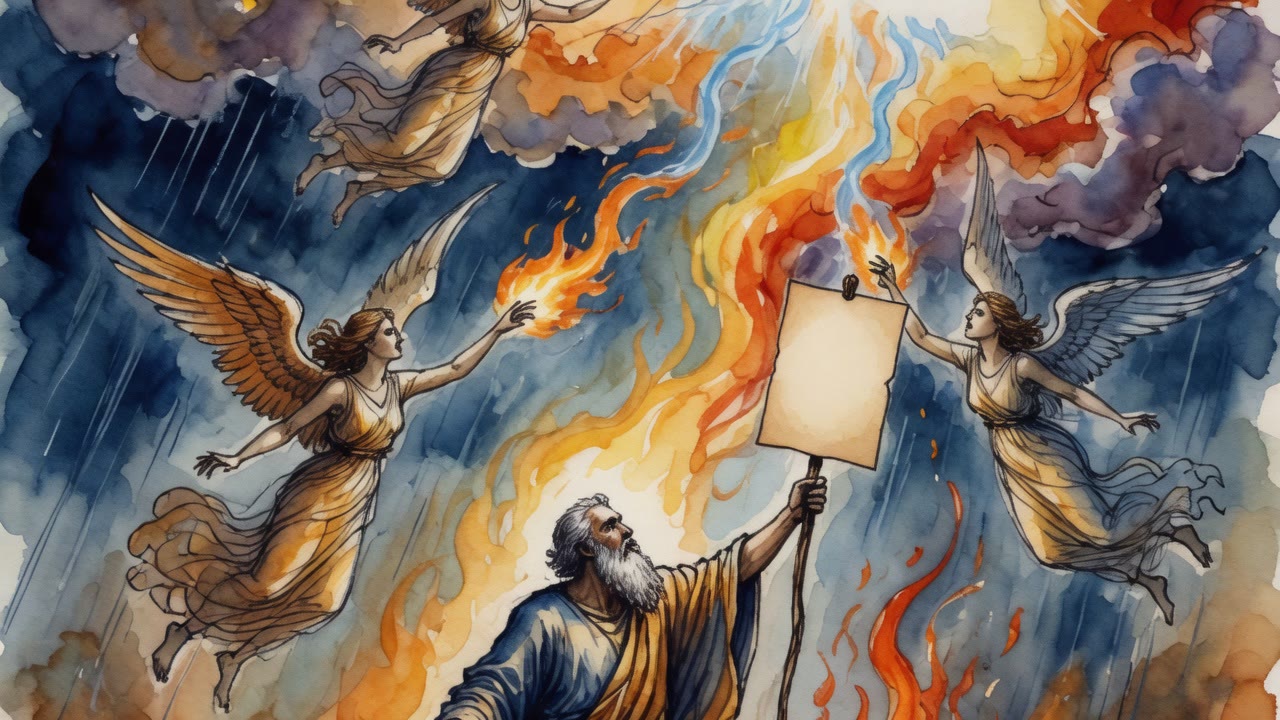
An angel named Hadarniel blocked the road, and Moses wept in the cloud like a lost child. Then he gripped the Throne of Glory with both shaking hands.
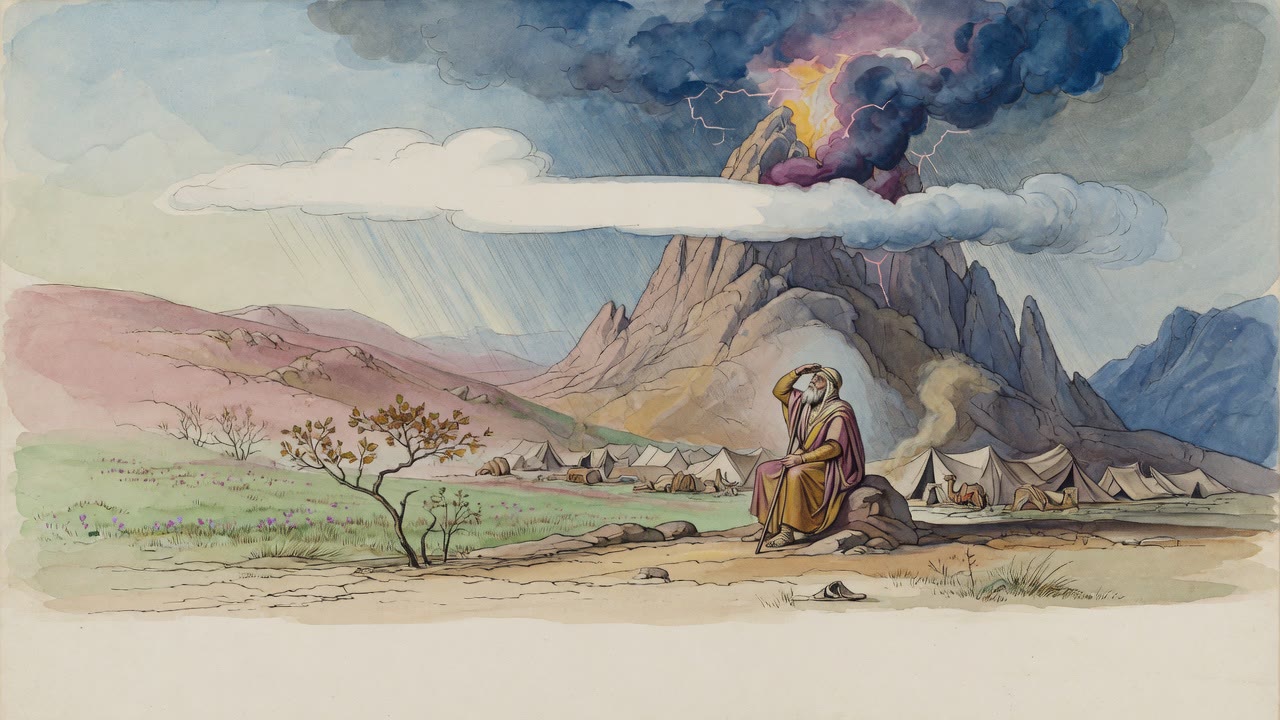
Moses vanished into the clouds of Sinai for the better part of a year. When he finally came back down, his father-in-law was still there waiting.
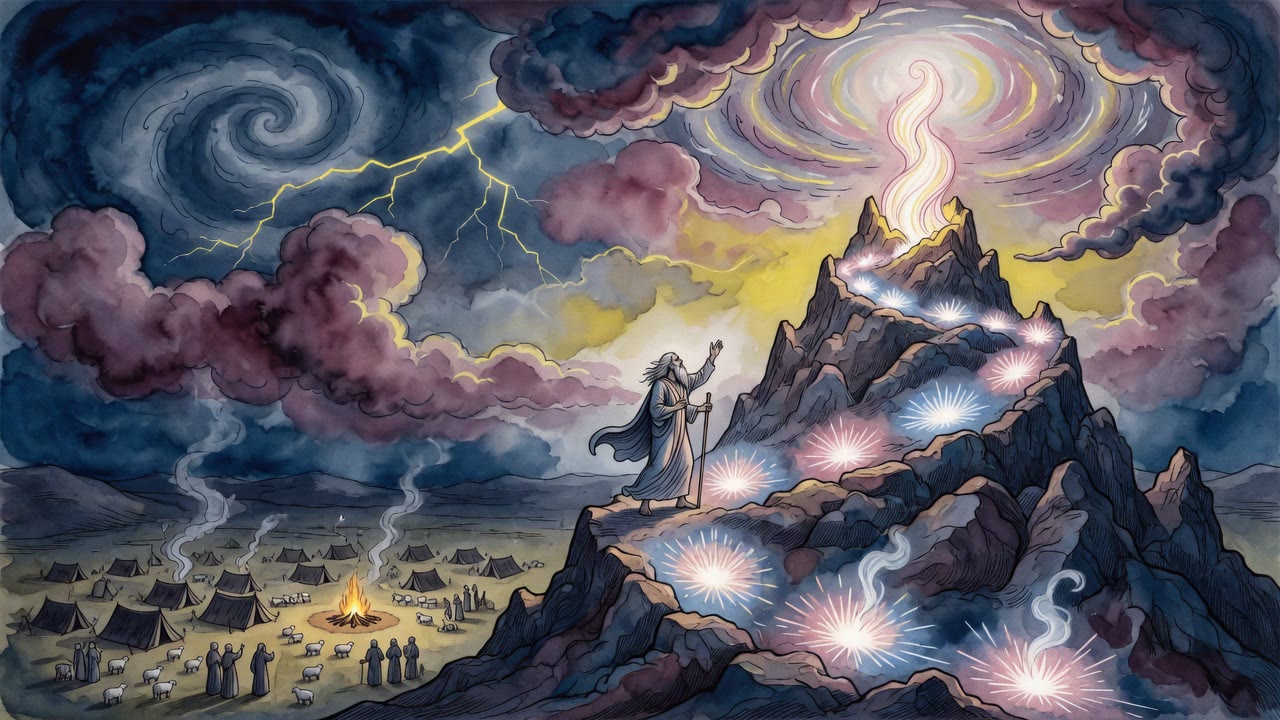
The Mekhilta reads Exodus 19 and finds something hidden: God gave one commandment at a time and waited each time for Moses to return with Israel's answer.
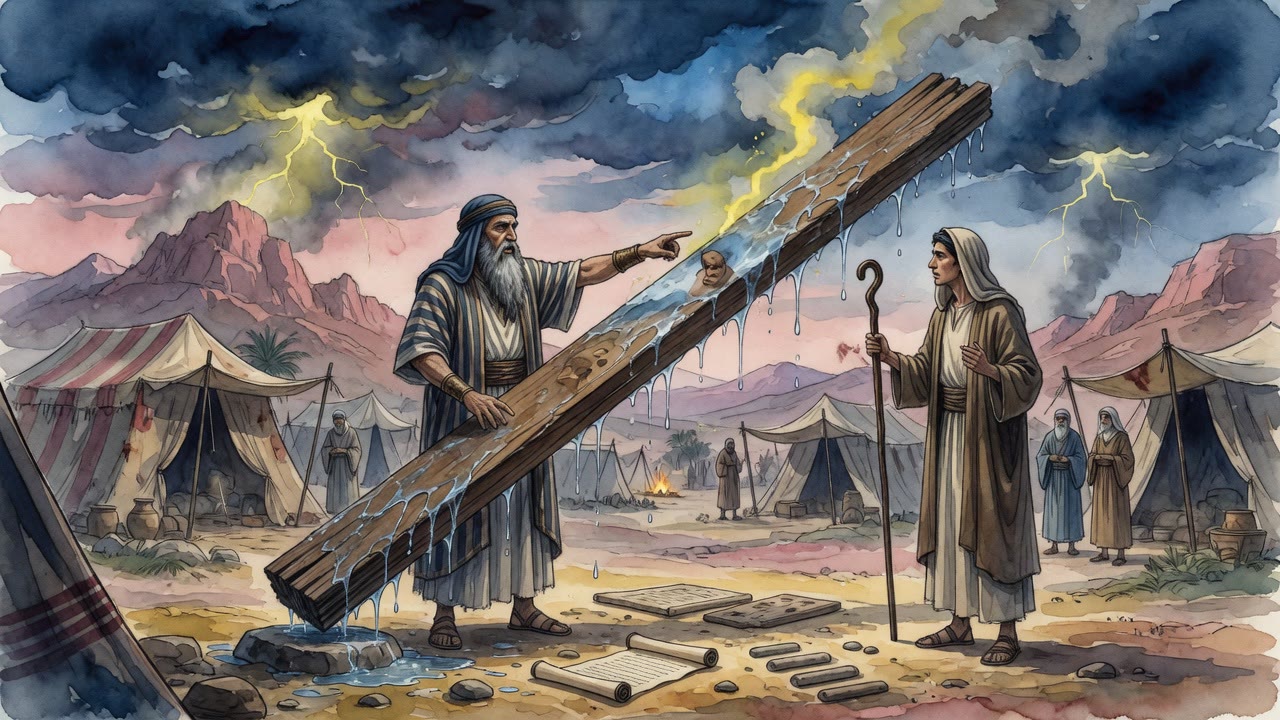
A Midianite priest reached the camp, watched Moses judge from dawn to dusk, then pointed at a waterlogged beam and said one man could not lift it.
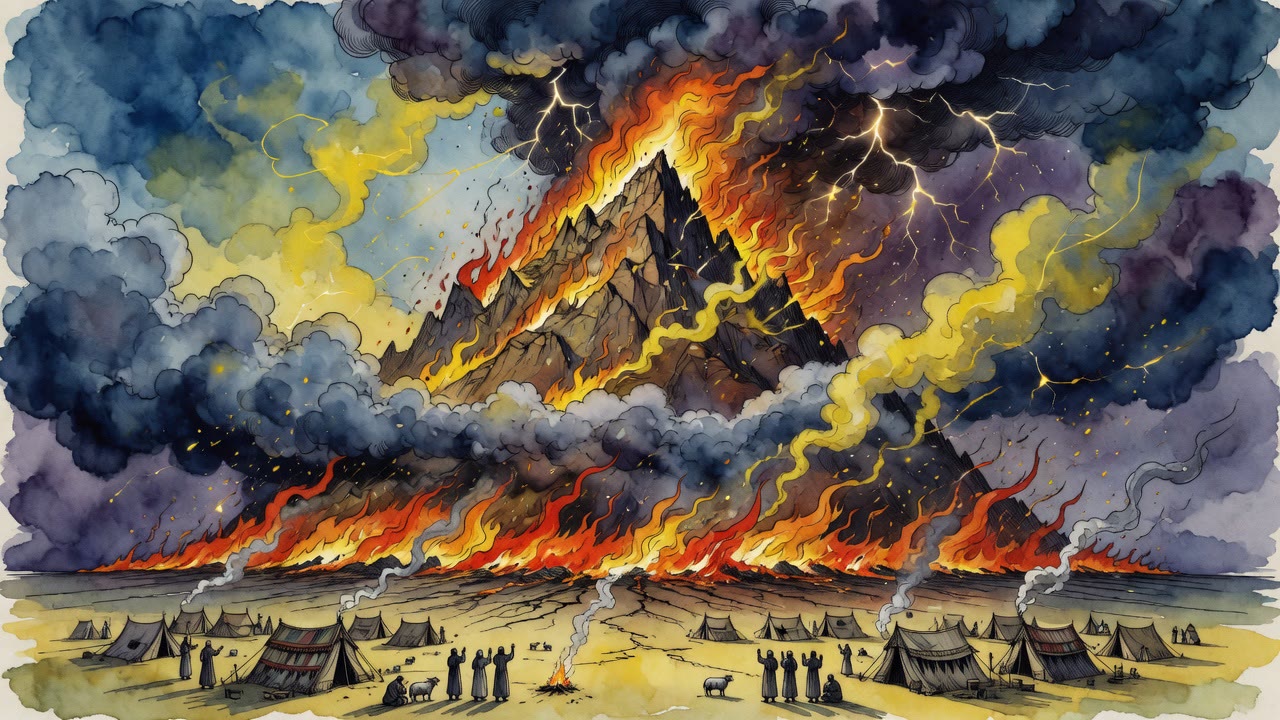
Israel had three days to wash their clothes and keep off the mountain. On the third morning the peak went up like a furnace and the horn would not stop.
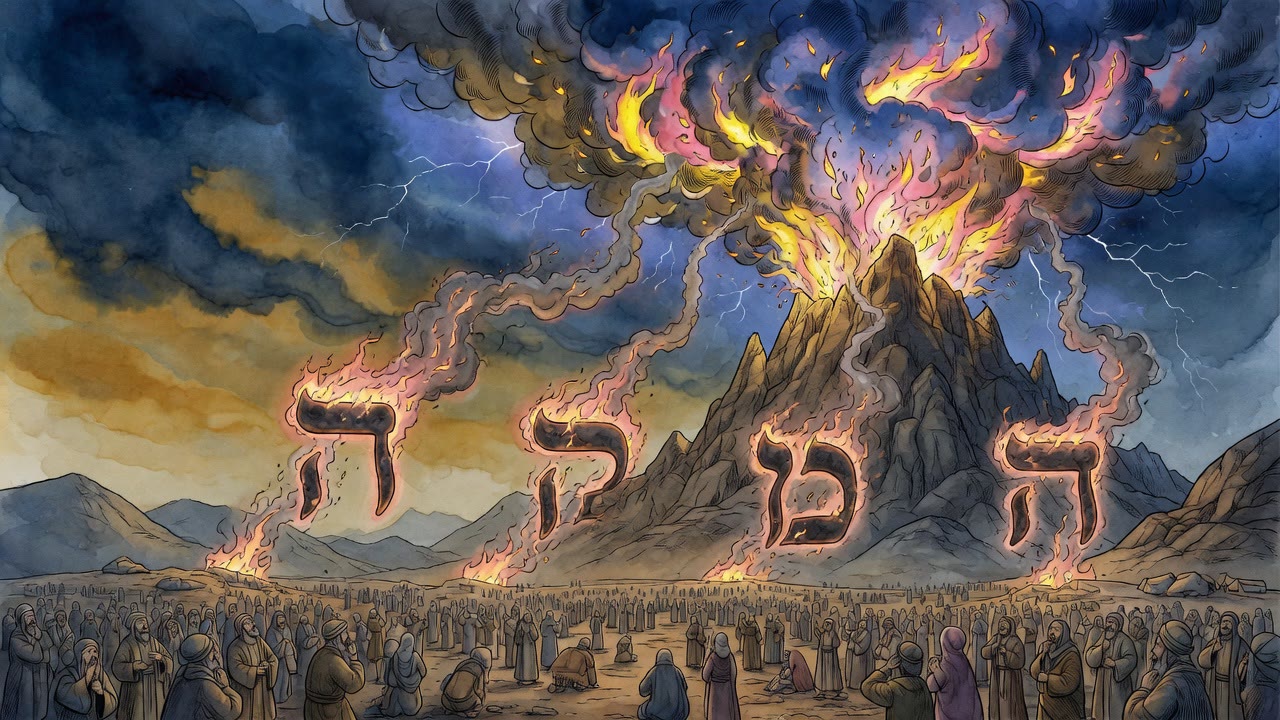
The mountain hung over the camp like an overturned barrel. God said the slope would be their grave. Then the first word struck and the nation fell still.
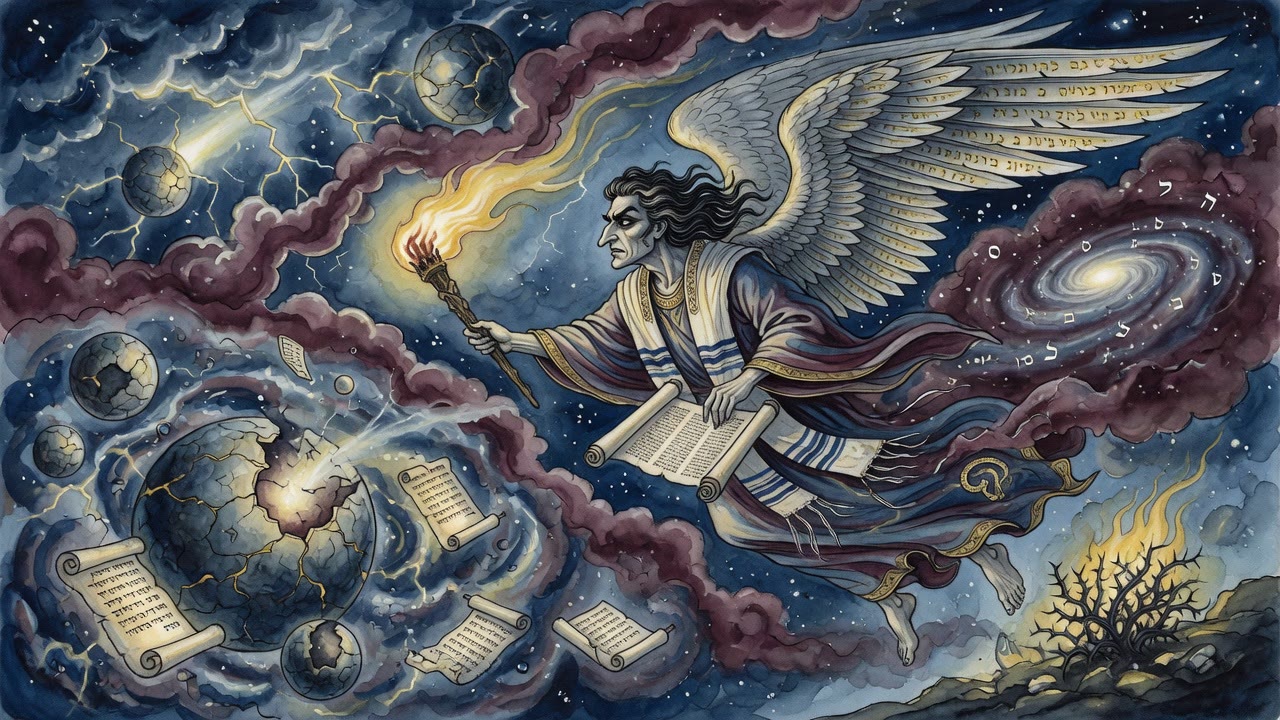
Moses came down from heaven with Torah, and Ha-Satan, the Accuser, could not find it. Earth, sea, depth, and death all denied him.
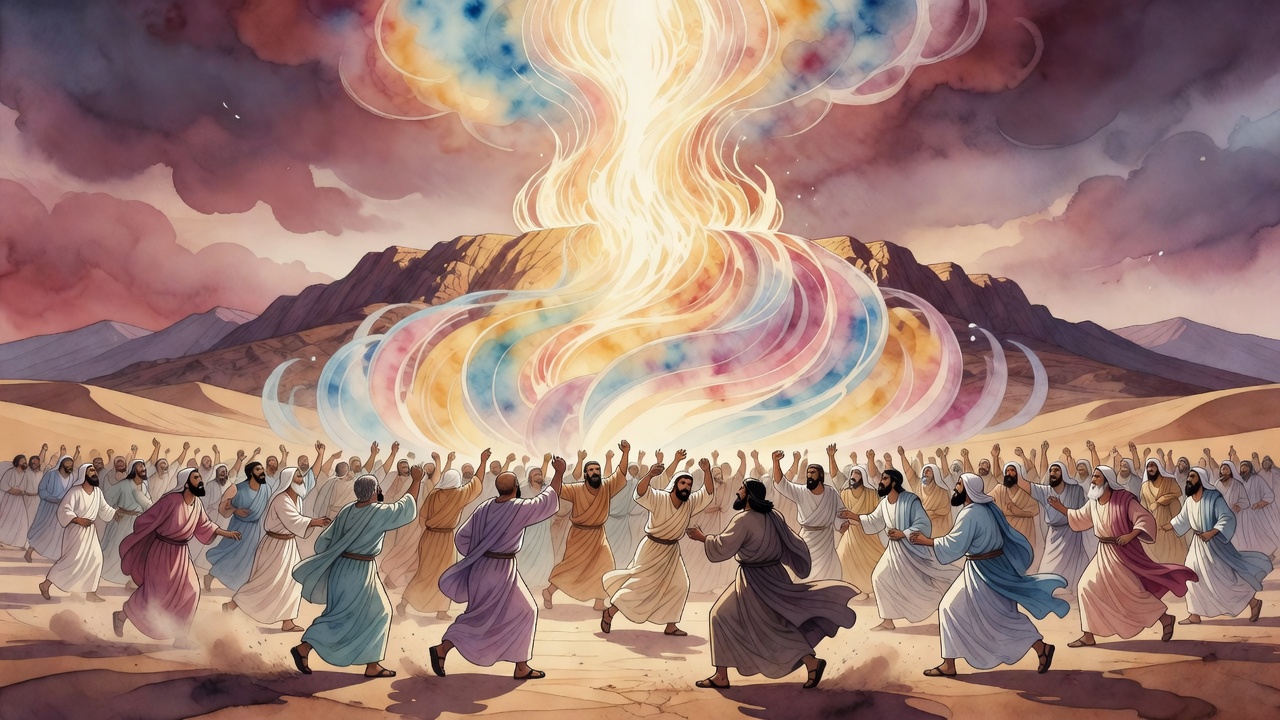
Each commandment at Sinai threw the entire nation backward twelve kilometers. Rabbi Akiva did the arithmetic: 240 kilometers walked in the body.
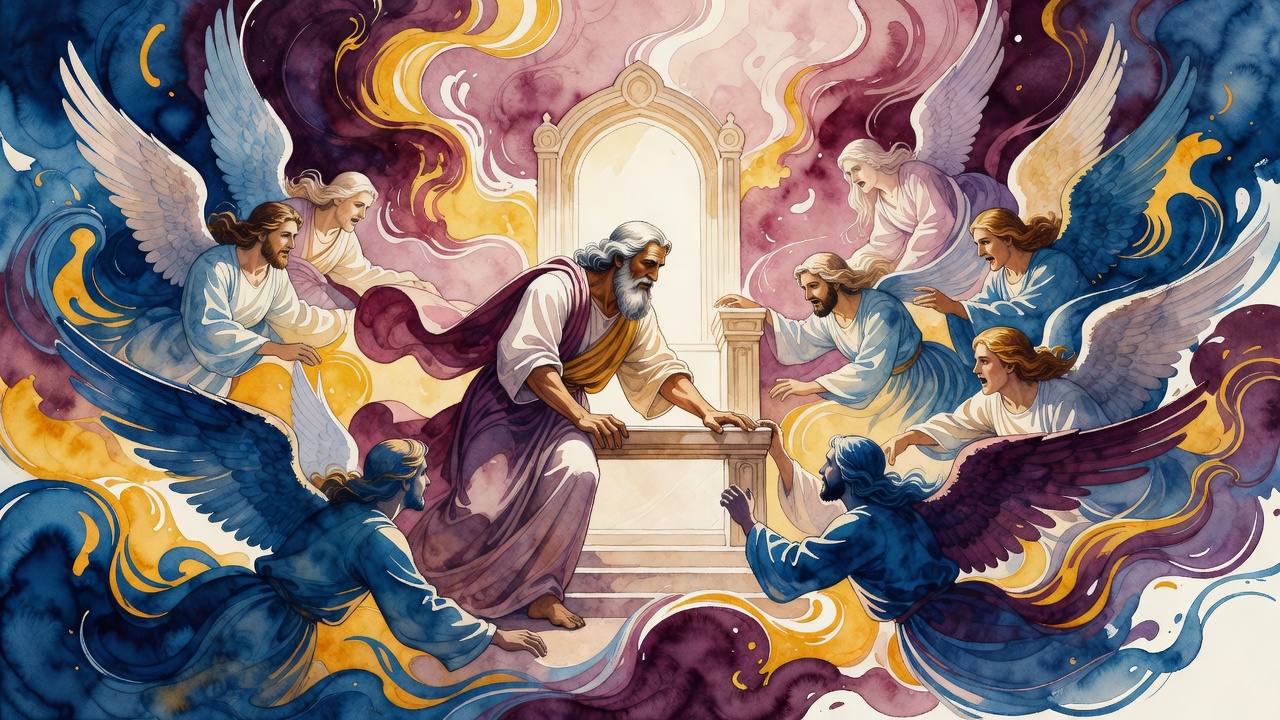
The angels crowded the cloud and asked what flesh was doing in heaven. Moses had forty days with no bread and a case to argue.
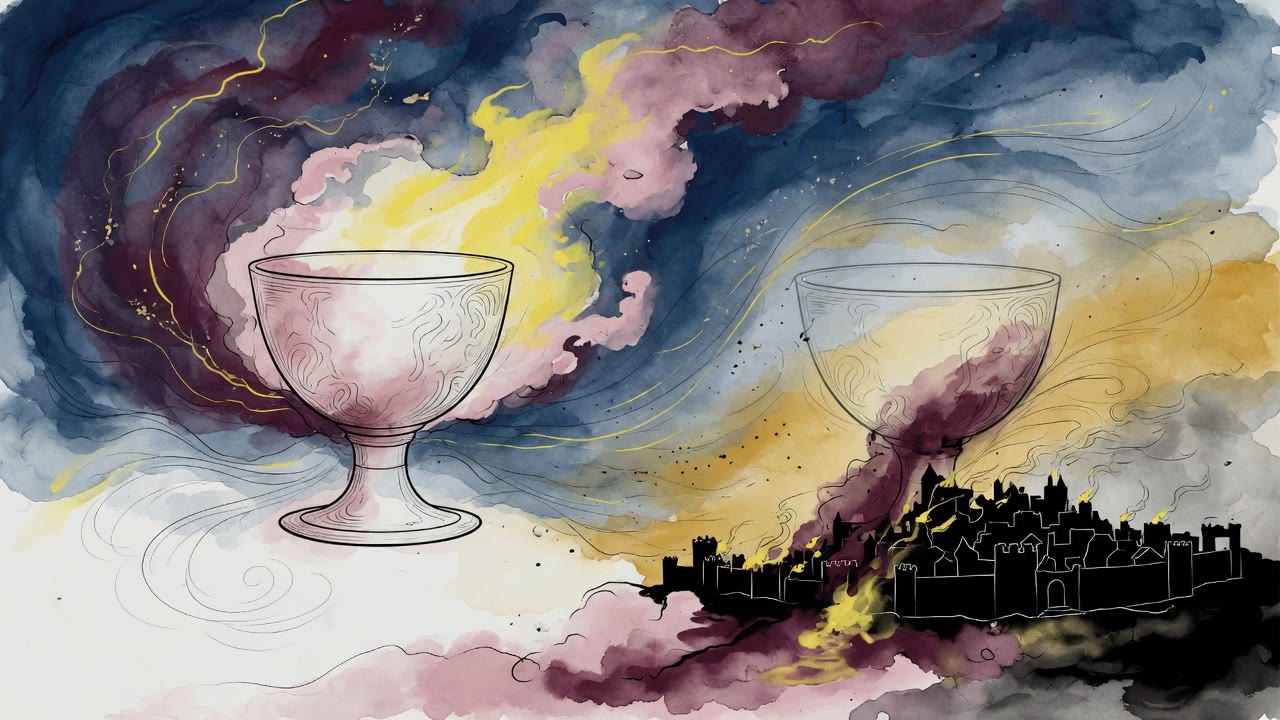
They said they would do, then they would hear. Angels tied two crowns on every head. While they wore them, no one in the camp died.
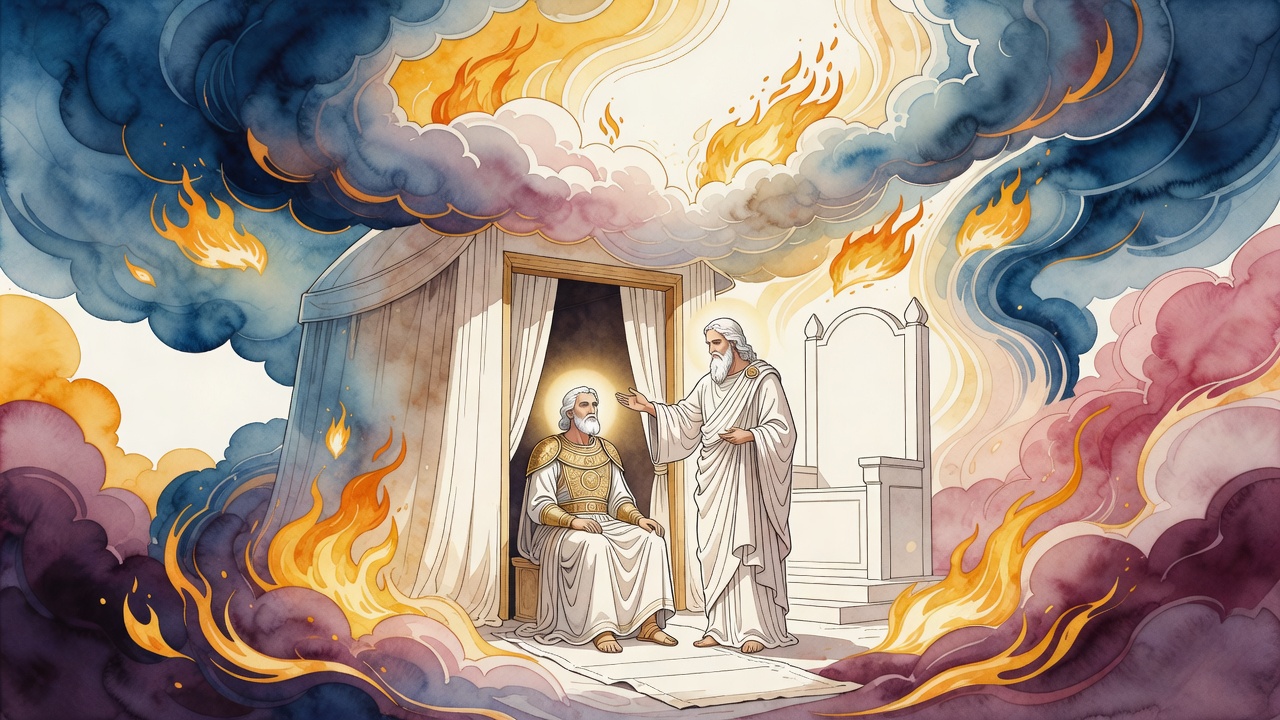
Moses anointed Aaron as High Priest and then told him he could not serve for seven days. He sat at the door of the Tabernacle and watched.
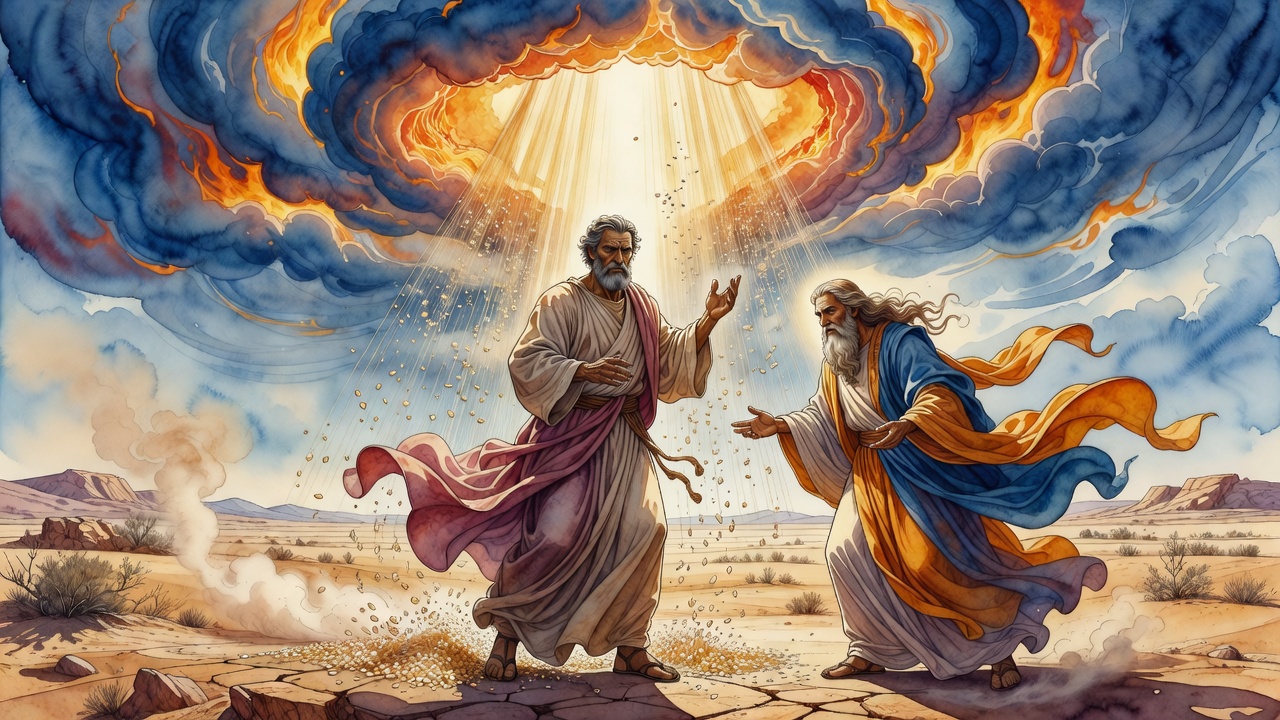
Moses called him the apple of Israel's eye and offered him a share in the land. Jethro tied his bags for Midian while manna still stuck to his sleeves.
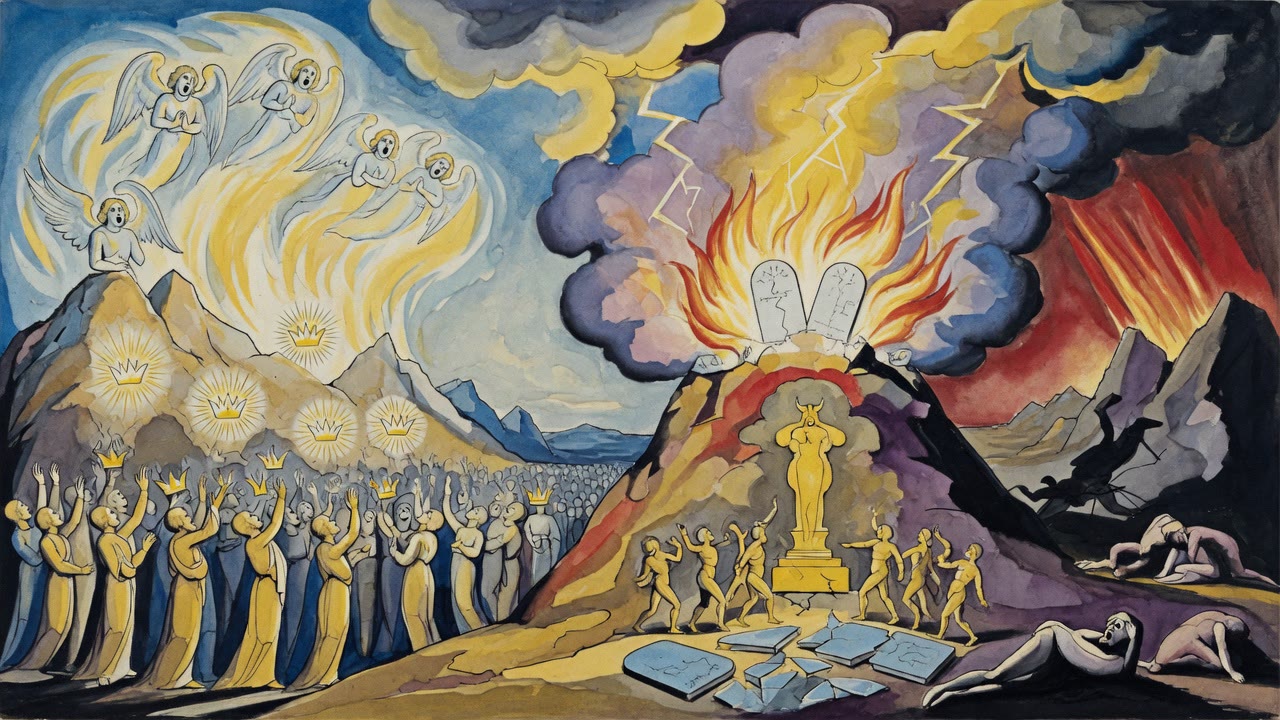
At Sinai the angels sang and Israel received crowns, but God already saw the calf, the broken tablets, and death returning to the camp.
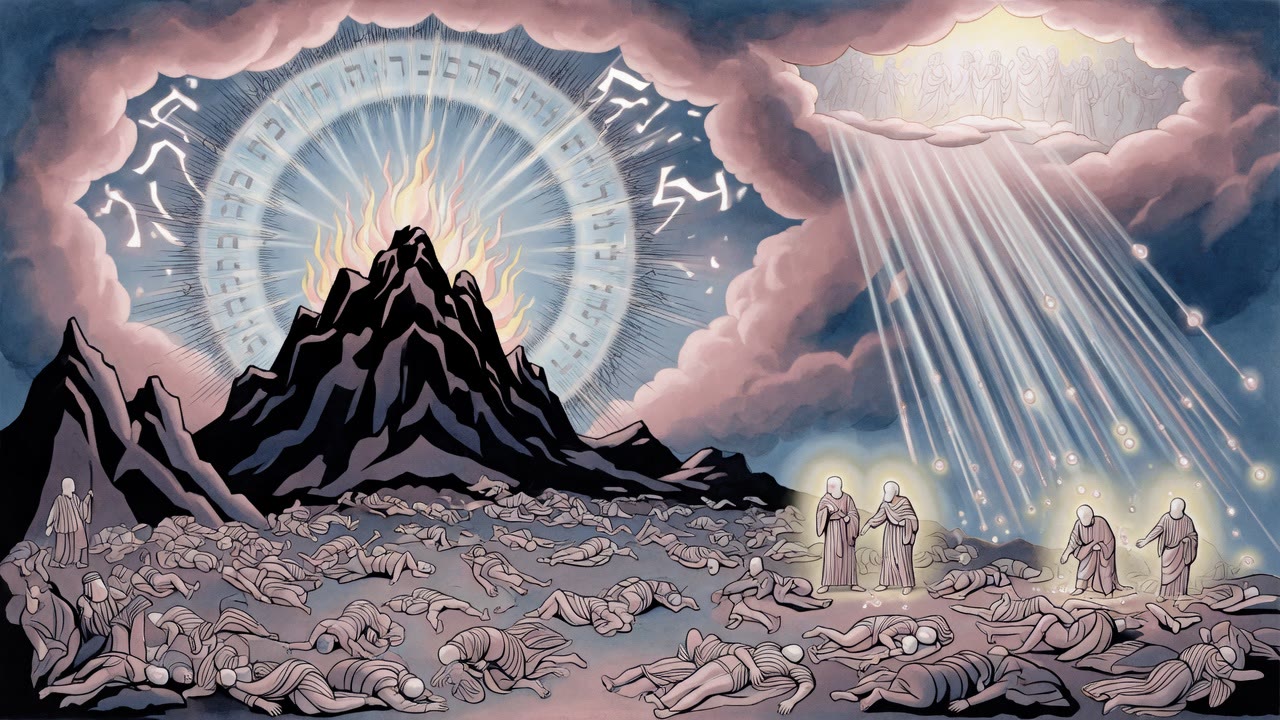
Moses threw the blood of bulls on the people. Then God's voice emptied every body in the camp. Dew saved for the last day woke them.
Most people with seven names are hiding something. Each of Jethro's seven names recorded a different act of choosing the harder right thing.
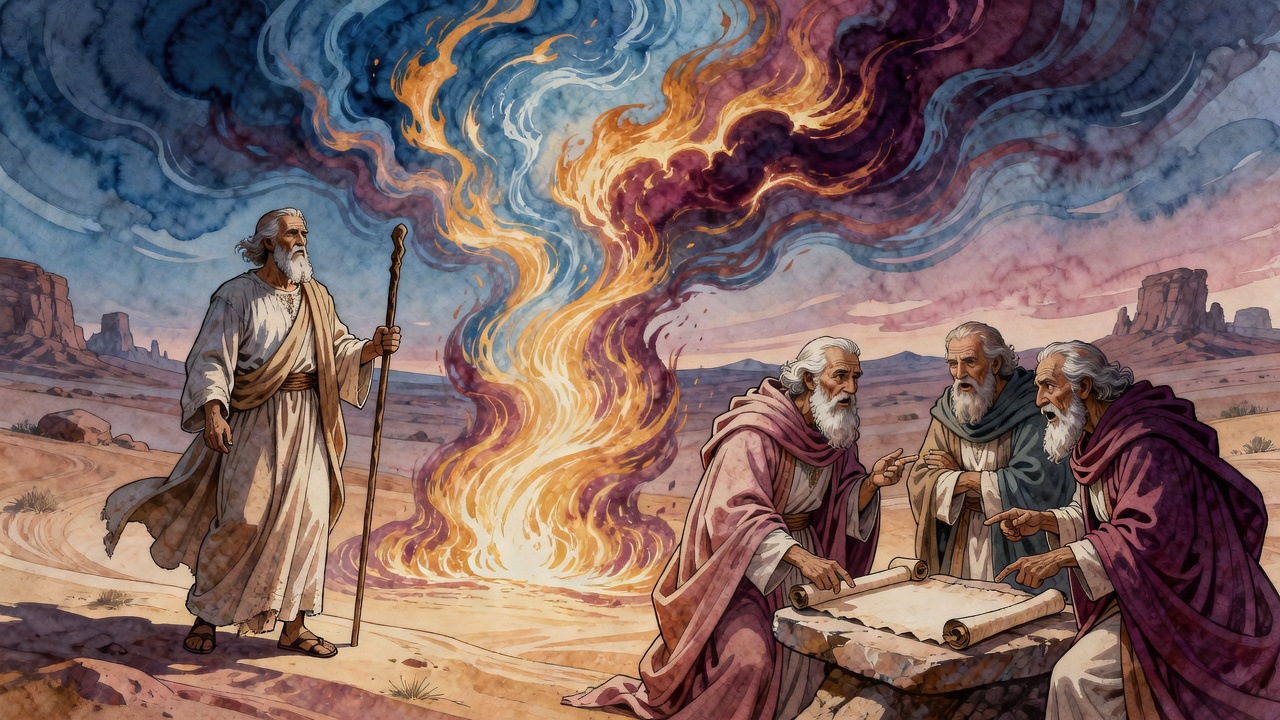
Jethro sent word ahead before he arrived. God told Moses to go out and meet him. Three sages disagreed about what Jethro's message actually said.
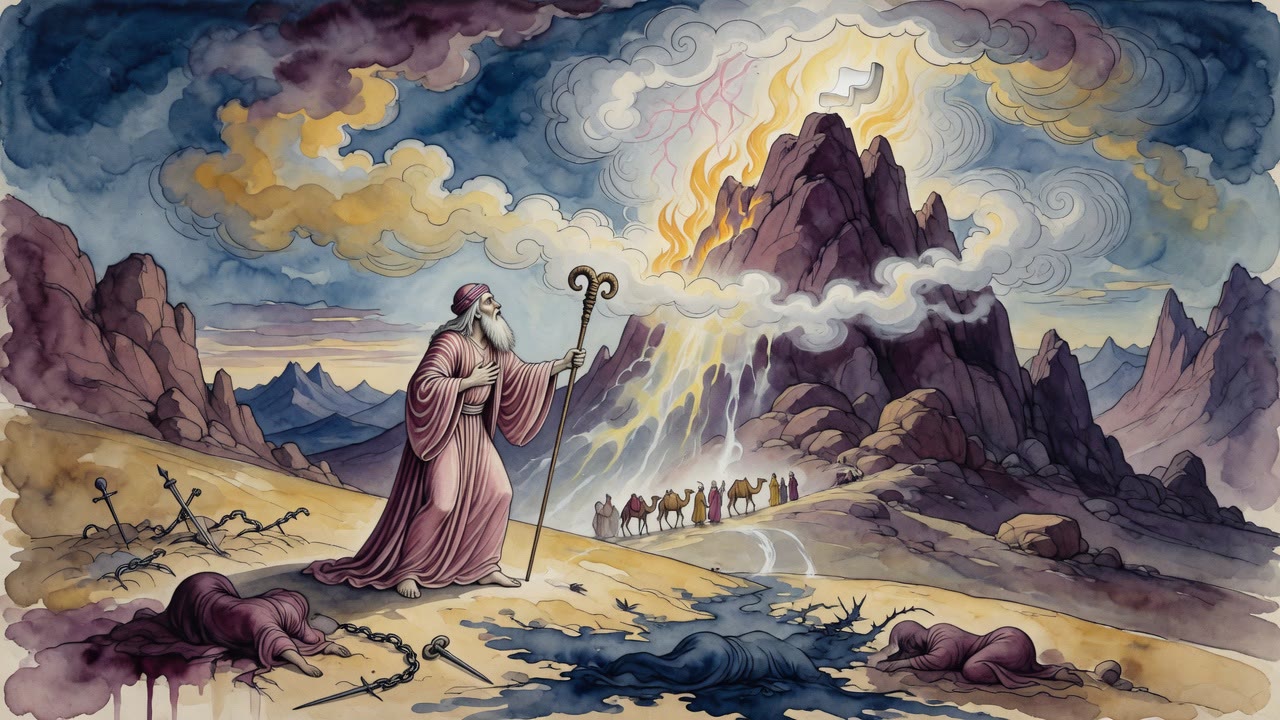
Jethro heard what God had done for Israel and came. Midrash Tanchuma opens with a verse about the wicked and the dead, and reshapes what conversion means.
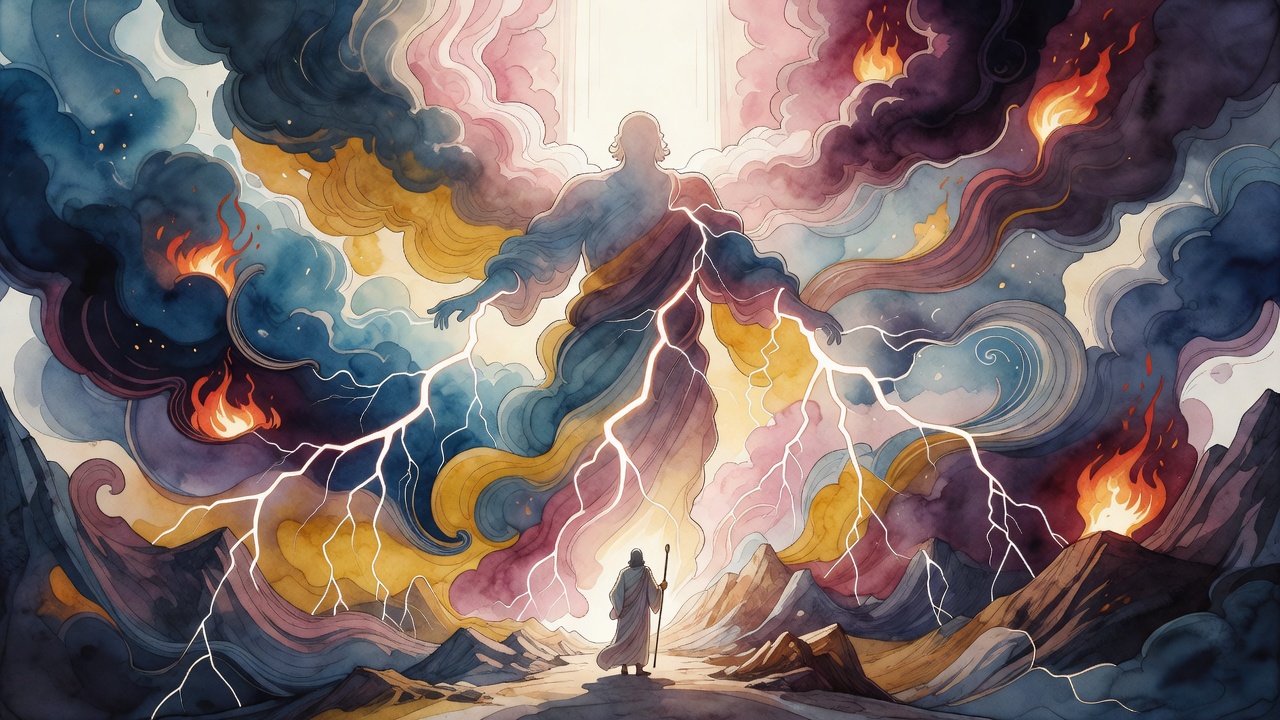
When Moses ascended to receive the Torah, an angel sixty myriads of parasangs tall blocked his path and unleashed lightning with every word.
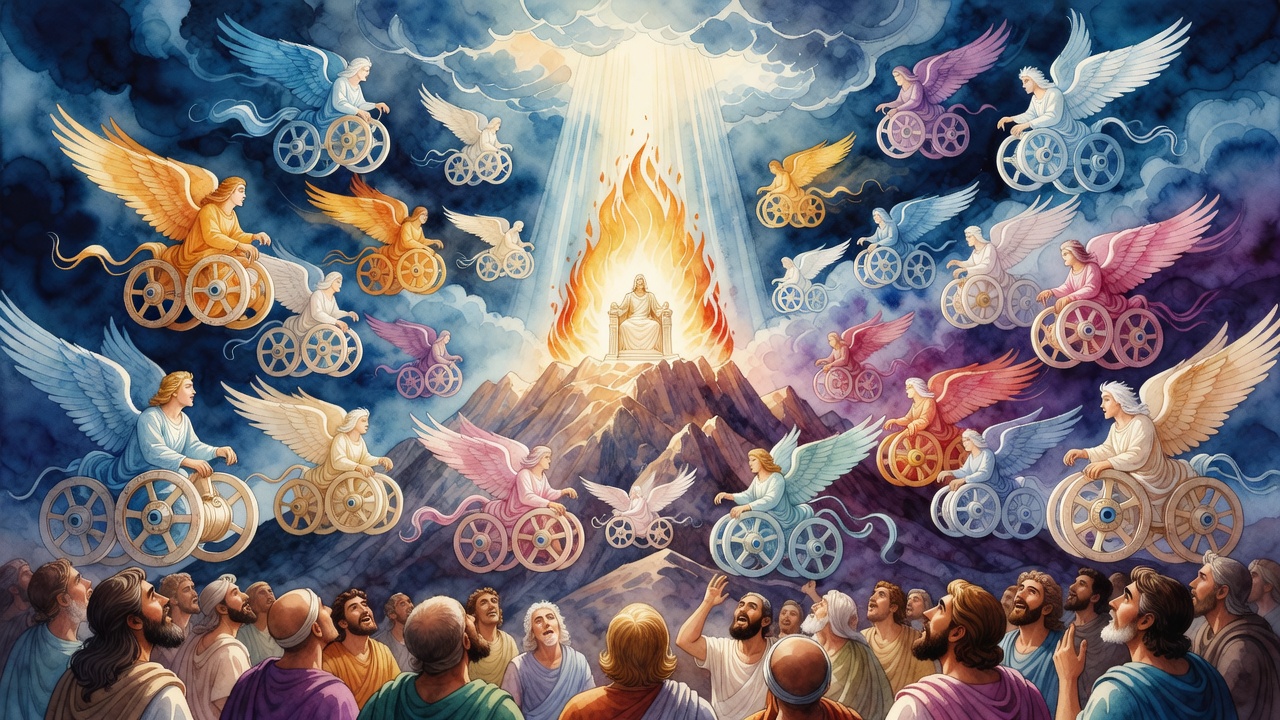
Rabbi Abdimi counted the angels who came down with God at the mountain. Every one of their chariots looked like the one Ezekiel saw by the river.
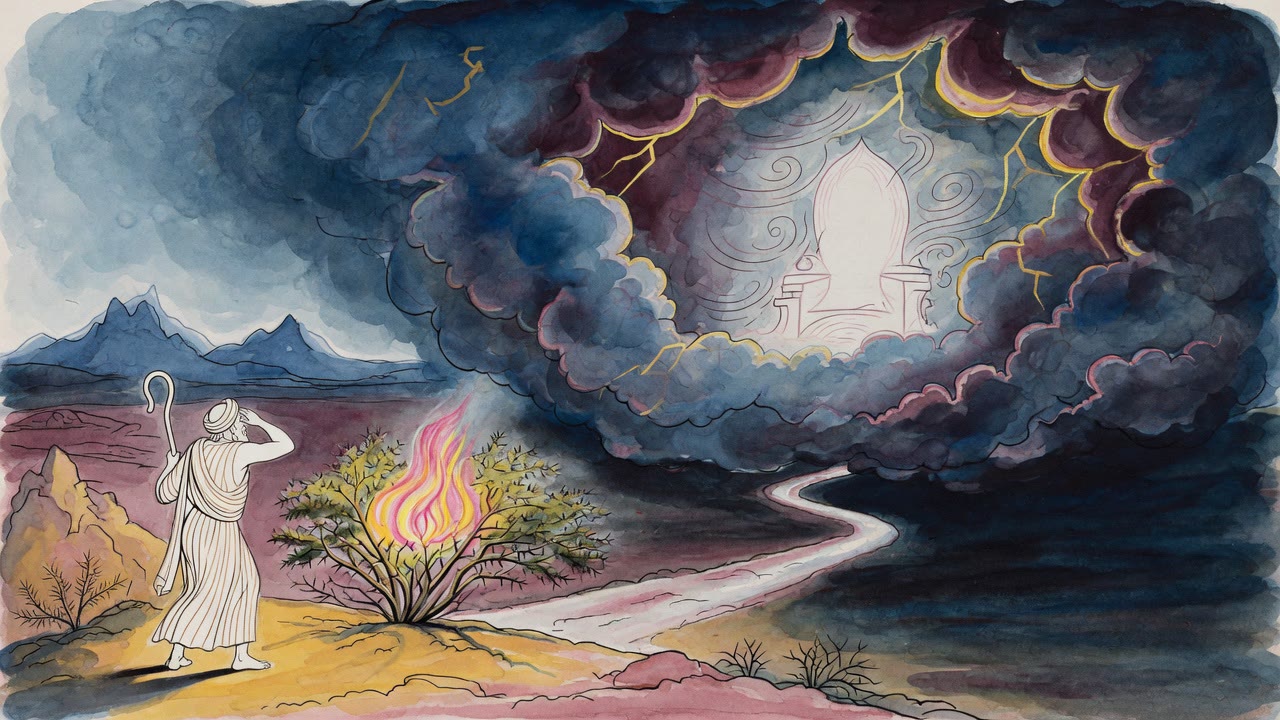
God gave the shepherd a fire that ate nothing, so the mountain would not frighten him. At the last threshold two angels had to carry him in.
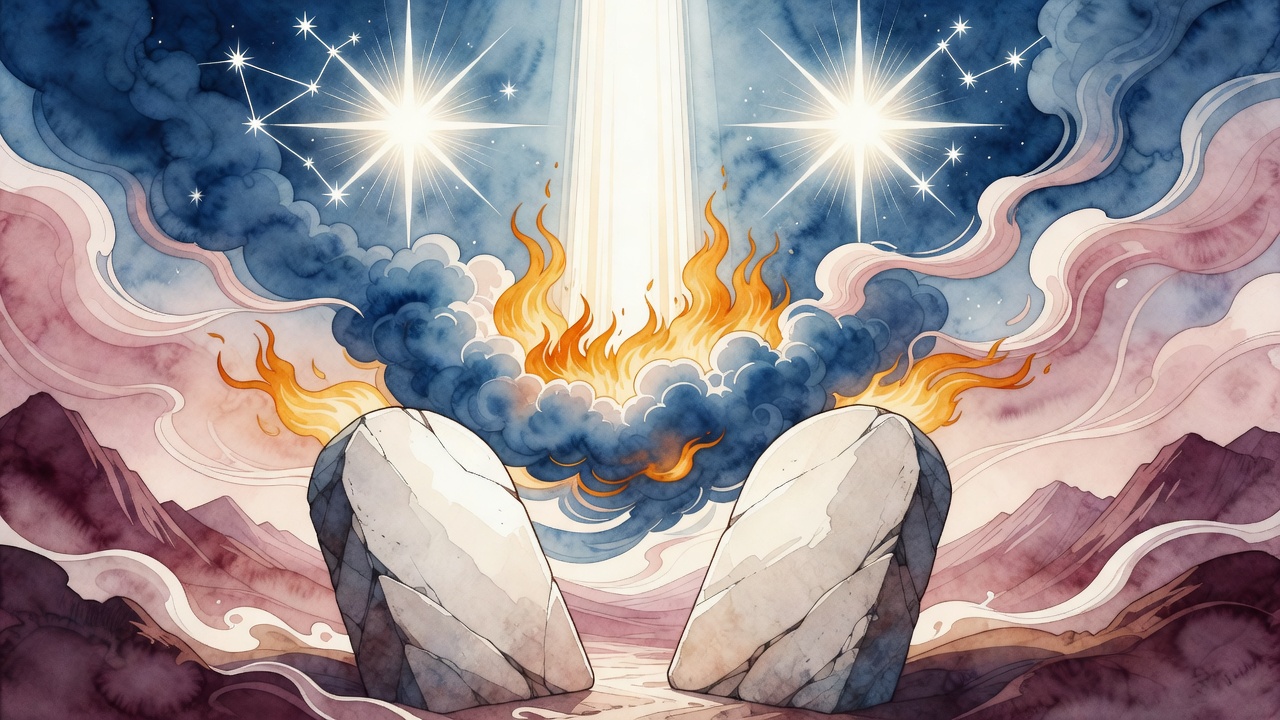
Wicked Esau could still walk in and learn, God said, and pointed at the calendar. That was the whole answer the nations were given.
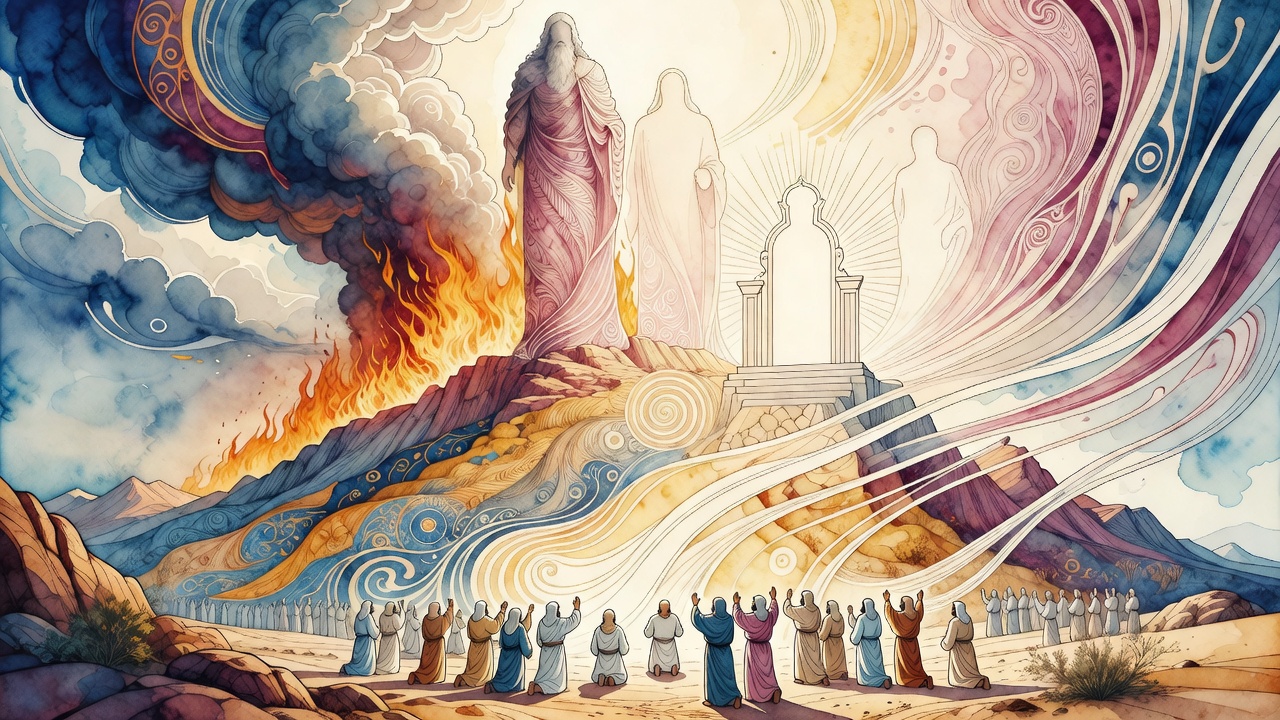
A kindness done in a low place with no witness rose as a thread of light. The Presence wore a robe cut from that cloth. When Israel turned, she wore black.
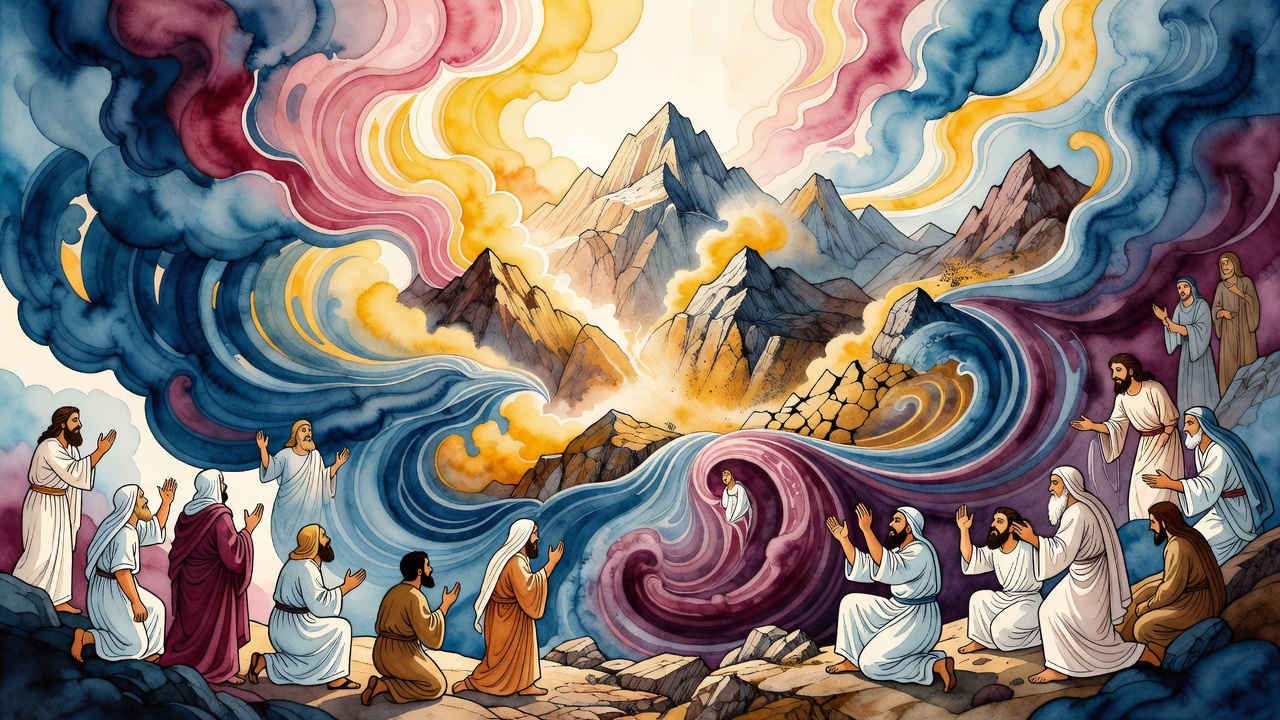
When the first commandment left God's mouth the mountains bowed and the sound turned visible, and each Israelite met a different face.
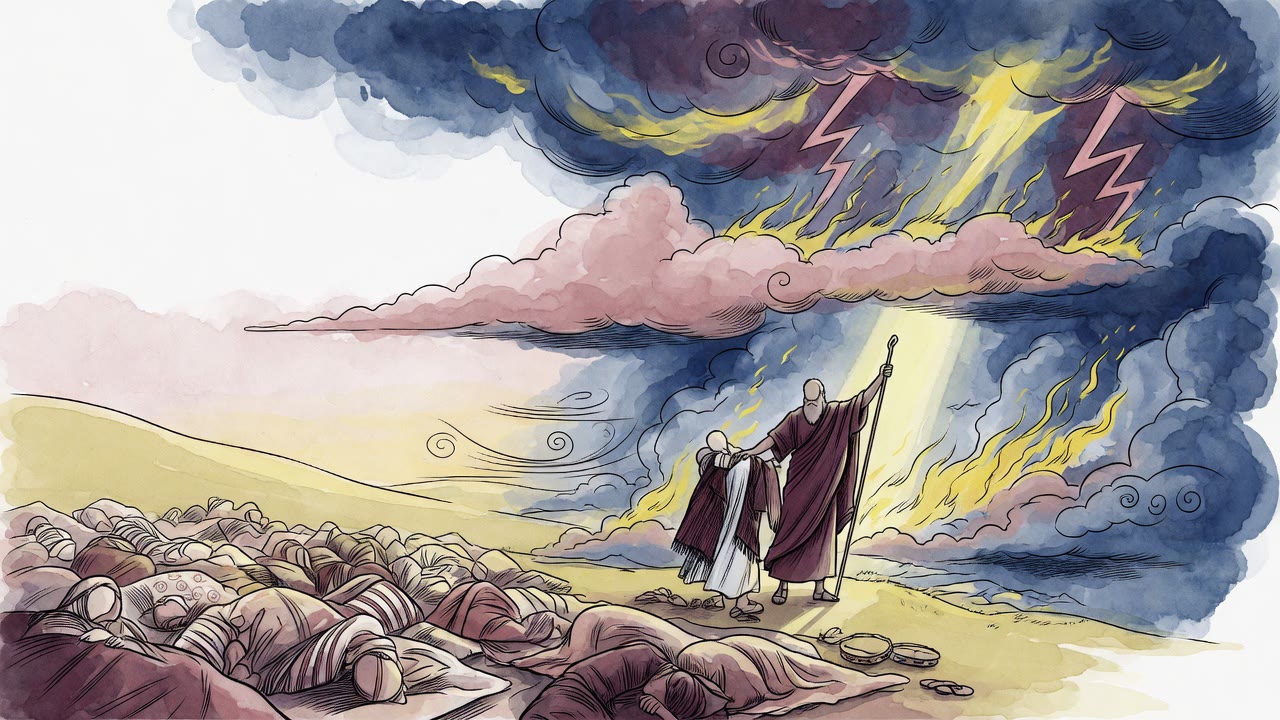
On the morning Torah was given, Israel slept late after a short summer night. Moses woke them as a bridegroom wakes a bride, and heaven walked out to meet them.
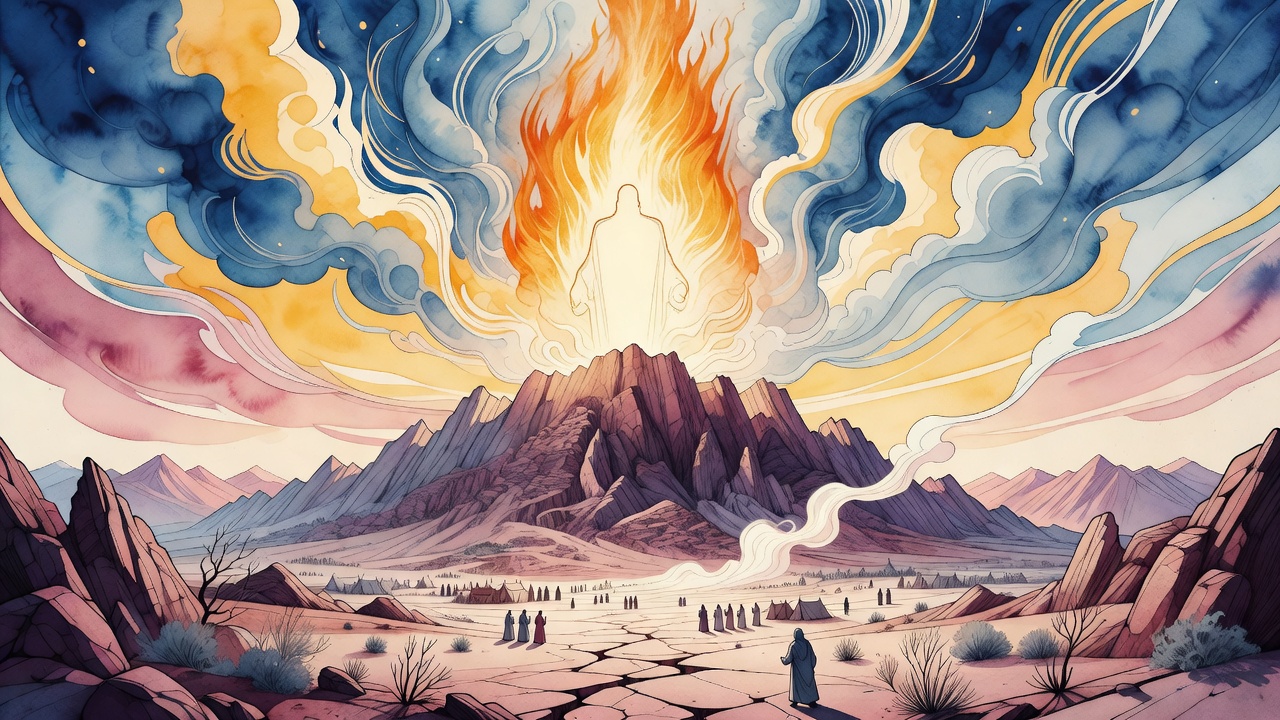
No bird sang. No ox lowed. A voice without echo said I am the Lord your God, and even the nations at the mountain's rim shook.
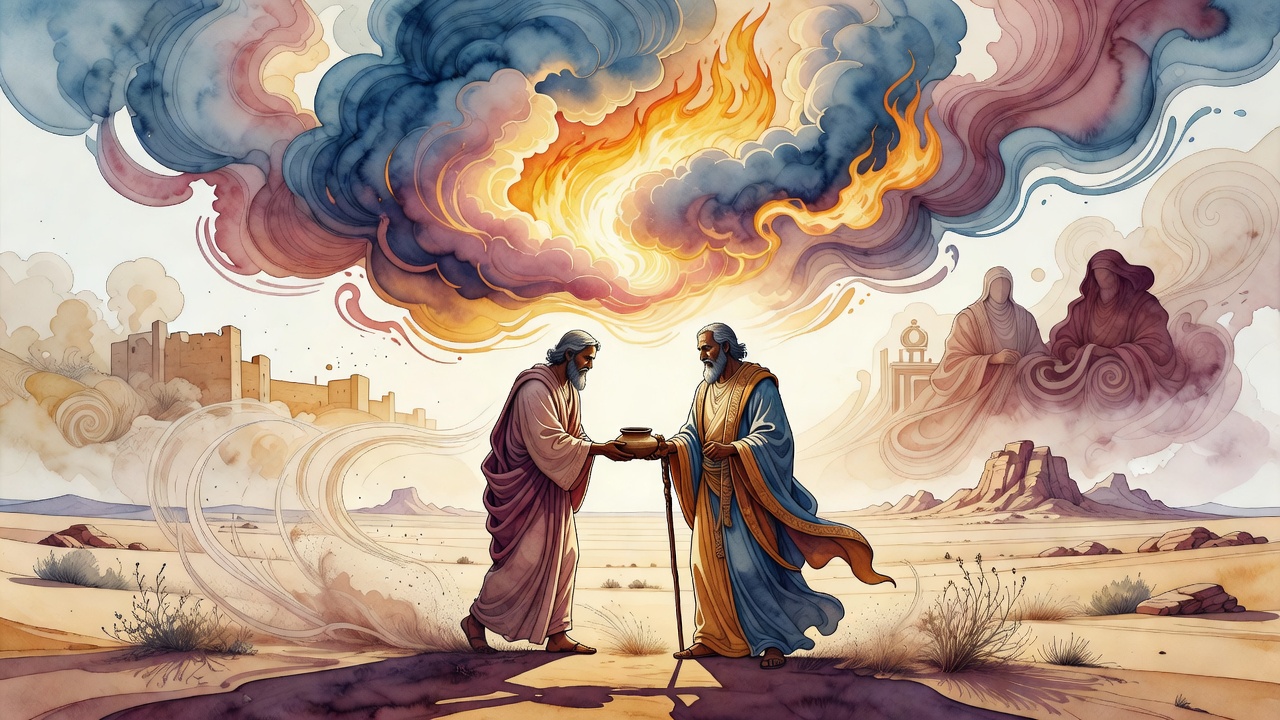
Moses served Jethro at a desert feast, then sent him home before Sinai, while Jethro's line later earned Jericho and Sanhedrin seats.
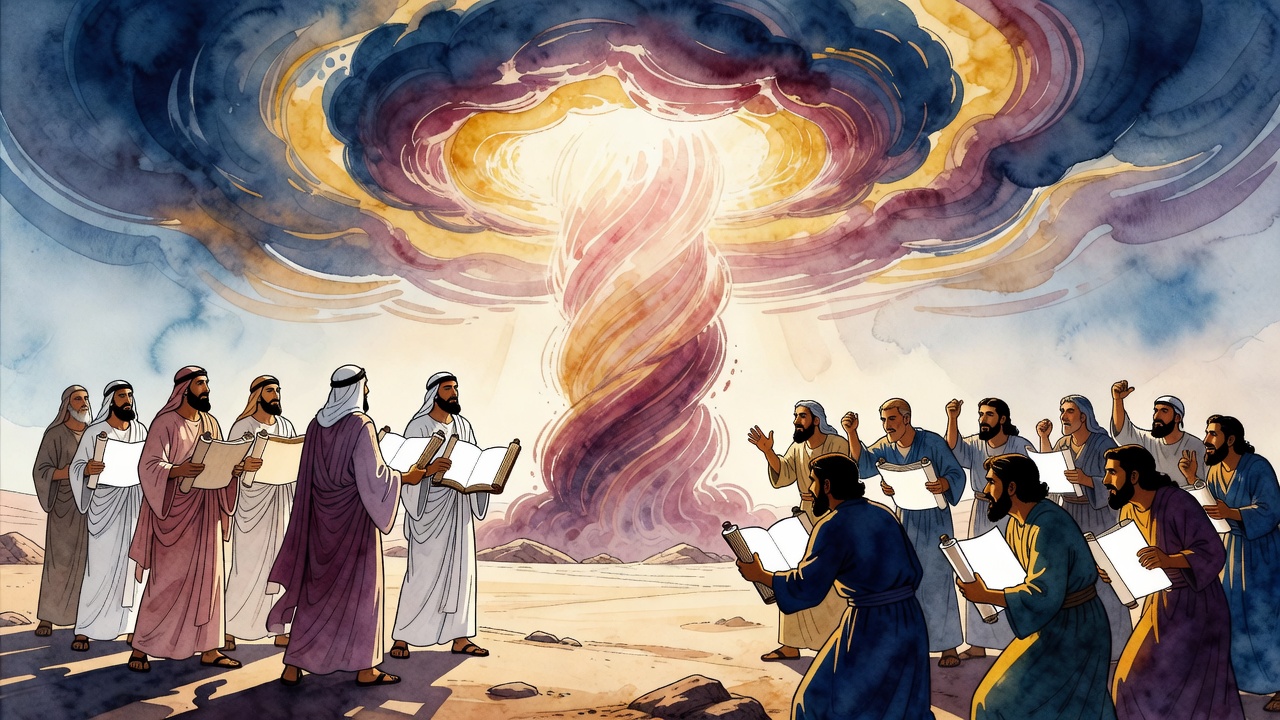
Before Sinai, the nations demanded to know why Israel was chosen. God asked for family records. Only Israel could open pure books of descent.
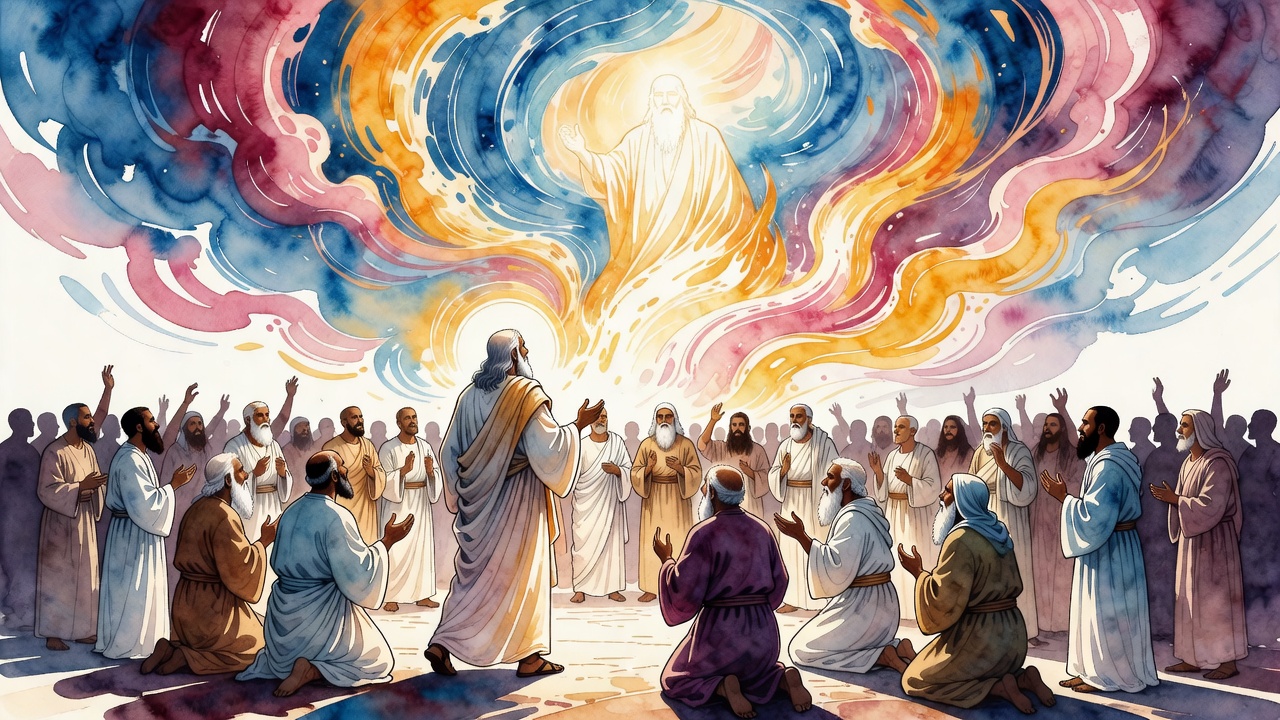
He could have climbed a rock and shouted the terms to the whole camp. The old men heard them first, and he stayed until they understood every word.
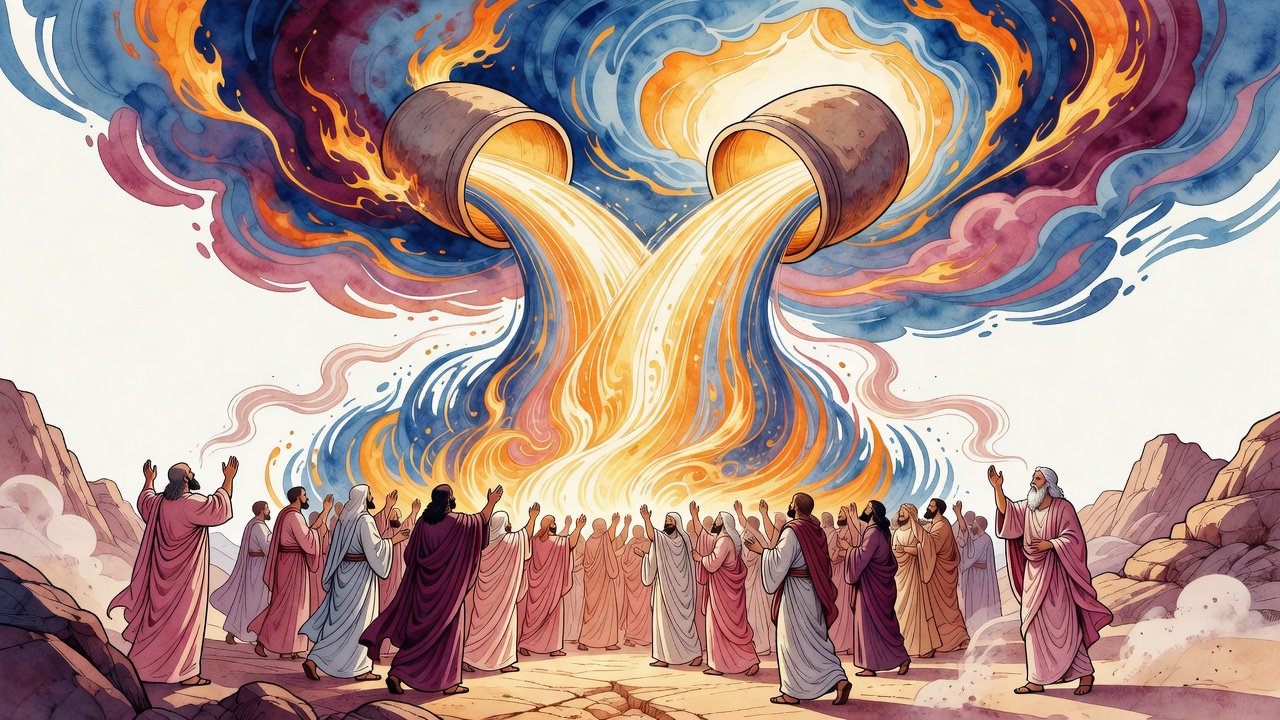
Adam and Noah received only a fragrance of law. At Sinai God tipped the jar and poured every commandment onto Israel.
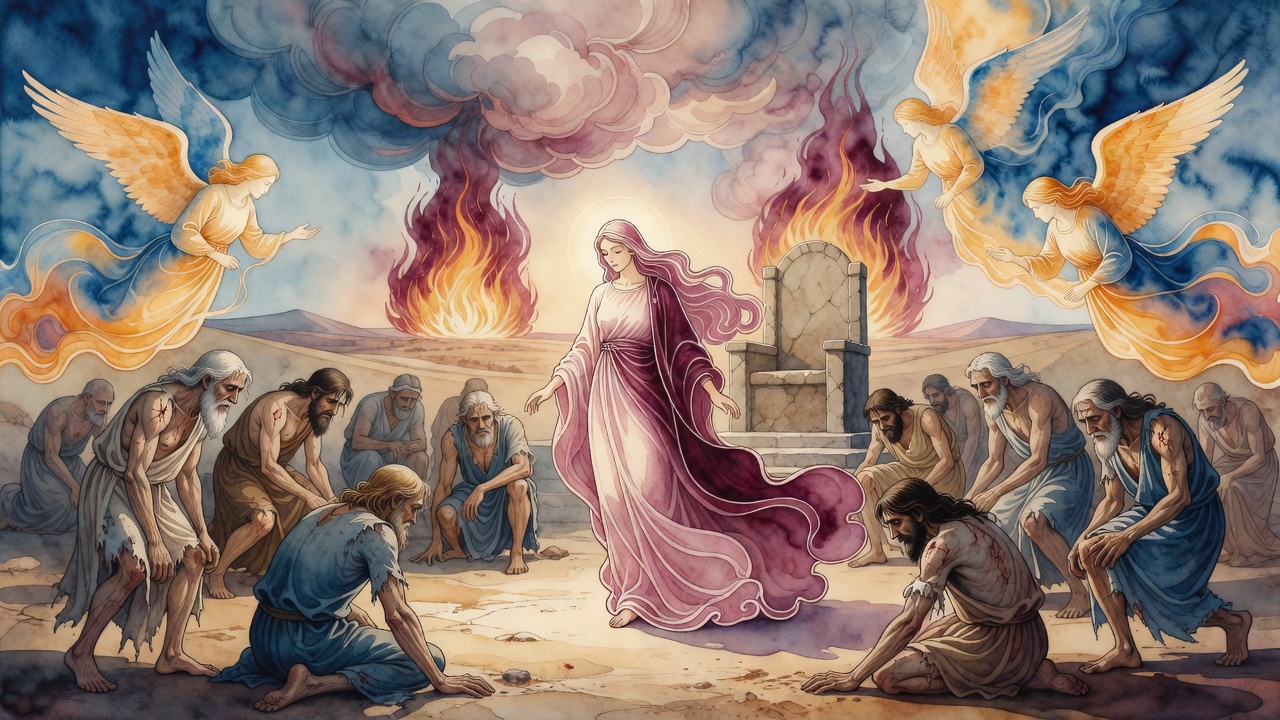
They reached the mountain with crushed hands. Angels went through the camp first. The seventh day still had no partner, and it asked why.
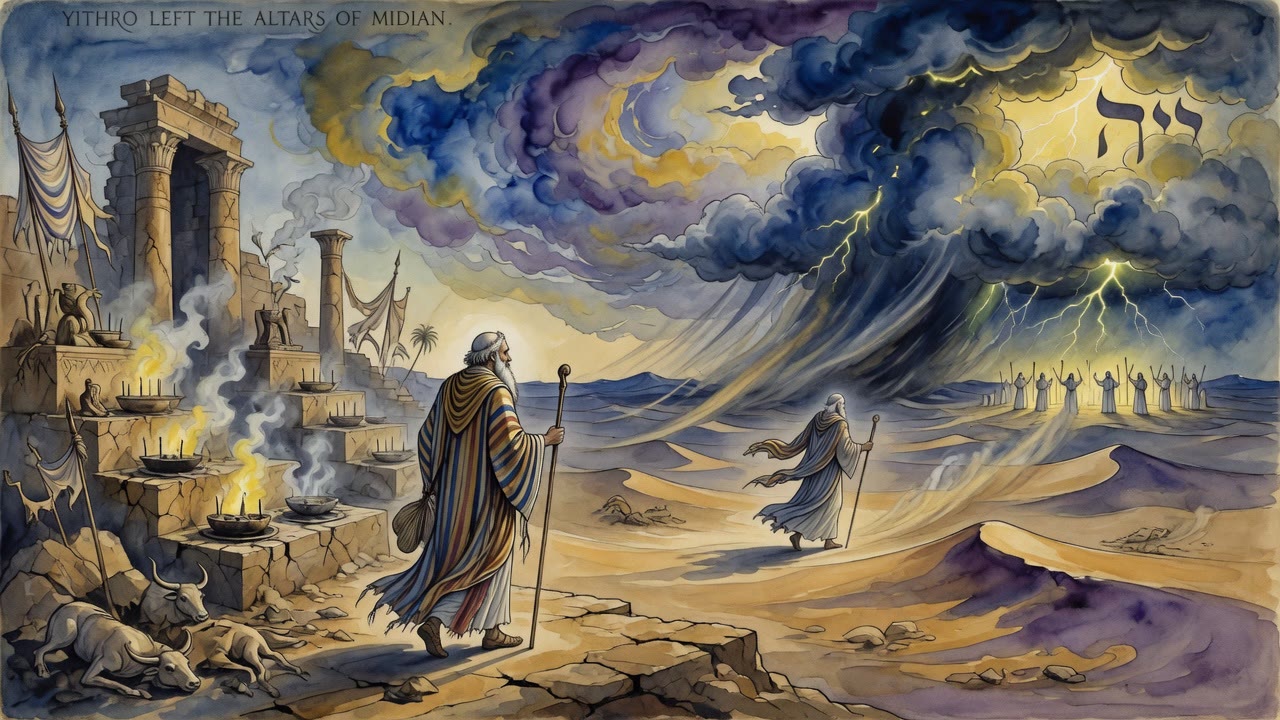
Yithro, called Cohein of Midian, heard what God did for Moses and Israel. He left rank behind and rode toward the camp at the mountain of God.
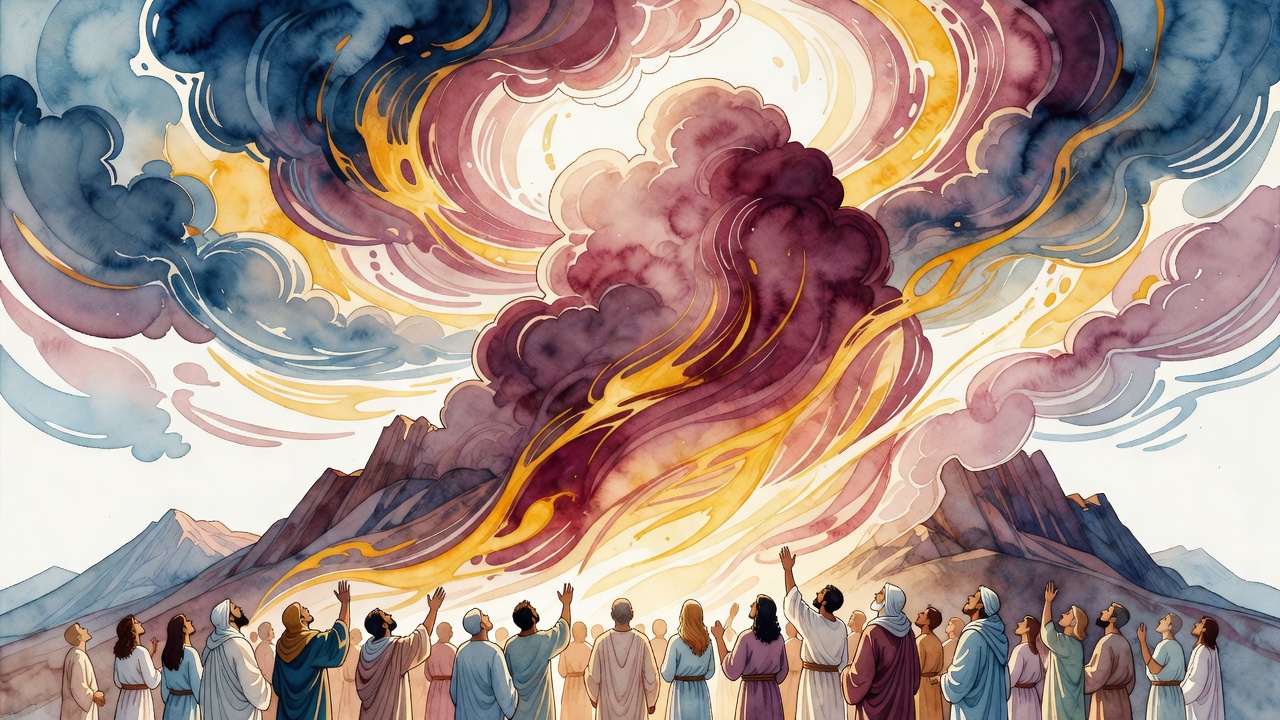
On the third morning the camp still had sleep in its eyes. God was already on the mountain. Thunder spoke in voices that did not copy each other.
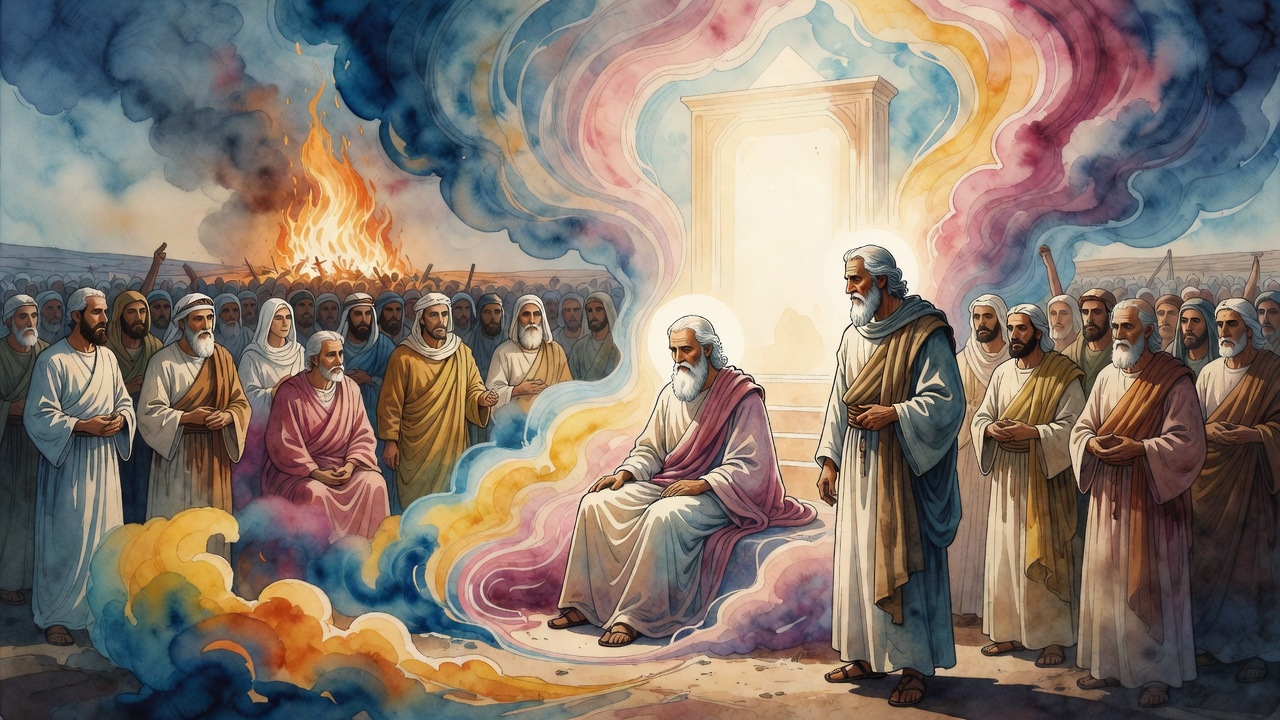
Jethro watched Moses judge alone from morning until night, then forced a new bench chosen by prophetic sight, wealth that cannot be bought, and fear of God.
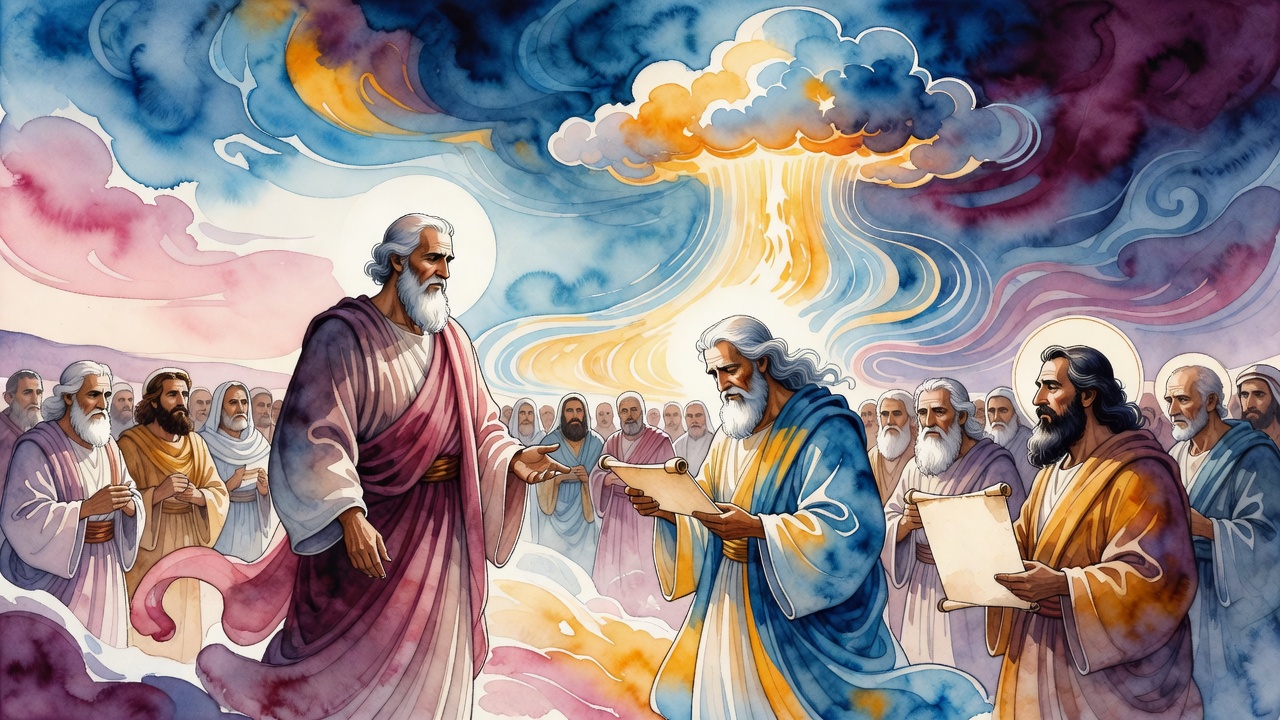
Jethro watched Moses judge from dawn to dark, then demanded a system of officers and God's consent before any reform.
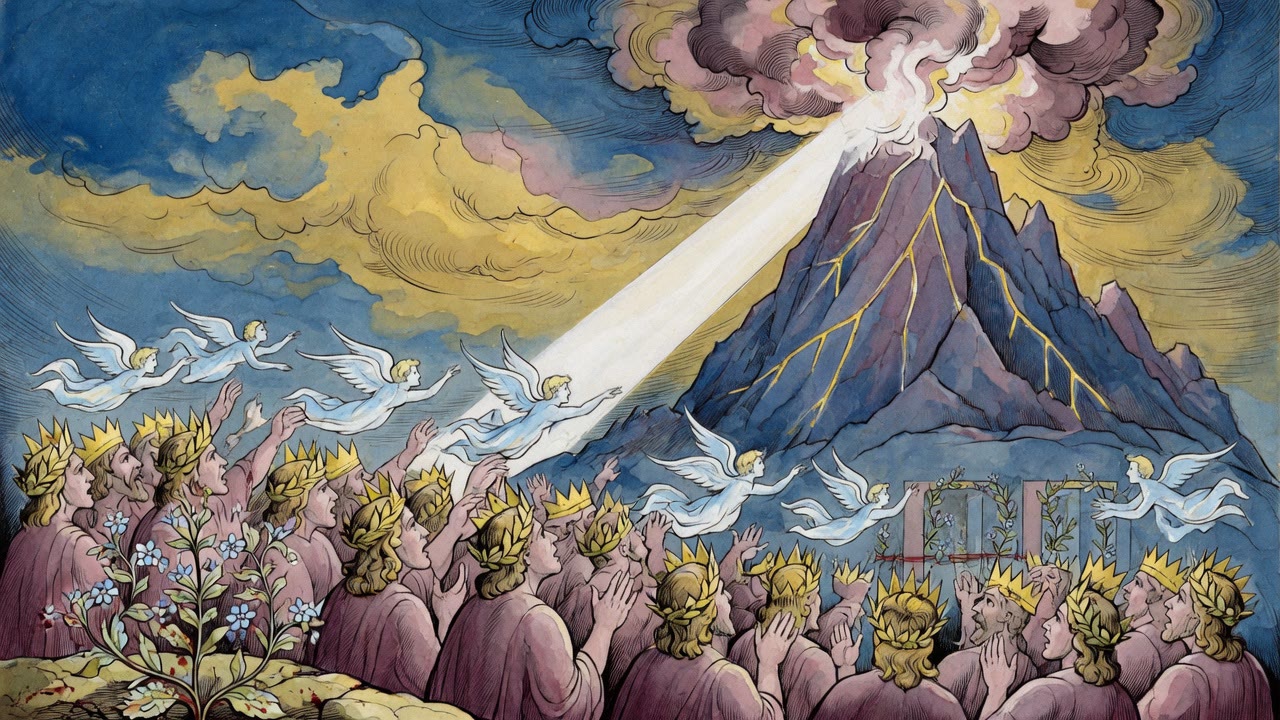
They did not wait to hear the terms. Six hundred thousand mouths promised to do, and angels came down with two crowns for each head.
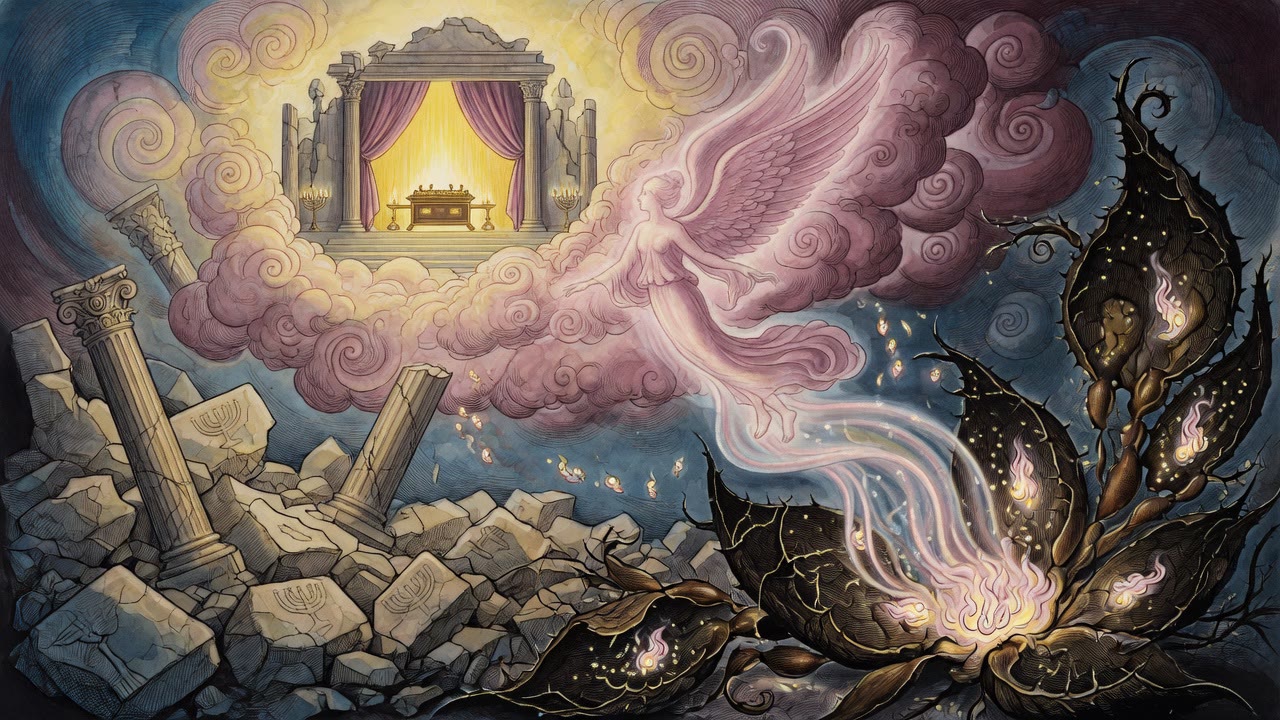
The first sentence emptied every chest on the mountain. The word itself turned back and said it had been sent to the dead.
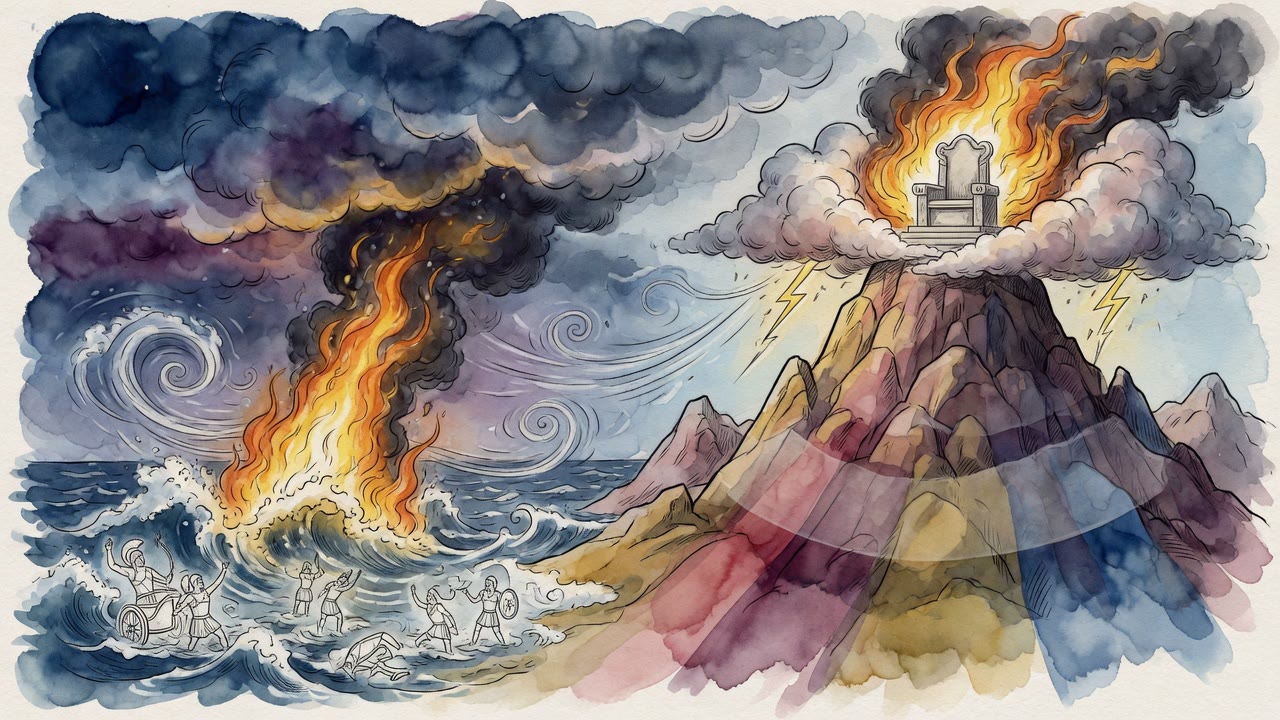
At the sea God came as a warrior. At Sinai He came as a merciful elder. The mountain wore six names so no nation could split Him in two.
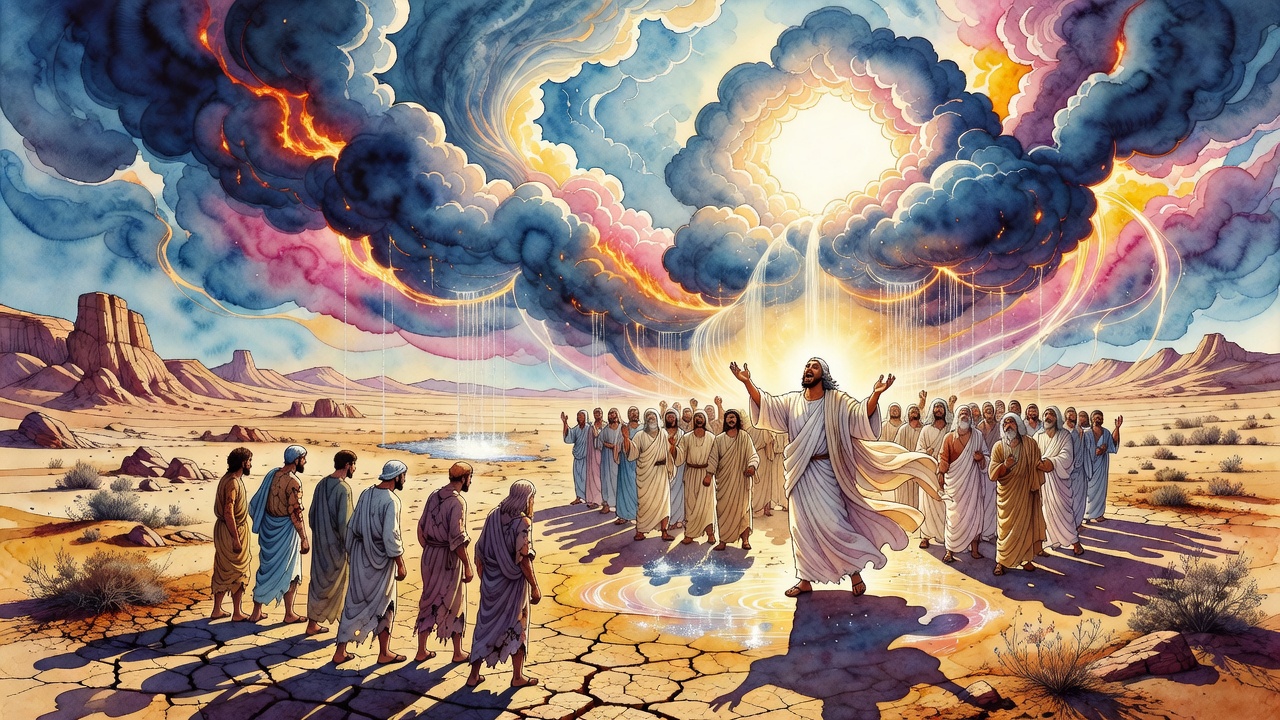
There was no shade at the foot of the mountain, and every neck was burning. Then God told the clouds to let go, and cool water hit the whole camp at once.
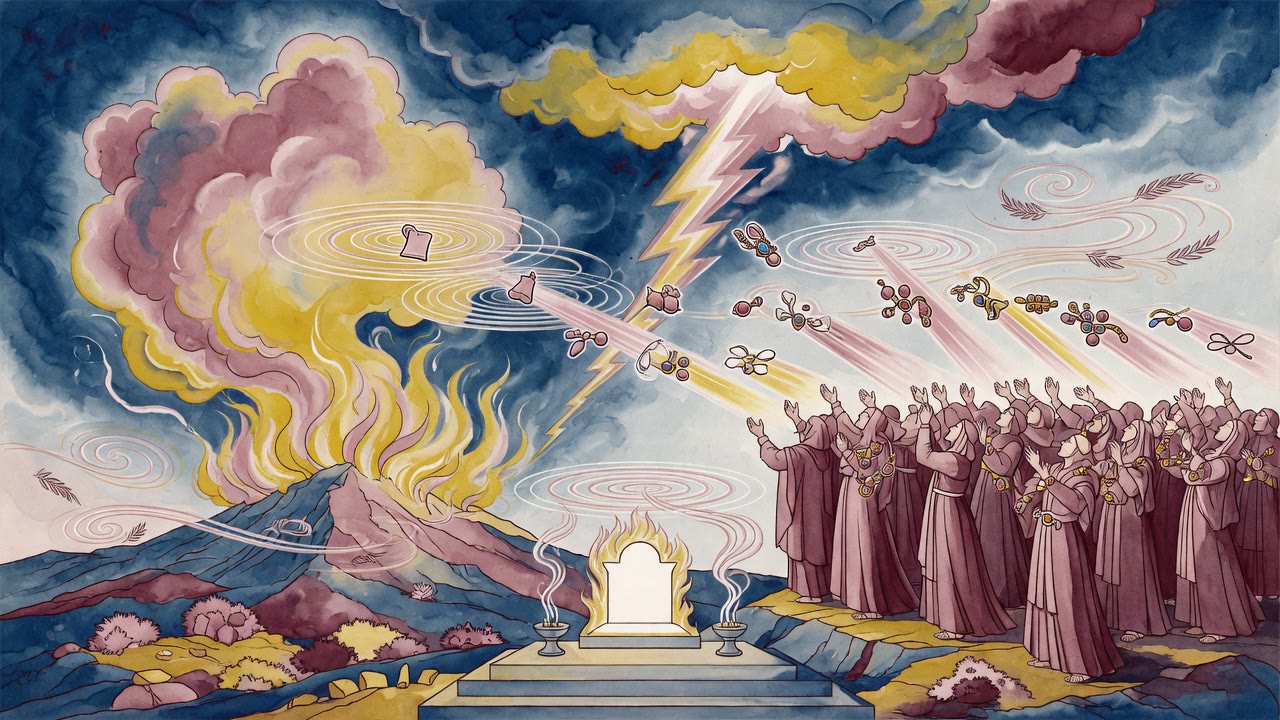
A king tells his wife to put on every jewel she owns so he will want her. Here the stones are commandments, and the camp still tasted honey in the air.
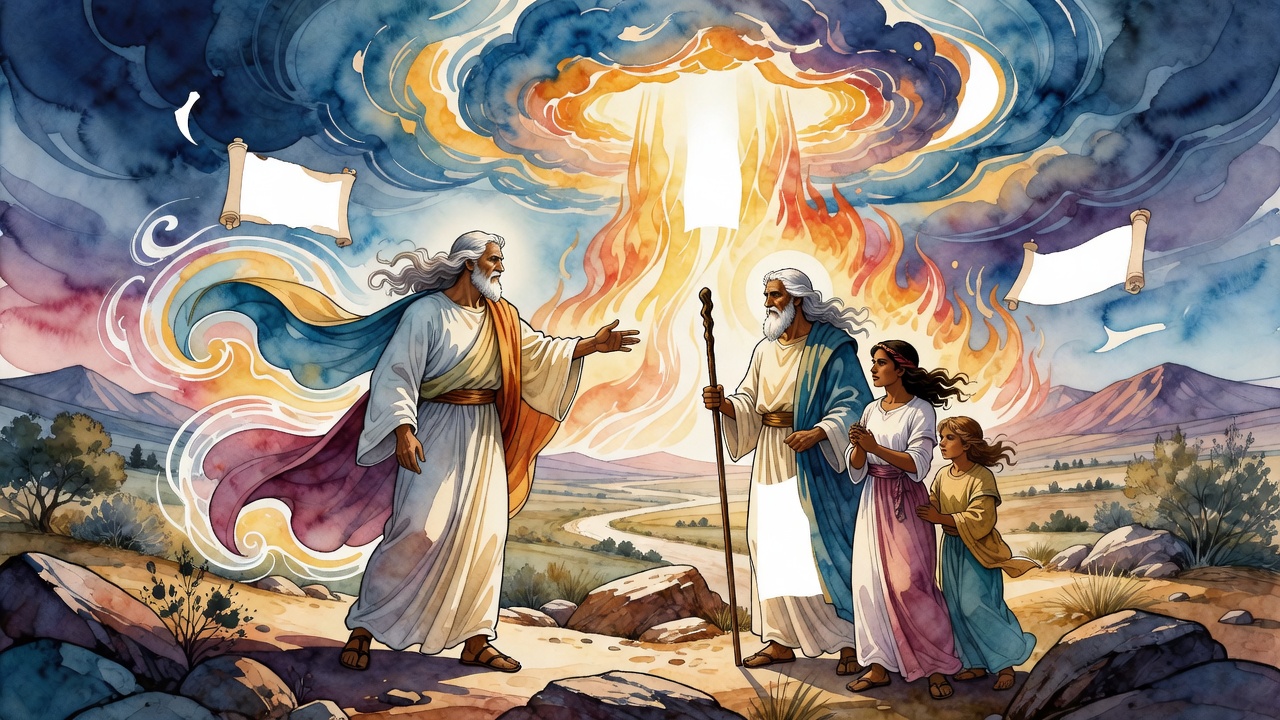
Brothers meet in the wilderness. Aaron asks why Moses is bringing a wife and sons into Pharaoh's fire, and the family turns around.
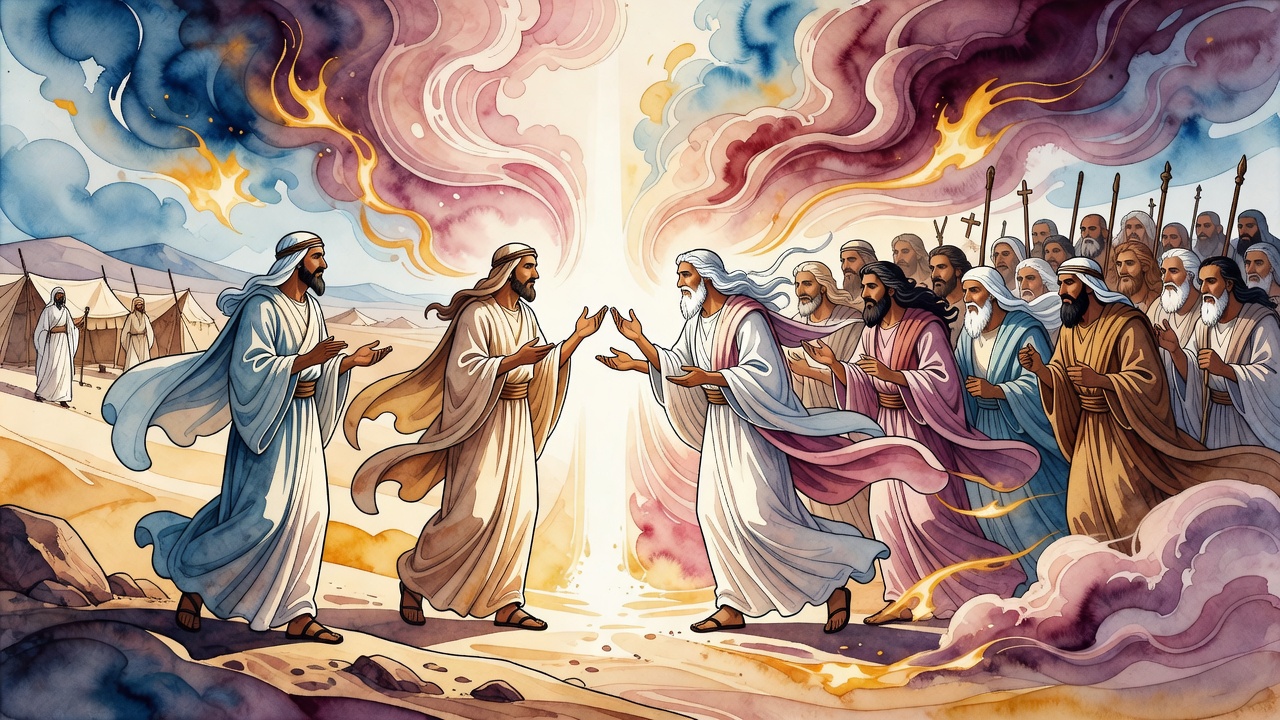
A Midianite priest nears the camp. Moses, Aaron, and seventy elders stream out. Before any miracle is told, two men ask after each other's peace.
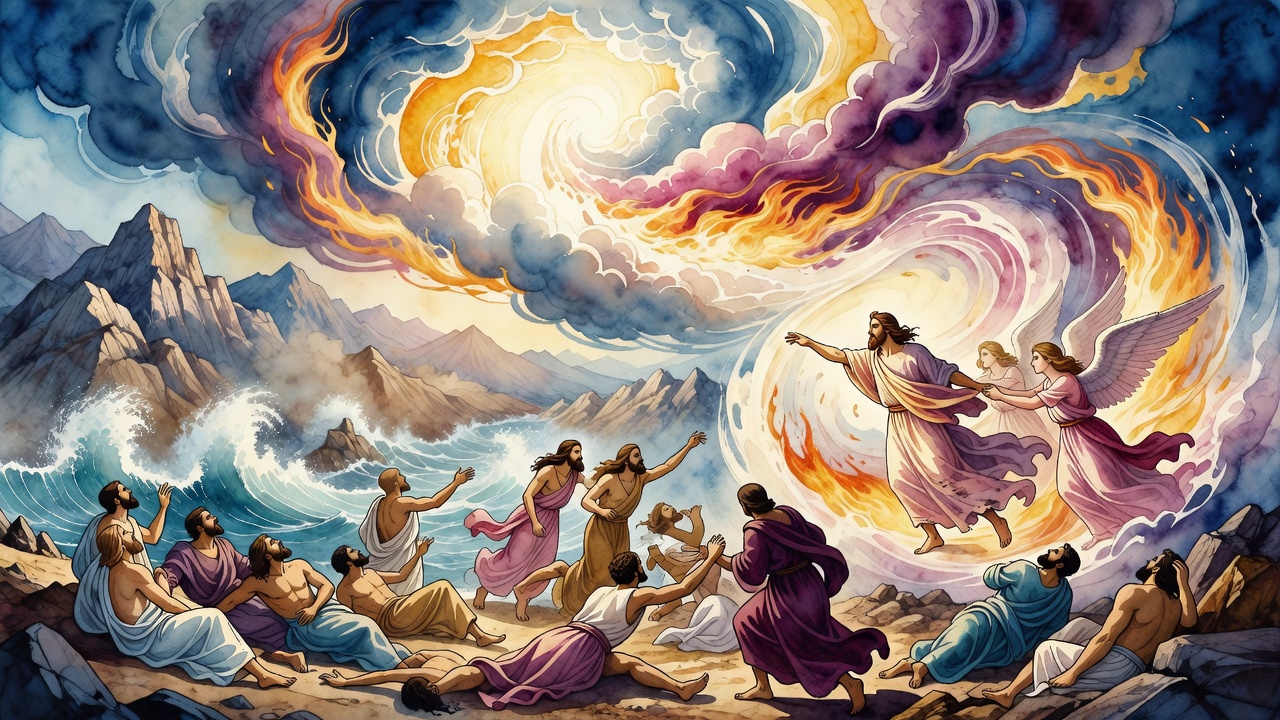
Heaven's first utterance shakes seas and mountains. Israel's dead stand up, the living fall twelve mil back, and angels drag Moses into the cloud.
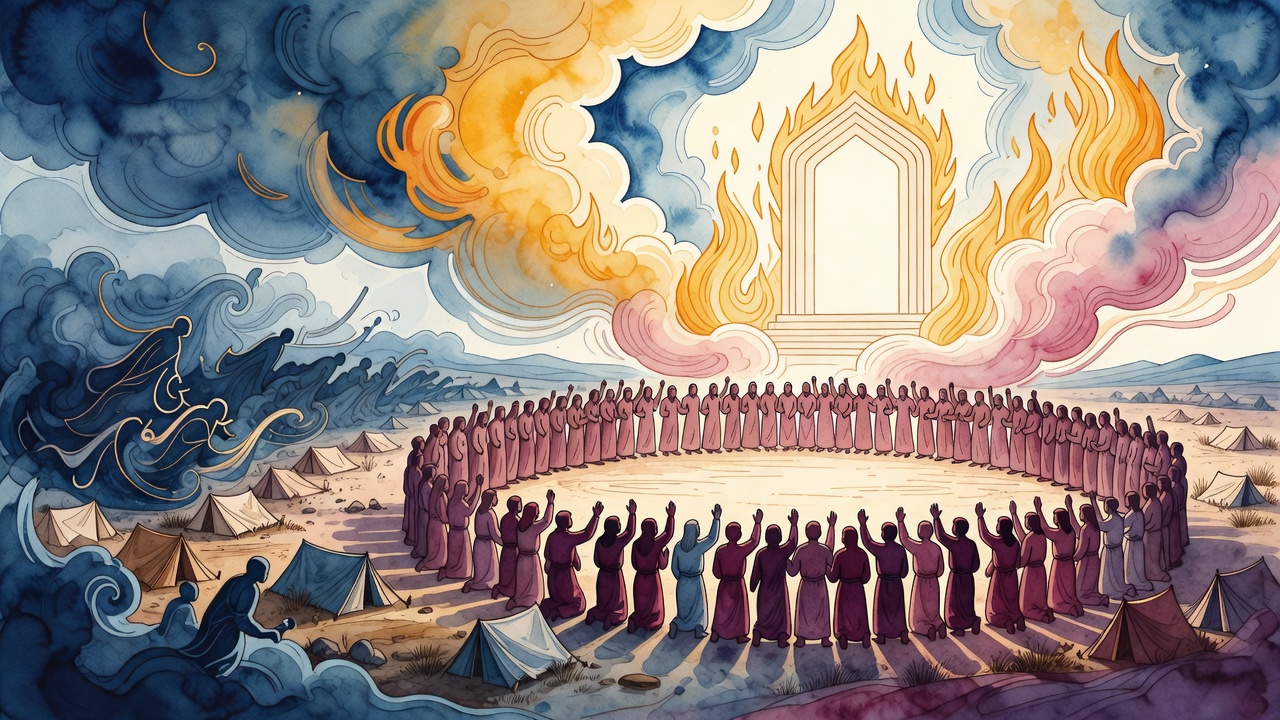
Quarrel followed them from Egypt to every campsite. Only when the nation camped as one body did Heaven open the wedding of Torah.
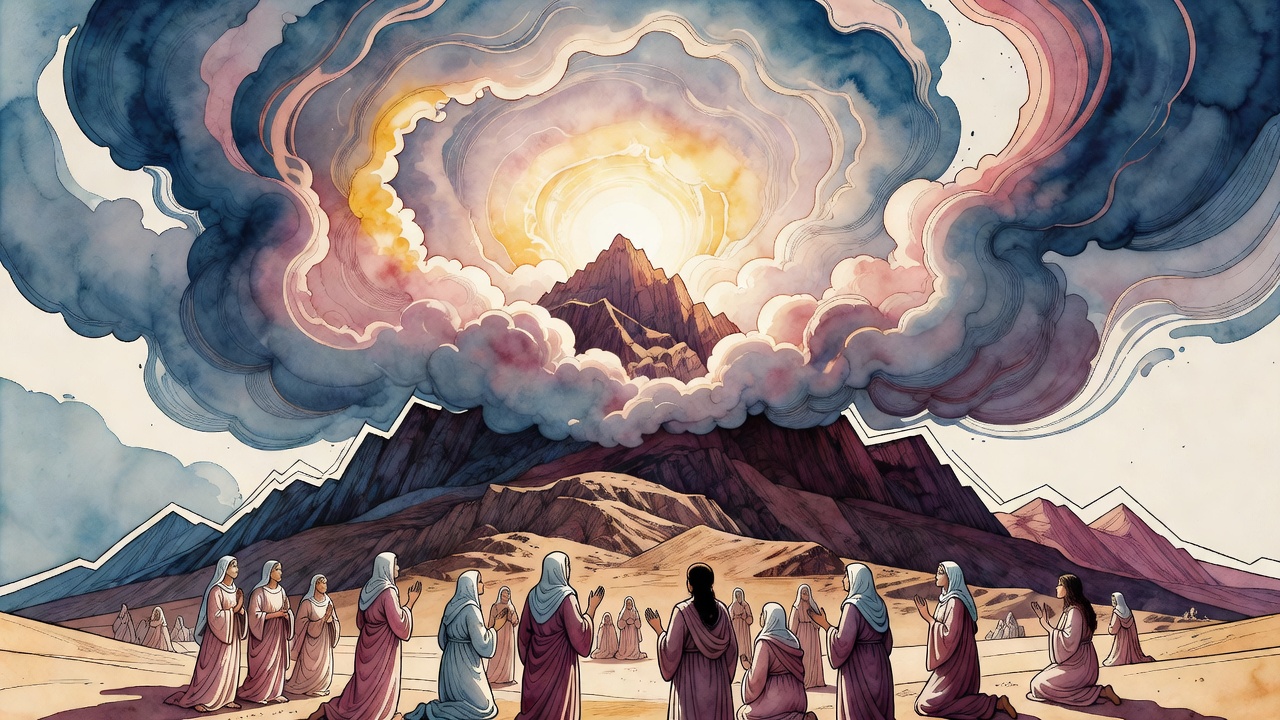
Glory covered Sinai for six silent days. Moses waited. God spoke first to the women of Jacob's house. Limits held the mountain so the people would not die.
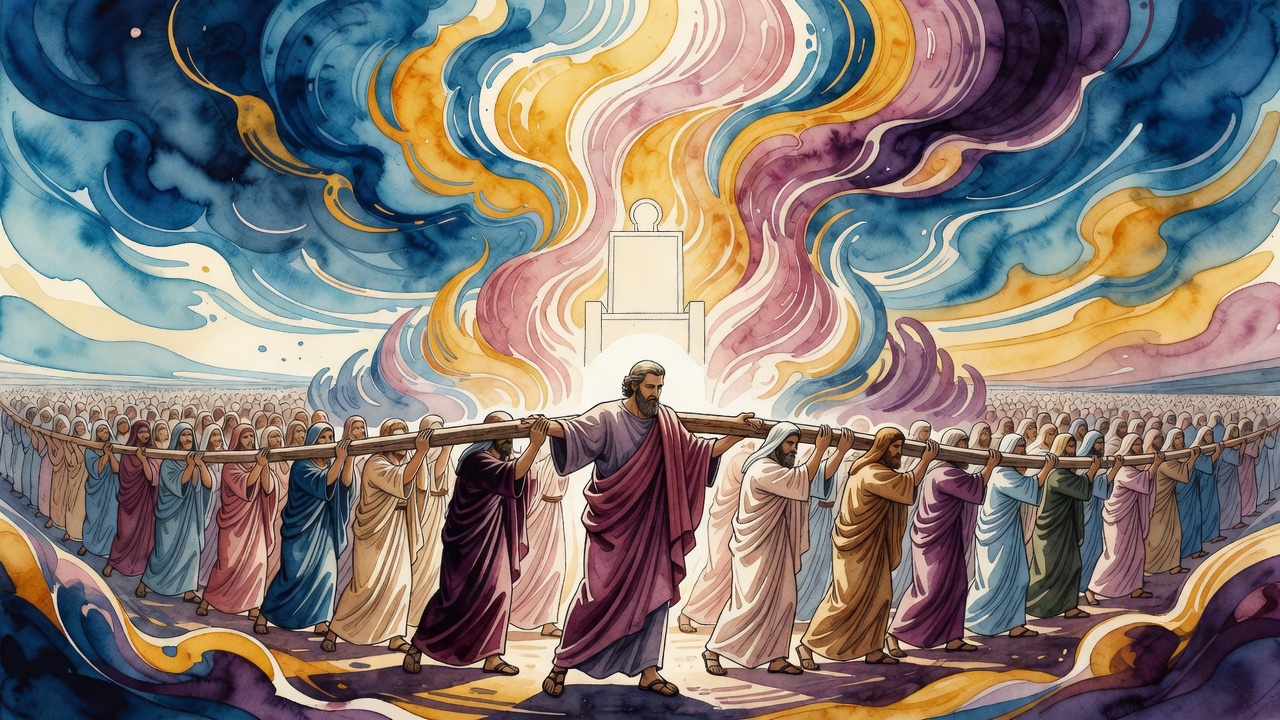
From dawn to dusk the line never broke until Jethro warned Moses he would droop like a stripped fig, and thousands of judges rose to share the beam.
