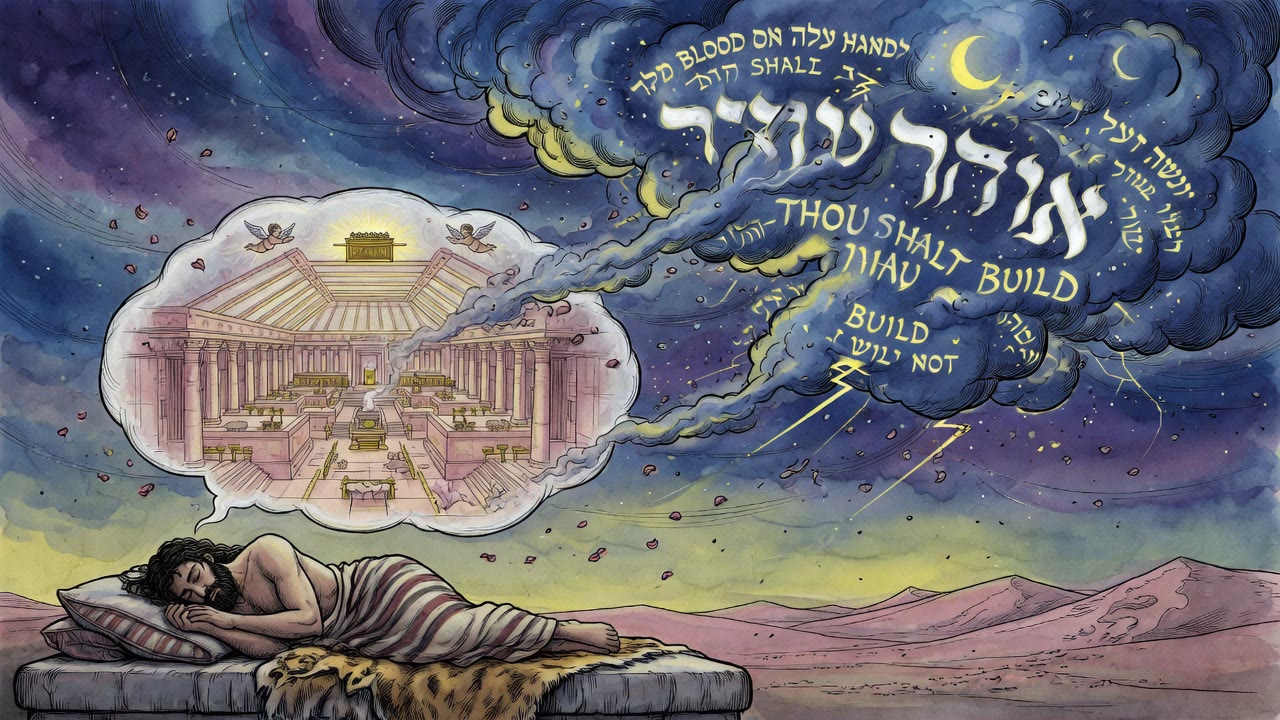
Samuel Anointed Saul and Then Spent Years Cleaning Up the Mess
Samuel mourned for Saul until the day Samuel himself died. He had made the king and he watched what the king became. The grief was his own making.
Table of Contents
 Click for full size
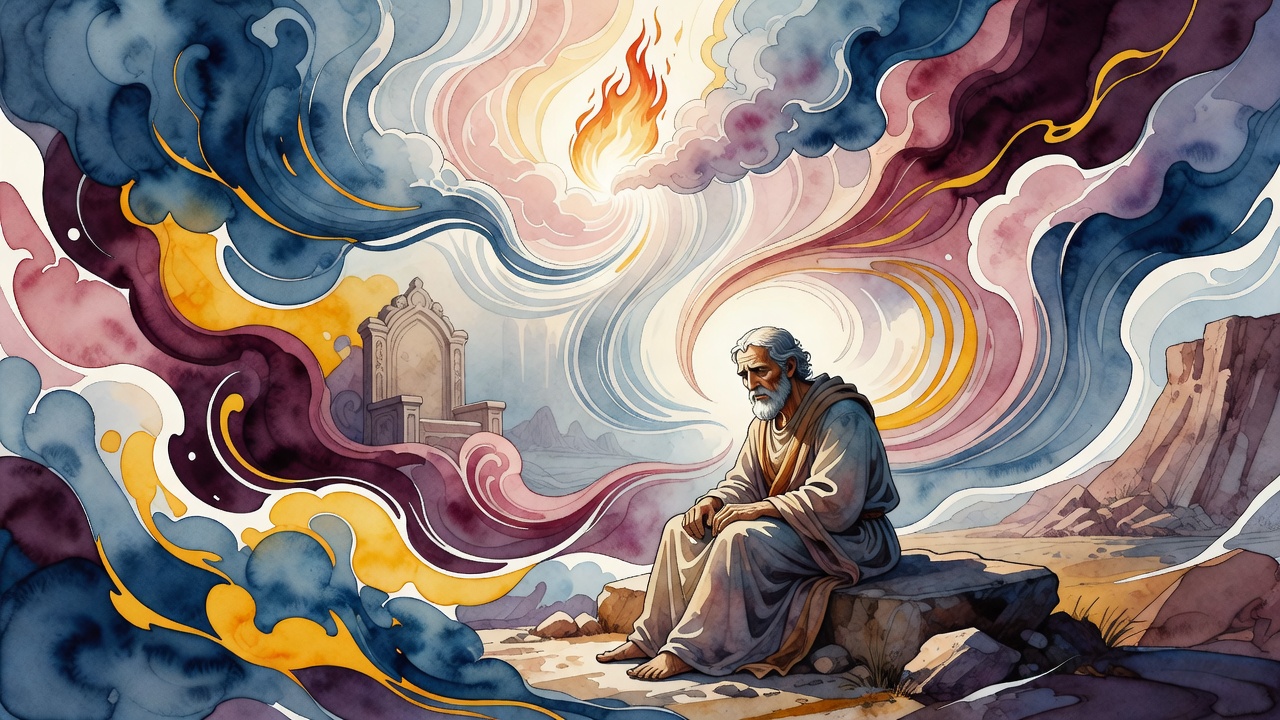
The Prophet Who Made a King and Could Not Stop Grieving
After God rejected Saul as king, Samuel mourned. The Torah records it plainly: Samuel grieved for Saul until the day he died. Not the day Saul died. The day Samuel died. He outlived his grief's object. He carried the weight of what he had set in motion for the remainder of his own life, walking through his duties as prophet and judge with the knowledge that the man he had anointed, the man he had crowned before all Israel, was crumbling on his throne.
The relationship between Samuel and Saul is not simply a prophet correcting a wayward king. It is something more specific and more painful: a man who had chosen someone, who had invested in the choice, who had said in front of the entire nation this is the one God has chosen, and then had to watch the gap widen year by year between who Saul was and who Saul might have been.
What Samuel Came From
Samuel did not arrive into history without preparation. His father Elkanah was, in some traditions, the moral equivalent of a second Abraham: so righteous that his merit alone, in a generation that had rotted around the edges with the idolatry of Micah, stayed God's hand from destroying the world. Elkanah walked different routes on his three annual pilgrimages so that his passage through surrounding communities would draw families back into the practice of going up to the sanctuary at Shiloh. Family by family, town by town, the father of Samuel rebuilt something that had been collapsing for a generation.
His mother Hannah had prayed her son into existence. The prayer in First Samuel, the extended bargaining with God at Shiloh, is preserved as one of the theological pillars of Jewish prayer practice. She promised the child to God's service before he was born, and when he was weaned she brought him to the sanctuary and left him with Eli the priest. Samuel grew up in the house of God, sleeping near the ark, learning the shape of a world organized around the divine presence.
What Saul Was and What He Could Have Been
Saul was physically extraordinary: taller than anyone in Israel, from his shoulders upward above the people. He was modest in a way that impressed itself on everyone who encountered him: when the lots fell on him to be named king, he was hiding among the baggage. The rabbis read that modesty as either genuine virtue or as the reluctance of a man who already knew, somewhere beneath his awareness, that he was not suited for what was being asked of him.
He had gifts. He had a prophetic spirit that fell on him at specific moments, that made him dance and sing with the prophets at Gibeah in a way that startled everyone who knew him. The rabbis noted that when the evil spirit afflicted him, David's music drove it away, which meant that music could reach him, that there was something in Saul that responded to the sacred. The problem was consistency. The problem was that what held under easy conditions collapsed under pressure.
The Agag Decision
The moment that ended Saul's kingship in Samuel's eyes was the battle against Amalek. God had commanded through Samuel: destroy everything. No spoils. No prisoners. Saul won the battle and kept Agag, the king of Amalek, alive. He kept the best of the livestock. When Samuel arrived and heard the sheep and oxen, Saul told him he had obeyed God's command. Samuel asked about the bleating he was hearing. Saul said the people had done it, not him, intending to sacrifice the animals to God.
Samuel's response was one of the most famous lines in the entire prophetic tradition: does God delight in burnt offerings and sacrifices as much as in obedience to God's voice? Behold, to obey is better than sacrifice, and to listen than the fat of rams. The verse became a foundational text of prophetic theology about the relationship between ritual and ethics. It was spoken in a moment of specific disappointment to a specific man who had just blamed his soldiers for something he had done.
Saul acknowledged the sin. He asked forgiveness. Samuel told him the kingdom had been taken from him and given to a neighbor better than him. He turned to leave. Saul grabbed the hem of his robe and the robe tore. Samuel said: God has torn the kingship from you today as you have torn this robe.
The prophet went home. He never saw Saul again face to face. And he mourned for him until the day he died.
← All myths