Moses Read the Torah Aloud and Then God Said It Was Not Enough
Moses stood before Israel, read every word of the Torah aloud, and sealed the covenant in blood. Then God told him none of it would protect him from dying.
Table of Contents
 Click for full size
The Man Who Read Everything Aloud
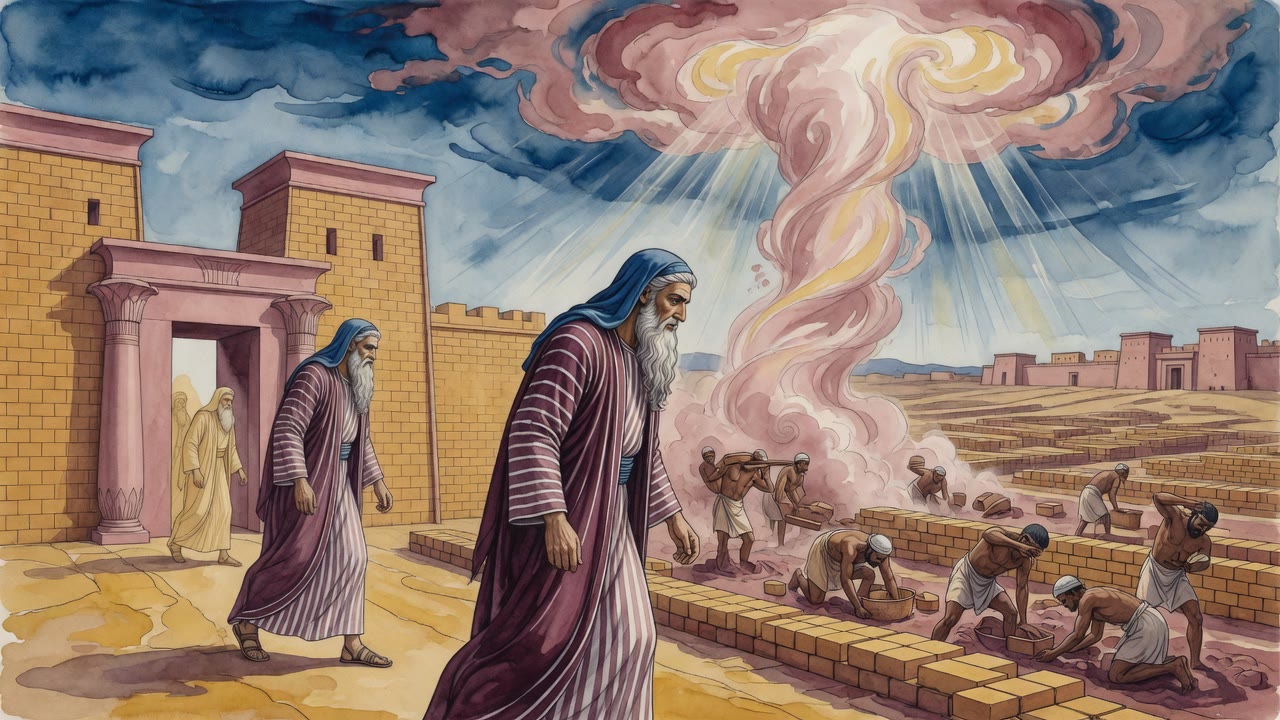
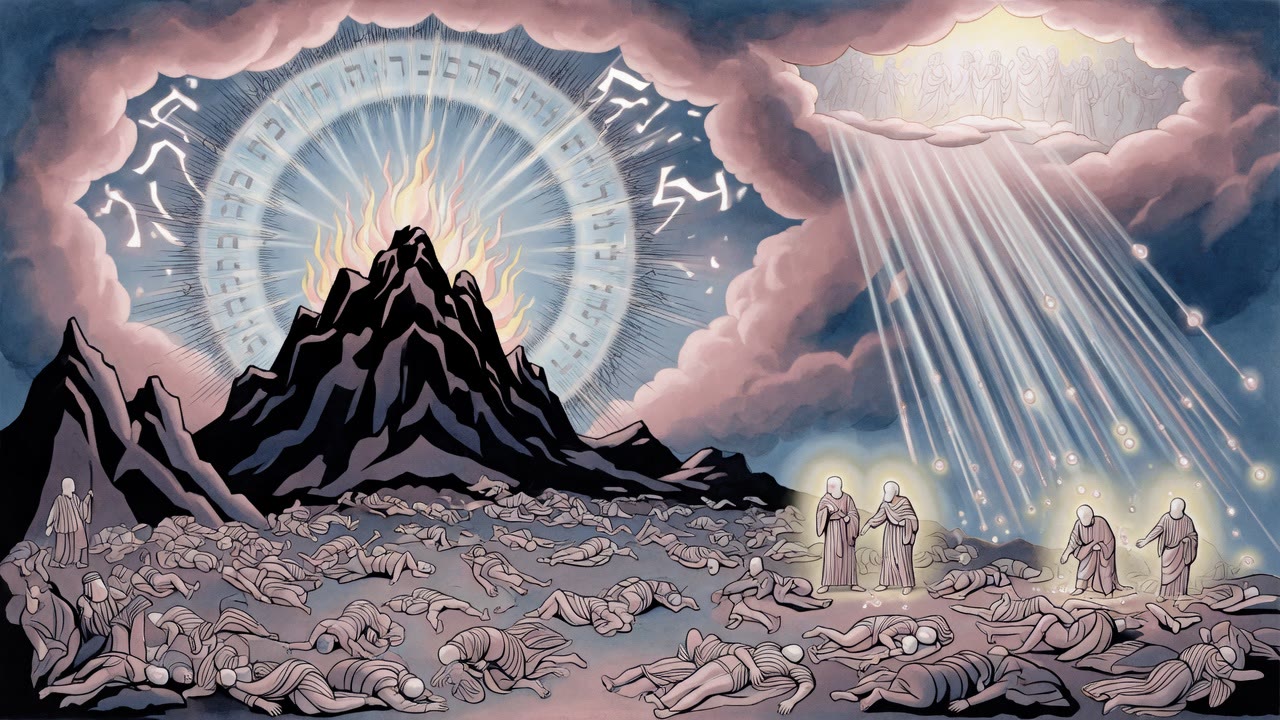
Before the covenant at Sinai was sealed, Moses stood before the entire assembled people of Israel and read the Torah to them. Not a summary. Not selected passages. The whole of it, word for word, every statute and ordinance, every warning and promise. He wanted no one to claim ignorance of what they were accepting. The covenant they were about to enter would bind them and their children and their children's children, and Moses believed that a covenant entered knowingly was a different thing from one accepted without understanding. He read it all. Then the blood was thrown against the altar, and the covenant was sealed.
This is the act preserved in Vayikra Rabbah, the midrashic collection on Leviticus compiled in the Land of Israel around the fourth to fifth century CE. Moses had done everything a man could do to demonstrate his faithfulness and to bind the people faithfully to God. He had carried them for forty years. He had argued God out of destroying Israel more than once. He had read the entire Torah aloud. And when the time came and he stood at the edge of the Jordan and asked God why he could not cross, God gave him an answer that had nothing to do with how much he had done.
The Question God Refused to Answer
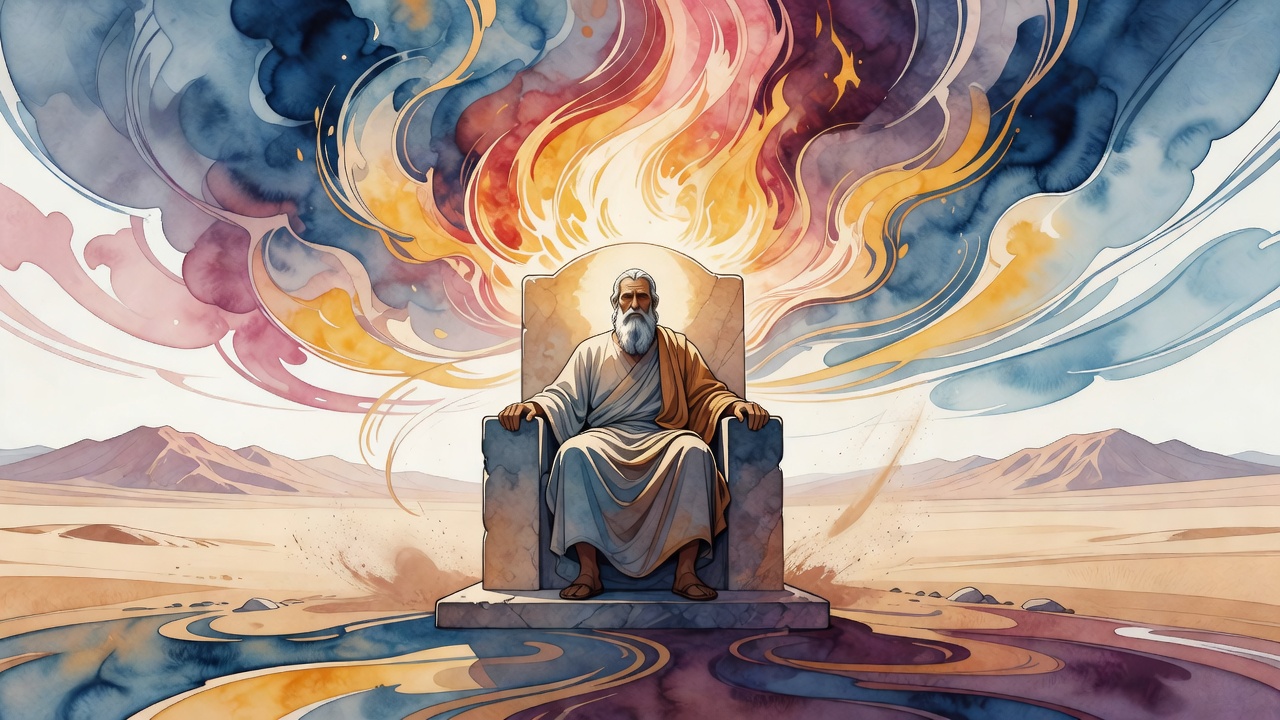
Moses listed his faithful deeds. The tradition preserved across several midrashic collections gives his speech considerable detail. He named the commandments he had kept, the trials he had endured, the intercessions he had mounted. He reminded God of the golden calf, when God had been ready to destroy Israel entirely and Moses had refused to accept that outcome. He spoke of the spies, of Korah, of the years in the wilderness carrying a people who had never made it easy. He asked why, after all of this, a single act at Meribah, a single moment of striking the rock instead of speaking to it, should cost him everything.
God's answer, according to the tradition, came back through Abraham. Abraham had never questioned God's promises. When told his descendants would be enslaved for four hundred years, Abraham asked no questions. When told to sacrifice his son, Abraham rose early and prepared the wood himself. Moses had asked. Moses had demanded explanations at every stage. The difference between them was not the quantity of their faithfulness. It was the quality of their silence when silence was required.
What God Showed Him Instead
When the arguments were exhausted, God showed Moses his reward. The heavenly court was arranged before him. Moses saw what waited for him after death, the position his soul would occupy in the world to come, the honor that the angels themselves paid to him. This was not a consolation offered to someone who had failed. It was a preview offered to someone who had succeeded so completely that no earthly continuation could have added to what he had already accomplished.
The heavenly voice that spoke to Moses at the end also promised him things he would never see with his living eyes. The Messiah. The Third Temple. The restoration of everything that exile and destruction would scatter. Moses stood at the border of the land he could not enter and received a vision of everything the covenant would eventually produce, in a time he would not be alive to witness. The decree was not reversed. The vision was real.
Why the Covenant Could Not Save Him
The most difficult part of the tradition is the logic behind God's refusal to explain. Moses had read the Torah aloud precisely so that no one could plead ignorance. He had sealed the covenant precisely so that its terms would hold. But God's silence on the specific question of why Moses could not cross was itself a kind of answer: the covenant was not a system of credits to be tallied and redeemed. Moses had accumulated more credits than anyone. The decree still stood. The covenant described the relationship between God and Israel across history. It did not constitute a claim that any individual could present against the terms of his own death.
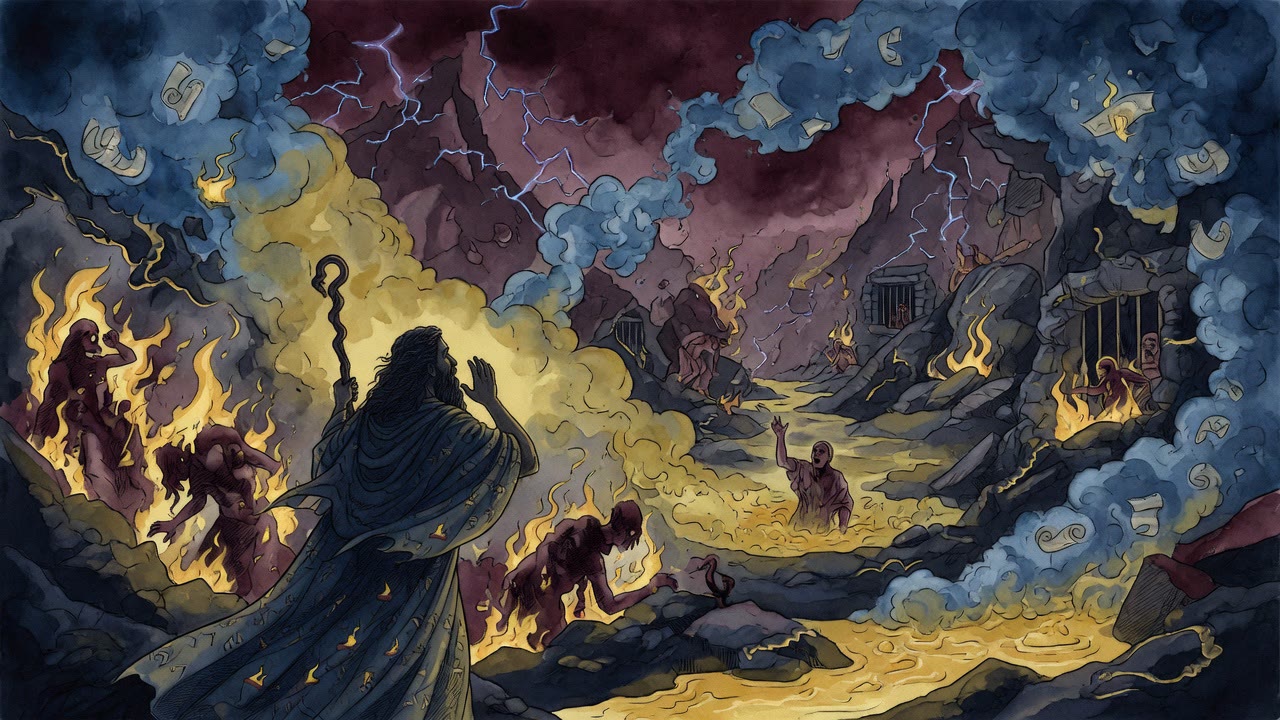
The rabbis found this unbearable and preserved it carefully. Moses died on the right side of the argument. He had done more than Abraham had done in certain respects, more than Isaac, more than Jacob. He had carried a burden none of them had carried. God acknowledged all of it and buried him in an unknown place so that no one could make his grave a site of petition. The covenant Moses had sealed was real. The decree against him was also real. Both were true at the same time, and no amount of reading aloud could reconcile them.
← All myths