Joshua Took Jericho and a Stolen Coat Cost Him Thirty-Six Men
Two spies lay flat under drying flax on a Jericho rooftop while the king's soldiers searched the river roads for them and found nothing.
Table of Contents
 Click for full size
Two Men Under the Flax
They walked into Jericho in daylight and nobody stopped them. Strangers came through all the time to gawk, so the men in the street took no notice of two more, and the two spent the afternoon looking at exactly what they had been sent to look at. Which stretches of wall were solid. Which were not. Which gates were weak enough to let an army through.
At dusk they went into an inn built against the wall and ordered supper. The king of Jericho was at his own supper when the report reached him. Hebrews. In the house of the woman Rahab. He sent men to take them and bring them to him for questioning under torture.
Rahab heard the soldiers coming up the street. She put the two spies on the roof and laid them flat under stalks of flax spread out to dry, and when the door opened she told the king's men that some strangers had eaten with her before sundown and gone, and that if they hurried they could still catch them. The soldiers went out along the roads toward the river and heard nothing and came back with nothing.
She brought the men down in the dark and made them swear. "When the city falls, my family stands in this house and lives. Hang scarlet threads in the window so your commander knows the door." They swore it, went out the window on a rope, and dropped down the outside of the wall.
The River and the Last of the Manna
Joshua was eighty-two years old and standing in front of a river he could not cross. The Jordan ran hard and there were no bridges over it and never had been. He had no ferry boats. If he stopped to build anything the Canaanites would come down on him while the timber was still green.
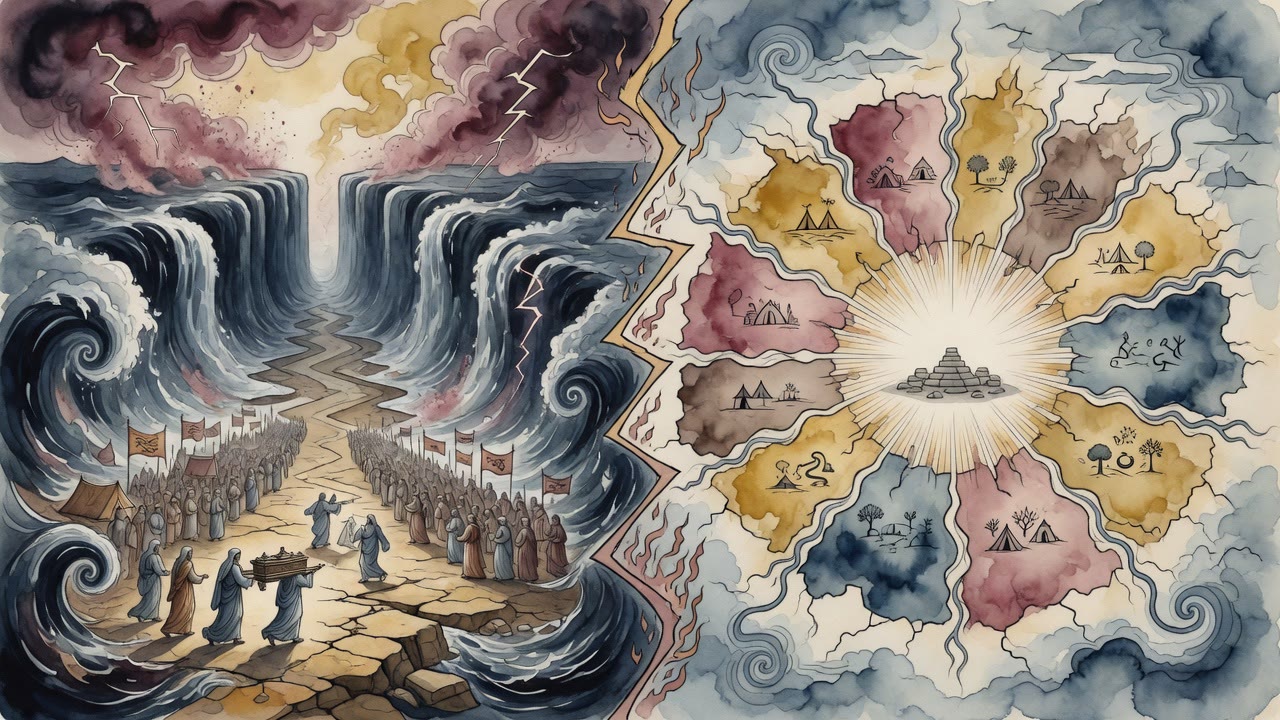
The priests carried the Ark down to the bank and went in first, and the water went out of the channel ahead of them. The Levites followed with the tabernacle and the vessels, and behind them came the whole nation by tribes with the women and children walking in the middle.
They camped at Gilgal, east of Jericho, and kept the Passover there on the fourteenth day. The next morning the manna did not come. Forty years of finding bread on the ground ended without a word of announcement, and the people went out and ate the grain of Canaan instead.
Seven Circuits and a Shout
Jericho shut itself. Nobody went out, nobody came in, and the gates stayed barred for weeks.
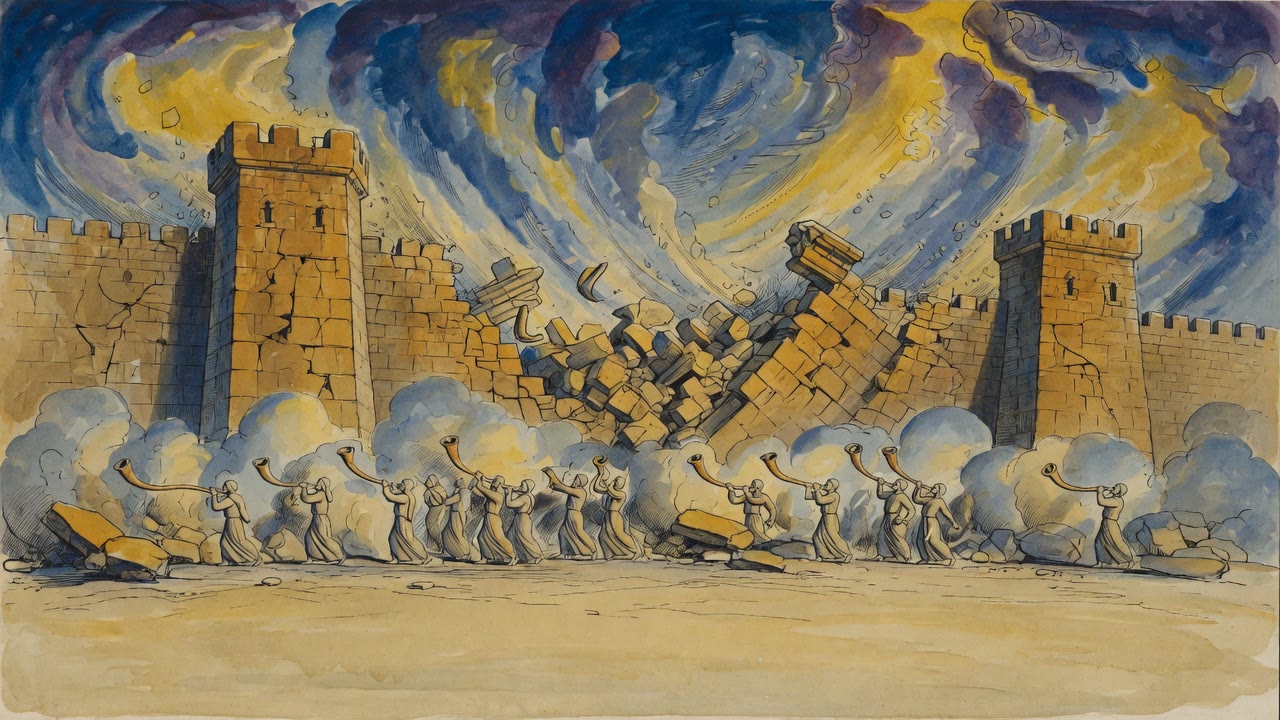
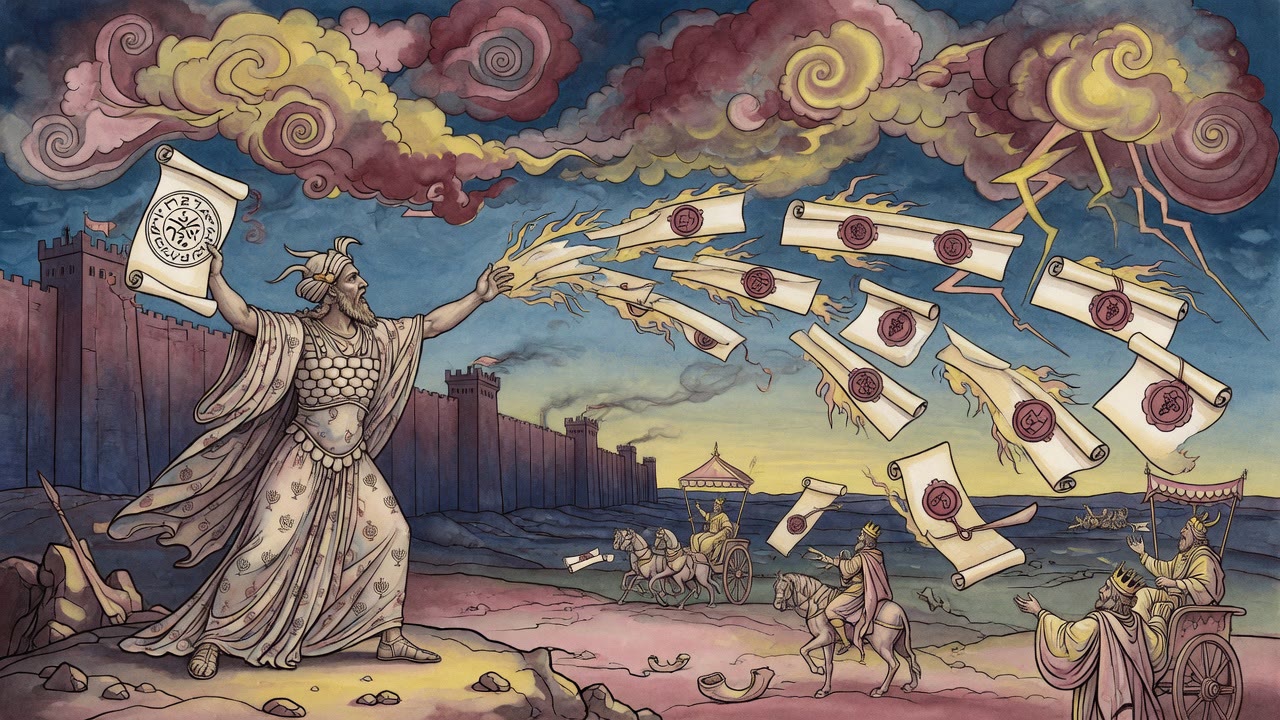
The fighting men walked around it once a day for six days while the priests blew the trumpets, and the men on the walls watched them do it and shouted down at them. On the seventh day they went around seven times. Then Joshua said, "Shout, for the Lord has delivered the whole city into our hands." The horns sounded and the whole nation roared at once and the walls came down flat, and every man went up over the rubble straight in front of him.
Everything inside was under the ban. Nothing was to be carried off and kept. The silver and the gold and the brass and the iron went into the treasury, and the rest of the city burned, and Joshua swore an oath over the ashes: cursed be the man who builds Jericho again, he will lay its foundation over his firstborn son and set up its gates over his youngest.
The war had a clause in it that the burning made easy to forget. The sentence on the seven nations lifted for any of them who turned from what they had been doing. Rahab and her household came out through that clause, and the scarlet threads were still hanging in the window when the wall around them fell.
Thirty-Six Men at Ai
The conquest was never meant to be finished in a season. God had said He would clear the country little by little rather than in one year, because a land emptied all at once goes wild, and the beasts breed in the abandoned towns faster than a new people can fill them. It was an arrangement built with room in it for a nation that was going to sin, and the sin came quickly.
Achan son of Carmi, of the tribe of Judah, went through the wreckage of Jericho and took something, and buried it in the floor of his tent, and said nothing.
Joshua, knowing none of this, sent scouts up to the next town. "Ai is small," they told him. "Do not march the whole army for it. Three thousand men will be enough." Three thousand men went up, and the men of Ai came out and fought them hard and killed thirty-six of them, and Israel ran.
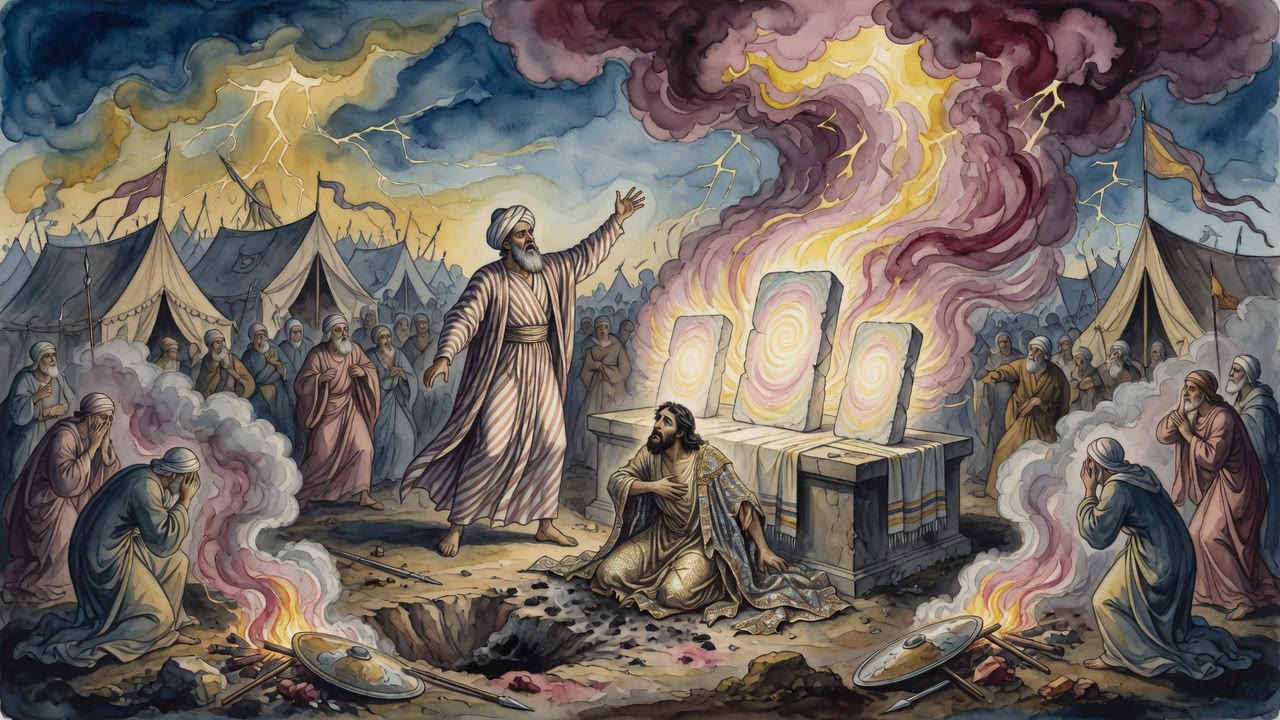
Joshua tore his clothes and went down on his face in front of the Ark with the elders beside him and dust on all their heads, and he stayed there until evening. "Why did you bring this people over the Jordan? What am I going to say now that Israel has turned its back on its enemies? The Canaanites will hear this and they will come around us and cut off our name from the earth."
The answer came back with no comfort in it. "Get up. Why are you lying on your face. Israel has sinned and taken of the accursed thing, and I will not go out with them again until it is out of the camp."
What Came Up Out of the Tent Floor
Joshua called the whole nation together in the morning and brought out the Urim, and the lot came down on the tribe of Judah, and it came down inside Judah until it stopped on one man.
"Tell me, my son. What have you done."
Achan told him. A beautiful robe out of Shinar. Two hundred shekels of silver. A wedge of gold weighing fifty. He had seen them lying in the spoil and wanted them and picked them up, and they were in the ground under his tent.
They went and dug, and the robe came up out of the dirt with the soil still in its folds, in front of the camp, in the same week that thirty-six men had been buried in ground nobody had time to mark.
← All myths