Retold in our words. Read the original at the link below.Townsend 1989 translation of Midrash Tanhuma, S. Buber Recension · CC-BY
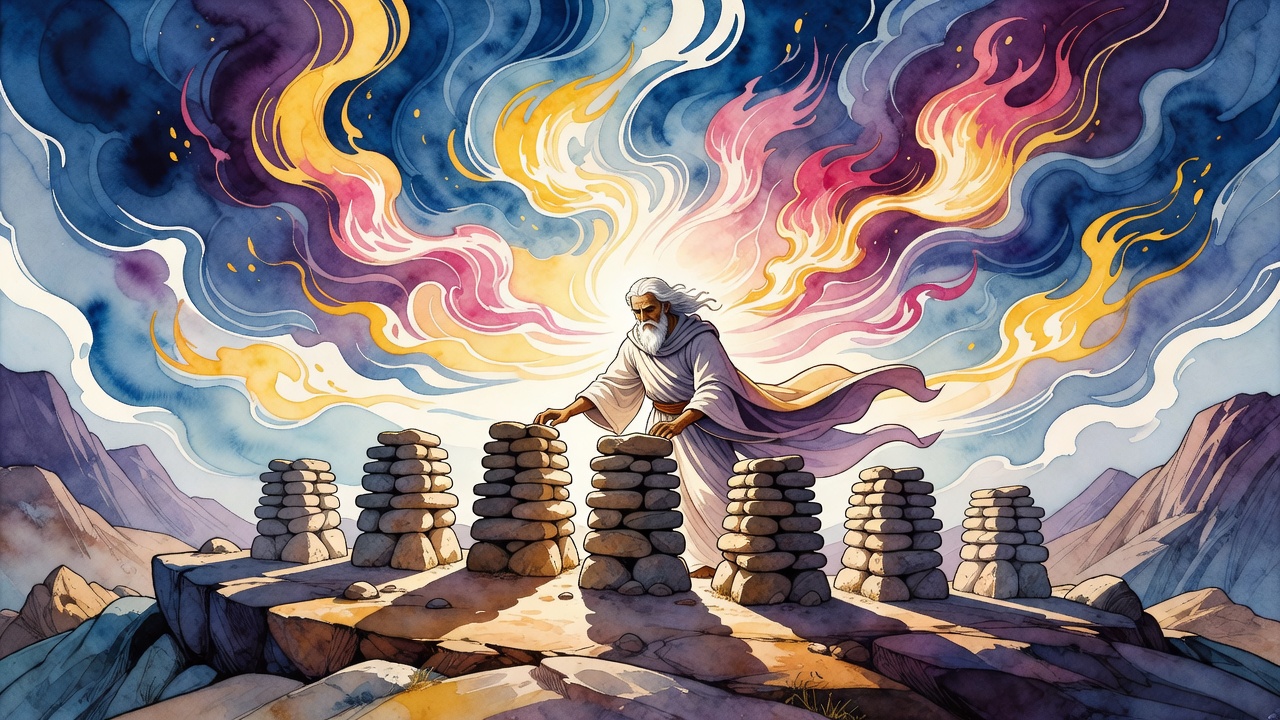
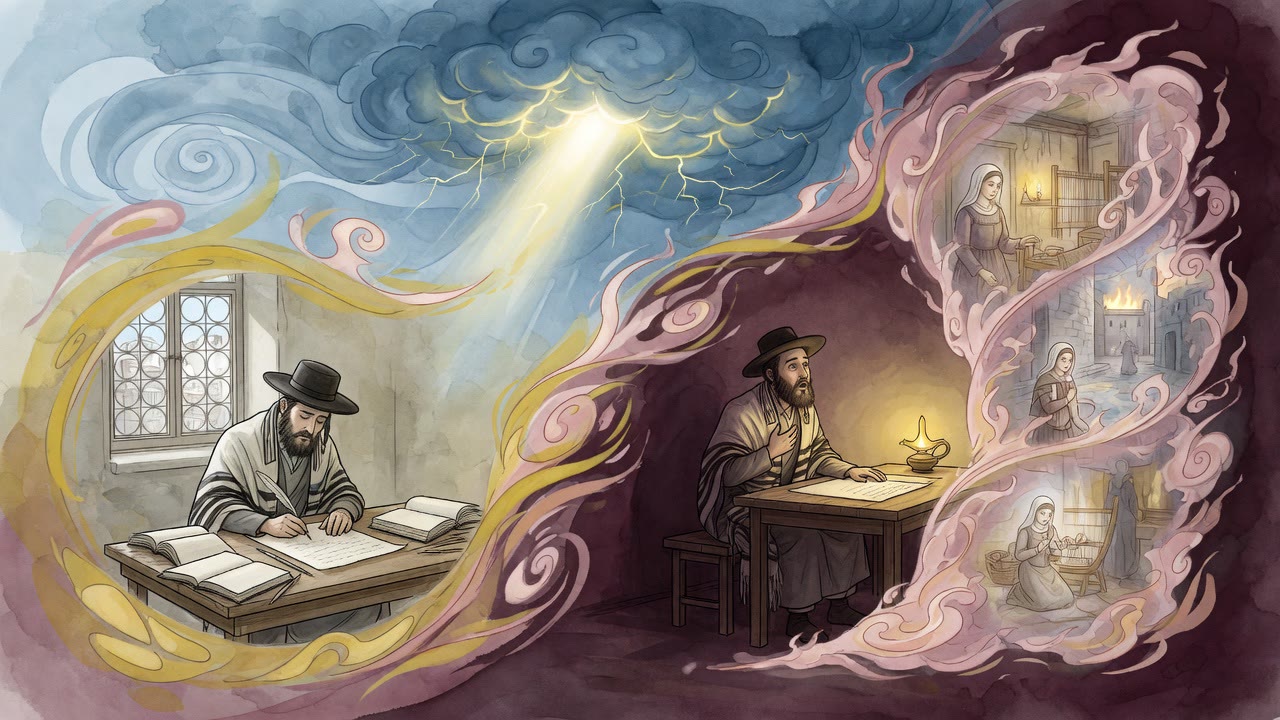
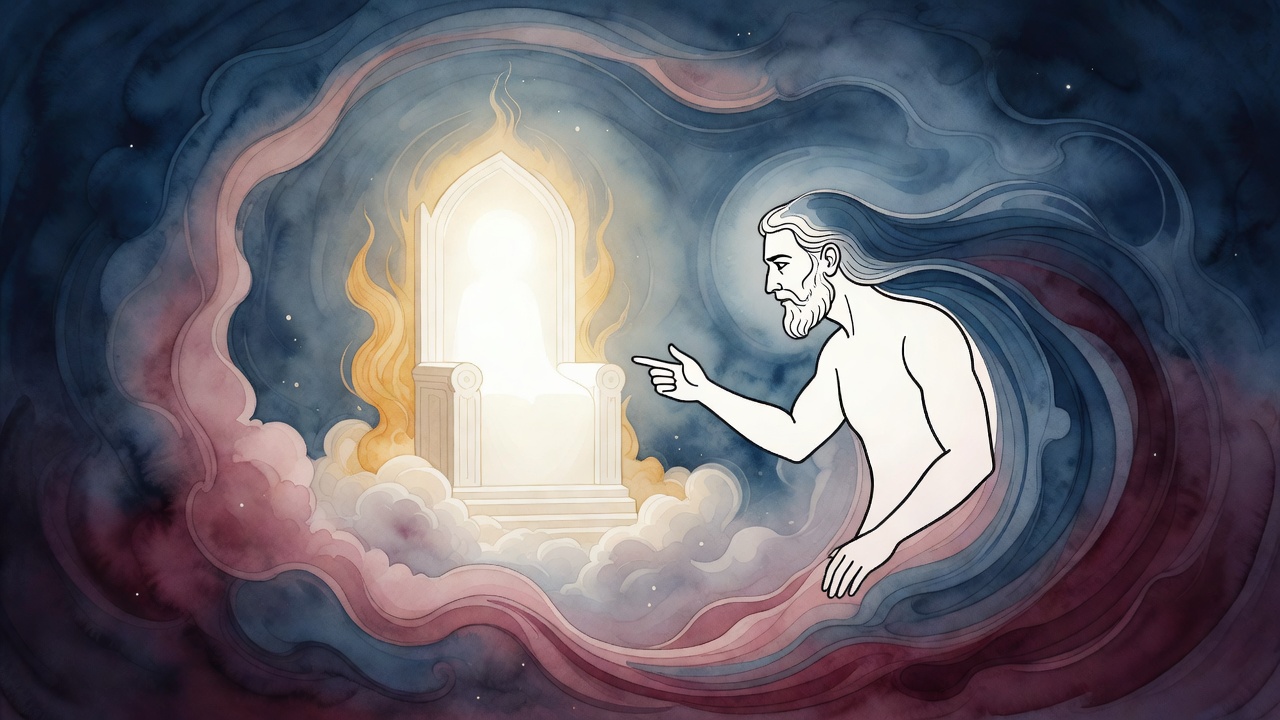
With the beginning (Gen. 1:1). This is what Scripture means when it says: The Lord with wisdom founded the earth (Prov. 3:19). That is, when the Holy One, blessed be He, was about to create this world, He consulted the Torah before embarking upon the work of creation, as it is said: Counsel is mine and sound wisdom; I am understanding, power is mine (ibid. 8:14). How was the Torah written? It was written with letters of black fire on a surface of white fire, as is said: His locks are curled and black as a raven (Song 5:11). What is meant by His locks are curled? It means that each crowned stroke on the letters of the Torah contains heaps and heaps of law. For example, it is written in the Torah: Profane not My Holy Name (Lev. 22:2); but if you should change the het in the word yehallelu (“profane”) into a heh, the word would read “praise,” and you would thereby destroy the world. Conversely, where it is written Let everything that hath breath praise the Lord (Ps. 150:6), if you should alter the heh in the word tehallel (“praise”) into a het, the word would read “profane,” and you would thereby destroy the world.
Similarly, in the verse Hear, O Israel, the Lord our God, the Lord is One (Deut. 6:4), if you should change the dalet in the word ehad (“one”) into a resh, the word would then read aher (“another”), and you would thereby destroy the world, since it is said: For thou shalt not bow to another god (Exod. 34:14). Likewise, in the verse They have lied against the Lord (Jer. 5:12), if you should change the preposition bet (“against”) into the preposition kaf (“like”), you would thereby destroy the world.
Again, in the verse There is none holy as the Lord (I Sam. 2:2), if you alter the preposition kaf (“as”) to read bet (“in”), you would thereby destroy the world.
If a slight change in a single letter can produce such drastic consequences, how much more so the alteration of a complete word. Such, then, is the meaning of His locks are curled. Accordingly David praised God by saying: Thy commandment is exceedingly broad (Ps. 119:96); and elsewhere in Scripture it says: The measure thereof is longer than the earth (Job 11:9).
The Torah served as an artisan in all the work of creation, as it is said: Then I was with Him, as a nursling (amon) (Prov. 8:30). However, you do not read the word as amon (“nursling”), but as uman (“artisan”), since it was with the assistance of the Torah that God stretched out the heavens and established the earth, as it is said: If My covenant be not with day and night, if I have not appointed the ordinances of heaven and earth (Jer. 33:25). With it, He bound up the sea lest it should go forth and overflow the world, as it is said: Fear ye not Me? saith the Lord; nor will ye not tremble at My presence who have placed the sand for the bound of the sea (ibid. 5:22). With it, also, He locked up the deep so that it might not inundate the world, as is written: When He set a circle on the face of the deep (Prov. 8:27). Similarly, He fashioned with it the sun and the moon, as is said: The Lord giveth the sun to light the day, the ordinances of the moon and the stars to light the night. Who stirreth up the sea, that the waves thereof roar, the Lord of hosts is His name (Jer. 31:35). Hence, you learn that the world was founded upon the Torah.
The Holy One, blessed be He, gave the Torah to the Israelites so that they might devote themselves to it and to its commandments day and night, as it is said: But thou shalt meditate therein day and night (Josh. 1:8). And it says elsewhere: But his delight is in the law of the Lord, and in his law doth he meditate day and night. And he shall be like a tree planted by streams of water (Ps. 1:2–3).
(Furthermore,) the world endures because of those who guard the law, as Hannah stated: For the pillars of the earth are the Lord’s (I Sam. 2:8). Who are the pillars of the earth? They are the guardians of the law, for whose sake alone the world was fashioned, as is said: He hath fashioned the world because of them (ibid.).
It has been taught on the authority of R. Simeon the son of Lakish: Why does Scripture say of the creation process (simply) first day, second day, third day, fourth day, fifth day, the sixth day, adding the definite article (heh) only in this instance, so that it reads the sixth day? This is to teach us, the rabbi explained, that God made an agreement with the works of creation in which he declared: If Israel accepts the Torah, in which there are five books, well and good, but if not I will return you to a state unformed and void (Gen. 1:2). Hence the sons of Korah exclaimed: When the earth and the inhabitants thereof trembled, I Myself established the pillars of it (Ps. 75:4). The word pillars in this verse refers to the Torah, which the Holy One, blessed be He, revealed at Sinai.
Moses, our teacher, merited receiving the Torah, for the sole of the Torah is humility and its crown is fear. The sole of the Torah is humility, as it is said: The base of humility is the fear of the Lord (Prov. 22:4), and its crown is fear, as it is said: The fear of the Lord is the beginning of wisdom (Ps. 110:10).
Both these attributes were possessed by our teacher, Moses. As to humility, it is stated: And the man Moses was very humble (Num. 12:3), and as to fear, it is written: For he feared to look upon God (Exod. 3:6).
Our teachers maintained that in reward for three things Moses was granted three things. As a reward for And Moses hid his face (Exod. 3:6), he was granted The skin of his face sent forth beams (ibid. 34:30); as a reward for For He feared (ibid. 3:6), he was granted They were afraid to come nigh unto him (ibid. 34:30); and as a reward for He was afraid to look (ibid. 3:6), he was granted The similitude of the Lord doth he behold (Num. 12:18).
The reward for the observance of the Torah, however, is bestowed not in this world but in the world-to-come, as Scripture states in the verse: Which I command thee this day to do them (Deut. 7:11); that is, to do them today and not in the world-to-come. “(I command thee) this day to do them, but I do not decree that you should receive the reward for their observance today.” Hence Solomon said (of the woman of valor): Strength and dignity are her clothing; and she laugheth at the time to come (Prov. 31:25); (inasmuch as her reward will be given to her in the time to come).
Observe the reward given for the observance of the Torah from the example of Pharaoh. Because Pharaoh said to Joseph, I am Pharaoh (Gen. 41:44), Joseph was exalted by him exceedingly, as it is said: And Pharaoh took off his signet ring and put it upon Joseph’s hand (ibid. v. 42). How much greater, then, is the reward bestowed by the Holy One, blessed be He, who with every commandment declares, I am the Lord (Exod. 31:13). (What else do we learn from this?) We learn from this that there is no limit to the reward given for the observance of the Torah. David foresaw this and declared: Oh how abundant is Thy goodness which Thou has laid up for them that fear Thee (Ps. 31:20).
Nowhere in the entire creation narrative does the word “He wrought” occur other than with reference to the reward bestowed in the hereafter upon those who have observed the Torah. Concerning them it is said, Thou has wrought for them that take refuge in Thee (ibid.).
You find that the Holy One, blessed be He, discloses prior to their death the reward to be given to those who devote themselves to the Torah. It happened that when R. Abahu was about to depart from this world, the Holy One, blessed be He, revealed to him thirteen streams of balsam oil. Thereupon, he said to his disciples: “Happy are you who devote yourselves to the study of the Torah.” “Master,” they asked, “what is it that you have seen?” He replied, “The Holy One, blessed be He, gave me thirteen streams of balsam oil in reward for studying the Torah.” And then he went on to say, Yet I have said, “In vain have I labored, I have spent my strength for nought and vanity; yet surely my right is with the Lord, and my recompense with my God” (Isa. 49:4).
It is because of the reward given to those who devote themselves to the Torah that Isaiah declared: Happy are ye that sow beside all waters, that send forth freely the feet of the ox and the ass (ibid. 32:20). The words that sow beside all waters refer to those who devote themselves to the study of the Torah, which is compared to water, as it is said: Ho! Everyone that thirsteth, come ye for water (ibid. 55:1); the word ox alludes to the Messiah of the House of Joseph, who is compared to an ox; and the ass refers to the Messiah of the House of David, for it is said of him: Lowly and riding upon an ass (Zech. 9:9).
Scripture states, concerning the reward that students of the Torah will receive after their deaths: And from old, men have not heard or perceived by ear, neither hath the eye seen a God beside Thee who worketh for him who waiteth for Him (Isa. 64:3). It states: Happy are they who are upright in the way, who walk in the law of the Lord (Ps. 119:1); that is to say, Happy are they who honor masters of the Torah. And it says also: It is a tree of life to them that lay hold upon her, and happy is everyone that holdeth her fast (Prov. 3:18).
Similarly, Moses declared: For if ye shall diligently guard (Deut. 11:22); that is, if you guard diligently the students of Torah, then you shall be guarded in turn. Hence Scripture states: For them that honor Me I will honor, and they that despise Me shall be lightly esteemed (I Sam. 2:30). This verse alludes to those who honor the students of the Torah.
What is more, there is a tradition to the effect that the object particle (et) in the verse Thou shalt fear (et) the Lord thy God (Deut. 6:13) alludes to reverence for the scholars of the Torah as well as to fear of the Lord. This is so because there is no virtue comparable to the study of the Torah, as it is said: It is more precious than peninim (“innermost”) (Prov. 3:15); that is to say, it is more precious than the high priest who serves in the innermost part of the sanctuary.
Scripture itself declares: Happy is the man that hearkeneth unto Me, watching daily at My gates, waiting at the posts of My door (ibid. 8:34). This verse indicates that no harm will befall the person who hearkens unto the Torah, for it is written: Whosoever hearkeneth unto Me shall dwell securely and shall be quiet without fear of evil (ibid. 1:33). It states: When thou walkest, it shall lead thee (ibid. 6:22).

 Click for full size