Naphtali Offered Last Because Happiness Needs Torah First
Twelve princes brought identical offerings on twelve straight days. Asher came eleventh, Naphtali last. The rabbis heard the words honey for me in his name.
Table of Contents
 Click for full size
Twelve Princes, Twelve Days, One Hidden Question
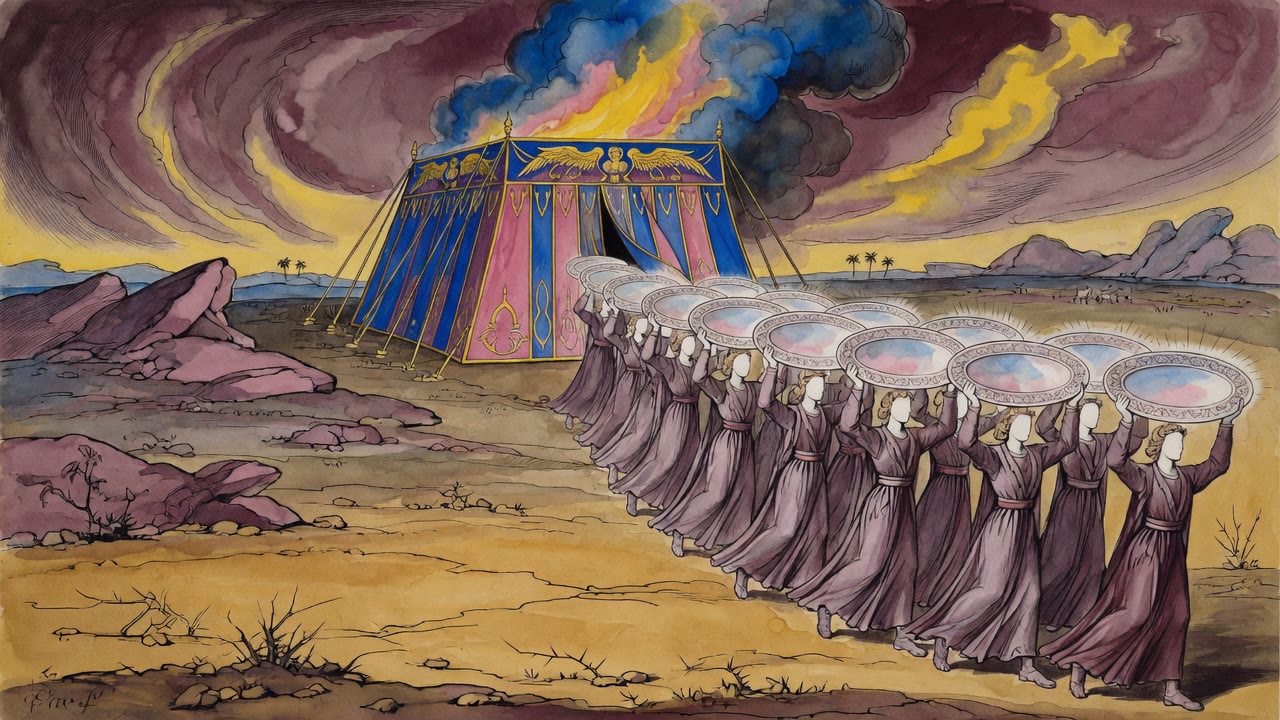
The Book of Numbers records the dedication of the Tabernacle in the kind of detail that tests a reader's patience. Twelve tribal princes. Twelve consecutive days. Twelve sets of offerings described in identical language, the same weights, the same animals, the same quantities, repeated with metronomic precision for each tribe. The prince of Judah, the prince of Issachar, the prince of Zebulun, through all twelve, the same words each time.
Most readers wonder why the Torah didn't simply say the offerings were identical and move on. The rabbis asked a different question. If the Torah repeats the description twelve times, there must be twelve different meanings hidden inside the repetition. What each prince offered was the same. Why each prince offered when he did was not.
On the eleventh day, the prince of Asher came forward. On the twelfth day, last of all, came Aḥira son of Einan, prince of Naphtali.
Why was Naphtali last?
The Name Naphtali Carries Inside It
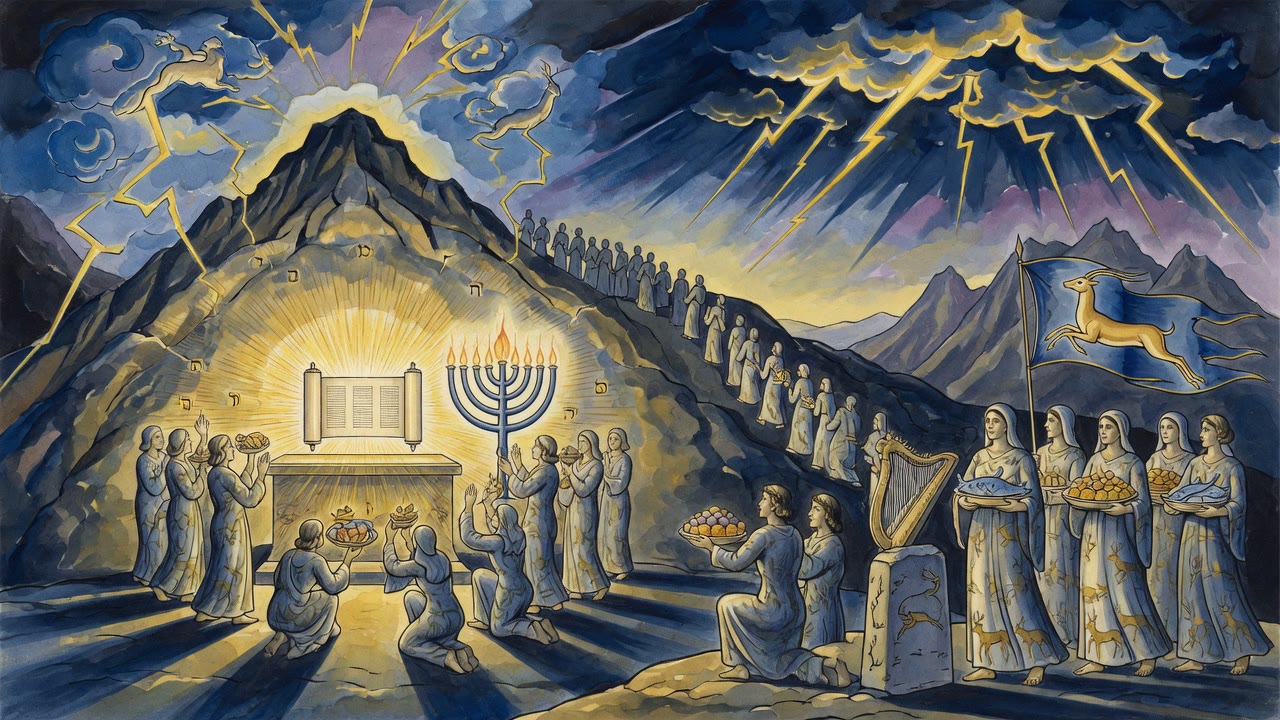
Bamidbar Rabbah 14:11, the rabbinic commentary on Numbers compiled in the centuries after the destruction of the Second Temple, begins with the Hebrew name itself. The rabbis heard inside the name Naphtali two words: nofet li. Honey for me. Sweetness for me.
That reading links directly to Psalm 19:11, where the words of Torah are described as sweeter than honey and the drippings of the honeycomb. The name Naphtali, in the rabbinic hearing, encodes a claim about the sweetness of Torah. The tribe carried that claim in their very name, the way a coat of arms carries the ambitions of the family that designed it.
Asher came first because Asher's name means happiness, good fortune, blessing. But the rabbis taught that happiness rests on Torah the way a building rests on its foundation. You cannot have the building without the ground beneath it. Asher the blessed goes first, but what makes blessing possible, what gives it its foundation, is the sweetness of the Torah that Naphtali carries in his name. The sweeter comes after the sweet, because without the foundation the happiness cannot stand.
The Offerings Honor Something Older
Naphtali's offerings honor not just the present moment of the Tabernacle dedication but the whole line of transmission that made the Tabernacle possible. The silver dish and the silver bowl offered on the twelfth day are read by the midrash as corresponding to specific patriarchal moments: the silver of Abraham, the silver of Isaac and Jacob, the covenant of the patriarchs, the hundred and thirty years of Jacob's life.
This is the midrashic method operating at full strength. An offering that looks like a quantity of silver becomes a memorial to the shape of the patriarchal lives, to the specific weight and measure of what the forebears carried. The prince of Naphtali, offering on the final day, was not just completing a twelve-day ceremony. He was closing a loop that began with Abraham and ran through every generation until this moment in the wilderness when the Tabernacle stood finished and the offerings could be brought.
Last Is Not Least
The obvious temptation when reading a twelve-day sequence is to assume the later positions are inferior. First is the place of honor. Last is what remains after the honored ones have gone. Bamidbar Rabbah explicitly resists this reading. The prince of Naphtali came last not because Naphtali was least but because what Naphtali represented, the sweetness of Torah as the foundation of all blessing, was the proper closing note of the ceremony.
A ceremony that opened with Judah, the royal tribe, and moved through all twelve tribes, needed to close with something that grounded the whole of what had been celebrated. The Tabernacle was built and dedicated so that Torah could have a dwelling in the midst of Israel, so that the teaching that had been given at Sinai could take up residence in a structure that traveled with the people. To end the dedication with the tribe whose name means sweetness of Torah was to end it with the thing the whole ceremony was about.
← All myths