At Sinai Israel Died and the Dew of Resurrection Brought Them Back
Moses threw the blood of bulls on the people. Then God's voice emptied every body in the camp. Dew saved for the last day woke them.
Table of Contents
 Click for full size
Twelve Pillars at the Foot of the Mountain
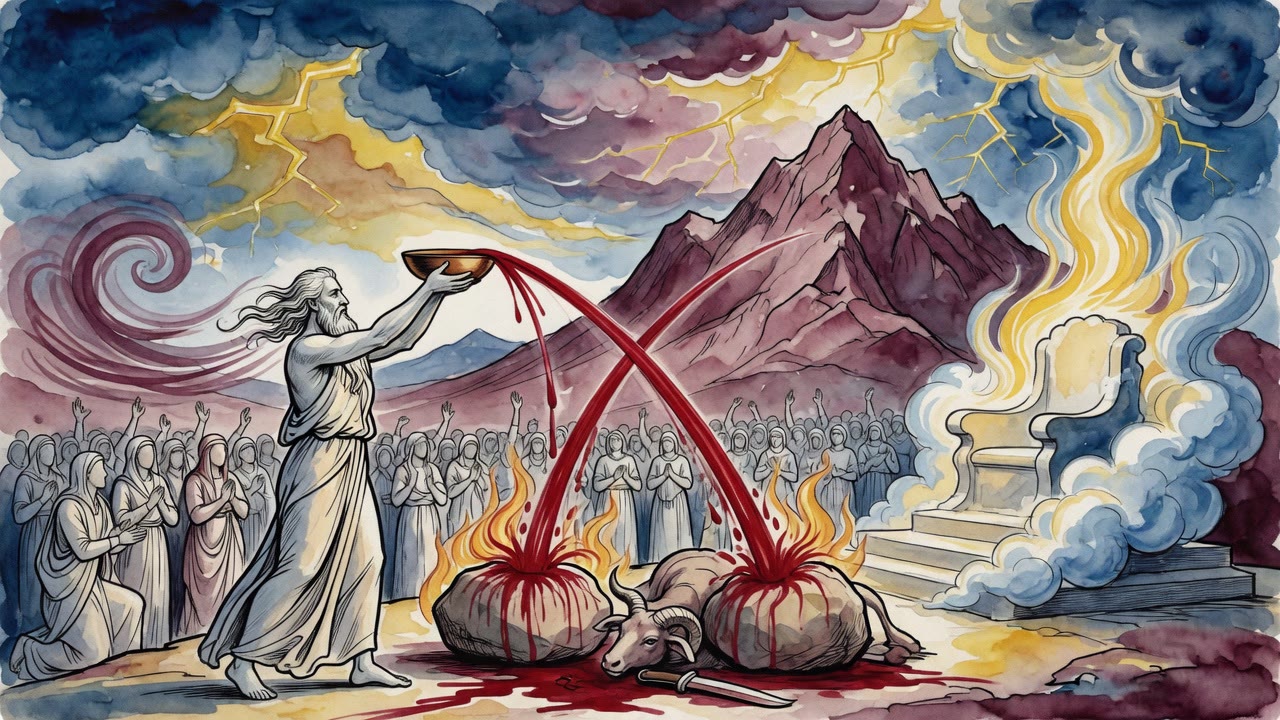
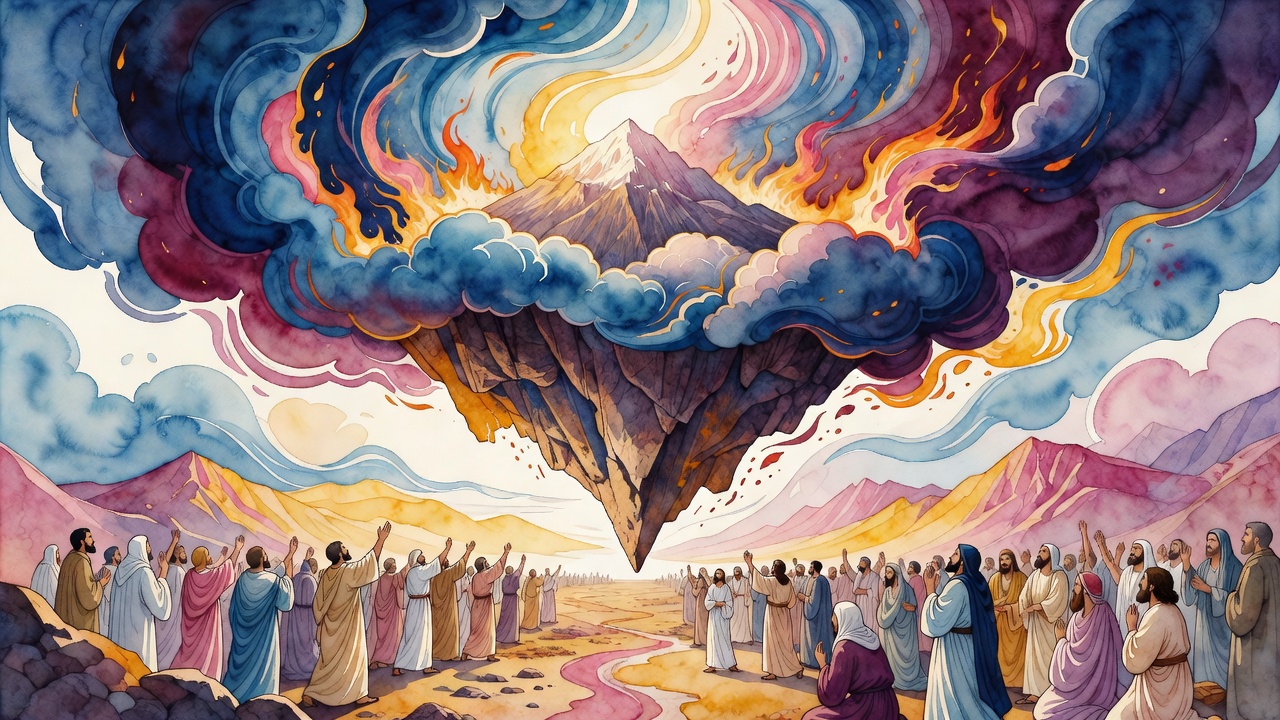
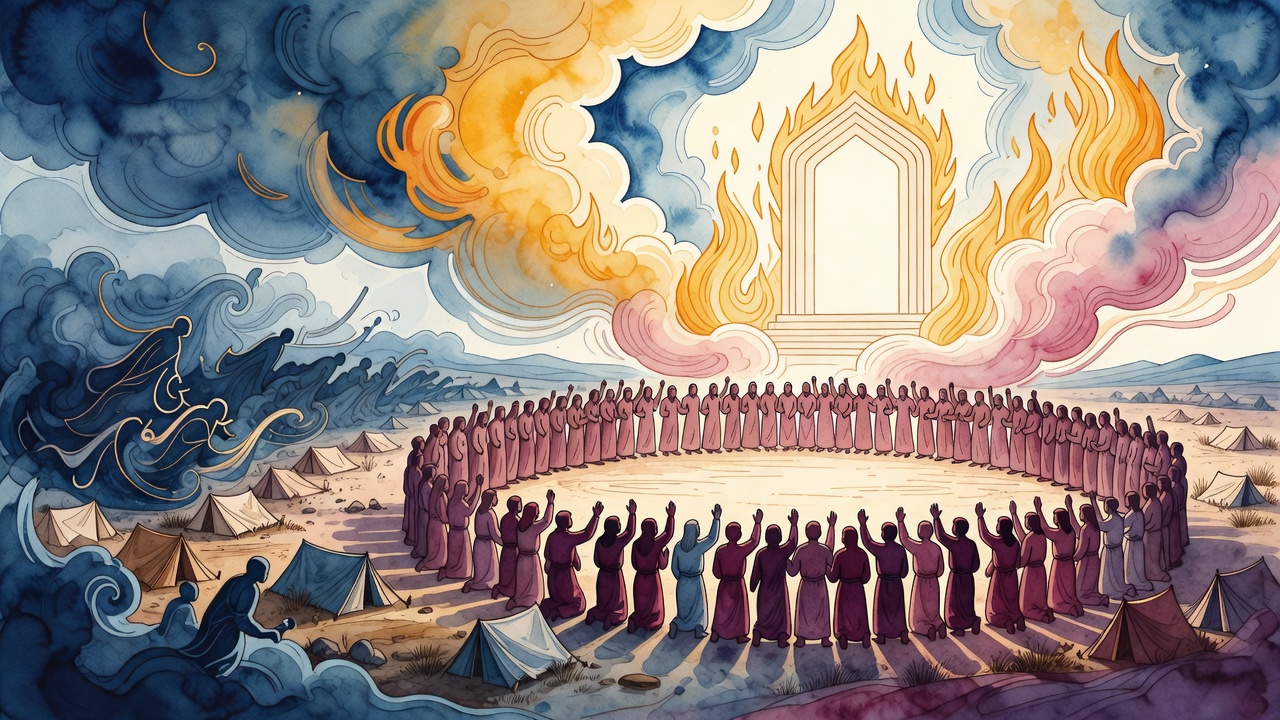
Moses set twelve stones in a line at the base of Sinai, one for each tribe, and the bulls were already screaming. He built an altar. He slaughtered. Half the blood hit the stones. Half he held back in basins, dark and still, while the mountain smoked above him.
The elders who served that morning moved like young men. They lifted and poured, and their arms did not shake. God had not spoken yet. The work was still work a body could do. The smell of fat and hide hung in the heat. Flies found the basins and were waved off and came back.
Moses opened the book and read every statute and every commandment aloud, so that later no one in the camp could say they had not understood what they were taking on. Faces watched him. Dust sat on their lips. A child picked at the dried blood on a sleeve and was pulled still. Then Moses took the basins and threw the remaining blood on the people themselves.
"This is the blood of the covenant which God has made with you concerning all these words."
The Elders Ate and Did Not Die
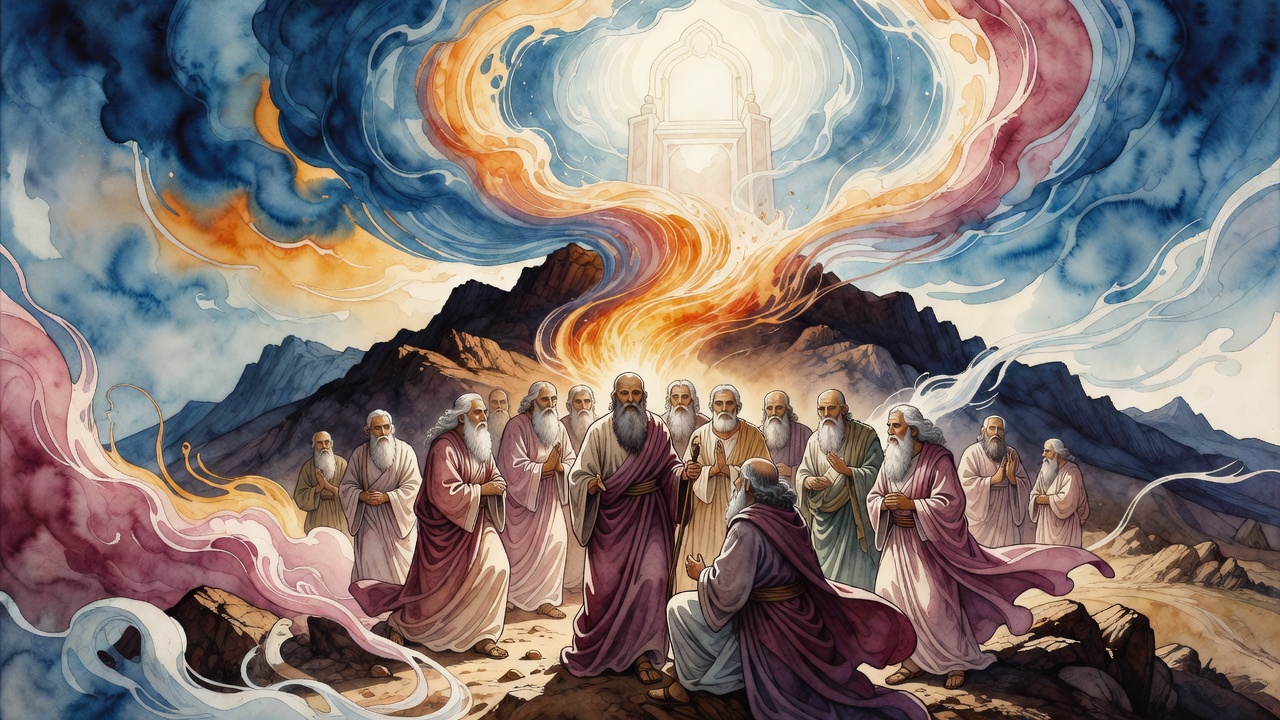
The covenant was sealed. The elders went up the mountain. They saw the God of Israel. Under His feet the ground was like a brick of sapphire, like the sky itself when it is clear. They ate. They drank. They lived.
Living was the strange part. What they had looked at should have emptied them where they stood. It had not. They came down with grease on their fingers and the color of that brick still in their eyes, and the camp below them was still breathing, still marked with blood, still waiting for a voice.
No one asked the elders what the brick had felt like under a heel. They wiped their mouths. They sat among the twelve pillars as if a meal on a mountain were a thing a man does and then walks away from.
The Voice Emptied Every Body
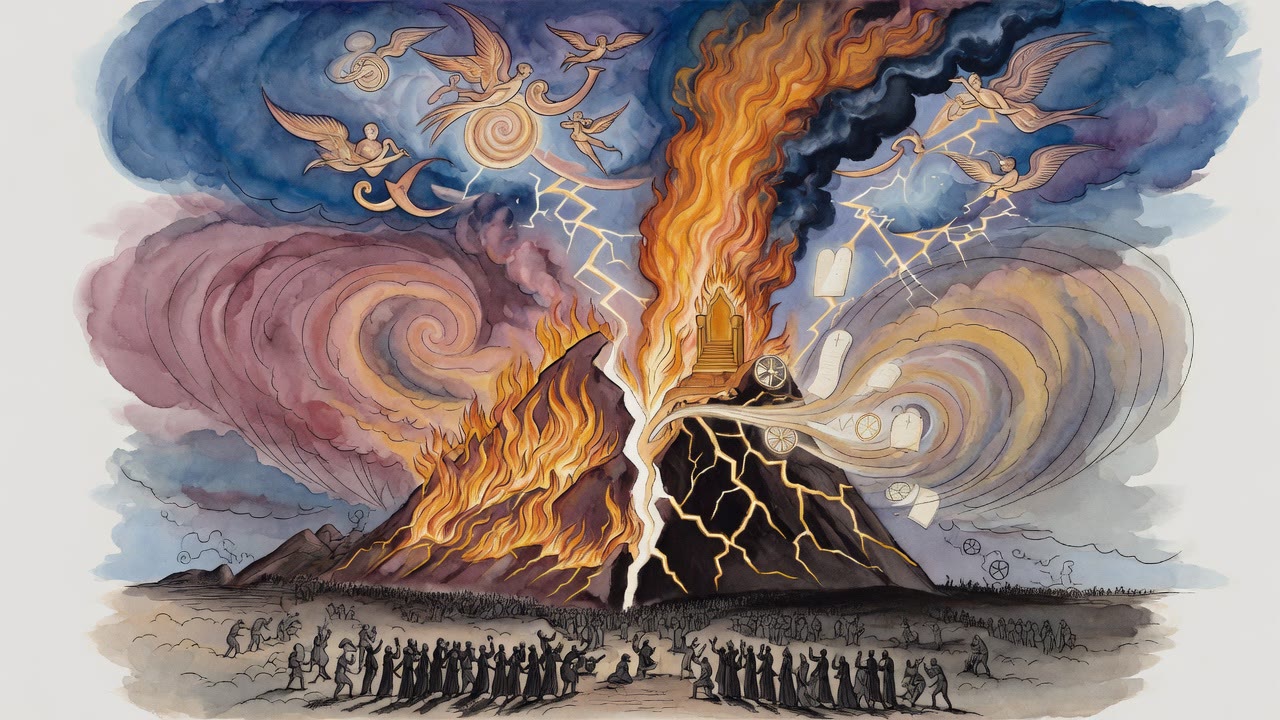
Then God spoke. The Ten Commandments came straight into every ear at the foot of the mountain. Moses stood among them like anyone else. No prophet in the middle. No delay.
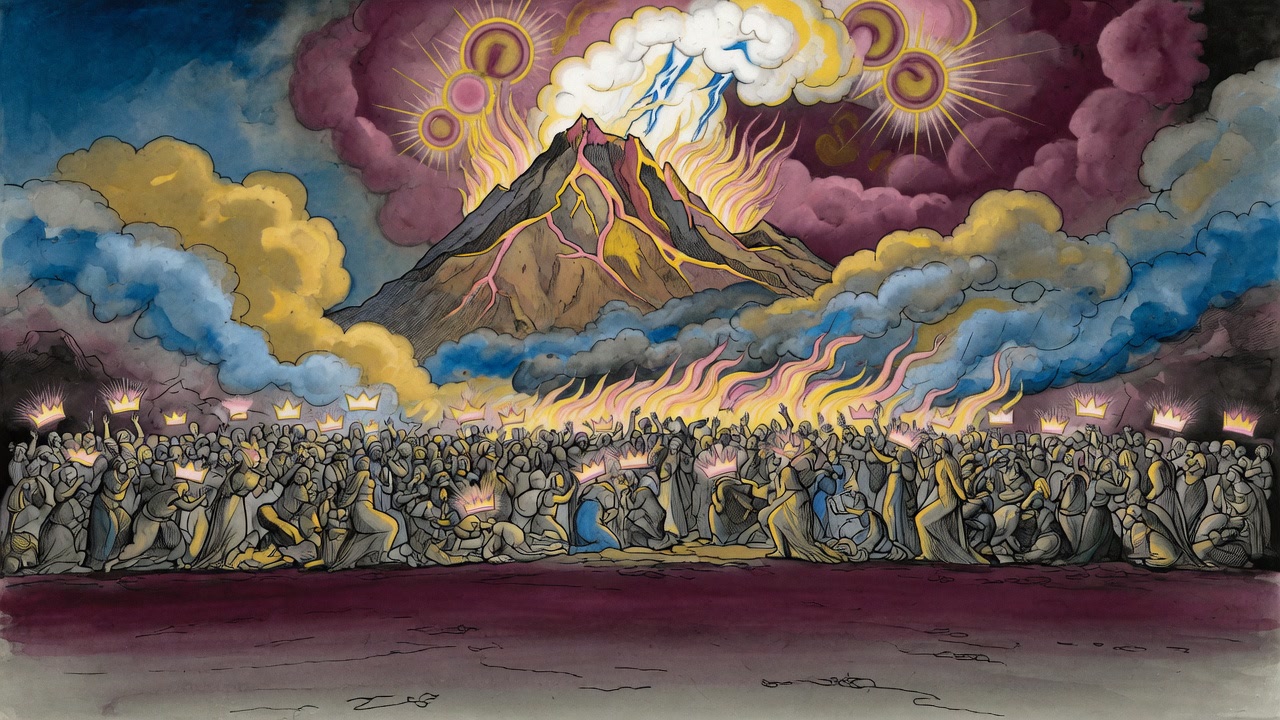
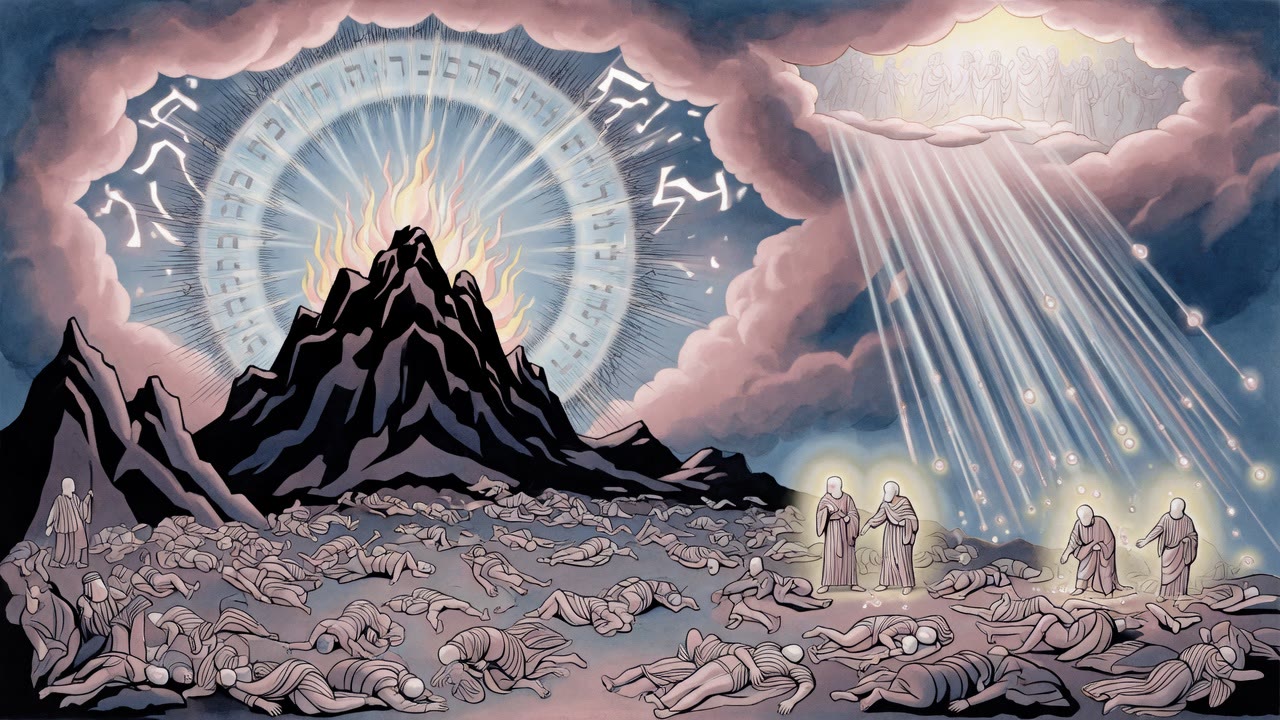
A woman near the third pillar opened her mouth to answer and no sound came out. Her knees went. Around her the camp went down in a wave, not like bowing, like strings cut. Dust in the teeth. Blood of the covenant still wet on sleeves. Children fell where they had been standing. Old men fell on the young. An entire people lay dead at the foot of the mountain where God was speaking.
The voice did not stop because they had stopped. The mountain kept burning. The basins sat empty. A goat that had not been slaughtered tugged its rope and bleated at bodies that did not sit up. The covenant they had just sealed was now a covenant with the dead.
Dew Reserved for the Last Day
Then the dew fell.
It was not morning moisture. It was the dew God has kept back for the resurrection of the dead at the end of days, the dew Isaiah named when he said, for the dew of lights is your dew (Isaiah 26:19). It is the dew that will fall on the valley of bones when history is finished. God used it at Sinai.
Bodies twitched. Mouths found air. A man sat up with blood on his collar and dirt on his tongue and heard the last of the words still hanging in the smoke. They came back. They stood on the same ground. They were not the same people who had arrived three days earlier. They had died, and the instrument of the last day had woken them, and the covenant from that hour forward was kept by people who had already gone through a death.
The altar had been waiting for this. The blood on the stones and the blood on the garments had already made the people and the altar one thing. When they fell, they fell as people who had been marked. When they rose, they rose as people who had been remade. Fire on the mountain. An oath in the basins. The deaths and the waking were not an interruption. They were how the words were given.
The Camp Got to Its Feet
Moses looked at the camp getting up. A child coughed dust. A man wiped blood from his neck and did not know whose it was, the bulls' or his own from the fall. The sapphire brick was gone from sight. Only the smoke was left, and a people who had already used the dew of the end of days, long before the end.
No one asked to go back to the version of themselves that had walked up to the mountain three days before. The pillars stood. The voice had finished. The wet on their clothes was blood and dew together, and they kept the words because they had already died for them and been handed back.
← All myths