Daniel Was a Boy When He Broke the Two Judges' Story About Susanna
Two judges swore they had caught her with a man under a tree in her own garden. The court believed them. A boy in the crowd asked which tree.
Table of Contents
 Click for full size
A Verdict Delivered Before Lunch
The two men who accused Susanna were judges. They had been appointed that year, they held court in her husband's house because he was the richest man in the Jewish community of Babylon, and they had spent months watching her walk through her own garden at midday.
They caught her there alone and told her what would happen if she refused them. She refused them. So they told the community instead, and what they told it was that they had come upon her in the garden with a young man, and that the young man had run and they had not been able to hold him.
Two judges said it. Nobody asked either of them a single question. The assembly condemned her and sent her out to be executed the same day.
The Boy Who Stopped the Procession
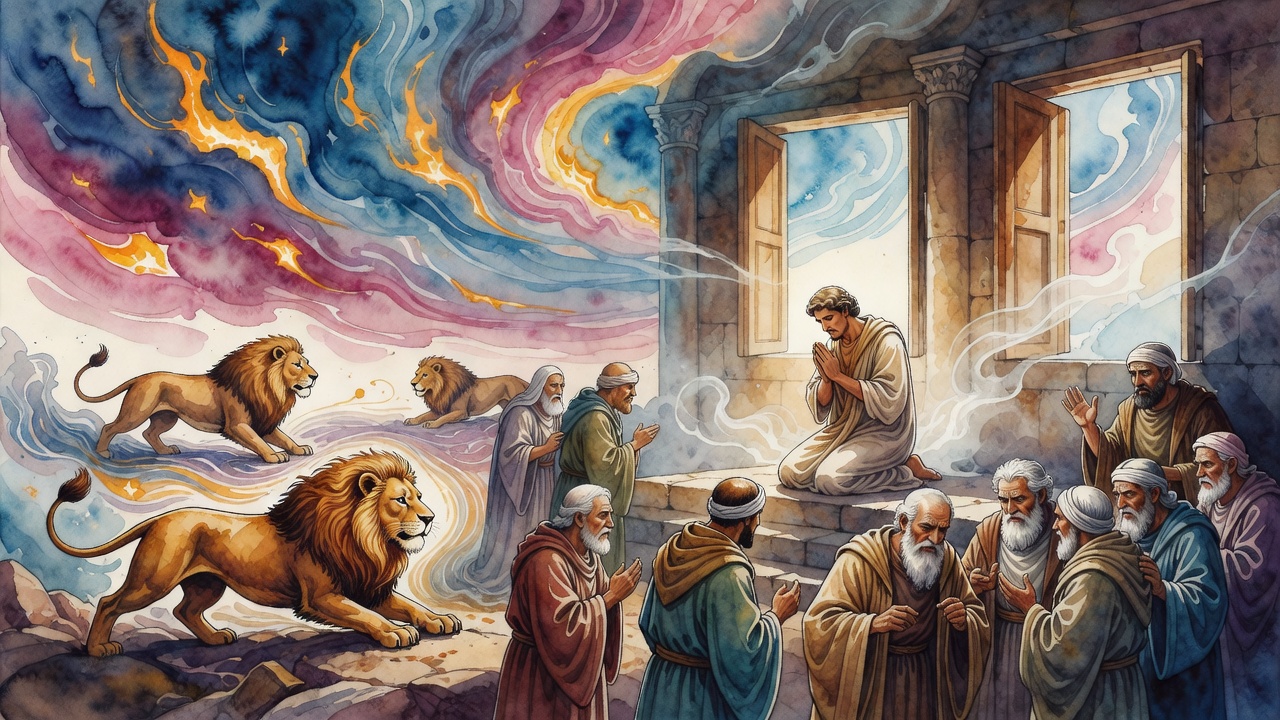
She was already being led out when a voice came up out of the crowd. It belonged to a boy named Daniel, and the words went through him rather than from him. He said he would have no part in her blood.
The people turned around. What is this that you have said?
He walked out and stood among them. "Listen to me, Israelites. You have acted like fools. You have brought a charge against a daughter of Israel without investigating it and without studying the matter. Go back to the court. These men have lied about her."
The whole crowd turned and hurried back the way it had come, and the two judges went back with it, still certain, because there was nothing to find. They had been careful. Their story matched.
Under Which Tree
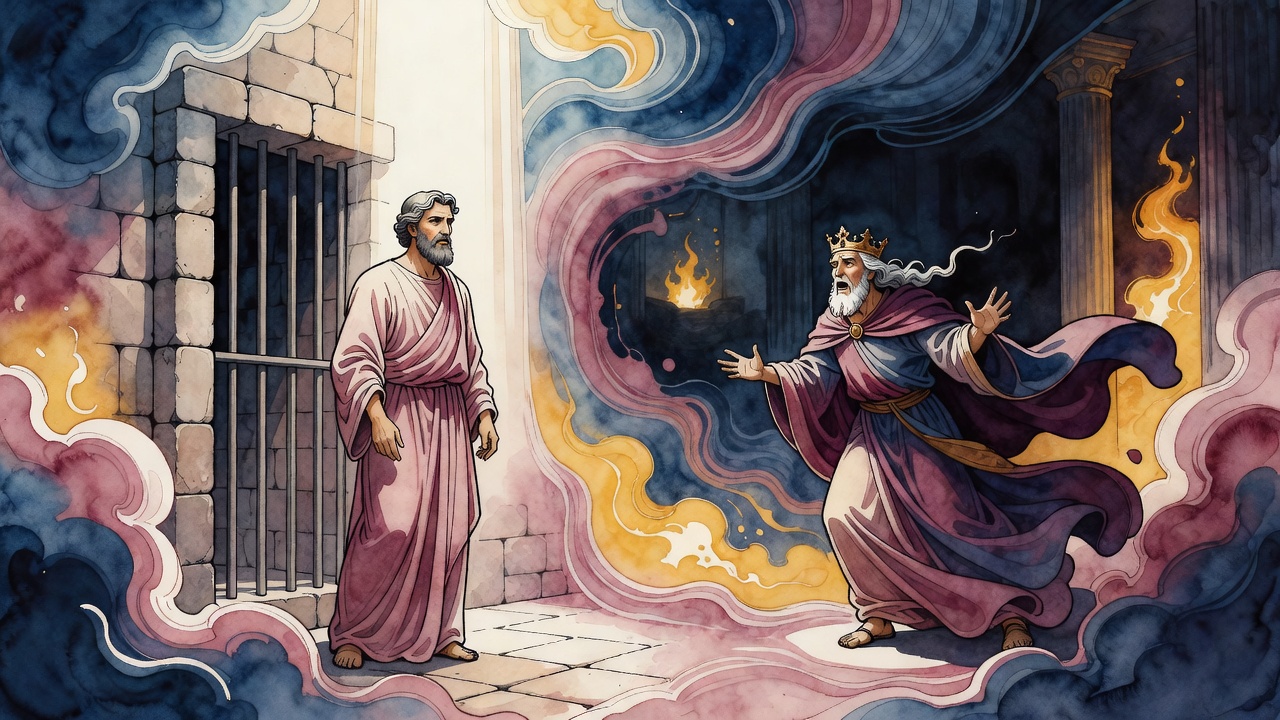
Daniel had them separated. He would not let the second one hear the first.
He put one of them in front of the assembly and asked him a single question. Under what tree did you see them together?
"Under a mastic tree."
They brought in the other. Under what tree did you see them together?
"Under an oak."
The garden was not large. The trees were not the same size and were not in the same place, and every person standing in that room had just heard two judges of Israel put the same crime under two different trees. The story broke in half in front of the whole assembly. The story broke in half in front of the whole assembly.
"May your lie cover your face," Daniel said to the second one. "The angel of God is standing over you with his sword out."
The assembly rose against the two men, caught by their own mouths, and gave them the death they had arranged for Susanna. The community went home shouting thanks. Nothing about it was miraculous. A boy had asked a question that anyone in the room could have asked.
The Furnace Heated Seven Times
Years later, three young men of Judah stood in front of another crowd in the same city and would not bow to the king's golden image. The king had the furnace stoked past anything it was built for.
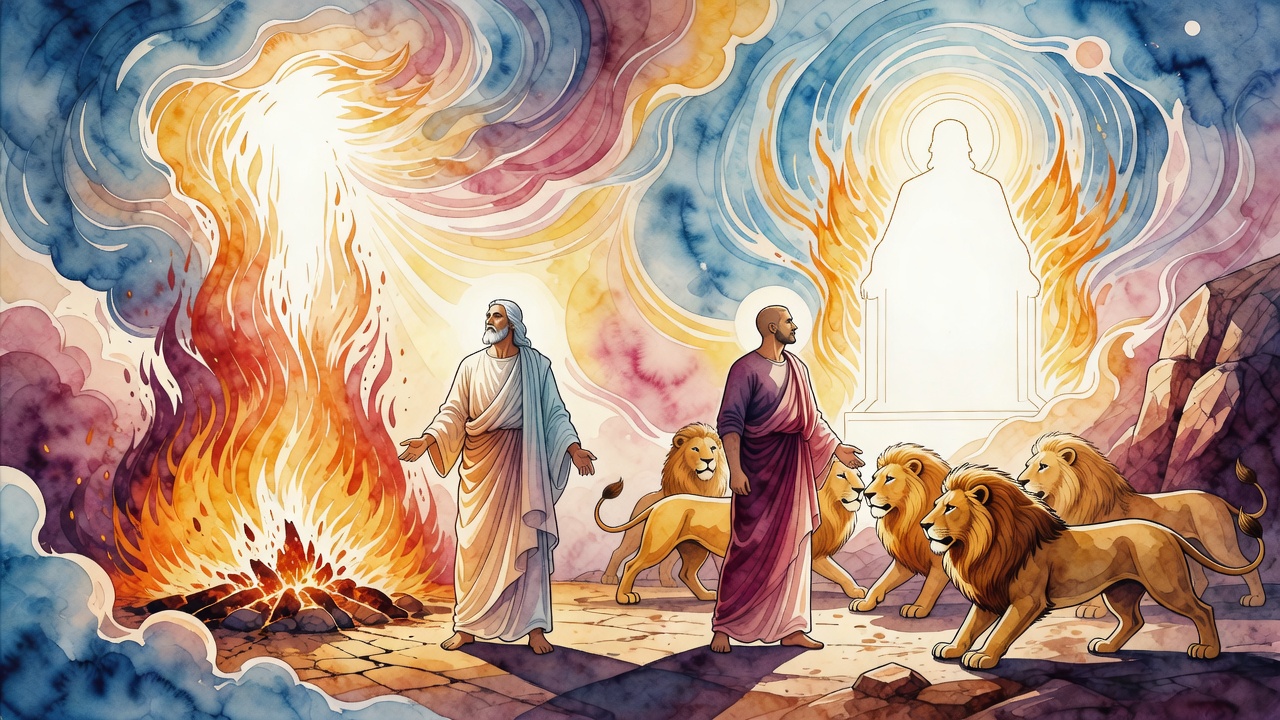
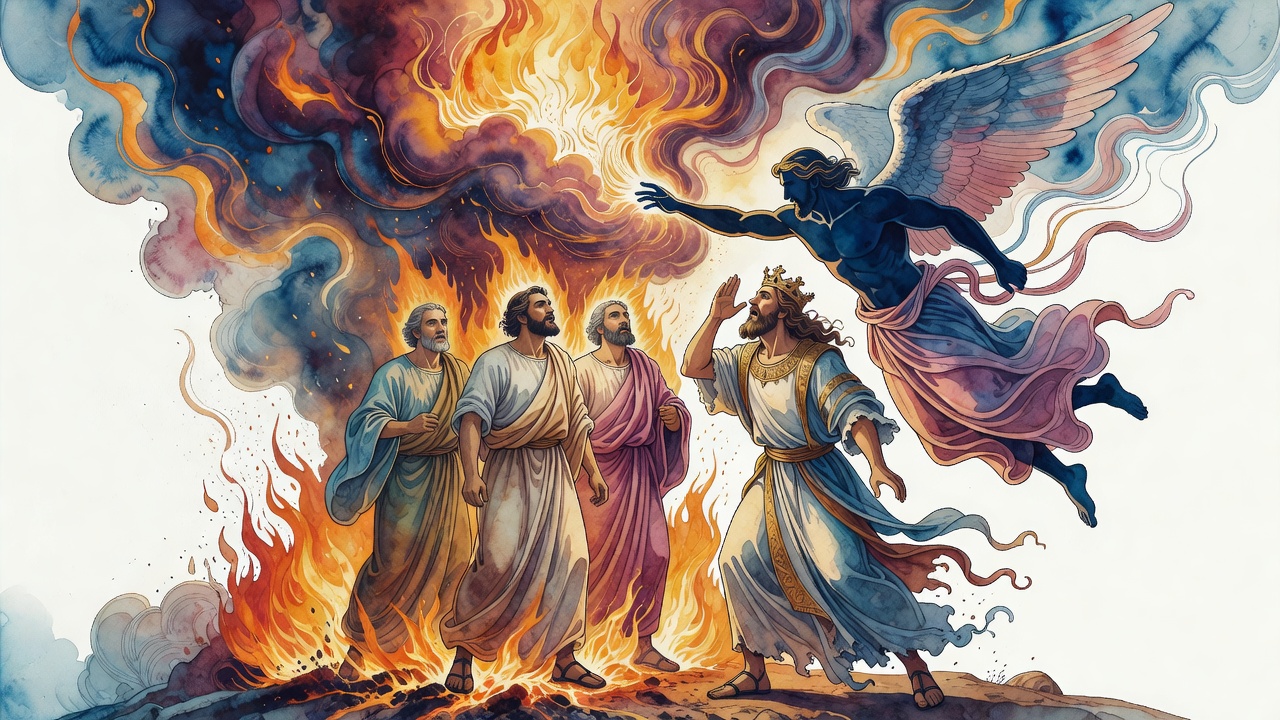
His servants kept feeding it while the three were inside: naphtha, pitch, dry tow, brushwood, anything that would catch. The flame climbed forty-nine cubits above the mouth of the furnace, leaned out sideways, and burned to death the Chaldeans who were standing around the opening feeding it.
Inside, an angel came down into the furnace with Azariah and the other two and knocked the fire back out of the oven. The middle of the furnace, where the coals were, turned into a damp wind that whistled. The three walked around in it and the fire did not touch them, did not hurt them, did not so much as bother them.
An Old Man at Modein Says the Names
Generations later, in a village in the hills of Judah, an old priest was dying and his sons were standing around the bed. The Temple had been defiled, the law had been outlawed, and the men in that room were about to start a war with the Greek kings over it.
Mattathias did not give them a strategy. He gave them a list of the ones who had survived.
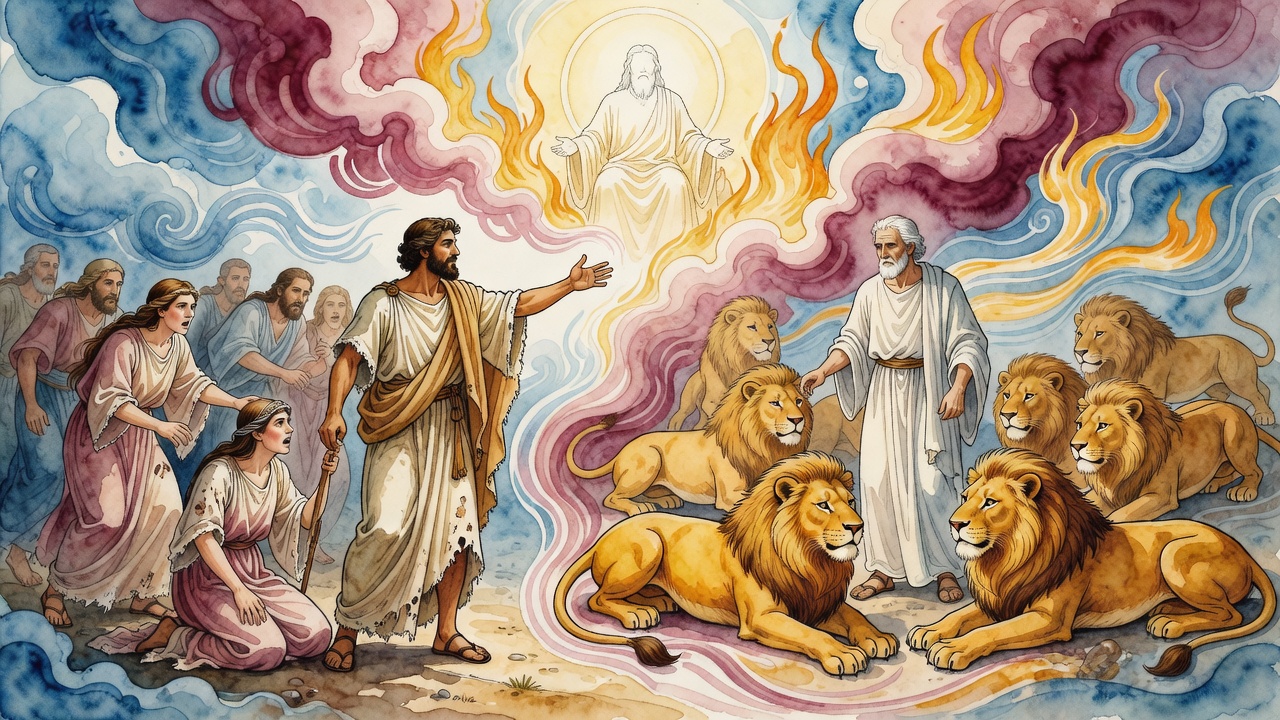
Hananiah, Azariah, and Mishael, he said. They believed, and they were saved out of the flame. Daniel. He was innocent, and he was delivered out of the mouth of the lions.
Then he told them what the list was for. Do not be frightened by the words of a wicked man, because his glory ends in worms and rot. Today he is carried on shoulders and tomorrow nobody can find him, because he has gone back to his dust and his plans have gone with him.
"So, my sons, be strong, and be men, for the law. That is where the glory is."
Then he died, and his sons buried him in Modein, and the war began.
← All myths