Jacob Wrestled All Night to Defend the Torah in Poland
A Polish scholar compared his battle to Jacob's night fight with the angel. His enemy was not Esau but men who wanted to destroy the tradition from within.
Table of Contents
 Click for full size
The Ford at Midnight
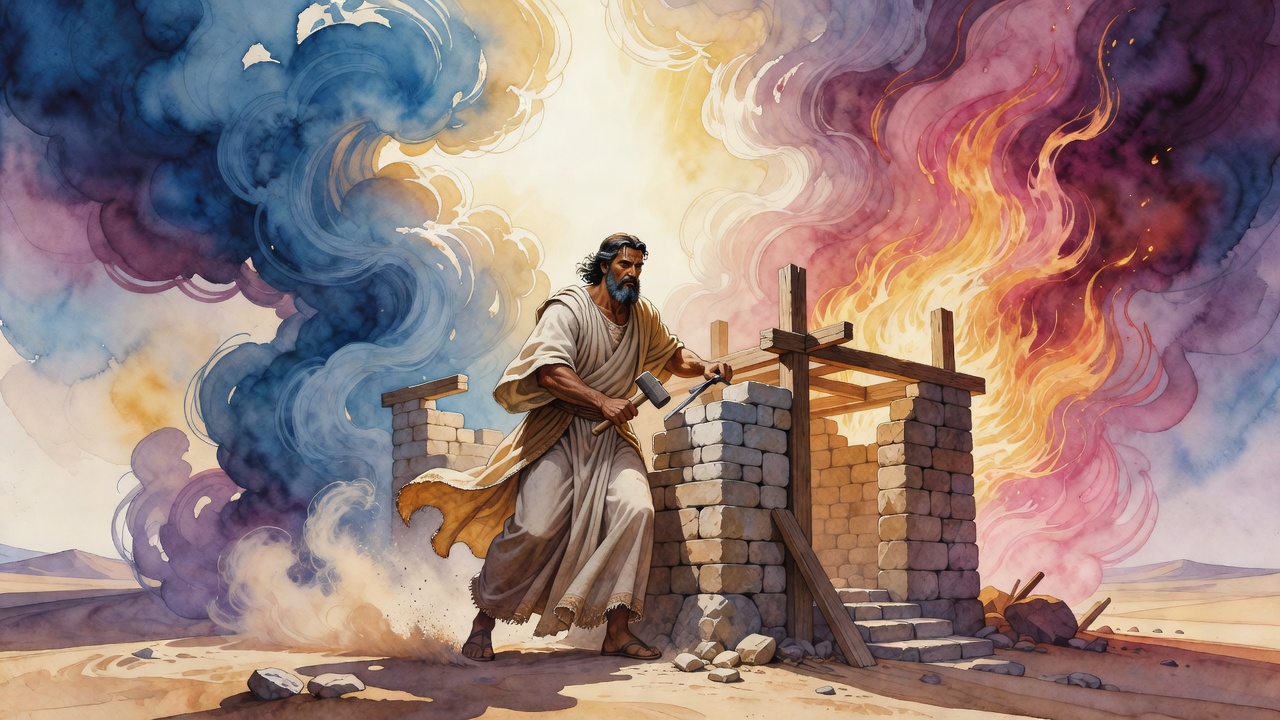
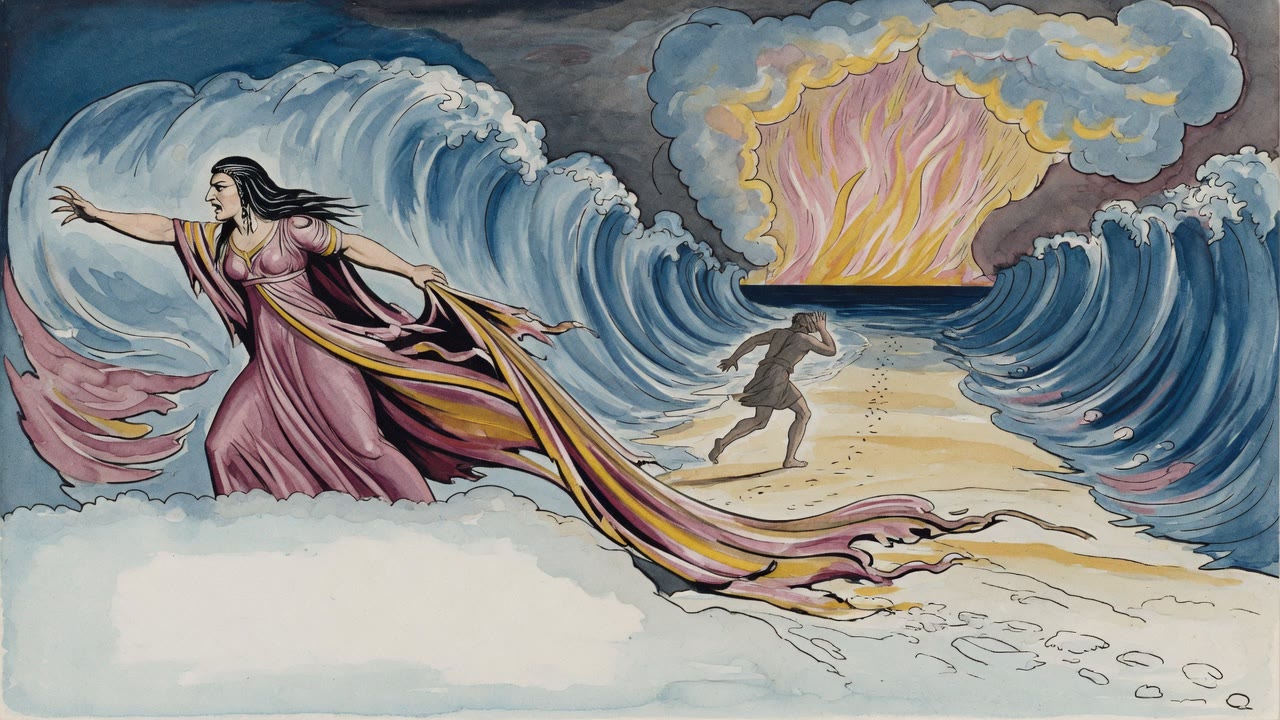
Jacob sent his family across the Jabbok ford and remained on the other side alone. In twelve verses the Torah describes what happened next: a man came and they wrestled until dawn. At daybreak the man touched Jacob's hip and wrenched it. Then he asked to be released because the dawn was breaking. Jacob refused to let go without a blessing. The man gave him a name. Israel. The one who strives with God.
The text does not say who won. Jacob walked away limping. But he walked away with a new name and the blessing he had demanded. The man he wrestled with, whoever he was, left at dawn having given both.
The Scholar Who Recognized the Fight
Rabbi Jacob Emden was born in Altona in 1697 and by the middle of the eighteenth century had made enemies at every level of Jewish communal life. Not because he sought enemies. Because he could not stop identifying what he believed was false and saying so plainly. His primary target was the Sabbatean movement, the network of crypto-believers who followed the false messiah Shabtai Tzvi long after Shabtai himself had converted to Islam in 1666 and discredited his own claims. The Sabbateans had not disappeared. They had gone underground, continued their practices in secret, held positions of authority in synagogues and academies, and used the language of sacred tradition to advance what Emden believed were corruptions of it.
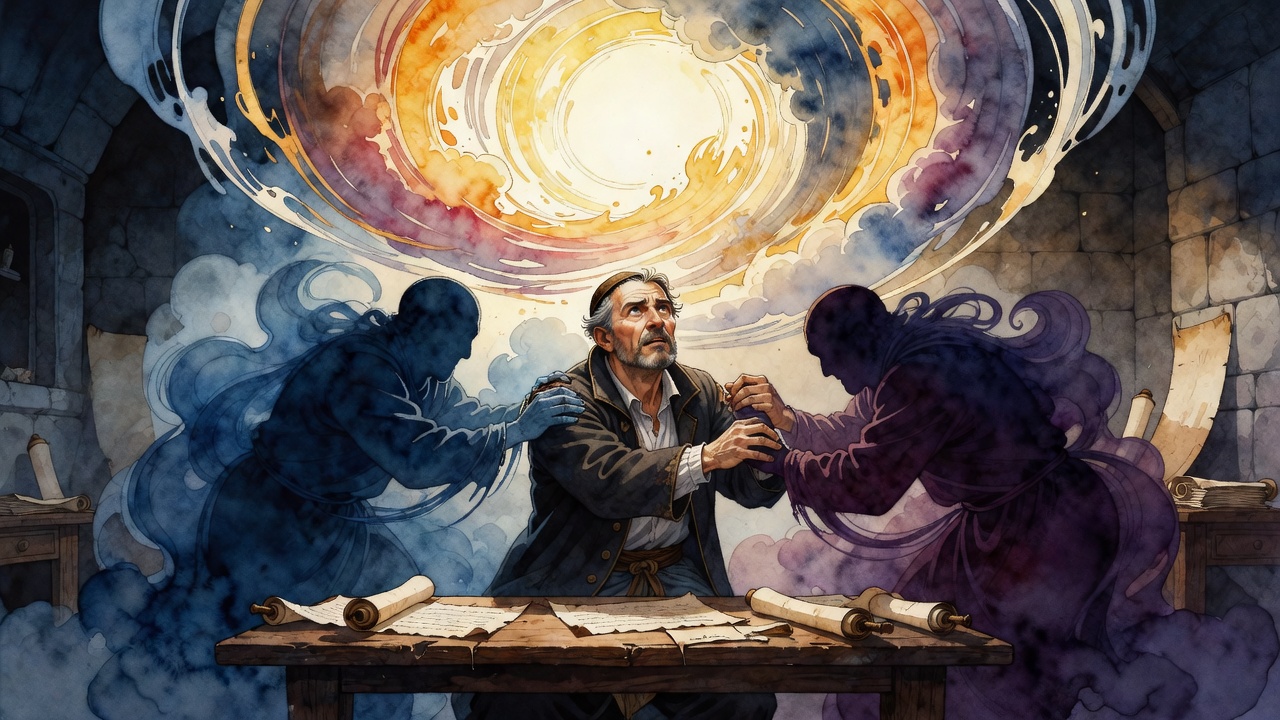
In the Mitpachat Sefarim, his work of critical textual scholarship printed in 1768, Emden reached for Jacob's midnight wrestling match as the image that fit his own experience. He wrote of a heavy battle imposed upon him against a warrior from his youth until the break of dawn. The language is not metaphorical in the ordinary sense. It is a claimed inheritance: this is what Jacob's battle was, this is what my battle is, and God has stood by me in both.
The Hasmoneans He Faced
Emden called his opponents Hasmoneans, a term whose precise meaning in his context has been debated. He did not mean the original Maccabees. He meant something about the posture of his enemies: men who presented themselves as defenders of the tradition while, in his view, hollowing it out from inside. Men who claimed the authority of the house they were simultaneously undermining. The Hasmonean dynasty itself had ended in exactly this way, its priestly authority compromised by political calculation until the dynasty destroyed itself.
The parallel was pointed. Emden was accusing his opponents of being precisely the kind of defenders whose defense was the problem. Their orthodoxy was a performance. Their invocations of sacred texts were strategic. And they had power, real power within Jewish communities, which made the battle genuinely dangerous rather than merely intellectually taxing.
Why the Fight Was Jacob's
The tradition had long read Jacob's wrestling match as more than a physical contest. Ginzberg's Legends of the Jews, drawing on earlier midrashic sources, identifies Jacob's opponent as Michael, the archangel, and describes the heavenly host arrayed behind him. In that reading, Jacob was not wrestling a man. He was wrestling the principality of Esau, the angelic representative of the force that had been in opposition to Jacob since before either of them was born. The entire night was a cosmic negotiation conducted through physical combat.
Emden reached for that fight to name his own. He does not claim to be wrestling an angel. He claims to be in a structurally similar situation: a battle that began in his youth, that has lasted through the long night of his career, against opponents whose strength is not merely human because they represent a spiritual force working against the integrity of Jewish tradition. The fact that he is still in the fight at the break of dawn is itself the evidence that, like Jacob, he has not been defeated. The limp is real. So is the blessing.
← All myths