God Refused Moses the Sight of His Face Until Moses Was Dying
After the golden calf, God said He would send an angel instead of coming Himself. The people heard it, took off their ornaments, and never put them back on.
Table of Contents
 Click for full size
The Camp That Stripped Itself
The message came down while the gold was still being swept up. Go up from here to the land I promised. I will send an angel ahead of you and drive out the nations. But My Presence will not travel among you, because you are a stiff-necked people, and if I went with you for one hour I would destroy you on the road.
The people heard it and stopped where they stood. Nobody put on his ornaments that morning, or the morning after. They took off what they had been given at the mountain and left it off.
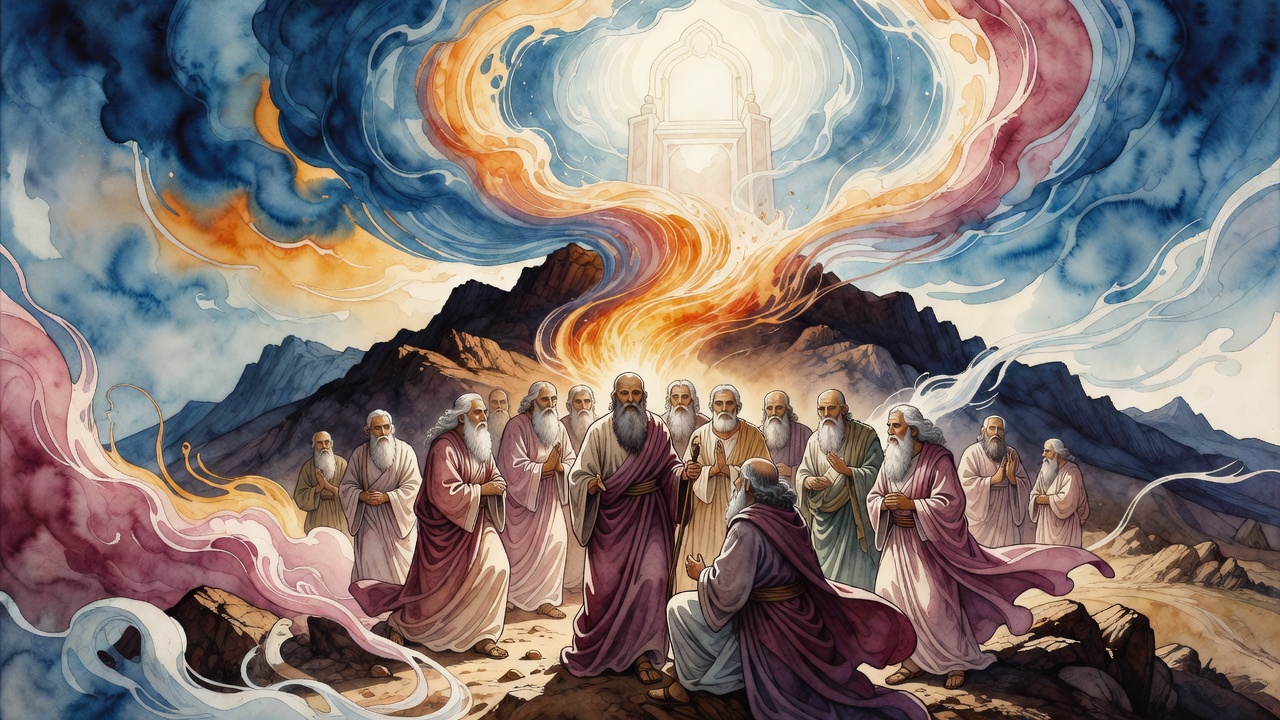
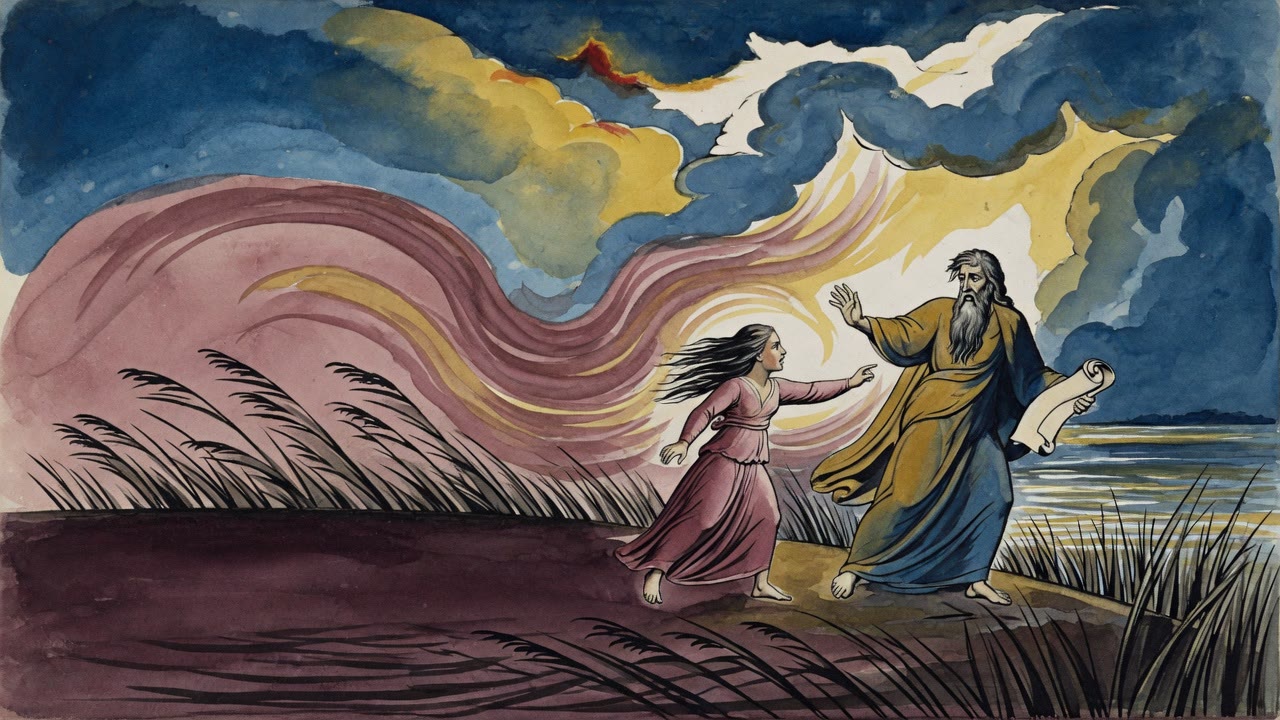
Moses pulled up a tent and carried it outside the camp, well out, past the last line of cookfires, and pitched it there. Anyone who wanted instruction had to walk out to it in the open. And when Moses went out to it, the whole camp came to its feet. Every man stood in the door of his own tent and watched him cross the empty ground until the flap closed behind him.
Then the column of cloud came down and stood in the doorway, and inside, God spoke with him word for word, the way a man speaks with the friend beside him. The people saw the column standing there and bowed, each one where he was. Only Joshua, a young man, would not leave the tent afterward.
The Bargain Moses Would Not Drop
Inside, Moses pressed.
"You tell me to take this people up, and You have not told me who You are sending with me. You said You know me by name and I have found mercy with You."
"My Presence will go, and I will give you rest."
"If Your Presence does not go among us, do not move us from here." He would not let it go at that. "How will anyone know that I and Your people have found mercy? How is Israel to be told apart from every other people on the face of the earth, except that You walk with us?"
"This thing you have asked, I will do."
He had won it. The Presence would travel. And having won, he asked for the thing no one had asked for.
Show Me Your Glory
"Show me, I pray, Your Glory."
"I will make all My goodness pass in front of you, and I will proclaim the Name before you, and I will be gracious to whom I am gracious." Then the refusal, flat and without softening. "You cannot see the face of My Presence. No man can see Me and stay alive."
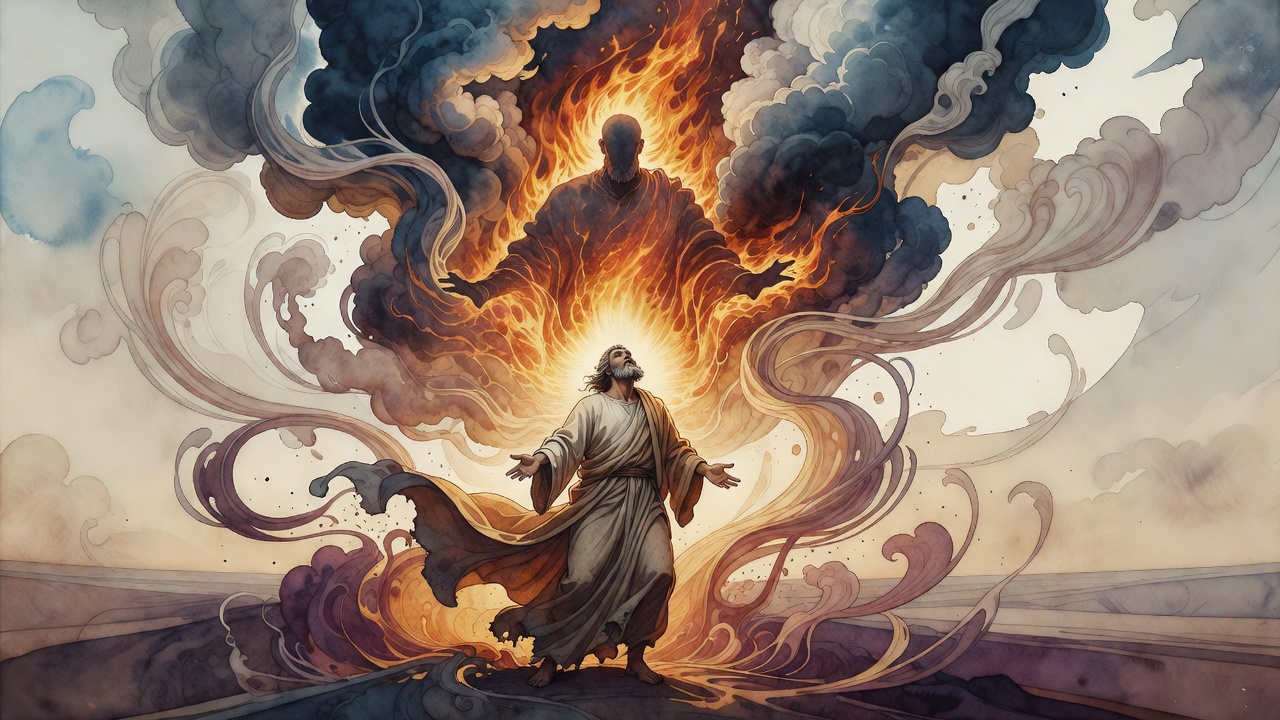
There was a place prepared. Moses climbed onto the rock and stood where he was told to stand. A hollow opened in the stone and he was put inside it, and something came over the opening and shut out the light while the Glory went past. He felt it go. When it was gone the covering lifted, and he was permitted to look, and he saw what was behind it going away from him.
He came down the mountain with his face throwing off light he could not see and the people could not look at.
What They Saw at the Mountain and What He Told Them They Had Not Seen
Forty years later, on the plains east of the Jordan, he made them go over it again.
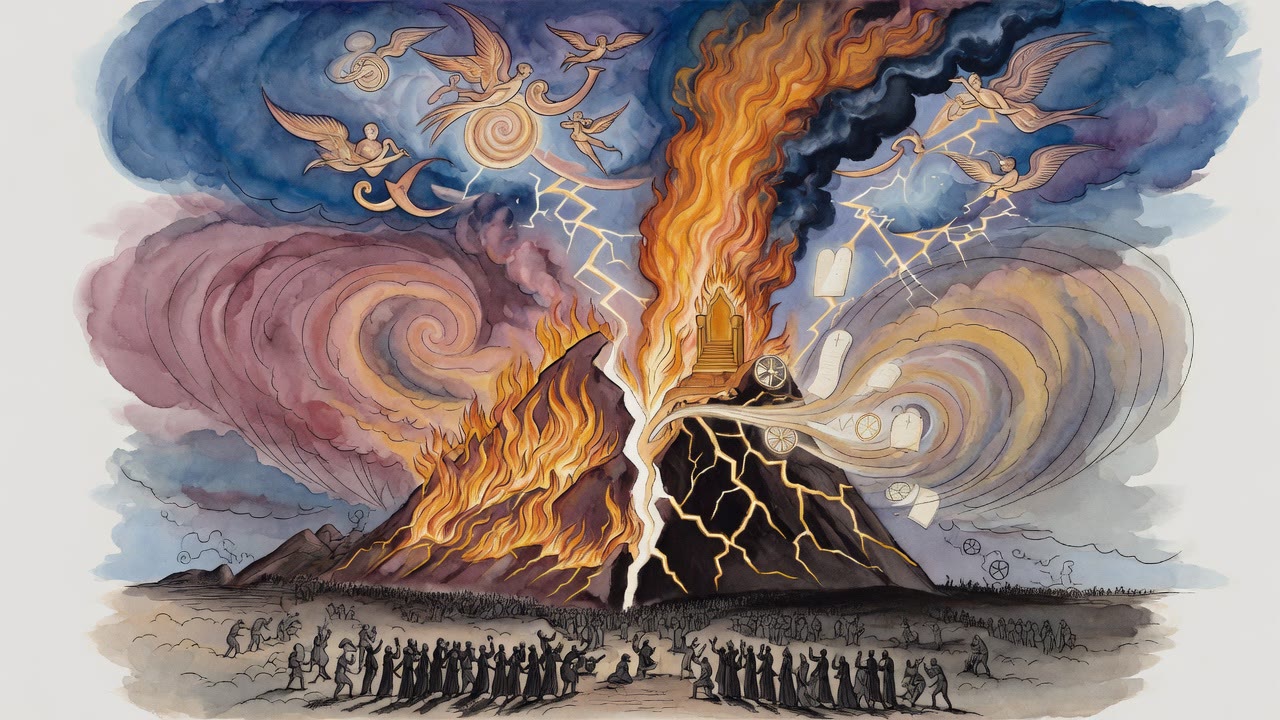
"Guard your souls very carefully," he told them. "You saw no form on the day the Lord spoke to you at Horeb out of the fire."
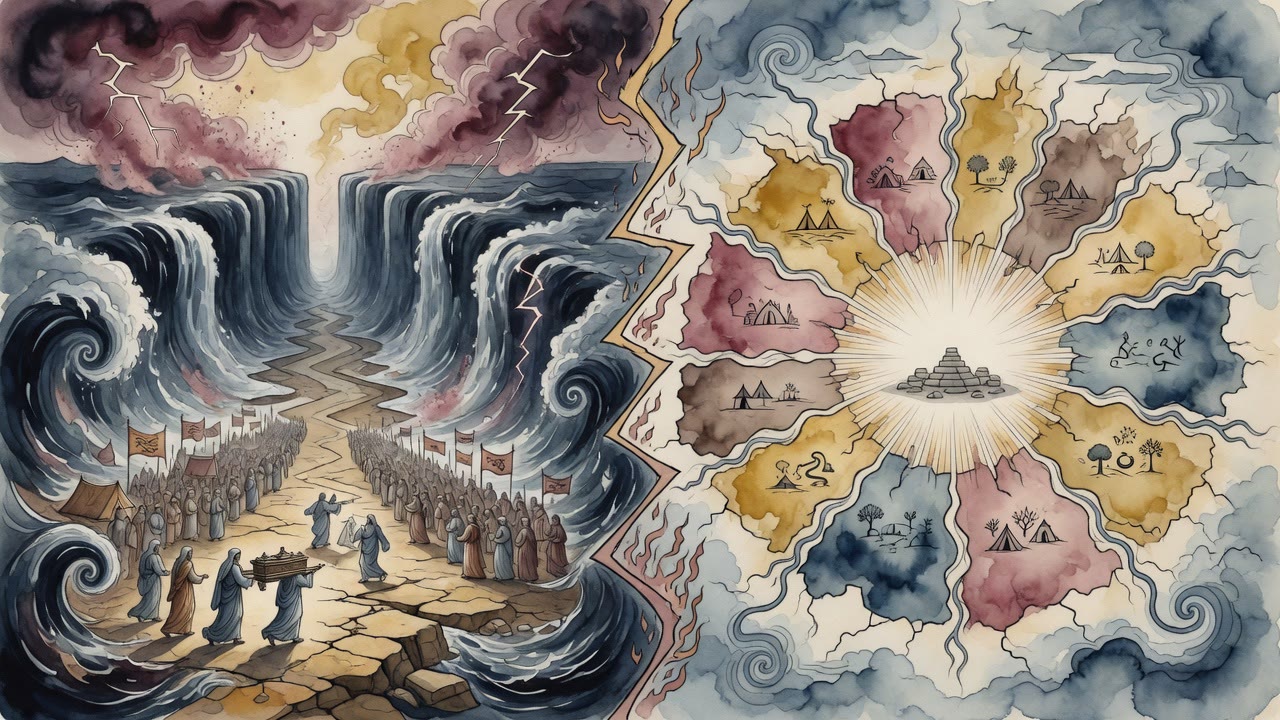
They had been there. They had stood in the smoke with the mountain shaking and the voice coming out of it, and now the old man was telling them that whatever they had seen, they had not seen a shape. He had reason to press. At the sea, God had come at them like a soldier in the middle of a battle. At the mountain He had come like an elder heavy with mercy. Two arrivals, two faces, and men were already muttering that there might be two powers behind them. So the first words at the mountain had settled it before anyone could start. I am the Lord your God. The same one at the water, the same one in the fire.
What the people had was a vision, and a vision is a thing lent for an hour. Build a picture out of it, hammer it into gold, and you are back at the calf by a longer road.
The Sight He Was Given at the End
He never got the face. That was the cost of standing closer than anyone, and he paid it for forty years, arguing at a curtain of cloud with his own eyes shut against the thing he most wanted.
What he had been promised was the back, and the promise was filed away for the world to come, which is a long distance from a man in a rock corridor asking now.
Then he went up Nebo alone, at a hundred and twenty, to look at a country he was not going to enter. He was close enough to death for the rules to slacken. The palm was taken away. What had been kept back from him on Sinai was set in front of him there, and he saw it, and then he died on the mountain with the land below him and nobody watching.
← All myths