Rabbi Loew Built the Golem From River Clay and Unmade It With Letters
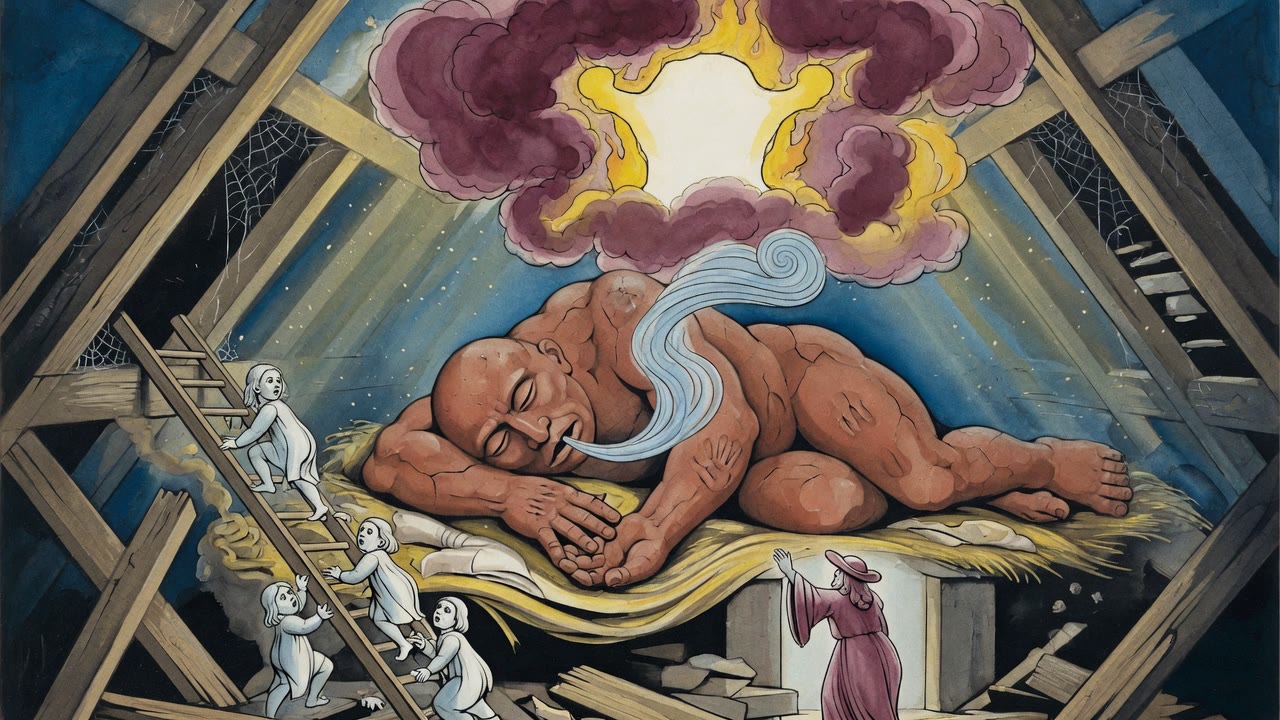
At two in the morning they climbed to the attic of the Old-New Synagogue. The clay still had a man's shape. They walked the other way around it.
Table of Contents
They went down to the Vltava at night, three men and a shovel, and took clay from the riverbank while Prague slept. Rabbi Judah Loew ben Bezalel shaped a body with his hands. His son-in-law and his most trusted student walked with him. Behind them the Josefov quarter still waited for the next planted corpse, the next mob, the next false charge that a child had died for Passover.
 Click for full size
He needed a guardian who would not tire, would not bargain, and would not speak. He needed a body that was not yet a person.
Clay From the Vltava
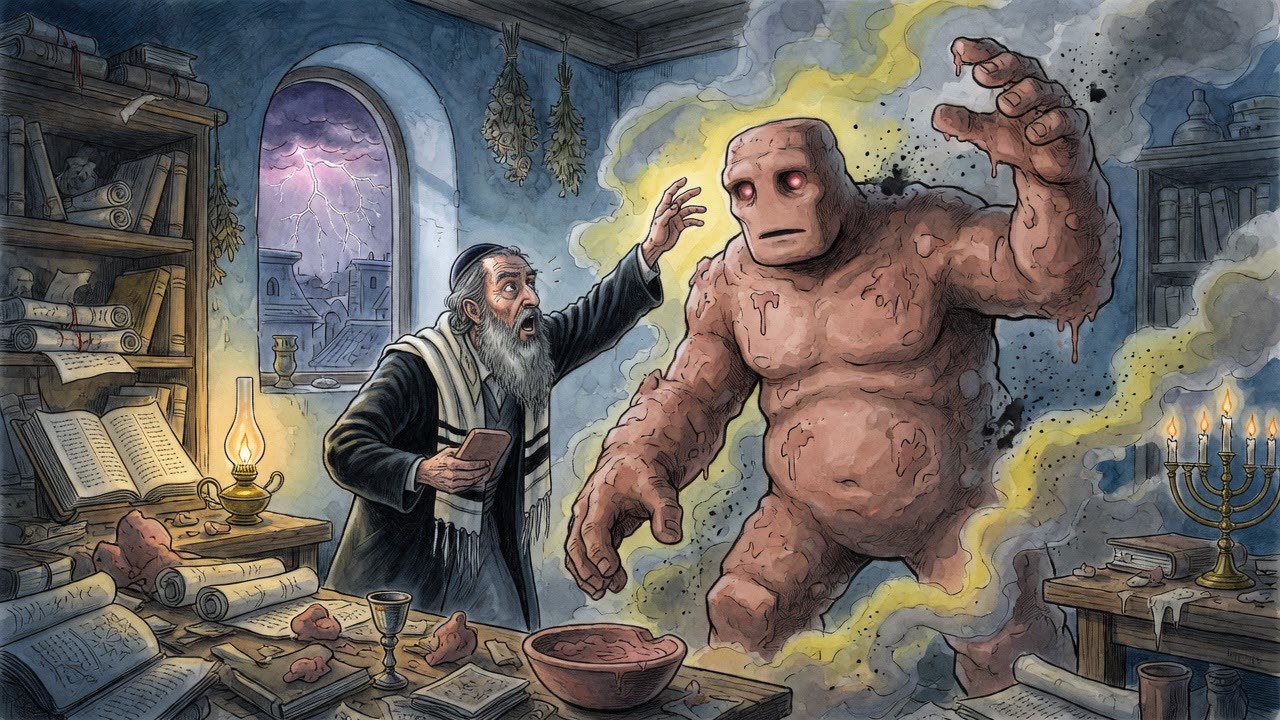
They walked around the form seven times, reciting the combinations they had drawn from Sefer Yetzirah, the Book of Creation, where Hebrew letters are not labels on the world but the stuff the world is made of. On the seventh circuit the clay grew warm.
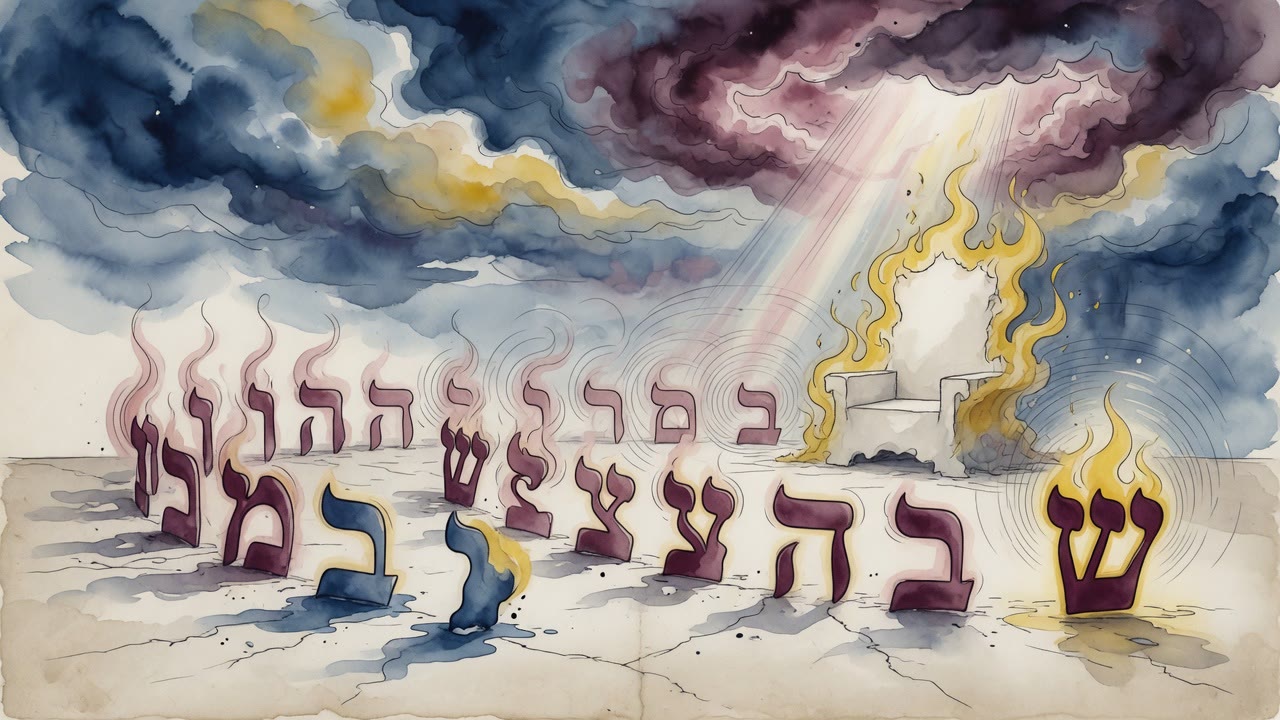
The Maharal wrote the Hebrew word emet (אמת), truth, on the forehead. He put a slip bearing the Name into the mouth. The golem opened its eyes.
It could not speak. It could follow instructions. It was stronger than any man in the quarter. For an hour of the first day, the old teaching says, Adam himself had been a golem, a shapeless mass, before he received a soul and stood up. The Maharal was not making a man. He was stopping at the hour before a soul. An unformed servant. A needle without the eye.
The Name Came Out Each Friday
On weekdays the golem worked. It hauled. It watched alleys. It stood in doorways the way a bar holds a house shut. On Friday afternoons, before Shabbat began, the Maharal extracted the Name from its mouth, or erased the first letter of emet, so the clay could rest. Emet without its aleph is met (מת), death. The body went still. On Saturday night he restored it.
Once he forgot. The sun dropped. The clay kept walking. He pursued it through the streets and caught it in front of the synagogue just before Shabbat, and pulled the Name in a hurry. The golem fell in pieces. He put it back together because the quarter was not finished needing it. After that he did not forget again. A servant who cannot rest will not stay a servant.
The Body at the Gate
The charge that killed Jews was simple and hard to fight in a street. Someone planted a child's body near a Jewish gate and shouted that the blood was for Passover. Rabbis wrote defenses. Courts heard arguments. Mobs did not wait for courts.
The golem caught a butcher at the quarter's edge with a small wrapped corpse, trying to set the trap that would bring the street down on Josefov. It stood between a crowd and the houses on a night when the noise was already turning toward massacre. Whether every episode later told is the same night or many nights, the pattern held. The clay did the work it was built for. The planted evidence did not reach the gate it was aimed at.
Rabbi Loew used the imperial court as well as the river. He argued. He negotiated. He finally stood before Emperor Rudolf II and made the case against the charge in person, with enough force that Rudolf issued a proclamation forbidding the accusation. The political protection arrived. The clay's job shrank in a single sentence from a throne.
Seven Circuits Backward
On the Friday after the proclamation, when the weekly rest came due, Rabbi Loew did not restore the golem on Saturday night. A protector built for a crisis should not keep walking once the crisis has a law against it. He summoned the same two men who had been with him at the river.
At two in the morning they climbed to the attic of the Alt-Neu, the Old-New Synagogue, where the golem lay dormant. Three figures. Dim light. A body that still had a man's shape and no breath. They circled it from left to right, the opposite of the making, seven times. After each circuit they paused and chanted the spells backward, the same letter-combinations from Sefer Yetzirah, now run in reverse.
After the seventh circuit he erased the aleph. Truth became death. The golem returned to clay, still vaguely human, no warmer than the boards. They wrapped the remains in two old prayer shawls and hid them among discarded books and forgotten objects in the attic. The next day the quarter heard that the golem had run away. Only a few knew the truth.
Rabbi Loew forbade anyone to enter the attic. The official reason was fire. The real reason lay under two tallitot, waiting. He had taken a body to the hour before a soul, and then he had taken even that hour back. If the need rose again, his descendants would know what to do. Until then the clay sleeps above the sanctuary, and Prague walks past a locked door.
← All myths