Josiah Died at Megiddo Because He Chose One Verse Over Jeremiah
Pharaoh warned Josiah to step aside and let the Egyptian army pass. Josiah quoted Moses and refused. He was struck by three hundred arrows before nightfall.
Table of Contents
 Click for full size
Jeremiah Came With His Teacher's Prophecy
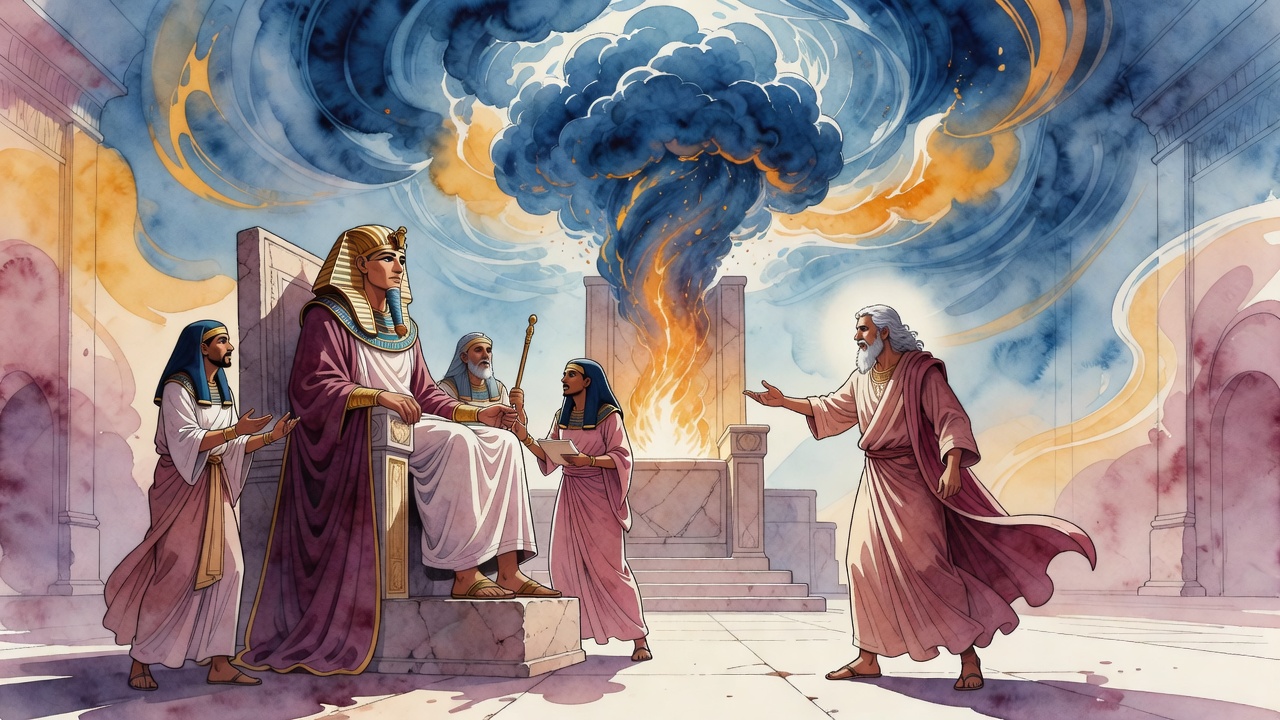
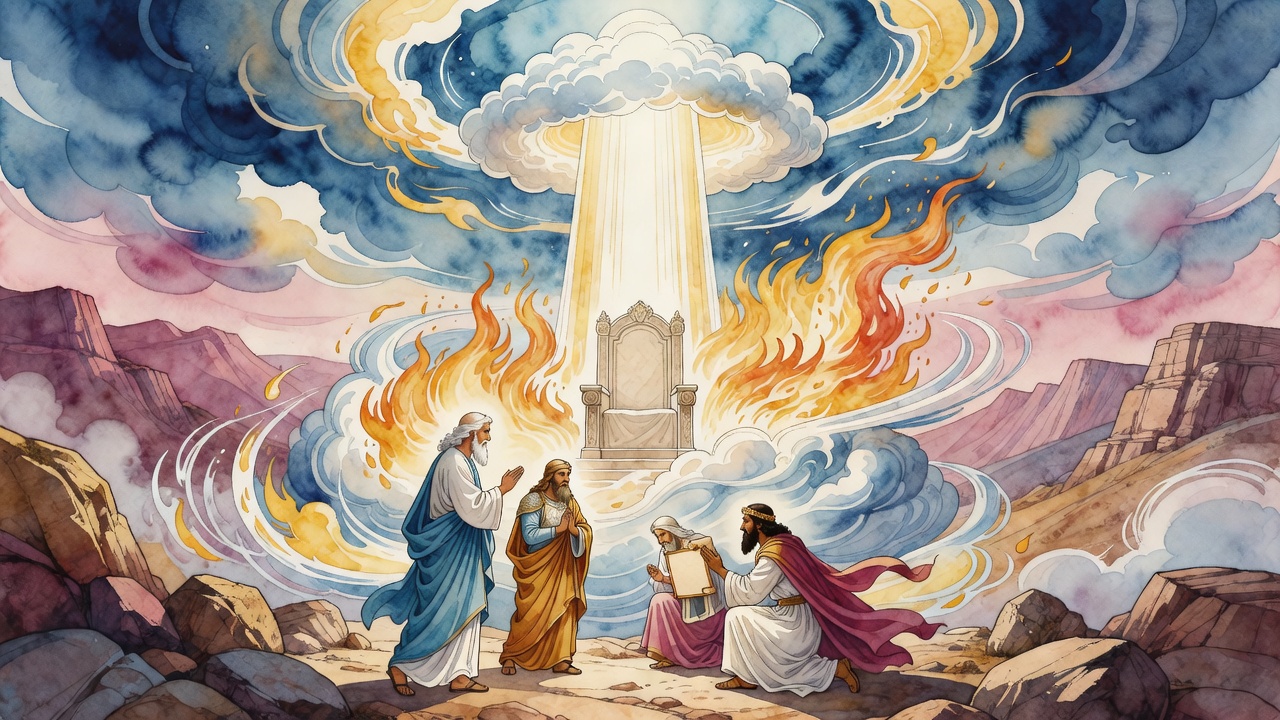
Jeremiah did not bring an argument of his own to the palace. He brought his teacher.
Isaiah had seen this war coming a hundred years earlier, Egypt against Assyria, and had said so, and the road Egypt would take to fight it ran the length of Judah. So the prophet told the king to open the road. Let Pharaoh through. The Egyptian column had no interest in Jerusalem and no orders about it, and if Judah stood aside the column would pass and be gone by the new moon.
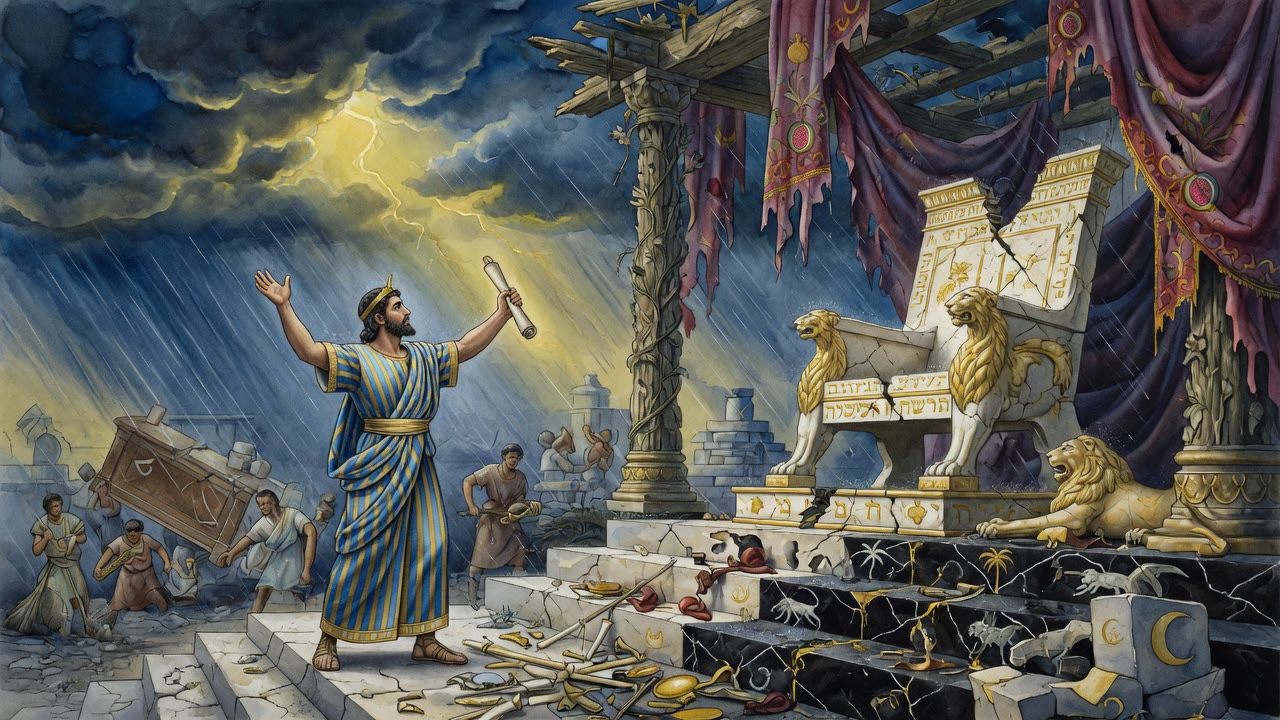
Josiah had spent his reign doing what prophets told him. He had torn down the high places, burned the vessels made for other gods, and rebuilt the worship of the Temple out of a scroll found in its own walls. He had never once been the man in the room who said no to a prophet.
He said no.
The King Answered With Moses
"Moses, thy teacher's teacher, spake," Josiah said. Then he gave the verse, and the verse was not obscure. "I will give peace in the land, and no sword shall go through your land."
He pressed on the words the way he pressed on everything. Not no hostile sword. Not no sword raised against Israel. No sword. A blade crossing his territory to cut somebody else's throat was still a blade crossing his territory, and the promise Moses had made covered every one of them or it covered nothing. Isaiah had seen a war. Moses had made a guarantee, and Moses had taught the man who taught Jeremiah, and a guarantee from further up the chain outranked a forecast.
He was not being reckless. He was being consistent, in the only way he had ever known how to be, with a man who could not answer him from a stronger verse.
So Jeremiah left, and Josiah called out the army, and the two forces met in the plain at Megiddo.
The Measure That Was Already Full
What the king did not know was that the promise he was standing behind had been quietly voided by the people he was standing in front of.
They had kept their idols. Not in the open, since he had made the open impossible, but kept, in rooms he never entered, by men who bowed correctly when he passed. The guarantees of the Torah were never issued to a nation like that, so the sword clause he was counting on had lapsed while he was still enforcing everything else in the book. He was innocent of the deception, which is a strange thing to be able to say about the most informed king Judah ever had.
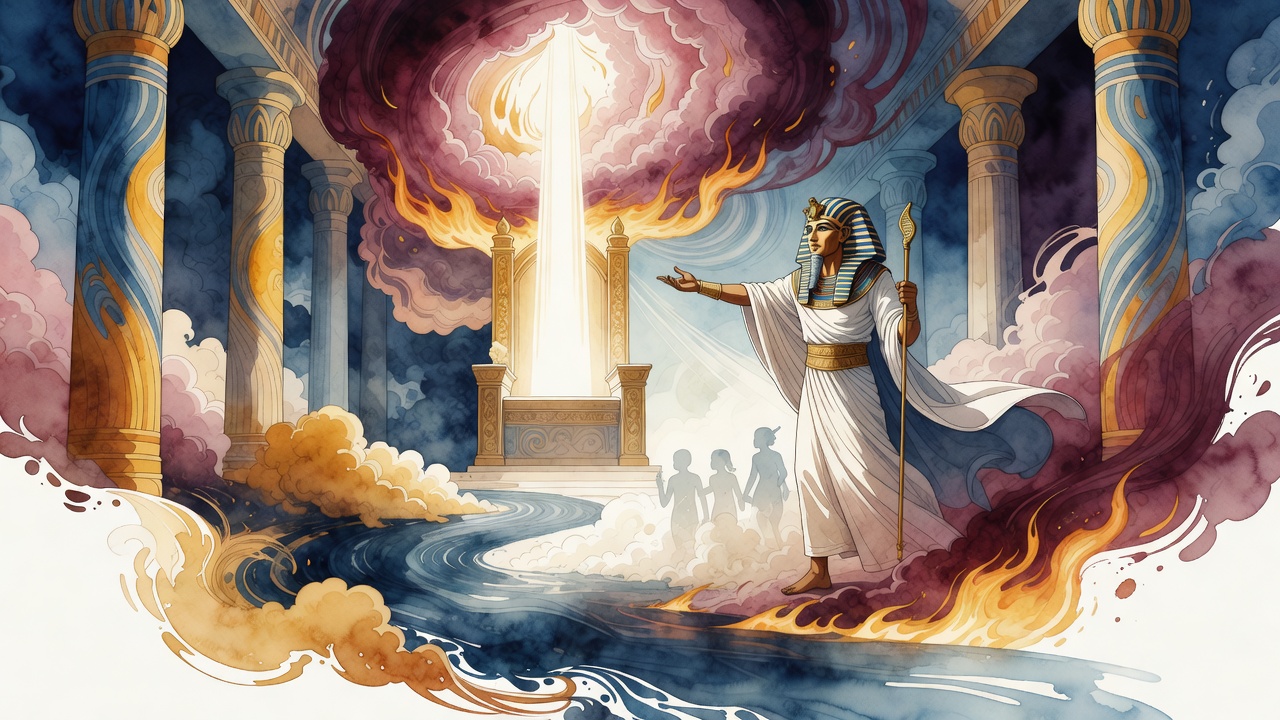
Above them, in the vision Amos was given, God stood over that generation the way a man stands over an animal he intends to slaughter. Their sins had filled a se'a measure to the rim. The rabbis asked which sin at the top of that measure was the one that prosecutes, and the answer was not idolatry, which sat lower in the jar. It was robbery. Short weights, bought judgments, wages held back, the ordinary daily theft of a market town, worth more in that court than bloodshed and worth more than the idols in the back rooms.
"Strike the apex, and the thresholds will quake." The apex was the king.
Three Hundred Darts at Megiddo
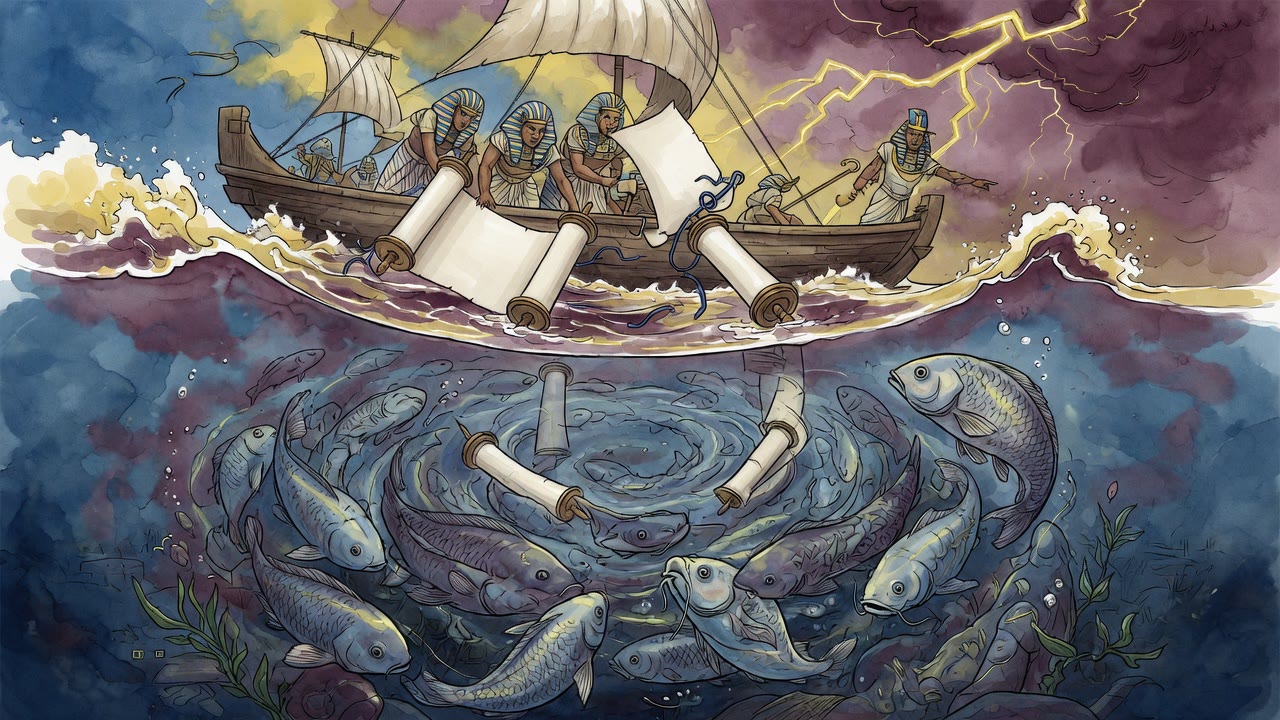
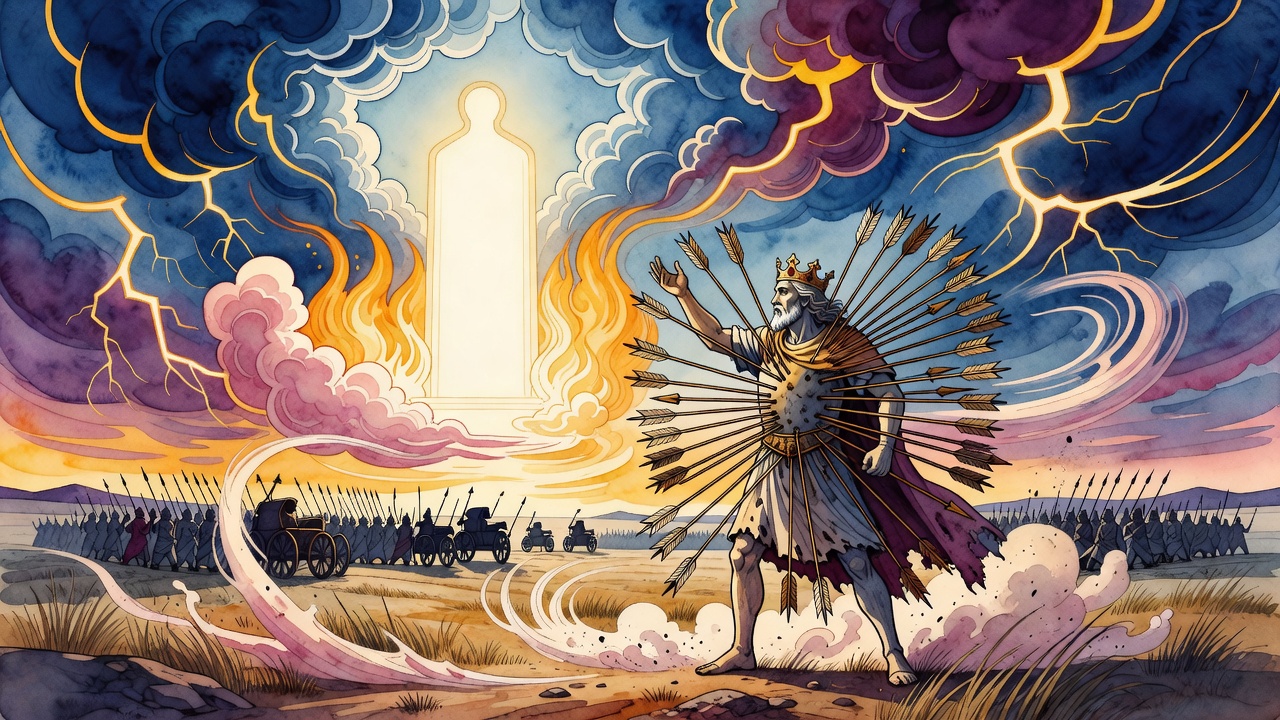
The Egyptians shot in volleys, and they kept shooting at the same man.
Three hundred darts went into Josiah before his people got him off the field. Not three or thirty. Three hundred, counted afterward, which means somebody counted them, which means the body came back to Jerusalem in a condition the counters could not stop describing.
He was alive for part of it. A man with that many shafts in him has time, and the whole court was waiting to hear what he would say, since a king dying inside a promise God had made him has grounds for a complaint that would be heard. His mouth was full of blood. He got the words out anyway, and they were not a complaint. "The Lord is righteous," Josiah said, "for I have rebelled against His commandment."
He had worked it out on his back in the chariot. Not that Moses had lied and not that Jeremiah had been lucky, but that a prophet had stood in his throne room and told him to stand aside, and he had preferred his own reading, and preferring his own reading was itself the rebellion. He named the crime as his and cleared the court of any other defendant, and then he died of it.
What Shook in Jerusalem
The men who quaked were his legal advisers.
They had sat in his courts through every year of the reform, hearing the cases from those markets, certifying that the land was clean, sending him out to Megiddo on the strength of a verse whose conditions their own dockets had already broken. The apex was struck in the plain, and the doorframes went on shaking in the city where the actual robbery had been transacted, in front of judges who had watched it come in and had called the land faithful anyway.
Judah buried the best king it ever had, and the men who had let the measure fill kept their seats.
← All myths