Korah Wanted the Hands That Spoke God's Name Over Israel
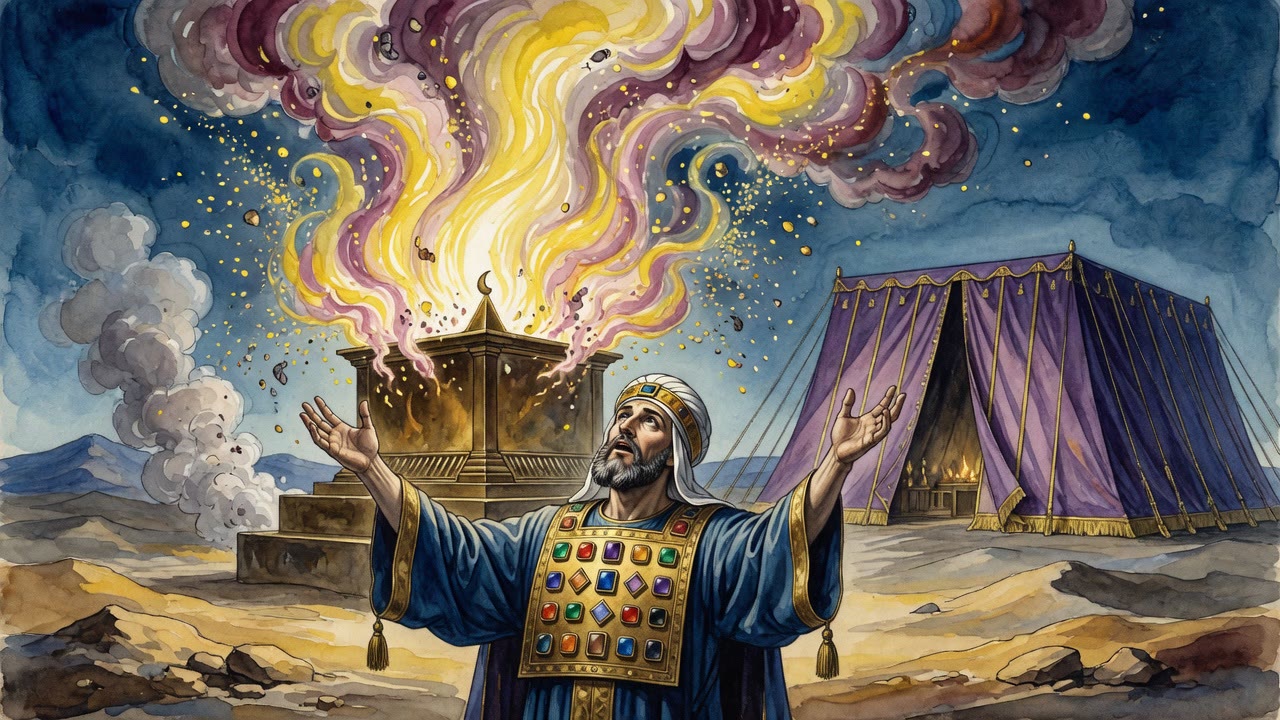
Inside the sanctuary the priest said the four-letter Name out loud. Anywhere else he said a substitute. Korah stood in the camp and watched Aaron do it.
Table of Contents
 Click for full size
The Hands Go Up and the Name Comes Out
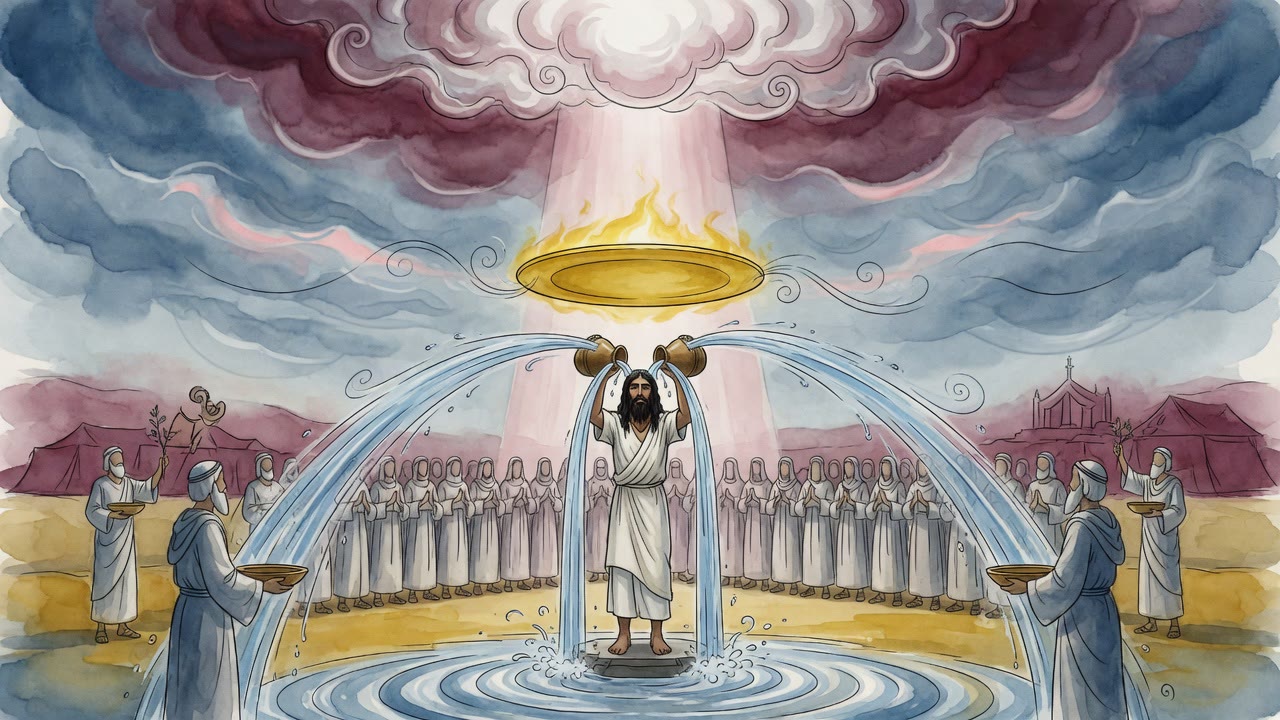
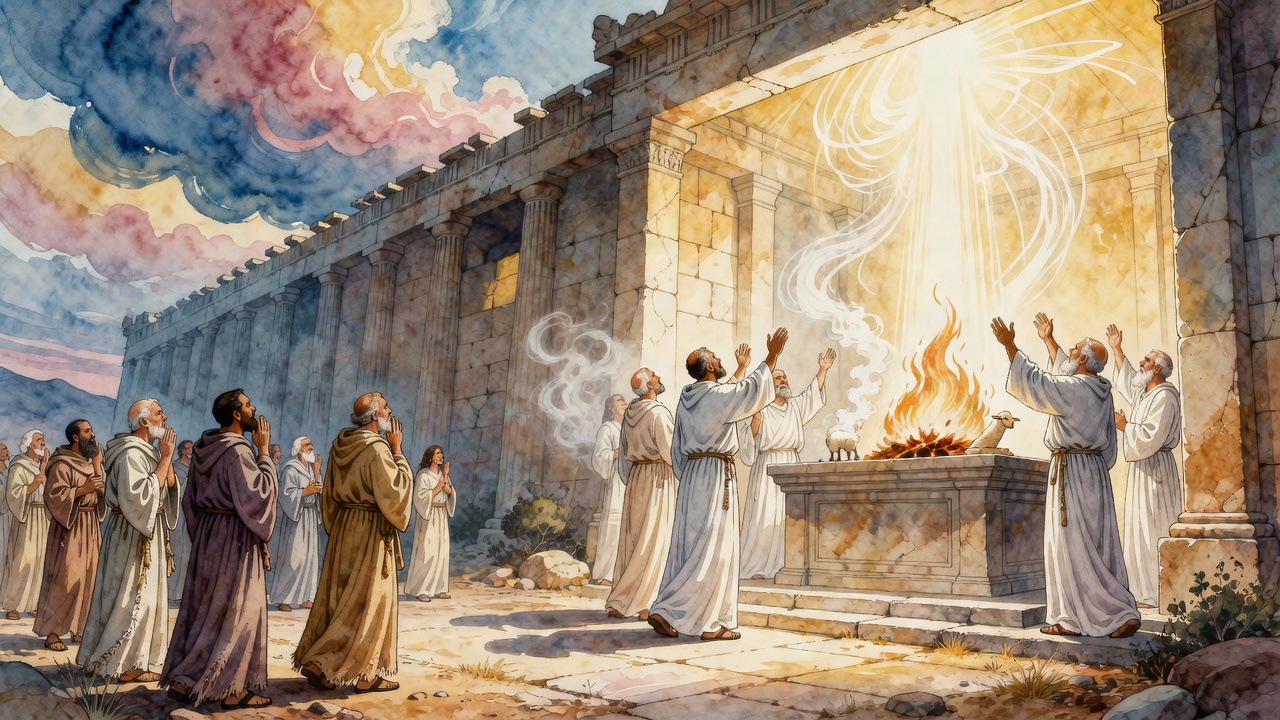
Aaron raises both hands over the people and says fifteen words.
May the Lord bless you and keep you. May the Lord make His face shine on you and be gracious to you. May the Lord lift His face toward you and give you peace.
Three lines, and inside them, three times, the four-letter Name. Not a title. Not a substitute. The actual Name, said out loud, by a man, in front of a crowd.
That only happens in one place on earth. The same three lines are said in every town in the country, and out there the priest reaches the Name and says Adonai instead, an epithet, a stand-in, a word that keeps the real one covered. The distinction is not a custom that grew up over time. It was pulled out of a verse. God says the priests shall place My name on the children of Israel, and elsewhere God says of the sanctuary that He will place His name there, and the same two words in the two verses lock together. My name means the Name itself. There means the sanctuary. In the sanctuary the Name. Outside it, an epithet.
So there was exactly one man, standing in exactly one courtyard, licensed to open his mouth and let it out.
What Keeping Turned Out to Mean
The second phrase is the one the rabbis pulled apart, because it sounds like the smallest of the six.
And keep you. Keep what, and from what?
Rabbi Nathan started at the bottom. Bless you with property, and then keep the property, and keep your body along with it. Rabbi Yitzchak went inward. Keep you from your own evil inclination, which is the one thief nobody can lock out. Then it kept widening. Keep you from the destructive spirits, the ones a man cannot see coming. Keep for you the covenant sworn to your fathers, which is a promise held in trust across centuries by a party who never dies. Keep for you the End itself, the redemption, the way a watchman keeps the night until somebody asks him how much of it is left.
And then past the edge of a life. Keep your soul at the hour of your death, so that it is bound up in the bond of life and not slung away like a stone out of a sling. Keep your feet out of Gehinnom (the realm of judgment after death). Keep you in the world to come.
One word in Hebrew, and a man walking home from the sanctuary had just been handed his property, his body, his self-control, his protection, his ancestors, the end of history, his own dying, and whatever comes after it. Every morning. From a pair of raised hands.
The Men Who Wanted the Hands
Not everyone in the camp watched that with a full heart.
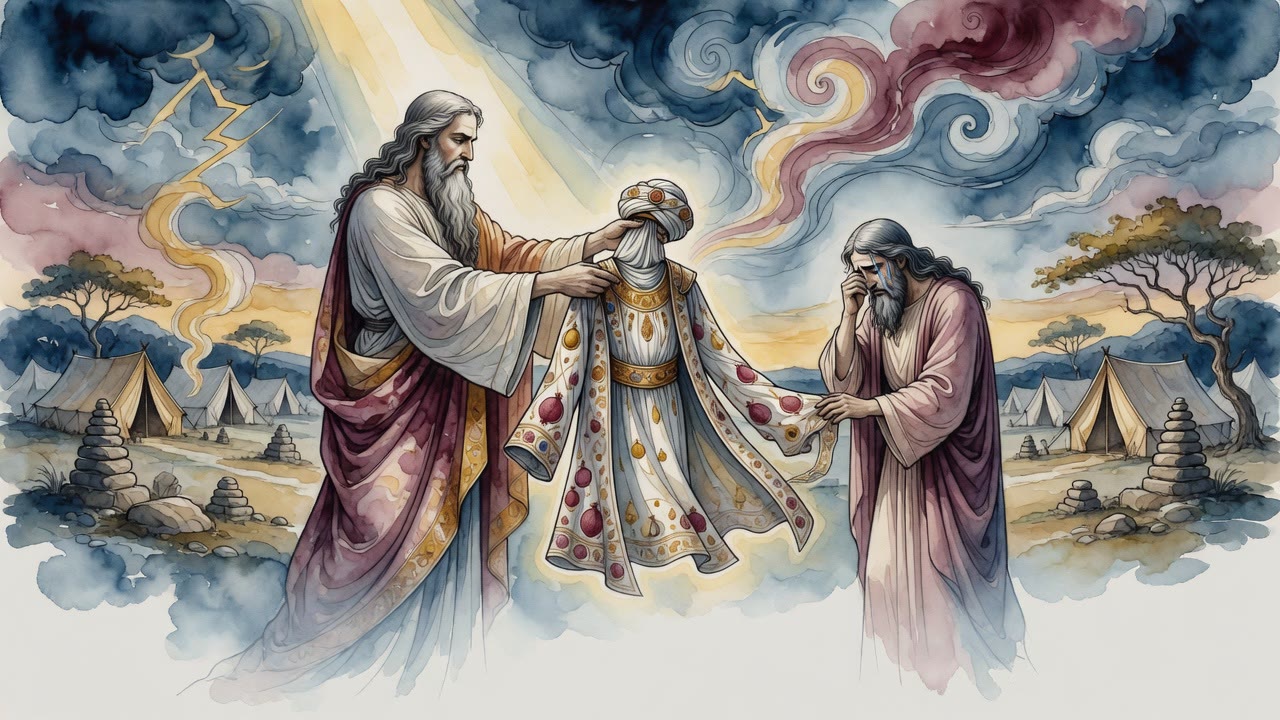
Strangers grew angry with Aaron. They were jealous of him out there in the desert, where there was nothing else to look at and one family had been given the only office that mattered. Korah gathered the resentment and gave it a shape. Dathan and Abiram came in with him. Two hundred and fifty men of standing came in behind them, and they were not thieves or fools. They were the summoned ones, men of name.
Their argument was clean and it was almost right. The whole community is holy, all of them, and the Lord is among them. So why do the two of you lift yourselves above the assembly of the Lord.
What they were asking for, underneath the argument, was the courtyard and the raised hands and the Name.
They Saw Him and He Was Enraged
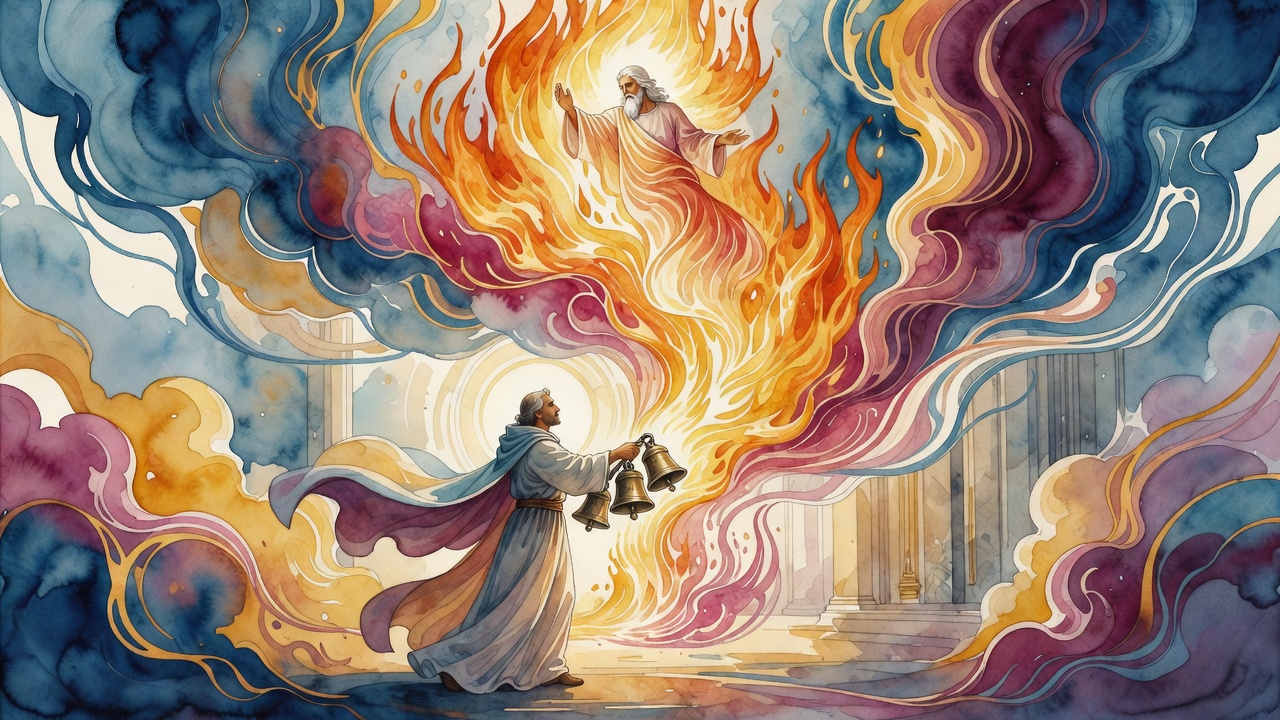
They came out in the morning with fire pans, two hundred and fifty of them, each man holding incense he had no right to burn, and they stood at the entrance of the tent and waited to be recognized.
The ground under Dathan and Abiram split open while their wives and children were standing in the doorways of their tents watching. It closed again.
The two hundred and fifty were still holding their pans when the fire came out and took them where they stood.
They saw the Lord, and He was enraged, and He destroyed them in His great anger. That is the whole account of it, and there is no sympathy anywhere in the sentence.
The Clause That Took It Away From the Priests
After the command about the blessing, the verse adds a short clause that looks entirely redundant.
And I shall bless them.
The rabbis asked why they are there at all, and gave two answers that point in opposite directions and land in the same place. So that Israel could never say their blessing depends on the priests. And so that the priests could never say we are the ones who bless Israel.
Korah had fought and died for a set of hands that turned out to be a conduit. The man in the courtyard was not the source of anything. He was a mouth borrowed for the length of three sentences, and the moment his arms came down there was nothing in them that belonged to him.
← All myths