Balaam's Donkey Knew More Than the Greatest Prophet
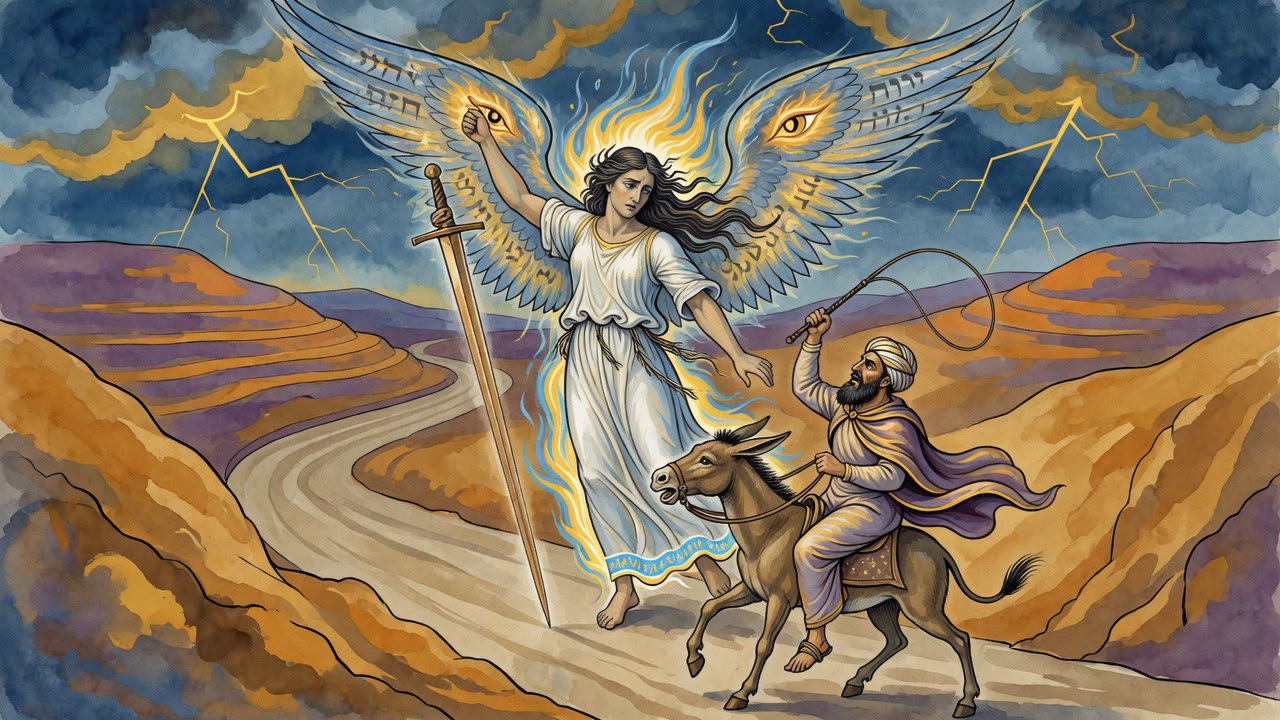
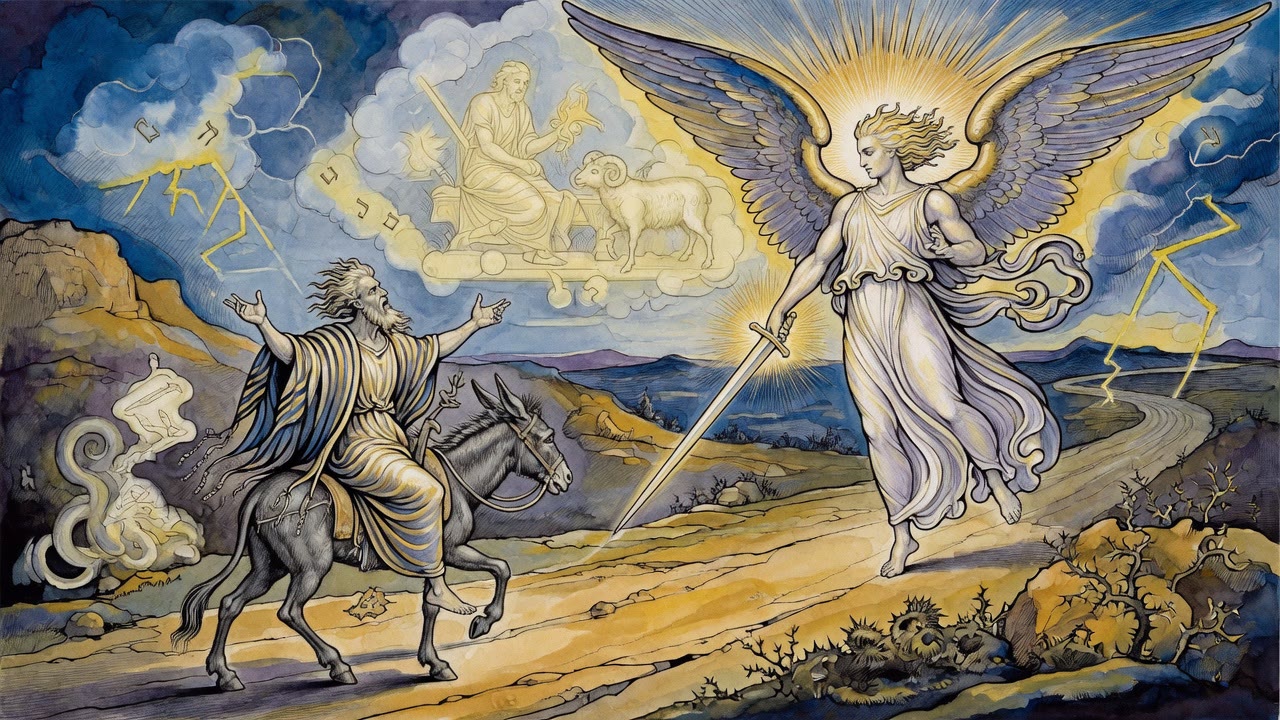
Balaam beat her three times for stopping in the road, then told her he would kill her if he had a sword. The angel in front of them already had one.
Table of Contents
The donkey saw the angel first.
 Click for full size
Balaam, described in the tradition as the greatest prophet the nations of the world ever produced, a man whose curses and blessings could alter the fate of peoples, rode an animal that had better spiritual perception than he did. The angel stood in the road with a drawn sword, visible to the donkey, invisible to the prophet. The donkey turned aside, pressed into a wall, sat down in the middle of the path. Balaam beat her three times, and each time she endured it without being able to explain what she had already understood.
The Three Festivals Hidden in Three Beatings
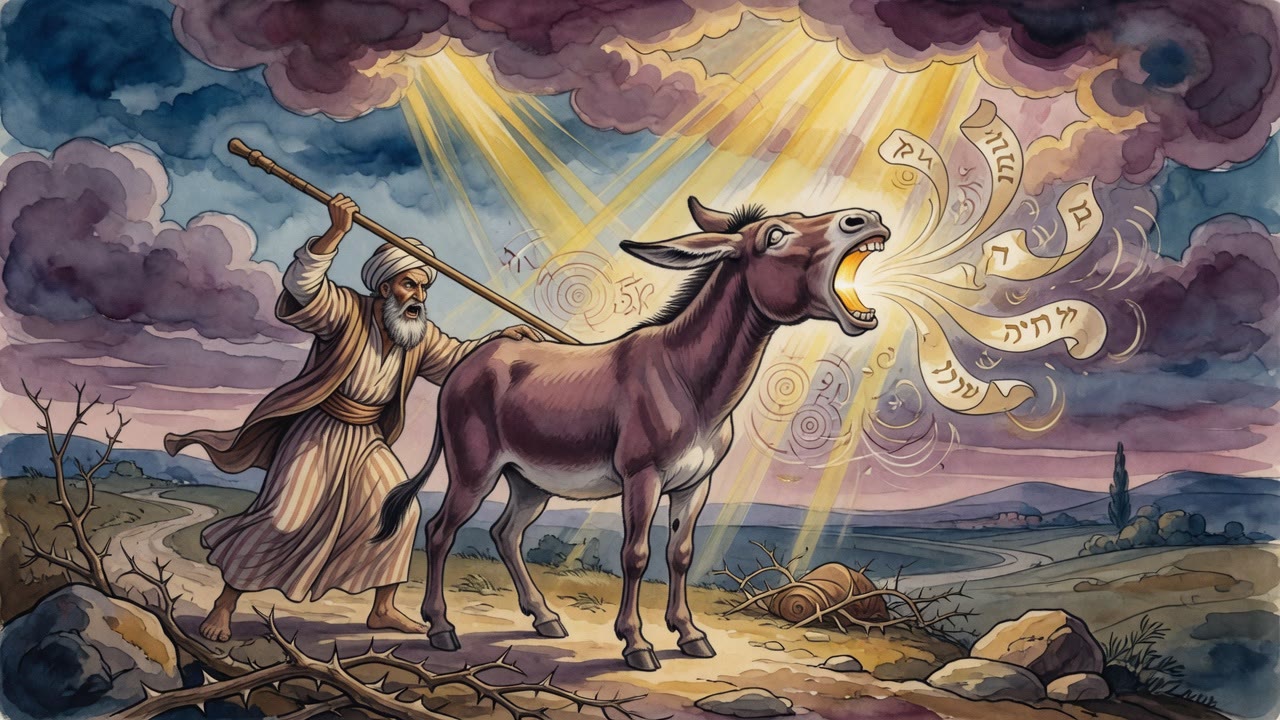
When God finally opened the donkey's mouth, her first question to Balaam was precise: "What have I done to you that you have struck me these three times?" (Numbers 22:28). In Hebrew, "three times" is shalosh regalim, the same phrase used for the three pilgrimage festivals, Pesach, Shavuot, and Sukkot.
Midrash Tanchuma, Balak 9, compiled in its present form by the fifth century CE, hears this as a theological argument embedded in the grammar. The donkey was telling Balaam: you are trying to uproot a people who observe three festivals a year. The very phrase you are using to count your blows against me is the phrase that names what makes Israel untouchable. Shemot Rabbah, a homiletical midrash on Exodus drawn from Palestinian amoraic traditions and edited through the medieval period, provides additional context for the three festivals: they were instituted because of the merit of the patriarchs, who never came before God empty-handed, and that merit accumulates in Israel's favor when they keep them.
The Prophet With the Foul Tongue
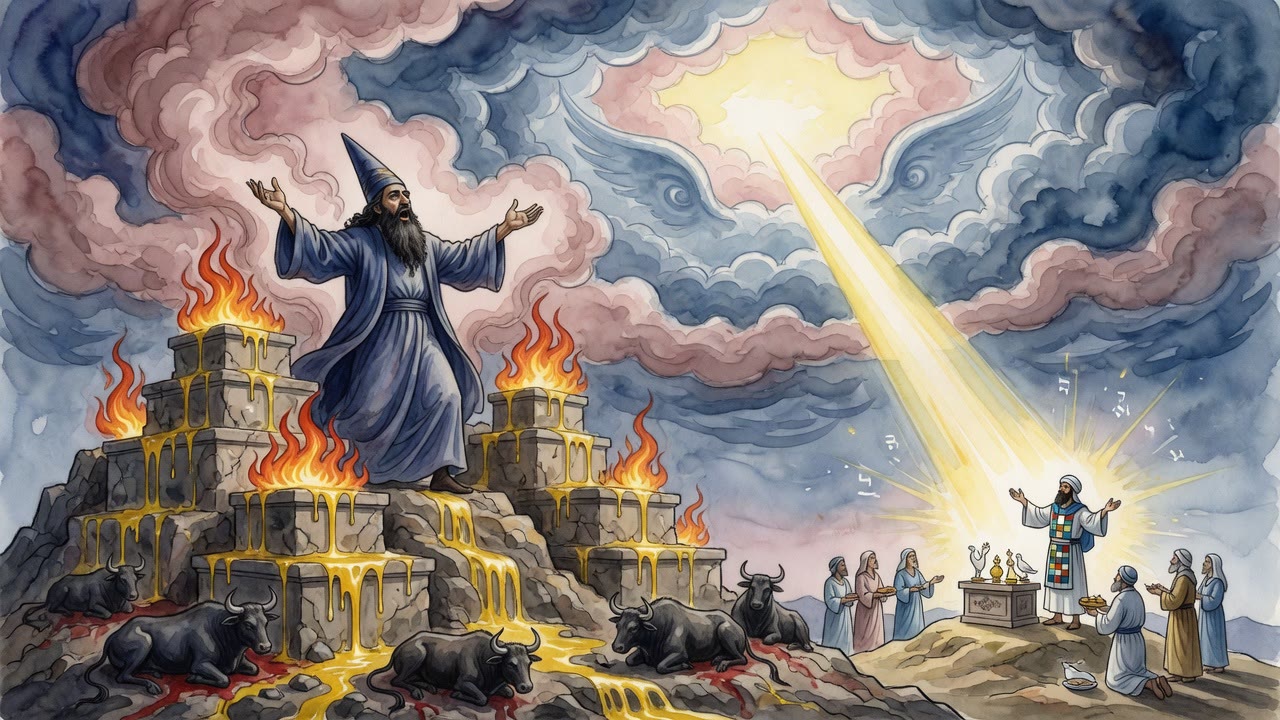
Balaam answered with fury: "Because you have made a fool of me! If I had a sword in my hand, I would kill you right now" (Numbers 22:29). The Tanchuma notes dryly that even though Balaam spoke in the holy tongue, Hebrew, he had a foul tongue. The greatness of his prophetic gift did not improve his character. A physician, the midrash says, who comes to heal with his tongue but has a foul tongue is useless. Balaam's instrument was language, and he had degraded the instrument.
The Mouth and the Tongue Belong to God
The reason God opened the donkey's mouth at all was not to produce a spectacle. Midrash Tanchuma, Balak 9, is explicit: God opened the donkey's mouth to demonstrate to Balaam that the mouth and tongue are under divine control. If Balaam wished to curse Israel, the organ he intended to use for that purpose was not his. It had always been God's. The donkey was a preview. What Balaam proposed to do with his mouth at Balak's altars, God could prevent with the same ease that He had just caused a beast of burden to speak philosophical argument in the holy tongue.
Why the Donkey Had to Die
The donkey died the moment she finished speaking. The question of why is answered by the Legends of the Jews, Louis Ginzberg's early twentieth-century synthesis drawing on midrash and Talmud. Two reasons are given. First, God feared the nations would worship the donkey if she remained alive. A speaking animal, in the ancient world, was the kind of thing around which cults formed. The donkey had served her purpose precisely. Allowing her to survive would have converted a demonstration of God's power into a new object of misplaced devotion.
The second reason is more unsettling: if the donkey were alive, Balaam's humiliation would be permanent and visible. Anyone who saw the animal could ask: is this the creature that shamed the greatest prophet? God removed the evidence to spare Balaam from endless public degradation. The midrash finds mercy even in the killing of an instrument.
← All myths