Akiva Saw What Moses Missed and Wept for It
Moses visited Akiva's academy and understood nothing. Then a student asked where the teaching came from and Akiva said: a law given to Moses at Sinai.
Table of Contents
 Click for full size
The Back Row of the Academy
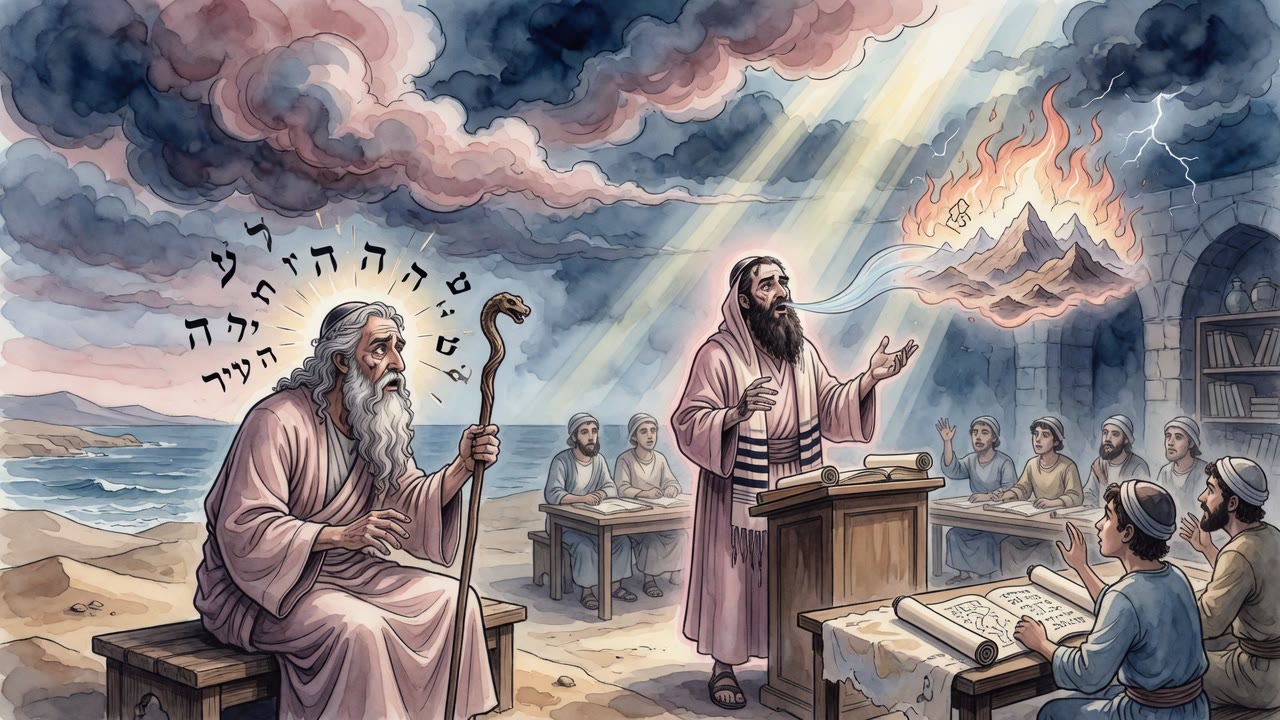
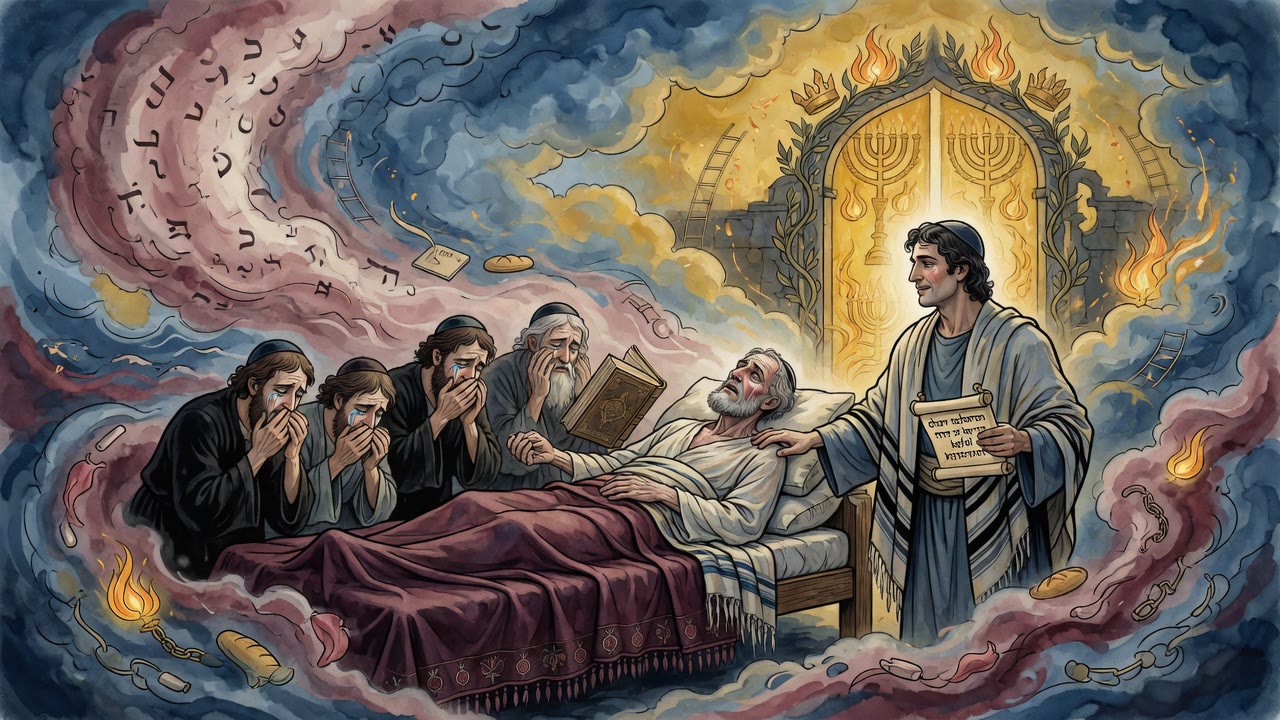
Moses arrived at Rabbi Akiva's academy and sat down at the back. He had received the Torah at Sinai. He had spoken with God's face to face. He had climbed the mountain and stood in cloud and received the words that would structure Jewish life for all generations. And now he sat in a classroom where his Torah was being discussed and he could not follow a word of it.
The Talmud in tractate Menachot records the moment without dramatizing it. Moses sat in the back row and felt faint as Akiva moved through the teaching, deducing laws from interpretive principles and deducing more laws from those laws, building a structure of meaning so elaborate that the man who had received the original material could not trace it back to its source. He felt faint. The Talmud says so plainly. The weight of what he was witnessing was almost too much to hold.
Then a student raised a hand and asked Akiva how he knew one of the things he had just taught. And Akiva said: it is a law given to Moses at Sinai. Moses was comforted. Not because the teaching suddenly made sense to him. Because it was still his. He had given birth to something that had outgrown him, and what he was hearing in the back of that classroom was the shape his gift had taken across generations of people who had received it and passed it on and built on it and passed on what they had built.
The Question Akiva Asked That Moses Could Not Have Answered
Sifrei Devarim, the early rabbinic commentary on Deuteronomy compiled in the third century, records a different kind of challenge Akiva posed to the tradition Moses carried. Reading the dietary laws in Deuteronomy 14, Akiva asked: was Moses a hunter or an archer, that he knew the distinguishing signs of every permitted and forbidden animal in creation? The question sounds like mockery. It is actually the opposite.
Akiva is insisting that Moses's knowledge of the animal kingdom was not expertise. Moses was not a zoologist who had catalogued every creature and memorized the markers that distinguished clean from unclean. He was a prophet. He knew what he knew because God told him, because revelation filled him with knowledge he had not assembled through observation and study. The laws of the Torah are not derived from nature. They were given. Moses received them, but he could not have derived them. Akiva was defending Moses against a charge no one had yet made, but the defense itself reveals the depth of Akiva's respect for what Moses had carried.
What Moses Came to Ask and What He Was Shown
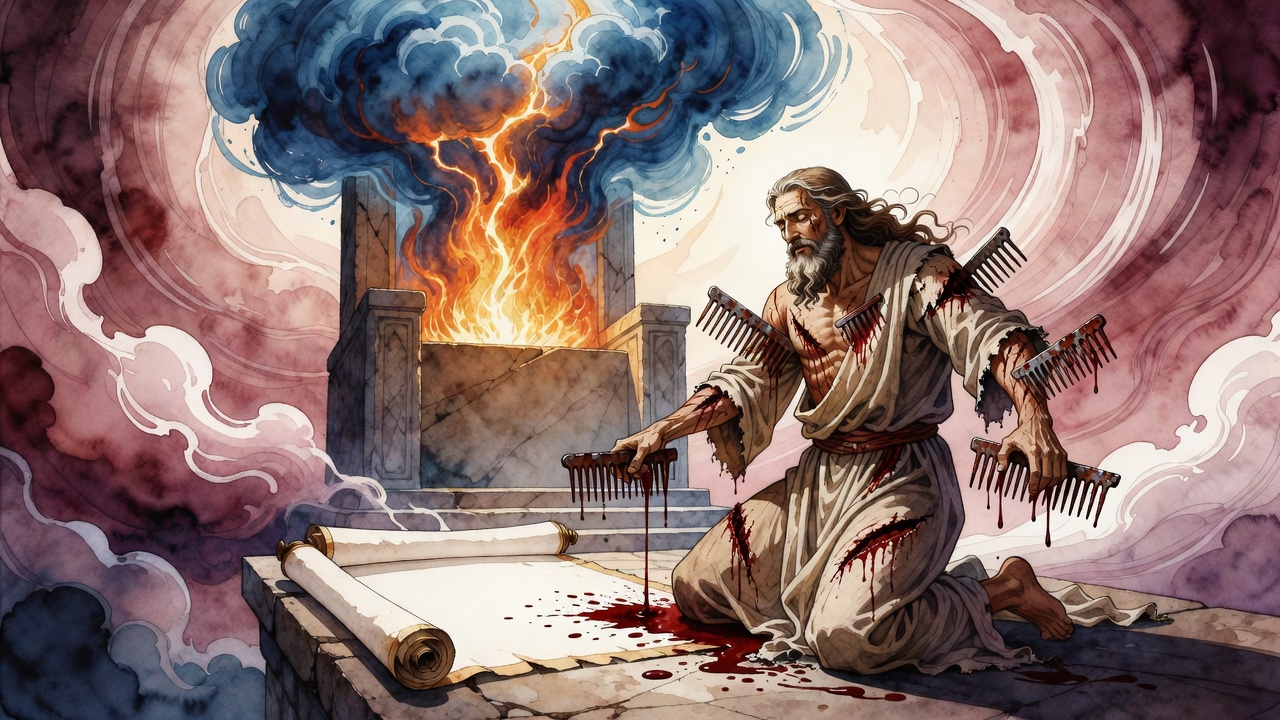
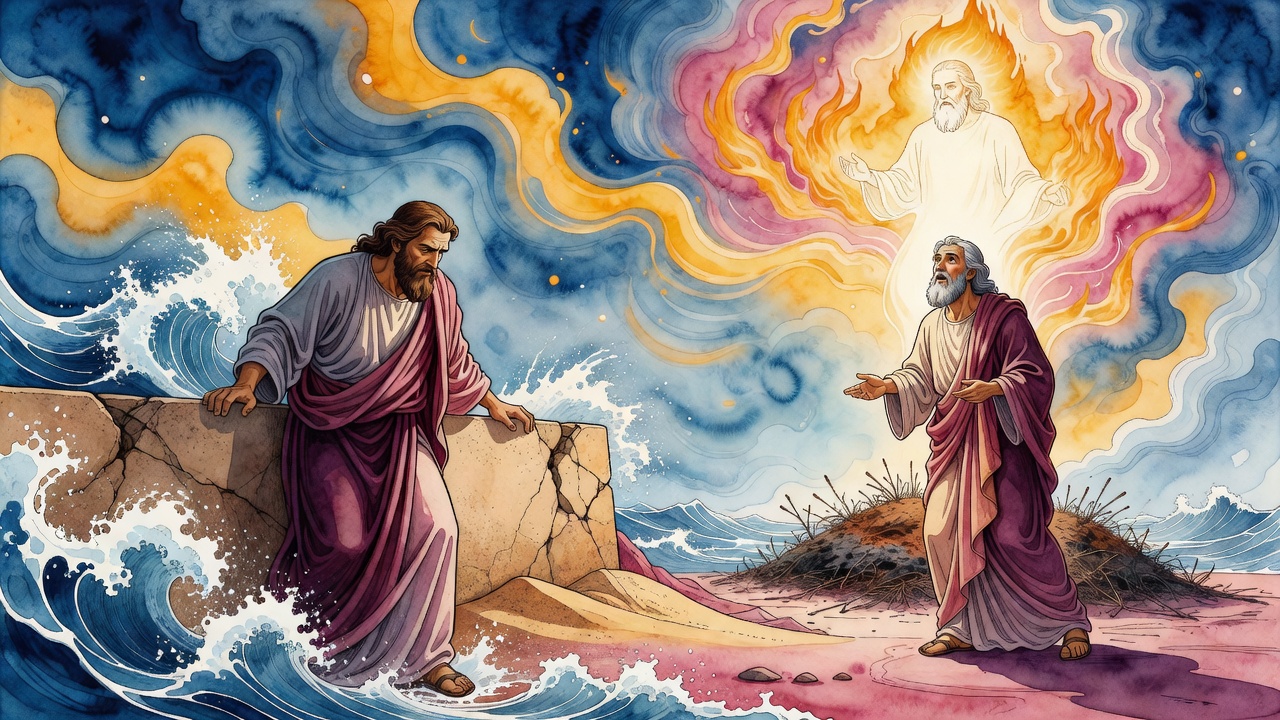
The tradition preserves a darker moment alongside the classroom scene. Moses, shown Akiva's future, asked God to show him Akiva's death as well. And God showed him: Akiva dying under Roman torture, his flesh combed with iron combs, his body destroyed by the soldiers of the empire that had outlawed Torah study. Moses saw it and said: this is Torah and this is its reward?
God answered: be silent, for such is my decree. The same words God used at the edge of the Reed Sea, when Moses cried out and God told him to stop crying and move forward. Be silent. There are things that cannot be resolved by argument or prophecy or even by the privilege of having stood at Sinai. Moses had stood there. He did not understand Akiva's death. The tradition preserved his protest and God's answer and offered neither explanation nor comfort beyond the answer itself.
Akiva and David's Court
The tradition places Akiva not only in a mystical encounter with Moses but in a visionary relationship with the Davidic line as well. The aggadic material shows Akiva moving between the worlds of legal precision and prophetic vision, a figure who could count the letters in the Torah and also see the messianic redemption that would come from David's house. The two capacities were not separate. For Akiva, the letters and the vision were the same thing examined at different scales.
The Shema on His Lips
Akiva died saying the Shema (Hear O Israel). His students were watching and asked how he could speak through the torture. He said he had loved God with all his soul his whole life and had wondered whether he would ever be called on to prove it. Now he was being called on. He prolonged the word ehad, one, as long as breath allowed. His soul departed at the word one. A heavenly voice said: happy are you, Akiva, for your soul departed at one. Moses sat in the back of the classroom and could not understand the teaching. Akiva stood at the end of everything and understood it perfectly.
← All myths