Abram Was Fourteen When He Commanded the Ravens and They Obeyed
Before Abram left Haran, before he smashed his father's idols, he was a boy in a field commanding ravens to turn back. He did it seventy times in one day.
Table of Contents
 Click for full size
Sowing Season in Haran
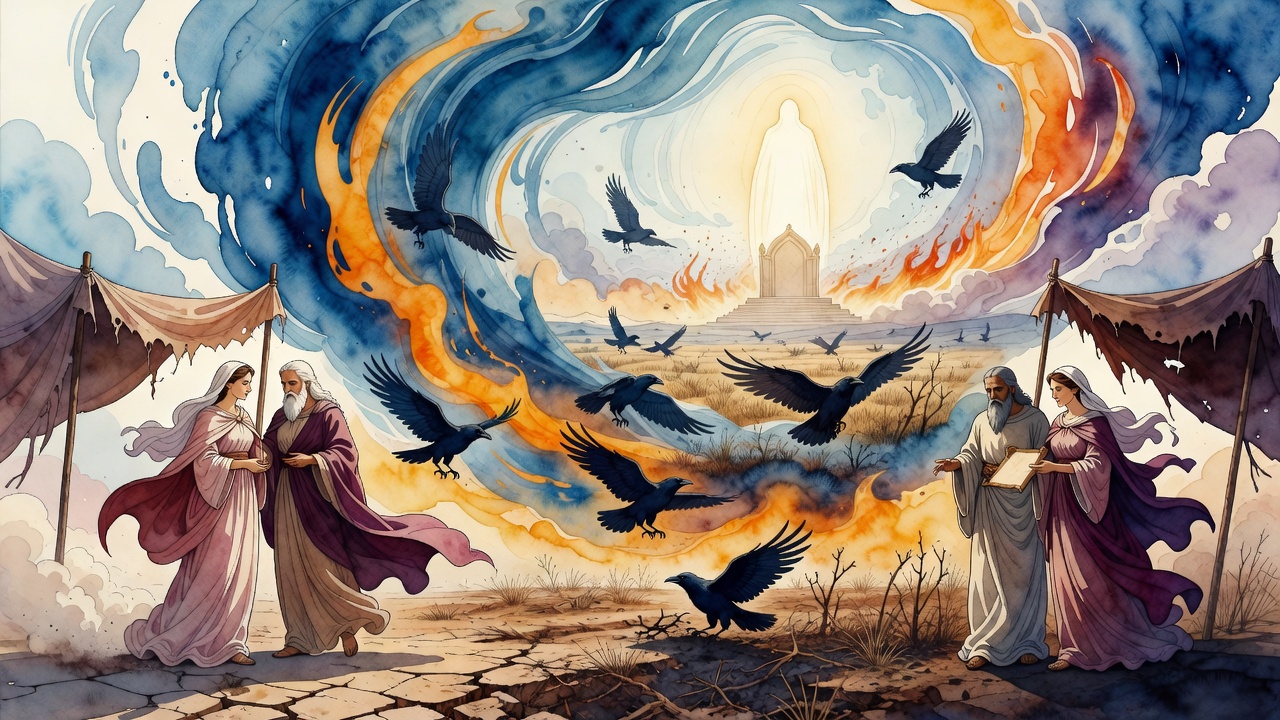
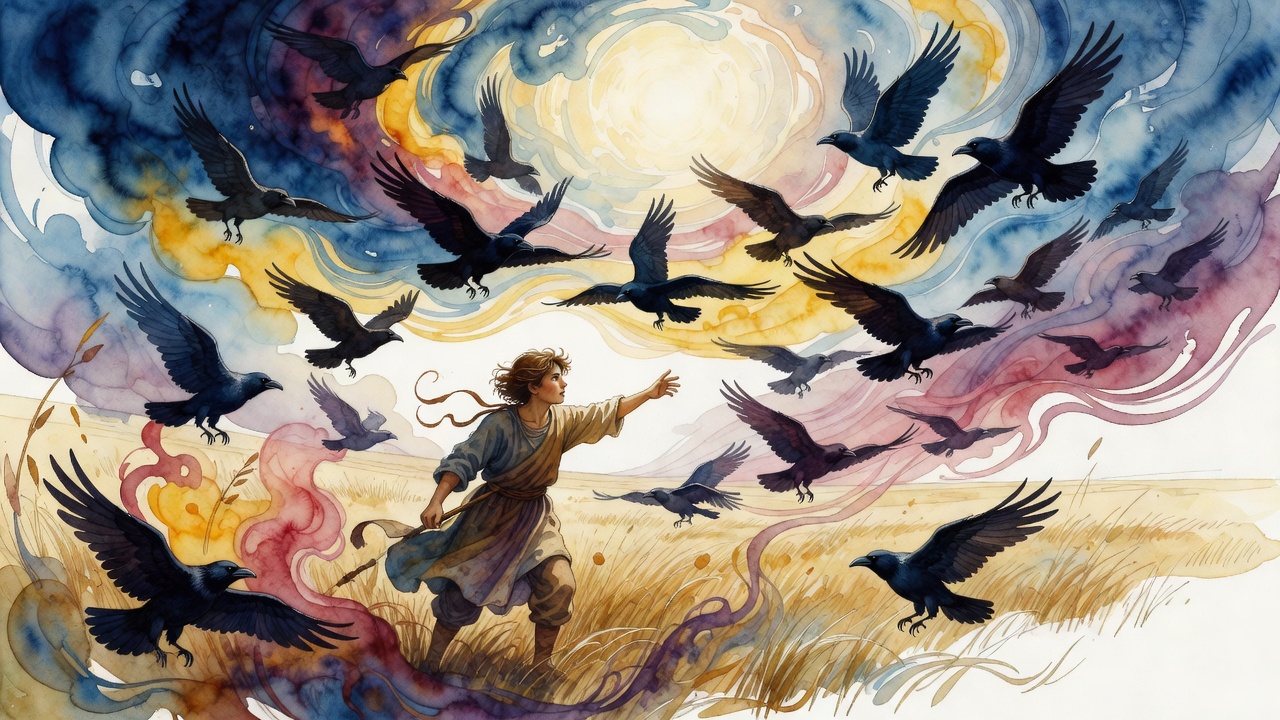
The ravens came the way they always came at sowing season, dropping out of the sky in a dark mass toward the freshly scattered seeds. Every farmer in Haran knew the problem. The birds descended at planting time and ate what the ground had not yet swallowed, and there was no permanent solution, only the annual labor of standing in the field and driving them off, over and over, for as long as the planting lasted. The boy standing in the field that morning was fourteen years old, the son of Terah, working the land with his family during the six days that the Book of Jubilees specifies were given over to agricultural labor in the account it preserves of this period of Abram's early life.
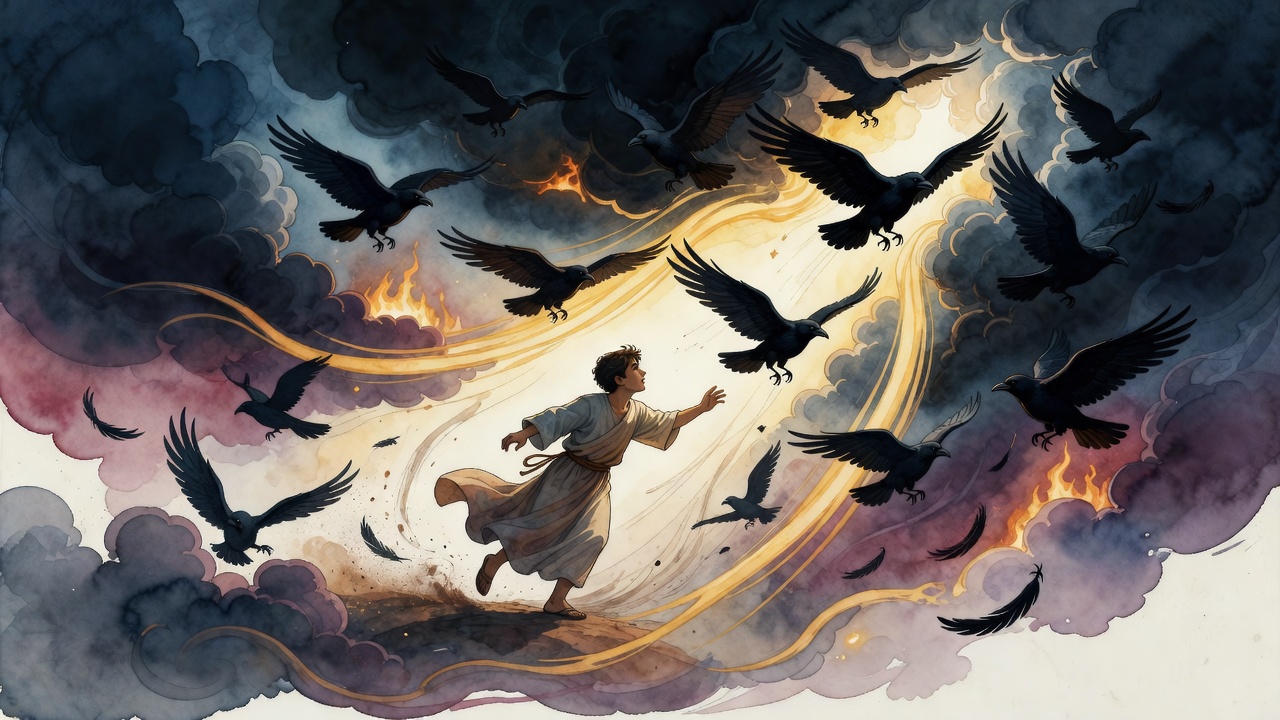
When the dark cloud of birds descended, Abram did not wave his arms. He raised his voice and cried out: "Descend not! Return to the place whence ye came!" The ravens turned back. Every one of them. They flew back to where they had come from without taking a single seed from the ground where Abram stood.
Seventy Times the Ravens Turned Back
He did it seventy times that day. Not once in a moment of unlikely fortune, not twice in a way that might be coincidence. Seventy times: the number that in Jewish tradition signals completeness, the number of nations, the number of the elders who ate and drank and saw God on the mountain. Seventy times the ravens came and seventy times Abram's voice sent them back. Not a single seed was taken from the ground under his protection. Jubilees records this with the calm precision it uses for all the strange facts it preserves: it happened, here are the numbers, the record stands.
The Book of Jubilees notes the practical consequence: from that year forward, the people of Haran no longer feared the ravens. Whatever Abram had done in that field, it had changed something permanent. The problem that had always existed and never been fully solved was solved. The birds had been commanded, and the command had held, and the harvest that followed was the first in the memory of anyone present in which the ravens had not taken their cut.
His Fathers' Books in Hebrew
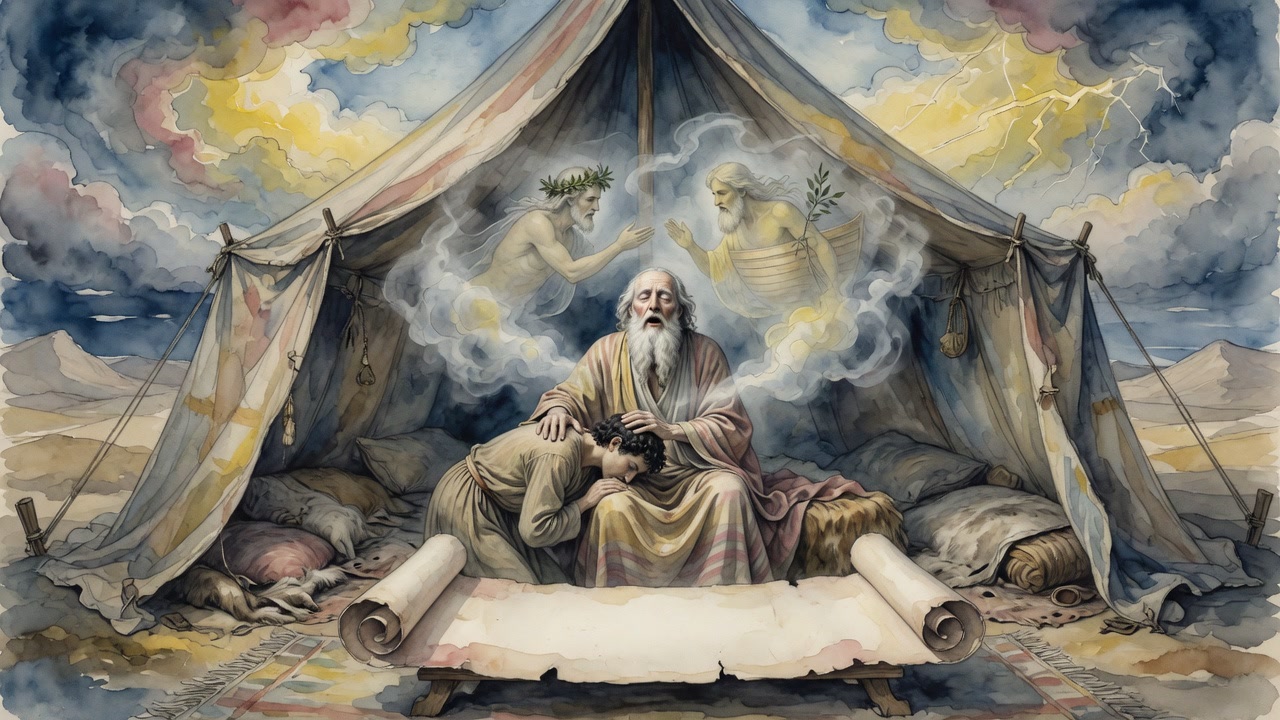
The same period of Abram's life, the six winter months when the fields were not being worked, was devoted to study. Jubilees preserves a specific detail that the Torah itself does not provide: Abram's fathers had left books, written in Hebrew, and Abram took those books and transcribed them. He did not merely read them. He copied them, which in the ancient world meant understanding them well enough to reproduce them accurately, the first step toward mastery rather than familiarity.
The books were written in Hebrew, Jubilees specifies, the language of creation, the language in which the world had been called into being. The angel who revealed these events to Moses noted: "I made known to him that which he could not understand." This is a quiet line in the text but carries considerable weight: Abram could not have understood these books alone. Divine assistance was required. The study was collaborative, a young man working through texts his ancestors had written, with an angelic presence filling in what the texts could not convey without help.
The Agriculture He Invented
Jubilees 12 places Abram in an even broader context than family inheritance. He taught the people of Haran how to farm in ways that addressed the fundamental problem the ravens represented. Before Abram, the account implies, the relationship between seed and bird was unresolved, a permanent vulnerability in the food supply of anyone who planted. After Abram's intervention, the work of agriculture could be done without that particular fear. The tradition credited him not merely with driving ravens away once but with establishing the knowledge by which it could always be done.
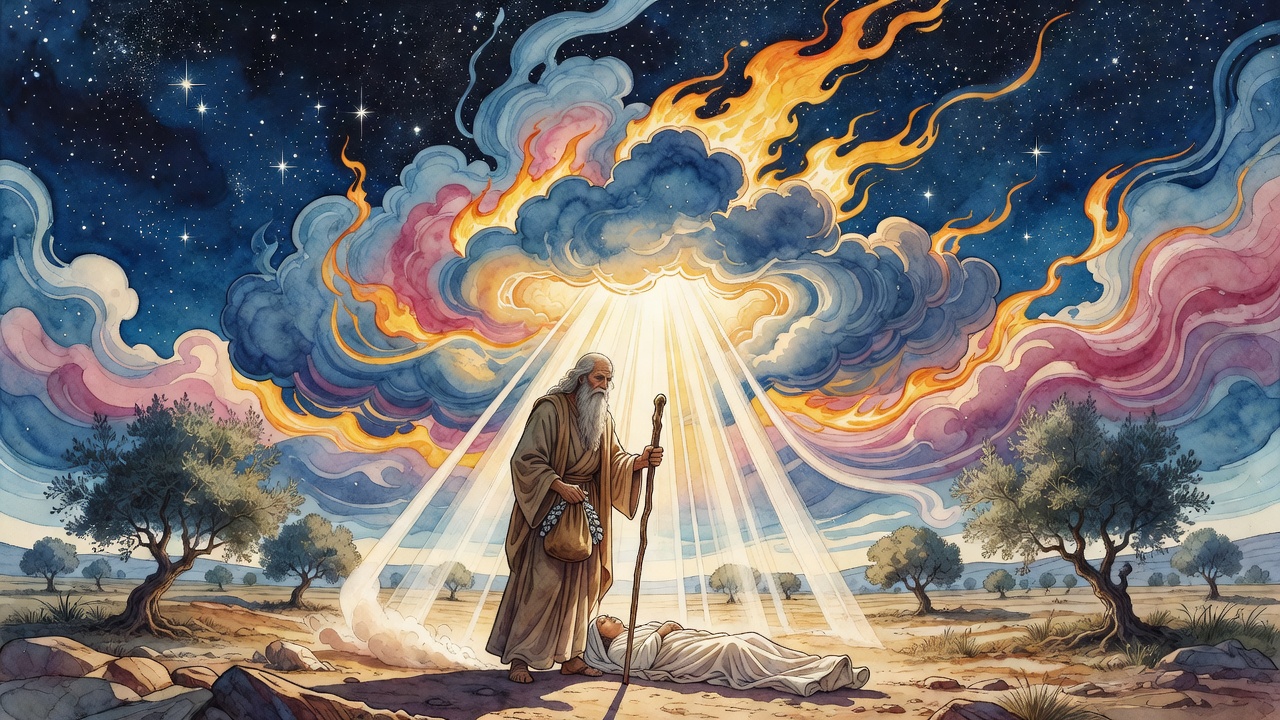
This is the picture of Abram before the call, before the covenant, before the names changed: a fourteen-year-old boy in a Mesopotamian field, reading his ancestors' books in the winter, commanding birds in the spring, establishing practices that would outlast him by generations. The call that comes in Genesis 12, "Go forth from your land," falls on a man who has already demonstrated, without being told to, the qualities that make him worth calling.
← All myths