Jethro Had Seven Names and Each One Was a Different Act of Devotion
Most people with seven names are hiding something. Each of Jethro's seven names recorded a different act of choosing the harder right thing.
Table of Contents
 Click for full size
A Name for Every Choice
Jethro carried seven names, and not a single one was an alias. Each was a deed pressed into language, a crystallization of something he had done, chosen, or become. The names were a biography compressed into syllables.
The Midrash Tanchuma, drawing on traditions assembled in late antiquity, records the list. Jethro, in Hebrew Yitro, from the root meaning addition or surplus, because he added a chapter to the law. Hobab, from the root meaning love, because he loved the Torah. The other names in the sequence continued in the same vein, each one marking a different facet of a man who kept making the same choice across the full length of his life: to move toward what he recognized as true, even when it cost him everything he had already built.
Most people who accumulate that many names are trying to hide behind them. Jethro's names were the opposite. They were displays. Each one was public evidence of a private commitment that other people had witnessed and recorded.
What He Walked Away From
When Jethro converted and came to live among the Israelites, the people of the land made him an offer. The fields of Jericho. Fertile, productive land in a region where land was the measure of everything: security, status, the capacity to feed your descendants and leave them something that would last. It was a generous gift, made to the father-in-law of the most powerful man in Israel. He could have taken it, settled in comfort, spent his remaining years in the abundance that his relationship to Moses entitled him to claim.
He refused. His reasoning was almost jarring in its directness: I abandoned all I owned in Midian in order to study Torah, and if I now accept land as a reward, the abandonment will have been for personal advantage rather than genuine devotion. The acceptance of a comfortable substitute would have retroactively changed the meaning of the sacrifice.
A name built from a deed holds only while every later choice still answers to it. Jethro knew that taking the land of Jericho would have been perfectly reasonable and entirely legal and would have quietly unmade the thing the names were recording. He gave up the comfortable inheritance to protect the integrity of what the names said he was.
Kenite and the Inheritance of His Descendants
The descendants of Jethro, called the Kenites, appear in the Torah and the books of the prophets long after Jethro himself has left the narrative. They lived among Israel, maintained their connection to the covenant people, and are recalled specifically for their faithful lineage. The name Kenite is itself one of the names in the list, derived from a term meaning smith or craftsman, connected to the metalworking traditions that also appear in Cain's lineage.
The tradition reads the persistence of the Kenites as evidence that devotion passed through families when it was genuine. Jethro's choice to abandon Midian was not only his own act. It established the direction of his line. His descendants inherited not land but orientation: the disposition to live among a people who valued Torah and to count that proximity as the real inheritance.
When Deborah sang her victory song after the battle against Sisera, she praised Jael, a Kenite woman, who killed the enemy general who had taken shelter in her tent. The tradition connects Jael's courage directly to her ancestry: she was Jethro's descendant, and the quality that made her act was continuous with the quality that made Jethro leave Midian. Devotion planted in one generation grew into a specific kind of moral courage in another.
The Name That Explained the Names
Yitro means surplus. He added a chapter to the law. But the word in Hebrew also means excellence, the quality of being more than sufficient, of exceeding the required minimum by the precise amount that transforms adequacy into virtue.
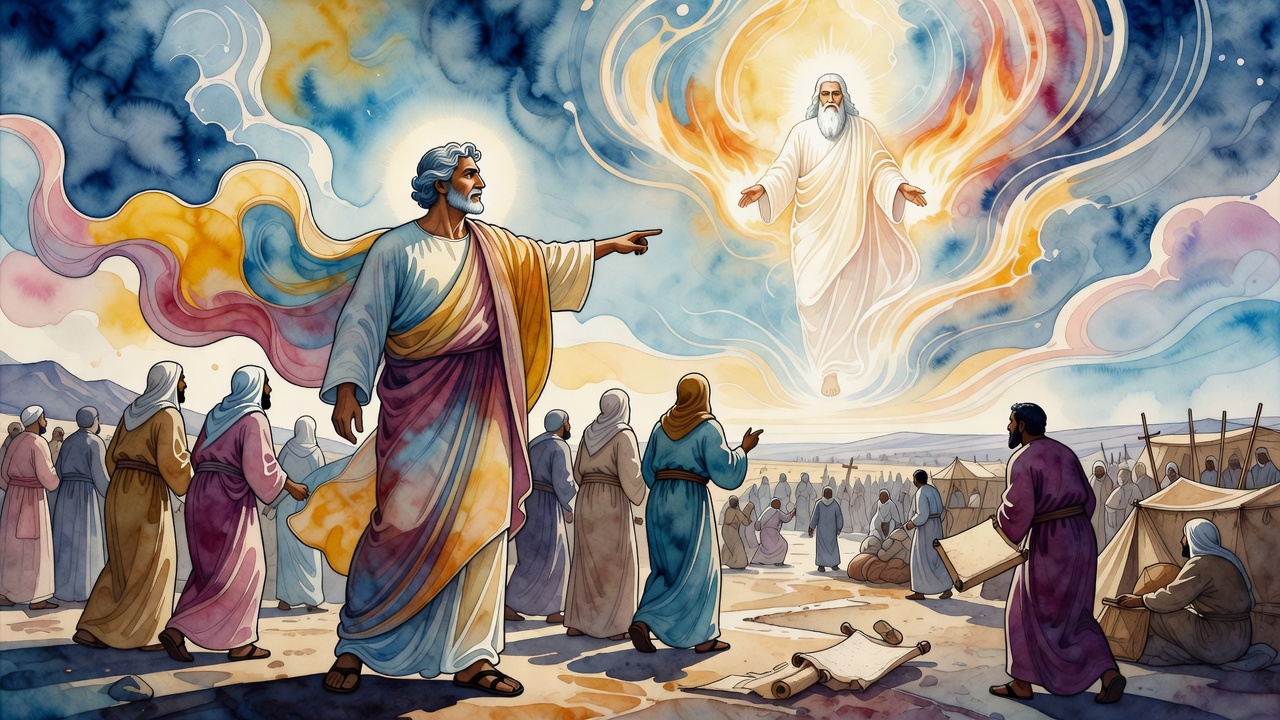
Jethro added to the law not by legislating but by arriving. His presence at Sinai, his advice to Moses, his conversion and the public acknowledgment that what God had done for Israel was worthy of complete devotion, added something to the record that the Torah needed: proof that the covenant was not merely inherited but could be chosen by someone who had seen every alternative and found them all wanting.
The seven names are the record of a person who kept being more than was required. Each name is the evidence that in some moment, when the easier path was available, Jethro took the harder one and someone noticed. Jethro accumulated names like that only by never taking the comfortable choice when the harder right one was still in view.
← All myths