Doeg Had the Whole Alphabet in His Mouth and Used It as a Weapon
Ahimelech handed David the showbread and Goliath's sword. Doeg stood detained in the sanctuary, counting every letter of what he saw.
Table of Contents
David came into Nob hungry, unarmed, and talking too fast. He told Ahimelech he was on the king's business. The priest looked at the hunted face and still took showbread from the altar, loaves meant for holy mouths, and put them in David's hands. Then he reached behind the ephod and drew out the sword of Goliath, wrapped and waiting. David ate. He took the blade. He left.
 Click for full size
Doeg the Edomite was detained before the Lord that day. He did not eat. He watched the bread leave the table and the sword leave the cloth, and he began to build the case in his mouth.
The Lion Sat on the Prey
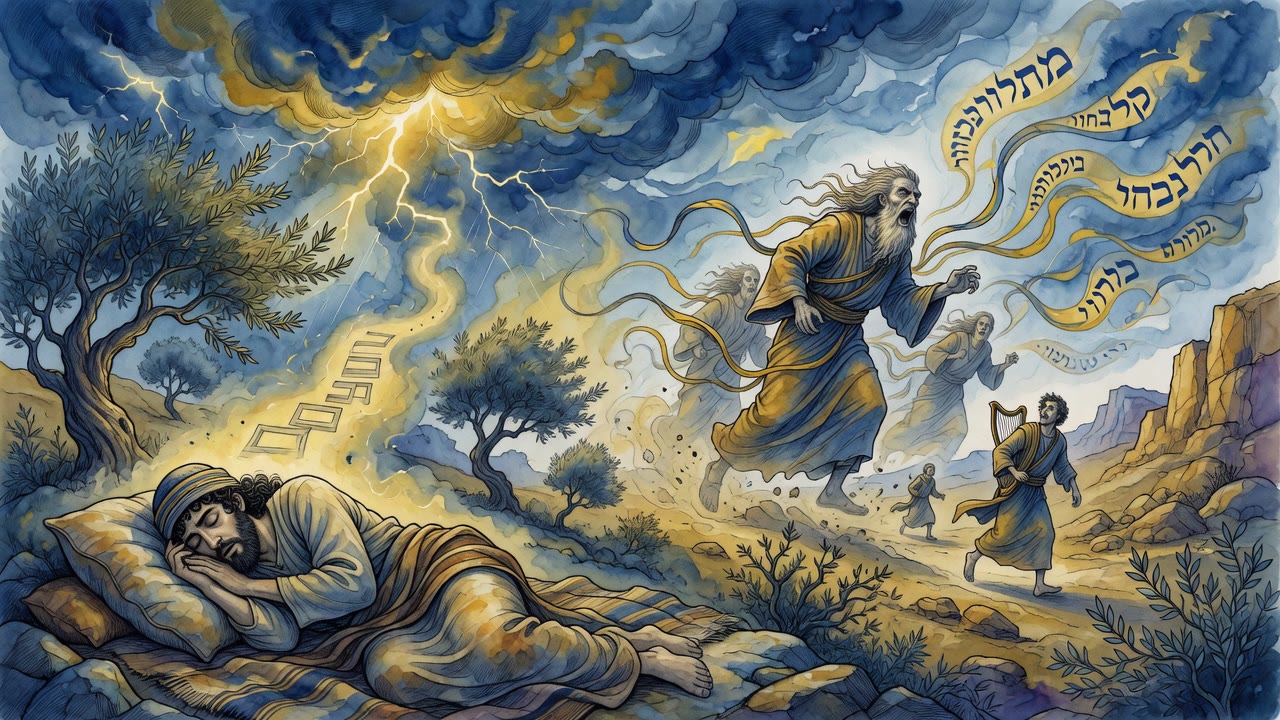
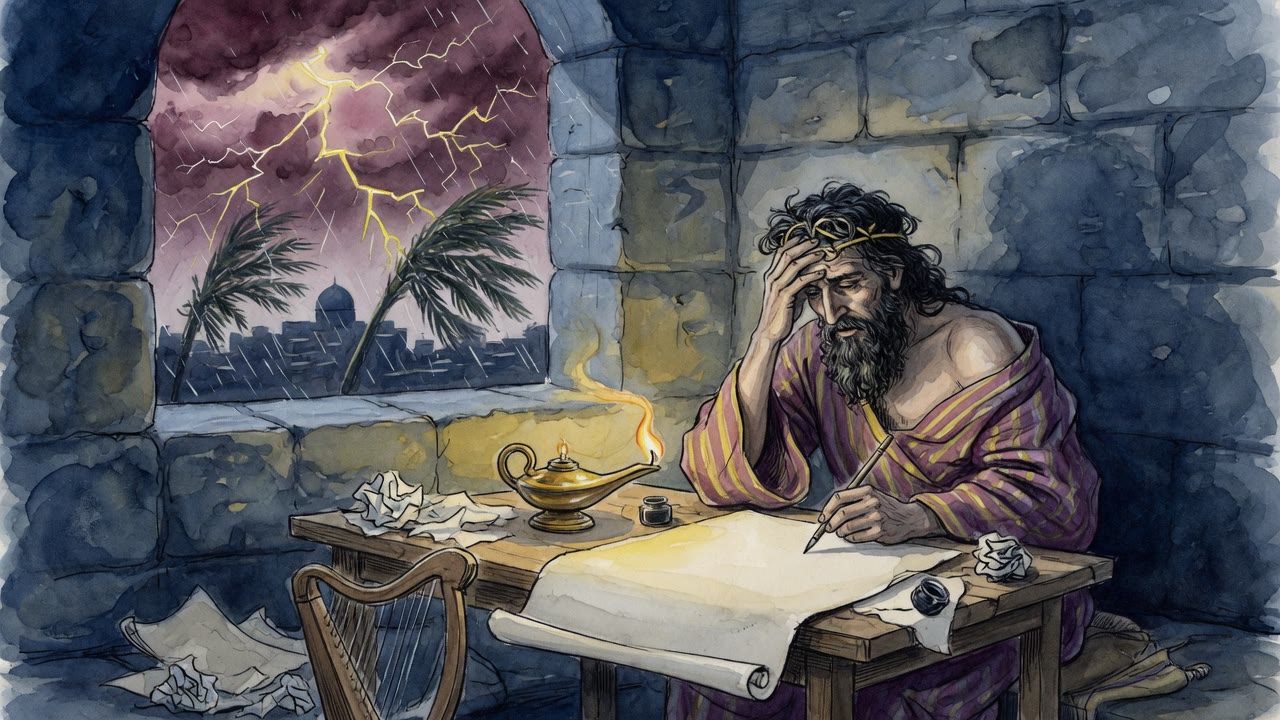
David ran with the sword knocking against his leg and a prayer already forming. "In You I have trusted," he said, and he did not hold a letter back. From aleph (א) to tav (ת), twenty-two letters, the whole aleph-bet of Torah poured toward God, because trust, if it is real, does not keep a sound in reserve.
The same twenty-two letters sat in Doeg's mouth. He had been president of the Sanhedrin before most men finish learning. He died at thirty-four, and by then the court had already called him the sharpest scholar of the age. They called him Edomi, not because he was an Edomite, but because he made other mouths go red. He could out-argue anyone. He liked the color that rose in their faces.
His learning stayed on his lips. It never entered his heart. He wanted to be watched while he spoke. When David bested him in a learned discussion, the vanity took a wound that would not close. From that hour Doeg bent every letter toward David's ruin.
Praise That Worked Like Poison
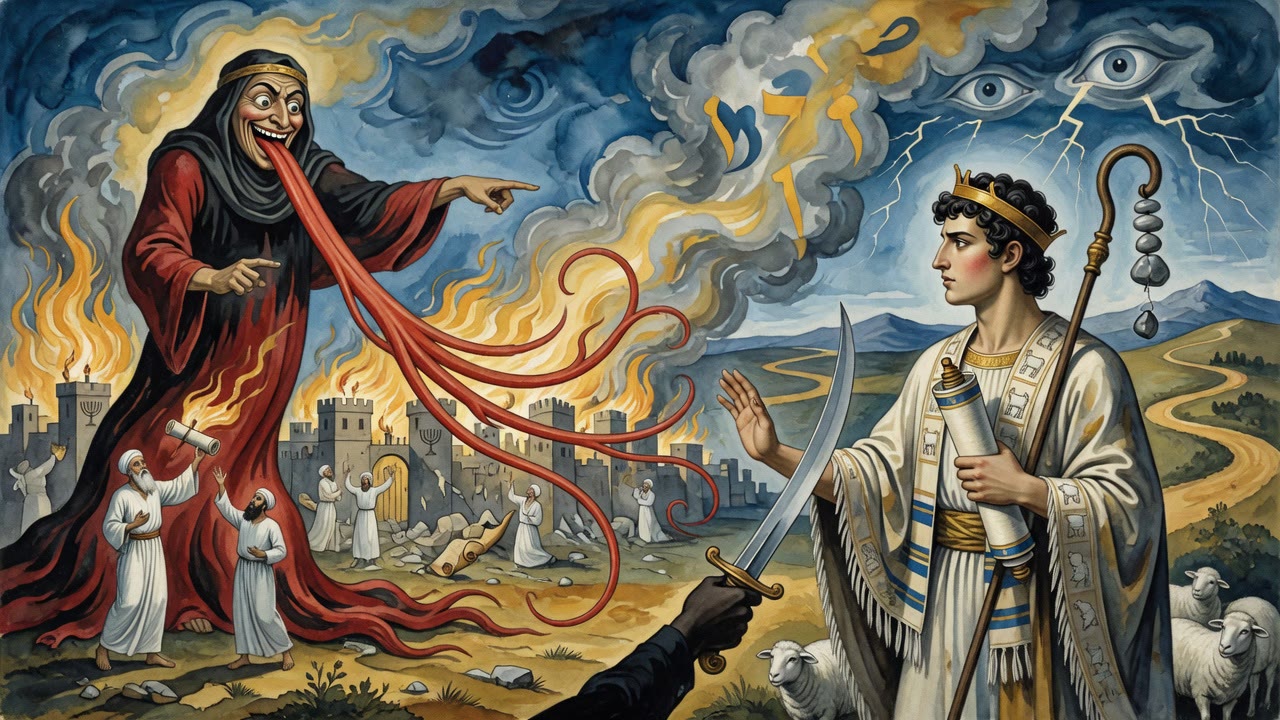
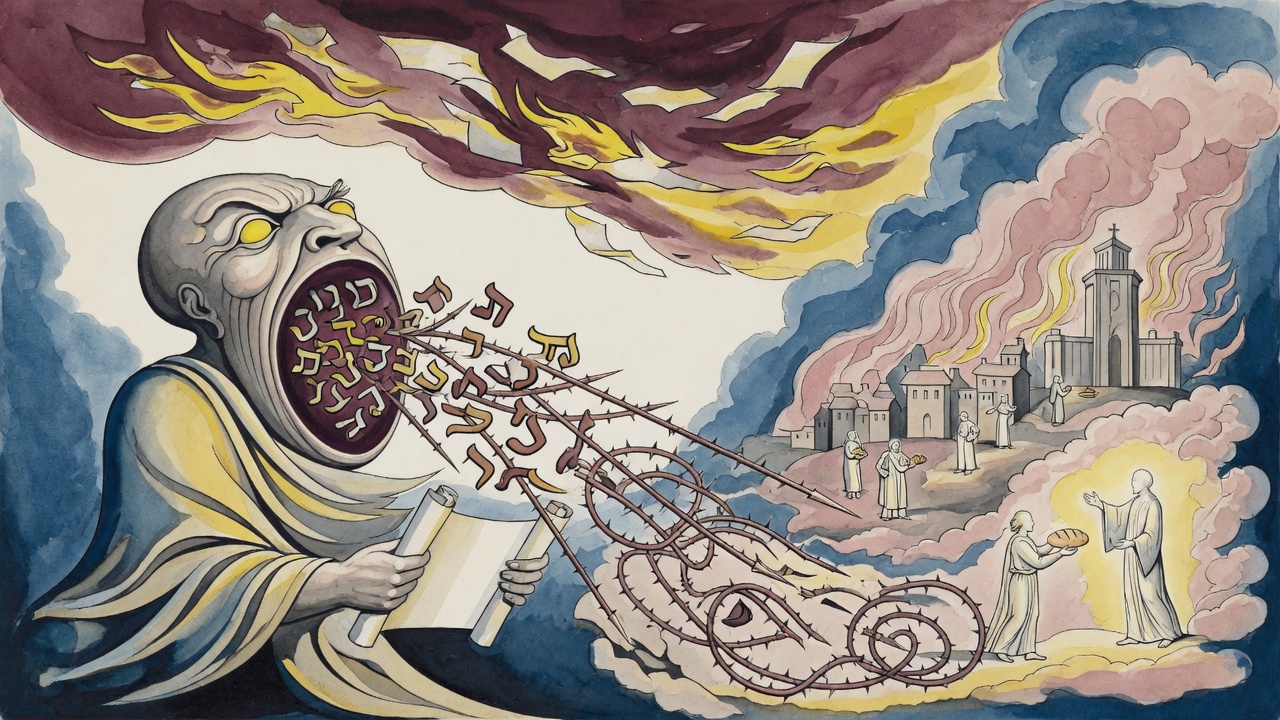
He went to Saul and praised David until the praise itself became a knife. He talked about the young man's victories, his songs, the way the women sang. Saul's face changed. Then Doeg changed the subject to blood. David's grandmother was Ruth of Moab, he said, and a Moabite seed could not enter the congregation of Israel. He built the case with care. It almost held.
Samuel and the men around him had to put their own weight against it, or Saul would have cut David out of Israel with a ruling instead of a spear. Doeg did not need a sword yet. He had the alphabet.
At Nob he used it. He told Saul what the bread had done and what the sword had done. He said Ahimelech had inquired of God for David, and that only a king and a court may ask the Urim and Thummim. A spirit of jealousy entered Saul, and he sentenced the priest to death. Ahimelech tried to answer. "Who among all your servants is as faithful as David?" Saul would not hear it.
The Guards Would Not Lift a Hand
The king commanded his runners to strike Ahimelech. They refused. Abner would not let the priests be harmed. The runners did not lift a hand against the priests of the Lord (1 Samuel 22:17).
Saul turned to the man whose mouth had already done the work. "You turn around," he said to Doeg, "and strike down the priests."
Doeg stood up. No one in the court helped him. He killed eighty-five men who wore the linen ephod. Then he struck Nob, the city of the priests, with the sword. One son, Abiathar, ran with the ephod and reached David. The rest of the city went quiet.
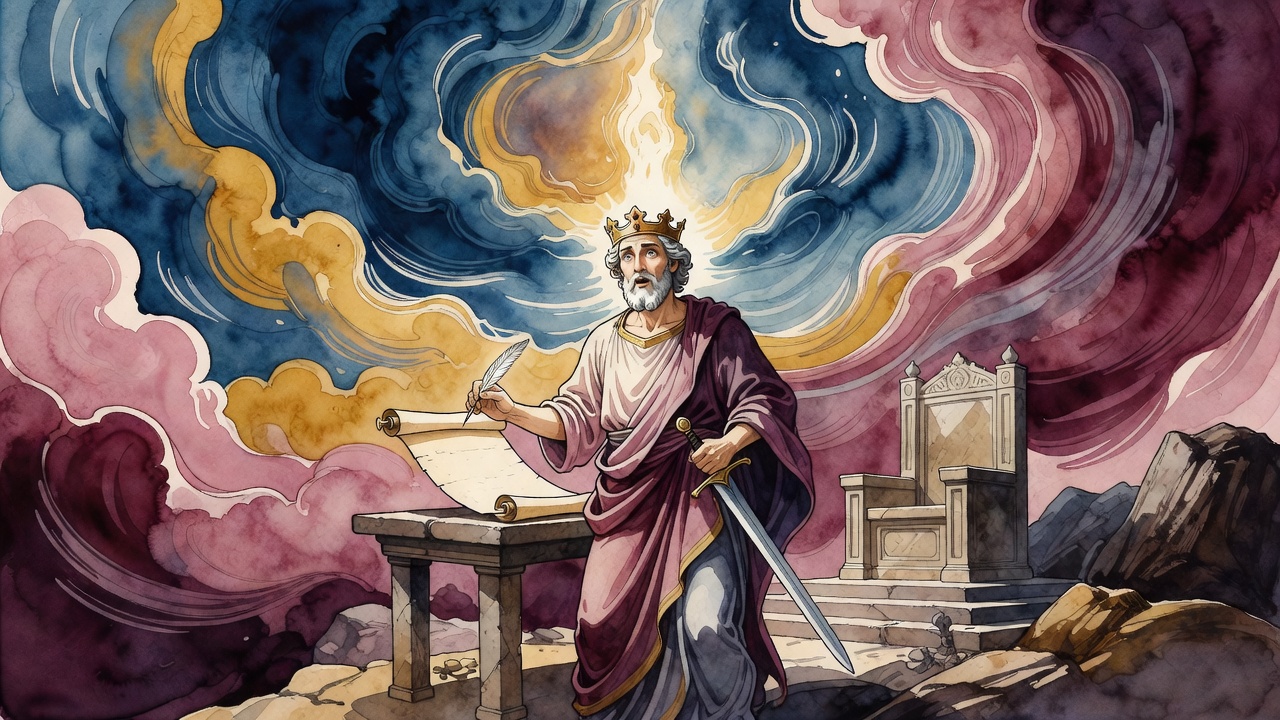
David cried out at him. "What glory is it to you to speak evil, you mighty one? All day you plot destruction. A strong man, the head of the Sanhedrin, is busy with this." He told Doeg what strength is. It is not pushing a friend into a pit. It is grabbing the hand so he will not fall. Doeg had seen Saul angry and had thrown him farther in.
Ashes in Every Study House
Doeg had given Saul the ruling that made the killing legal in the king's ears. He had even said Saul might shed David's blood, and that David's wife might be taken by another. On another day the same mouth stopped Saul from killing Agag, quoting a verse about a mother and her young slaughtered together. David's face went red at that ruling. The verse that spared Amalek's king did not spare Nob.
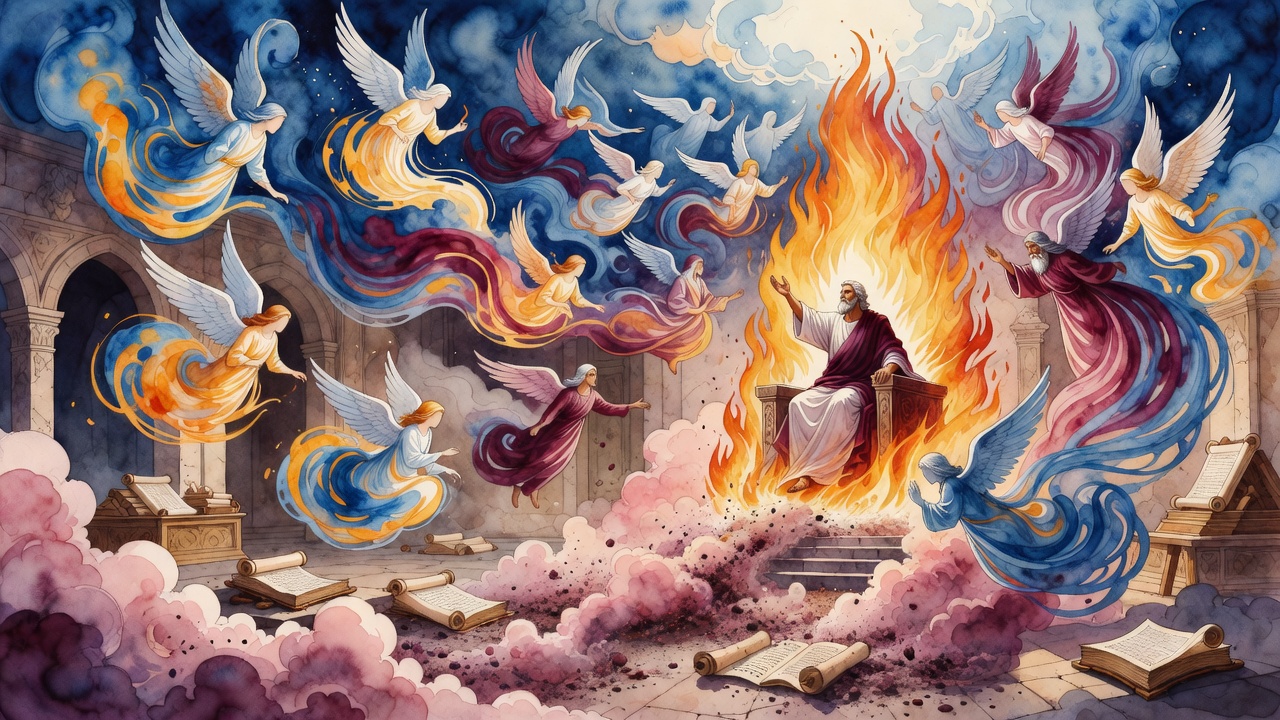
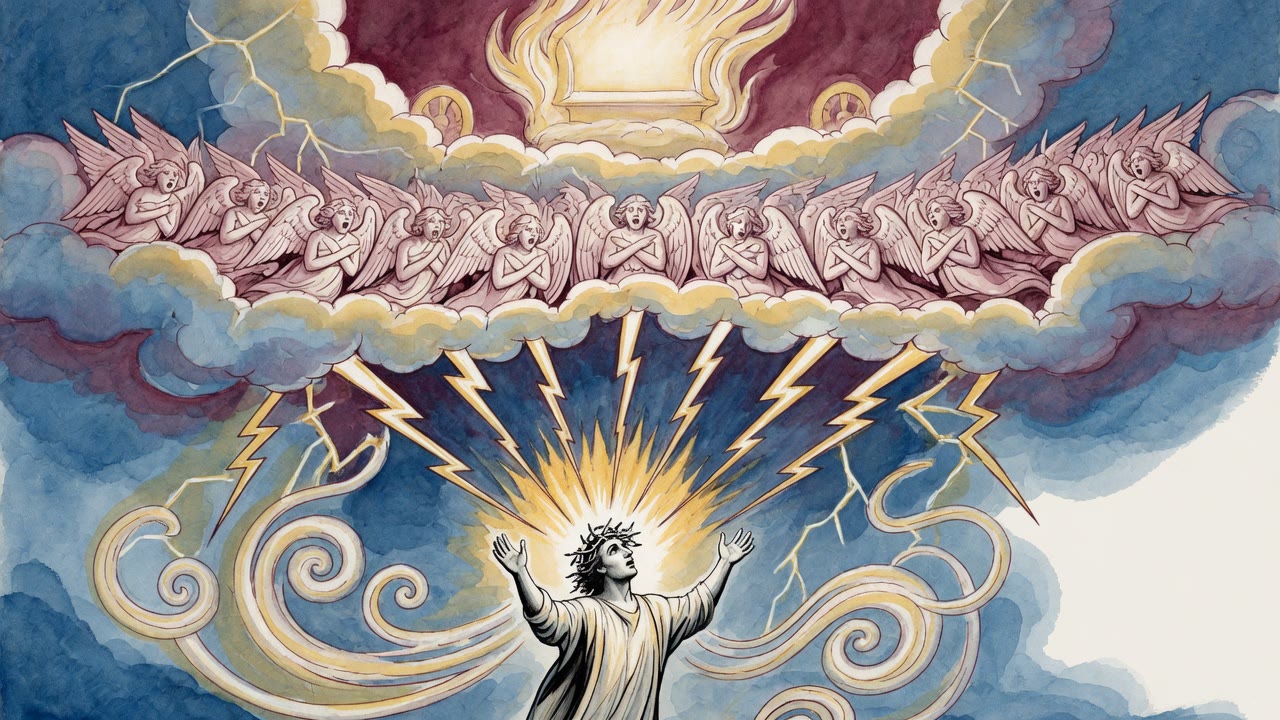
Doeg died young. The world to come was closed to him. One angel burned his soul. Another scattered his ashes through every house of study and prayer, so the places that had heard his questions would taste what his mouth had been. The twenty-two letters he had used as a weapon were taken off his tongue and swept across the floors where other men still sat and learned.
David had trusted with every letter. Doeg had spoken with every letter. Only one of those mouths left a psalm.
← All myths