Israel Was Hurled Backward at Sinai and Walked Back Ten Times
Each commandment at Sinai threw the entire nation backward twelve kilometers. Rabbi Akiva did the arithmetic: 240 kilometers walked in the body.
Table of Contents
 Click for full size
The Nation That Flew Backward
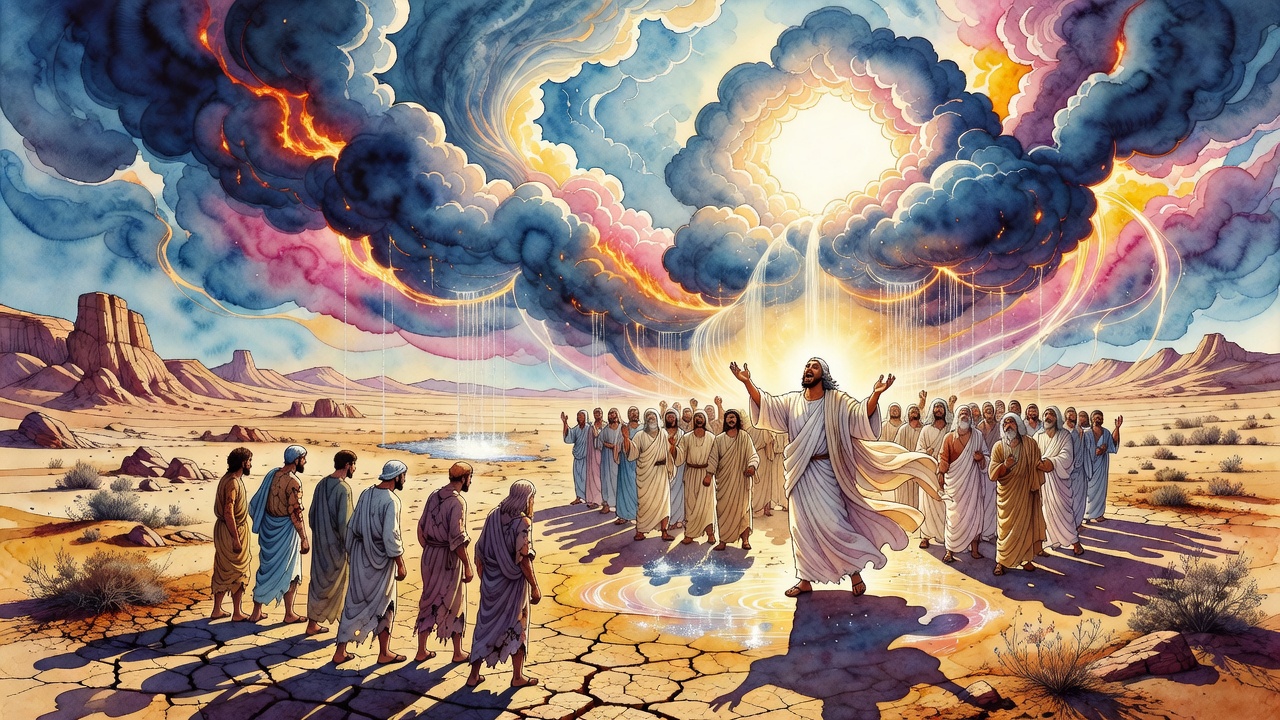
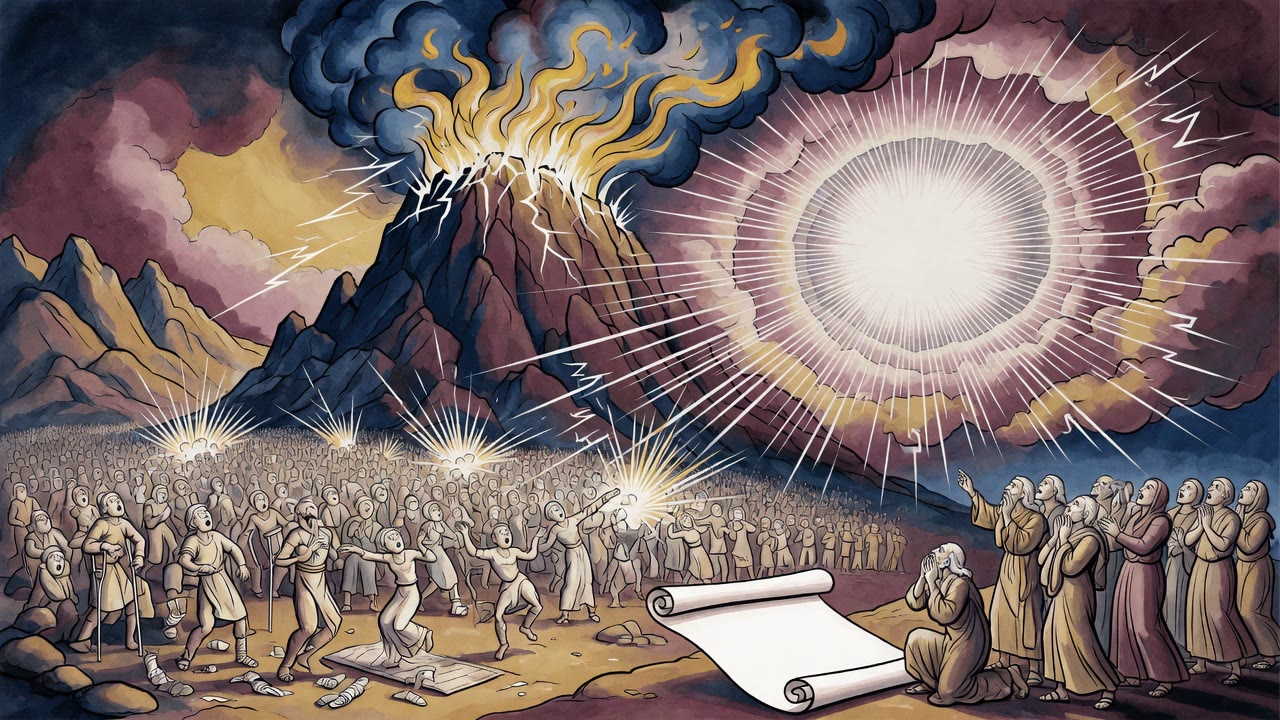
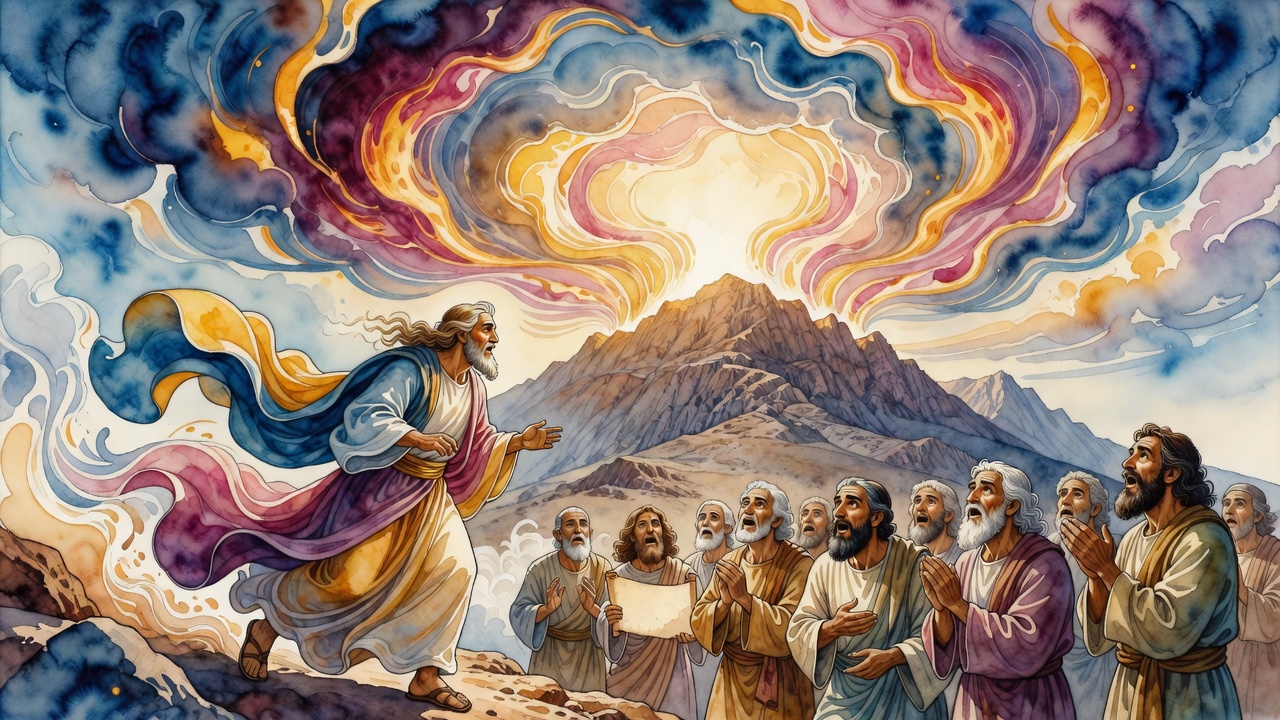
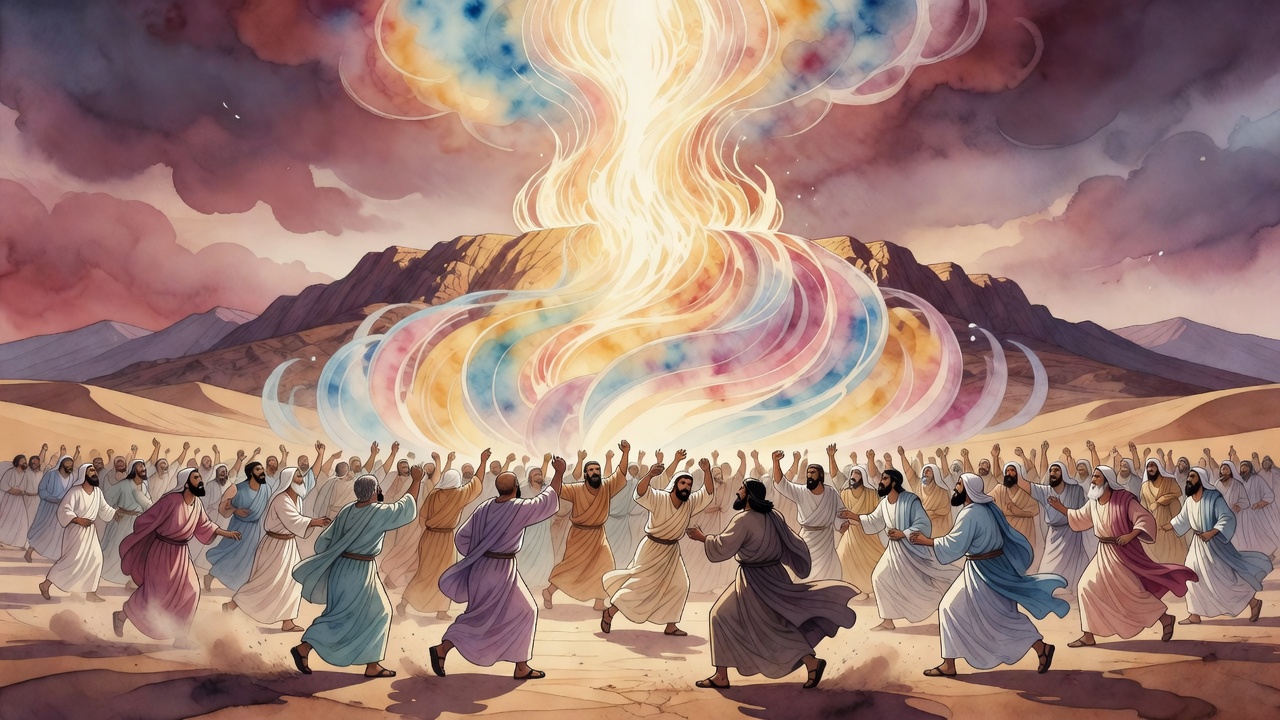
God spoke the first commandment and the force of the divine voice hurled the entire nation of Israel backward twelve mil, roughly twelve kilometers. The people picked themselves up, gathered themselves, and walked back to the foot of the mountain. Then God spoke again. They flew backward another twelve kilometers. They walked back again.
This happened ten times.
Rabbi Akiva did the arithmetic: twelve mil backward and twelve mil forward for each of the ten commandments equals 240 mil of travel, nearly 240 kilometers, walked by an entire nation in place, during the course of a single revelation. The Mekhilta DeRabbi Yishmael, the earliest tannaitic commentary on Exodus composed in the school of Rabbi Ishmael in the second century CE, records this without irony. Not as metaphor. Not as poetic license. This is what happened at Sinai.
Two Hundred Forty Kilometers of Willingness
The rabbis asked why. What is the point of being propelled backward and then returning? The Mekhilta's answer is embedded in the image: each return to the mountain's base was a choice. The people were not chained there. After each commandment threw them back, they walked toward God again voluntarily. The 240 kilometers of travel was 240 kilometers of willingness, performed ten times over, with the body.
And the people arrived at the mountain already carrying the weight of Refidim, the place before Sinai where they had quarreled with God and tested Moses, demanding water and asking whether God was really with them. The Mekhilta Tractate Bachodesh draws this parallel deliberately: they came to Sinai still not entirely sure they were worthy of what they were about to receive. They had rebellion in their recent history. God gathered them at the mountain anyway.
What They Acquired Beyond the Torah
Sifrei Devarim, the tannaitic midrash on Deuteronomy, lists what Israel acquired during its time at Sinai beyond the Torah itself. The text says they received the Torah, the commandments, the statutes, the judgments, and the sanctuary. But one item in the list is unexpected: they acquired the aron, the Ark. The portable vessel built to carry the law was fashioned at Sinai from the same encounter that produced the law. The container and the content were given together, at the same mountain, during the same forty days. The Ark was not a later invention for storing what had been received. It was part of the receiving.
Whether God Descended
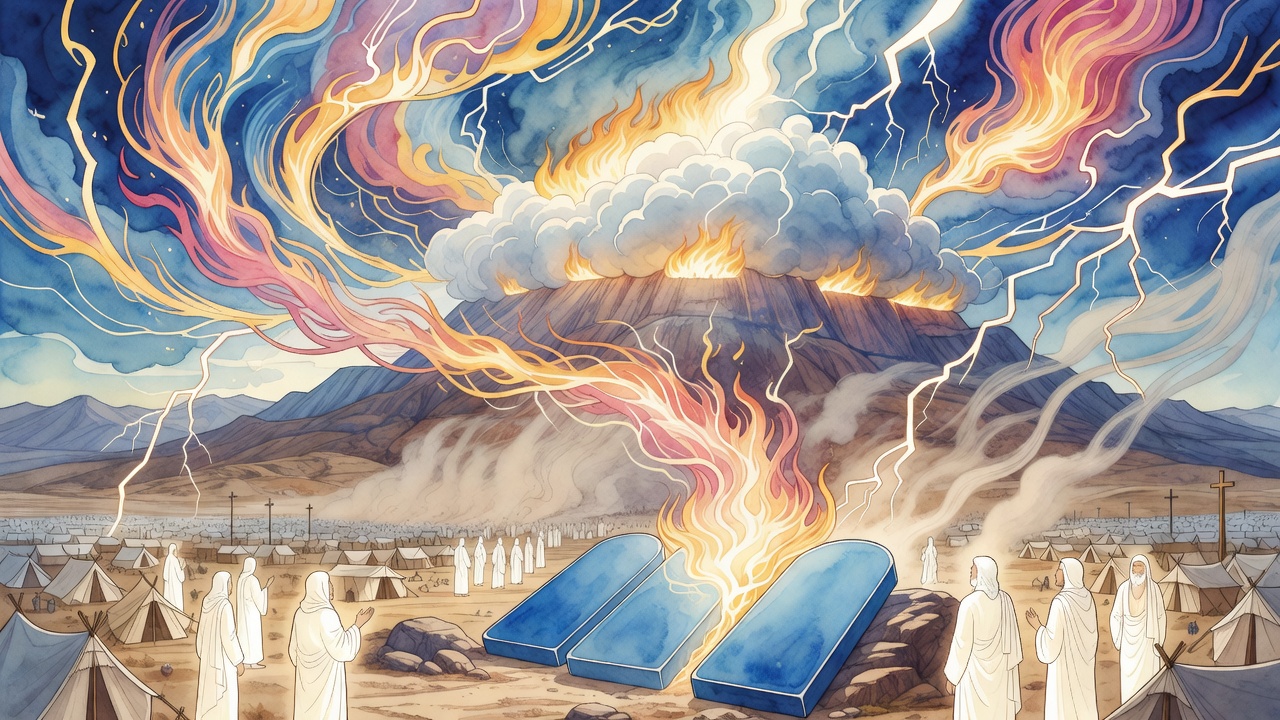
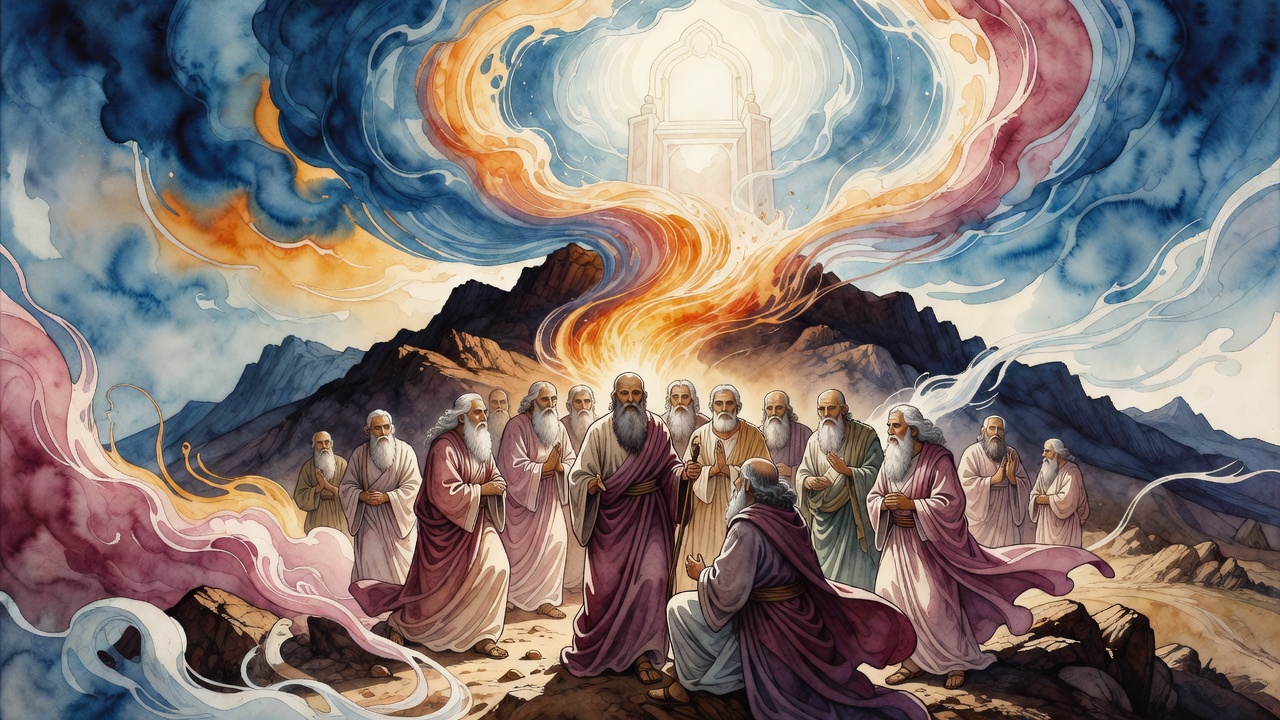
The verse says: and the Lord went down upon Mount Sinai. Rabbi Yehudah HaNasi, the redactor of the Mishnah himself, who lived in the second and third centuries CE, grappled with this directly. Did God actually relocate from heaven to a geographical summit? He concluded it cannot be read literally. God did not go from one place to another. The divine presence is everywhere and moves nowhere. What happened at Sinai was not God's journey. It was Israel's transformation. The mountain became the place where the infinite was localized not because God moved but because Israel kept walking back.
The Stones That Did Not Stay in the Desert
A midrash on the Western Wall reaches forward across centuries to claim that every stone used in the Temple's construction came from Sinai. The physical mountain did not stay in the desert. It walked into Jerusalem. The Western Wall still stands, the Midrash says, because it is built from the stones of the revelation, and the revelation, once given, does not leave.
At the end of the revelation, the people of Israel said na'aseh v'nishmah, we will do and we will hear. Commitment before comprehension. The Talmud records that the angels marveled at this, because it was the posture of angels themselves: act first, understand later. But the Mekhilta's arithmetic of the 240 kilometers suggests something more radical still. They did not merely promise to do and hear. They did it, ten times over, with their feet. That is not intellectual assent. That is the body voting.
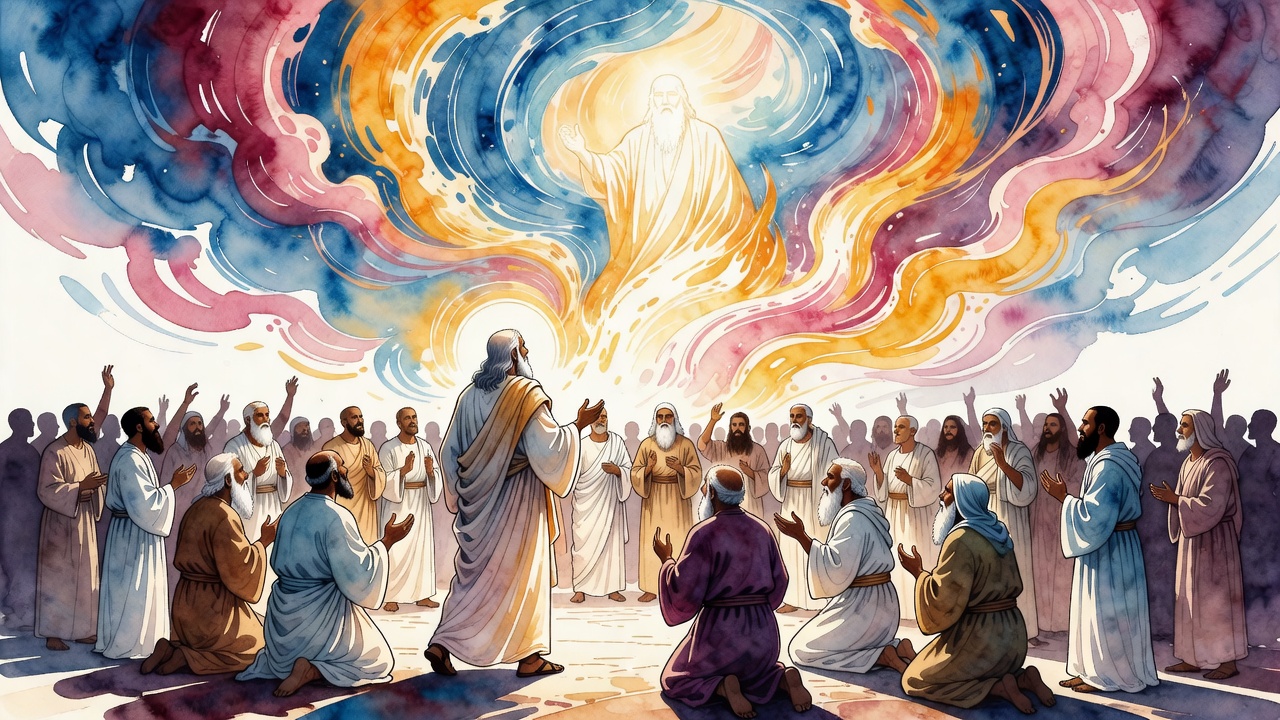
When the Torah says that the people encamped at the foot of the mountain, the word in Hebrew is vayichan, singular: one person. As if the entire nation became one body, one set of legs walking back toward the fire. The math, in the Mekhilta's vision, produces that unity. Two hundred forty kilometers of individuals who kept returning became, at the mountain's base, a single person choosing to hear.
← All myths