Joshua Inherits the Land After Forty Years of Waiting
Ten spies talked about walls and giants. The camp wept all night. By morning someone was already weighing a stone.
Table of Contents
 Click for full size
The Cluster Should Have Been Enough
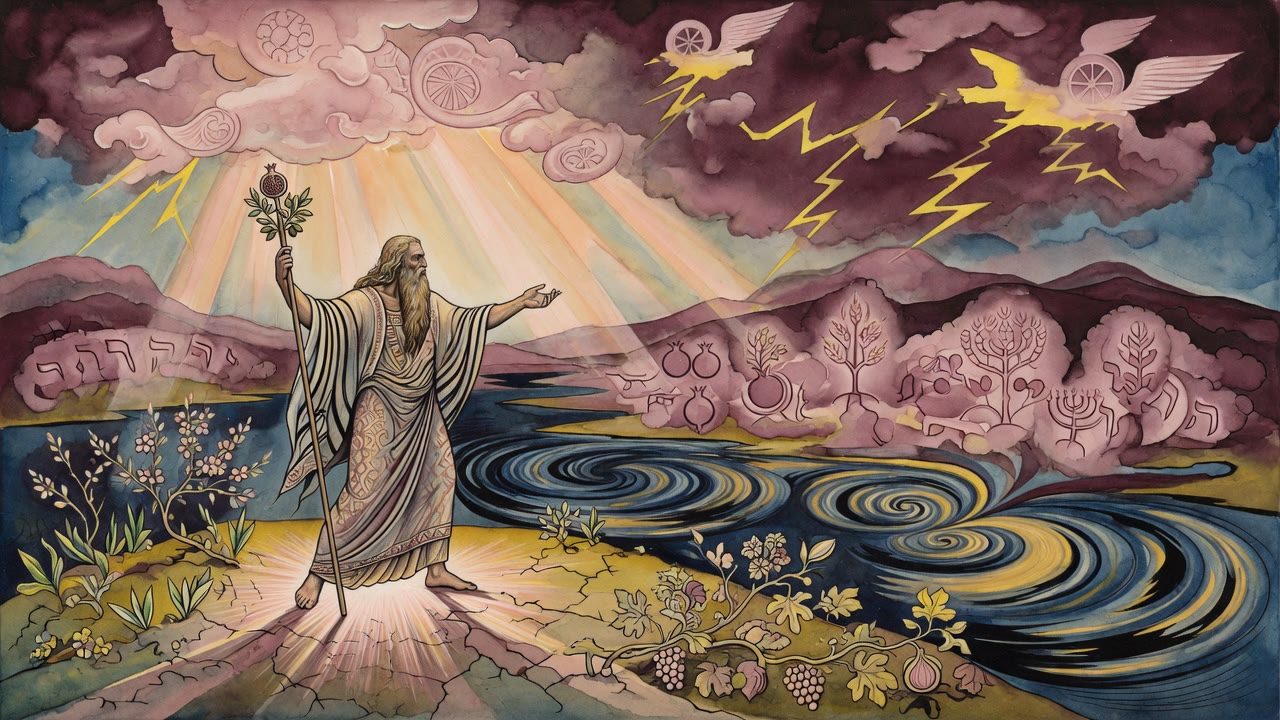
Twelve men went north into Canaan and came back forty days later with one cluster of grapes hung on a pole between two of them. The fruit was so heavy it took two shoulders. Juice ran down the wood. That should have ended the argument.
Ten of them talked instead.
The land eats its inhabitants, they said. The cities are walled up to the sky. There are men there beside whom we looked like grasshoppers, and that is how we looked to them too.
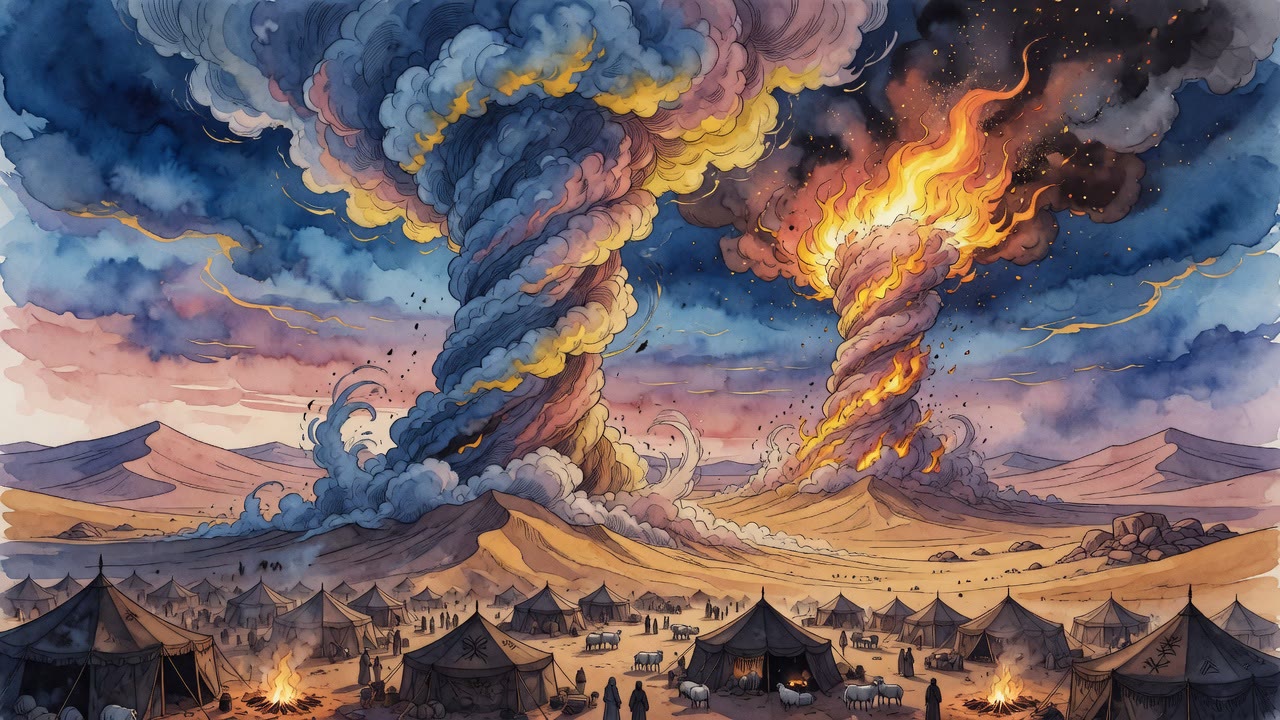
The camp did not argue. It broke. Six hundred thousand fighting men and their families wept all night, a sound like weather with no rain in it. By morning the weeping had turned into a plan spoken out loud in front of the tent: appoint a captain, turn the column around, walk back to Egypt.
Two Men Tore Their Clothes
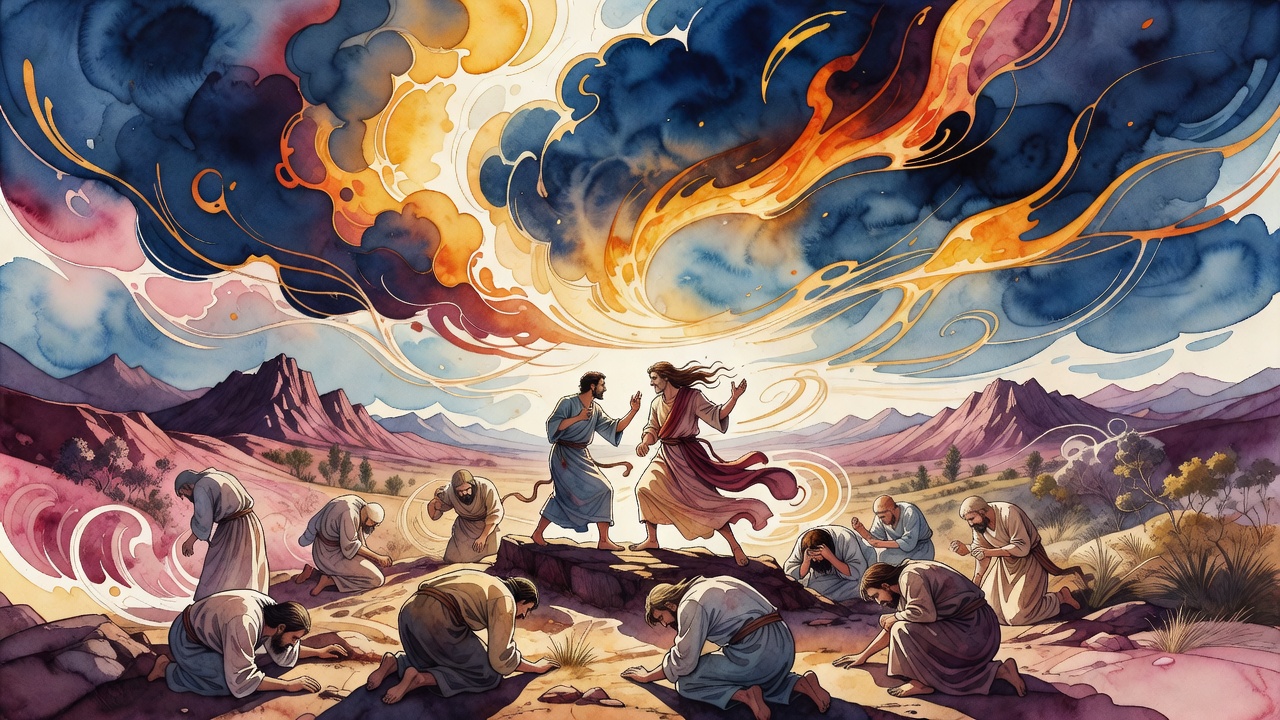
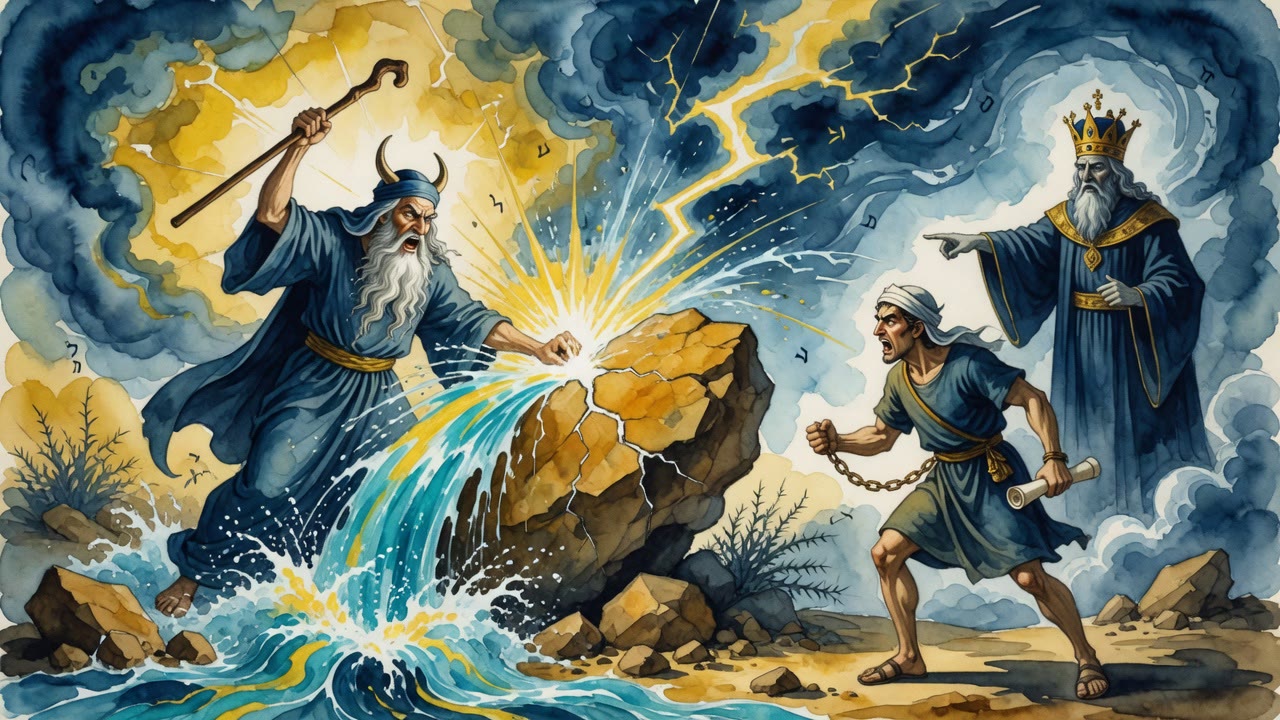
Joshua and Caleb had walked the same forty days. They had seen the same walls. They tore their garments open down the front and stood where the crowd could see the tear.
"The land is good," they said. "It is exceedingly good. Only do not rebel, and do not be afraid of the people of the land, because their shade has left them."
The congregation bent down and picked up stones.
Two men with their shirts torn. A nation that had already decided. The front row weighing rocks in open palms. Nothing in the count favored them. They were two against six hundred thousand, and the six hundred thousand were right about the walls. The walls were real. The giants were real. The report was accurate in every measurable respect and wrong about the only thing that mattered.
The stones never flew. The glory came down over the tent first. After that nobody was throwing anything.
Forty Years of Graves
The sentence was arithmetic. One year in the wilderness for each day the spies had spent in the land. Forty days walking. Forty years walking.
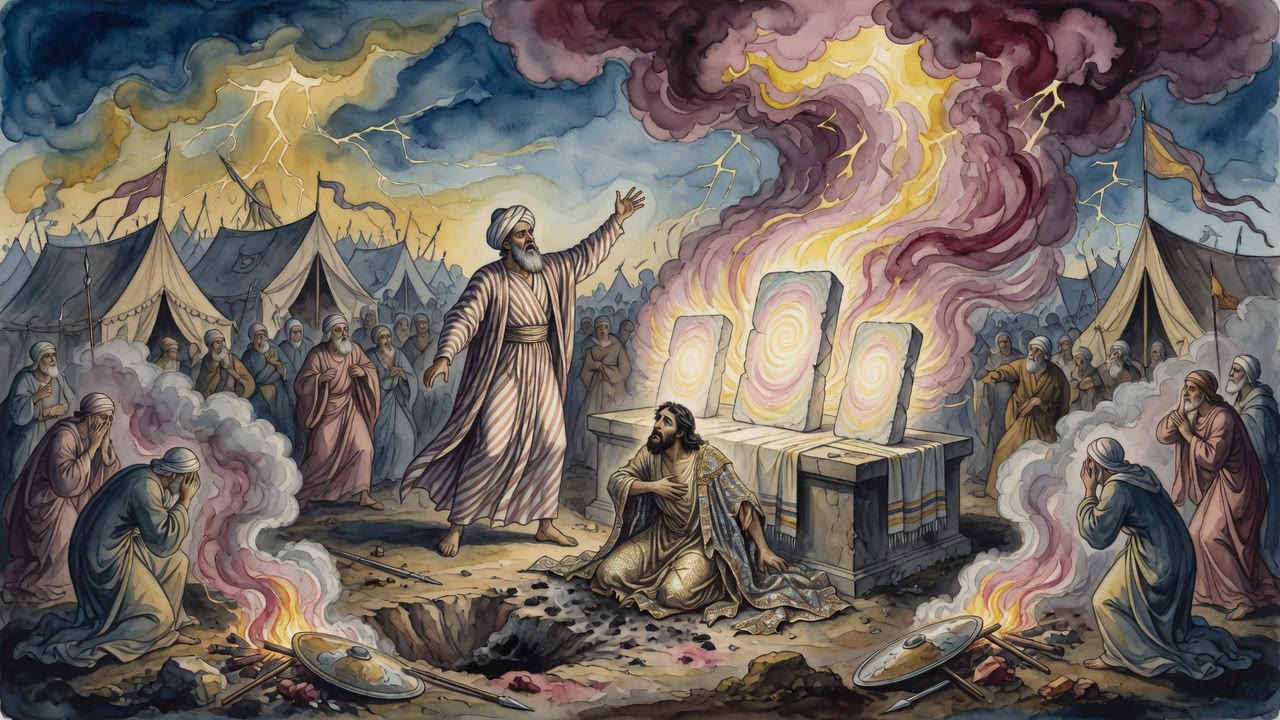
The ten men who had brought the report died first, by plague, before the year turned. The rest of that generation died slowly, in a country with no cities and no river they could keep. Every camp left graves behind it. A boy who had wept that night grew into a man, married, raised children who had never seen the Nile, and was buried in sand by sons who would cross without him.
Two men out of six hundred thousand walked the whole forty years and were still standing at the end of them. They had turned the anger and shut down the evil report. The wage for that was the long hard privilege of outliving everyone who had wanted to stone them.
The River in Flood
The Jordan was in flood at the barley harvest when the column finally came down to it. Joshua stood in the mud and looked at the far bank. Water chewed the edges of the reeds. What waited there was not a gift without terms.
Three things in Israel's history were handed over on a condition: the land, the Temple, and the kingdom of the house of David. Two things were handed over free and clear, the scroll of the Torah and the covenant of Aaron, and those could not be taken back. The land could. "Take heed to yourselves, lest your heart be enticed," the warning ran, "and the anger of the Lord burn against you, and He shut up the heavens" (Deuteronomy 11:16-17).
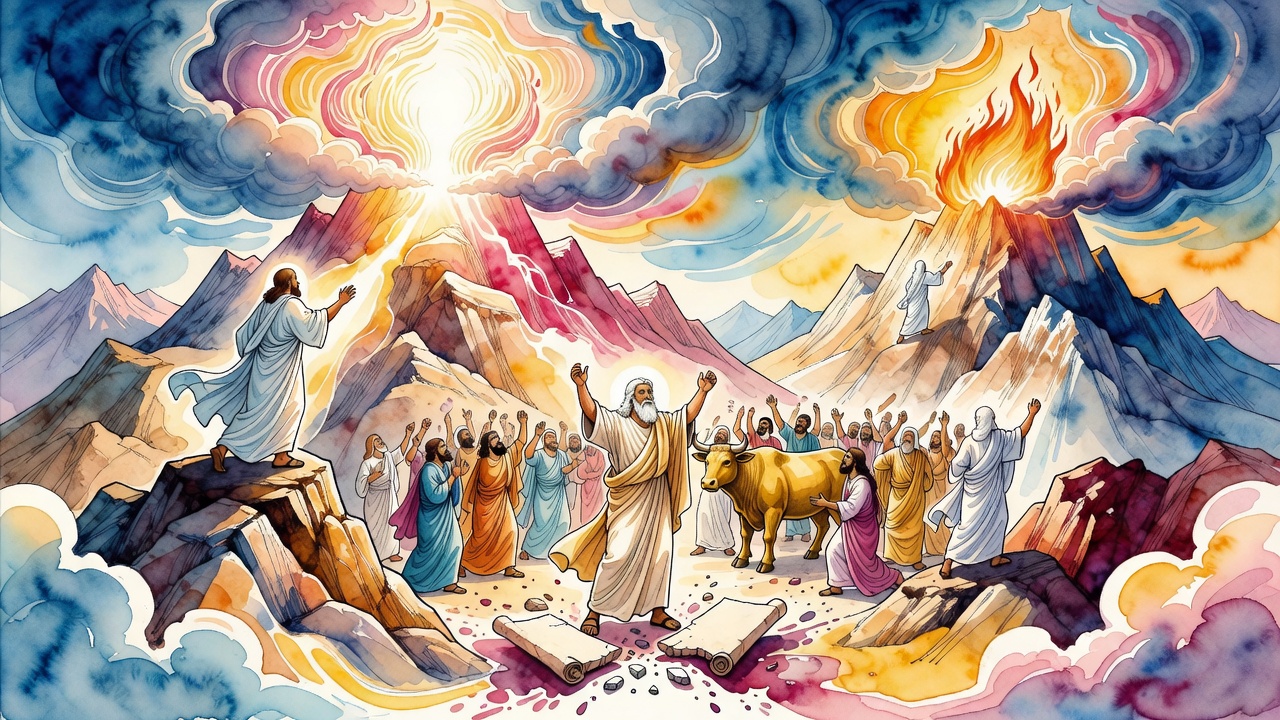
Joshua knew the terms in his bones. Before he died he gathered the tribes at Shechem and made them say it back in their own mouths. Choose this day. When they chose, he set up a stone under an oak and told them the stone had heard every word.
Caleb Asked for the Mountain
Before God chose this land, a prophet's voice could land anywhere on earth. Once the choice was made, every other country was shut out. Before Jerusalem was chosen, a man could raise an altar anywhere in the land and it counted. Once the city was chosen, everywhere else stopped counting. The field had narrowed, four centuries after Abraham walked it, to one people, one river, one crossing.
Caleb was eighty-five when the fighting slowed. He came to Joshua with dust still on his beard and asked for the hill country, the worst of it, the part with the walled towns and the giants still in them. He said his strength was the same as the day Moses sent him out. The wisdom given him at forty had stayed, and it had not made him careful.
He took the mountain. His sons took a portion after him. The men who had picked up stones were forty years in the ground. Joshua watched him climb toward the old walls and did not call him back.
← All myths