An Angel Brought Jacob Seven Tablets With His Whole Future Inside
Jacob wanted to build a sanctuary at Bethel and make it permanent. The answer came back the same night, in a vision, from an angel holding seven tablets.
Table of Contents
 Click for full size
Seven Tablets in the Night
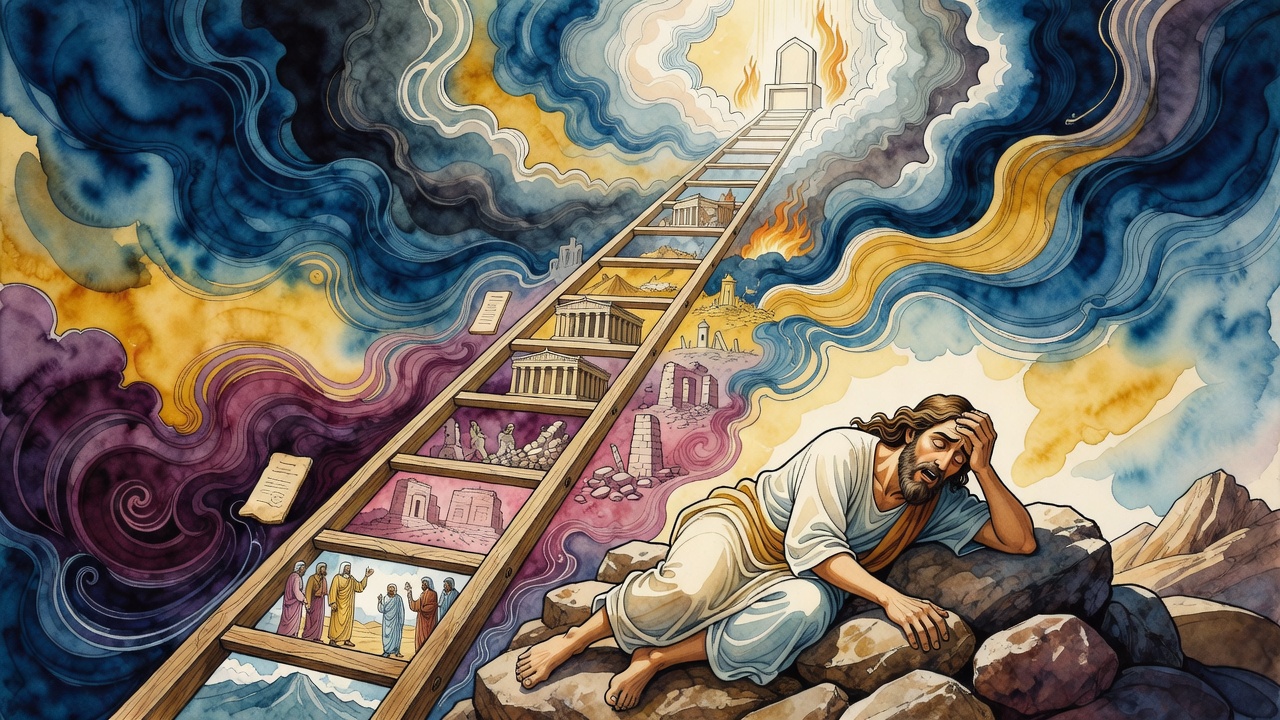
Jacob stood watching the sky over Bethel until there was nothing left to watch. God had finished speaking and gone up, and Jacob kept his head tilted back long after the last of it had passed out of sight.
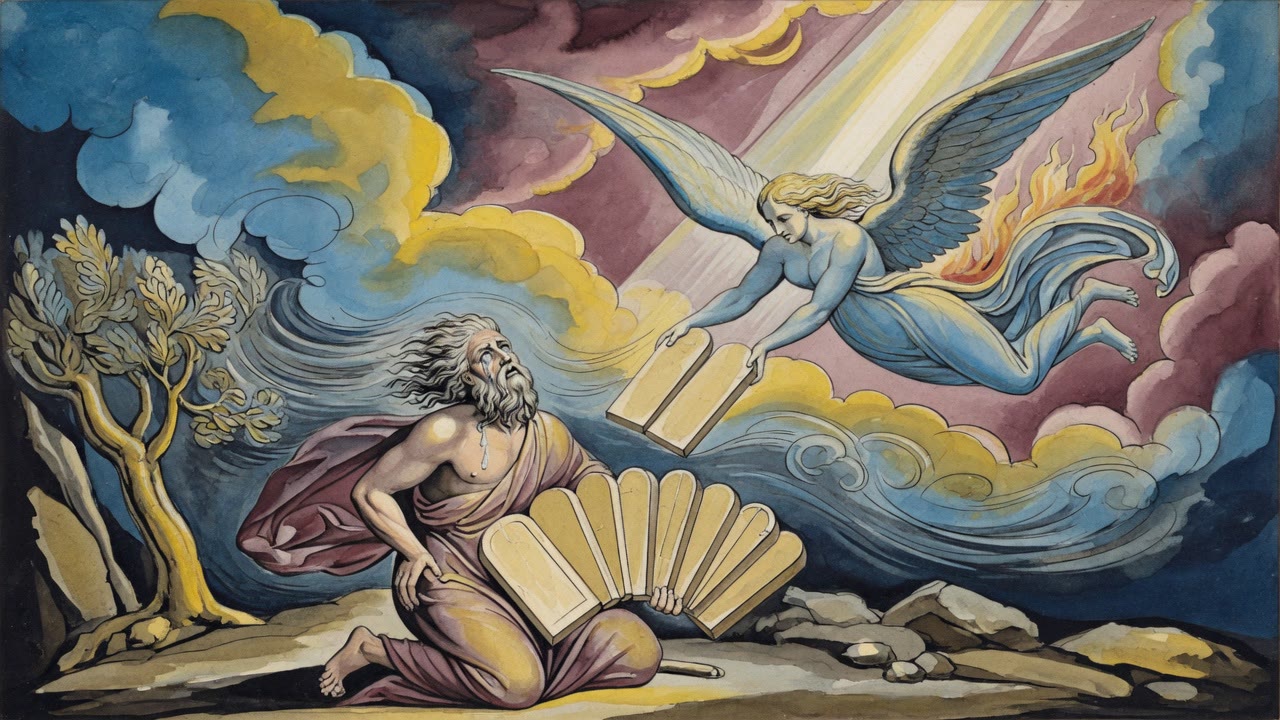
He slept, and in the night an angel came down the same way with seven tablets in his hands and put them into Jacob's.
He read them. Everything that would happen to him was on those tablets, and everything that would happen to his sons, all of it, to the end of the ages. A man lying on a stone floor in Canaan read his descendants forward through centuries they had not reached yet, and the angel stood over him and turned the tablets so he would miss nothing.
Then the angel took them back and gave him one instruction. Do not build this place. Do not make it an eternal sanctuary. Do not settle here. This is not the place.
Jacob had wanted to build. He had poured oil on a rock here as a boy running for his life, and he had come back to make it permanent, and he was told to put the stones down and go.
The Sword Behind Laban
He had reached Bethel the hard way. Twenty years earlier he had run to Haran to save his neck from Esau, and he had run out of Haran with his household because a voice told him to. "I cannot let My Presence stay with you outside the land," God said. "Go back to your fathers' country." So he took his wives and his children and his flocks and left without a word to his father-in-law.
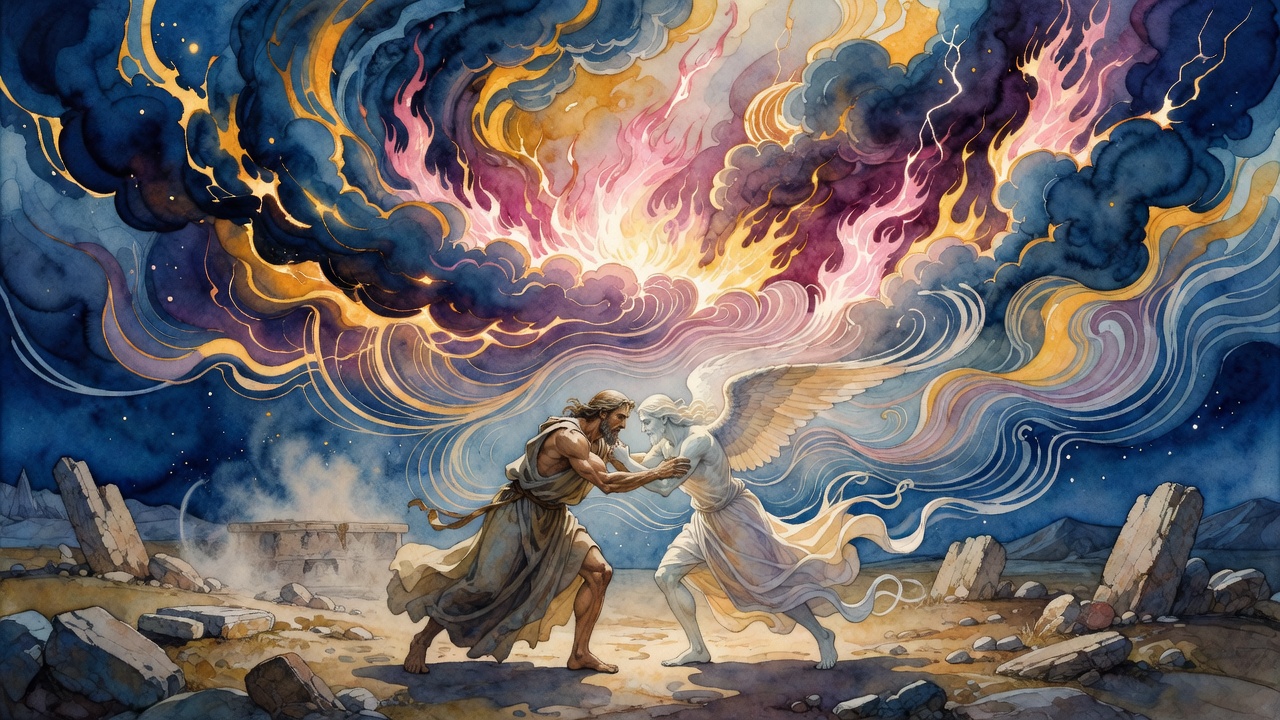
Laban came after him with every fighting man in his city, and he came to kill. On the third night, with the camp asleep and the distance closing, the angel Michael came down behind Laban with a drawn sword and stood there ready to take his head off. What he said instead was almost gentle. "Say nothing to Jacob. Not one word, good or bad."
Laban got up in the morning, looked at the herds and the servants and the wagons and the grandchildren, and could not stop himself. "All of this is mine," he said. Then, since he had been forbidden to threaten, he fell back on grievance. "And why did you steal my gods?"
The Writing That Kept Death Away
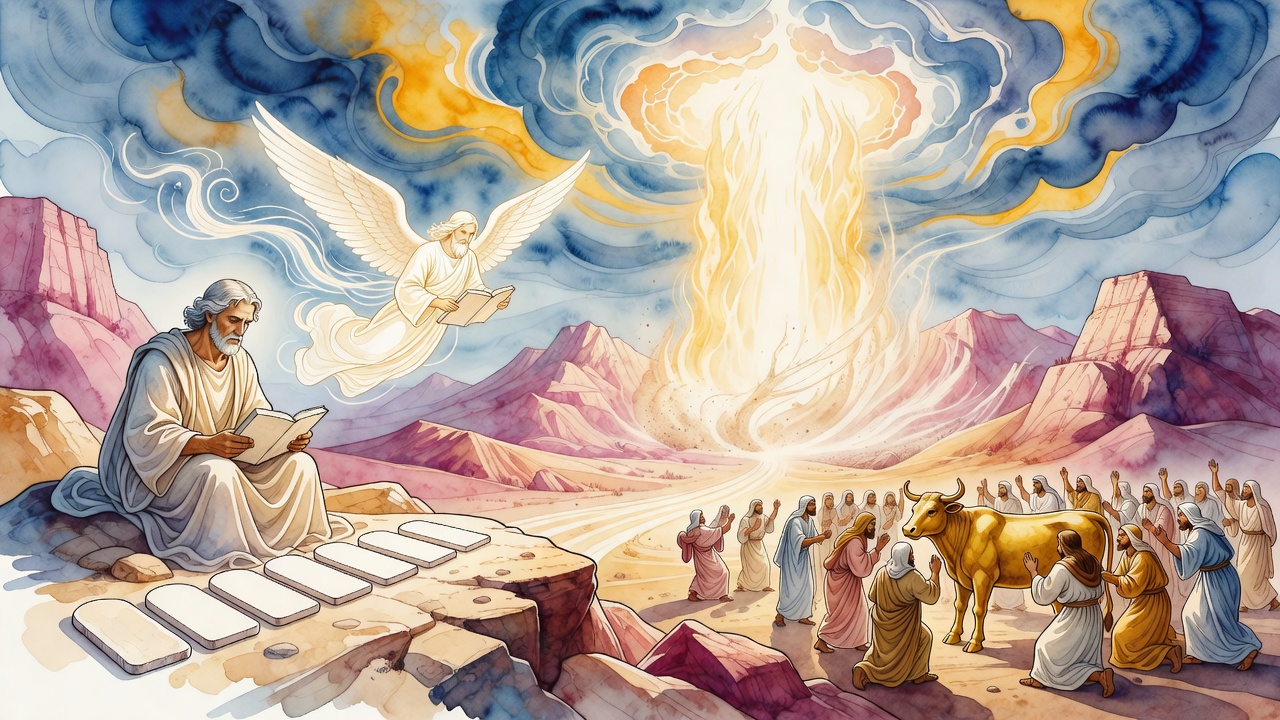
Generations down the tablets, Jacob's sons came out of Egypt and stood at a mountain, and what they were handed there was writing again. Engraved on the tablets, the verse says. Some heard in that engraving the word for freedom, and argued over which freedom it meant. Freedom from empires, one said. Freedom from the angel of death, said another.
For as long as that engraving was theirs, death had no authority over them. God said as much. If the angel of death came and asked why he had been made at all, the answer waiting for him was that he had been posted over idolaters, not over these people. Heaven had dressed them the day they accepted the Torah. Crowns, one sage said. Weapons with the great Name cut into them, said another. Purple robes. Belts. Something was on every one of them that death could not get past.
Moses went up the mountain and did not come down when they expected him. They came to Aaron and told him to make them a god who would walk in front of them. Aaron reminded them what they had sworn six weeks earlier, and then he saw what they had already done to Hur, who had told them no, and he was afraid. Bring me your gold rings, he said. They tore them off and kept coming until he had to stop them. Enough. That is enough.
When they had finished dancing, the ornaments came off. Every crown, every weapon, every letter of the Name went back, stripped from them at the foot of the mountain, and the angel of death went back to work.
The Tent Pitched Outside the Camp
Moses would not stay in a camp like that. He took his tent, walked out past the last row of the people, and pitched it in open ground.
God went out after him. The upper worlds were left standing empty. The ministering angels arrived to sing the morning hymn and found nobody on the throne. The sun and the moon and the stars came in to bow and to collect permission to go out and light the world, because without that permission they will not move, and there was no one there to ask. They put the question to the fiery creatures at the gate. Where is the Throne of Glory? Go out to Moses, the creatures told them. Anyone looking for God is looking outside the camp.
The conversation in that tent went the way conversations go between two people who are both furious with the same third party.
"Can two faces both pour boiling water?" God said. "We had an arrangement. When you are angry, I calm you. When I am angry, you calm Me."
"You were angry first," Moses said.
"Go make it up with them," God said. "Go back into the camp." And Moses, who had walked out precisely so he would not have to, heard what was underneath the order and said it out loud. You cannot take Your love off them for a single moment.
The Gold Came Back
They gave gold a second time. It came in morning after morning for the Tabernacle until the craftsmen went to Moses and told him there was too much, and the proclamation went around the camp that nobody was to bring anything more. The same hands, the same earrings, the same metal.
Let the gold of the Tabernacle come, God said, and pay for the gold of the calf.
So the eternal sanctuary Jacob had been forbidden to build at Bethel got built after all, in a desert, out of the melted-down remains of the worst thing his descendants ever did. And they were told what was still coming. Today you are like the stars, one prophet heard, and later you will resemble your Maker, and the righteous will stand further in than the angels, who will lean over and ask them what ruling heaven handed down that morning.
← All myths