Miriam's Well Followed Israel Forty Years and Stopped the Day She Died
A well followed Israel forty years in the desert. The Talmud named whose merit sustained it. The morning after Miriam died the people found nothing to drink.
Table of Contents
 Click for full size
Three Leaders, Three Gifts
The Babylonian Talmud in tractate Taanit names three leaders as the source of Israel's three great miraculous provisions in the wilderness. Moses brought manna from heaven. Aaron brought the cloud of glory that sheltered the camp from the desert heat and cold. Miriam brought water.
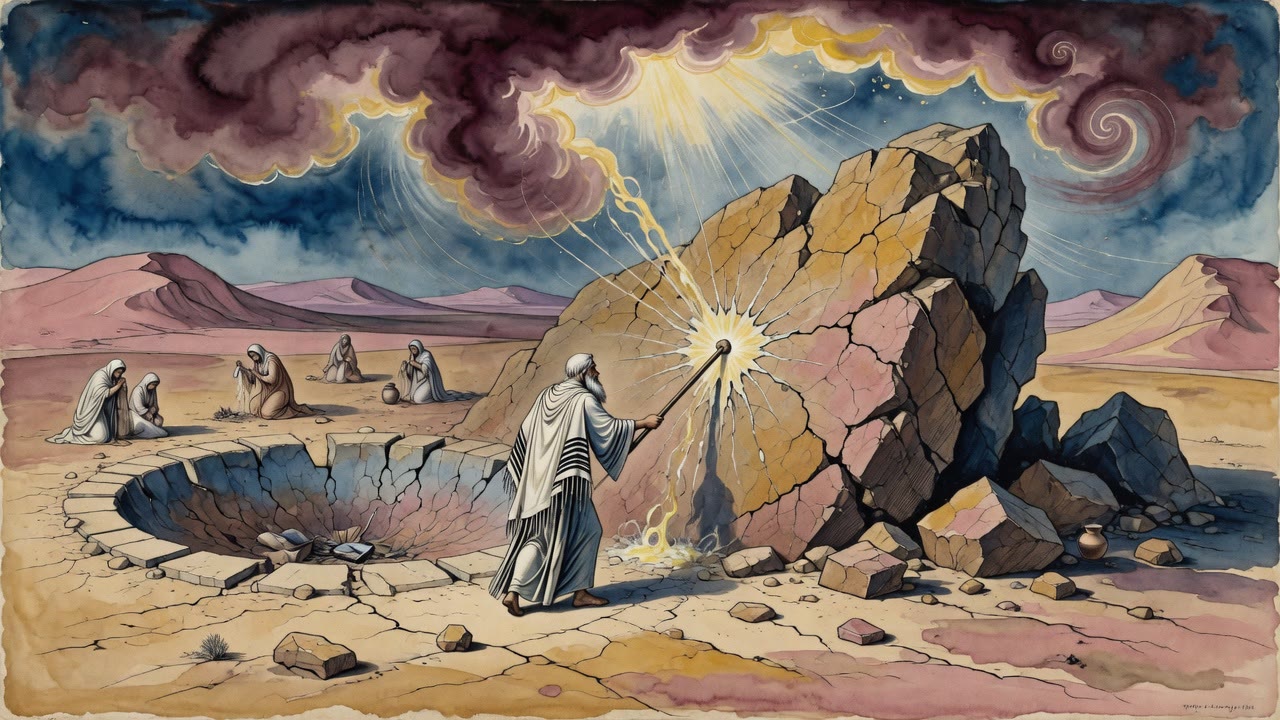
These three provisions were not parallel in the way they are sometimes described. They were tied to the individuals who carried them in a specific way: each provision lasted exactly as long as its carrier lived, and vanished when the carrier died. Ginzberg's Legends of the Jews, synthesizing the Talmudic and midrashic material from sources spanning the classical rabbinic period, records that when Miriam died in the fortieth year, the well vanished the same day. The people went to drink the next morning and found nothing.
The text records the loss as immediate. Not a gradual diminishment. Not a slow drying. The connection between Miriam and the water was so direct that the moment she stopped existing, the water stopped flowing. Moses and Aaron struck rocks and prayed afterward and managed to restore water temporarily, drawing on their own combined merit, but it was not the same. It was borrowed water. Miriam's well was something else: water that flowed from a specific person's specific life.
Water That Belonged Only to Israel
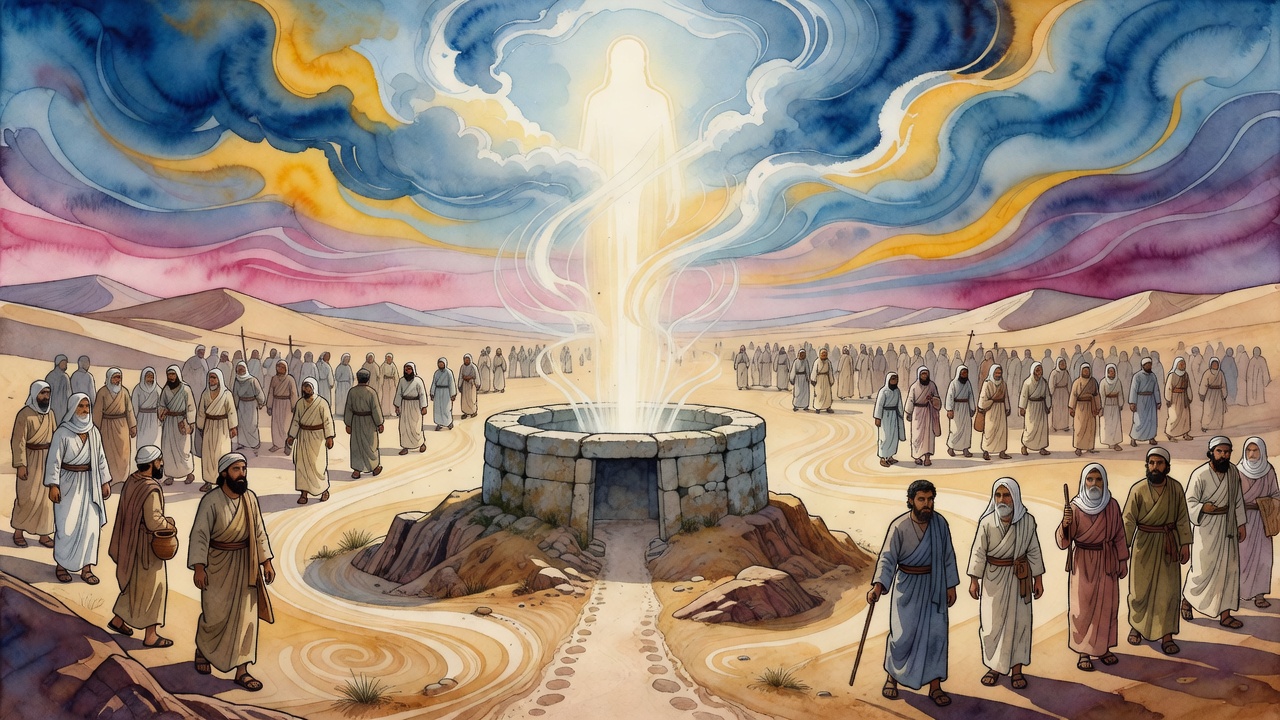
The Sifrei Devarim, a tannaitic commentary on Deuteronomy compiled in the second century CE, adds a detail that clarifies the nature of the provision. When other nations tried to draw from Miriam's well, they found nothing. The manna was the same: when the nations attempted to gather it, they could not. These were not natural phenomena that happened to be available to Israel. They were targeted gifts, tied to specific people and available only to the people those people carried.
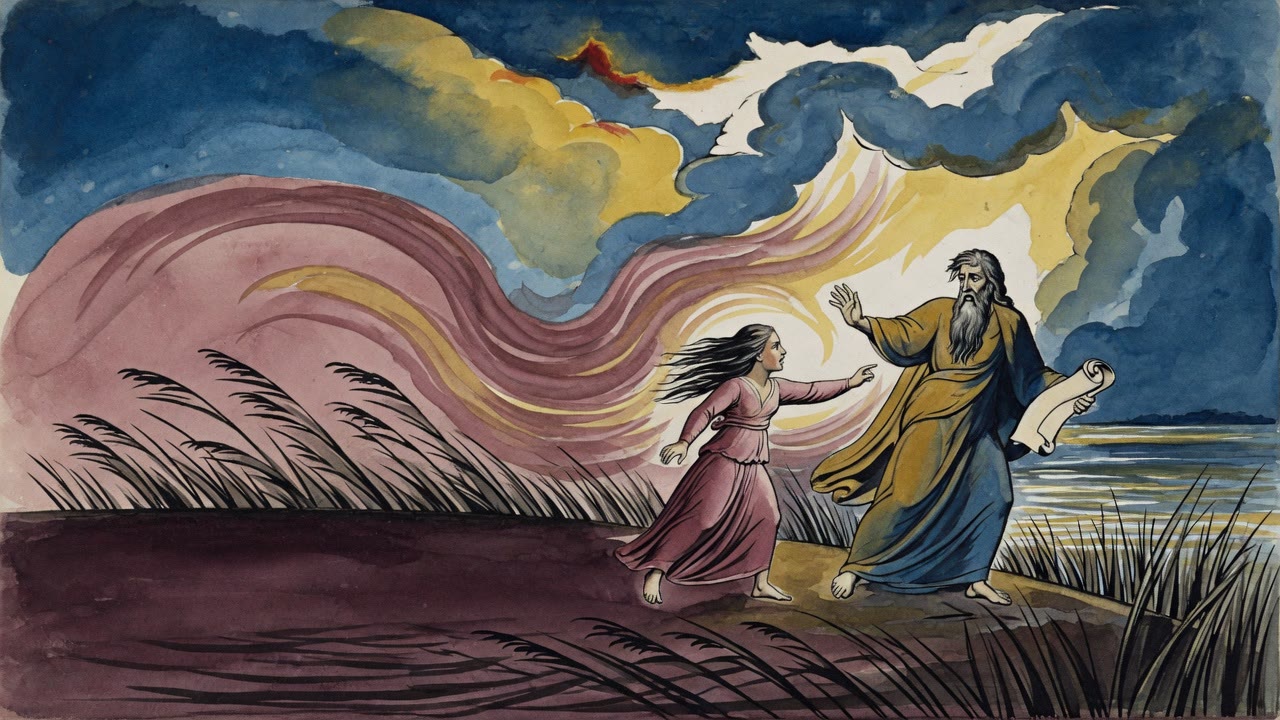
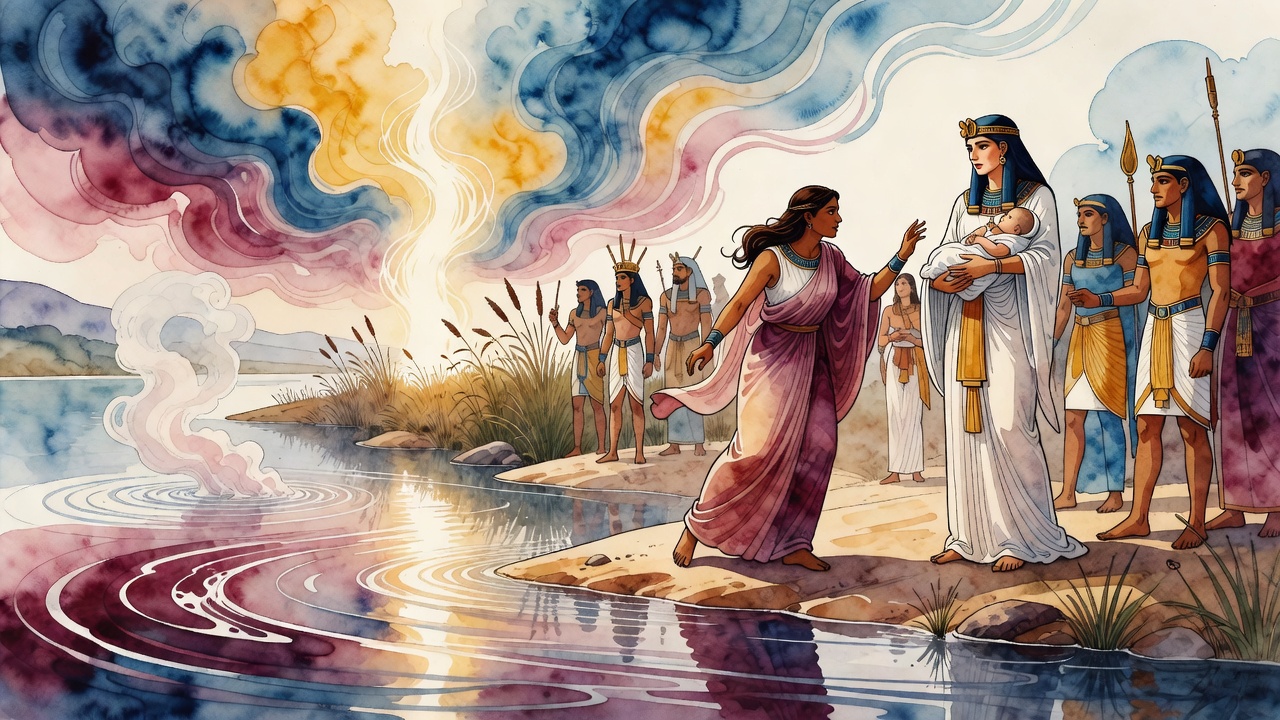
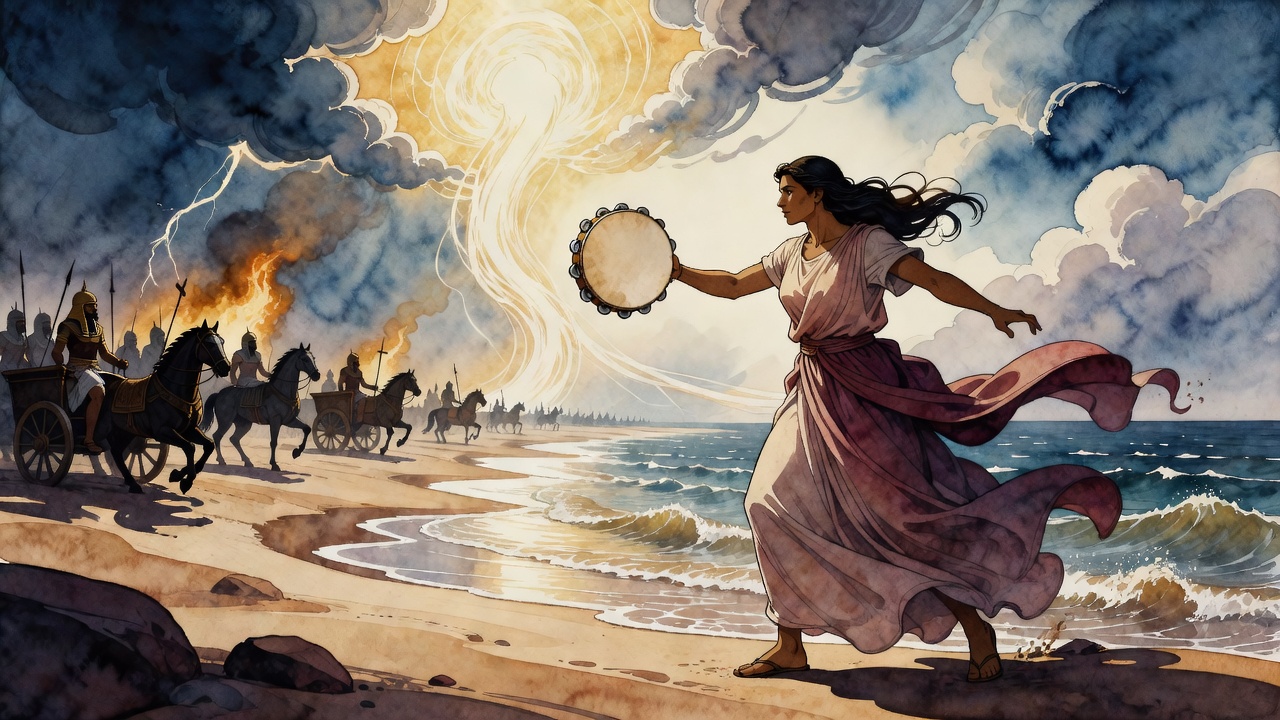
This is more than a claim about miracles. It is a claim about the structure of merit and its effects. Miriam's righteousness produced water that fed a people. The water was not produced because Israel deserved it. It was produced because Miriam's life, from the age of five when she argued with her father to preserve the birth rate of Israel, through the watch at the river, through the song at the sea, through decades of wilderness walking, had accumulated into something that had weight in the order of things. The well was the visible expression of that weight in a form the community could drink.
The Rivers That Ran Through the Camp
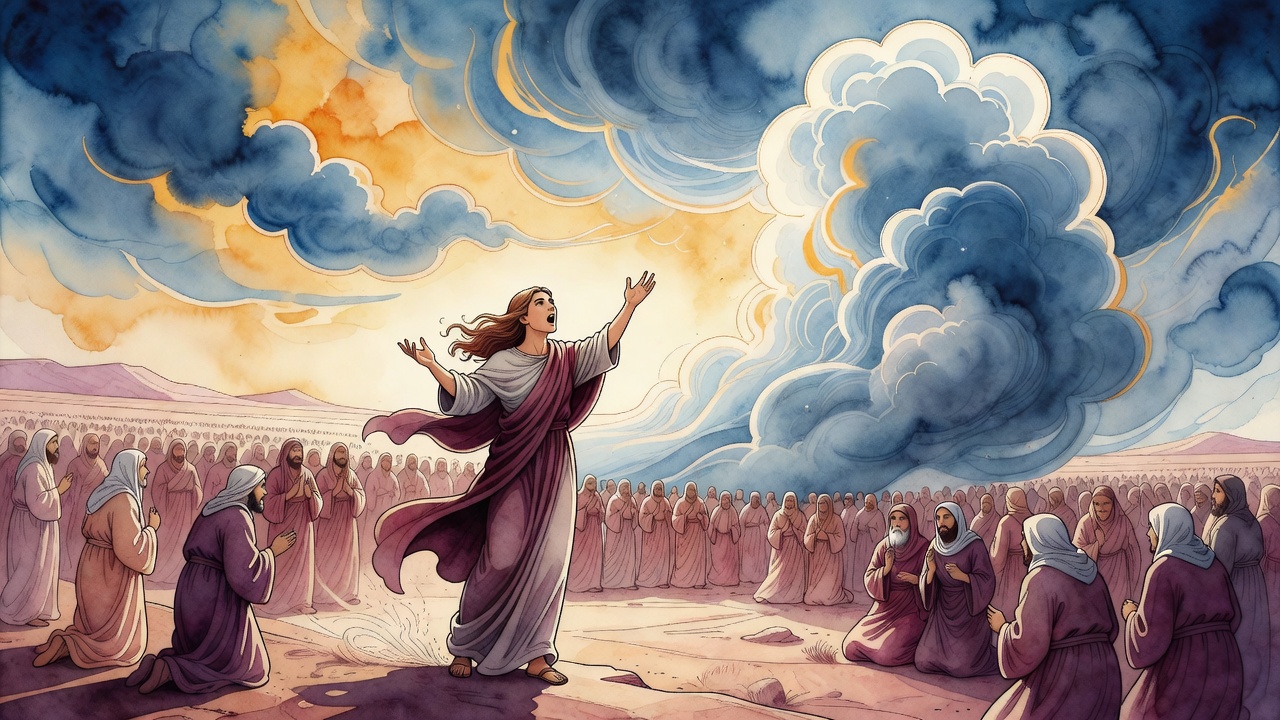
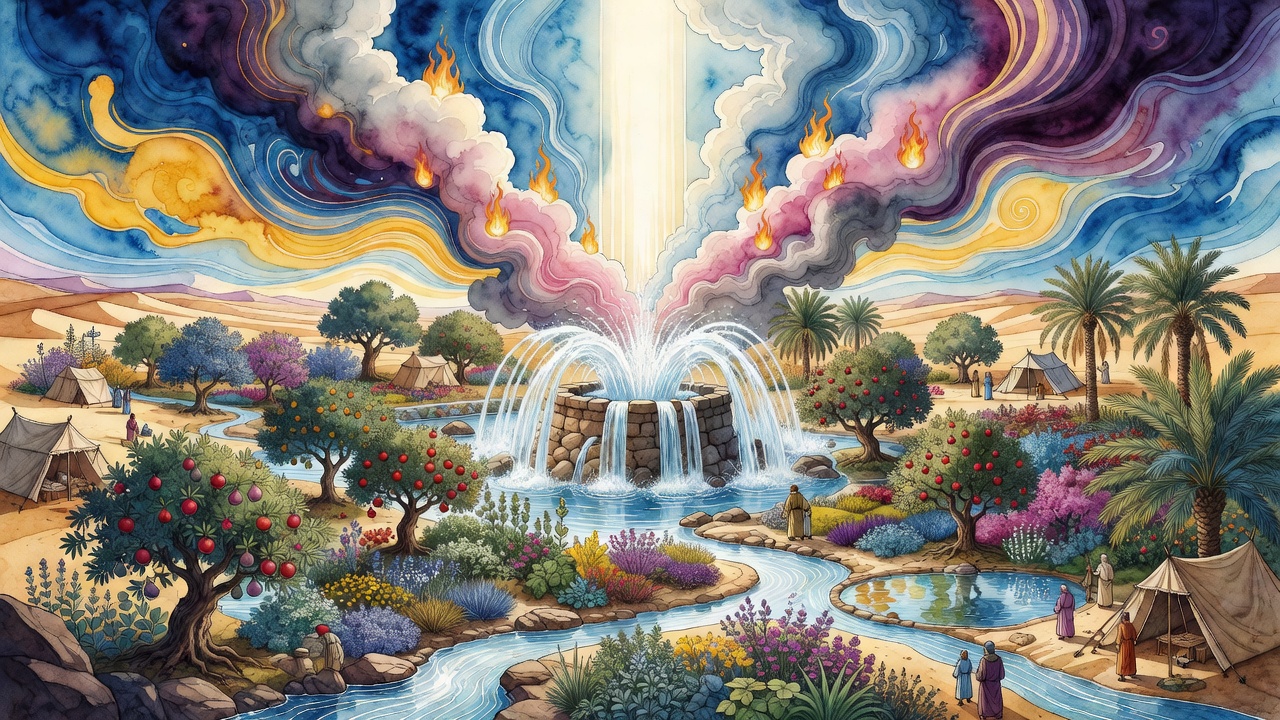
Ginzberg's account of the well is more elaborated than the Talmudic summary. The well did not simply provide drinking water. It produced rivers. The camp of Israel was divided by flowing waterways that came from Miriam's well. These rivers irrigated a plain around the camp where trees and plants grew in the desert. Women visiting each other used small boats to cross the waterways. The wilderness had become, in the vicinity of the Israelite camp, something that looked from a distance like a garden.
The Garden of Eden in the Third Heaven has two springs, one of honey and milk, the other of oil and wine, feeding four rivers that wind through paradise. The Book of Jubilees describes Gan Eden in exactly these terms. What Miriam's well produced in the wilderness was, according to this reading, a miniature echo of the same structure: a righteous person's merit creating a garden in the middle of a desert, rivers running where there should have been only sand, life blooming from a source that should have had no reason to flow.
The Death That Stopped Everything
Miriam died in the first of Nisan, the beginning of the month that would become the month of Passover. Aaron died four months later. Moses died on the seventh of Adar, almost a year after Miriam. The sequence is significant in the tradition: Miriam went first, and her going was felt most immediately because her gift was water and water was the most urgent provision the camp required.
Pirkei DeRabbi Eliezer, the early medieval Jewish text, preserves a tradition about Miriam that connects her final days to the punishment of tzara'at she had received for speaking against Moses. She had been shut outside the camp for seven days while the community waited for her return before continuing the march. The entire community, all twelve tribes, had stopped and waited. They did not continue without her. This was the measure of what she meant to Israel: the people could not move forward while she was outside the boundary. After her death, they moved forward without her. But the water did not come with them.
What the Well Was Made Of
The Wisdom of Miriam, as Ginzberg calls the larger account of her life, was not only the quality that helped her argue her father back to her mother. It was the capacity to see what was necessary before anyone else could see it, to prepare for celebrations before the disasters that would produce them had finished running, to remain at the river when everyone else had walked away. The well was the long-term expression of that quality. For forty years it followed Israel because the woman who generated it was walking with Israel and the water knew where she was.
When she stopped walking, the water stopped following. There is no more precise statement in the tradition about how the internal quality of a person shapes the external world they move through.
← All myths