135 myths · Page 3 of 5
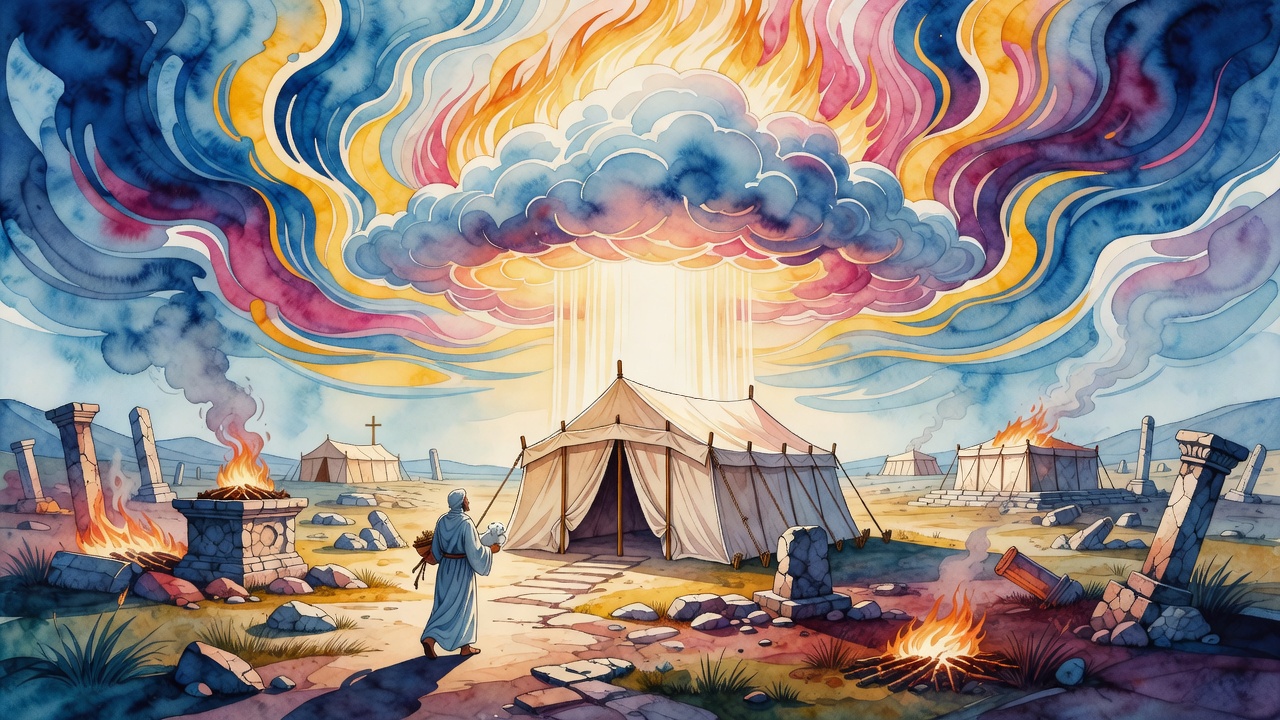
Before the Tabernacle, sacrifice wandered any high place. Once the Tent stood, God demanded one door, then came loaded with blessings like Jacob to Pharaoh.
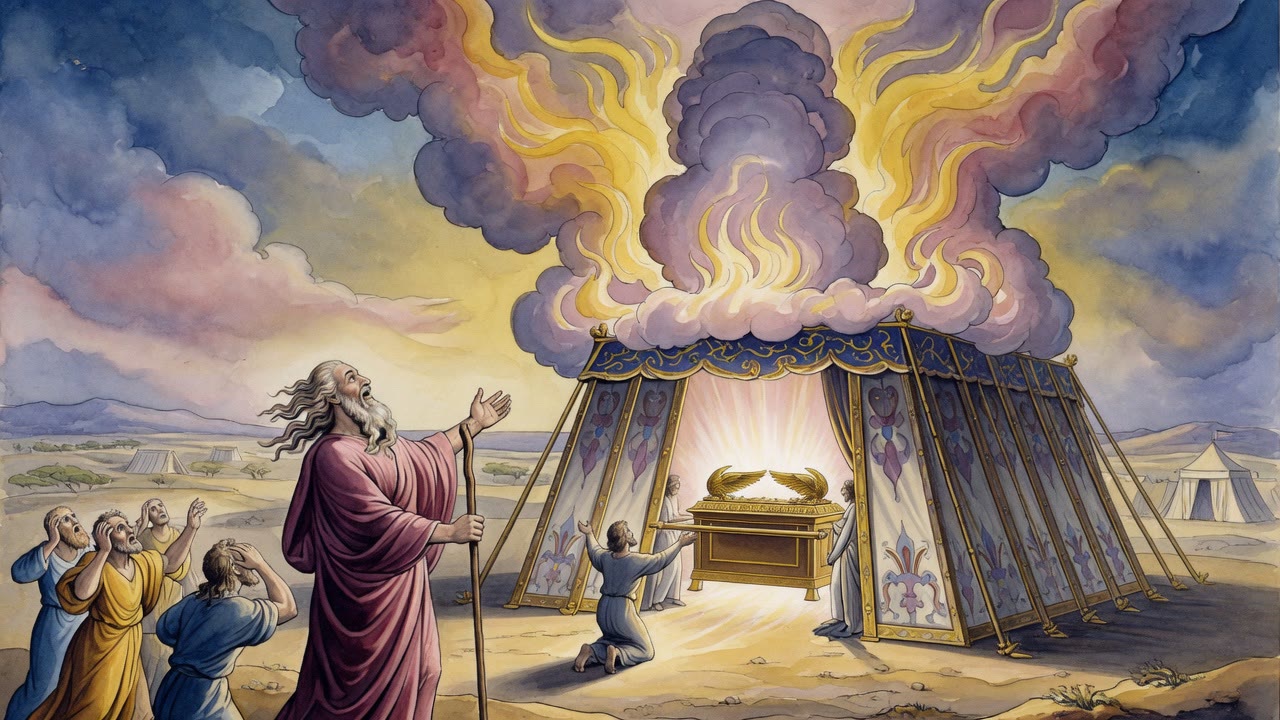
Scoffers mocked Moses until the Shekhinah, the Divine Presence, rested. Bezalel began with the Ark of light, and the dwelling rose alone.
Cynics watched the nape of his neck and called him rich. One thousand seven hundred seventy-five shekels sat blank in the ledger.
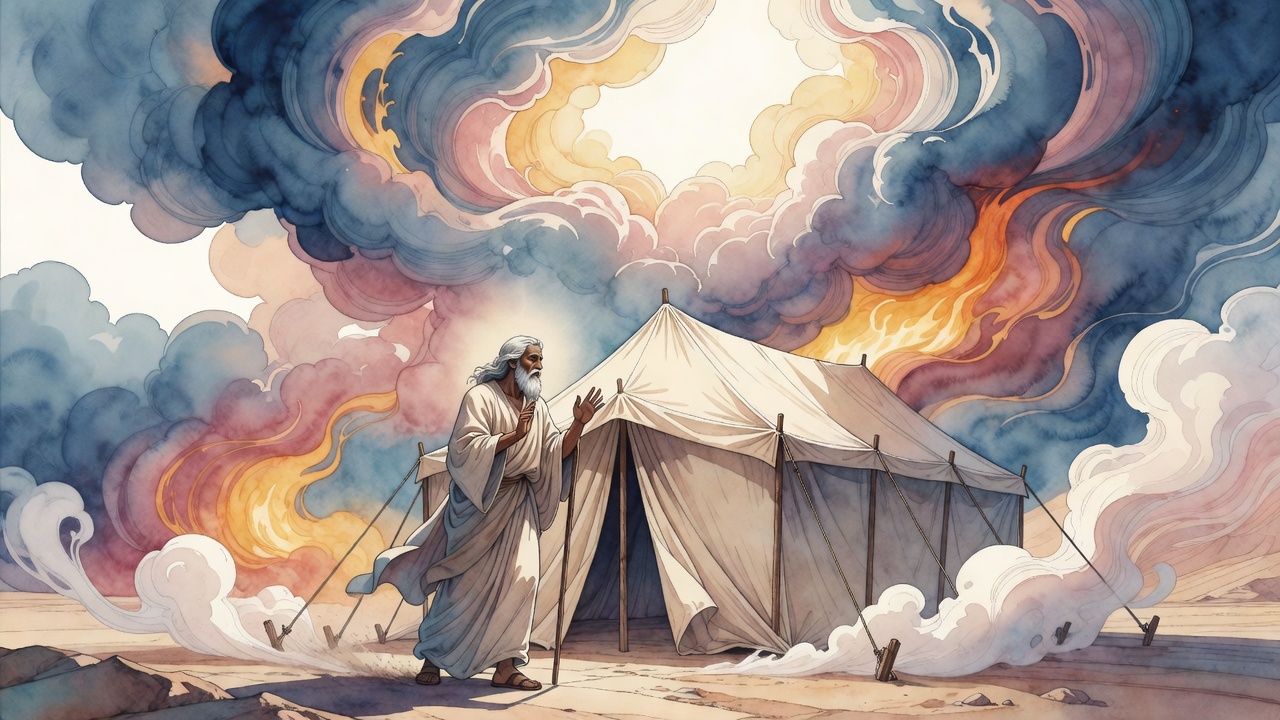
After Sinai Moses stood outside the finished Tent, afraid of the cloud, until the Holy One called him alone by name.
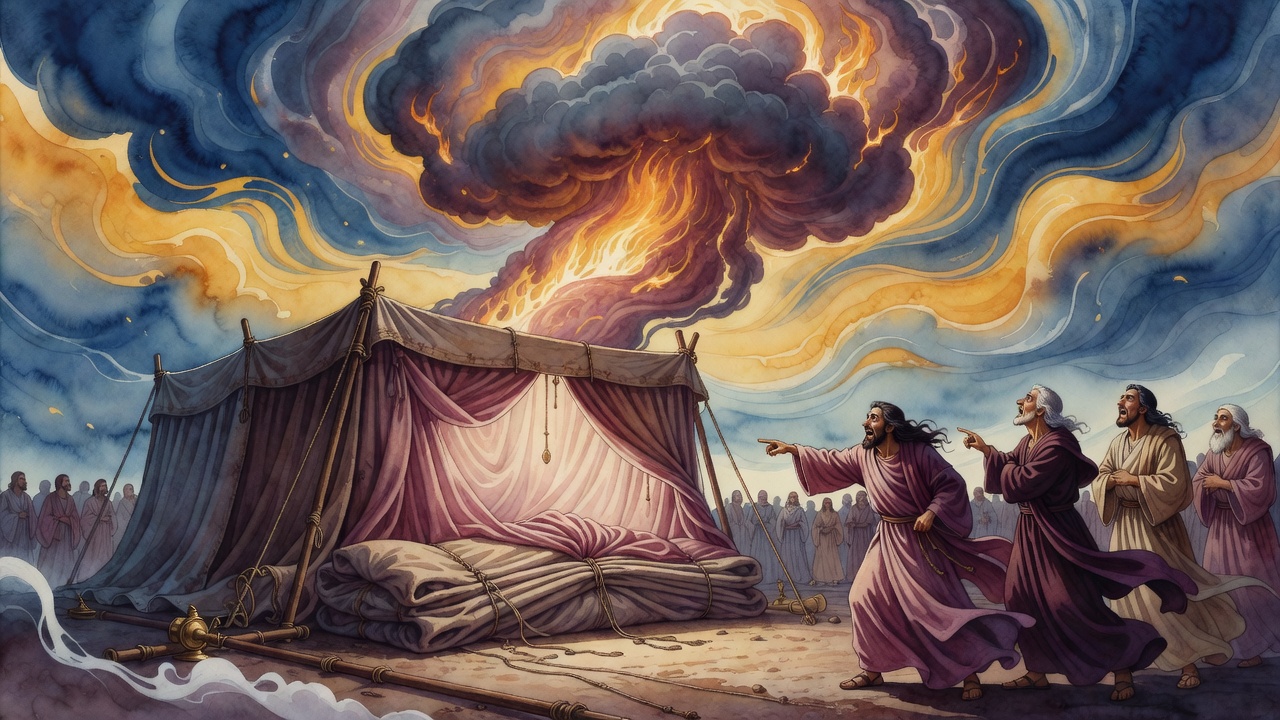
The boards were finished. Moses still left them stacked. Mockers counted the folds until Abraham's month of good news arrived.
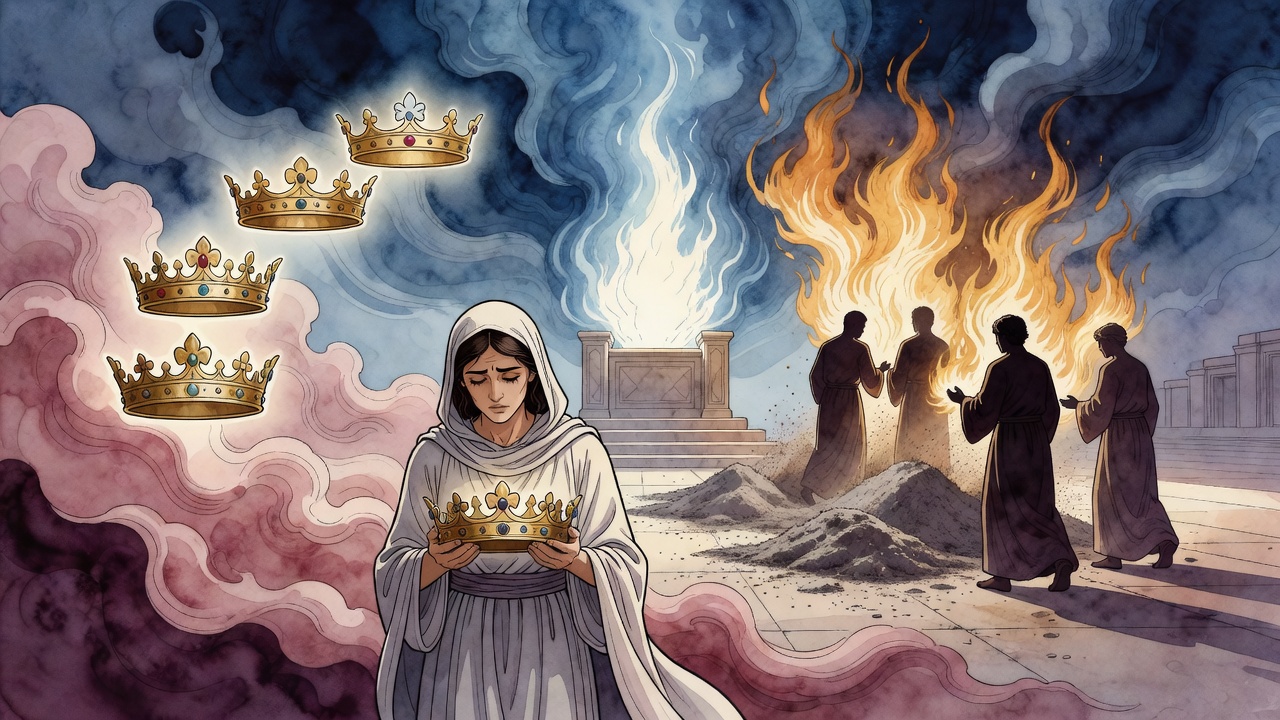
Oil still shone on Aaron's beard. By nightfall Nadab and Abihu lay as ash at the Tent, and Elisheba's hands were empty.
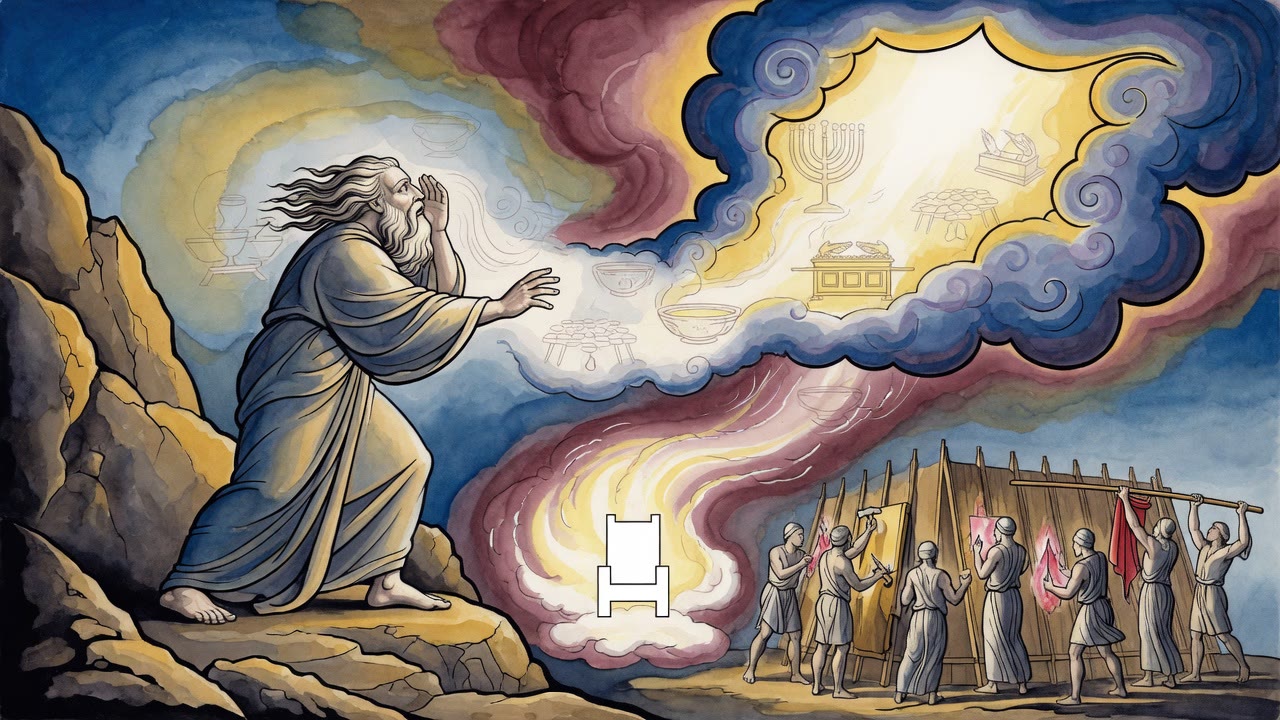
The camp said Moses had given the Sanctuary to his own blood. He opened the words from the mountain and showed them Bezalel's name already written.
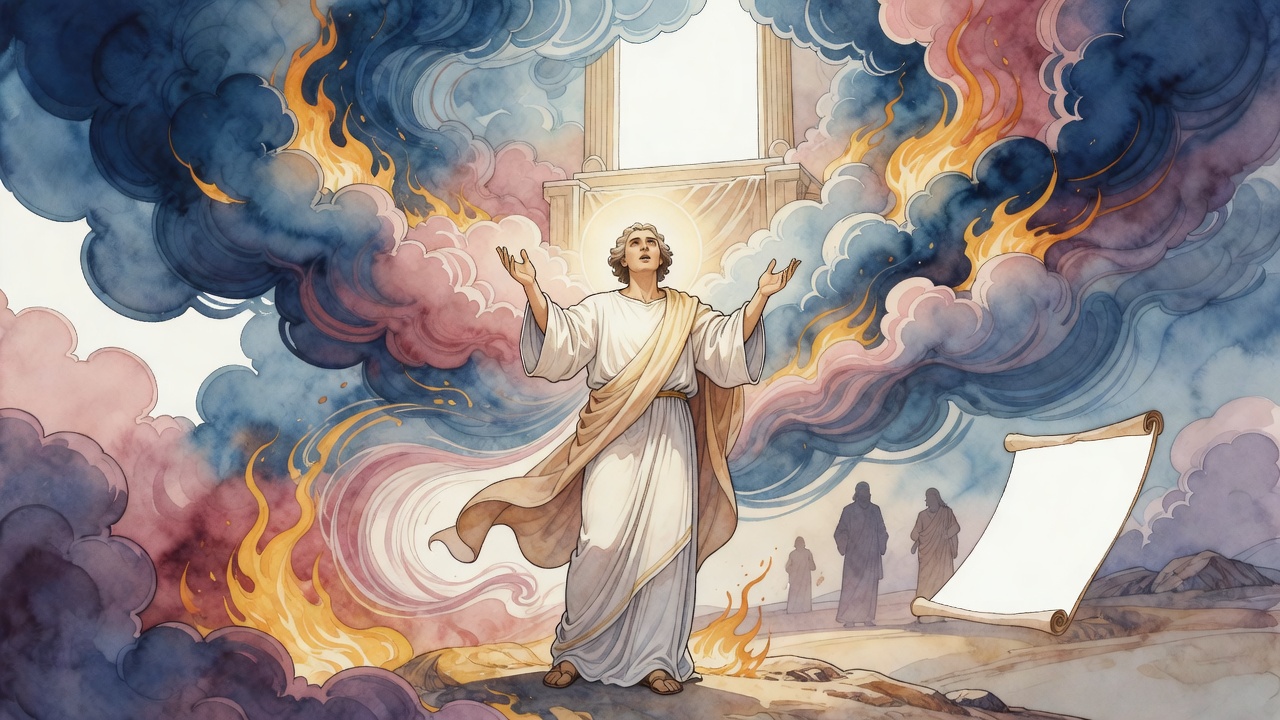
Moses put the vestments on his brother. Aaron had not asked for them. The lamps stood on the wrong side of the table.
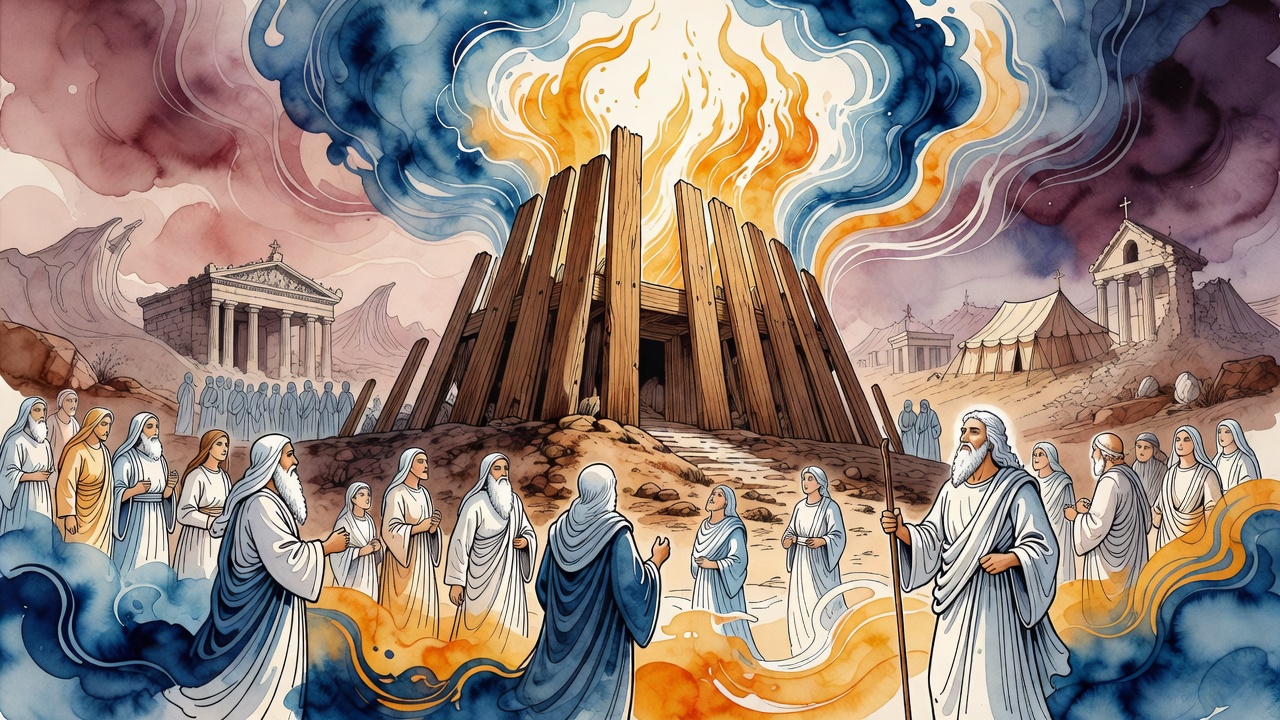
Acacia boards rose as a pledge Heaven could seize. When Temple and Tent are gone, the righteous become the collateral, and Moses still sees his plan built.
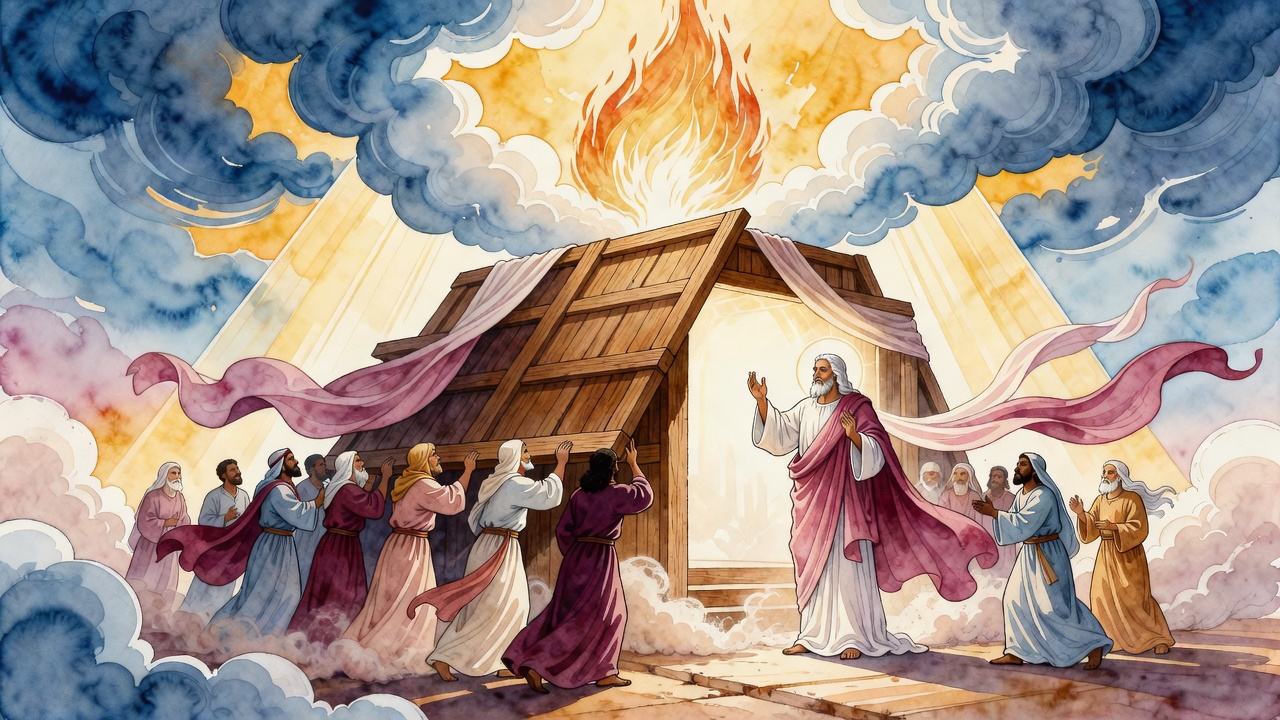
On the eighth day the people set the last board. Heaven used creation's own words again, and Moses blessed the work of their hands.
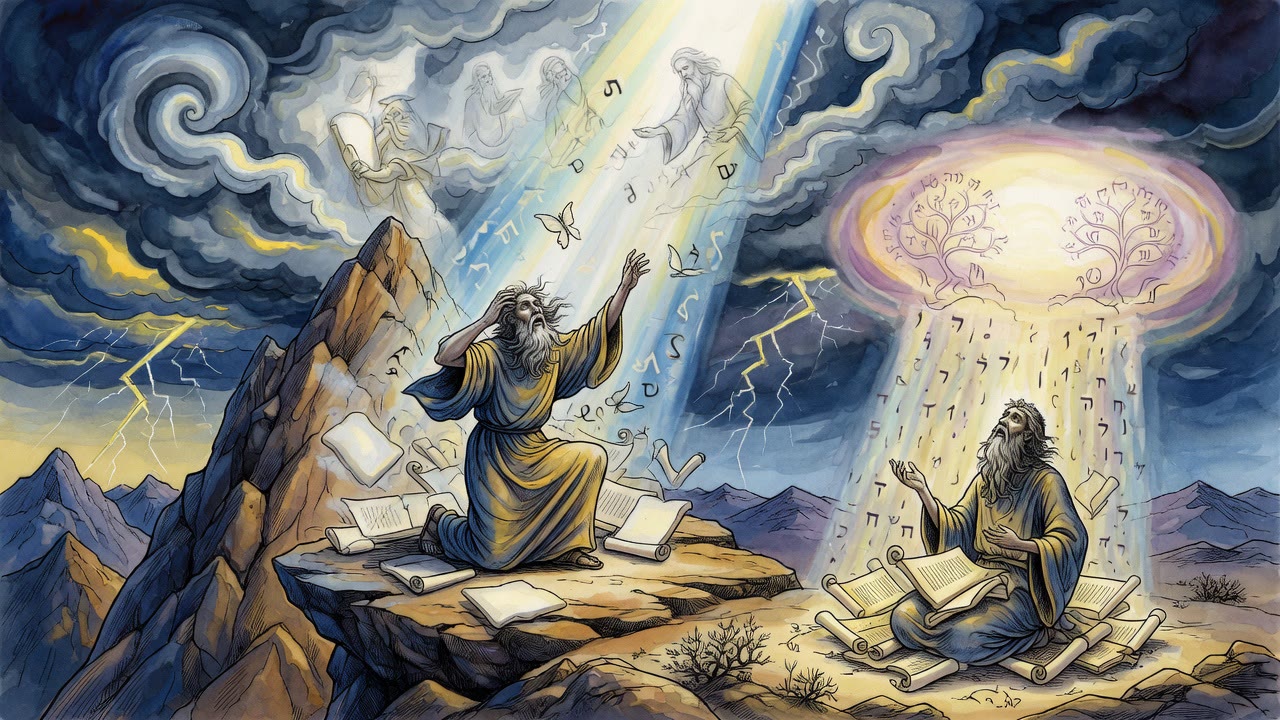
For forty days Moses learned Torah and forgot it. God poured it into him as a gift, and Ha-Satan (the Accuser) hunted the treasure across earth, sea, and death.
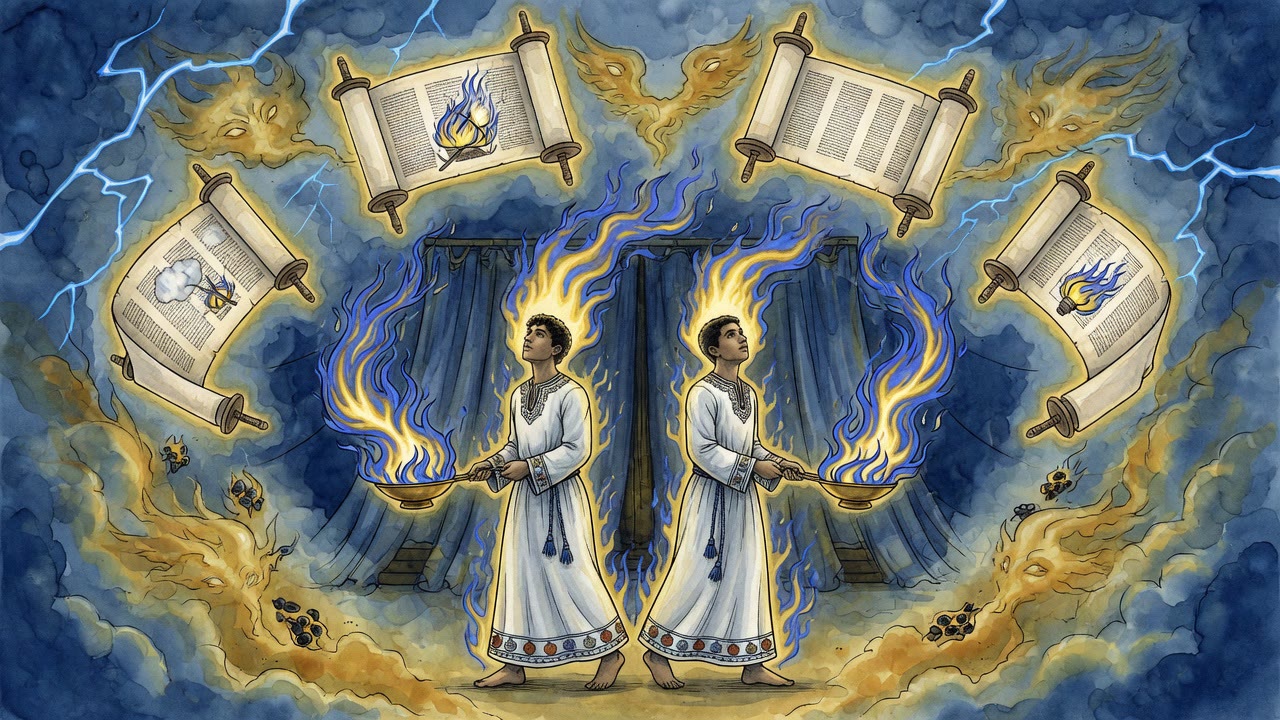
Each brother lifted his own pan. The coal came from a stove, not the altar. By noon Aaron's sons were dead on the court stones.
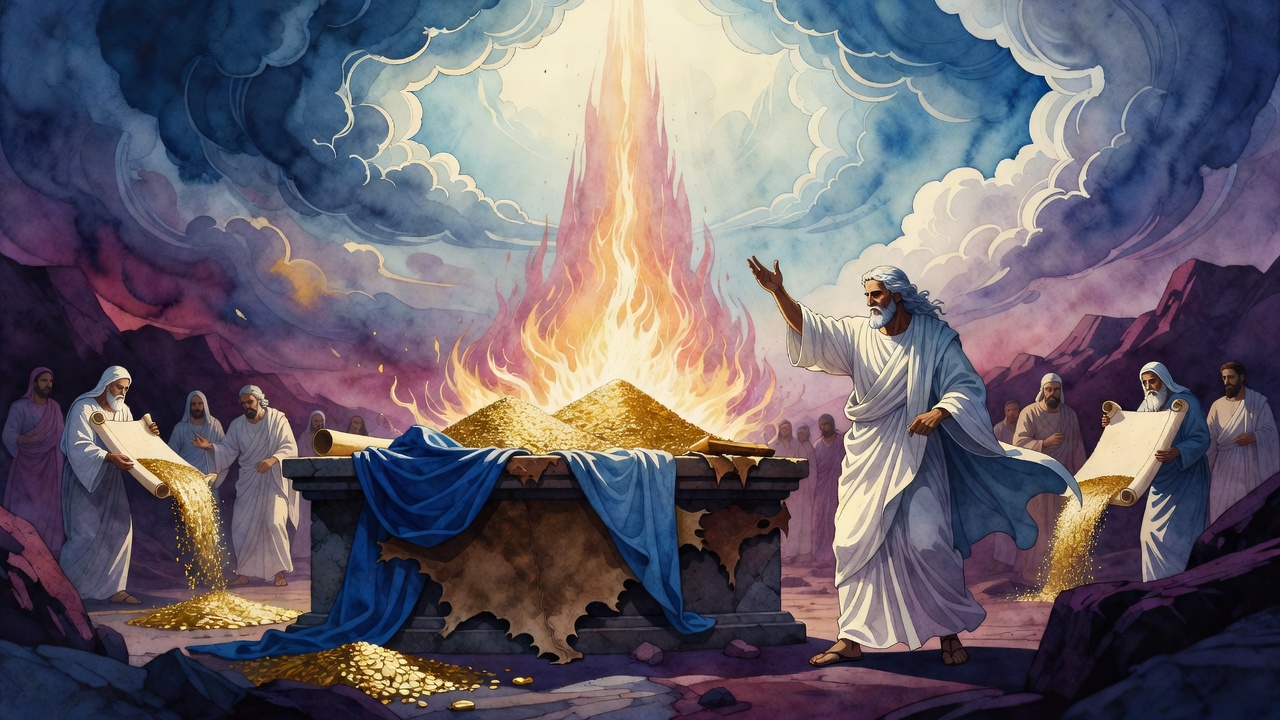
Weeks after the calf, so much gold came in that Bezalel reported more than the work could use. Moses raised both hands and shouted for the giving to stop.
Gold keeps coming until Bezalel and Aholiab tell Moses to stop. The desert Mishkan rises from too much love, not too little.
After the calf, God asks for gold again, the same metal of betrayal funding a sanctuary so the nations see Israel forgiven.
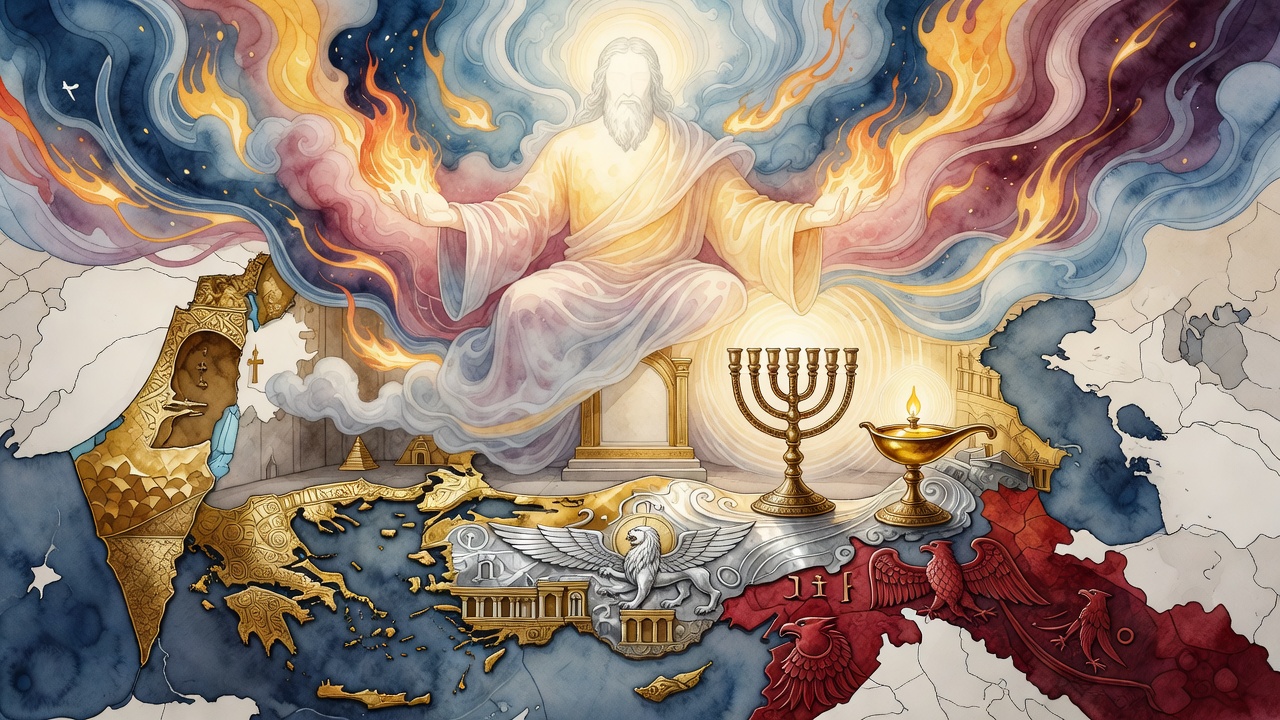
Gold, silver, brass, and red skins in the sanctuary map Babylon, Persia, Greece, and Rome, while oil for the lamp still promises a future light.
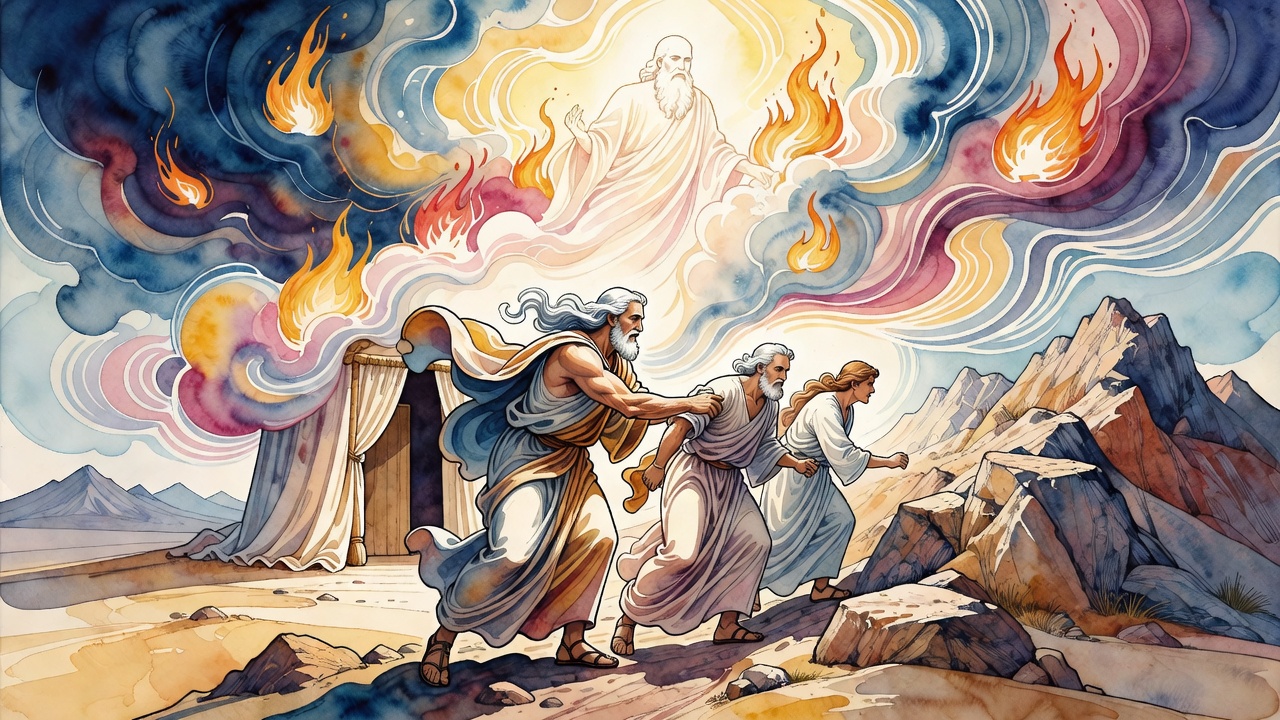
Curtains, new wood, oil. Aaron wanted the first service under his own feet. Moses walked him past the door and out of the camp.
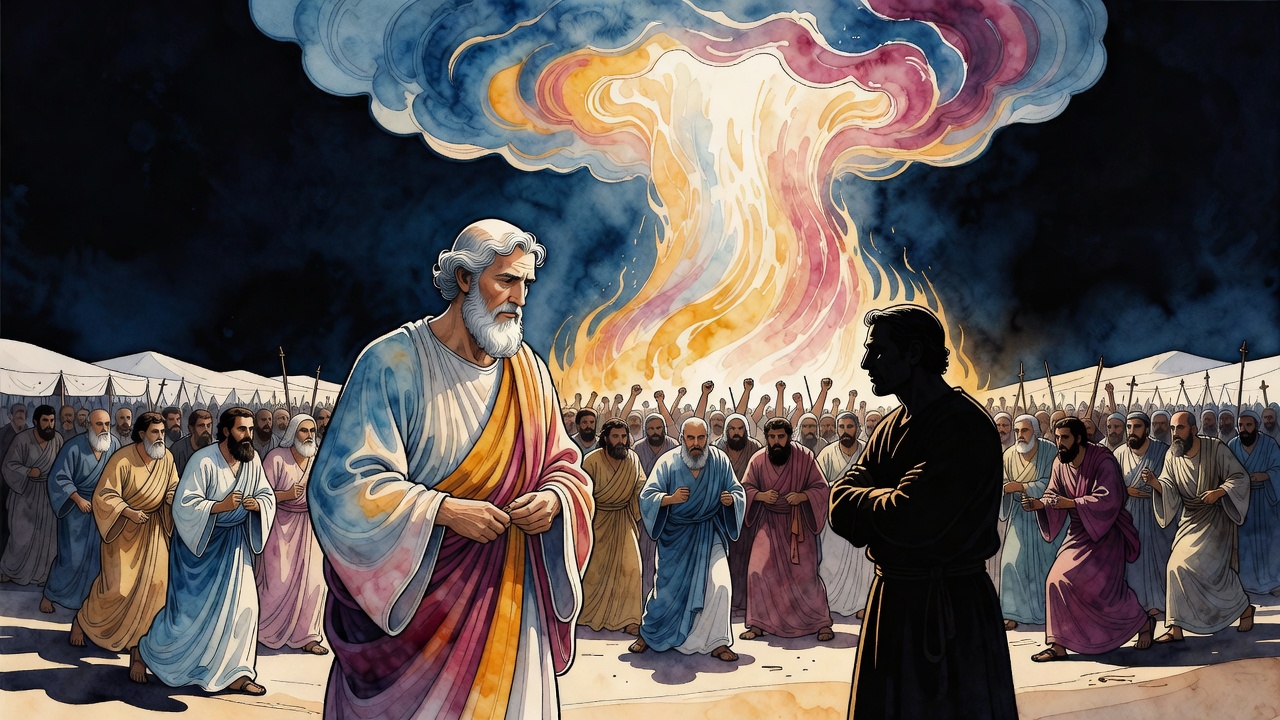
Two hundred fifty men want the altar by nightfall. Moses buys them until morning, hoping sleep will unmake a rebellion.
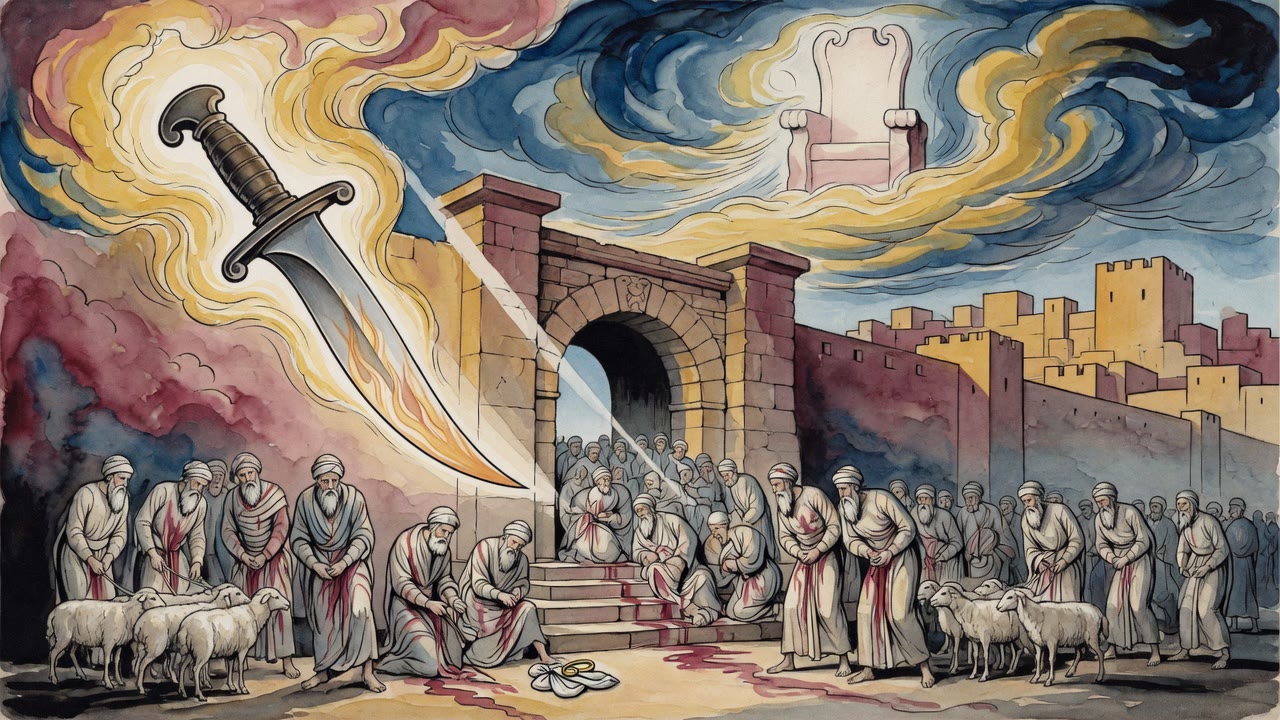
After Adam's bite the Presence leaves floor by floor. Abraham, Isaac, and Moses pull it back until the Tabernacle stands.
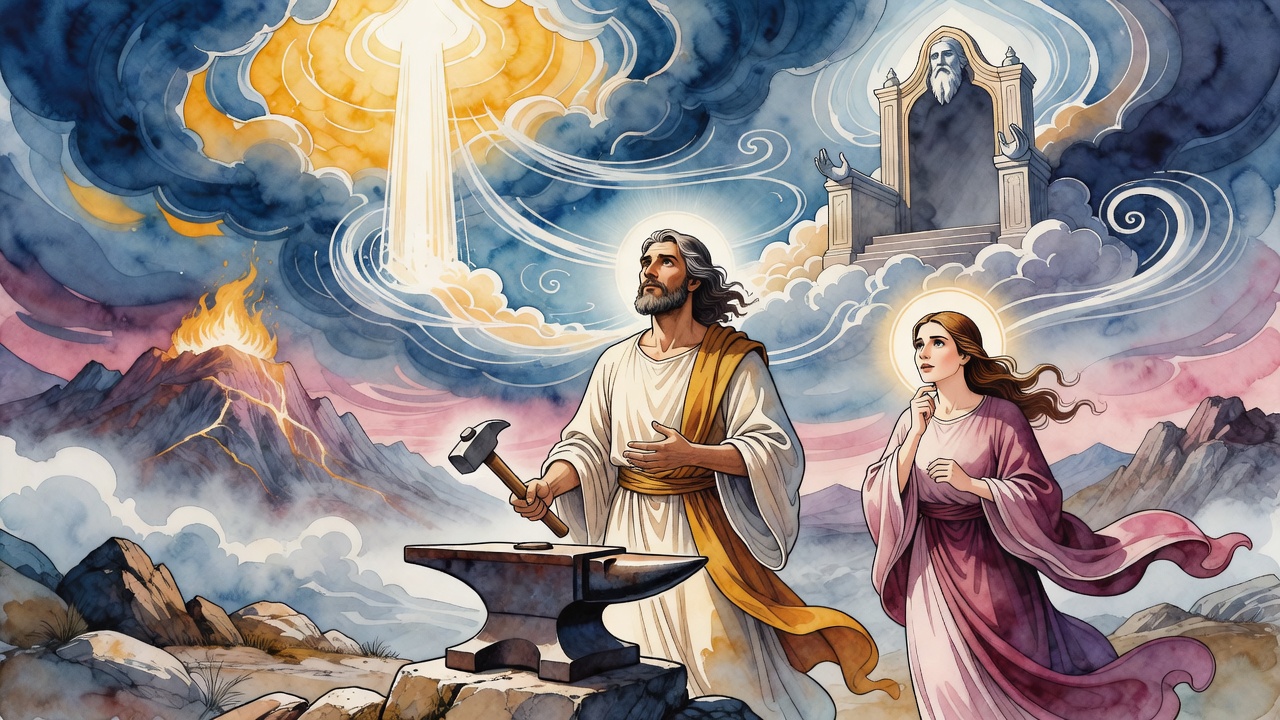
Bezalel is called by name before he lifts a tool, and a lady learns why wisdom is lent only to those who already know how to spend it.
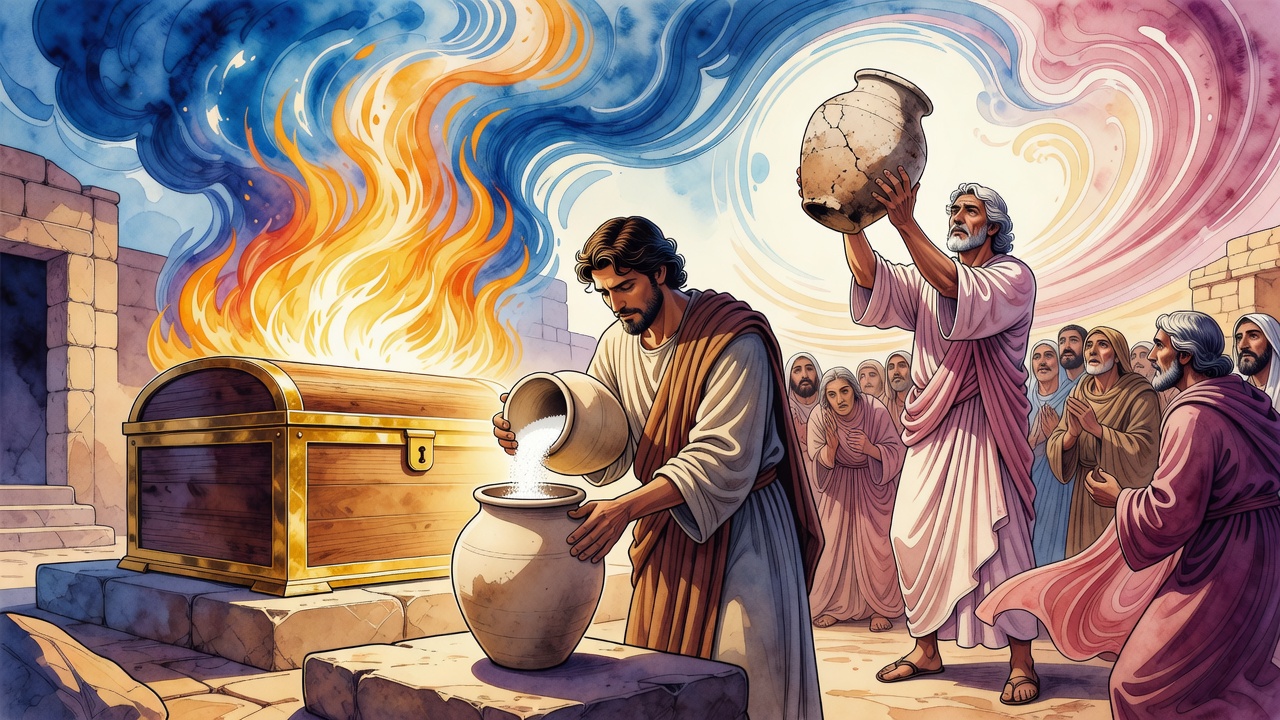
Aaron fills a plain clay jar with an omer of manna and sets it by the ark. Centuries later Jeremiah lifts the same jar to feed a doubting people.
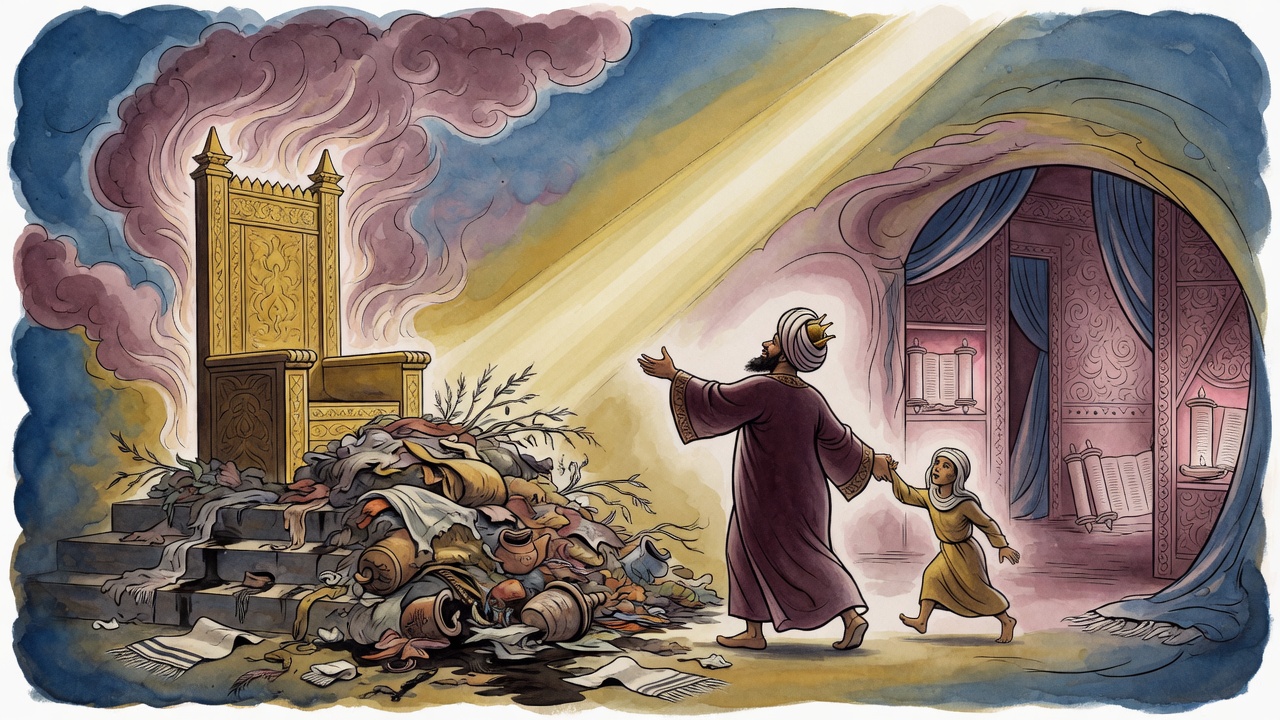
After Nadab and Abihu fell, the law fenced Aaron from the veil. Moses still walked him into the Tent to teach the incense, brothers without rivalry.
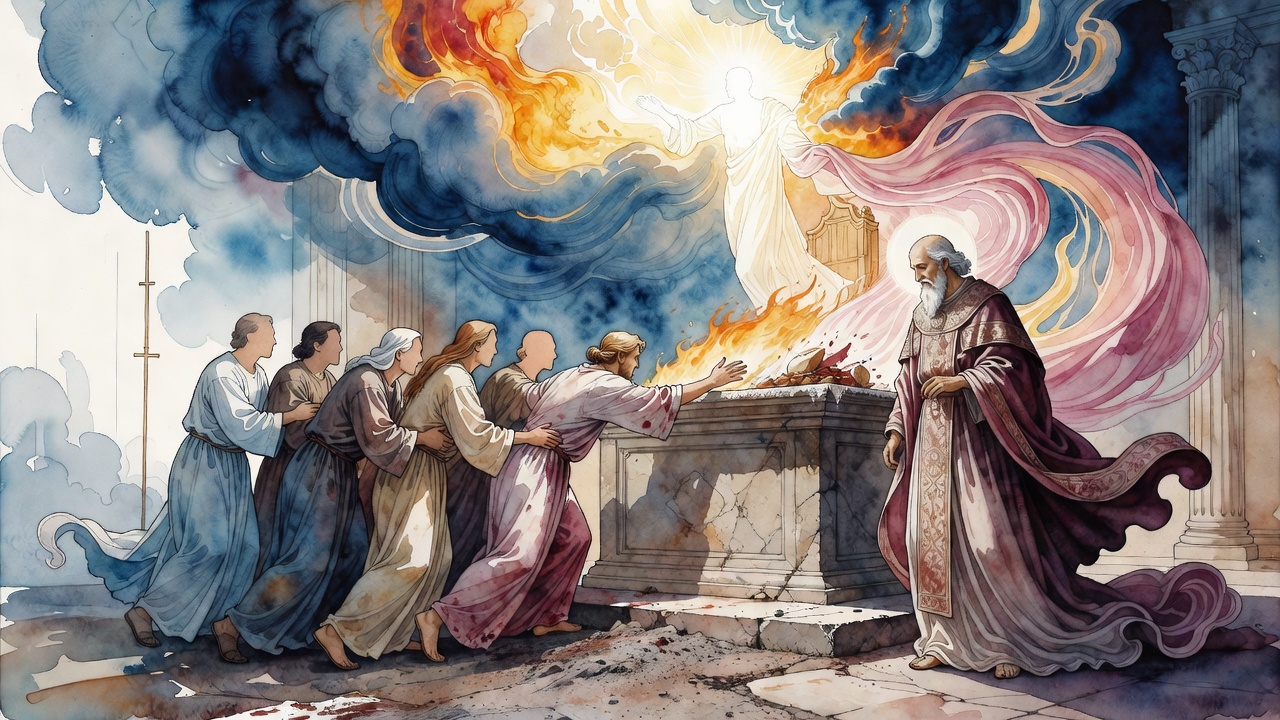
Even a killer mid-service at the Tamid was pulled out to die, while the high priest's tunic atoned daily for innocent blood.
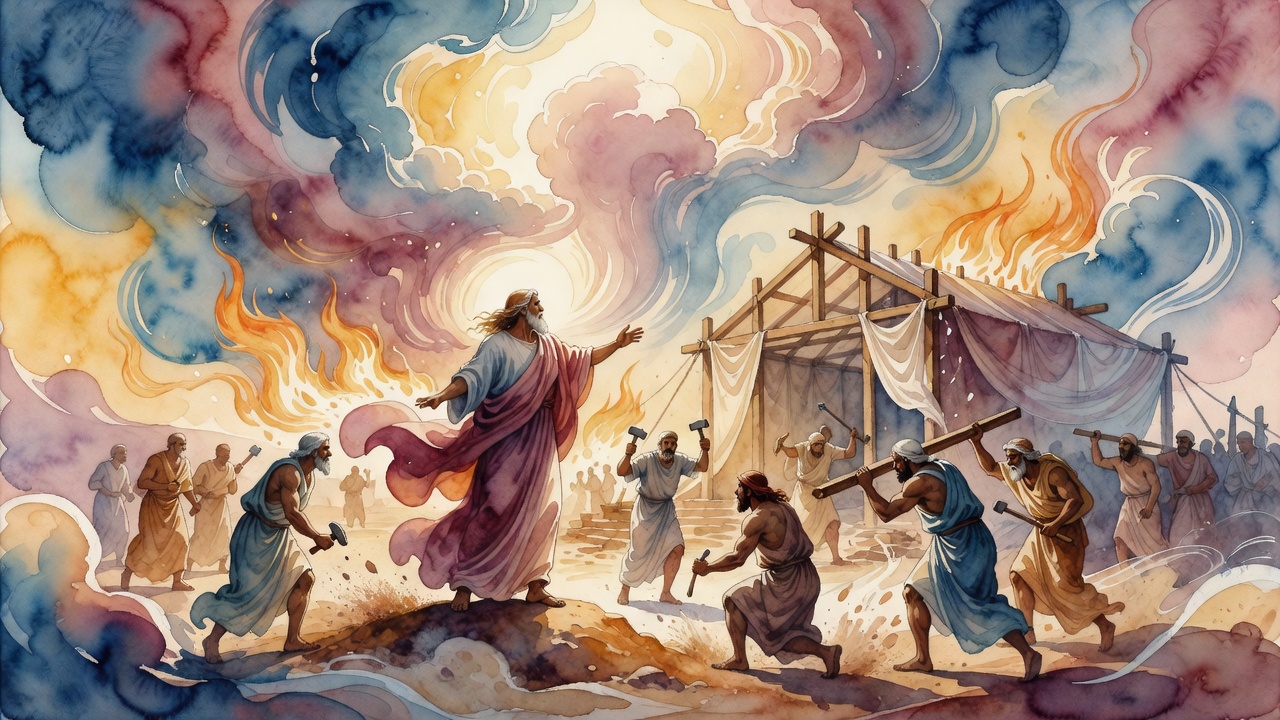
Half-built boards at dusk on the sixth day. Gold rings still waiting for their poles. One man reached for a mallet. Another man set it down.
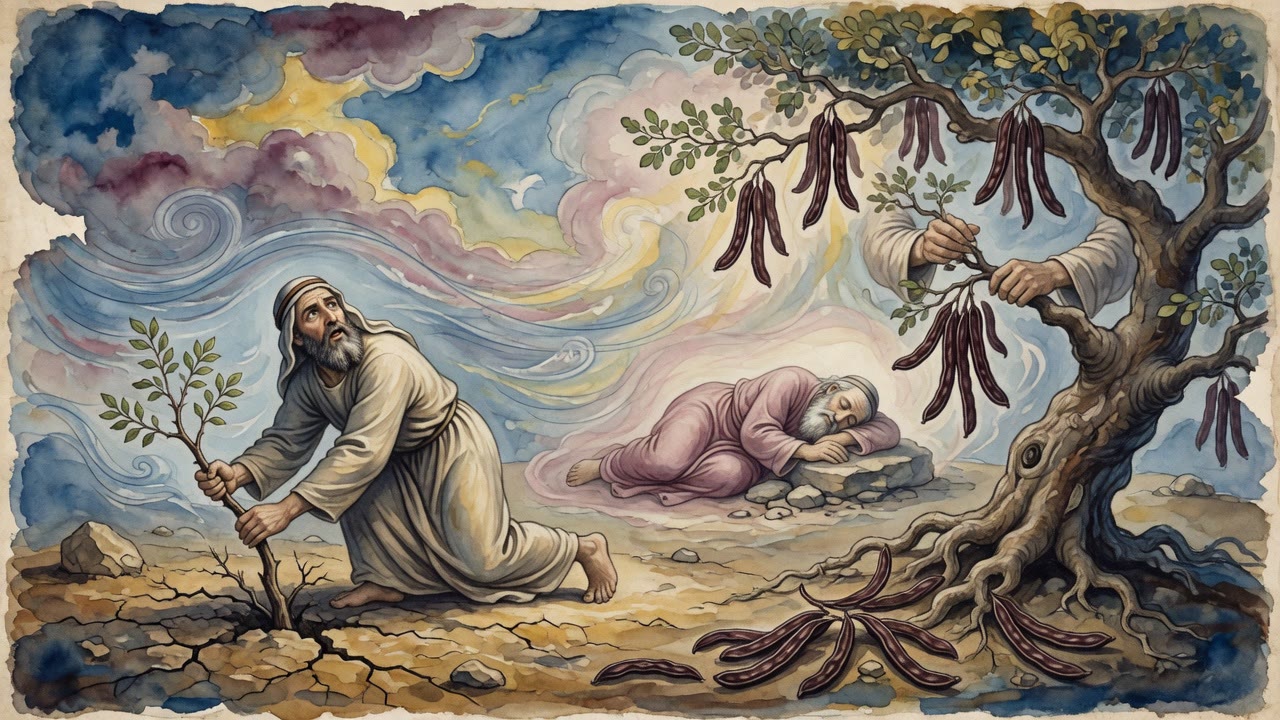
Sixty myriads cannot fit at the Tent door. God answers with stretched heavens, Sinai chariots, and a future Jerusalem that climbs to the Throne.
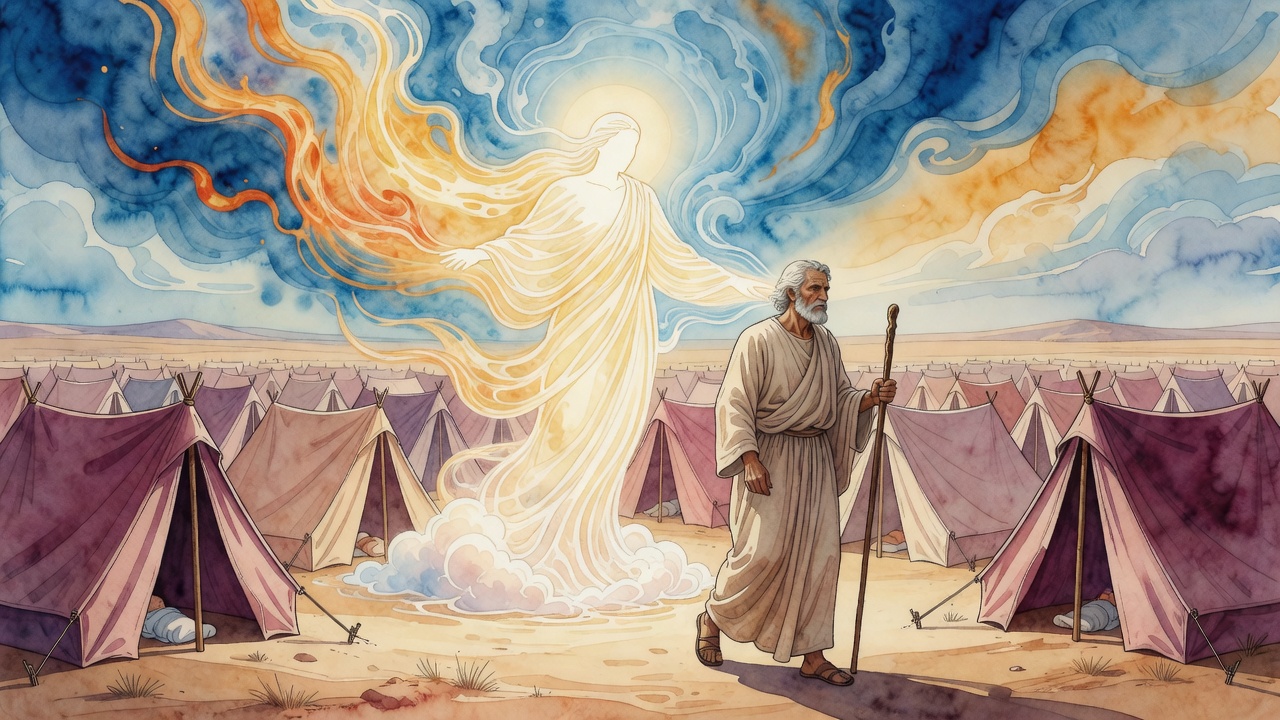
Moses cannot enter every courtyard to count Levi from a month old. The Presence walks ahead of him and whispers how many infants sleep in each tent.
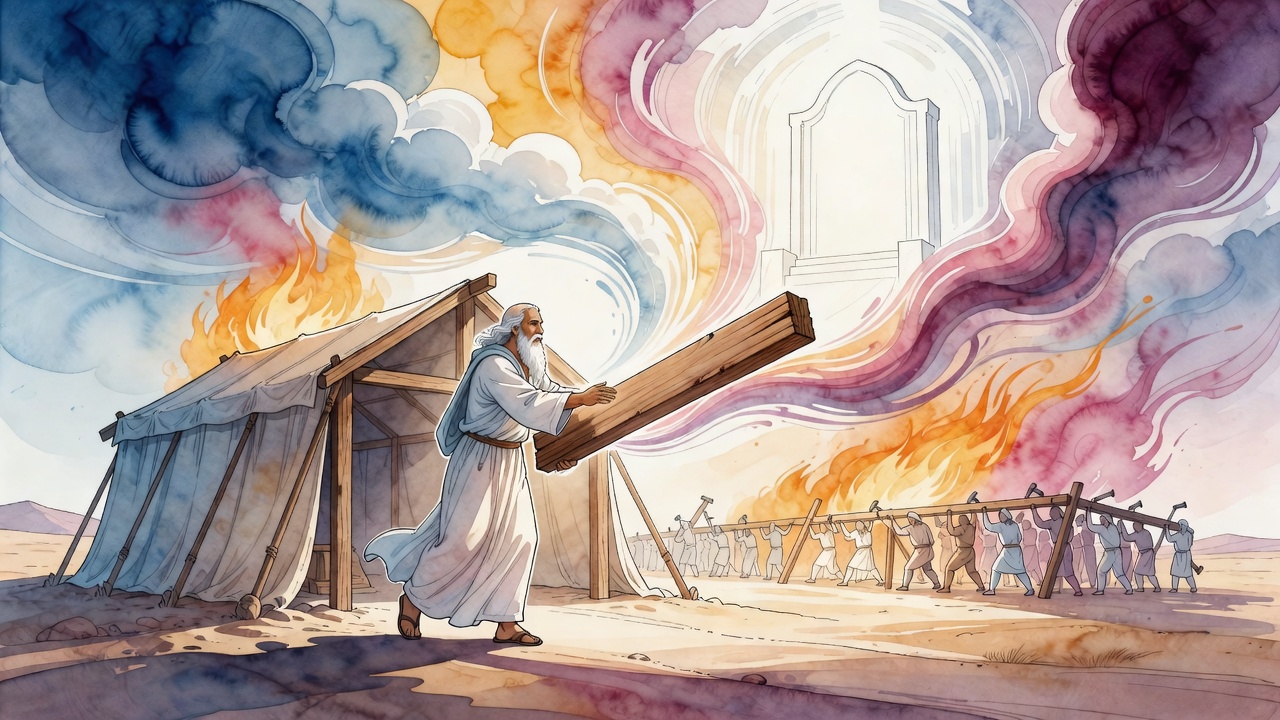
All Israel builds the Tabernacle, yet Scripture names only Moses at the finish. He steps inside and hears a voice that settles for peace, not judgment.
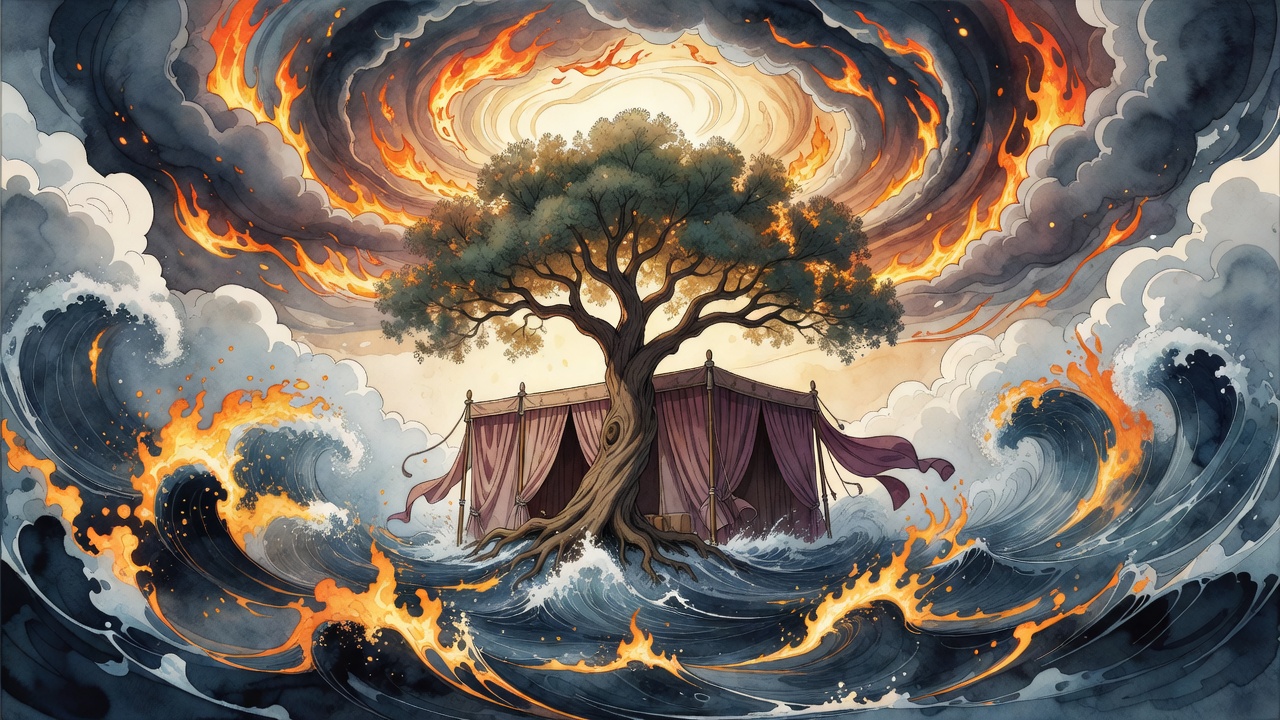
Angels cut Abraham's tamarisk and threw it into the Sea of Reeds. Israel pulled the wood out and ran it through the Mishkan as the middle bar.
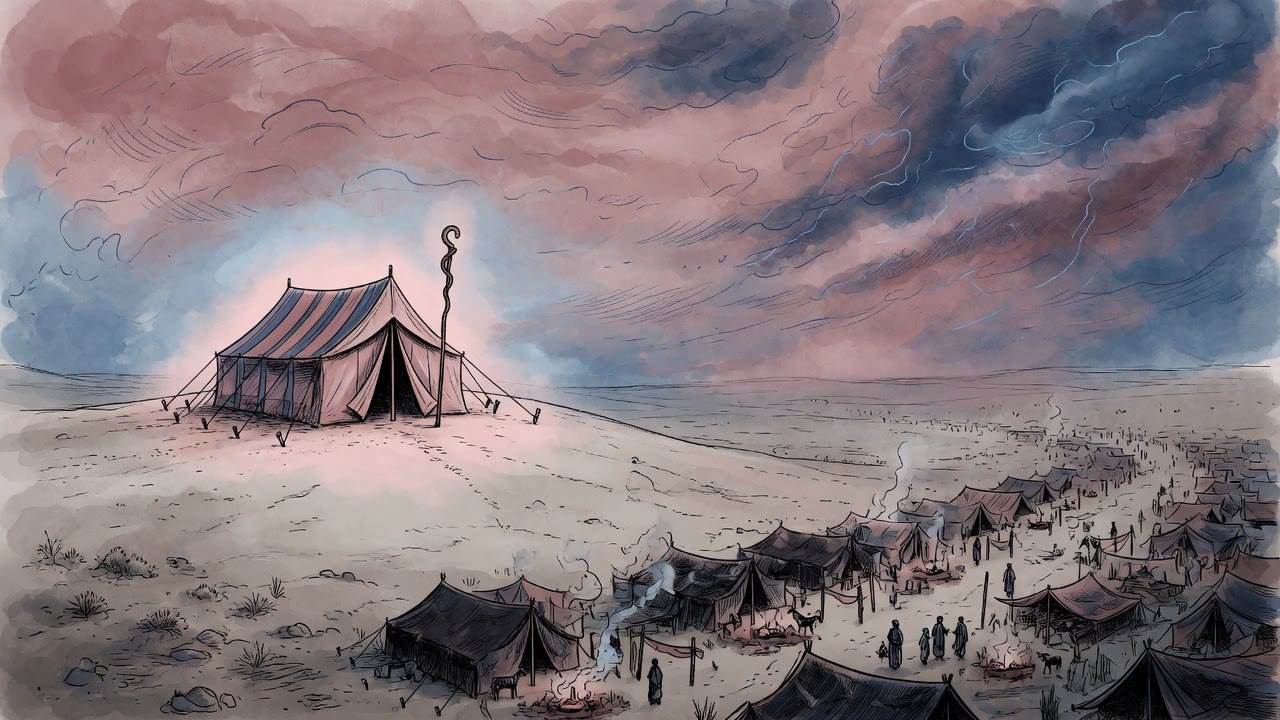
The gold of the calf still stank in the dust. Moses dragged his tent past the last row of Israel and did not look back.
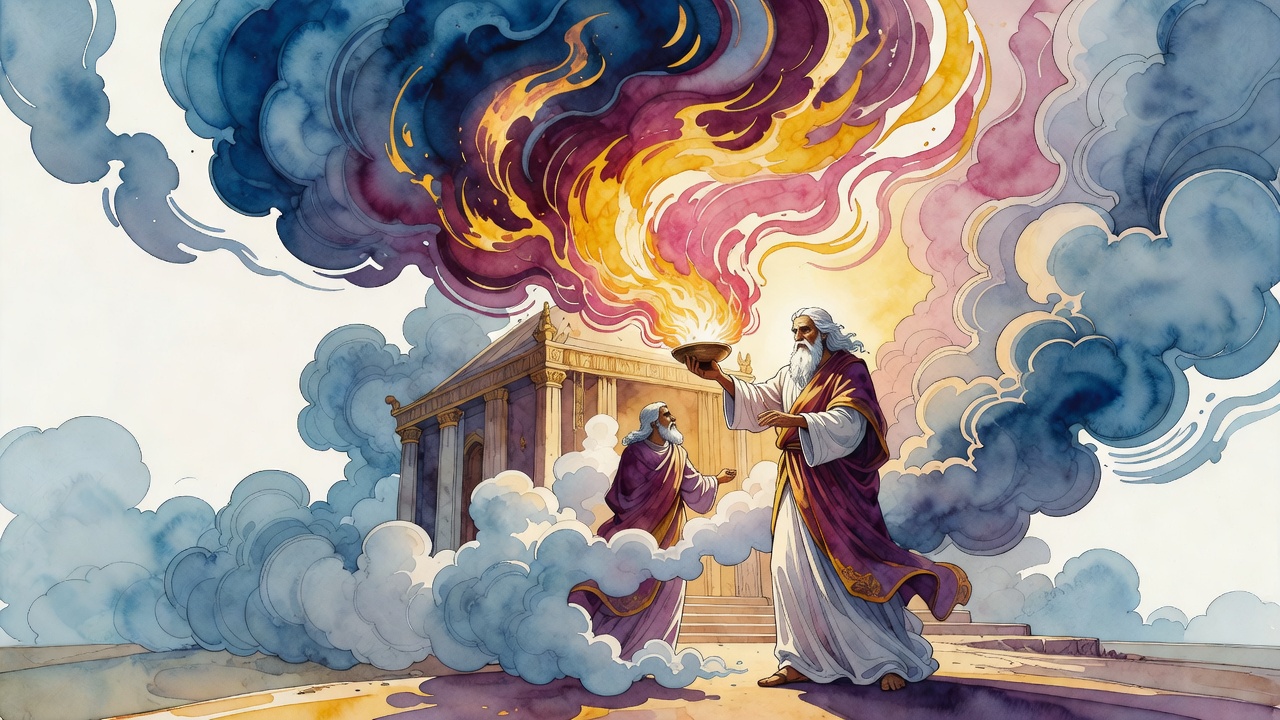
For seven days Moses served as high priest in smoke Aaron would own. When the Mishkan rose, the Shekhinah, the Divine Presence, came home by invitation.
