5 min read

Aaron Was Chosen and Brought Near at Once

Abraham and Moses were chosen but drew themselves near. Aaron alone was chosen and brought close, then blessed Israel standing in the holy tongue.

Curated by Arthur · Told by Maggid ·
Table of Contents
  1. Two Kinds of Fortune
  2. Those Who Walked Themselves In
  3. Jethro, Rahab, and the Double Gift
  4. Light God Does Not Need
  5. The Priests Stand to Bless
Aaron Was Chosen and Brought Near at Once Click for full size

Two Kinds of Fortune

"Take Aaron and his sons along with him, the vestments" (Leviticus 8:1-2). The command lands beside a psalm: "Fortunate is the one You choose and bring near, to dwell in Your courts" (Psalms 65:5). The sages split the blessing into two gifts that rarely arrive together.

Fortunate is the one chosen even if not brought near. Fortunate is the one brought near even if not chosen. Most of the great ones received only half.

Those Who Walked Themselves In

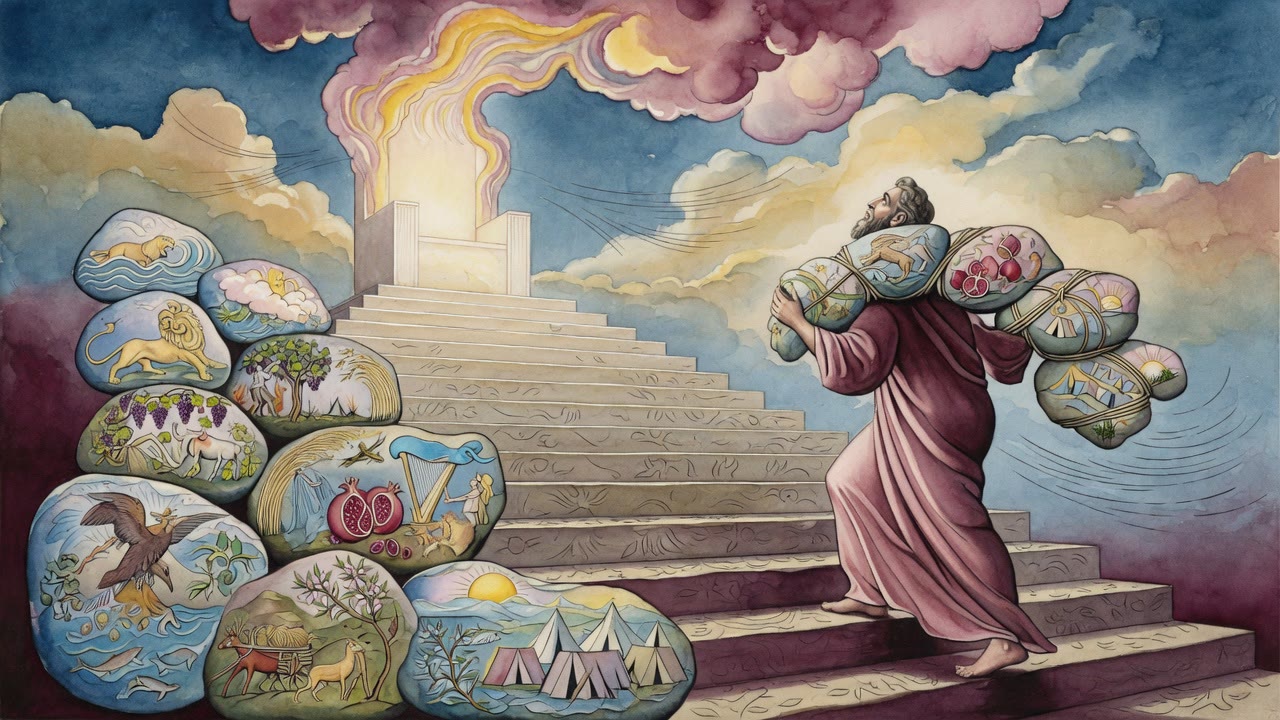
Abraham was chosen. "You are the Lord, the God who chose Abram" (Nehemiah 9:7). He was not pulled by the sleeve into nearness. He walked himself toward the Voice.

Jacob was chosen. He dwelled in tents and drew himself close. Moses was chosen, the one who stood in the breach, yet the midrash will not say Heaven dragged him to intimacy without his own long climb. David was chosen as servant, and he made himself companion to those who fear God.

Chosen, each of them. Nearness they largely seized with their own feet.

Jethro, Rahab, and the Double Gift

Others were brought near without that first election. Jethro came under the wings and was welcomed, yet the language of choice is not hung on him the way it is hung on Abraham. Rahab was drawn in from the wall of a doomed city. Nearness without the older title of chosen.

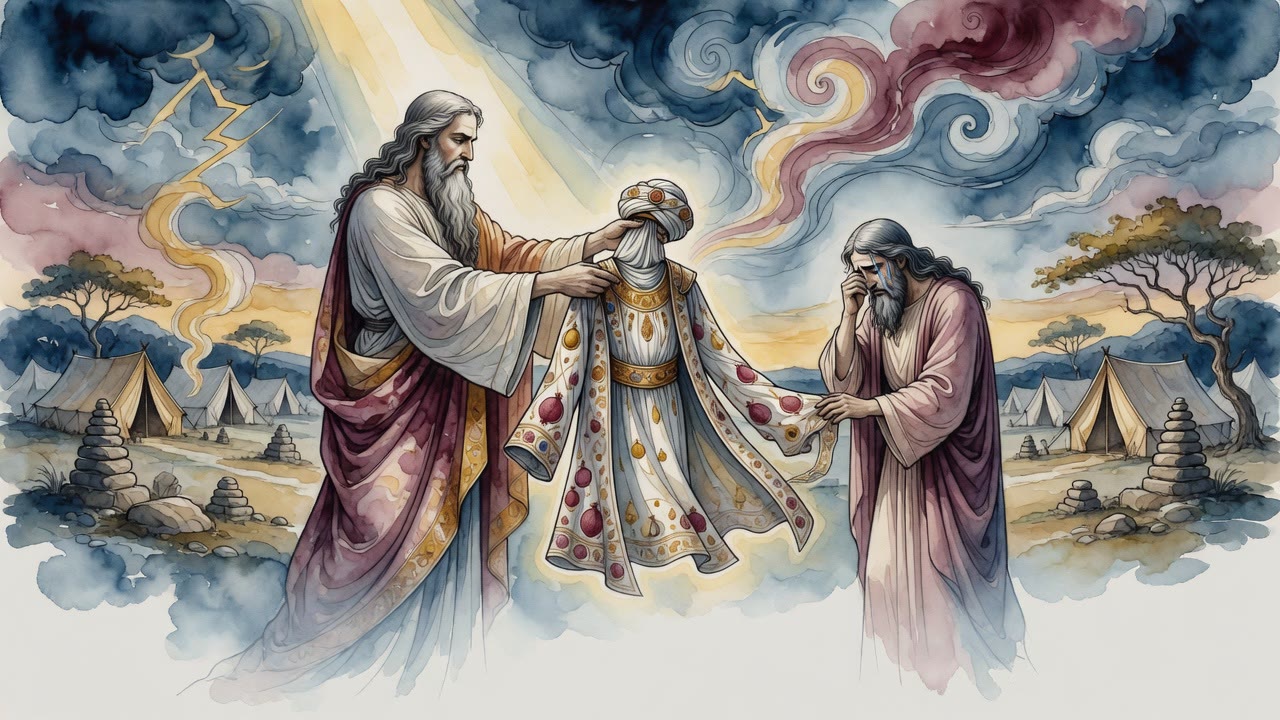
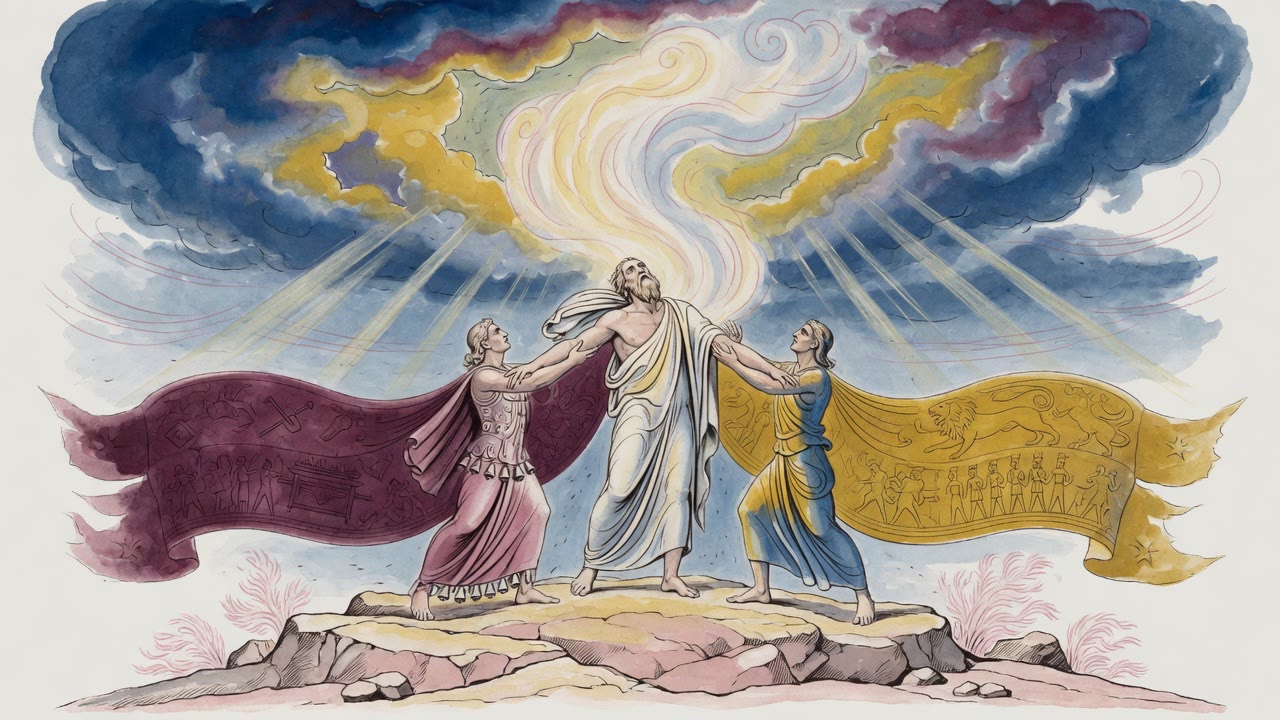
Aaron received both. "I chose him from all the tribes of Israel to be My priest" (I Samuel 2:28). And again: "You shall bring near to yourself your brother Aaron" (Exodus 28:1). Chosen and brought near. The psalm's double fortune sits on one head under the turban.

Light God Does Not Need

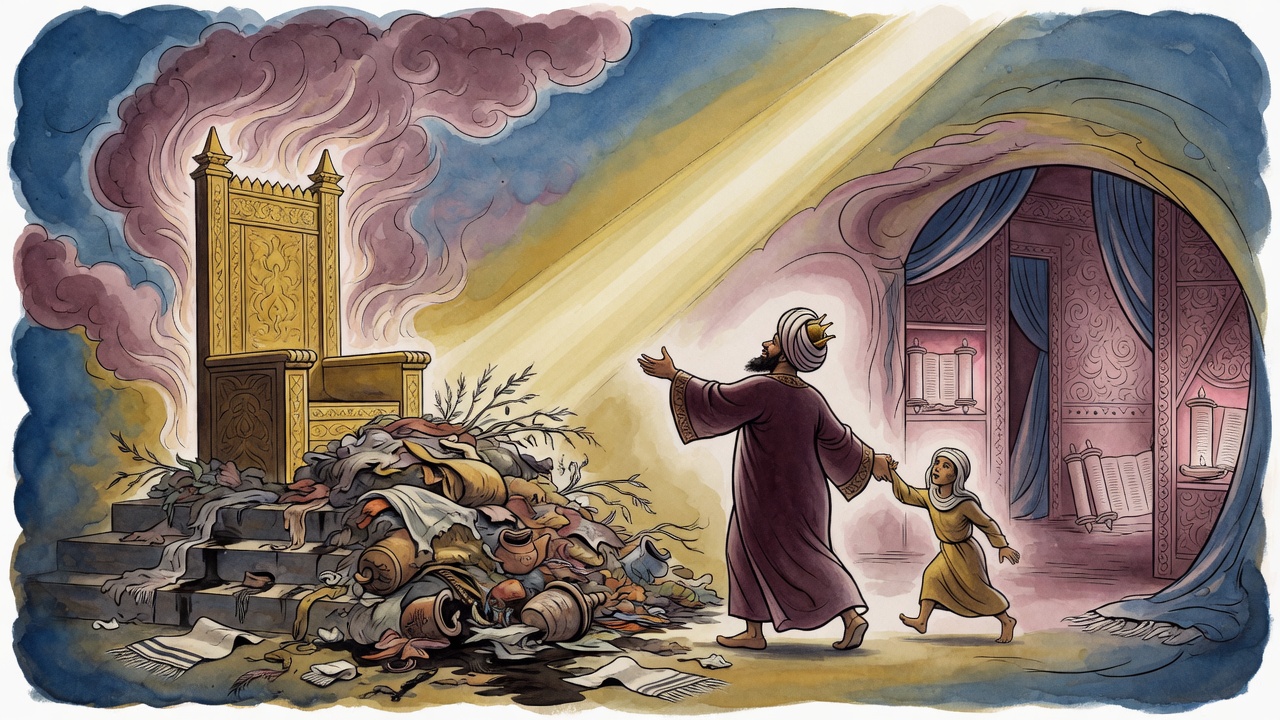
In the Tent of Meeting the menorah (the lampstand) stood outside the veil, opposite the table, on the right where a mortal king would never set his lamp. A human king places light at his left for his own eyes. Here the arrangement teaches the opposite. The Holy One does not require Israel's oil.

The lamps burn for Israel's sake, for a future when darkness covers the earth and gross darkness the peoples, and upon Zion the Lord will arise and His glory be seen (Isaiah 60:2). Aaron's line tends a light that does not feed God's eyes. It feeds a people who must learn to see when the nations go dark.

The Priests Stand to Bless

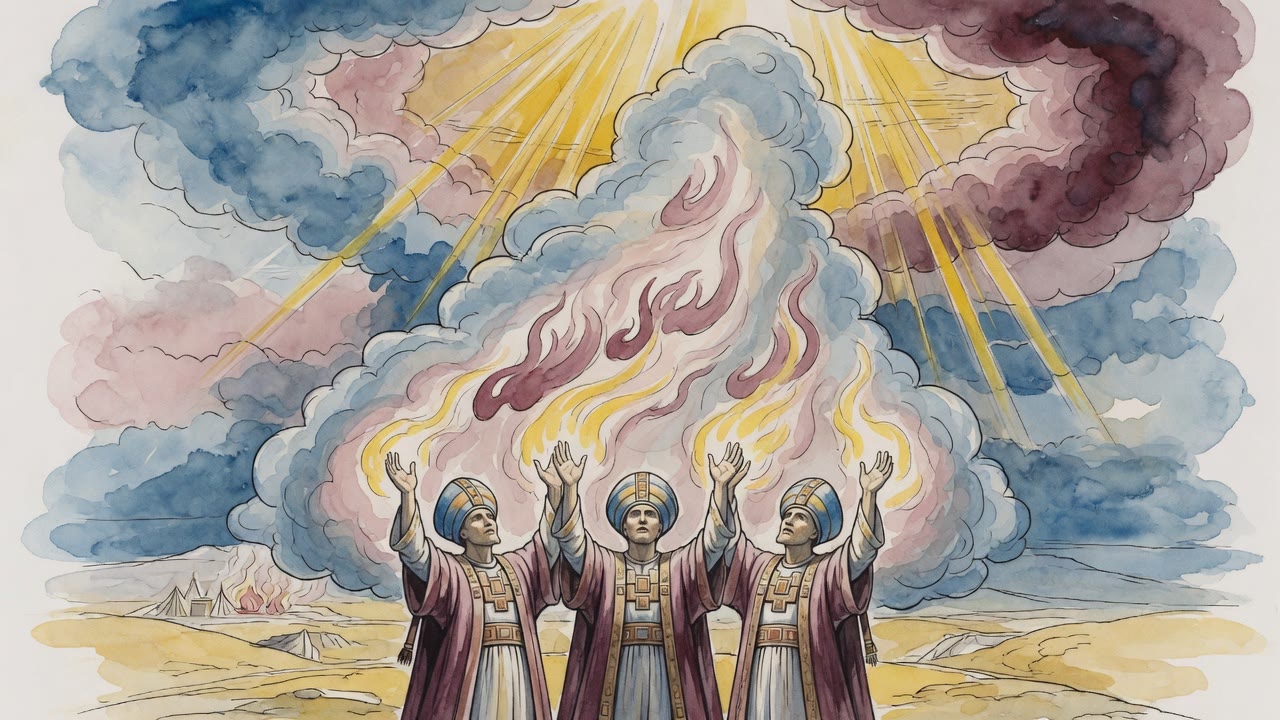
The Lord spoke to Moses: Speak to Aaron and to his sons. "Thus shall you bless the children of Israel" (Numbers 6:22-23). Because the speech is aimed at the Kohanim, the action is theirs. The holy tongue, standing posture, hands raised in the pattern the tradition guards. Not any language. Not seated ease. Blessing is likened to ministering, and ministering is done on the feet.

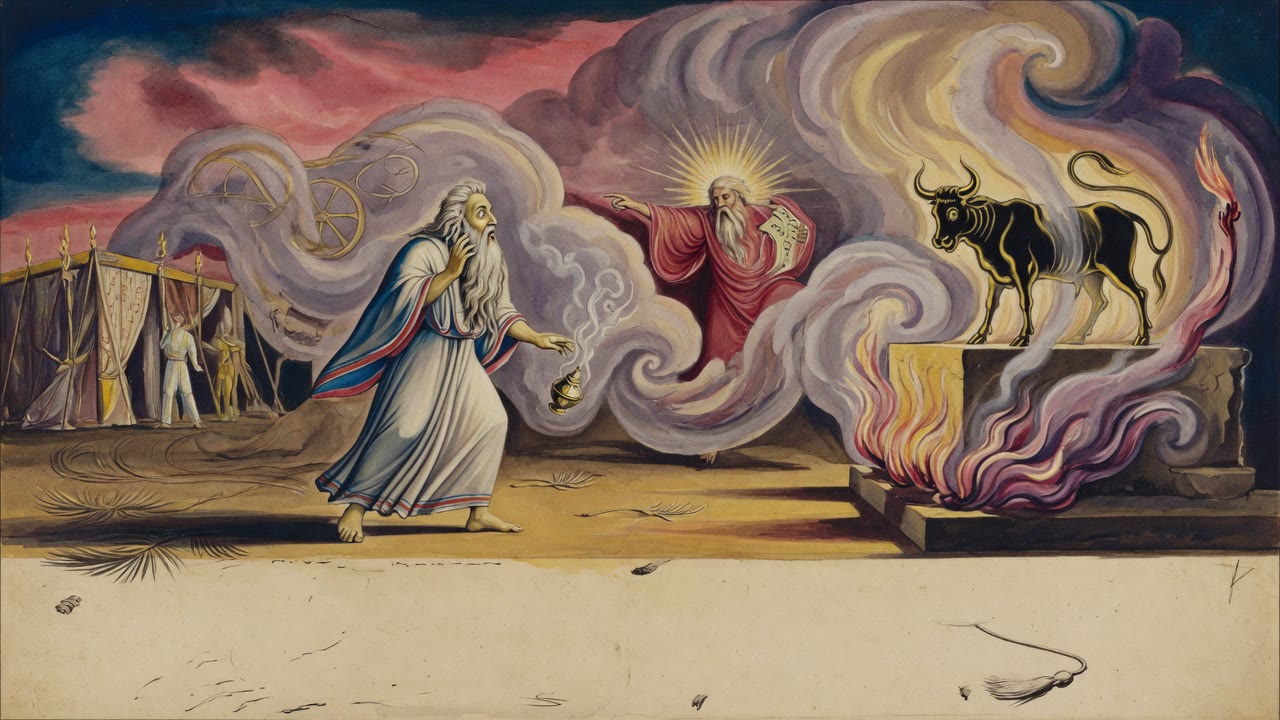
Aaron does not invent the words. He carries them. Chosen, brought near, dressed, lit by a menorah God does not need, he opens his mouth and the Name rides out toward the camp in Hebrew that cannot be swapped for convenience.

The double fortune ends in a triple blessing that still leaves the people standing under hands that were first chosen, then drawn close, then filled with speech not their own.

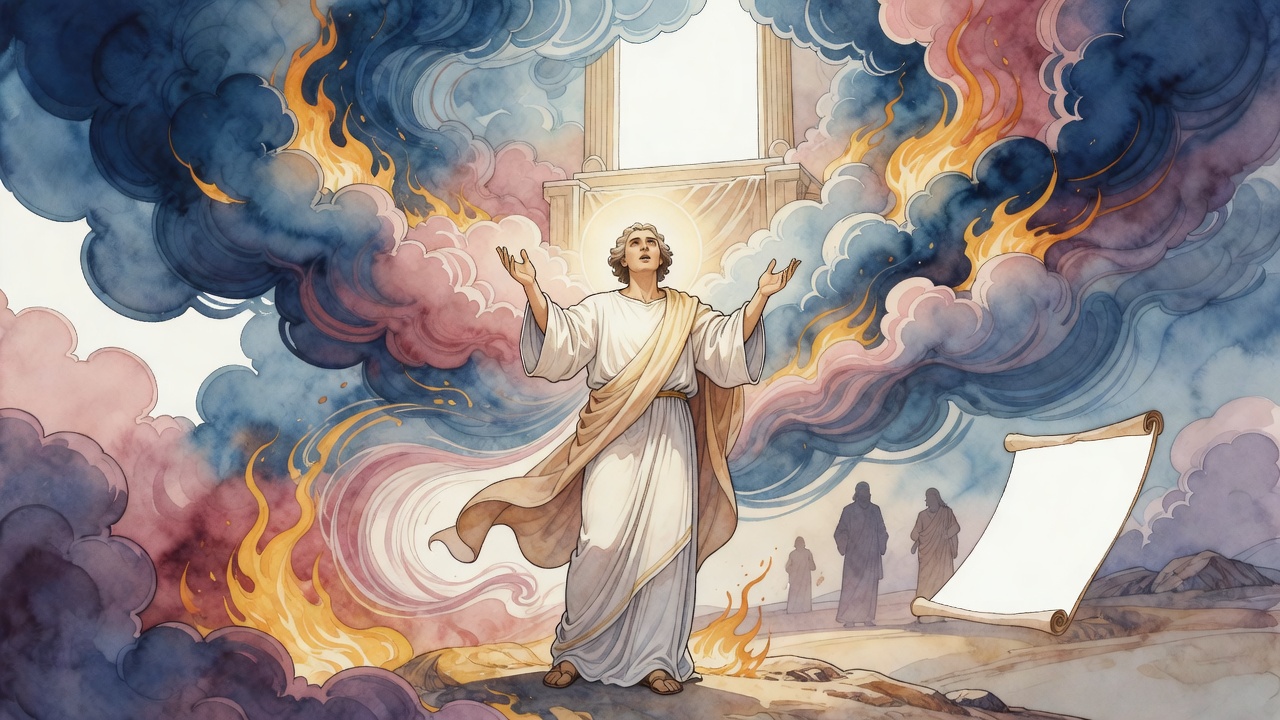
Other heroes earned nearness by walking. Aaron was taken by the wrist and by the title together. The vestments were not a prize for ambition. They were the clothing of a man Heaven both selected and relocated, from the crowd into the court, from the court into the light that teaches Israel it is not God's darkness that needs oil.

Election without nearness can look like a title hanging on a far wall. Nearness without election can look like a guest who never receives the family name. Aaron's story refuses both half-measures. Heaven said chosen. Heaven said bring him near. The vestments closed the circuit. Oil and fabric made the double gift visible to a camp that needed to see who spoke for them upward.

The menorah's wrong-side placement is almost comic to a palace steward. Lamps on the right? For whose eyes? For the people's future eyes, when darkness is the weather of the nations and Zion needs a remembered light. Aaron's sons would trim wicks God did not depend on. Dependence ran the other way. Israel depended on a sign that service is not a bribe to keep the Holy One from stumbling in the dark.

Then the hands rise. "Thus shall you bless." Hebrew only. Standing only. The Sifrei's care about language and posture keeps the blessing from becoming a casual wave. Kohanim do not own the words. They borrow them daily and return them by speaking them outward. Chosen, brought near, lit by unnecessary light, Aaron becomes a mouth for a formula older than his fear and stronger than the camp's noise.

"Fortunate is the one You choose and bring near." The psalm finally has a body to land on. The body wears linen and gold and carries a silence just before the Name leaves the lips toward the twelve tribes waiting with uncovered heads.


← All myths

From the tradition

Sources

3 sources

The texts behind this telling. Some cards carry a translation of the source; others are our own retelling of it, and each card says which. Every card links out to the original.

Midrash Tanchuma, Tzav 8Midrash Tanchuma

Retold in our words. Read the original at the link below.Townsend 1989 translation of Midrash Tanhuma, S. Buber Recension · CC-BY

(Lev. 8:1-2:) “Then the Lord spoke [unto Moses]…, ‘Take Aaron and his sons along with him, the vestments […].’” This text is related (to Ps. 65:5), “Fortunate is the one You choose and bring near, to dwell in Your courts.” Fortunate is the one whom the Holy One, blessed be He, has chosen, even though He has not brought him near. And fortunate is the one whom He has brought near, even though He did not choose him. Now which was this one whom He chose? This was Abraham. It is so stated (in Neh. 9:7), “You are the Lord, the God who chose Abram….” However He did not bring him near. Instead he brought himself near. In the case of Jacob, the Holy One, blessed be He, chose him, as stated (in Is. 41:8), “Jacob, whom I have chosen.” It also says (in Ps. 135:4), “For the Lord has chosen Jacob for Himself.” But He did not bring him near. Instead he brought himself near. Thus it is stated (in Gen. 25:27), “but Jacob was a perfect man dwelling in tents.” Moses He chose but did not bring near, as stated (in Ps. 106:23), “[…] had not Moses His chosen one stood in the breach.” David He chose but did not bring near, as stated (in Ps. 78:70), “He chose David, His servant.” [But] he brought himself near, as stated (in Ps. 119:63), “I am a companion to all who fear You.” Fortunate are those whom the Holy One, blessed be He, chose, even though He did not bring them near. Come and see [concerning] Jethro. The Holy One, blessed be He, brought him near, but He did not choose him. In the case of Rahab the Harlot, He brought her near but did not choose her. Aaron was doubly fortunate because the Holy One, blessed be He, chose him and brought him near. Where is it shown that He chose him? Where it is stated (in I Sam. 2:28), “And I chose him from all the tribes of Israel to be My priest.” And where is it shown that He brought him near? Where it is stated (in Exod. 28:1), “And you shall bring near unto yourself your brother Aaron.” Therefore, David praised him (in Ps. 65:5), “Fortunate is the one You choose and bring near, to dwell in Your courts.”

Full source
Midrash Tanchuma, Tetzaveh 7Midrash Tanchuma

Retold in our words. Read the original at the link below.Townsend 1989 translation of Midrash Tanhuma, S. Buber Recension · CC-BY

In the tent of meeting, without the veil (Exod. 27:21). In case you are inclined to assert that He required the light, the menorah was placed before the curtain near the ark, outside of the veil. This was to demonstrate to you that He did not require the light supplied by man. Usually, when a human king constructs a bed and a table, he places a lamp on the table at his left side, but in the Temple, the Menorah was placed at the right of the table, as it is said: And thou shalt set the table without the veil, and the candlestick over against the table (Exod. 26:35). This was done to teach you that He does not require your light. It was instituted solely for your sake, so that the world would be illumined in the future, when darkness descends upon the nations of the world, as it is said: For, behold, darkness shall cover the earth, and gross darkness the peoples; but upon thee the Lord will arise, and His glory shall be seen upon thee (Isa. 60:2).

Full source
Sifrei Bamidbar 39:1Sifrei Bamidbar

Retold in our words. Read the original at the link below.Sifrei by Rabbi Shraga Silverstein · CC-BY

What seems like a simple act is actually steeped in tradition, detail, and a whole lot of meaning.

The Book of Numbers, Bamidbar in Hebrew, gives us the source for the Priestly Blessing. In (Numbers 6:22-23), we read, "And the L-rd spoke to Moses, saying: Speak to Aaron and to his sons, saying: Thus shall you bless, etc." So, why all the emphasis on "saying?" Well, Sifrei Bamidbar, a collection of legal midrash (rabbinic interpretive commentary), points out that because this whole section deals with Kohanim, with priests, Aaron and his sons are brought into the context of "saying" (dibbur). There’s a rule: when the dibbur, the divine communication, is to the Kohanim, the action belongs to them. When it’s to all of Israel, the action is for all of Israel. And if it’s for all of humankind, then even proselytes are included. It's all about who the message is intended for.

What language are we talking about here? "Thus shall you bless the children of Israel" – in the holy tongue, Hebrew. You might ask, "But why not any language?" Clever question! The text anticipates this. (Deuteronomy 27:12) says, "These shall stand to bless the people." Just as there, the blessing is in the holy tongue, so here, it must be too. Rabbi Yehudah offers another perspective: wherever you see words like aniyah ("answering"), amirah ("saying"), or cachah ("thus"), you know the holy tongue is intended.

How should the Kohanim be positioned? Standing! "Thus shall you bless the children of Israel" – standing. Sounds obvious. But the text pushes us: maybe they can sit or kneel? Again, (Deuteronomy 27:12) comes to the rescue: "These shall stand to bless the people." We see "blessing" mentioned in both places. Just as "blessing" there means standing, so too does "blessing" here. Rabbi Nathan adds something interesting. He points to (Deuteronomy 10:8), which speaks of the Kohanim standing before the L-rd to minister and bless His name. Blessing, he says, is likened to ministering. And just as ministering requires standing, so does blessing.

Then comes the raising of hands. "Thus shall you bless the children of Israel" – with raised hands. You guessed it, the text anticipates our skepticism. Maybe they can keep their hands down? (Leviticus 9:22) describes Aaron lifting his hands to the people as he blessed them. So, just as there were raised hands, so too here. But Rabbi Yonatan challenges this: maybe we need everything that was present there – Rosh Chodesh (new moon), a specific offering, and the High Priest? That seems a bit much! So, (Deuteronomy 18:5) clarifies that a Cohein is chosen "to stand and minister in the name of the L-rd, he and his sons all of the days." So his sons are likened to him. Just as he raises his hands, so do his sons.

What about the Name itself? "Thus shall you bless the children of Israel" – with the explicit name, the Tetragrammaton, yod-keh-vav-keh. You might wonder, can they use a substitute name? Nope. It is written in (Numbers 6:27), "And they shall place My name on the children of Israel" – the name that is distinctive with Me. But does this apply everywhere? Not quite. We also read in I (Kings 11:36), "to place My name there." Just as there refers to the Temple, so too does this verse. In the Temple, the Tetragrammaton is used. Outside, an epithet suffices. These are the words of Rabbi Yoshiyah. Rabbi Yonatan offers another interpretation. He inverts (Exodus 20:21), reading it as "Wherever I am revealed to you, there shall you mention My name." And where is God revealed? In the Temple! This is why it is forbidden to utter the explicit Name outside the Temple borders.

Who gets the blessing? "Thus shall you bless the children of Israel" – this initially tells us only about the men of Israel. But what about women, proselytes, and servants? The phrase "Say to them" includes absolutely everyone. And what about the Kohanim themselves? Do they get blessed? Yes! Verse 27 says, "and I shall bless them (the Kohanim)."

"Thus shall you bless the children of Israel" – face to face. This means a direct, unobstructed view. Not back to face! The text reinforces this with "Say to them" – as one speaks to a neighbor, directly. And finally, the blessing must be spoken in a loud voice, so the whole congregation can hear. Not a whisper! The phrase "Say to them" implies that the entire community should be able to hear the blessing being said. And where does the prayer leader come in? The phrase "Say to them" also teaches us that the prayer leader prompts the Kohanim to give the blessing.

It's not just a nice sentiment; it's a carefully constructed, deeply meaningful act, connecting us to generations past and to the divine presence. And maybe, just maybe, that connection is exactly what makes it so powerful.

Full source