Aaron Lights the Lamp That God Does Not Need
Twelve princes laid gold on the altar for twelve days. Levi brought nothing the camp could watch. God answered with a wick.
Table of Contents
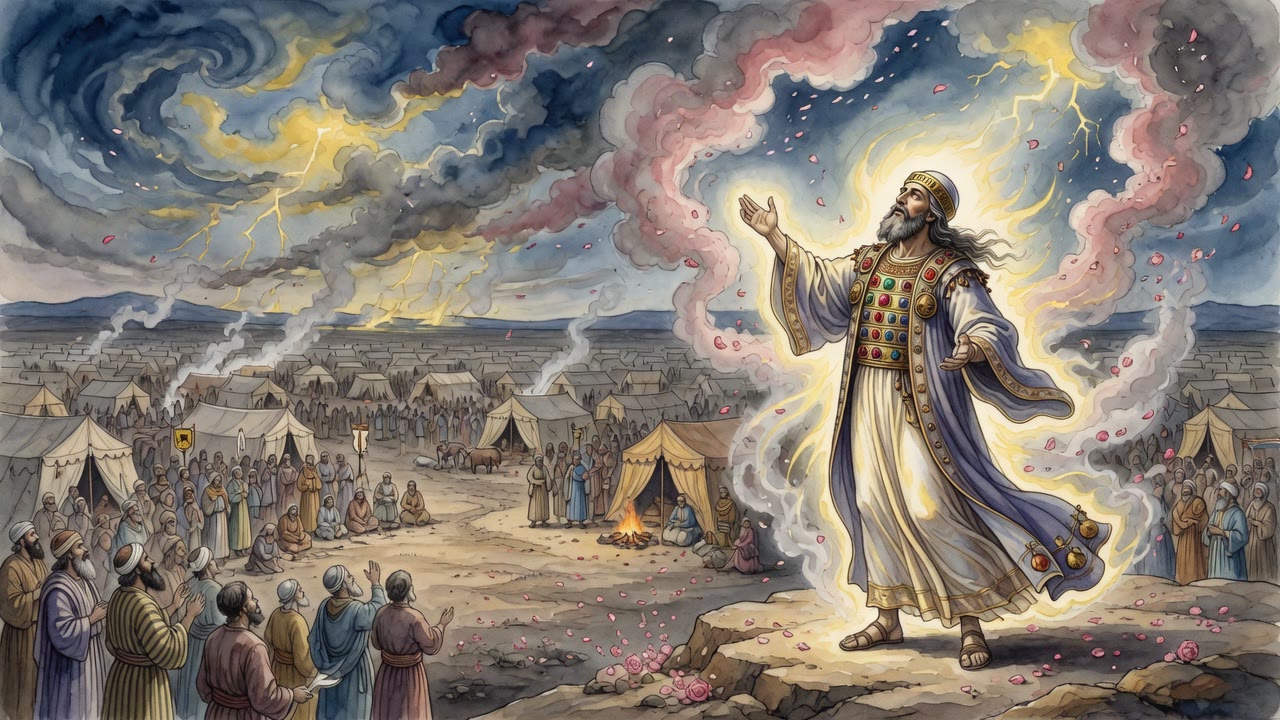
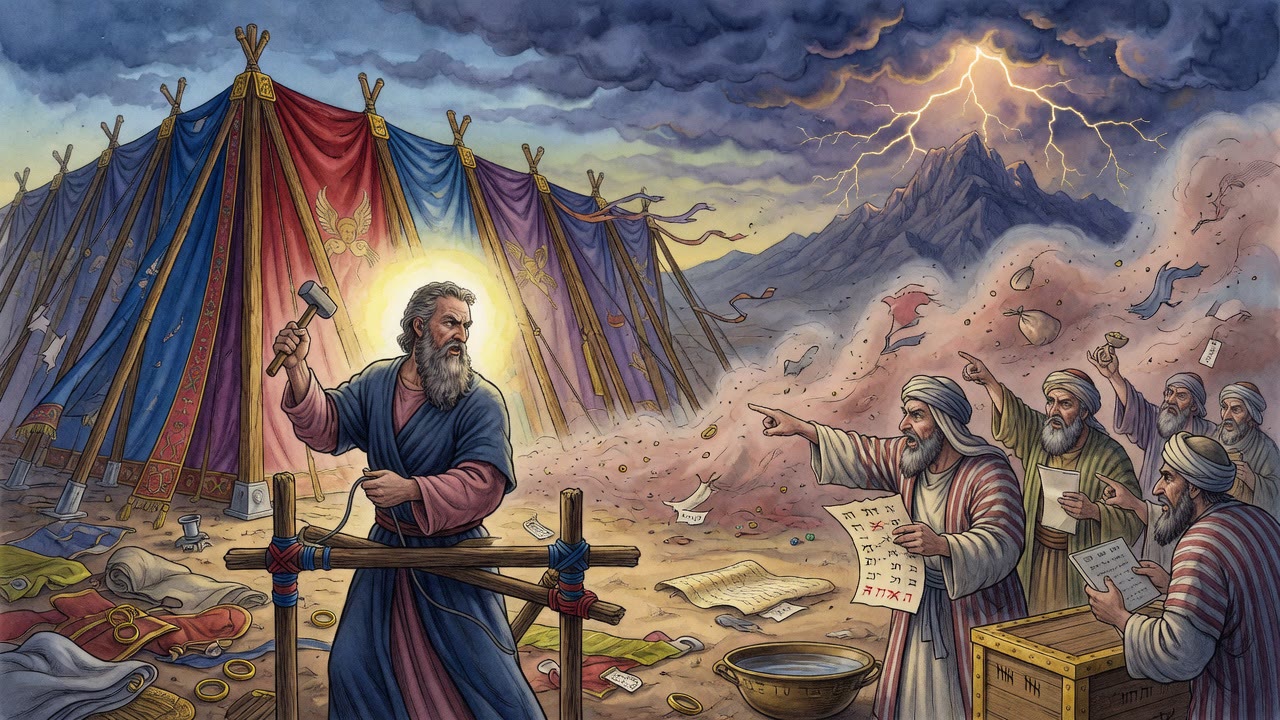
Aaron stood at the edge of the camp and counted the days of dedication the way a man counts empty seats. Twelve days. Twelve princes. Gold, silver, animals, flour, oil. Carts rolled in. Incense smoked. His own tribe of Levi brought nothing the people could watch being laid on the altar.
 Click for full size
"Woe is me," he said under his breath. "It seems God has shut my house out of this honor because of my sin."
The words did not travel far. God heard them anyway.
Greater Glory, Smaller Flame
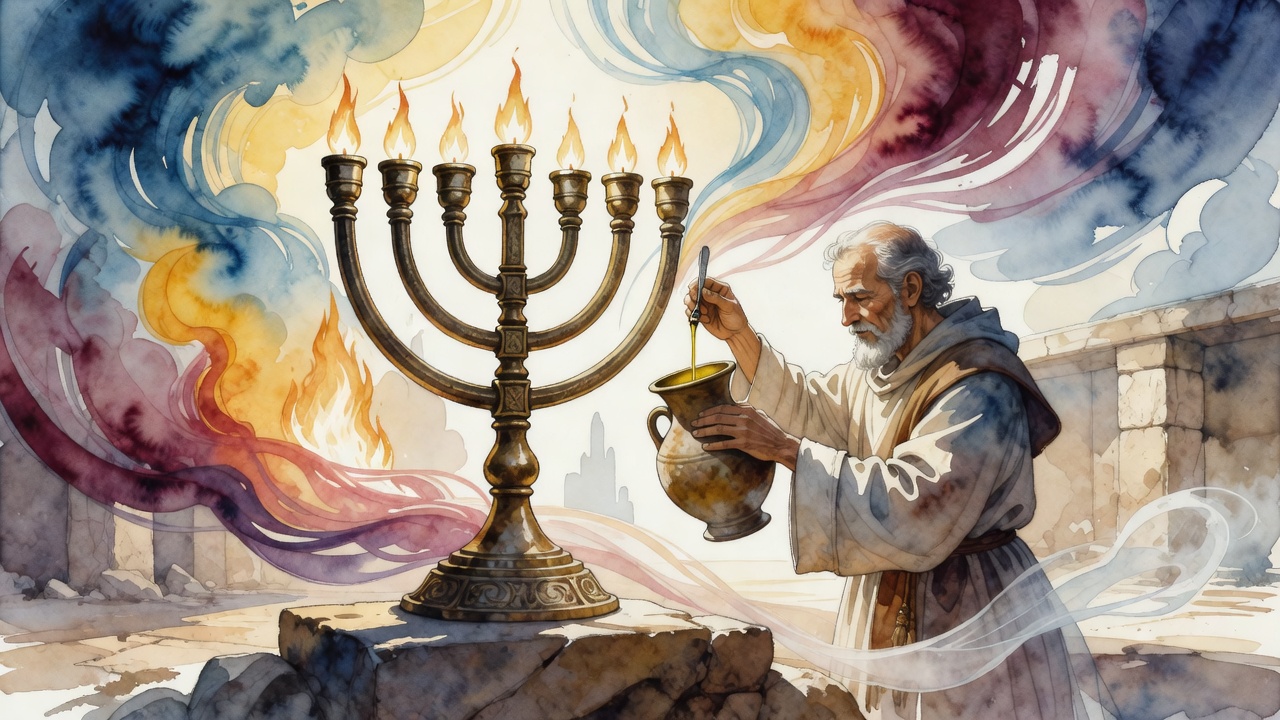
God spoke to Moses before Moses had finished the circuit of the courtyard. "Go to Aaron. Tell him he is not slighted. He will enjoy a greater glory than all the others. He is to light the lamps of the menorah (מנורה), the lampstand."
Moses found his brother still watching the last of the gift-bearers. Aaron's hands hung open at his sides, as if waiting for a load that never came.
"God has appointed you," Moses said. "Not to match their carts. To kindle the lights inside the sanctuary."
Aaron looked past him toward the gold branches. Seven cups. Clean wicks. Oil that had not yet been touched. Lighting a lamp did not look like glory beside twelve days of royal offerings. It looked like chore work.
The Israelites heard the command and raised their own protest. "O Lord of the world! You bid us make a light for You, the very light of the world, the One in whom light dwells!"
God answered them without softening it. "Not because I need your light do I bid you burn lamps before Me, but only that I might distinguish you in the eyes of the nations. They will say, Behold the people of Israel, who hold up a light before Him who bestows light upon the world."
Then God pressed the point into the body itself. "By your own eyesight you can see how little need I have of your light. You have the white of the eye and the black of the eye, and it is by the dark part that you see, not through the white. How should I, who am all light, have need of your flame? A mortal lights one light from another that is already burning. I brought forth light out of darkness. In the beginning darkness was upon the face of the deep, and I said, Let there be light, and there was light (Genesis 1:2-3)."
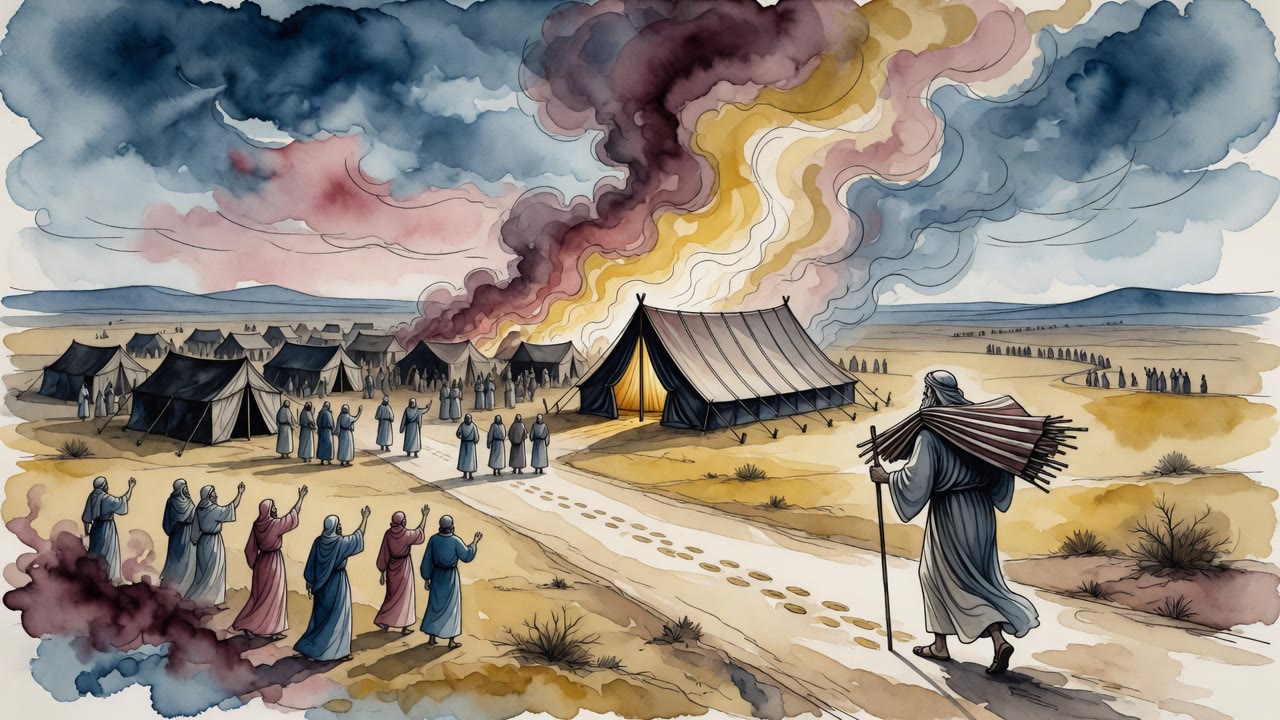
Aaron stepped forward. He filled the cups. He set the flame. The menorah caught and held, a steady row of fire in a place no prince's gift had entered.
Moses Could Not Say Death
Years later the same brothers walked the camp again, and the light between them had changed shape. God had told Moses that Aaron's days were finished. Moses could not open his mouth and say death. He searched for a gentler road into the news.
"Aaron, my brother," he began, "has God given anything into your keeping?"
"Yes," Aaron said.
"What, pray?"
"The altar and the table upon which is the shewbread has He given into my charge."
Moses kept his voice even. "It may be that He will now demand back from you all that He has given into your keeping."
Aaron still did not catch the edge. "What, pray?"
Moses tried a narrower door. "Has He not entrusted a light to you?"
Aaron thought of metal and oil. "Not one light only, but all seven of the candlestick that now burn in the sanctuary."
He answered as a caretaker of furniture. Moses had meant the soul, the candle of the Lord inside his brother. He did not force the word. He let the image stand.
The Climb After the Riddle
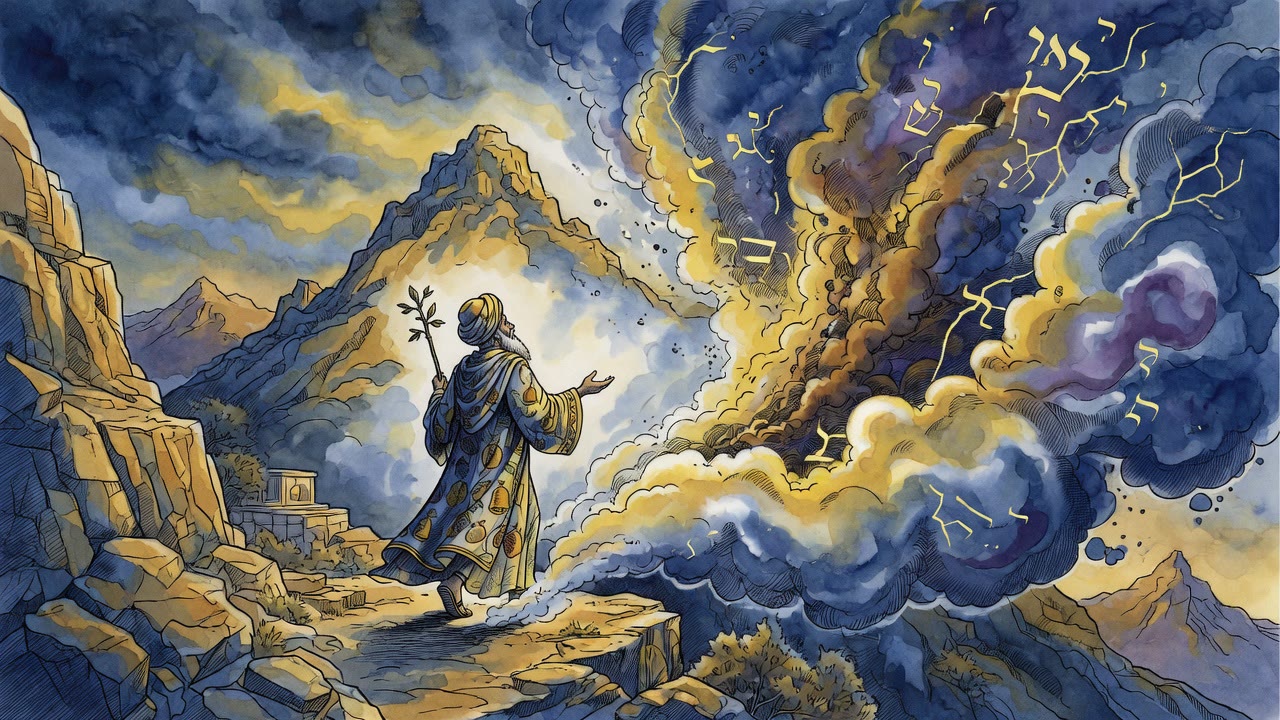
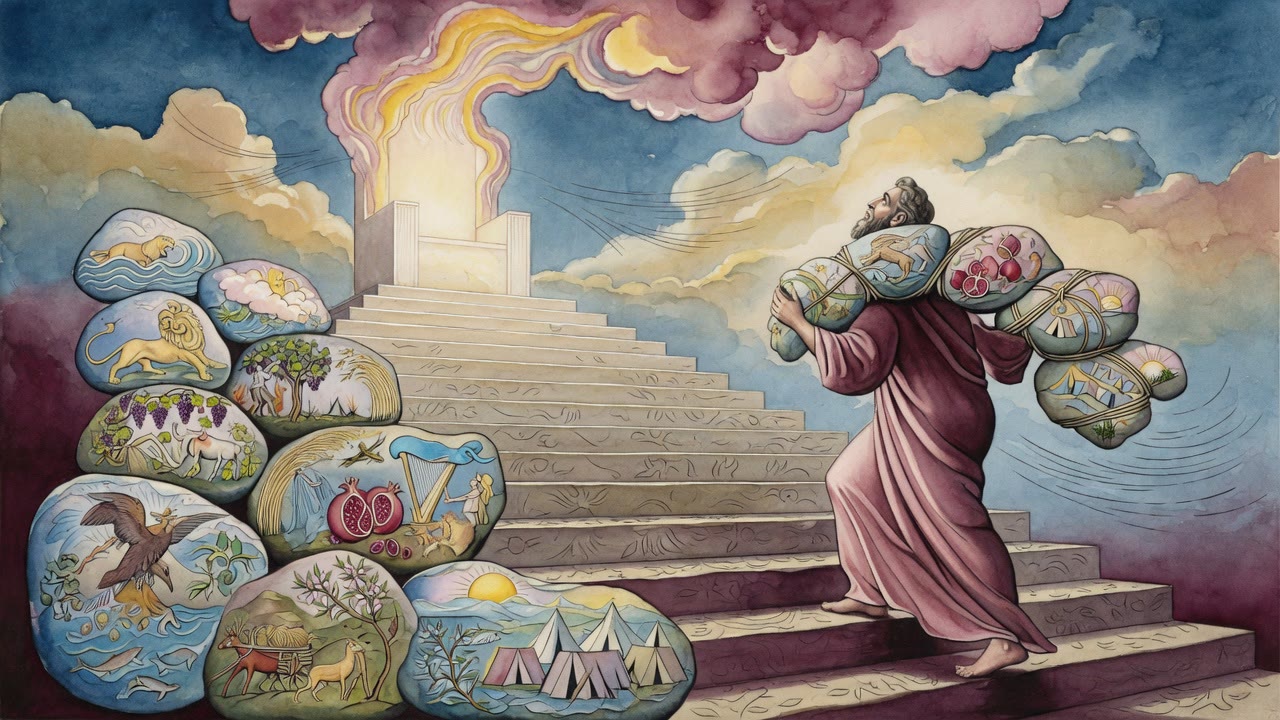
They walked toward the mountain path God had already named. The camp noise thinned. Wind moved over stone. Moses still could not force the blunt sentence. Every step asked the same debt. What God had deposited, God was calling back.
Aaron finally understood. The menorah could be left to the next hands. The soul could not. The man who had feared exclusion at the dedication now faced a harder exclusion, the end of the body that had carried the charge.
He did not run. He climbed.
On the day of the first lighting, God had said the nations would watch Israel hold a lamp before the Source of light. On the day of Aaron's death, Moses used the same image to tell his brother how a trust ends. The princes' gifts had been public and heavy. Aaron's glory had been quiet and daily. When the quiet glory finished, the body that tended it finished too.
Someone Else Will Fill the Cups
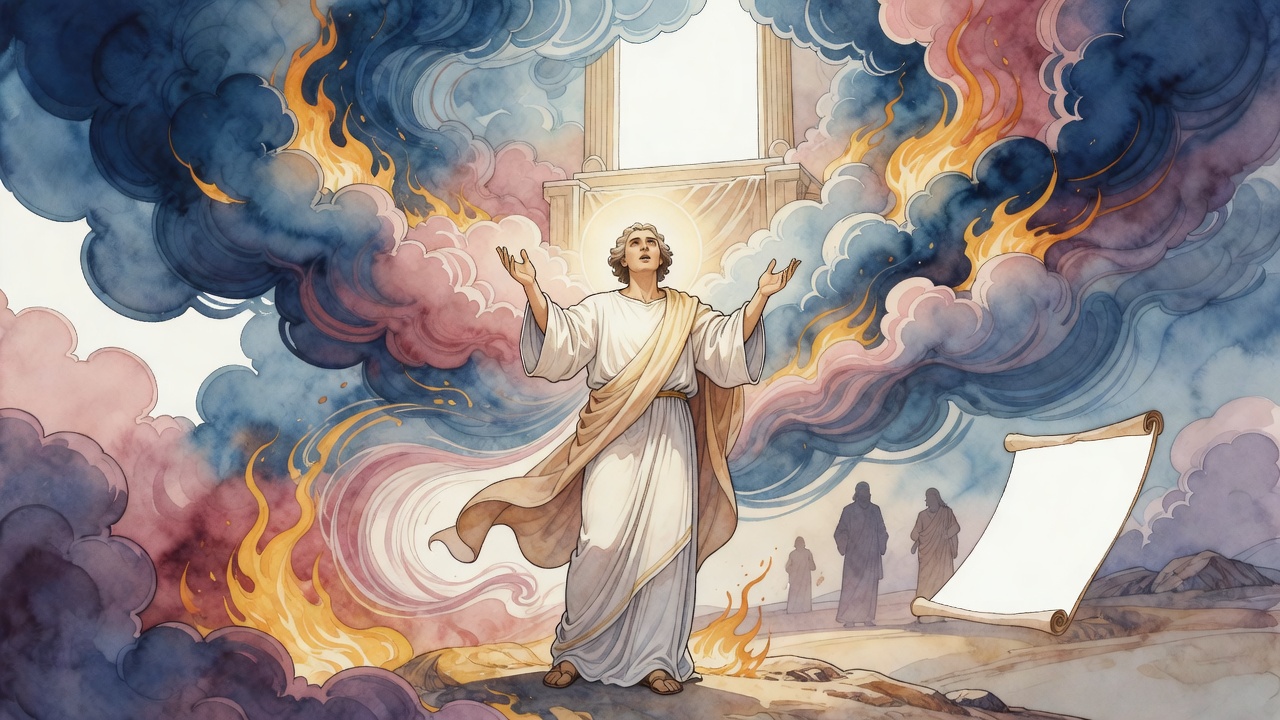
Moses looked back along the last stretch of the climb. He had broken the news without naming the grave. Aaron had heard it in the only language that matched his life. The light he had been told was greater than twelve days of offerings was now due back to the One who needed no lamp at all.
Below them the sanctuary still waited for evening. Someone else would fill the cups. The flame would rise again. The man who first feared he had no place among the gifts had been given the place that outlasted every cart, and then been asked to surrender it.
Aaron kept climbing. The seven lamps behind him would burn without him. That had been the glory. That was also the farewell.
← All myths