Moses Built the Tabernacle While They Accused Him of Theft
They said Moses looked well fed on gold given to God. He opened the ledger in front of the camp. One row of curtain hooks was still blank.
Table of Contents
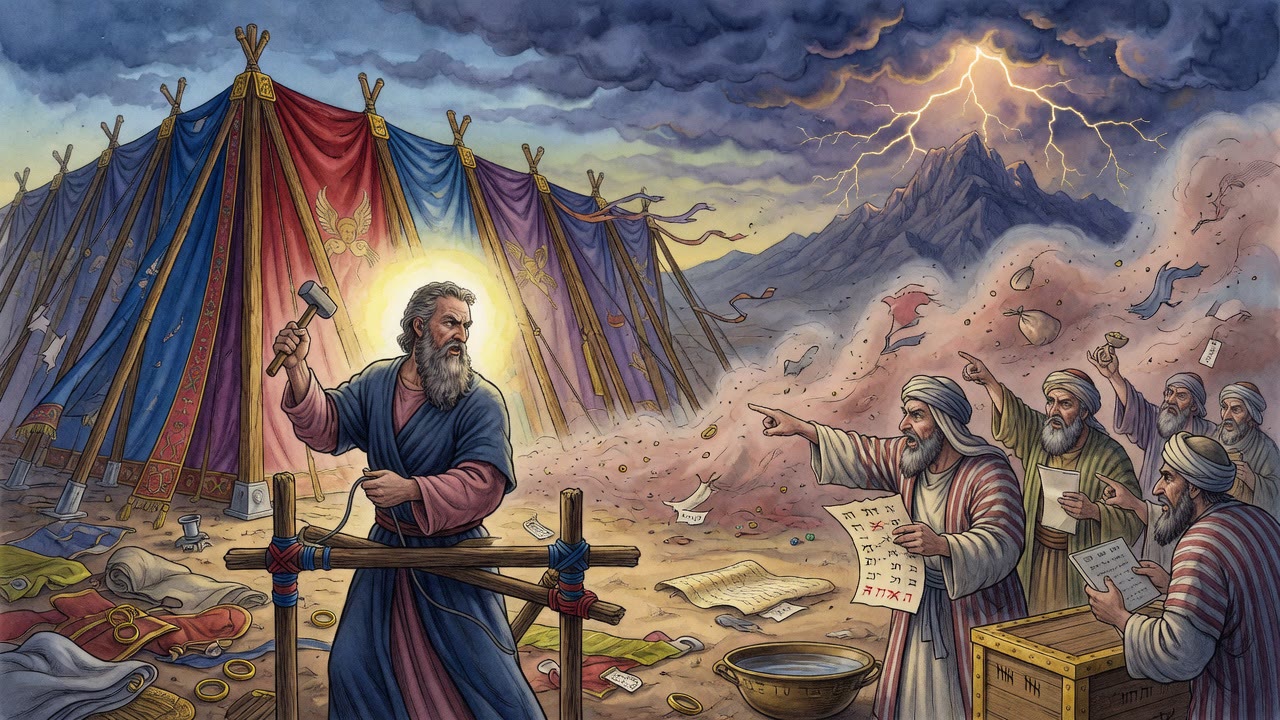
The whisper started at the edge of the camp and walked inward. "Look at him," a man said, pointing at Moses. "See how well fed he is. He is living off the gold we gave God."
 Click for full size
Another laugh, thinner. "Do you think a man in charge of the sanctuary stays poor?"
The Camp Would Not Stop Giving
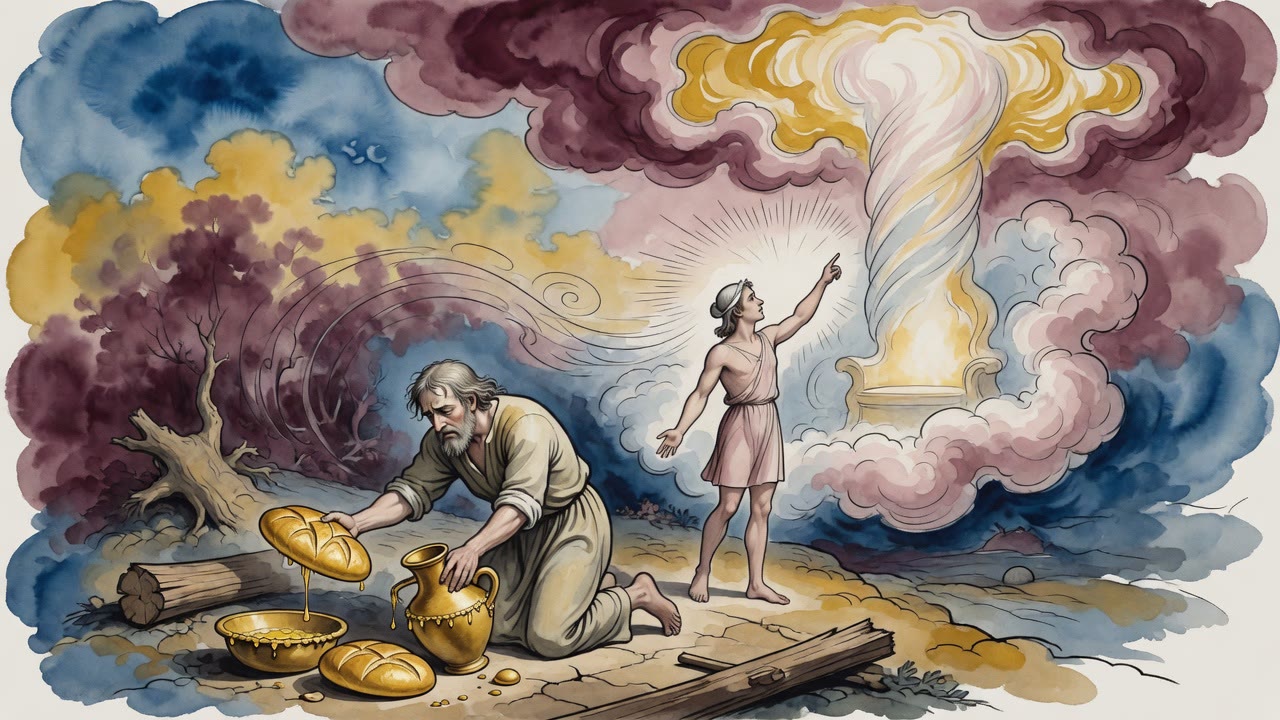
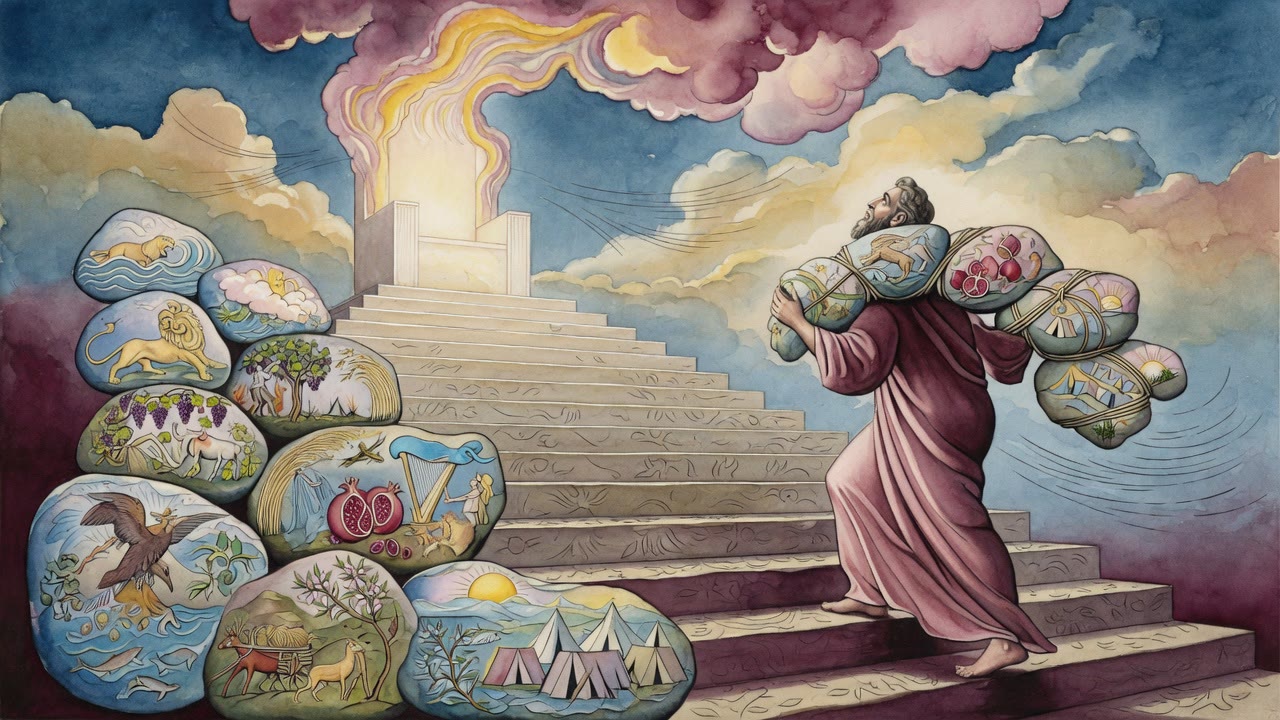
Morning after morning they had come with more. Gold, silver, linen, acacia, skins dyed red and blue, stones. The craftsmen came to Moses with their hands full and their work stalls overflowing. "The people bring more than the work can hold," they said.
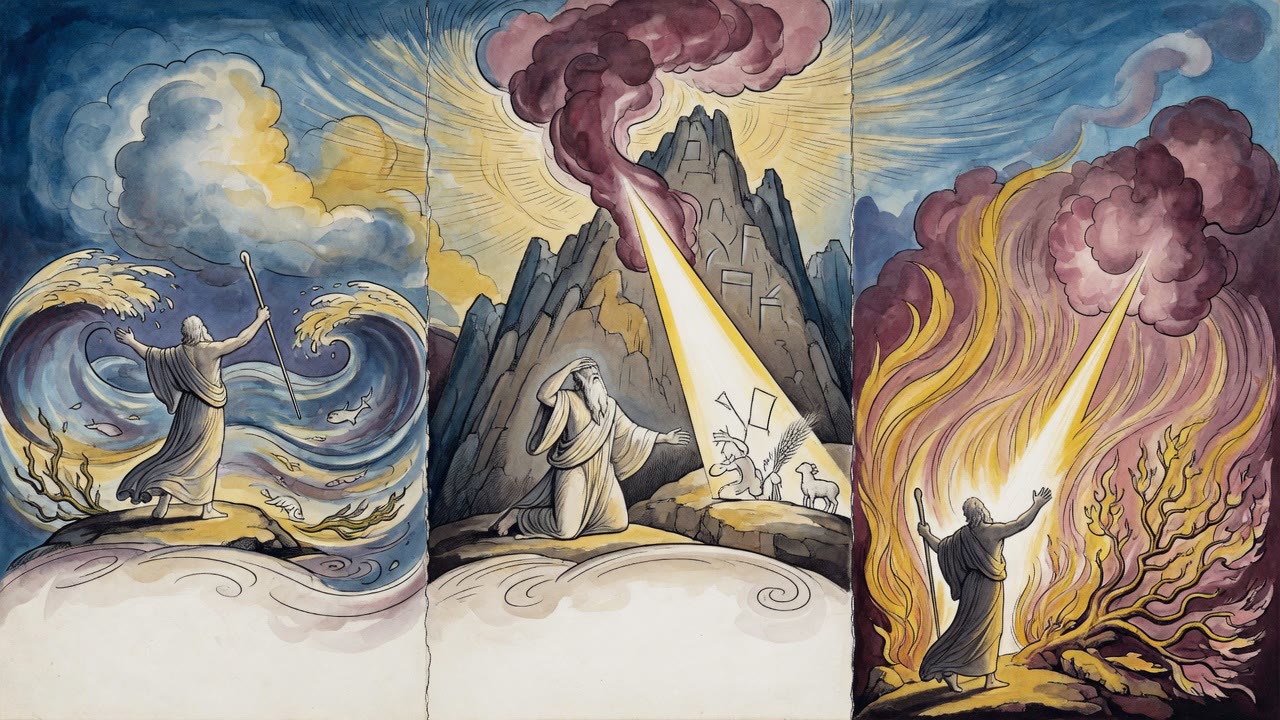
Moses sent a herald through the lanes. "Neither man nor woman may make any more work for the holy separation." The cry named both, because both had been bringing. The people ceased. They put their remaining gold back in their tents and did not sulk. After years of having nothing, they had given until the builders ran out of room, and then they stopped because they were told to stop.
That should have ended the talk. It opened it. Leftover treasure in Moses's keeping, after a calf made of earrings, made old fear sit up. Who watches the treasurer when the treasurer is also the lawgiver?
He Forgot the Hooks
Moses did not argue in the lanes. He waited until the Mishkan (משכן), the Tabernacle, stood, and then he called a public accounting. Tribal leaders. Craftsmen. The whole community. He laid out every ounce received and every ounce spent. Silver sockets. Hooks for the pillars. Coating for the posts. Each amount had a purpose.
He closed the ledger and felt a hole in it. Seven hundred seventy-five shekels had gone to the hooks that held the curtains, and he had not named them. The camp would hear a silence there and call it theft. He had built the house of God and could not prove the last row.
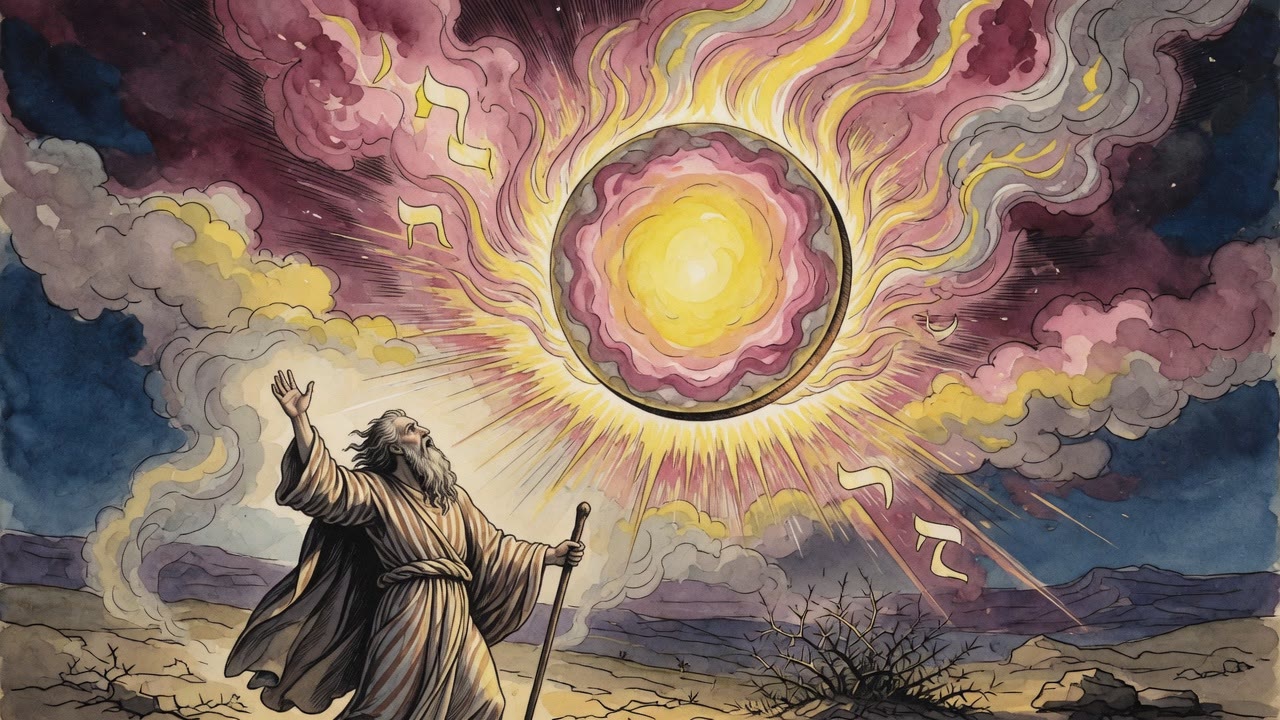
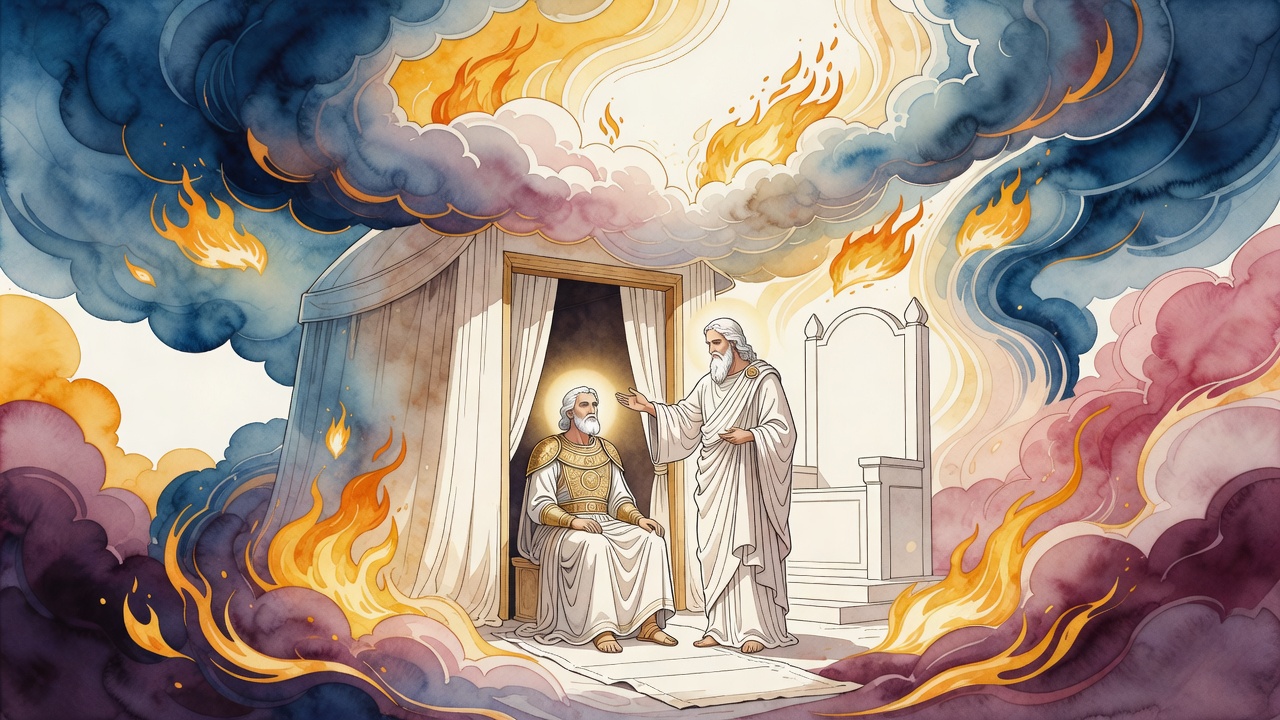
He raised his eyes. The Shechinah (שכינה), God's presence, was sitting on those very hooks, as if the missing line had been written in light instead of ink. Moses named the 775 shekels aloud. The hooks had their number. The whispers had no floor left.
Israel watched the light on the metal and believed him. Not because a speech was beautiful. Because the thing he had forgotten was wearing God.
Fire Made the Lamp
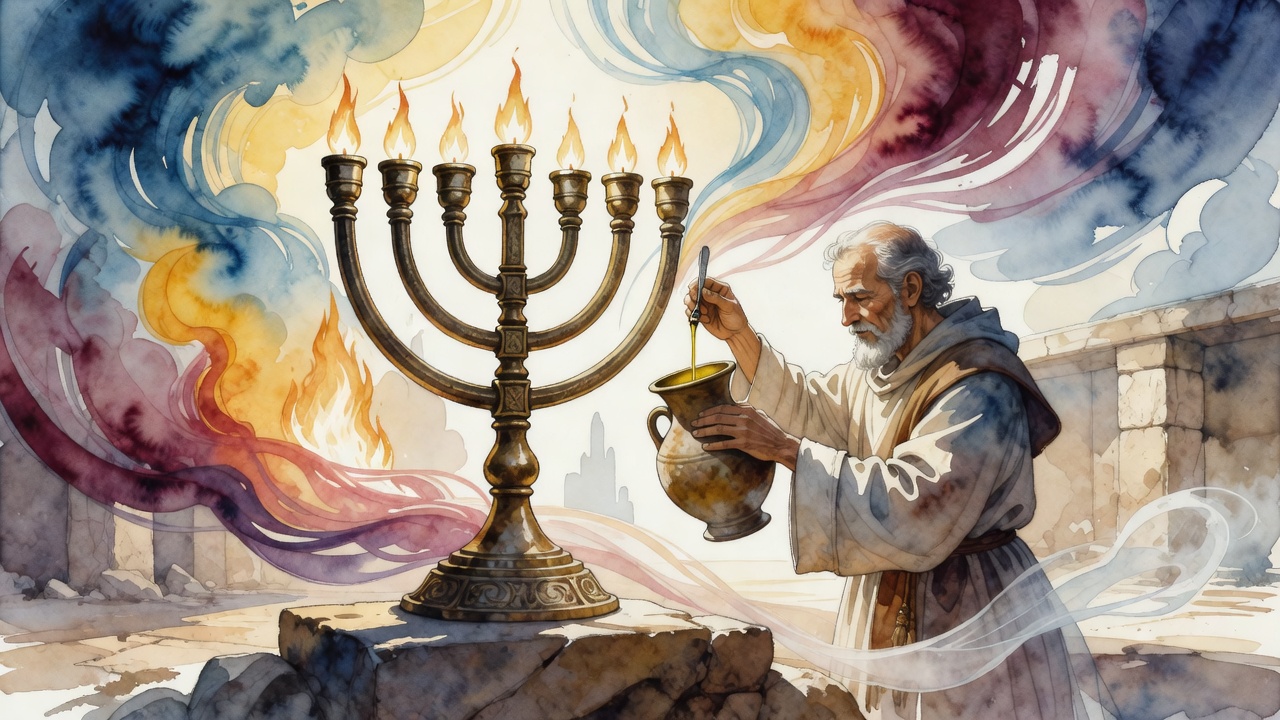
A different failure would not close with a ledger. God had commanded a menorah (מנורה), a lampstand, beaten from one piece of gold: shaft, seven branches, almond-blossom cups, knops, flowers, all from the same bar. Moses looked at the command and could not see the object.
God showed him a model in fire. White fire, red fire, green fire, black fire, turning together. Moses came down and tried. The gold in his hands would not become the gold in the fire. He went back up. God drew the design on Moses's palm. "Imitate what I have drawn." Moses tried again. The palm and the workbench still refused each other.
Three times he fell short. God had shown him the new moon that way, and the beasts that were unclean. The lamp still defeated him. Then God told him to throw a talent of gold into the fire. Moses threw it. When the fire was done, the menorah stood complete, branches and blossoms and hammered stem, born, not assembled. No craftsman had joined it. Moses stood before a lamp he had been unable to make and understood the limit: some shapes only come out of fire.
The Boards Would Not Stand
Outside the camp Moses had already raised a second tent, a Tabernacle of Revelation, copied in every detail, the place God had been meeting him since the calf. Inside the camp the real sanctuary waited to be inaugurated, and the Shechinah did not come down. The people turned on the artisans. "Set it up, so the Presence will dwell with us."
The wise men tried. The boards went up and fell. Bezalel tried, the master who had shaped the work. Oholiab tried beside him. The structure collapsed in their hands. The camp's generosity curdled. "Look what the son of Amram brought on us," they said. "We spent our gold so God would live under goat hair, and it will not even stand."
They came to Moses. "We did what you asked. Tell us what we missed." Moses walked the work. They had missed nothing. He was grieved. He had not driven a single peg of the building himself, and now the building would not rise.
God spoke. Moses had been sad that he had no share in the making. Therefore the standing would be his. Moses put his hands on the boards that had refused Bezalel. The Mishkan stood. The cloud came down. The leftover gold in the ledgers, the hooks with their 775 shekels, the lamp born from fire, all of it sat inside a house that would not rise for anyone but the man they had called a thief.
← All myths