Parshat Behaalotecha5 min read

Three Things God Had to Show Moses Directly

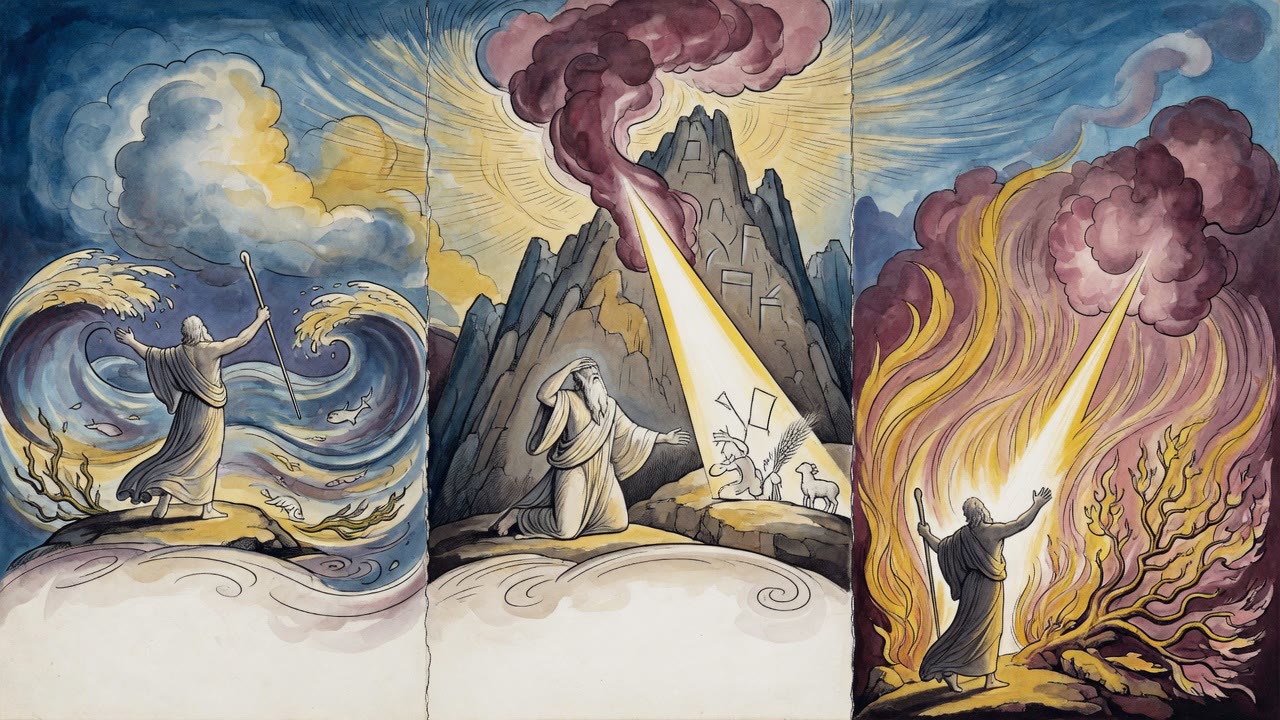
Moses split the sea and stood at Sinai, but three commands defeated his imagination. Each time, God pointed. The third time, he showed Moses fire.

Curated by Arthur · Told by Maggid ·
Table of Contents
  1. The Verse That Says This
  2. God Drew Fire for Moses
  3. The Prophet Who Could Not Teach Himself
  4. What the Word This Means in Each Case

Moses could stand inside revelation and still fail to picture a lamp.

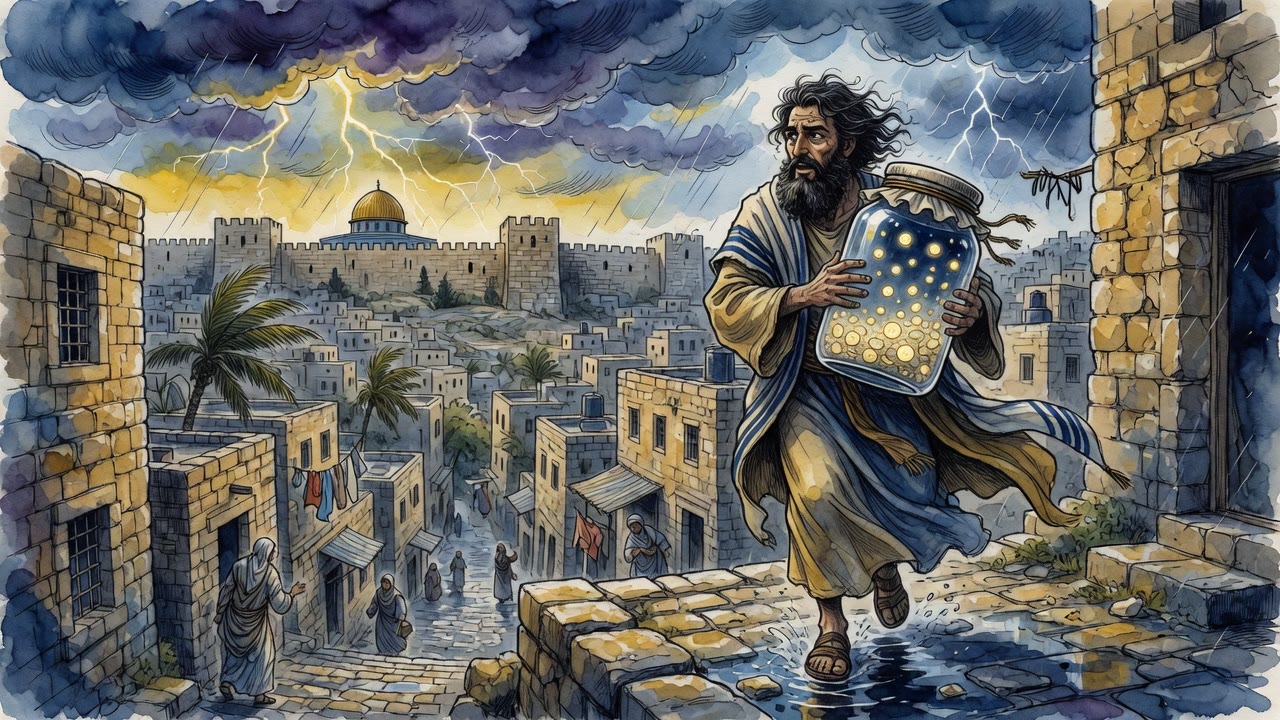
He had already faced Pharaoh. He had already split the sea. He had already climbed Sinai and spoken with God mouth to mouth (Numbers 12:8), a form of prophetic contact that the tradition reserves for him alone among all the prophets. Then God commanded the menorah, a single piece of hammered gold with branches and cups and knobs and flowers, and Moses could not hold the shape in his mind. No matter how many times the instructions came, the image would not form.

The Verse That Says This

Rabbi Akiva, in the Mekhilta DeRabbi Yishmael, the tannaitic midrash on Exodus compiled from the school of Rabbi Ishmael in second and third-century Palestine, noticed a pattern. Three commands in the Torah use the same unusual word: zeh, this. Not a general instruction but a pointed gesture. Here. This exact thing. Akiva listed them.

The new moon. When God was instructing Moses about the lunar calendar, Moses could not picture exactly which phase of the moon marked the beginning of the new month. God had to show him directly, pointing: this crescent, this degree of light, this moment in the moon's cycle.

The impure swarming creatures. When Leviticus listed the animals that rendered a person ritually impure (Leviticus 11:29), the word this appeared again, implying that God pointed to each creature individually. This beetle. This worm. This kind of lizard.

The menorah. And this is the work of the menorah (Numbers 8:4). The word this is doing the same work it did with the moon and the lizards. Speech was not sufficient. The finger had to point.

God Drew Fire for Moses

The Legends of the Jews, Louis Ginzberg's synthesis of rabbinic tradition, extends the menorah failure into something more vivid. God did not simply point at a menorah. He made one.

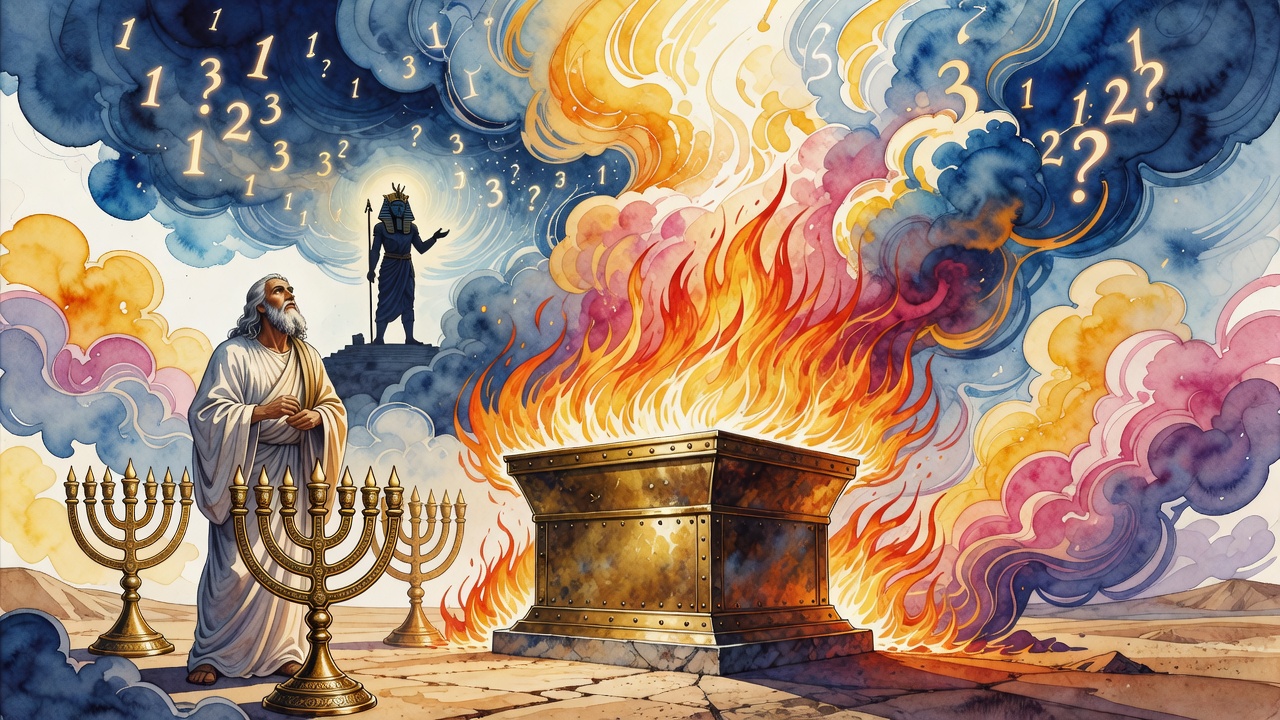
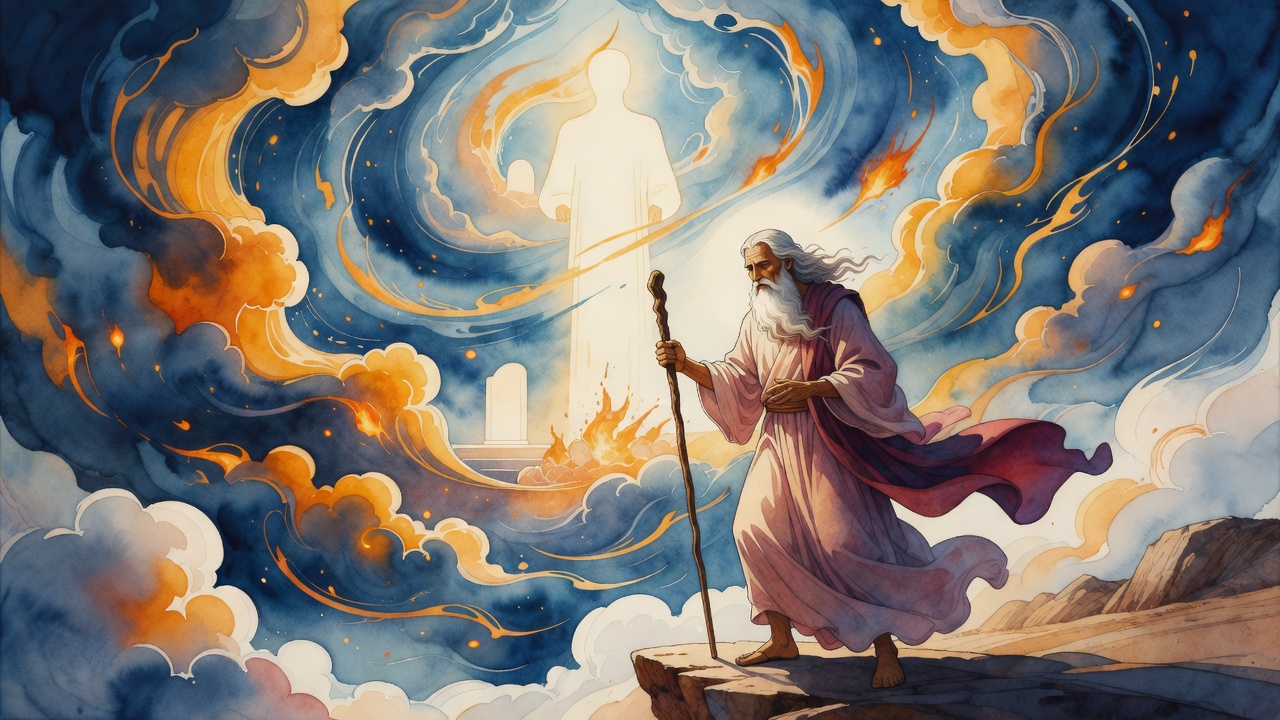
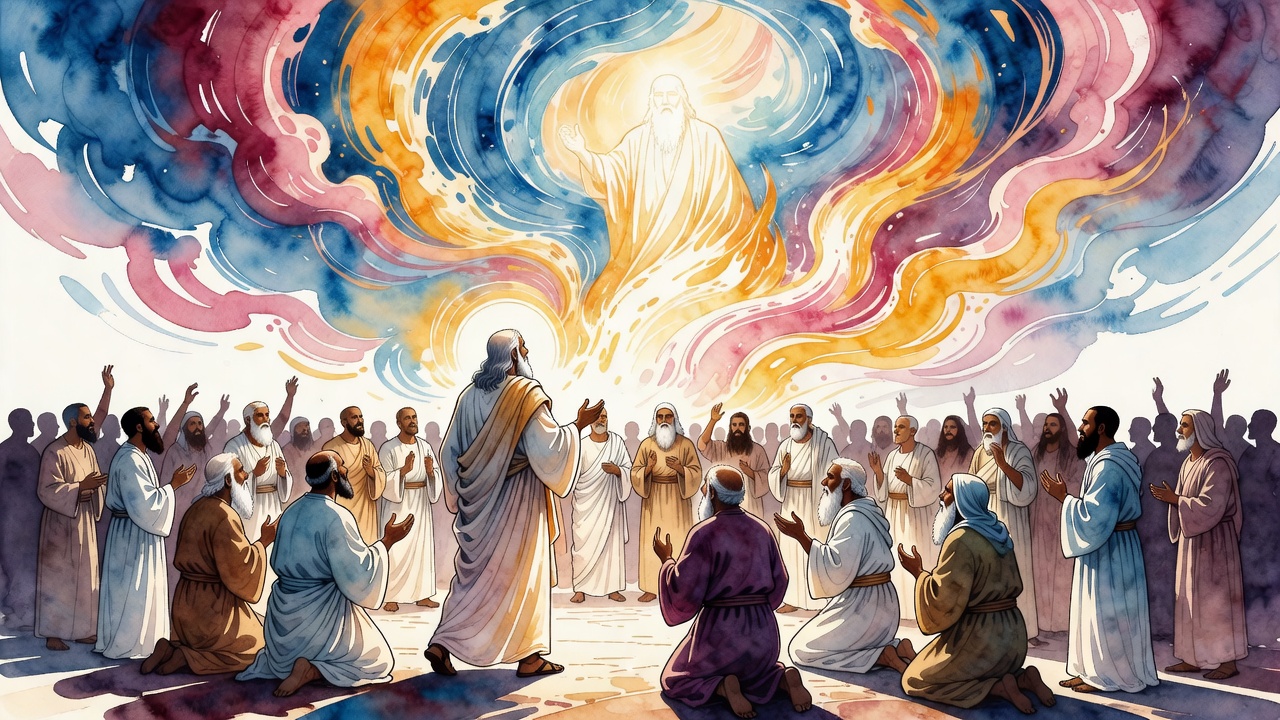
From fire. White fire, red fire, green fire, and black fire, the four fires woven together that appear in mystical descriptions of the Torah itself. God fashioned the menorah from these fires and showed it to Moses. Not a clay model. Not a drawing on stone. A luminous object made of the same substance from which creation was spoken. "This," God said. "Make it look like this."

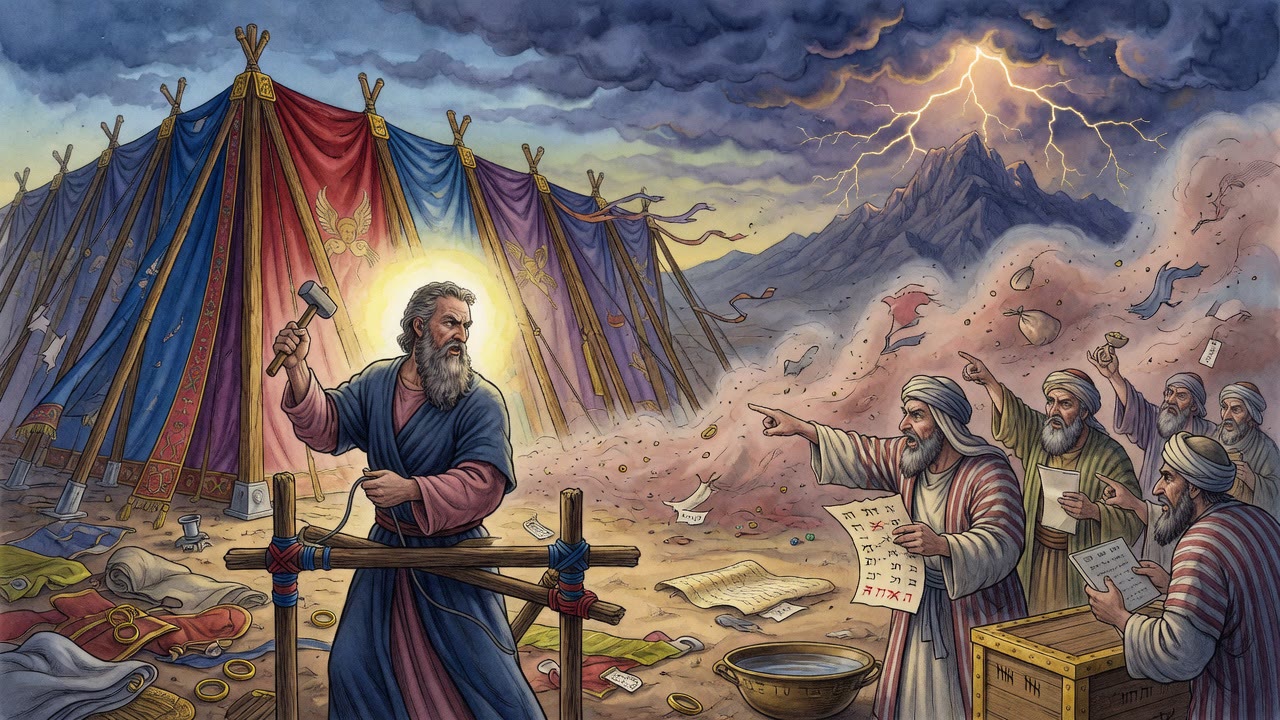
Moses looked. He understood while he was looking. He came down from the mountain. He went to the craftsmen. He tried to describe what he had seen. The shape would not come. The description dissolved into the ordinary air of the camp and left him standing with instructions he could remember and a form he could not reproduce.

He went back up to God a second time. God showed him again.

Moses came down a second time. He went to the craftsmen a second time. The shape dissolved again.

A third time, the same. God showed him a fiery menorah, every knob and flower and almond-cup demonstrated in detail. Moses descended. The moment his feet touched the earth, the image was gone.

The Prophet Who Could Not Teach Himself

The final instruction God gave Moses was not another demonstration. It was a referral. God told him: "go to Bezalel. He will do it right."

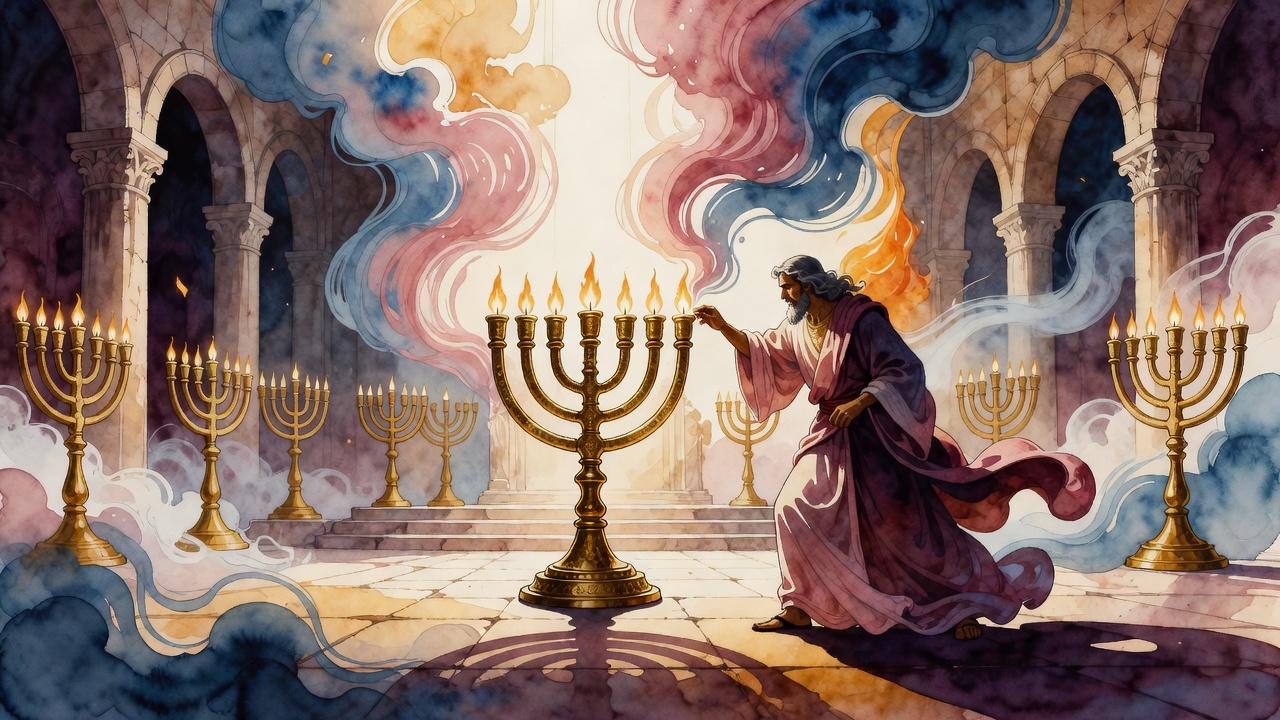
Bezalel was a craftsman, a young man from the tribe of Judah, filled with the spirit of God in wisdom and understanding and knowledge and all manner of workmanship (Exodus 31:3). He was not a prophet. He had not stood at Sinai the way Moses had. He had received no direct revelation, no mouth-to-mouth communication. But he could hold the shape of the menorah in his mind where Moses could not, and when he hammered the gold, the form that emerged matched what God had shown.

The Talmudic tradition, collected in Ginzberg's retelling, adds an almost comic dimension. When Moses saw what Bezalel made, he recognized it immediately. That is it. The thing he had been trying to describe and failing. The craftsman had understood the instruction Moses could not execute, and the recognition was instantaneous. Moses knew the menorah the moment he saw it finished. He just could not make it himself.

What the Word This Means in Each Case

The Mekhilta's observation is not only about Moses's personal limitation. It is a principle. Some things cannot be transmitted through language. The new moon is a visual phenomenon. You cannot describe the precise crescent that marks a new month in a way that works for every observer in every climate. You have to see it. The impure creatures are a matter of species identification. You cannot list every worm and beetle and snail without pointing. And the menorah is a three-dimensional form that branches and curves and terminates in cups shaped like almond blossoms, and no verbal description in any language is going to produce the same object twice.

The word zeh is God acknowledging the limit of speech. Even divine speech. Even the same voice that said let there be light and light appeared had to resort to pointing when the target was precise enough.


← All myths

From the tradition

Sources

9 sources

The texts this telling draws on, in full. Open a card to read inline, or expand it for a wider, quieter read.

Mekhilta Tractate Pischa 2:2Mekhilta DeRabbi Yishmael

Rabbi Akiva taught that there were three things Moses could not visualize on his own, no matter how great his prophetic power. God had to physically point them out to him.

The first was the new moon. When God instructed Moses about the lunar calendar, Moses could not picture exactly what phase of the moon marked the beginning of a new month. God had to show him directly. The second was the identification of impure swarming creatures. (Leviticus 11:29) says, "And this shall be unclean for you from among all the things that swarm upon the earth", the word "this" implying that God pointed to each creature and said, "This one." The third was the construction of the menorah. (Numbers 8:4) states, "And this is the work of the menorah," again using the demonstrative "this," indicating that God had to show Moses a model because the design was too complex to convey through words alone.

Other sages added a fourth item to the list: the laws of slaughtering sacrificial animals. (Numbers 29:38) says, "And this is what you shall do upon the altar," suggesting that the precise method of slaughter also required divine demonstration.

This teaching is remarkable for what it reveals about the rabbinic view of Moses. Even the greatest prophet who ever lived, the man who spoke with God face to face, had limits to his comprehension. Some sacred things cannot be transmitted through language. They must be seen. The Mekhilta quietly insists that even Moses needed God to show, not just tell.

Full source
Legends of the Jews 3:124Legends of the Jews

The Talmud tells us that the menorah was made of a single piece of gold. But how did Moses, blessed be he, actually make it?

The story goes that when God commanded Moses to create this intricate candlestick, Moses was stumped. He just couldn't figure out how to bring God's vision to life. It was just too complex, too detailed. I mean, All those bowls, those knops, those flowers… how could one even begin?

So, God, in His infinite wisdom and patience, decided to show Moses a model. But this wasn't just any model made of clay or wood. According to our tradition, as found in sources like Tanhuma, God fashioned a candlestick out of fire itself! White fire, red fire, green fire, and black fire swirling together in a dazzling display. Can you even imagine the sight?

Even that wasn't enough! Poor Moses still couldn't quite grasp the design. So God, as we find in Ginzberg's Legends of the Jews, drew the design of the menorah right on the palm of Moses's hand! "Look at this," God said, "and imitate what I have drawn." It's a beautiful image, isn't it? God, the ultimate artist, sketching a masterpiece on the hand of his most trusted servant.

Still, Moses struggled. So, finally, God instructed Moses to cast a talent of gold into the fire. And then… a miracle happened. The candlestick, in all its glorious detail, shaped itself out of the flames! It just formed itself. Now that's what I call divine intervention!

This wasn't an isolated incident, either. The Midrash Rabbah teaches us that God often had to present things tangibly to Moses to make certain laws understandable. Take the laws regarding clean and unclean animals, for instance. God, it is said, showed Moses one specimen of each, saying, "This you shall eat, and this you shall not eat." It brings a whole new meaning to the idea of "show, don't tell,". These stories remind us that sometimes, even the most brilliant minds need a little help, a little tangible demonstration, to truly understand the divine will. And perhaps, more importantly, they show us the incredible patience and compassion of God, who meets us where we are, guiding us step by step on our journey of understanding. What does it mean to you that God would go to such lengths to ensure that his vision was made manifest?

Full source
Legends of the Jews 3:17Legends of the Jews

God, in all His glory, gave Moses meticulous instructions on how to build it. Seems straightforward. Wrong.

In Ginzberg's retelling in, Legends of the Jews, poor Moses descended from Heaven, ready to get to work. and completely forgot everything! Can you imagine the frustration?

So, naturally, Moses went back to God. "Um, could you run that by me again?" God, patient as ever, showed him again. But the moment Moses touched down on Earth, poof! Gone. Forgotten. It's almost comical, isn't it?

A third trip to Heaven, and this time, God even pulled out a fiery candlestick – a visual aid of cosmic proportions! He demonstrated every single detail. You'd think that would do the trick. But alas, no.

Finally, God, perhaps with a divine sigh, told Moses, "Go to BEZALEL. He will do it aright."

And Bezalel did. Instantly. No problem at all.

Moses was astounded. "God showed me repeatedly how to make the candlestick, yet I could not properly seize the idea; but thou, without having had it shown thee by God, couldst fashion it out of thy own fund of knowledge!"

This is where it gets really interesting. Moses exclaimed, "Truly dost thou deserve thy name BEZALEL, 'in the shadow of God,' for thou dost act as if thou hadst been 'in the shadow of God' while He was showing me the candlestick." for a second. Bezalel, whose name literally means "in the shadow of God," possessed an innate understanding, a divine spark, that allowed him to grasp the concept effortlessly. While Moses, the great lawgiver, struggled, Bezalel just knew.

What does this story tell us? Is it simply a evidence of Bezalel's incredible talent? Perhaps. But maybe it's also a reminder that understanding comes in different ways for different people. That sometimes, even the most profound knowledge needs the right vessel to take shape. And that even MOSES, in all his greatness, needed a little help from someone whose gifts complemented his own.

It makes you wonder, doesn't it? What unique gifts do we possess, lying dormant, waiting for the moment to shine? And who are the Bezalels in our lives, the ones who can see what we can't, and help us bring our own visions to life?

Full source
Midrash Tanchuma Buber, Shmini 11:3Midrash Tanchuma Buber, Shmini

Concerning the creeping things, from where? As it is said, "And these shall be unclean to you [among the swarming things that swarm upon the earth]" (Leviticus 11:29). The Holy One, blessed be He, took hold of each and every species and showed it to Moses, and said to him: This one you may eat, and this one you may not eat, [as it is said,] "This is the living creature which you may eat [and so forth: but this you may not eat]" (Leviticus 11:2, 4).

And do not wonder at the matter; for behold, the Holy One showed [the creatures to Adam]. And [He said,] "And I, what is My name?" He said to Him: It is the LORD, as Scripture says, "I am the LORD, that is My name" (Isaiah 42:8). [This is My name by which the first man called Me;] it is My name which I have established between Me and My creatures. Now if in the case of the first man the Holy One passed the creatures before him, then as for Moses, for whom the Holy One sought to warn Israel concerning the impurities and concerning the purities, do you wonder that He showed him and said to him, "[This is the living creature which you may eat]"?

Full source
Midrash Tanchuma, Bo 6Midrash Tanchuma

This month shall be unto you (Exod. 12:1). R. Ishmael said: He showed him the moon during night and said: Like this shall you examine the new moon; this shall be the law for future generations. Teach them the time of the new moon. He said to them: Until now I intercalated the year (adding an additional month in leap years), but now I turn this responsibility over to you. From now on you shall count (the days and designate the time) for the appearance of the new moon. This month. This is Nisan, and there is no other (i.e., no intercalated second Nisan to sere as the first month). With regard to Tishri it is written: And the feast of ingathering (Sukkot) at the turn of the year (the autumnal equinox) (Exod. 34:22). This teaches us that the month in which the festival called the feast of the ingathering at the turn of the year occurs is the month in which the year actually changes. However, Tishri is called the seventh month only because it comes seven months after Nisan. This month refers to Nisan. A hint of this (is the fact that it is the only month that is spoken of as the first month), as Scripture states: In the first month, which is the month of Nisan (Est. 3:17), first for months, and first for festivals, since (Passover) is written first: The festival of Passover, the festival of Shavuot, the festival of Sukkot.

Full source
Midrash Tanchuma, Shmini 8Midrash Tanchuma

Three things Moses found difficult and the Holy One, blessed be He, showed them to him with a finger and these are them: The making of the menorah, the moon, and creeping things. In the making of the menorah, how [was it]? When Moses ascended [Sinai], the Holy One, blessed be He, was showing him on the mountain how he would make the tabernacle. When He showed him the making of the menorah, Moses found it difficult. The Holy One, blessed be He, said to him, “See, I am making it before you.” What did the Holy One, blessed be He, do? He showed him white fire, red fire, black fire, and green fire. Then from them He made the menorah, its bowls, its knobs, its blossoms, and the six branches. Then He said to him (in Numb. 8:4), “This is the making of the menorah.” This teaches that the Holy One, blessed be He, showed him with a finger. But nevertheless, [Moses] found it difficult. What did the Holy One, blessed be He, do? He engraved it on the palm of Moses’ hand. He said to him, “Go down and make it just as I have engraved it on your hand.” Thus it is stated (in Exod. 25:40), “Observe and make them [by means of] their pattern.” Even so, he found it difficult and said (in Exod. 25:31), “with difficulty (mqshh) will the menorah be made,” meaning to say, how difficult it was to make. The Holy One, blessed be He, said to him, “Cast the gold into the fire, and it will be made automatically.” So it is stated, “with difficulty will the menorah be made” [be made (a reflexive form, in the niph'al) is what is written, i.e.,] was made of its own accord. This teaches that Moshe had difficulty with the menorah, and the Holy One, blessed be He, showed it to him with a finger, as stated (in Numb. 8:4), “this.” In reference to the moon (yareah), where is it shown [that Moses had difficulty]? (Exod. 12:1-2) “Then the Lord spoke unto Moses…, ‘This month (hodesh) for you.’” He said to him, “In the month of Nissan, you will see like this and like that and [you shall] sanctify [it].” This teaches that the Holy One, blessed be He, showed him with a finger. In reference to creeping things, where is it shown? Where it is stated (in Lev. 11:29), “Now this shall be unclean for you from among the swarming things which swarm on the earth.” The Holy One, blessed be He, caught each and every species, showed them to Moses, and said to him, “This you may eat, and this you may not eat.” [Thus it is stated (in Lev. 11:2, 4),] “This is the creature that you may eat …. However this you may not eat.” Moreover, do not be surprised over [this] thing, since it is a fact that the Holy One, blessed be He, showed all creatures to the first Adam, and he gave them names. And where is it shown? Where it is stated (in Gen. 2:19), “and all that man called the soul ….” After he had given names to all of them, the Holy One, blessed be He, said to him, “And I, what is My name?” He said to him, “It is Y____.” Thus it is written (in Is. 42:8), “I am Y____; that is My name,” this My name, which the first Adam gave Me. It is My name, which I have agreed upon [for use] between Me and My creatures. So if in the case of the first Adam, the Holy One, blessed be He, had the creatures pass before Him; in the case of Moses, when the Holy One, blessed be He, wanted to warn Israel about the unclean and about the clean, are you surprised that He showed him and said to him, “These you may eat, and these you may not eat?” Lest your [evil] drive lead you astray, saying that the Holy One, blessed be He, has forbidden Israel from having good things, the Holy One, blessed be He, said, “Whatever I have forbidden you from having, I have permitted you to have [something] that corresponds to it. How is this? I have forbidden you menstrual blood; I have permitted you virginal blood. I have forbidden you [animal] blood; I have permitted you the liver, which is wholly blood. I have forbidden you the flesh of swine; I have permitted you the tongue of a fish with the name shibbuta, which resembles swine. I have forbidden you [another] man's wife; I have permitted you a man’s divorcee. I have forbidden a gentile woman; I have permitted a beautiful woman [captive]. I have forbidden you a brother's wife; I have permitted her for you after his death, with no children, as stated (in Deut. 25:5), ‘her brother-in-law shall have sexual intercourse with her.’ I have forbidden you mingled seeds, but I have permitted you a sindon with a woolen fringe. I have forbidden you the fat of cattle, but I have permitted you the fat of game animals.” R. Bisna said in the name of R. Hiyya, “What the Holy One, blessed be He, forbade for cattle He permitted for game animals, and what He forbade for game animals He permitted for fowl, and what He forbade for fowl He permitted for fish. How? He forbade the fat in the case of cattle; He permitted it in the case of game animals. He forbade the thigh muscle in the case of game animals; He permitted it in the case of fowl. He forbade blood in the case of fowl; He permitted it in the case of fish. And why all this? In order to give Israel a good reward for observing the commandments.” Ergo, it states (II Sam. 22:31 = Ps. 18:31) “As for God, His way is perfect…”; for all the ways of the Holy One, blessed be He, are perfect. And likewise, what does the Holy One, blessed be He, care whether one ritually slaughters cattle and eats [the meat] or whether one slaughters cattle by stabbing and eats it? Will some such thing benefit Him (i.e., the Holy One, blessed be He,) or harm Him? Or what does He care whether one eats carcasses or eats what is clean? Solomon said [about this] (in Prov. 9:12), “If you are wise, you are wise for yourself; [and if you scoff, you will bear it alone].” Thus, the commandments were given only to purify (rt. tsrp) [mortals] through them, as stated (in II Sam. 22:31 = Ps. 18:31, cont.), “the word of the Lord is pure (rt. tsrp).” Why? So that He might be a shield over you, [as stated] (ibid., cont.), “He is a shield for all who take refuge in Him.” Ergo (in Lev. 11:2:), “These are the creatures [that you may eat].”

Job said (in Job 14:4), “Who can produce something clean out of something unclean, no one.” After the Holy One, blessed be He, permitted the cow and forbade the camel, who could declare clean or declare unclean? Who has done so? Is it not the One? Is it not the singular One of the world? Come and see: Originally at the creation of the world, everything was permitted, as stated (in Gen. 9:3), “as with the green grass, I have given you everything.” And it states (in Gen. 1:31), “And God saw everything that He had done, and behold, it was good.” Then after Israel stood by Mount Sinai, He increased Torah and commandments for them in order to give them a good reward. But if so, why did He not so command the first Adam? The Holy One, blessed be He, said, “When I ordained an easy commandment for him, he transgressed against it. How could he fulfill all these commandments? On the very day on which it was commanded, on that day he transgressed against it. He was unable to remain obedient to the command for a single hour. How did the Holy One, blessed be He, create Adam? R. Judah ben Pedayah said, “[Twelve hours make up the day.] In the first hour the first Adam arose in the thought of the Holy One, blessed be He, [with a view] to creation. In the second He consulted with the ministering angels and said (in Gen. 1:26), ‘Let us make man in our image.’ In the third He gathered his dust. In the fourth He kneaded him. In the fifth He shaped him. In the sixth He stood him up as a golem. In the seventh He blew breath into him. In the eighth He brought him into the Garden of Eden. In the ninth He commanded him, ‘Eat of this, and do not eat of that.’ In the tenth [Adam] sinned. In the eleventh he was judged. In the twelfth he was expelled.” Thus you must conclude that he did not remain obedient to the commandment for even a single hour. R. Judah ben Pedayah said, “Would that someone remove the dust from your eyes, O first Adam, you who could not persevere in your temptation for even a single hour, while here your children are keeping all the commandments which were given to them and persevering in them!” One of them rises to plant, till, weed, prune, take pains to irrigate, and see the fruits of his plantings when they produce first fruits. Then he folds his hands and does not taste them, in order to fulfill what is stated (in Lev. 19:23), “three years it shall be [forbidden] to you….” But in the case of the first Adam, it was told him, “Eat of this, and do not eat of that,” and he was not able to remain obedient to the commandment for a single hour. Instead (according to Gen. 3:6), “then she also gave some to her husband, and he ate,” but [when] your children were commanded to eat this and not to eat that, [they remained obedient to those commandments]. And [this obedience is] especially [evident] when someone from Israel takes a bovine, an ox, or a lamb, slaughters it ritually, skins it, washes it, and inspects its health. When it is found to be unfit, he holds back and does not eat it. Ergo (in II Sam. 22:31 = Ps. 18:31, cont.), “the word of the Lord is pure.” For that reason, the first Adam was not commanded, because it was revealed to the Holy One, blessed be He, that he could not remain obedient to many commandments; as behold, he was commanded [only] one commandment, and he did not persevere with it. But in the case of Israel, when the Holy One, blessed be He, gave them many commandments, they observed them. He therefore expanded the Torah and commandments for them, and said to them (in Lev. 11:2-7), “These are the creatures that you may eat…. These, however, you may not eat…: the camel […]; the rock badger […]; the hare […]; and the pig.” Another interpretation of (Lev. 11:4-7). The camel (rt. gml) represents the kingdom of Babylon, since it is stated (in Ps. 137:8), “O Daughter of Babylon, who are to be destroyed, fortunate is the one who repays you the recompense (rt. gml) [with which you recompensed (rt. gml) us].” The rock badger represents the kingdom of Media, since it made Israel into a corner and ownerless (as in Esth. 3:6), “to exterminate, to kill and to destroy all [the Jews]…”; and likewise, the name of Ptolemy’s wife was rock badger (arnevet). The hare alludes to Greece, since it brought low the Torah from the mouth of the prophets. As it is stated (in (Amos 8:1)1), “Behold days are coming says the Lord, God, and I will send a hunger…”; and it is written (in (Amos 8:1)2), “And they shall wander from sea to sea….” How is this? In the future to come the Holy One, blessed be He, will issue a proclamation: Whoever has been engaged in such and such a commandment may come and receive his reward. Then the gentiles also will say, “Give us our reward, for we have performed a commandment.” The Holy One, blessed be He, [however] has said, “Whoever has observed the [commandments of the] Torah may come and receive his reward.”

Full source
Yalkut Shimoni on Torah 188:1Yalkut Shimoni on Torah

"This month shall be for you" (Exodus 12:2). Rabbi Ishmael said: Moses showed the new moon to Israel and told them, "Like this you shall see it and so establish it for the generations." Rabbi Akiva says: This is one of three matters that were difficult for Moses, and the Omnipresent showed all of them to Moses with a finger. Similarly you say, "And this is the work of the lampstand" (Numbers 8:4); similarly, "And this is unclean for you" (Leviticus 11:29); and some say, also concerning slaughter, as it is said, "And this is what you shall offer upon the altar" (Exodus 29:38).

Rabbi Shimon ben Yohai says: Were not all the utterances spoken with Moses spoken only by day, while the new moon He showed him by night? How then? He spoke with him by day and showed him the new moon by night. Rabbi Eliezer says: He spoke with him by day at dusk and showed him the new moon at dusk.

"This month": this is Nisan. Or is it merely one of the months of the year? When it says "the feast of ingathering at the going out of the year" and "the feast of ingathering at the turn of the year" (Exodus 34:22), you must ask: which month has the feast of ingathering, has the turn of the year going out in it, and is called the seventh? You find only Tishrei. Once you have learned that the seventh month is Tishrei, Nisan is its head. And although there is no proof of the matter, there is a hint to the matter: "in the first month, which is the month of Nisan" (Esther 3:7).

"Head of months": this teaches that Nisan is the head of the months. From where that it is also the head for kings? Scripture teaches, "And it came to pass in the four hundred and eightieth year after the children of Israel went out... it was the second month of Solomon's reign" (I Kings 6:1). And from where that it is also the head for the festivals? Scripture teaches, "on the feast of unleavened bread, and on the feast of weeks, and on the feast of booths" (Deuteronomy 16:16). Rabbi Yitzhak and Rabbi Natan say: also for the renting of houses, but not for years, nor for sabbatical cycles, nor for jubilees, nor for planting, nor for vegetables.

"For you": and Adam the first man did not count by it. Or is it merely "for you" and not for the nations? When it says "it shall be first for you," "for you and not for the nations" is already stated. What then does "for you" teach? For you, and Adam the first man did not count by it. We find ourselves learning that the nations count by the sun and Israel by the moon. And it is not enough for Israel that they count by the moon, but once every thirty days they lift their eyes to their Father in heaven. When the sun is eclipsed it is a bad sign for the nations, who count by the sun; and when the moon is eclipsed it is a bad sign for the enemies of Israel, since Israel counts by the moon. Rabbi Meir says: when the sun is eclipsed in the east it is a bad sign for those who dwell in the east; in the west, a bad sign for those who dwell in the west. Rabbi Yoshiyah says: when the constellations are eclipsed in the east it is a bad sign for those who dwell in the east, and so on. Rabbi Yonatan says: both these and those were given to the nations, as it is said, "Thus says the LORD: Do not learn the way of the nations" (Jeremiah 10:2).

"Head of months": I might hear a minimum of two months. Scripture teaches, "to the months of the year" (Exodus 12:2).

Full source
Midrash Tanchuma Buber, Shmini 11:1Midrash Tanchuma Buber, Shmini

[(Leviticus 11:2) THESE ARE THE CREATURES THAT YOU MAY EAT.] There were three things that Moses found difficult: the making of the menorah, the moon, and the creeping things.

The making of the menorah, how was it? At the time when Moses ascended, the Holy One, blessed be He, was showing him on the mountain how he was to make the Tabernacle. When He showed him the making of the menorah, Moses found it difficult. The Holy One, blessed be He, said to him: "Behold, I am making it before you." What did the Holy One, blessed be He, do? He showed him white fire, [red fire,] black fire, and green fire, and from them He made the menorah, its cups, its knobs, and its flowers, and the six branches. And He said to him, "This is the making of the menorah" (Numbers 8:4), for the Holy One, blessed be He, was showing it to him with the finger; yet even so he found it difficult.

What did the Holy One, blessed be He, do? He engraved it upon his hand. He said to him: "Go down and make it just as I have engraved it upon your hand," as it is said, "And see and make [them by their pattern]" (Exodus 25:40). And from where do we know that He engraved it upon his hand? As it is said, "And He sent forth the form of a hand" (Ezekiel 8:3); and "form" can refer only to the making of the menorah, as it is said, "And see and make [them] by their pattern," etc. And even so he found it difficult, and said, "[The menorah] shall be made [of beaten work]" (Exodus 25:31), how difficult is it to make? The Holy One, blessed be He, said to him: "Cast the gold into the fire, and it will be made of itself," as it is said, "of beaten work shall the menorah be made", "shall be made" is written, meaning it shall be made of itself.

Full source
Midrash Tanchuma Buber, Bo 10:1Midrash Tanchuma Buber, Bo

[(Exodus 12:2:) "THIS NEW MOON" (i.e., "THIS MONTH").] Rabbi Samuel bar Abba said: Every new moon that is born from the sixth hour [of the day] and earlier, the eye has the power to see it; from the sixth hour and later, the eye does not have the power to see it. And that new moon, concerning which the Holy One, blessed be He, spoke to Moses, was born from the sixth hour and later, and the eye did not have the power to see it. So the Holy One, blessed be He, showed it to him with His finger, and said to him: "This new moon."

Full source