Aaron Was Not Left Out, He Was Set Apart
When every other tribal prince brought offerings at the Tabernacle, Aaron watched. God's answer to his despair changed what he thought his calling was.
Table of Contents
 Click for full size
Eleven Tribes and the Man Who Watched
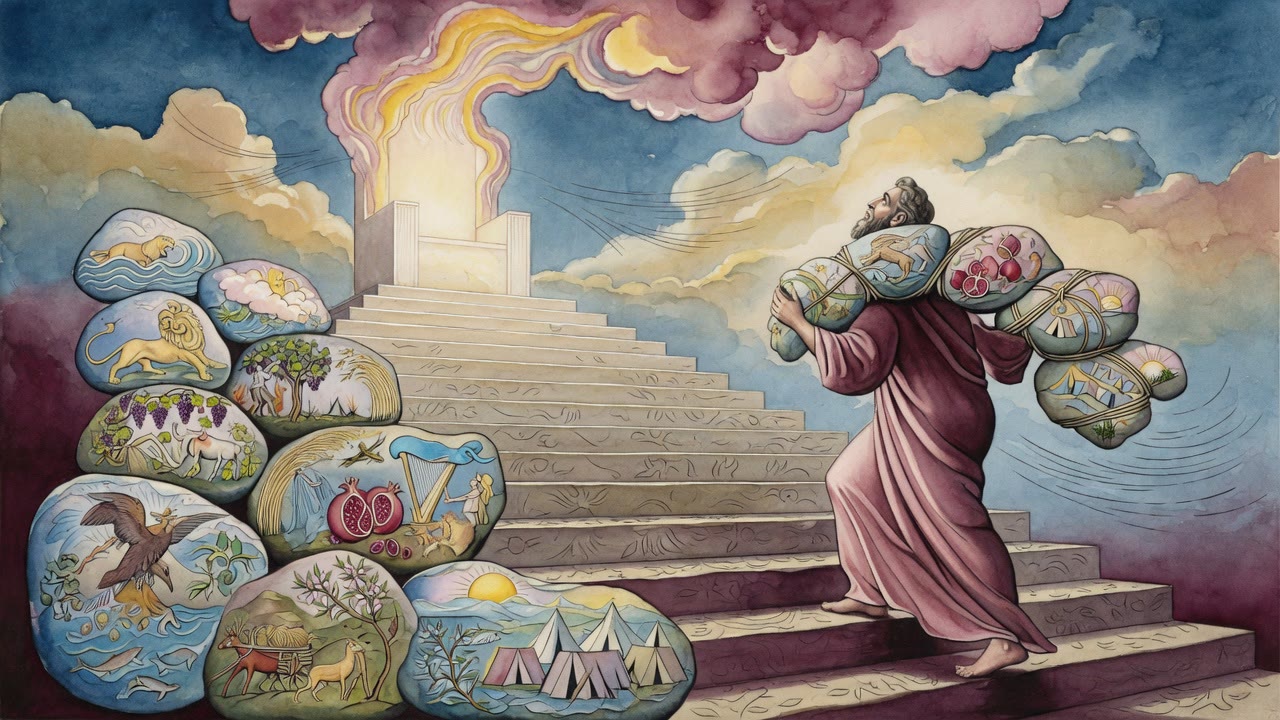
Eleven days. Eleven princes stepping forward one by one with their silver dishes and their animals and their bowls of incense to dedicate the newly built Tabernacle. Judah on the first day. Issachar on the second. Zebulun on the third. The ceremony proceeded through the tribes of Israel with the orderly authority of a thing that had been arranged by God himself.
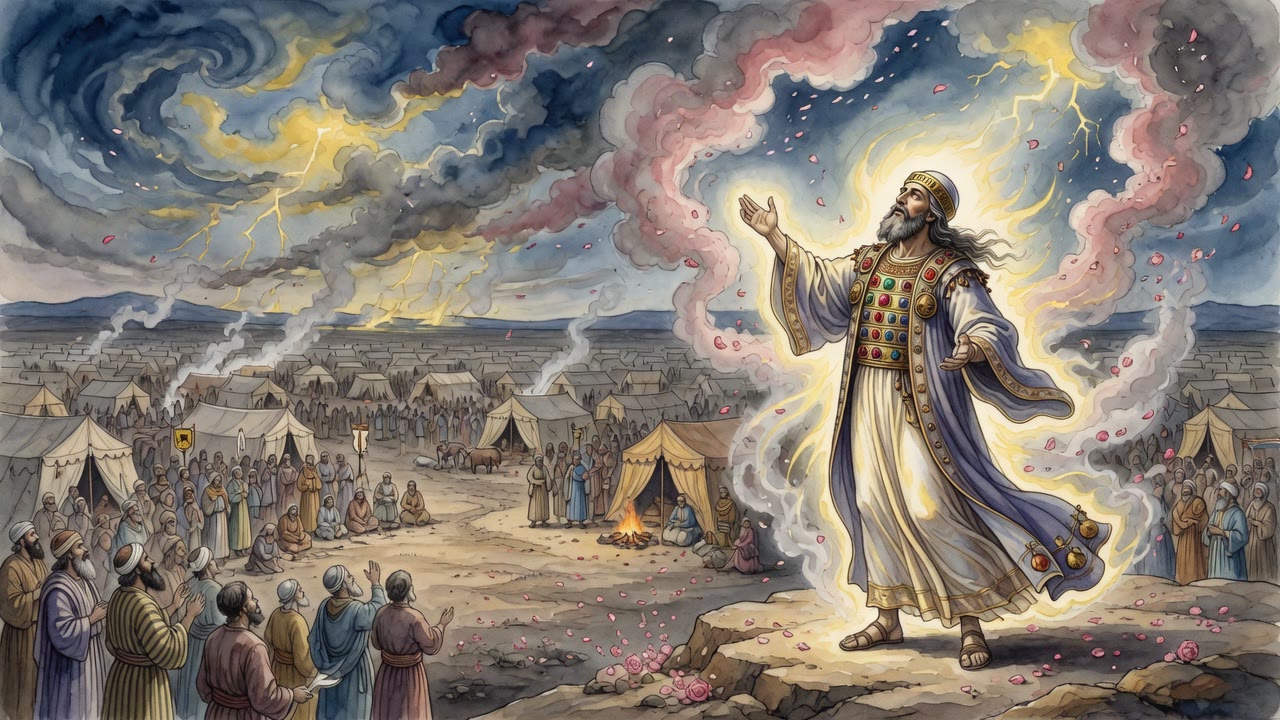
Aaron watched. He was the High Priest, the brother of Moses, the man who had stood before Pharaoh and watched the plagues descend on Egypt, who had held up Moses's arms at the battle of Amalek, who wore the golden crown inscribed with the divine name. His tribe was not called. Day after day the ceremony continued, and Levi remained absent from the sequence.
The midrash in Bamidbar Rabbah does not skip past what this produced in Aaron. It goes directly to the feeling. "Woe is me," Aaron said to himself. "Perhaps it is because of me that the Holy One is not accepting the tribe of Levi."
Why Aaron Blamed Himself
This is a startling confession to find in a rabbinic text about the High Priest. Aaron does not ask why the ceremony was arranged this way, or whether the arrangement is unjust, or whether there will be an explanation at the end. He goes directly to self-blame. He assumes the exclusion is a punishment. He assumes the punishment is for something he has done.
The man who represented all of Israel before God on Yom Kippur, who performed the most sacred rituals of the entire religious year, who wore the vestments that carried the names of all twelve tribes over his heart as he walked into the Holy of Holies, sits with his head in his hands wondering what he did wrong. The midrash finds this credible, not ridiculous. It is the response of a man who understands that closeness to God does not protect you from divine judgment; it makes you more, not less, accountable for your failures.
Aaron knew what he had done. The golden calf. Whatever he had hoped to accomplish by making it, whatever he thought he was managing in the chaos after Moses disappeared up the mountain, the outcome was the worst moment in Israelite religious history up to that point. He had never been certain, in all the years since, that he was fully clear of its consequences.
What God Said to Moses
Bamidbar Rabbah 15:6 records God's response to Aaron's despair, but the response is not given to Aaron directly. It is given to Moses, and Moses is the one who must carry it to his brother. God said to Moses: "go and speak to Aaron. Tell him not to be afraid. You were reserved for something greater."
The tribal offerings were a one-time ceremony. Precious, significant, the proper way to mark the dedication of the Tabernacle. But they had a beginning and an end. The twelfth day arrived and the ceremony was complete. What was given to Aaron was not a ceremony but a permanent office. The Menorah, the Tabernacle lamp with its seven branches, would be lit by Aaron and his sons and his sons' sons for as long as the Tabernacle and Temple stood. The tribal princes made their offering once. Aaron would make his every single day.
Your Portion Is Greater Than Theirs
Moses went to Aaron and told him. God's words, exactly as given. And Aaron was comforted.
The midrash says his comfort was real and complete. Not the forced comfort of a man who has accepted less than he wanted and made his peace with the gap. The genuine comfort of understanding that the shape of his calling was different from what he had been watching and that different did not mean lesser. The tribal princes had their moment in the twelve-day sequence. Aaron had the daily fire. The moment is impressive. The daily fire is the form God's permanence takes inside human time.
The Maccabees, centuries later, would re-light the Menorah (the lampstand) after it had been extinguished by Antiochus. When they found oil enough for only one day and it burned for eight, they were standing in the tradition Aaron had been inaugurated into at that first Tabernacle dedication, when God told the man who thought he had been passed over that he had actually been reserved.
← All myths