Moses Came to Persuade Aaron to Wear the High Priest's Robes
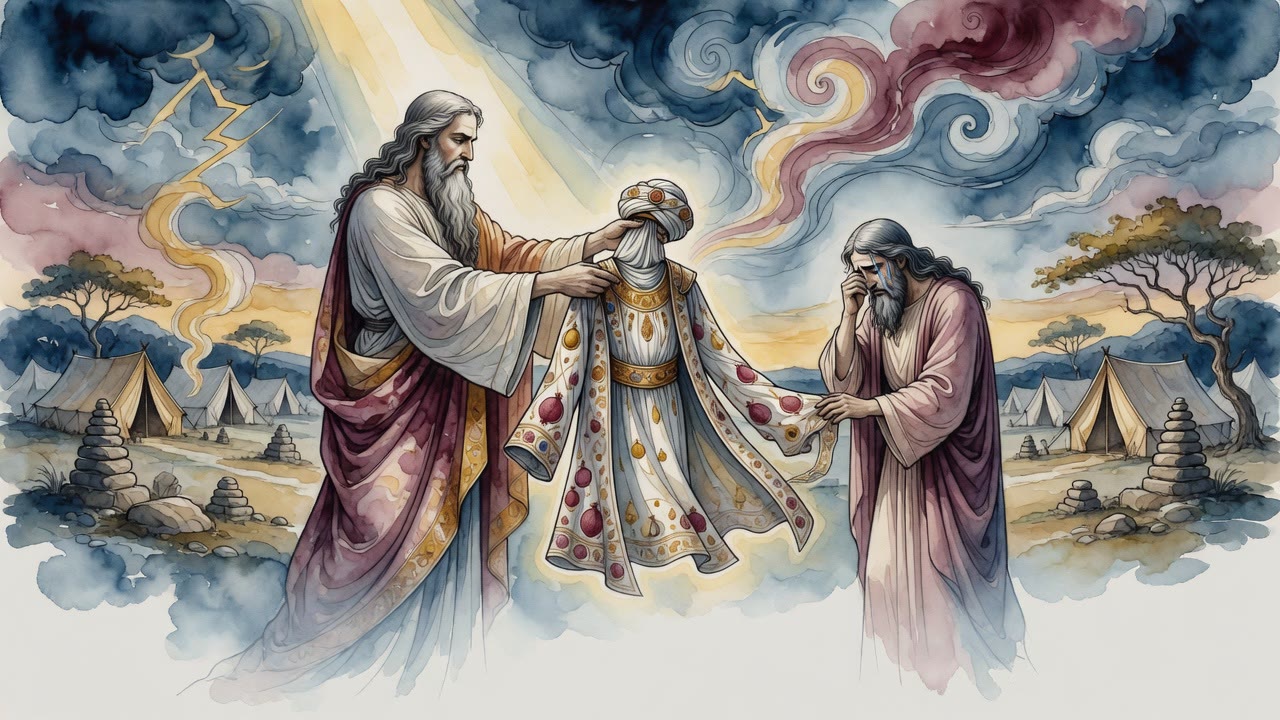
Moses crossed the camp to tell his brother Aaron he would wear the High Priest's robes, and Aaron, who shunned distinctions, wept and said no.
Table of Contents
The Tabernacle stood finished at last, its boards joined, its curtains hung, the smell of fresh acacia and dyed wool still sharp in the desert air. Moses walked away from it across the camp, and the people watched him go, because they knew he carried something. He had built that tent with his own labor and his own grief. Now he was crossing the sand to give it to his brother.
 Click for full size
The Voice That Knew a Reluctant Heart
The instruction had come to Moses plainly enough. On the twenty-third day of the month of Adar, he was to consecrate Aaron and Aaron's sons. Aaron would be the Kohen Gadol, the High Priest, the one man permitted to enter the holiest places and stand between the people and the fire that had spoken from the mountain.
But the voice that gave the order added a strange second command. "Go and persuade him," it said. "Aaron is a man who shuns distinctions. Talk him into it."
Moses turned that word over as he walked. Persuade. Not summon, not appoint, not command. The highest religious office Israel would ever know, and the man chosen for it would have to be coaxed into accepting it like a reluctant guest pulled toward the head of the table.
The Brother Who Wept Without Jealousy
Moses knew exactly why. He had watched Aaron his whole life. When Moses had first been told to lead, when the staff and the words and the burden had fallen on the younger brother instead of the elder, Aaron had not soured. He had come out to meet Moses in the wilderness and kissed him, and the joy on his face had been real, joy without a shadow of envy in it. A lesser man would have nursed the wound of being passed over. Aaron had simply been glad.
This was the man who walked between quarreling neighbors and would not leave until they were embracing. The man who heard of a marriage gone cold and went first to the husband, then to the wife, and told each that the other ached to make peace. He pulled people back from the edge of their own anger. He did not push himself forward. He pushed others toward each other.
And there was the Calf. Moses did not let himself forget it, and neither did Aaron. When the mountain had seemed to swallow Moses and the people had panicked and demanded a god they could see, it was Aaron who had stood among them as the gold went into the fire. He had survived it. He had grieved it. To be lifted now to the holiest service of all, with that memory still raw, must have felt to Aaron less like a reward than like a question he could not answer.
What Aaron Said When the News Came
Moses reached him and told him. "God wants you to be High Priest. The robes, the breastplate, the incense, the altar, all of it, yours."
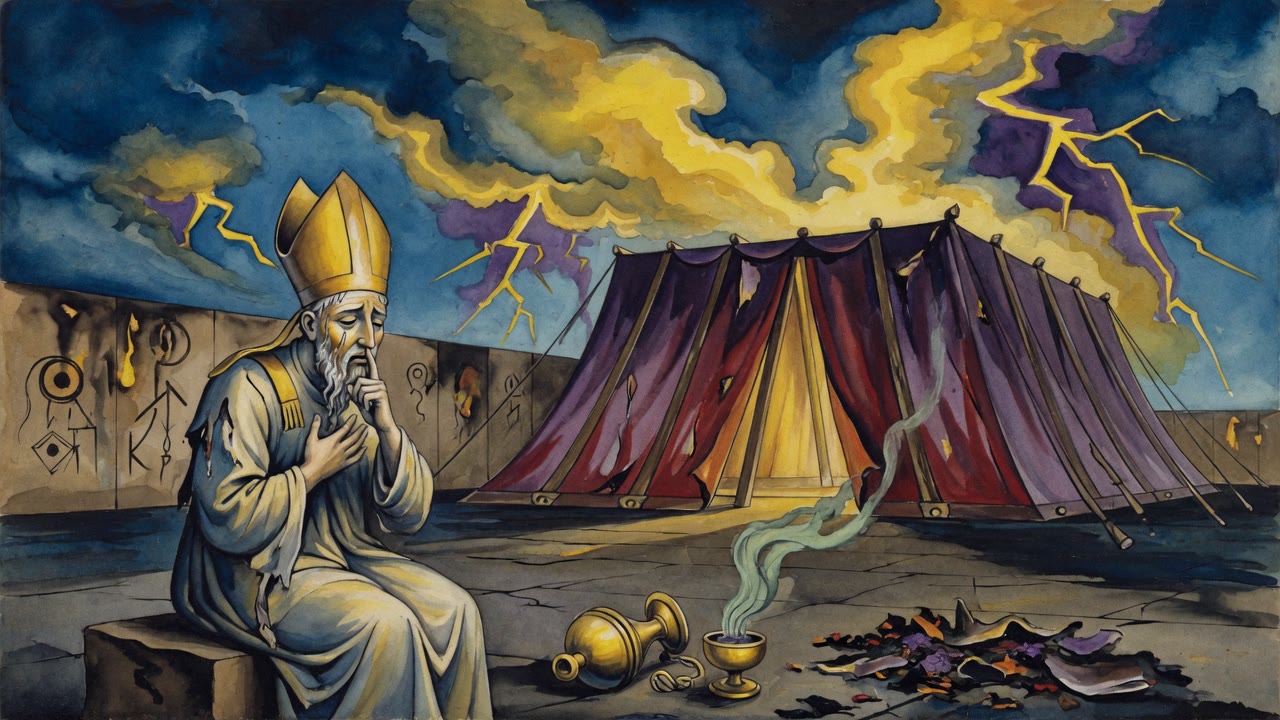
Aaron did not light up. He looked at his brother, at the dust on Moses from the work of raising the Tabernacle, and he protested.
"You did all the labor of erecting the Tabernacle," Aaron said, "and now I am to be its High Priest?"
There it was, the whole man in a single sentence. He could not see why the one who had sweated over every board should hand the glory of standing inside it to someone who had not. It struck him as backward, almost unfair, that the builder should serve while the brother received the crown.
The Answer That Settled It
Moses did not argue the honor or list Aaron's virtues. He gave him the only answer that could reach a man like that.
"As truly as you live," Moses said, "although you are to be High Priest, I am as happy as if I had been chosen myself. As you rejoiced in my elevation, so do I now rejoice in yours."
That was the door that opened him. Not flattery, not command, but the memory of his own kindness handed back to him. Aaron had once been glad for Moses without keeping any of the gladness for himself. Now Moses was being glad for Aaron the same way, and there was no answer to that except to accept. So Aaron wept, and he said yes.
Seven Days in the Shadow of the Tent
What followed was not a coronation. It was a withdrawal. For an entire week Aaron and his sons lived in the shadow of the Tabernacle, secluded at its door, set apart from the camp and its noise.
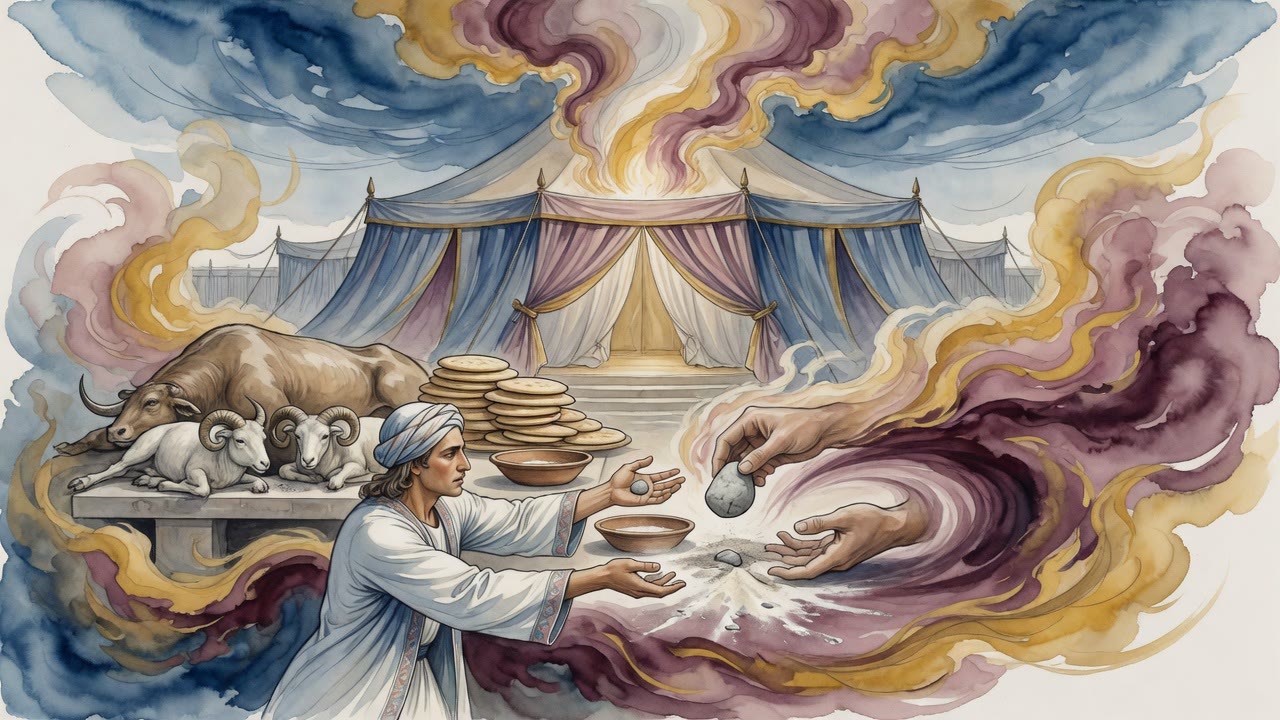
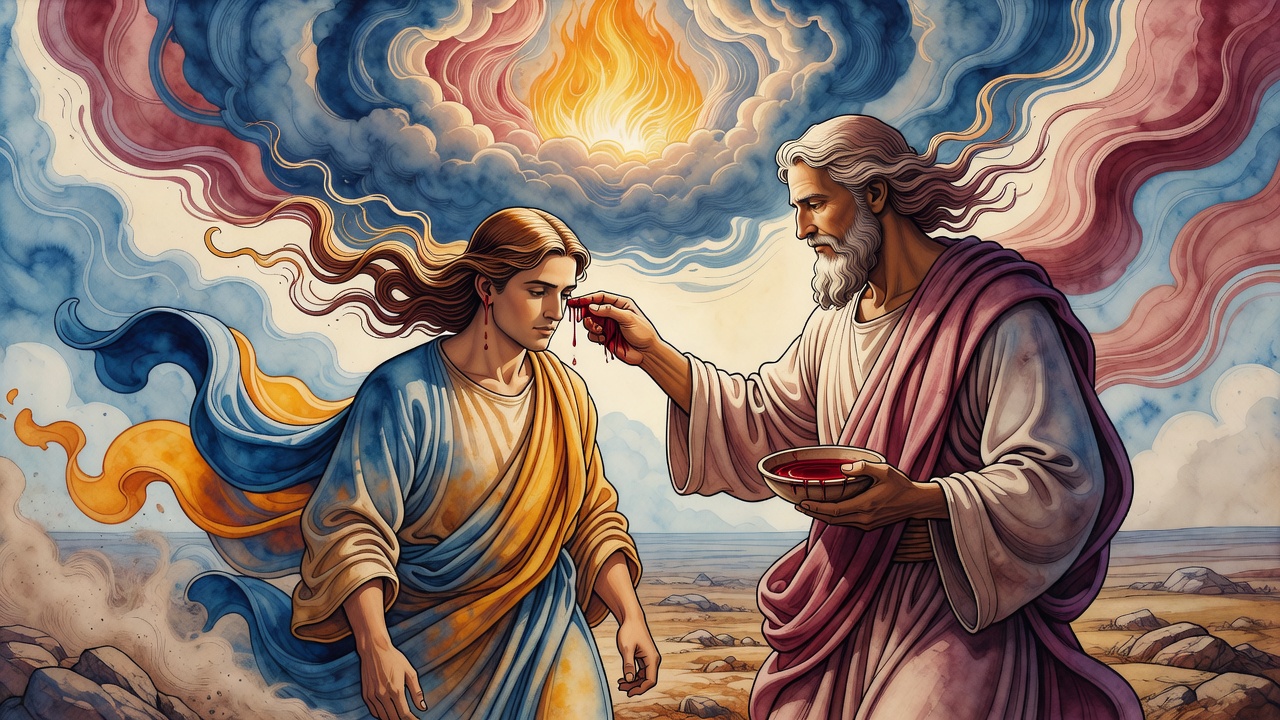
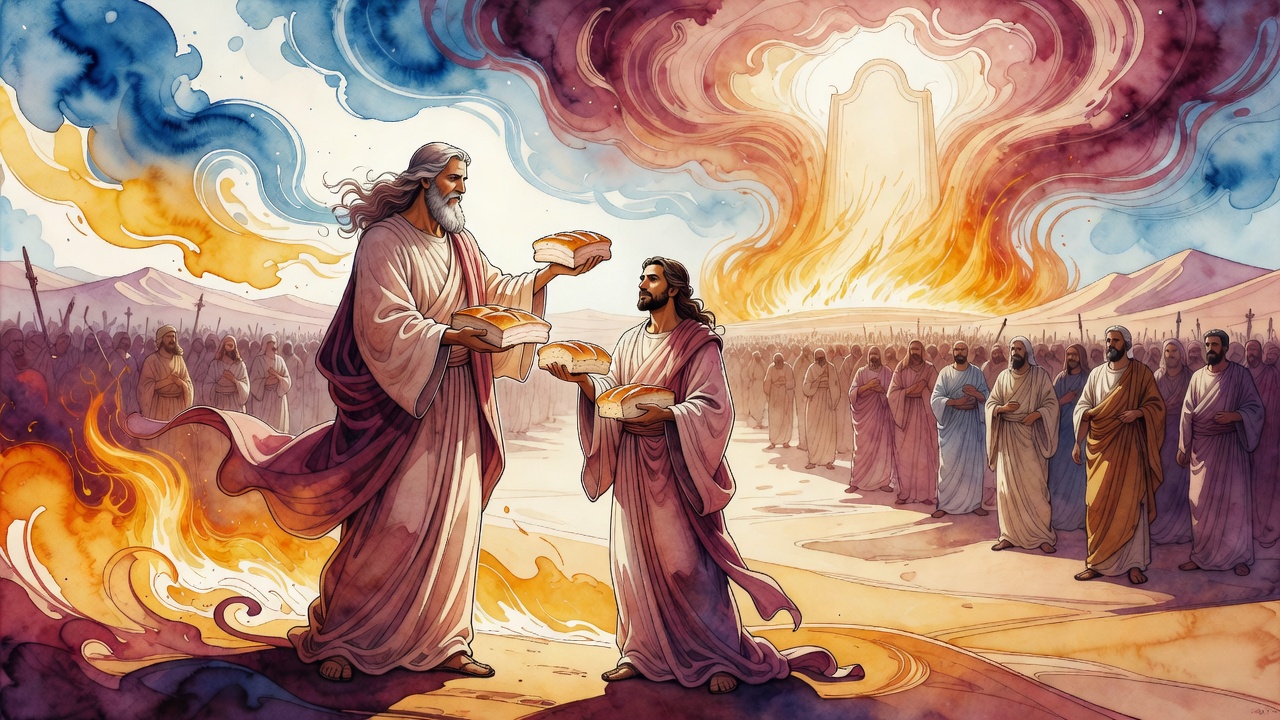
Through all seven days it was Moses who served as priest. Moses brought the sacrifices, Moses tended the offerings meant to make his brother holy. He took the blood of those offerings and sprinkled it on Aaron and on Aaron's sons, day after day, doing for his brother every duty that would soon become Aaron's alone. The builder served the priest into being. He gave away the work of his own hands, blood and ash and a week of his life, so that his elder brother could step out at the end of it transformed.
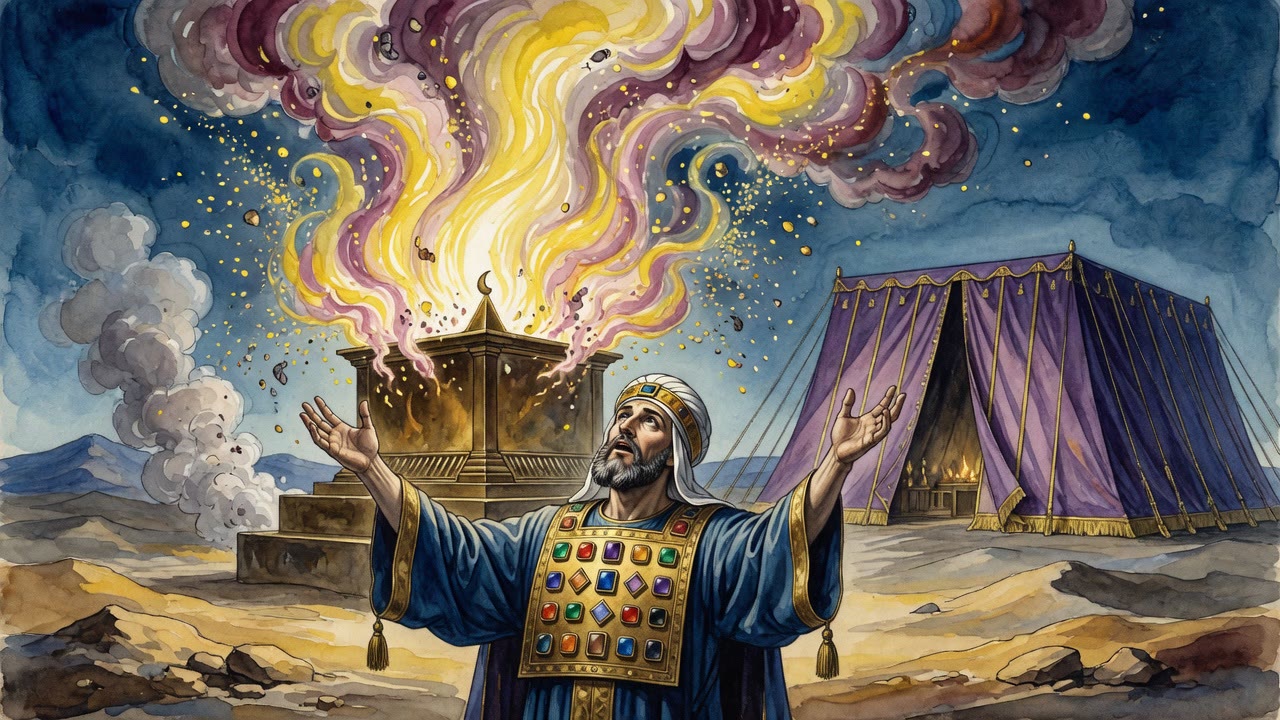
When the week closed, Aaron walked out of the shadow in the robes, no longer the man who fled distinction but the one who carried the whole people's name into the holy place. He had been talked into it weeping. He served them the rest of his days.
← All myths