6 min read

The Verse Where Aaron Comes Before Moses

Thirty verses put Moses first and Aaron second. Then one verse flips the order, and the reversal decides who outranks whom.

Curated by Arthur · Told by Maggid ·
Table of Contents
  1. The Hand That Wrote the Names
  2. The Verse That Turned Around
  3. The News at Aaron's Door
  4. The Answer That Held the Scale Level
  5. Why the Furrow Broke

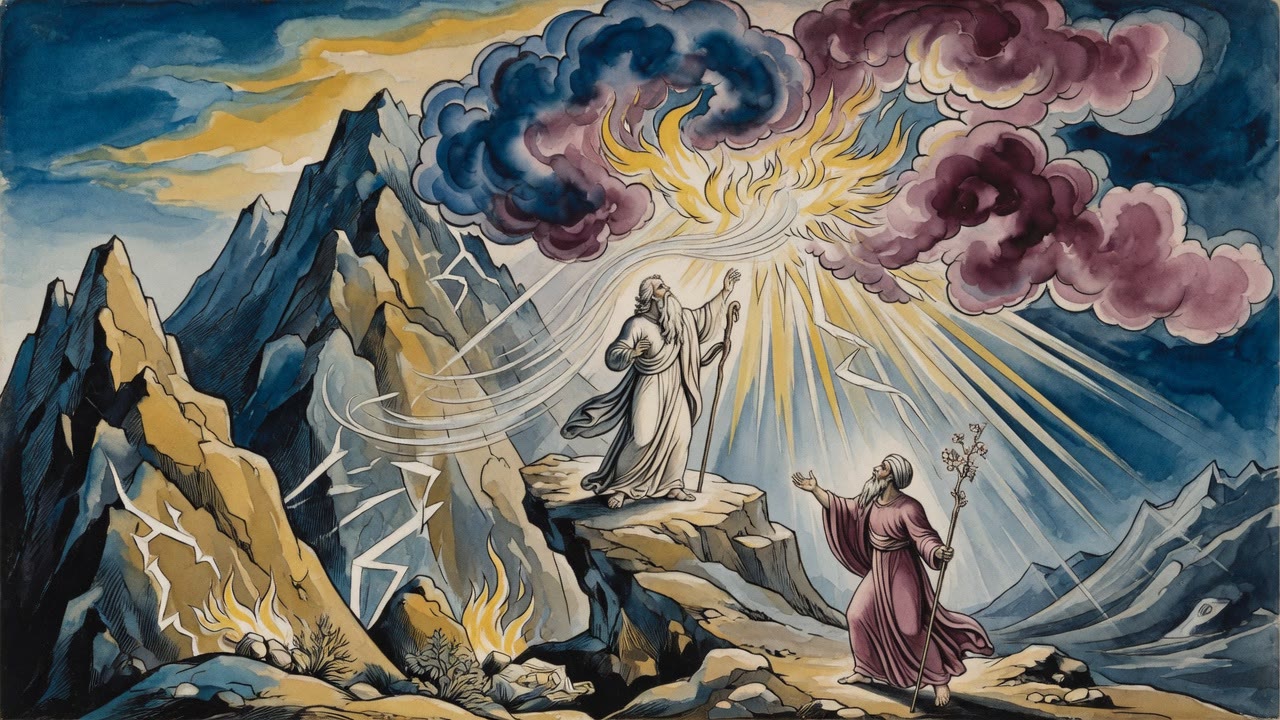
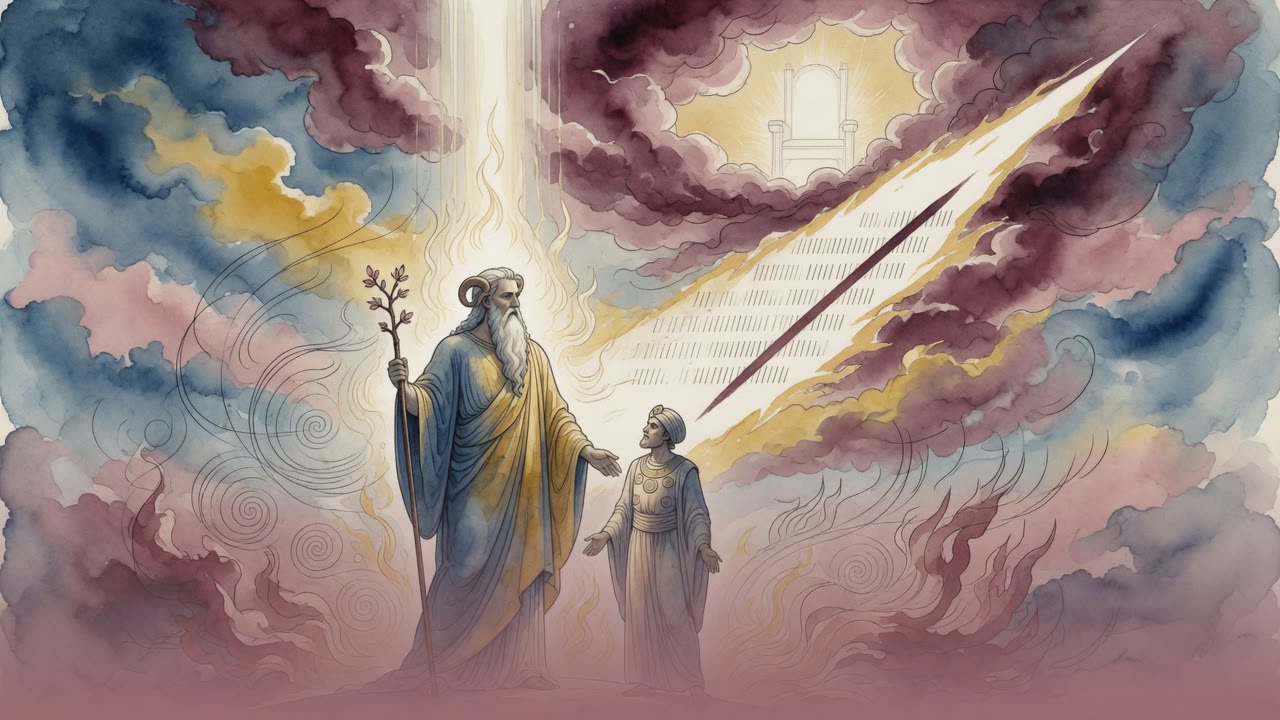
The scribe's reed had written the two names together so many times that his hand no longer paused over them. Moses first. Aaron second. The order ran down the column like a furrow plowed straight, verse after verse, the younger brother who had stood barefoot before the burning bush, then the older brother who came out to meet him in the wilderness and kissed him. Whoever read the scroll aloud could fall into the rhythm and never look up. Moses and Aaron. Moses and Aaron. The liberator and the man who spoke for him.
The Hand That Wrote the Names

The genealogy was long and dry, a column of fathers and sons threaded toward two men. Here were the heads of the houses of Levi, the sons of Kohath, the families counted by their generations. The list seemed to exist only to arrive at the brothers, to set them at the end of a chain of bone and breath and say: these two. These are the ones to whom the word came.

And the word kept coming in the same order. The Lord spoke to Moses and to Aaron. He charged Moses and Aaron. He sent Moses and Aaron into Pharaoh's court with the demand that shook the river to blood. A reader in a hurry could be forgiven for deciding the matter was settled. The first name carried the weight. The second name carried the first name's staff.

The Verse That Turned Around

Then came one line, set into the middle of the column where no one expected the ground to shift. "It is that Aaron and Moses" (Exodus 6:26). Aaron first. Moses second. For the length of a single breath the order reversed itself, and the careful furrow broke.

It would be easy to read past it. Most eyes do. The names are the same names, the brothers the same brothers, and one flipped verse in a wall of identical verses looks like a slip of the reed, a scribe's hand wandering for an instant before it found the old groove again. But the flip is not a slip. The flip is an argument, planted in the text the way a stone is planted to mark a boundary that the eye would otherwise miss.

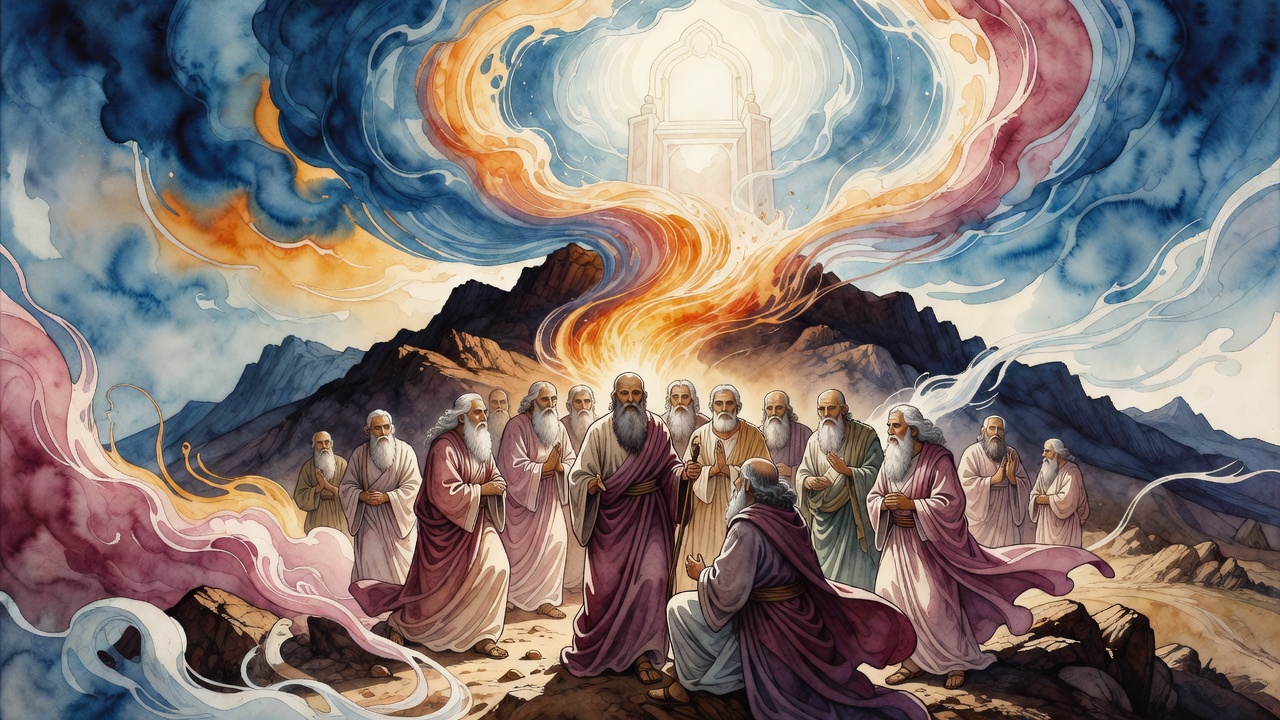
Picture the logic it dismantles. If the first name always outranks the second, then thirty verses of "Moses and Aaron" build a throne under Moses and a footstool under Aaron. Moses becomes the whole story. Aaron becomes a brother-sized accessory, the man who held the staff and wore the breastplate on the days his junior needed an extra pair of hands. The reversed verse will not allow it. Sometimes Moses leads the pair. Sometimes Aaron does. The two are weighed against each other and the scale holds level. Before the Lord, the prophet and the priest stand on the same step.

The News at Aaron's Door

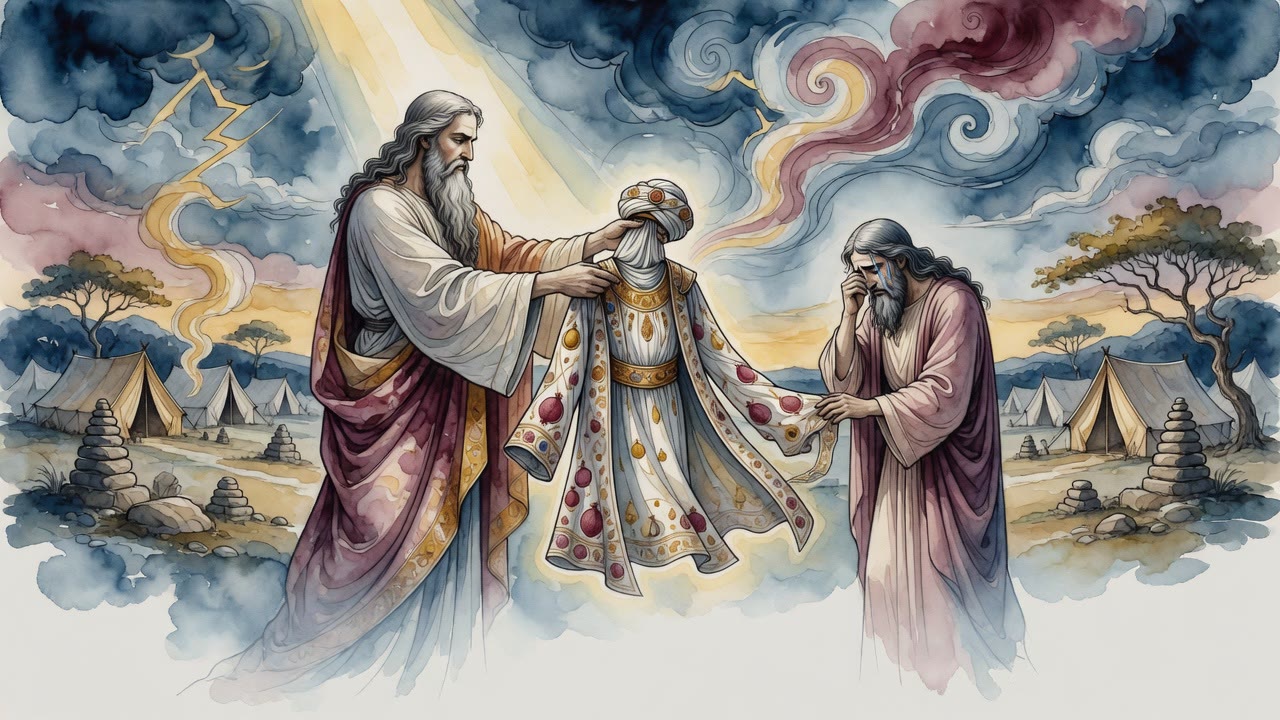
That equality was not an idea kept in a scroll. It had a face, and the face belonged to Aaron on the day his brother came to him with news. The Tabernacle stood finished, every loop and clasp and curtain raised by Moses' hand and Moses' command. And now Moses had to tell his older brother who would walk into it as Kohen Gadol, high priest, the man who would enter where the cloud sat.

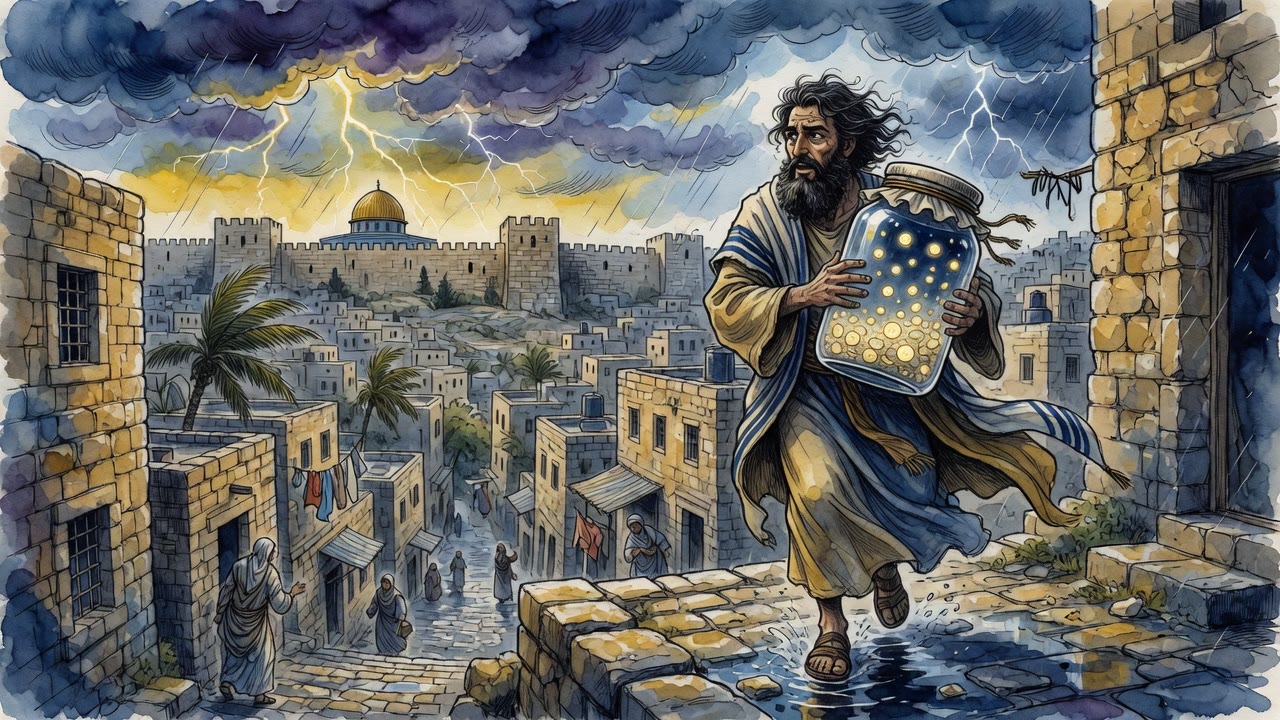
Aaron was not ecstatic. He heard it and the question came out of him like a complaint a man only makes to someone he trusts. "What," he said. "You had all the labor of erecting the Tabernacle, and I am now to be its high priest." There it was, the older brother watching the younger build something with his own arms, and then being handed the right to stand inside it. A lesser house would have cracked along that seam.

The Answer That Held the Scale Level

Moses did not flinch and did not condescend. "As surely as you live," he told him, "though you are to be high priest, I am as happy as if I had been chosen myself. As you rejoiced in my elevation, so do I now rejoice in yours." He remembered the kiss in the wilderness, the brother who had felt no envy when the younger one was raised over him. Now the debt of that gladness came due, and Moses paid it without a grudge. Neither brother stood on the other's neck. The man who built the house and the man who would serve in it looked at each other as equals, which is exactly what the flipped verse had been insisting all along.

Then Moses leaned in with stranger counsel, the voice of a brother arming a brother before he walks into danger. The people had sinned with the calf and been forgiven, the breach with God sealed over. Still, Moses warned, when Aaron entered the sanctuary he must shut the mouth of the accuser, the one who waits to recall old failures and turn them into a charge. Take a young calf for a sin-offering, Moses said, so that the very animal that nearly undid you becomes the thing that clears you. Carry your worst day in your hands as your offering, and the accuser has nothing left to say.

Why the Furrow Broke

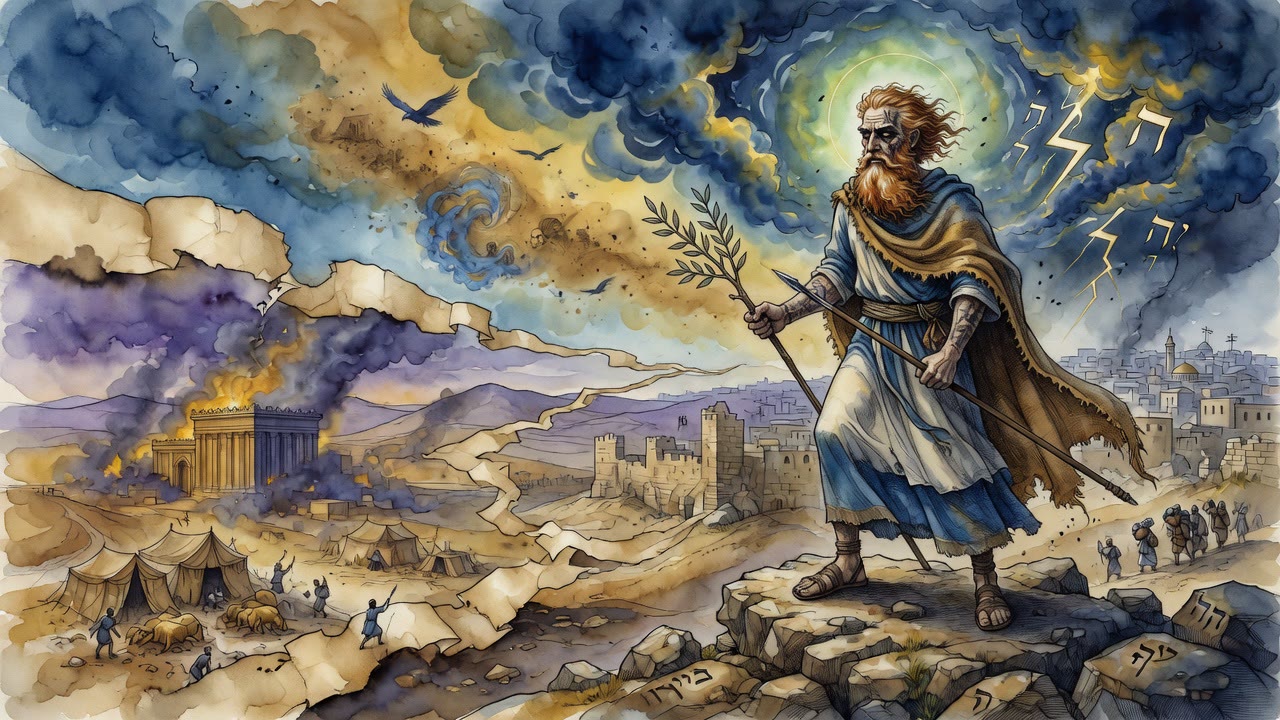
So the brothers walked toward the Tabernacle, one to enter and one to send him in, neither above the other. The scribe's hand had told the truth all along, even in the line where it seemed to wander. Moses and Aaron, Aaron and Moses, the order turning so that no one could ever pin it down and build a hierarchy on it. The reversal in (Exodus 6:26) was the boundary stone, set deep in a list of names, marking the place where the prophet and the priest were measured against each other and found to weigh the same.


← All myths
From the tradition

Sources

2 sources

The texts this telling draws on, in full. Open a card to read inline, or expand it for a wider, quieter read.

Mekhilta Tractate Pischa 1:3Mekhilta DeRabbi Yishmael

The Torah speaks "to Moses and to Aaron", in that order. Moses first, Aaron second. A natural reading would assume this reflects a hierarchy: Moses is the greater, Aaron the lesser. After all, the person mentioned first usually takes precedence.

The Mekhilta challenges this assumption head-on. One might think, it says, that the one who takes precedence in the verse takes precedence in the act. Perhaps Moses alone received the instruction, and Aaron was merely along for the ride. But then the Torah contradicts itself. In (Exodus 6:26), the order is reversed: "It is Aaron and Moses." Aaron first, Moses second.

From this reversal, the Mekhilta derives a remarkable principle: both are equal. The Torah alternates the order precisely to prevent anyone from establishing a fixed hierarchy between the two brothers. Sometimes Moses comes first. Sometimes Aaron comes first. The variation is deliberate, it is the Torah's way of saying that in God's eyes, the prophet and the priest stand on the same level.

This teaching carries enormous weight for understanding the relationship between prophecy and priesthood in Jewish tradition. Moses was the greatest prophet. Aaron was the first High Priest. These are fundamentally different roles, yet the Mekhilta insists they are equal in dignity. Neither the visionary who speaks with God "face to face" nor the priest who enters the Holy of Holies outranks the other. The Mekhilta reads the Torah's shifting word order as a statement of constitutional balance, two pillars of equal height holding up the house of Israel.

Full source
Legends of the Jews 3:71Legends of the Jews

When Moses approached Aaron with the news that God wanted him to be the Kohen Gadol, the High Priest, Aaron wasn't exactly ecstatic. He pointed out, "What! Thou hadst all the labor of erecting the Tabernacle, and I am now to be its high priest!" Can you blame him? Moses got to lead the whole project!

Moses, ever the diplomat, responded, "As truly as thou livest, although thou art to be high priest, I am as happy as if I had been chosen myself. As thou didst rejoice in my elevation, so do I now rejoice in thine." It paints a picture of deep brotherly love and mutual respect. It wasn't just about power or prestige; it was about serving God and the people.

Moses then gives Aaron some intriguing advice. "My brother Aaron, although God had become reconciled to Israel and has forgiven them their sin, still, through thy offering must thou close the mouth of Satan, that he may not hate thee when thou enterest the sanctuary. Take then a young calf as a sin-offering, for as thou didst nearly lose thy claim to the dignity of high priest through a calf, so shalt thou now through the sacrifice of a calf be established in thy dignity.”

The Zohar tells us that even after forgiveness, there's a need to appease the forces of negativity, represented here by Satan. The offering of the calf is particularly symbolic. It’s a way to confront the past transgression of the Golden Calf and to ensure that Aaron's path forward is clear. It's almost like saying, "Let's use the symbol of our failure to pave the road to our redemption.”

But it doesn't stop with Aaron. Moses then turns to the people. "You have two sins to atone for," he tells them: "the selling of Joseph, whose coat you fathers smeared with the blood of a kid to convince their father that its owner had been torn to pieces by a wild beast, and the sin you committed through the worship of the Golden Calf."

He instructs them to bring a kid to atone for the sin involving the kid (Joseph’s coat), and a calf to atone for the sin involving the calf (the Golden Calf). "But to make sure that God had become reconciled to you, offer up a bull also, and thereby acknowledge that you are slaughtering before God your idol, the bull that you had erstwhile worshipped."

This multi-layered atonement is fascinating. It’s not just about asking for forgiveness; it's about actively dismantling the idols and harmful patterns that led to the sins in the first place. It’s about acknowledging the past, confronting it, and choosing a different path.

The people, however, question this. "What avails it this nation to do homage to its king, who is invisible?" They are yearning for tangible proof, a sign that their efforts are not in vain.

Moses replies, "For this very reason did God command you to offer these sacrifices, so that He may show Himself to you." At these words they rejoiced greatly, for through them they knew that God was now completely reconciled to them, and they hastened to bring the offerings to the sanctuary.

Their joy stems from the hope of divine revelation, of experiencing God's presence. It emphasizes the human need for connection, for feeling seen and acknowledged by something greater than ourselves.

Moses concludes with a powerful admonition: "See to it now that you drive evil impulse from your hearts, that you now have but one thought and one resolution, to serve God; and that your undivided services are devoted singly and solely to the one God, for He is the God of gods and the Lord of lords. If you will act according to my words, 'the glory of the Lord shall appear unto you.'"

This isn't just about performing rituals; it's about transforming the heart, focusing intention, and dedicating oneself to a higher purpose. It is about wholeheartedly choosing good over evil and serving God with every fiber of their beings.

As we find in Midrash Rabbah, the idea here is that true reconciliation requires not just external actions, but a deep internal shift.

What does this story tell us? Perhaps that leadership requires both strength and humility, as demonstrated by both Moses and Aaron. Maybe that atonement is a complex process that involves confronting the past, dismantling harmful patterns, and striving for a deeper connection with the Divine.

Or, maybe it's a reminder that even in the most sacred narratives, there's always room for human emotions, sibling dynamics, and the ongoing struggle to live a more meaningful life. And that, perhaps, is the most sacred lesson of all.

Full source