Aaron Stood Between the Living and the Dead and the Plague Stopped
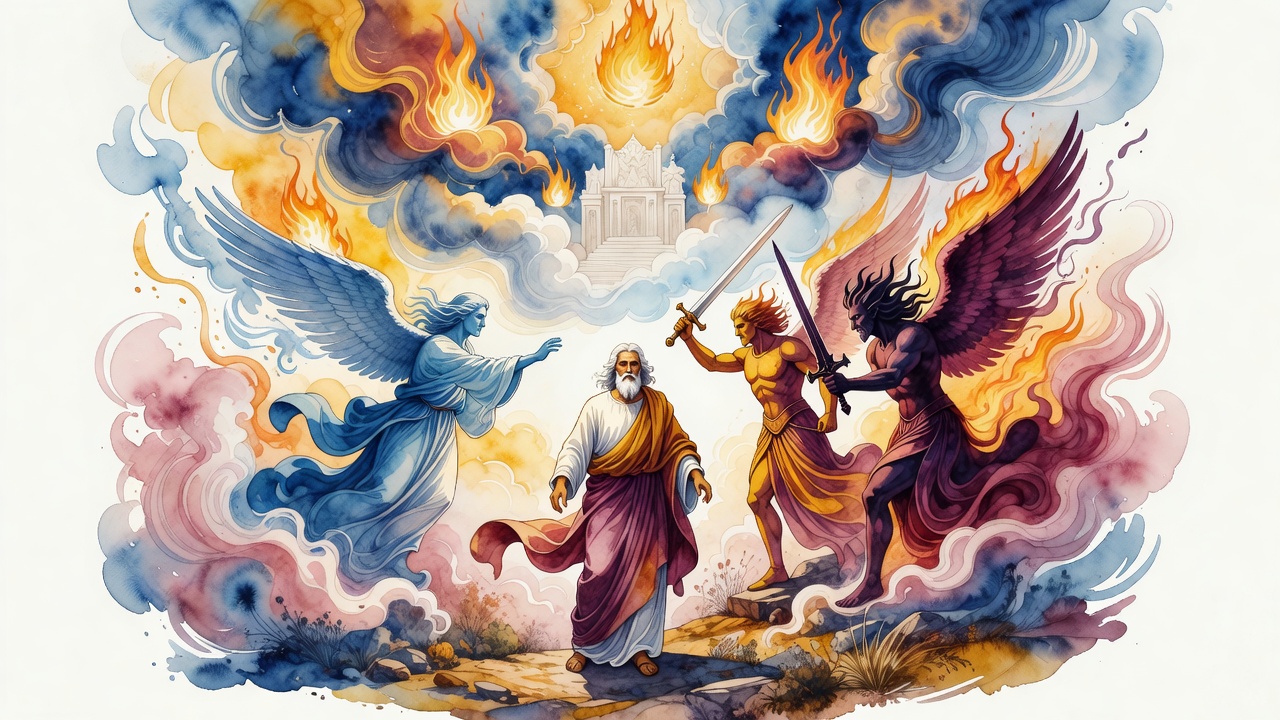
Korah was already under the ground. By morning Israel blamed Moses, and Aaron ran into the plague with altar fire and incense.
Table of Contents
The day after the earth swallowed Korah, the camp got worse. Fire had taken the two hundred and fifty men who had brought unauthorized incense. By morning Israel turned on Moses and Aaron with the charge that they had killed the people of God.
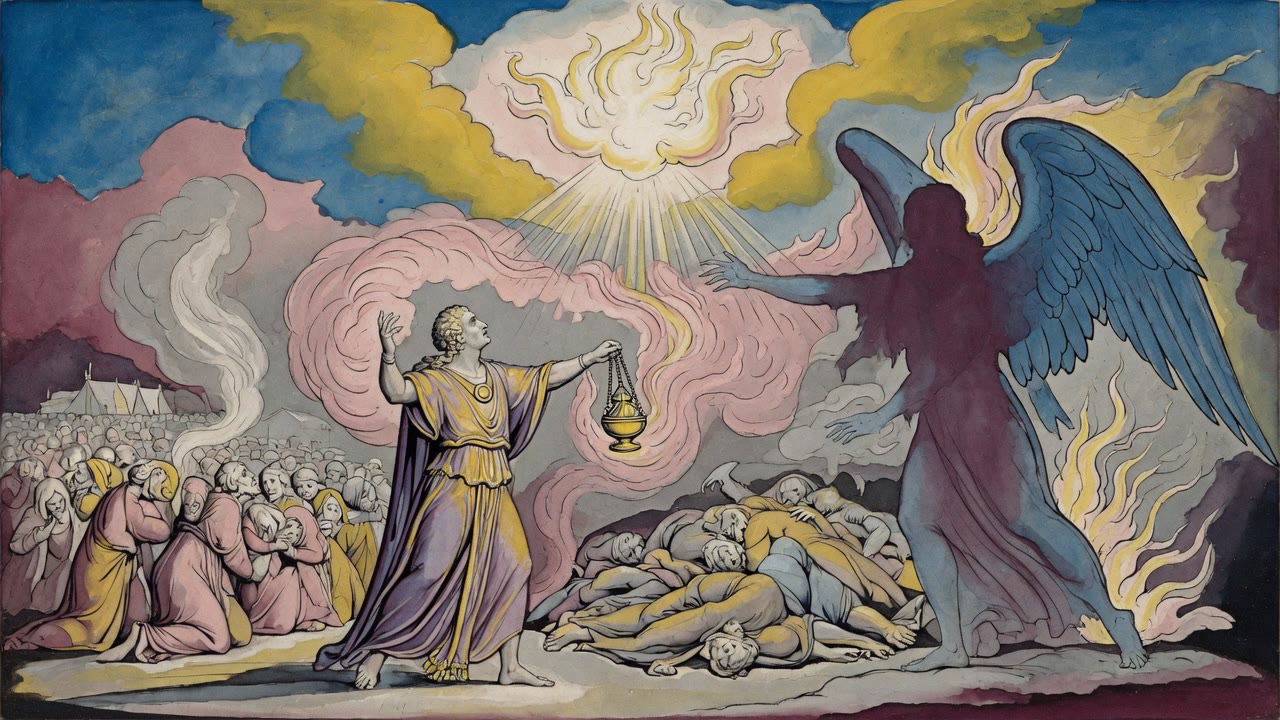 Click for full size
The Cloud of the Shechinah (שכינה), the Presence, covered the Tabernacle. The congregation gathered to kill them. While they were still shouting, a plague began moving through the tents.
Take Fire and Run
Moses did not tell Aaron to wait for a formal sacrifice. He told him to take a censer, take fire from the altar, put incense on it, and run into the congregation.
Not walk. Run. The plague was already in bodies.
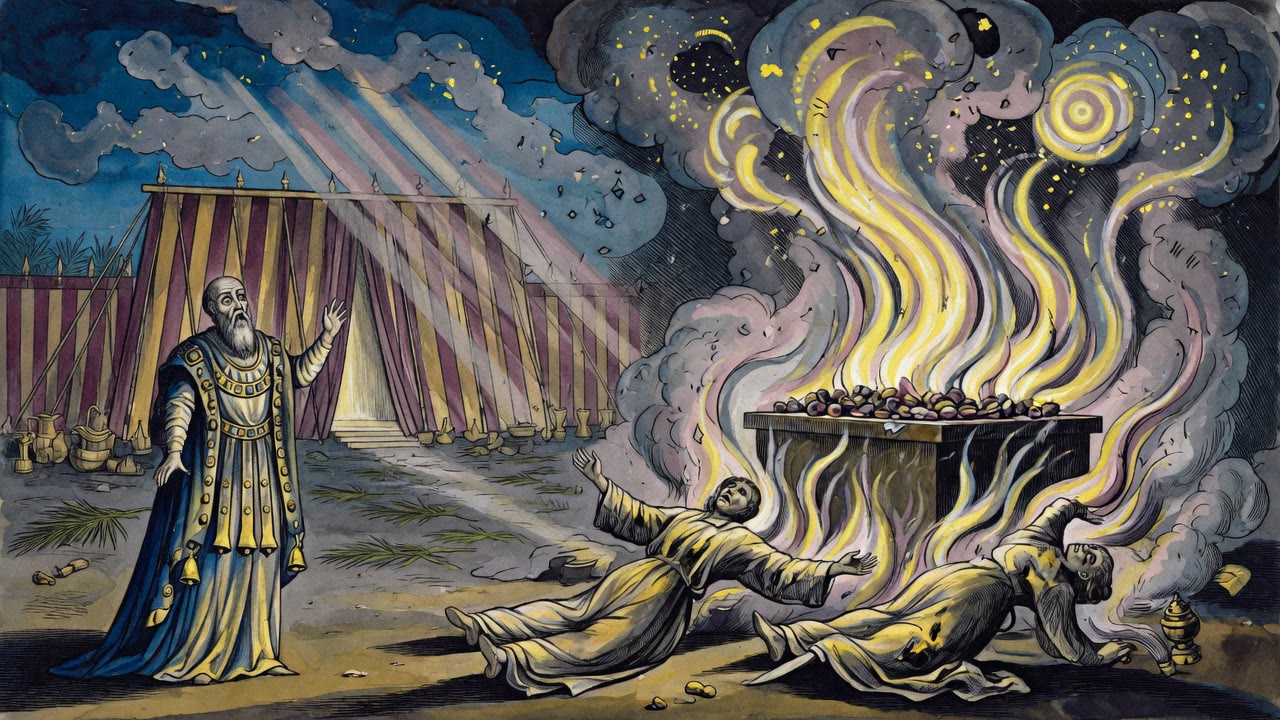
Aaron stopped. His sons Nadab and Abihu had burned because they put strange fire into censers. "Shall I now fetch holy fire from the altar and carry it outside?" he said. "I will meet death through this fire."
"Go quickly and do as I have bidden you," Moses said. "While you stand and talk, they die."
Aaron took the pan. "Even if it be my death, I obey gladly if I can serve Israel." He ran.
The Pans Already Meant Death
The object in his hand had just become a sign of death. Eleazar had been ordered to take the two hundred and fifty bronze censers out of the burning, where the souls, not the bodies, of Korah's company had been consumed. He hammered them into plates that now covered the altar: a memorial, so that no stranger who was not of Aaron's seed would come near to burn incense before the Lord.
Eleazar went, not Aaron. God had said the censer brought death on two of Aaron's sons, so let the third now fetch the censer and make atonement.
Aaron ran into the crowd that was dying with one of those same tools. The incense that had killed unauthorized men when offered in arrogance was now being offered by the man ordained to hold it, in a situation that would not wait. The same metal. The same fire. The same act. Different hands, different hour.
The Secret from Sinai
Moses knew why he sent incense into a plague. When he had gone up Sinai to receive the Torah, he had met the Angel of Death among the angels. Each angel gave him a gift. Death's gift was a secret: incense holds him at bay. The fragrance is a boundary. Burned correctly, it makes a line the Angel of Death cannot cross.
Israel had come to call incense death-bearing after Nadab and Abihu, and after the two hundred and fifty. Moses meant to break that fear. Sin brings death. The incense, used as it was given, stops the reaper. Aaron did not know that yet. He only knew he was running toward dying people with the tool that had killed his sons.
He Seized the Angel by the Loins
The Angel of Death moved through the camp like a reaper through wheat, row by row. A line he touched did not escape. A man standing one row ahead still breathed until the angel reached him.
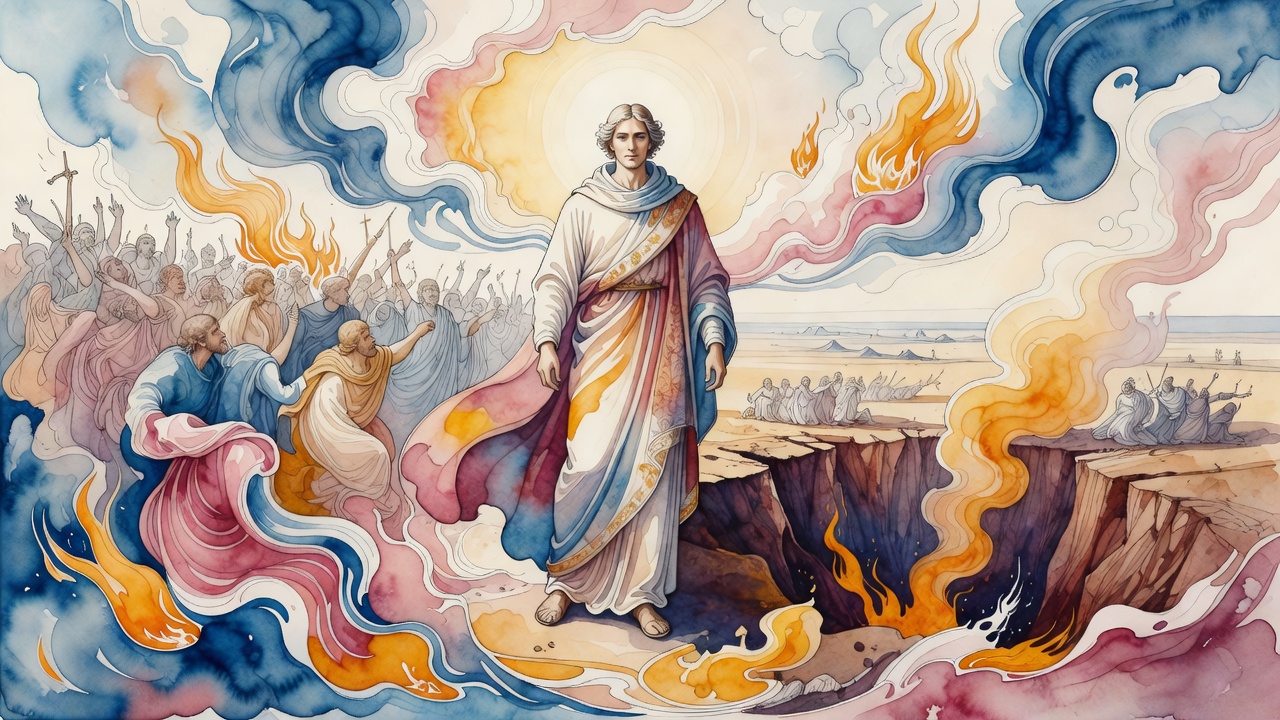
Aaron pushed in and placed himself between the living and the dead. He stood there with the burning censer. The angel stopped.
"Leave me to my work," the angel said. "The Omnipresent sent me to kill, and you lay hold of me? You bid me stop in the name of a creature of flesh and blood."
"Moses commanded me to seize you," Aaron said. "Everything Moses tells me comes from the mouth of the Holy One."
"I tell you the Holy One sent me, and you answer me with Moses? Who will make me believe you?"
Aaron did not argue further. "Moses is in the Tent of Meeting, and the Holy One is there with him. Let us both go." He seized the angel by the loins, thrust the censer under its face, and dragged it, against its will, through the camp to the Tent. He locked it in. Death ceased.
Between the Living and the Dead
Aaron stood in the midst, between the dying and those still breathing, until the burning stopped. Fourteen thousand seven hundred had already fallen, besides those who had died in Korah's schism. He returned to Moses at the door of the Tabernacle. The plague was stayed.
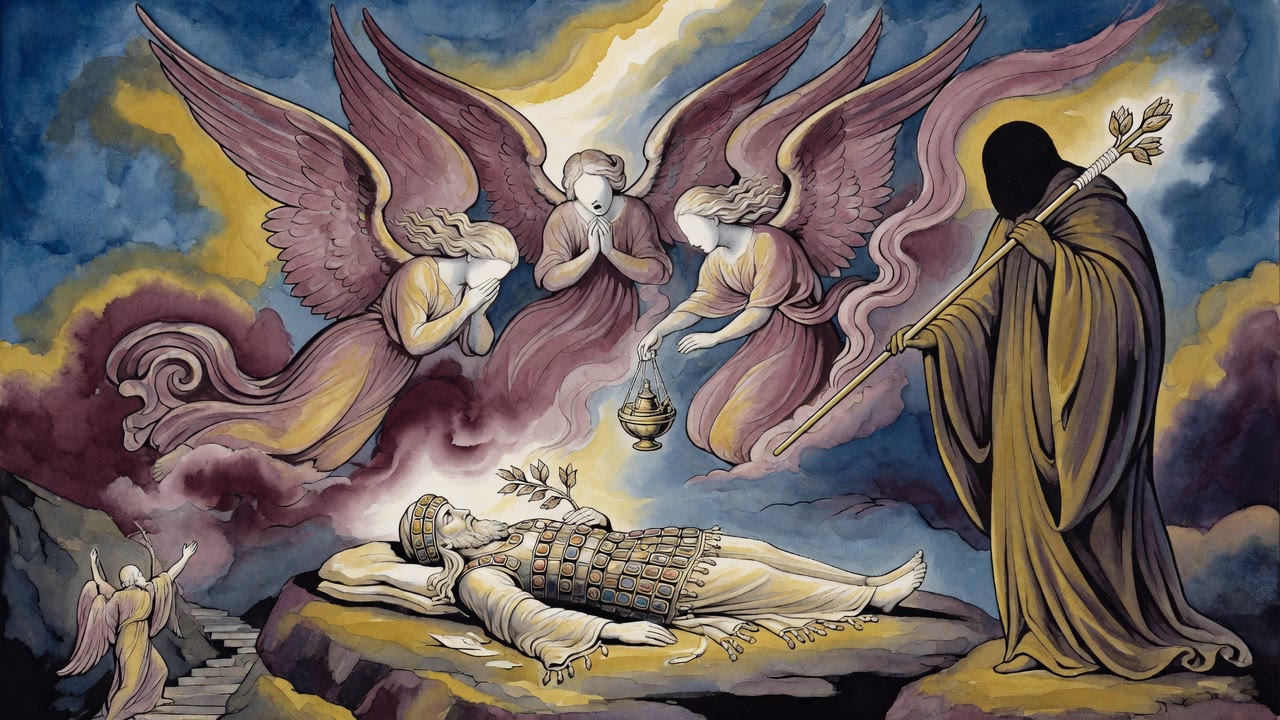
He could not bury Nadab and Abihu when they died. A high priest does not walk in that funeral. He had run toward a fire anyway. Years later he would not die by this angel at all. He would die by a kiss from God, as Miriam did, as Moses would. The angel he locked in the Tent was not given his death.
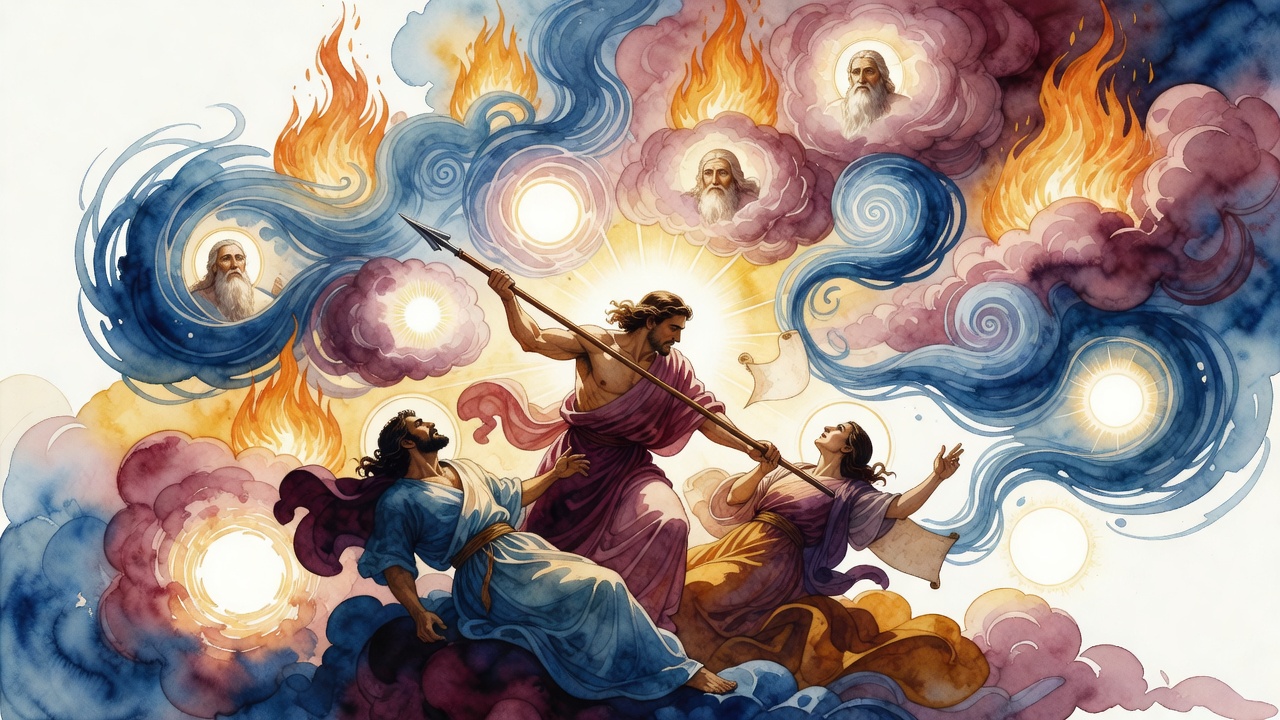
A generation later Phinehas, his grandson, would run toward another breach with a spear in his hand, when Israel failed at Peor. The same house. The same refusal to stand still while the camp died. Aaron had already shown the shape of that office: take the tool, enter the gap, hold the line until the dying stops.
← All myths