Aaron Saw the Calf on the Altar and Could Not Move
Every time Aaron approached the altar as high priest, the shape of the Golden Calf appeared at its corner. Moses had to talk him through it each time.
Table of Contents
 Click for full size
The Day Moses Had to Convince Aaron to Approach the Altar
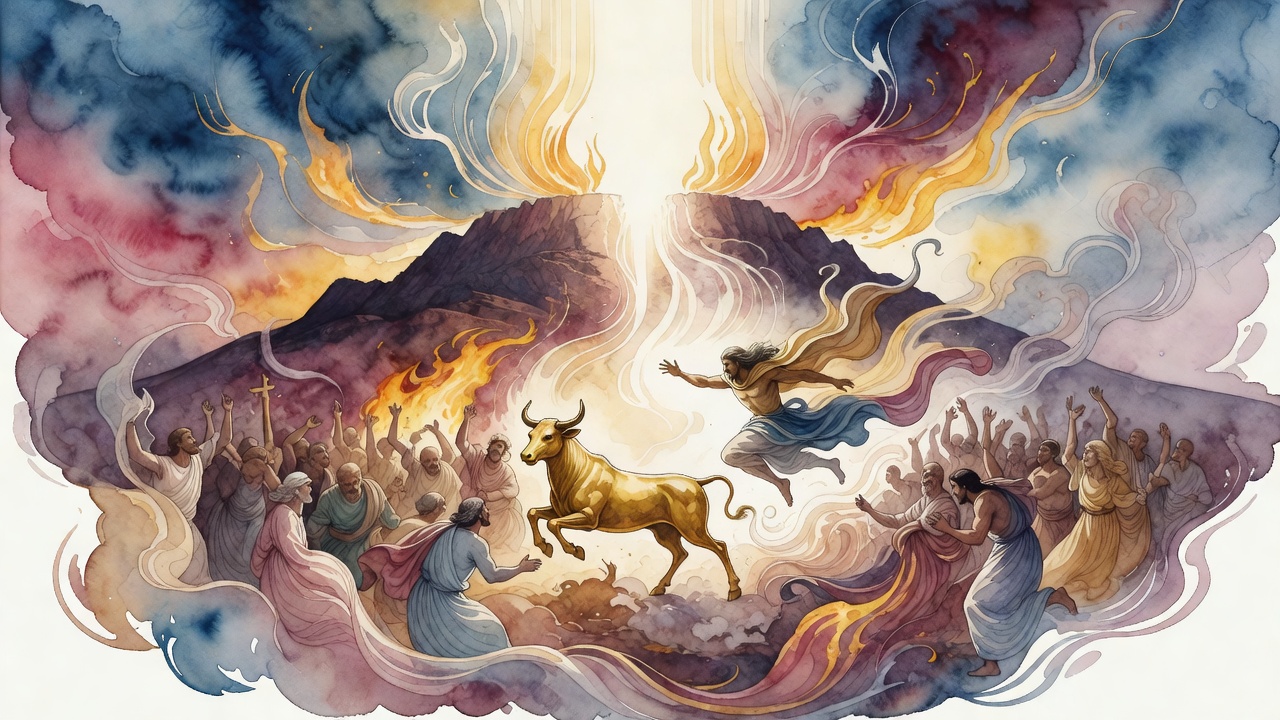
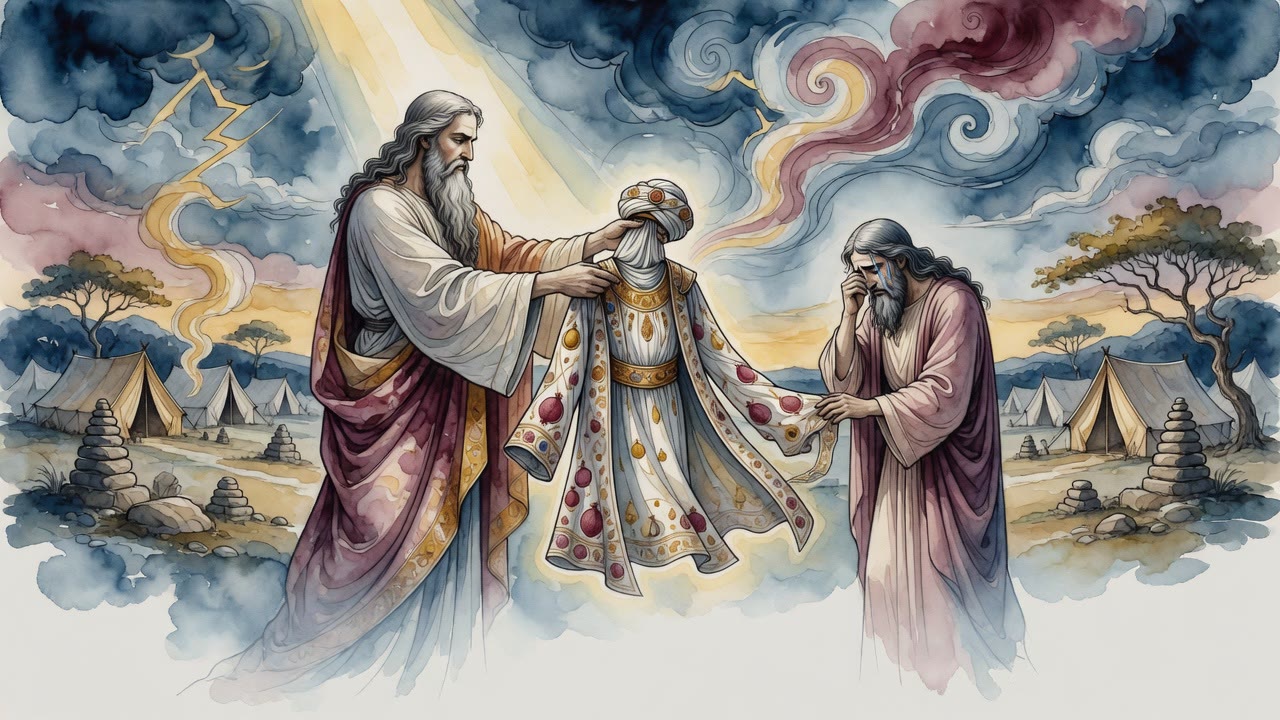
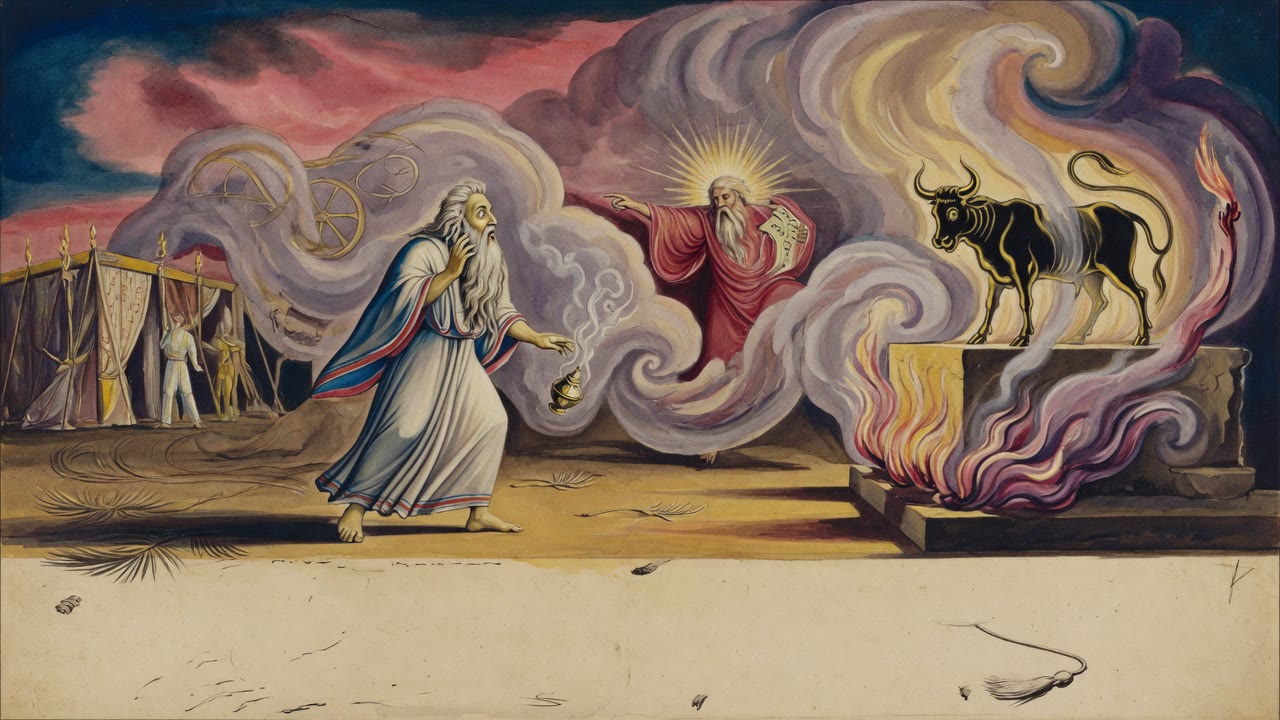
On the eighth day of consecration, the first of Nisan, Aaron was supposed to walk forward and offer his first sacrifice as high priest. He had completed seven days of preparation. He was wearing the garments Moses had placed on him. The altar stood before him with the offerings waiting. He took a step toward it and stopped. The Targum Jonathan records what he saw: at the corner of the altar, the form of the calf. His own work. The Golden Calf he had built when the people demanded a god and Moses had not yet returned from the mountain.
Moses came to him and said: Take courage. Go near the altar, and do not be afraid. That is the version the Targum preserves. The Hebrew Bible does not mention Aaron's hesitation at all. The Targum had to invent this scene because it was the only explanation that made the narrative coherent. How could the man who built the idol become the man who stood before God to atone for idolatry? The answer the Targum provides is that Aaron never forgot what he had done. He saw it every time he approached the altar. Moses had to encourage him through it every single time.
What Aaron Had Seen Before the Calf Was Built
Aaron had been at Sinai. He had seen the fire and heard the voice. He had gone up the mountain with Moses, with Nadab and Abihu, and with seventy elders, and they had seen the God of Israel, and under His feet something like a pavement of sapphire stone, and they ate and drank there, in the presence of what they had seen. A man who had done that did not easily forget what God was.
When the people came to him demanding a visible god to lead them because Moses had been gone too long on the mountain, Aaron tried to delay. He suggested he would build the altar himself, in person, hoping to slow things down long enough for Moses to return. He asked the people to bring the gold from the ears of their wives and children, calculating that they would refuse, that the request would buy time. They did not refuse. They stripped the gold from their families and brought it to him in armloads. He melted it down. The calf came out of the fire. The later tradition attributed what emerged not to Aaron's hands alone but to a gold plate that Moses had used to call Joseph's bones up from the Nile, a plate engraved with the image of an ox, which had fallen into the molten gold and shaped what came out of it. The blame was distributed across generations that way. Aaron was still implicated.
The Man Who Died Because He Said No
Hur was Miriam's son, the grandson of Caleb, and he had been left in charge alongside Aaron while Moses was on the mountain. When the crowd gathered and demanded the idol, Hur stood against them. He refused them and rebuked them. The tradition records that the people killed him for it. They killed him before they went to Aaron, and Aaron knew that if he refused as Hur had refused, his own life would end the same way. Betzalel, who would later build the entire Tabernacle from gold and silver and acacia wood, was Hur's grandson. God gave him the commission for the Tabernacle, the traditions say, specifically as a compensation for Hur's death. The master craftsman who built the holy dwelling was connected by blood to the man who had died trying to prevent the unholy one.
Forty Days While Moses Argued in Heaven
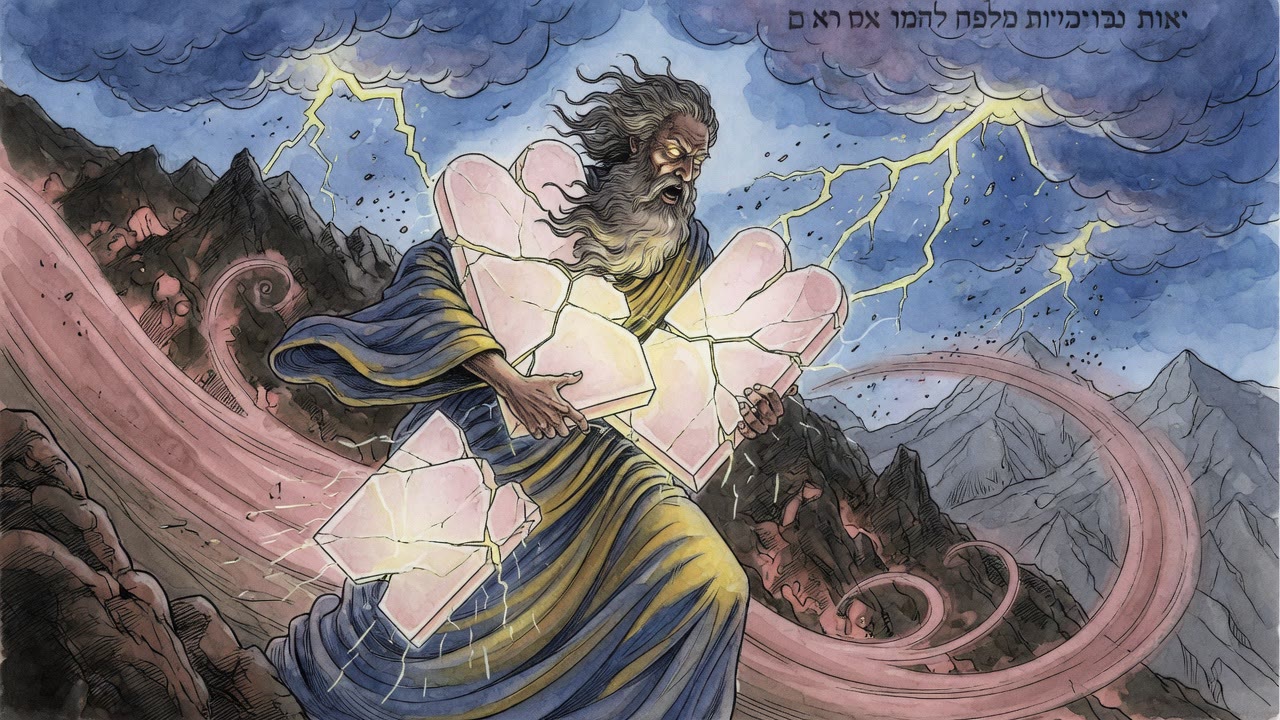
When Moses came down from the mountain and saw the calf and the dancing, he threw the tablets and shattered them. The tradition says the ocean itself threatened to burst its boundaries when the tablets broke, because the Torah is what holds the world's structure in place, and its desecration shook the foundations. Moses ground the calf to powder, mixed it with water, and made the people drink it. Then he went back up the mountain and stayed there for forty days, from the eighteenth of Tammuz to the twenty-eighth of Av, arguing with God against the annihilation of Israel.
None of his arguments worked at first. Not the argument from the Patriarchs. Not the argument from Egypt's mockery if the people were destroyed in the wilderness. Not any of the appeals he tried during the first three weeks. Then he invoked the merit of Abraham, Isaac, and Jacob specifically, naming the promises God had made to each of them, and God relented. The people were forgiven, collectively, though the punishment remained in the accounting, to be spread across future generations whenever God visited their transgressions. Aaron was forgiven too. He was appointed high priest. The altar was built. And when he approached it for the first time, the calf was waiting for him at the corner, and Moses told him not to be afraid.
← All myths