5 min read

Moses Broke the Tablets and Carried the Pieces

Moses shattered the first tablets at the Golden Calf, but the broken stone was not thrown away. The fragments traveled with Israel.

Curated by Arthur · Told by Maggid ·
Table of Contents
  1. The Sea Threatened to Come Back
  2. The Anger Had a Price
  3. Bezalel Corrected the Order
  4. The Cloud Moved Over the Ark

The first tablets hit the ground before Israel had finished dancing.
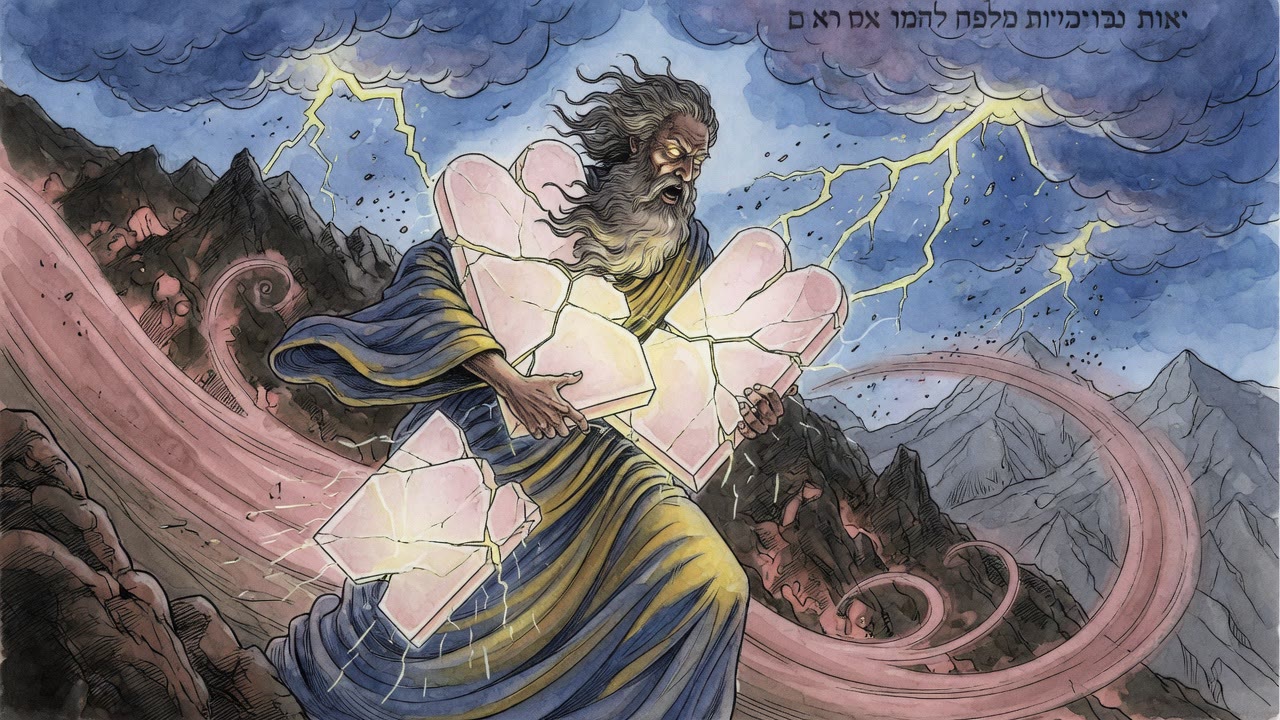
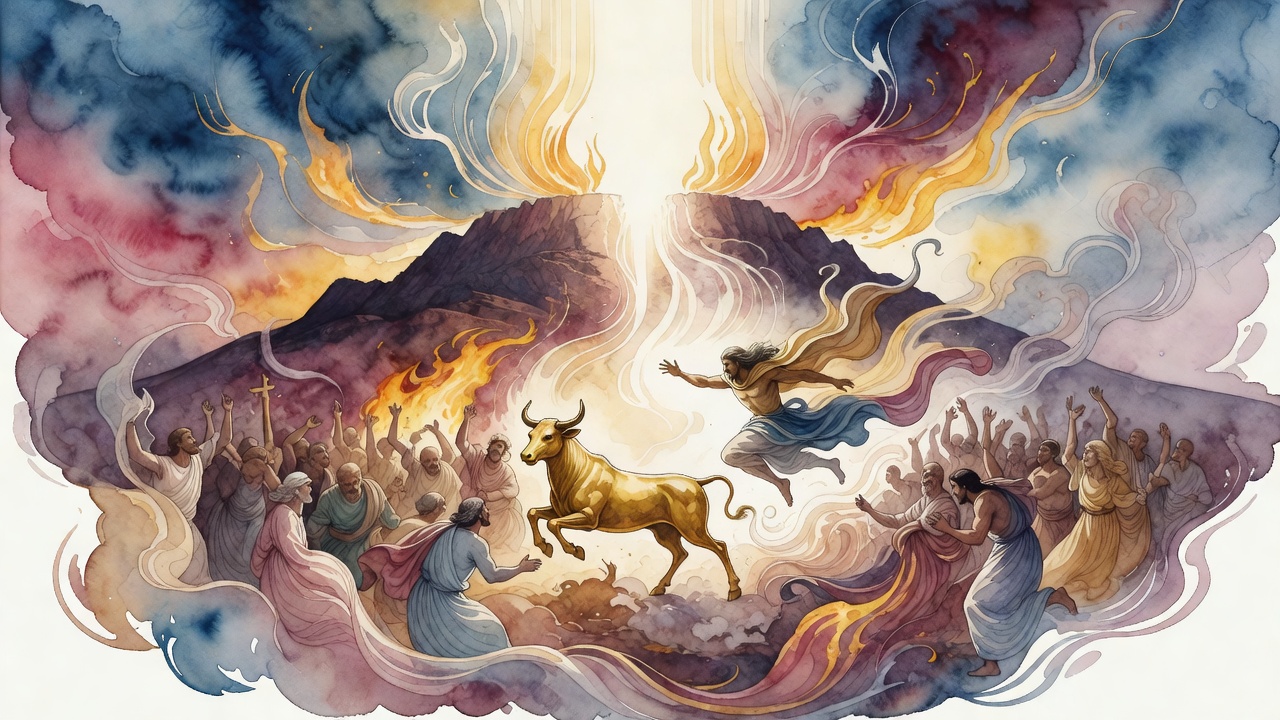
Moses came down from Sinai carrying stone written by God, and below him the camp had turned gold into a calf. Music rose. Bodies moved. The covenant lay in his hands while the people celebrated its betrayal. His anger caught fire, and the stone left his grip.

The tablets broke.

The Sea Threatened to Come Back

The breaking did not stay local.

Hardly had the fragments scattered before the deep itself began to threaten the world. The ocean pressed upward, ready to burst its limits and flood everything. Creation had stood on Torah, and now the people who received Torah had turned from it. The waters had an argument. If Israel would not keep the covenant, why should the old boundaries hold.

Moses had shattered the tablets, but now he had to keep the world from shattering after them.

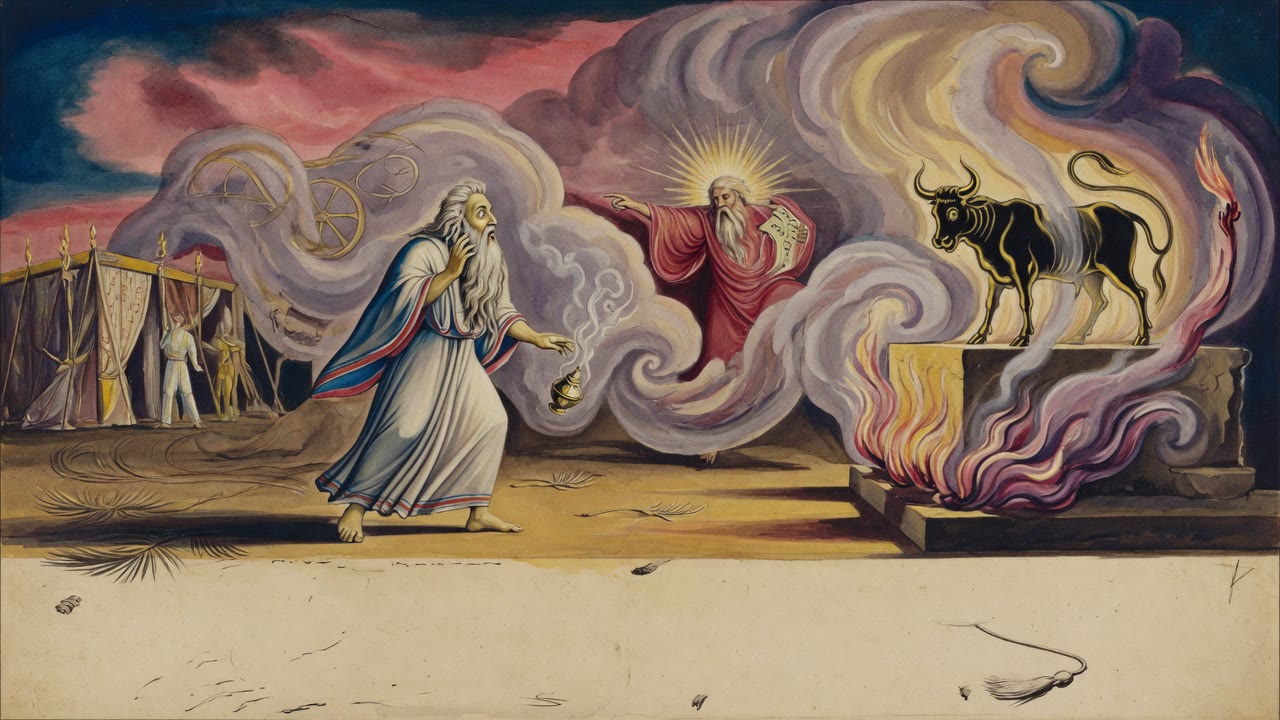
He burned the calf. He ground it down. He scattered it into water and made Israel drink what they had worshipped. The idol entered their bodies as bitter evidence. Gold that had been lifted as a god became dust in the throat.

The waters withdrew from their accusation. The world remained.

The Anger Had a Price

He had been right to be furious, but fury still leaves marks.

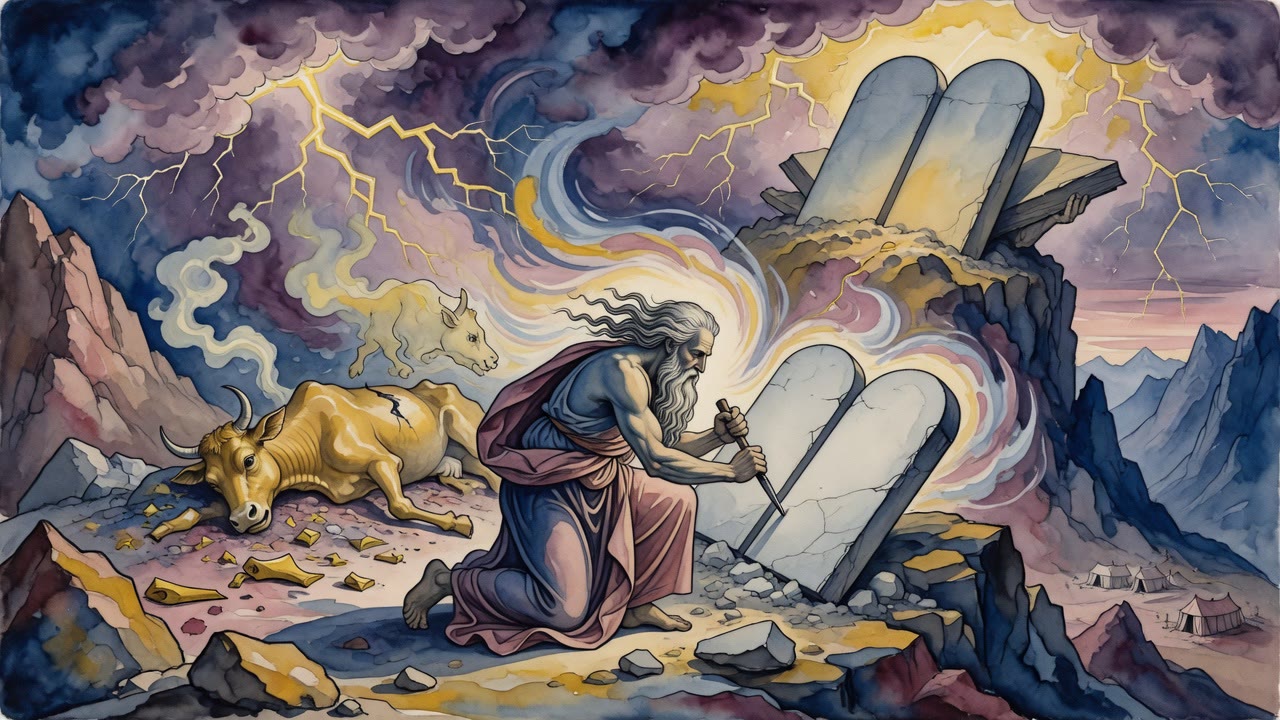
When God later said, "Carve for yourself two tablets like the first," the sages heard consequence in the command. Moses had cast the first tablets from his hands. Now he would have to carve the second. The new stone would come through his labor. Anger may be righteous, but it can still make a man carry tools.

The second tablets did not erase the first. They stood beside them as repair stands beside ruin. The first set was divine gift, broken in the sight of sin. The second set was divine writing placed on stone Moses had cut. One came whole and was shattered. The other began with human effort after damage had already entered the camp.

The fragments did not stop being holy because they were fragments. Brokenness changed their form, not their origin. The first tablets had still been written by God. Their pieces still carried the shock of Sinai, the terror of the calf, and the cost of a leader's necessary anger.

Israel would live with both memories.

Bezalel Corrected the Order

Then came the house that would carry the tablets.

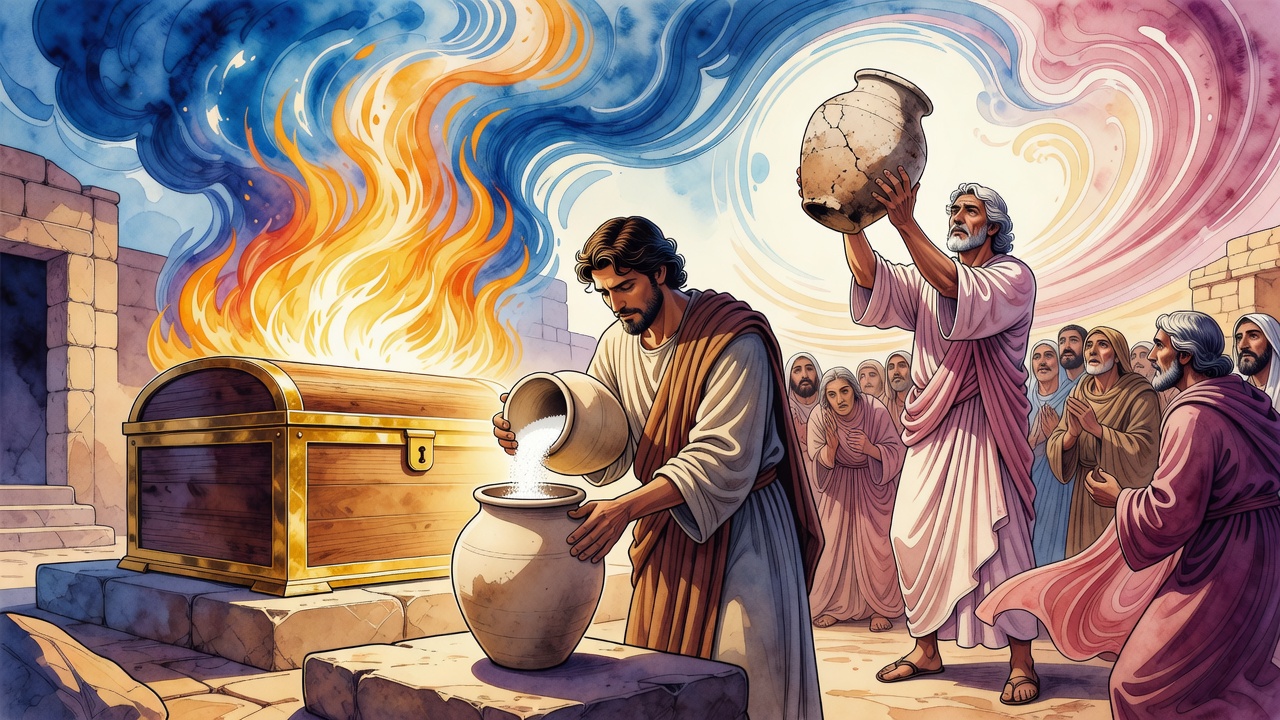
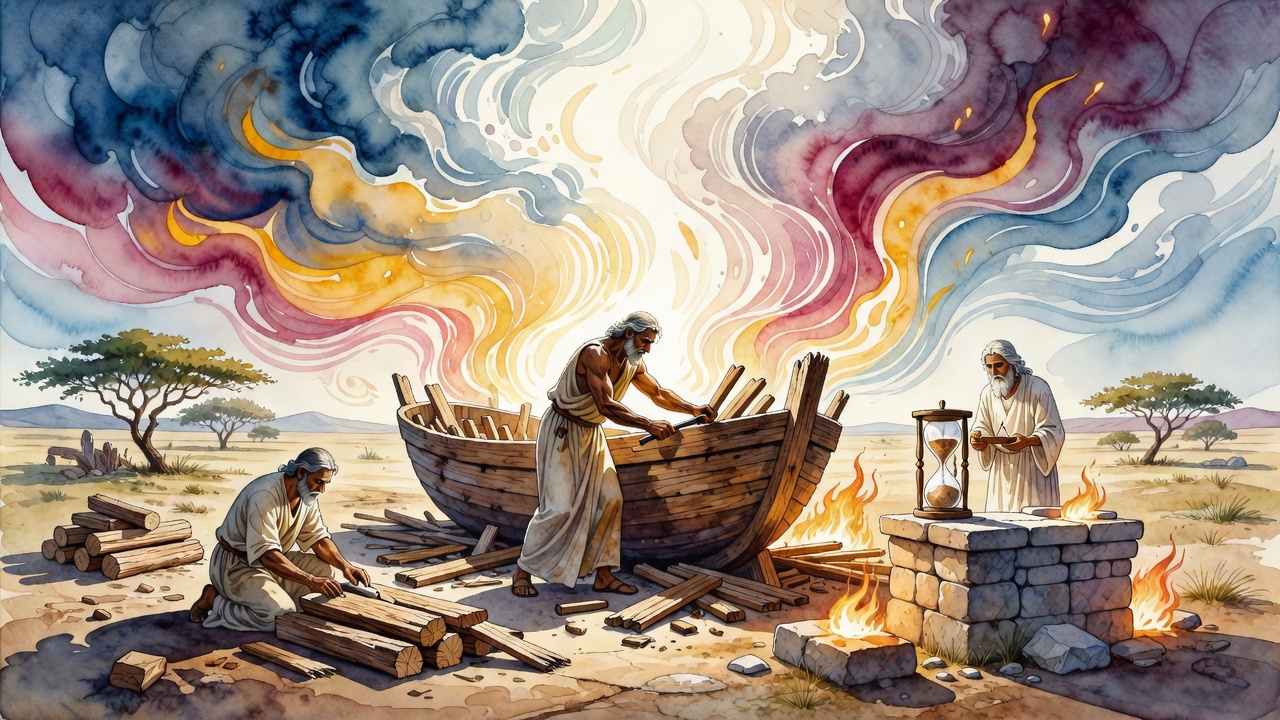
God instructed Moses about the Tabernacle, the Ark, and the vessels. Moses tested Bezalel by reversing the order, telling him to build the Ark first and the house afterward. Bezalel did not bow his head and pretend confusion was obedience. "A person builds a house first," he said, "and then places vessels inside it. Where will the Ark stand if there is no dwelling."

Moses heard the correction and recognized the source of its wisdom. Bezalel had stood in the shadow of God, as his name implied. The craftsman saw the shape of the command because he knew what a house is for. Holiness needs a place to rest, and the Ark needs a chamber before it can be carried from chamber to camp.

The Cloud Moved Over the Ark

Once the Ark was made, it did not sit like furniture.

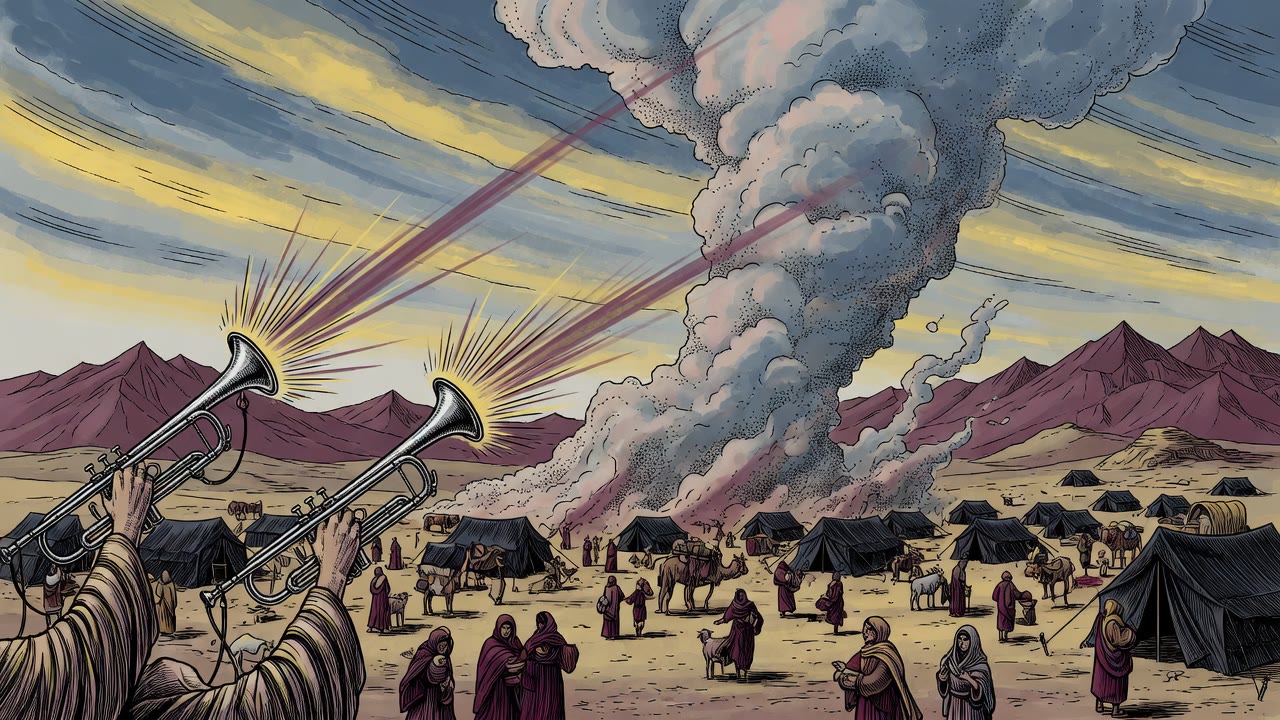
When God wanted Israel to move, the cloud over the Ark shifted. Within it shone the letters yod and he, and the standards of the tribes answered. Priests saw the movement and sounded the trumpets. Myrrh and frankincense moved through the air as the camp prepared to travel.

But even then the people did not move until Moses spoke.

The Ark was at the center, but the camp still needed a human voice to turn sign into motion. Cloud could rise. Letters could shine. Fragrance could run through the air. Israel waited until Moses gave the word, because the people who broke the tablets still had to learn how to walk after the repaired covenant.

Inside the Ark lay the second tablets, and with them the memory of the first broken stone. The camp crossed the wilderness carrying both covenant and fracture. Israel did not hide the pieces. The fragments traveled with them, because a holy people is not made by pretending nothing ever broke. It is made by carrying the break under cloud and command until the road opens again.


← All myths
From the tradition

Sources

4 sources

The texts this telling draws on, in full. Open a card to read inline, or expand it for a wider, quieter read.

Legends of the Jews 2:109Legends of the Jews

The familiar story is this: Moses is up on Mount Sinai, receiving the Torah, and the Israelites, impatient and doubting, melt down their gold and fashion a false idol. Moses descends, sees the idolatry, and in a fit of righteous anger, shatters the tablets.

What happened next is where things get truly wild.

In Legends of the Jews, (Ginzberg), hardly had Moses broken those tablets when the ocean itself – the very foundation of the world as they knew it – threatened to burst forth and flood everything. Imagine! The cosmos itself reacting with fury to Israel’s betrayal.

Why? Because the Torah, the divine instruction, is what holds everything together. As we find in Midrash Rabbah, the world stands only through the observance of the Torah. And with Israel’s unfaithfulness, the waters argued, the very reason for creation was undermined.

So, what did Moses do? This is where the story takes a turn that’s both bizarre and strangely logical. Moses took the Golden Calf, burnt it to ashes, and then, in a move that seems straight out of a mystical thriller, "strewed it upon the water." It wasn’t just symbolic. He then challenged the waters, essentially asking: "What do you want from the dry land?"

The waters, personified in this legend, responded with the chilling truth: "Israel has not been faithful to it [the Torah]." Talk about cosmic drama!

Moses, ever the mediator, then makes a grim offer. He declares that all who committed idolatry would be given to the waters. "Are you now satisfied with these thousands?" he asks. He's essentially saying, "Here, take the guilty."

But even that wasn't enough! The ocean remained enraged and refused to retreat. The ocean only calmed after Moses forced the children of Israel to drink of the water mixed with the ashes of the Calf. Talk about a bitter draught of repentance.

What are we to make of this strange tale? It's more than just a story about punishment. It highlights the profound connection between human actions and the very fabric of reality. It suggests that our choices, our faithfulness (or lack thereof), can have cosmic repercussions.

It makes you think, doesn't it? What "calves" are we worshipping? And what waters are we stirring up as a result?

Full source
Devarim Rabbah 3:14Devarim Rabbah

We all have. But have you ever stopped to consider the consequences, not just for those around you, but for yourself?

The Book of Deuteronomy, or Devarim in Hebrew, is full of wisdom. And the Sages, in their commentaries like Devarim Rabbah, unpack those lessons in ways that really resonate. Devarim Rabbah 3 tells a powerful story about anger, consequences, and second chances, all centered around Moses, our great leader.

The verse in question is, "Carve for yourself." Sounds straightforward. But the Sages see so much more. They connect it to another verse, from Ecclesiastes: "Do not be hasty in your spirit to become angry, as anger abides in the bosom of fools" (Ecclesiastes 7:9). Who, the Rabbis ask, was it who became angry?

Well, it was Moses. Remember the story? He comes down from Mount Sinai, clutching the two Tablets of the Covenant, only to find the Israelites worshipping a golden calf. His reaction? Pure, unfiltered rage. "Moses' wrath was enflamed and he cast the Tablets from his hands" (Exodus 32:19).

Can you picture it? The Tablets, symbols of God's covenant with the Israelites, shattered on the ground. A devastating moment.

And here's where the Midrash, the interpretive tradition, really gets interesting. The Holy One, blessed be He, confronts Moses. "So, Moses, do you vent your fury on the Tablets of the covenant? Do you seek that I will vent My fury, and you will see that the world will be unable to endure for even one hour?" God is essentially saying, "Your anger was destructive. Imagine what My anger could do." It's a chilling thought.

Moses, humbled, asks, "What can I do?" And God responds with a consequence: "I will impose a penalty on you: You shattered them, you replace them." Hence, "Carve for you two Tablets of stone."

So, what's the takeaway? It's not just about Moses's mistake. It's about us. Our anger, our reactions. The Sages are reminding us that anger, while a natural human emotion, can have devastating consequences. Moses, even in his greatness, wasn't immune.

But there's also a message of hope. Even after such a profound lapse in judgment, Moses is given a second chance. He's tasked with recreating what he destroyed. This speaks to the power of teshuvah (repentance), of repentance and return. We all make mistakes. The key is to learn from them, to take responsibility, and to rebuild what we've broken.

The story of Moses and the Tablets is more than just a biblical narrative. It's a timeless lesson about the destructive power of anger and the redemptive power of second chances. It challenges us to examine our own reactions and to strive for a more measured, compassionate approach to the challenges in our lives. Because, as the story suggests, sometimes the hardest work is not building something new, but rebuilding something we ourselves have shattered.

Full source
Legends of the Jews 3:7Legends of the Jews

He was the master craftsman chosen to bring the Tabernacle to life. A true artist, filled "with the spirit of God, with wisdom, with understanding, with knowledge and with all kinds of skills" (Exodus 31:3). But was he just a really good technician? Or something more?

The story goes that God gave Moses very specific instructions: First, build the Tabernacle itself, that sacred space. Then, create the Aron HaKodesh, the Holy Ark, to house the Ten Commandments. And finally, craft all the furnishings that would fill the Tabernacle (Exodus 25-31).

Moses, being Moses, decided to test Bezalel. You know, just to make sure God picked the right person. So, he tells Bezalel to do things in reverse order. "First," Moses says, "build the Ark. Then make the furnishings. And then build the Tabernacle itself."

Being Bezalel in that moment. Would you just blindly follow orders?

Bezalel doesn't. He challenges Moses! He says, "Moses, our teacher, that's not how it works! People build the house before they fill it with furniture. What am I supposed to do with all these sacred objects if there's no Tabernacle to put them in?" for a second. It wasn't just about following instructions. Bezalel understood the logic of creation, the natural order of things. He grasped the underlying principle.

Moses, of course, is thrilled. He realizes Bezalel isn't just a craftsman; he's a true partner in creation. He immediately admits, "You're right! That's exactly how God commanded. Were you perhaps 'in the shadow of God' (b'tzel El, a play on Bezalel's name), that you knew this?" (as the story is told in Ginzberg's Legends of the Jews, based on various Midrashic (rabbinic interpretive commentary) sources).

This little story, packed with meaning, found in several sources, including Midrash Tanchuma, isn't just about the construction of the Tabernacle. It's about the nature of true wisdom. It's about understanding the divine plan, not just executing it.

It makes you wonder, doesn’t it? Are we just following instructions in our own lives, or are we striving to truly understand the bigger picture? Are we building the house before we fill it with furniture?

Full source
Legends of the Jews 4:37Legends of the Jews

Legends of the Jews turns to Pillars of Fire and Cloud of Moses.

The Talmud, specifically in Sifrei Bamidbar (Numbers) Piska 84, tells us that when God wanted Israel to move, the cloud that hovered over the Ark – the Ark containing the luchot, the tablets of the Ten Commandments – would shift. This wasn’t just any cloud; within it shone the Hebrew letters Yod and He, part of God’s sacred name. And the four strips of cloud above the tribal standards would follow suit.

The sight: these luminous letters, leading the way!

When the priests saw these clouds in motion, they knew it was time. They'd blast the trumpets – the shofarot – signaling the entire camp to prepare for departure. And get this: as they started to move, winds would carry the scent of myrrh and frankincense from all directions!

But here's where it gets even more interesting. Even with these celestial signals, the people wouldn't move without Moses' say-so. As Ginzberg recounts in Legends of the Jews, before starting out, the pillar of cloud would actually shrink and wait before Moses.

He would then utter the powerful words: "Rise up, Lord, and let Thine enemies be scattered; and let them that hate Thee flee before Thee." Only then, would the pillar of cloud begin to move. This verse, from (Numbers 10:35), became a powerful expression of faith and reliance on God's protection.

It was the same drill when they were setting up camp. The pillar of cloud would contract, waiting for Moses to speak. This time, he would say: "Return, O Lord, unto the many thousands of Israel." (Numbers 10:36).

According to Midrash Rabbah, only after these words were spoken would the cloud expand first over the tribes associated with the standard of Judah, and then over the Mishkan, the Sanctuary, both inside and out, signifying God's protective presence over the entire community.

So, what does this all mean? It's more than just a colorful story about ancient travel arrangements. It speaks to the intimate relationship between God, Moses, and the Israelites. It highlights the importance of both divine guidance and human leadership. It reminds us that even miracles require participation, a willingness to listen, and the faith to move forward, even when the path ahead is uncertain. What "clouds" are guiding you, and what words do you need to say to set them in motion?

Full source