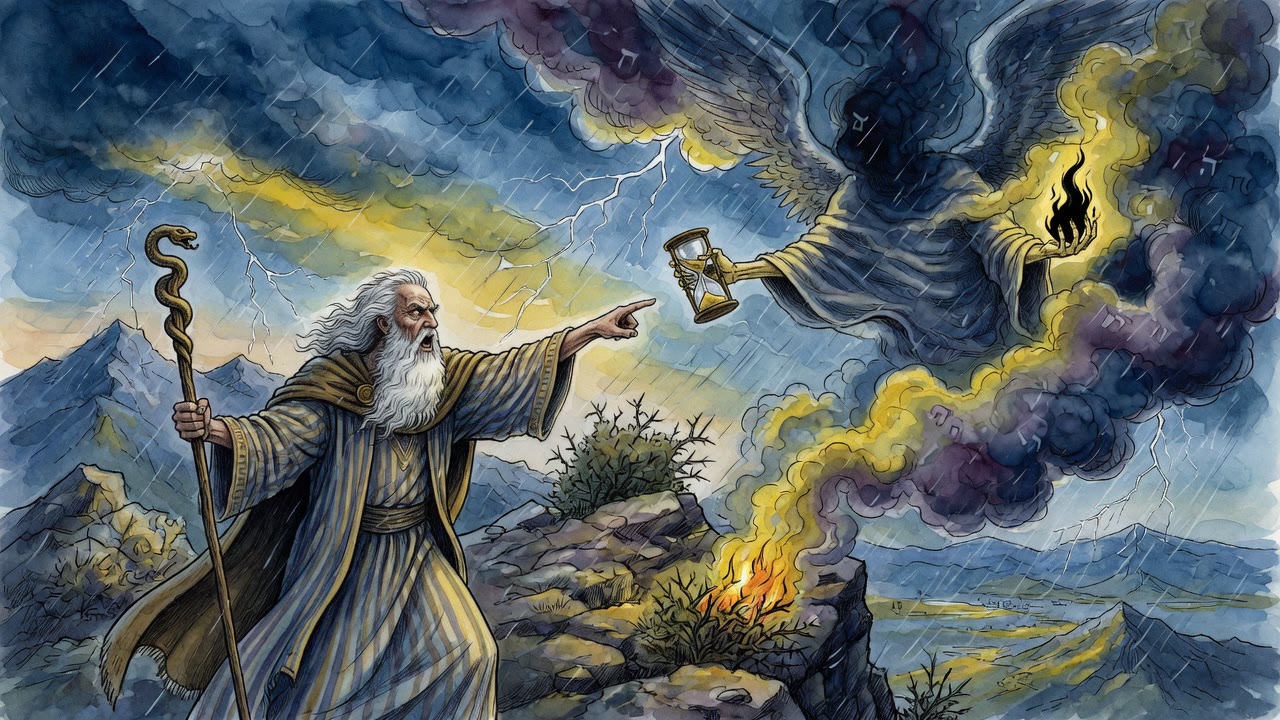
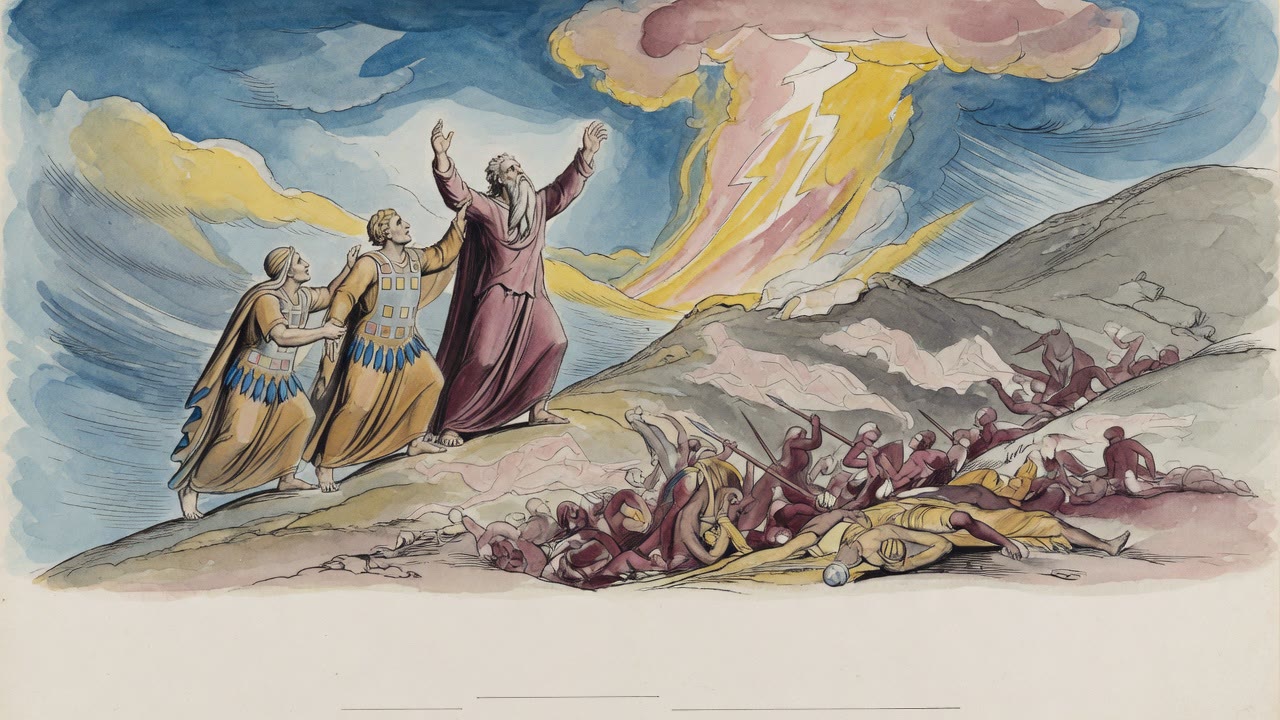
The Cloud Stood Still and Waited for Moses to Speak
The pillar drew itself small and stopped at Moses' face. Six hundred thousand waited in the dust. The cloud would not move until he asked it to.
Table of Contents
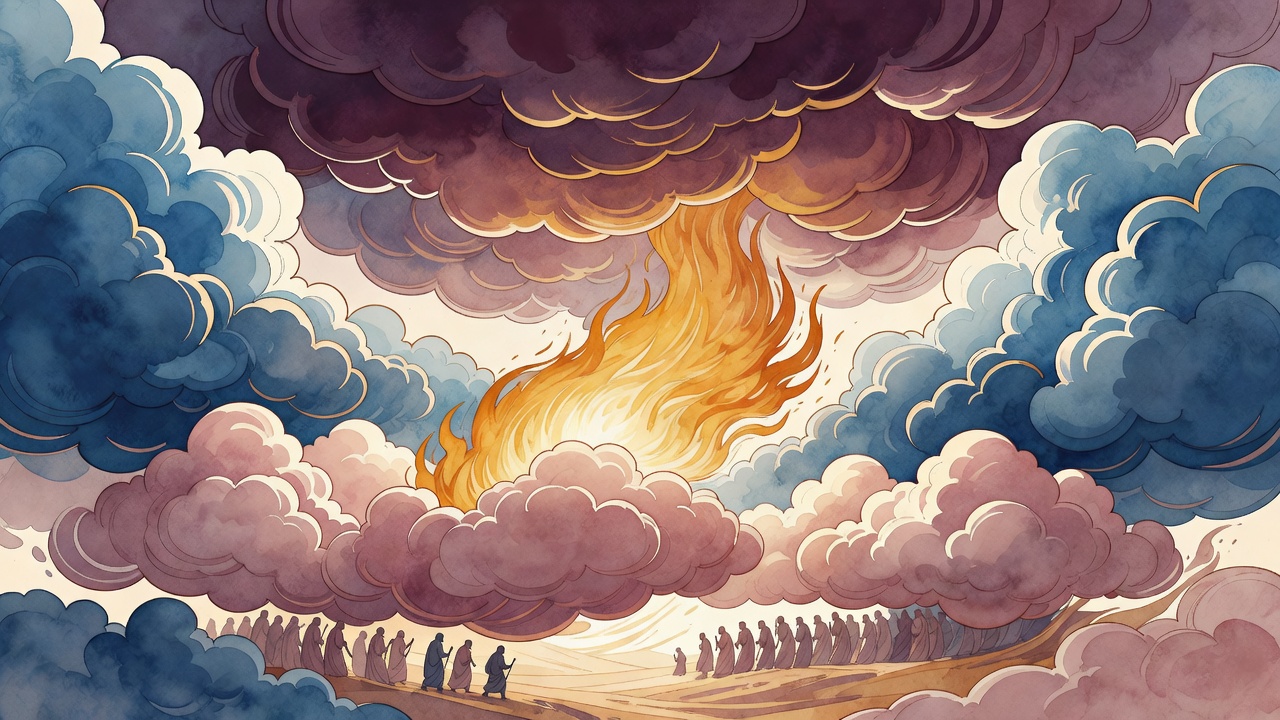
The pillar shrank. It drew itself in and came to a stop directly in front of Moses and held there. Six hundred thousand fighting men, and their families, and their cattle, stood in the dust and waited with it. The thing that leveled mountains would not take one step until a man opened his mouth.
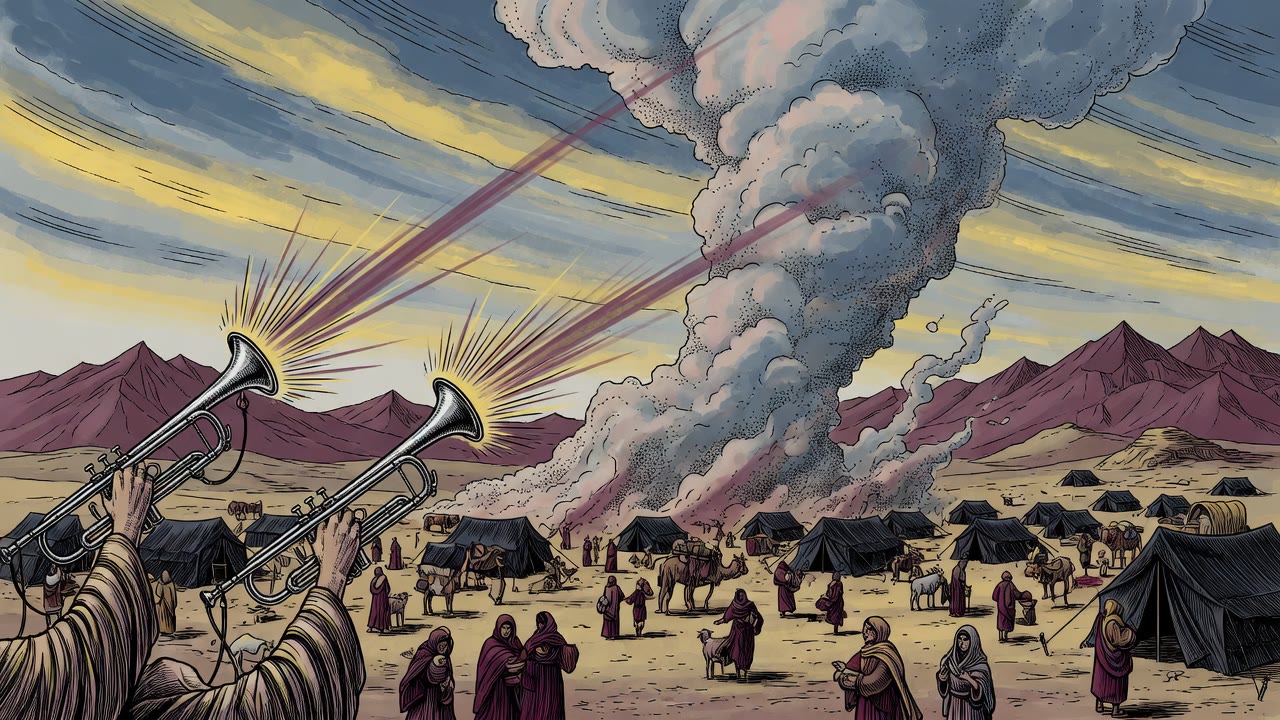 Click for full size
Moses looked at the contracted cloud. It waited the way a servant waits, which is a strange posture for a pillar of the Presence. He had to speak first.
Rise Up, Lord
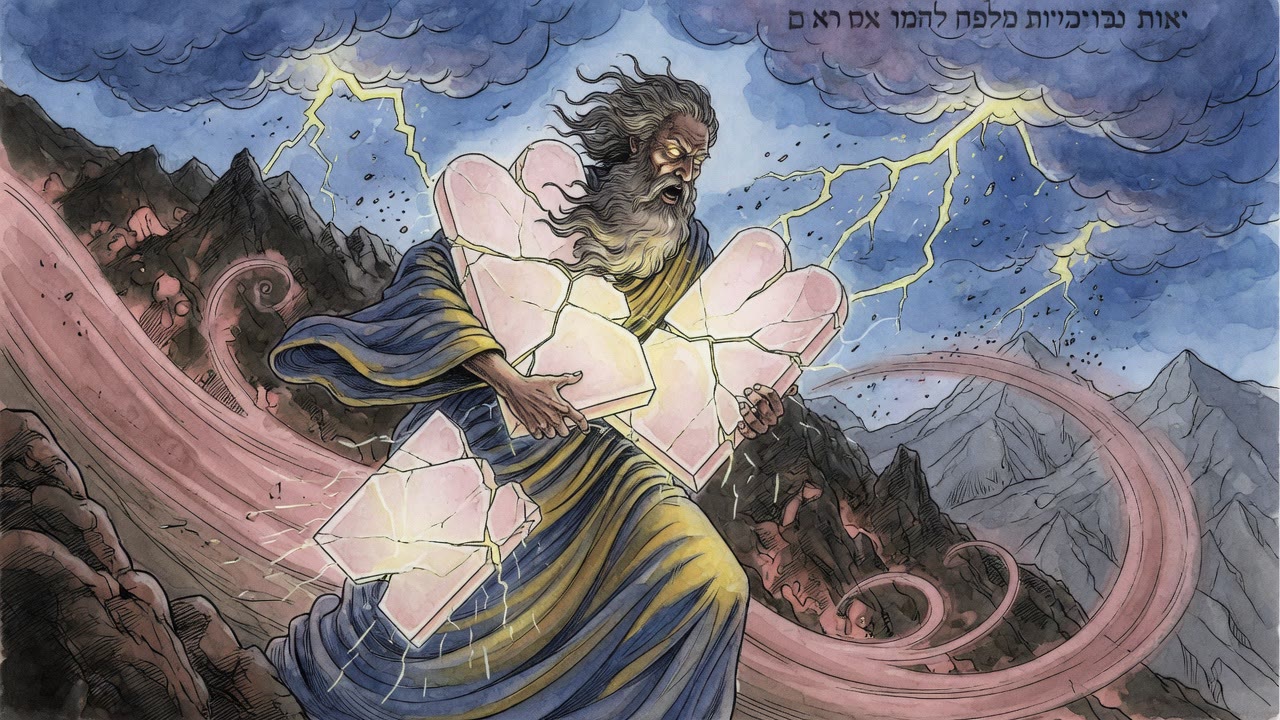
He said the words. "Rise up, Lord, and let Your enemies be scattered, and let those who hate You flee before You." Only then did the pillar start.
The cloud over the Ark, the one with the two letters on it, lifted off and turned in the direction Israel was to march. The four lettered arms came away from the golden hooks and followed it. The priests watched for that. The moment they saw the clouds go, they put the trumpets to their mouths and blew, and the four winds came in from every side of the earth carrying myrrh and frankincense over the camp. The whole nation went up out of the wilderness inside a column of smoke that smelled like a king's storeroom.
When the marching was done the pillar did the same thing in reverse. It contracted and stood in front of Moses again. A nation waited. He said, "Return, O Lord, to the many thousands of Israel." Then it spread out, first over the tribes under Judah's banner, then over the sanctuary, inside and out.
Every camp, every march, forty years. The cloud that dressed their children and lit the night still needed a human mouth.
Seven Clouds and Four Banners
There were seven clouds and each had a job. One went in front. One came behind. Two stood on either flank. One lay overhead against the sun and the cold. One ran ahead of the whole procession flattening the high ground and filling in the low ground so that nobody stumbled walking.
The seventh was the strange one.
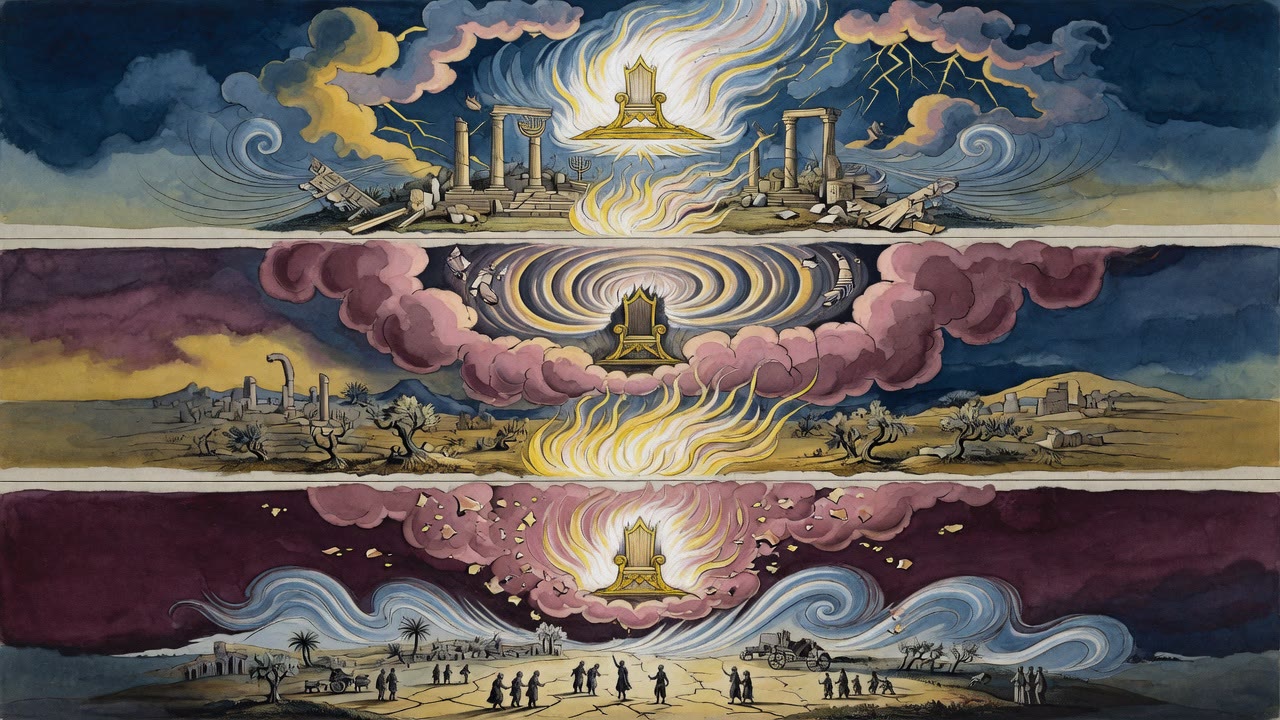
Four standards stood over that camp. Judah in the east, with a lion on the banner. Reuben in the south, a man holding mandrakes. Ephraim in the west, a fish. Dan in the north, a serpent. Out of the top of each banner came hooks of gold that narrowed to a point like a pike, and on those points rested one arm of the seventh cloud. Three letters were cut into each arm, one taken from Abraham, one from Isaac, one from Jacob, and the light of the Shechinah (שכינה), the divine presence, burned inside the letters so they could be read at a distance.
That accounted for twelve letters. One was left over, the He that God had taken out of His own name and given to Abram to make him Abraham. That one went on the cloud above the Ark, and all week long that cloud walked the circuit of every camp in Israel, giving light like the sun while it was day and like the moon after dark, so that a person out there could still tell one from the other.
Moses could lift his face and read the fathers' letters on the arms of cloud. The camp was not guessing its way through sand. It was being carried, letter by letter, and still the carrier stopped at his mouth.
The Well That Drew the Lines
Miriam's well sat by the entrance to the court, near Moses' tent, and it told the tribes where to stop. When the curtains of the court went up, the twelve pillars around the well sang, and the water came up out of the ground and swelled into a river.
That river split. Four channels ran out to the four corners of the court, and from there the water spread through the camp of the Levites and out around the whole nation, running between one family and the next, between one tribe and the next, so that every household knew exactly where its ground ended without a single argument about it. The banks grew spices. People lay down on the herbs and the smell traveled, and the water itself tasted like the food of the world to come.
From the tabernacle curtains the rivers picked up the color of the blue dye, and lay across the wilderness like water at first light. Foreign nations saw it from a long way off, a shining thing in the desert with a whole people standing in the middle of it, praising God. Who are these, they said, looking at us out of the wilderness. Fear fell on them, and dread, and they did not come closer.
Sleeves That Kept Up With the Boys
A boy woke in that camp and his wrists were not past his sleeves. The cloth had stretched in the night as he had stretched. Nobody's coat ever got dirty either, because the clouds went over them and cleaned them, and forty years of walking in the same clothes in the desert left nobody smelling of it.
Later, Rabbi Eleazar put the question to Rabbi Simeon the way a student asks about a hole in a story. When Israel came out of Egypt, did they bring weavers with them?
"No," Rabbi Simeon said.
"Then what did they wear for forty years?"
"The ministering angels clothed them."
"But the children grew."
"Look at the purple snail," Rabbi Simeon said. "Its shell grows while it grows." The camp had lived inside that mercy without naming it. Moses had lived inside it too. The clothes grew. The well drew lines. The clouds leveled the ground. And still the pillar would not move until he asked.
The Cloud That Let Nothing Through
Generations later another man stood outside a burning city with the same word in his mouth and it meant the opposite thing.
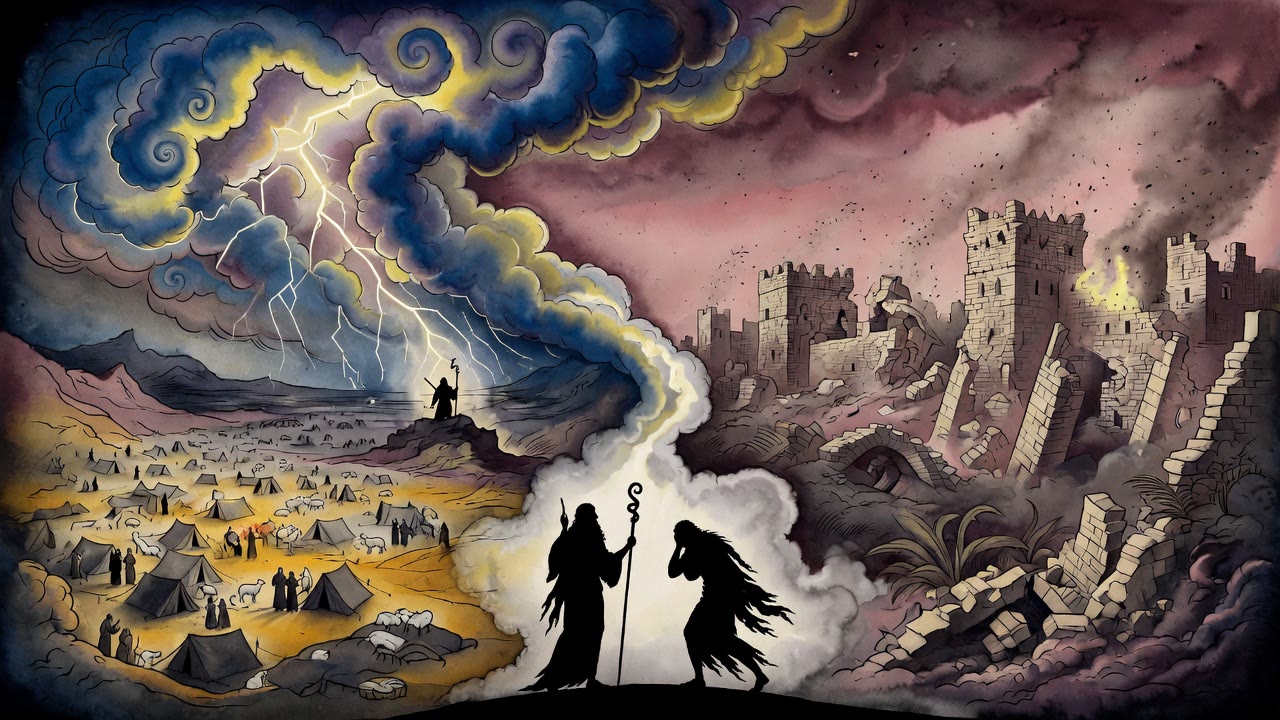
Jeremiah had watched the walls come down and the sanctuary burn and the people go east in ropes. He sat in the rubble and prayed, and the prayer did not arrive. He said so plainly. You have wrapped Yourself in a cloud, so that no prayer gets through (Lamentations 3:44).
Same cloud. Same word for it. In the wilderness it had stood in front of Moses and waited to be told where to go. Over Jerusalem it hung there and let nothing pass, and there was nobody left whose voice moved it.
Moses had spoken, and six hundred thousand had stepped. Jeremiah spoke, and the ash did not answer. The pillar that once contracted at a man's face now screened heaven from a man's mouth.
← All myths