Parshat Naso5 min read

God Stands Behind the Priests Who Bless

Israel wanted blessing straight from heaven. God put the priests in front and stood behind their raised hands.

Curated by Arthur · Told by Maggid ·
Table of Contents
  1. Order Written to Stop a Fight
  2. Hands That May Not Rise
  3. Israel Objects to the Middle Man
  4. The Transmission Holds

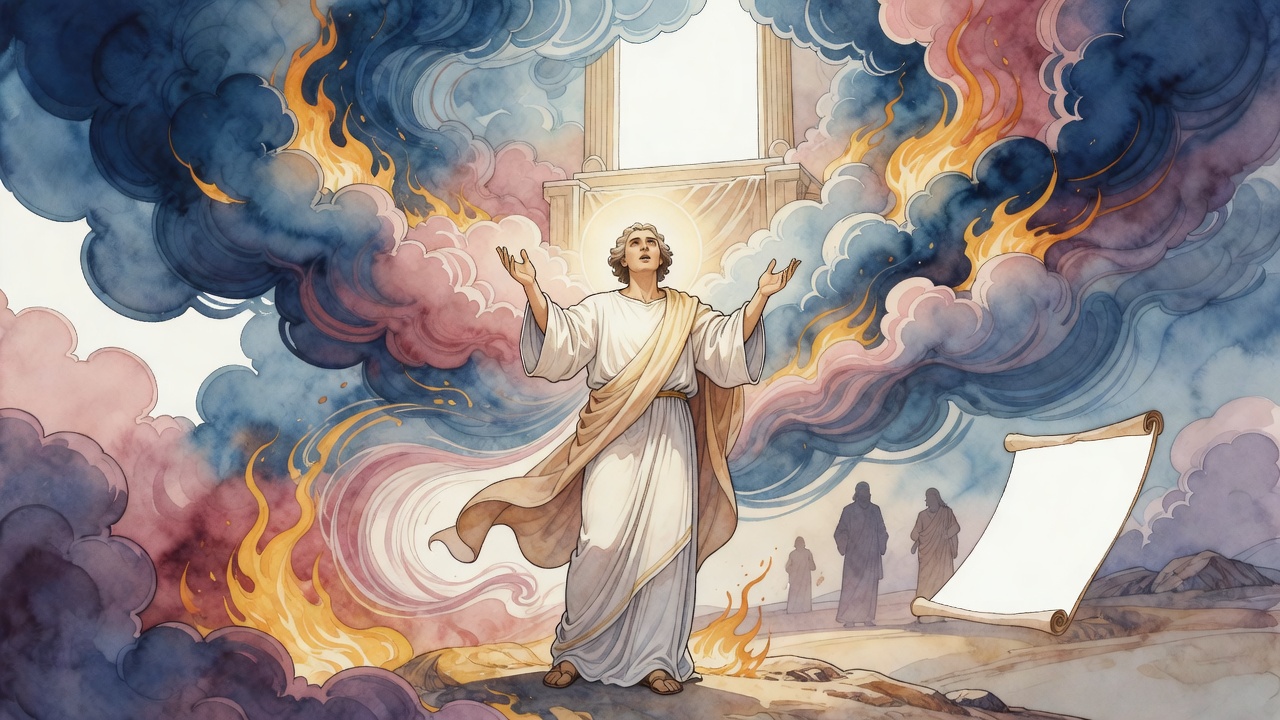
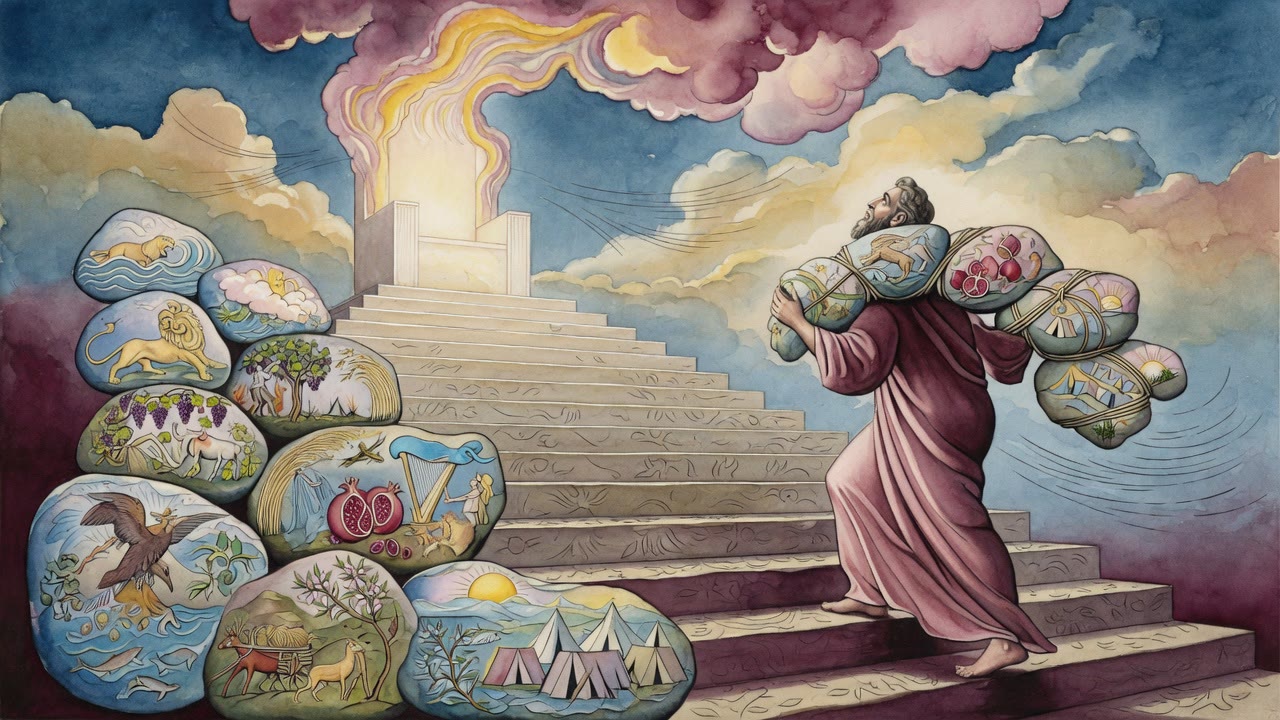
The boards were finished. The sockets set. The whole work of the Tabernacle lay complete in the camp's hands, and still no one raised it. They brought the Tent to Moses the way workers carry a finished tool to the only man who knows the last turn (Exodus 39:33). Cloth and gold waited in stacks. Moses stood in the middle of a gift that would not stand until he moved.
God Stands Behind the Priests Who Bless Click for full size

Peace was already the hidden hinge. Without it, the Sanctuary would only become another quarrel.

Order Written to Stop a Fight

When the Torah is read, the priest reads first, then the Levite, then the ordinary Israelite. The masters fixed the sequence for the sake of peace, so no man in the row would shove for honor while the scroll lay open. The rule was not flattery. It was a fence. Fix the order and the room stops arguing about who steps up. Elbows stay down. The scroll stays clean of bloodless rivalry.

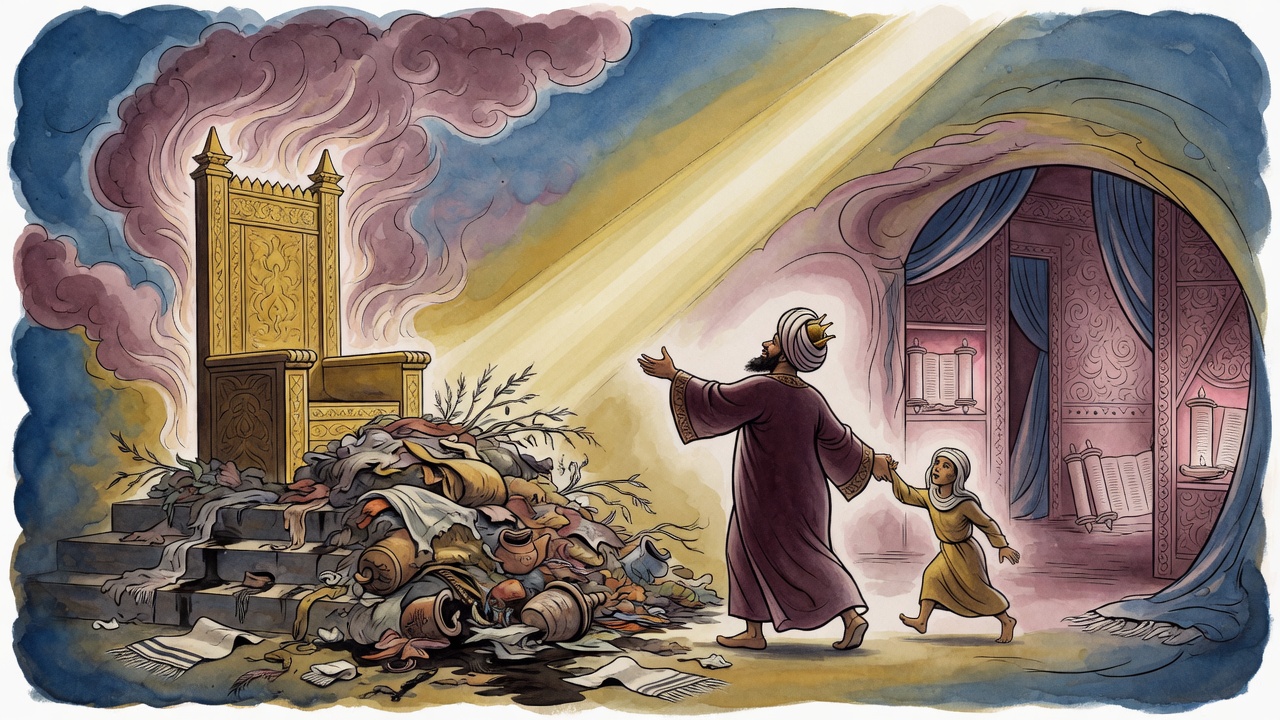
The same care reached past Israel's border. When the people drew near the territory of Lot's children, God told Moses not to provoke Moab or contend with them in battle (Deuteronomy 2:9). Kinship held the sword down. Peace was not a soft mood. It was ordinance and restraint, written into who speaks first and who is spared a war. Moses received the completed Tent under that pressure: a house for God that would split the camp if honor ran free, and a border that would split blood if kinship were forgotten.

Hands That May Not Rise

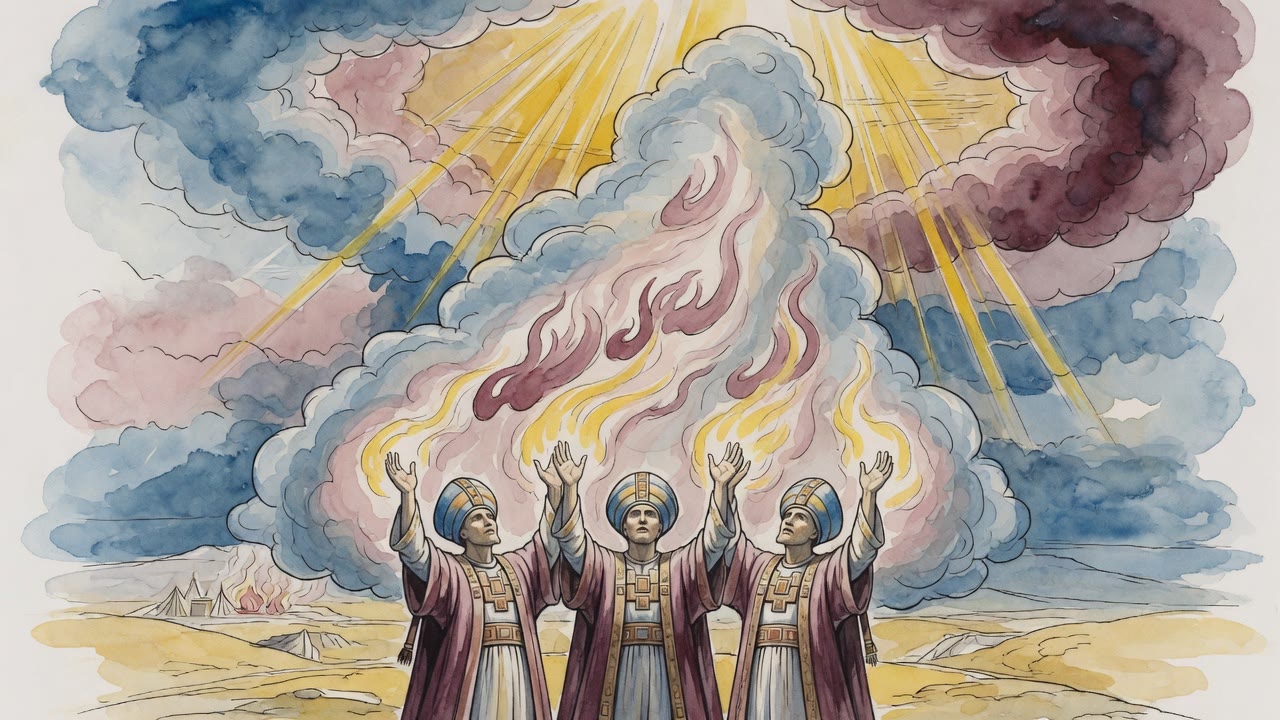
God spoke to Moses. Speak to Aaron and his sons. Thus shall you bless the Children of Israel (Numbers 6:22-23). The blessing left heaven's mouth and entered priestly mouths. From now on the priests would raise their hands over the people.

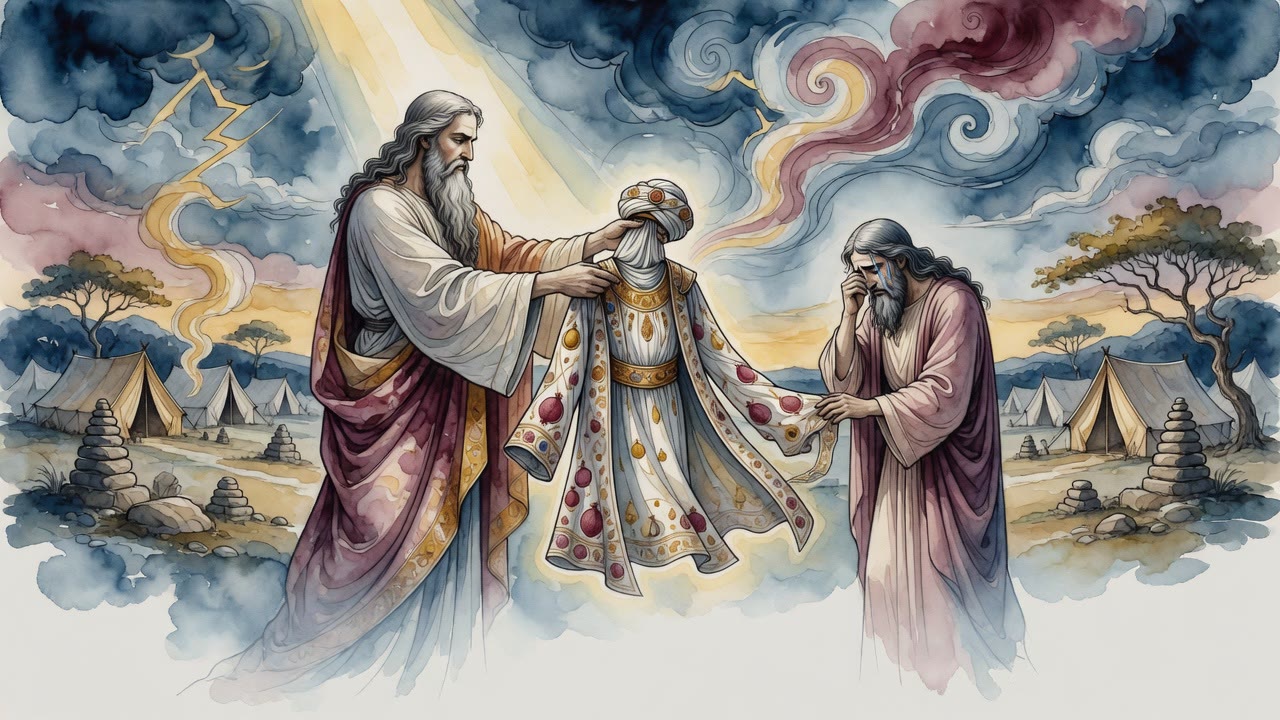
Not every priest. A man with blemished hands could not lift them. Rabbi taught that a blemish anywhere barred the raising. Stains of woad or madder on the fingers barred it too, because the people would stare at the dye instead of hearing the words. In towns where most men worked dye or purple hides, the stained hands were allowed, because no eye would fix on the color as a spectacle. The body of the blesser had to disappear enough for the blessing to pass. A ruined hand stayed down. A purple hand in a purple town rose with the rest.

Aaron learned the shape of the hands. Fingers split. Palms forward. A living screen between the people and the sky. He practiced the stance until the joints knew it without thought, because the moment of blessing would not wait for a man to remember his fingers.

Israel Objects to the Middle Man

The congregation pushed back. Master of the world, You tell the priests to bless us. We need only You. Look down from Your holy dwelling and bless Your people (Deuteronomy 26:15). They did not want a human throat between them and the voice that had split the sea. They wanted the direct look from heaven, not a cousin's fingers in the air. The argument rose from the same camp that had carried boards to Moses: give us the Presence without the go-between.

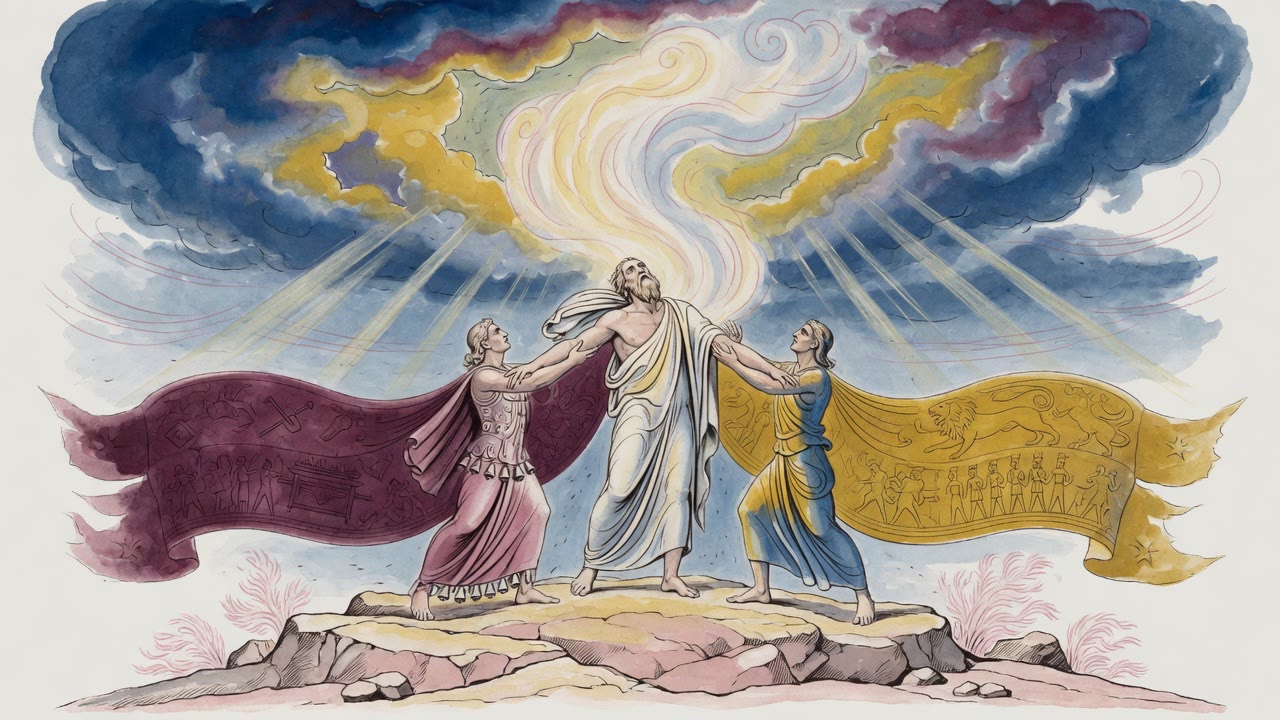
God answered without taking the command back. Although I have told the priests to bless you, I am standing along with them and blessing you. That is why the priests spread their hands: the gesture says the Holy One stands behind the wall of flesh. Behind our wall, as the Song puts the lover (Song of Songs 2:9). The people still faced human palms. Behind those palms, unseen, God took His place and spoke the same blessing through and past the men He had charged.

Israel could not dismiss the priests. The priests could not claim the power as their own. The hands rose. The Presence stood in the gap. The objection died without a ruling against Aaron. It died because heaven refused to leave the platform empty.

The Transmission Holds

From the beginning God had blessed His people Himself. From the day of this charge, the blessing moved into Aaron's line, with God refusing to step out of the room. Moses cautioned them. Thus shall you bless. Not invent. Not withhold. Not turn the raised hands into a private throne.

In the synagogue the priest still steps first to the reading. In the duchan the fingers still split. A man with ruined hands stays down so eyes will not snag on the wound. A dyer in a town of dyers may rise because no one is watching color. Through all of it the same claim holds. The wall of fingers is thin. What stands behind it is not.

Moses had received a finished Tent from a people learning peace. Aaron raised hands over a people who had tried to refuse him. God stood in the space neither side could own, and the blessing went out over heads that had argued for a clearer sky and received instead a living screen with heaven at its back. The boards waited for raising. The hands waited for the words. The Presence waited behind both.


← All myths
From the tradition

Sources

2 sources

The texts behind this telling. Some cards carry a translation of the source; others are our own retelling of it, and each card says which. Every card links out to the original.

Midrash Tanchuma, Pekudei 10Midrash Tanchuma

Retold in our words. Read the original at the link below.Townsend 1989 translation of Midrash Tanhuma, S. Buber Recension · CC-BY

And they brought the Tabernacle to Moses (Exodus 39:32). This homily from Midrash Tanchuma on the portion of Pekudei opens, as the Tanchuma often does, with a halakhic question posed to the masters: what things were ordained for the sake of peace? The verse about bringing the completed Tabernacle to Moses becomes the doorway to a meditation on how the law itself is shaped to preserve harmony among Israel.

The masters teach that the following was instituted for the sake of peace. When the Torah is read in the synagogue, the priest reads first, then the Levite, and only afterward the ordinary Israelite, because fixing this order forestalls the quarrels over honor and precedence that would otherwise arise. That is the path of peace, a settled rule sparing the community the strife of each man claiming his place. The homily then shows how precious peace is in the sight of the Holy One, blessed be He, even toward the nations. When the time came for Israel to enter the land and they drew near the territory of the descendants of Lot, God said to Moses, Do not provoke Moab, neither contend with them in battle (Deuteronomy 2:9), sparing them out of regard for the bond of kinship. The stake of the teaching is that peace is not merely a sentiment but a principle woven into the very ordinances of the Torah, governing both the order of worship within Israel and the conduct of Israel toward others.

Full source
Midrash Tanchuma, Nasso 8Midrash Tanchuma

Retold in our words. Read the original at the link below.Townsend 1989 translation of Midrash Tanhuma, S. Buber Recension · CC-BY

(Numb. 6:22–23:) “Then the Lord spoke unto Moses, saying, “Speak unto Aaron and unto his children, saying, ‘Thus shall you bless the Children of Israel.’” Let our master instruct us: In the case of priest with a blemish, is it right for him to raise his hands (in the priestly blessing)? Thus have our masters taught (in Meg. 4:7): A priest whose hands are blemished may not raise his hands. But Rabbi taught, “A priest who has blemishes anywhere at all may not raise his hands.” R. Judah says, “Also whoever has his hands stained with woad, madder, or rubia may not raise his hands. Why? Because it is customary for people to be looking at him.” R. Joshua the Great taught, “If the majority of the men in the town are in that business (i.e., of dying cloth), he is permitted to raise his hands; in the same way that in the South, there are [many] hides that are tanned purple and their hands [with which they bless] are dyed.” The Holy One, blessed be He, said, “From the beginning I have blessed My people; from now on the blessings are transmitted to you. You are to bless My children,” Therefore the Holy One, blessed be He, told Moses to caution Aaron and his children to bless Israel. How is this shown? From what they have read [on the matter] (in Numb. 6:23), “Speak unto Aaron and unto his children, saying, ‘Thus shall you bless.’” (Numb. 6:23:) “Thus shall you bless.” This text is related (to Deut. 26:15), “Look down from Your holy dwelling, from the heavens, and bless Your people.” The congregation of Israel said to the Holy One, blessed be He, “Master of the world, You tell the priests to bless us. We only need You to bless us, as stated (Deut. 26:15), ‘Look down from Your holy dwelling, [from the heavens, and bless Your people].’” The Holy One, blessed be He, said to them, “Although I have told the priests to bless you, I am standing along with them and blessing you.” For that reason the priests spread their hands. [They do so] to say, “The Holy One, blessed be He, is standing behind us.” So also it says (in allusion to the Holy One, blessed be He, in Cant. 2:9) “there he stands behind our wall, gazing through the windows, peering through the lattice,” [i.e. “gazing through the windows,”] from between the fingers of the priests; “peering through the lattice,” when they extend their hands. It is therefore stated (in Numb. 6:23), “Thus shall you bless.”

Full source