5 min read

Aaron Climbs Mount Hor Knowing He Will Die

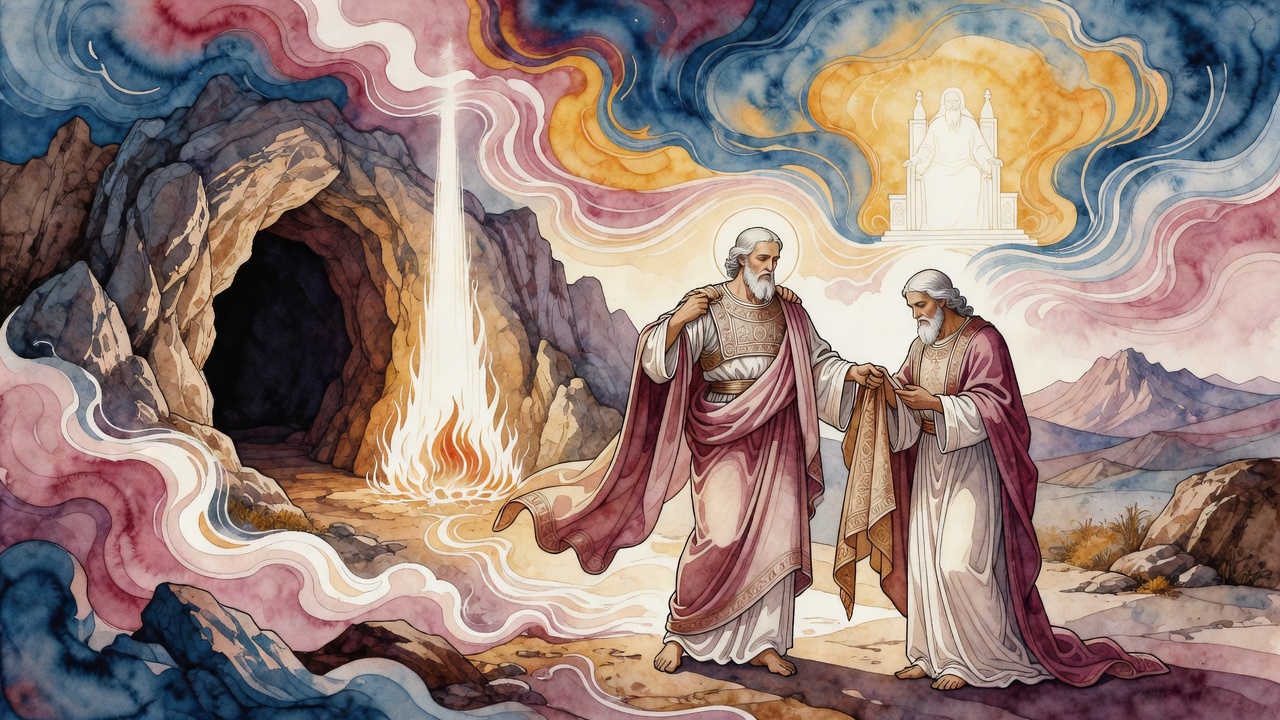
God tells Moses that Aaron will be gathered, and the high priest climbs the mountain to strip his garments and hand them to his son.

Curated by Arthur · Told by Maggid ·
Table of Contents
  1. The King Who Would Not Steal a Cloak
  2. At Your Command the Presence Rests
  3. God Stands Behind the Hands
  4. The Garments Come Off

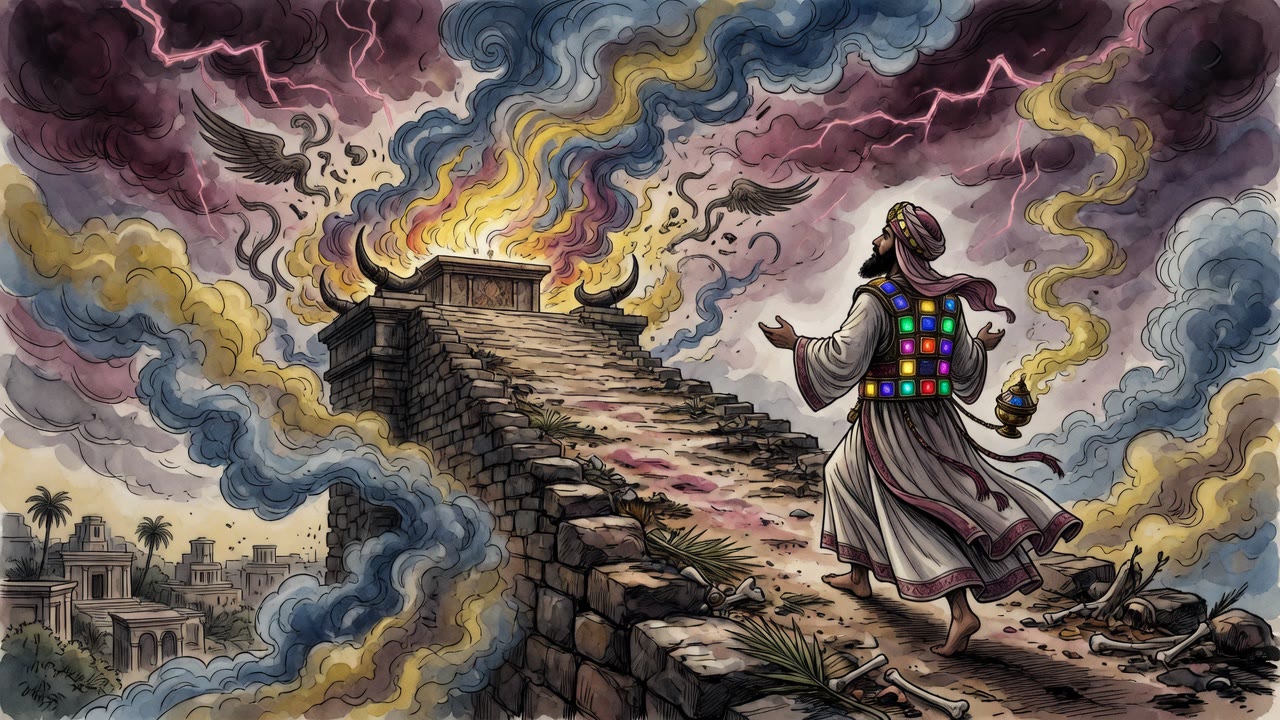
Aaron stood at the base of Mount Hor and already knew the day. The righteous are told when they will be gathered, so they can hand their crown to their children. Miriam had died without that public warning. Aaron would not. The Holy One said to Moses and to Aaron together, on the mountain's edge, that Aaron would be gathered to his people.
Aaron Climbs Mount Hor Knowing He Will Die Click for full size

Moses tried to bargain. Leave him alive, he asked, on the far side of the Jordan with Reuben and Gad. The answer came hard and clear. His death is required for the giving of the Land. Do you want him not to die, and them not to enter?

The King Who Would Not Steal a Cloak

The situation is like a king who has two ministers of finance, men who never act without his knowledge. One has left a beautiful garment with the king. The king needs the cloak, yet he will not put it on until he informs the owner. So the Holy One said of these two righteous men, Moses and Aaron: they have done nothing without My knowledge. Now that I take them, I will not take them without telling them.

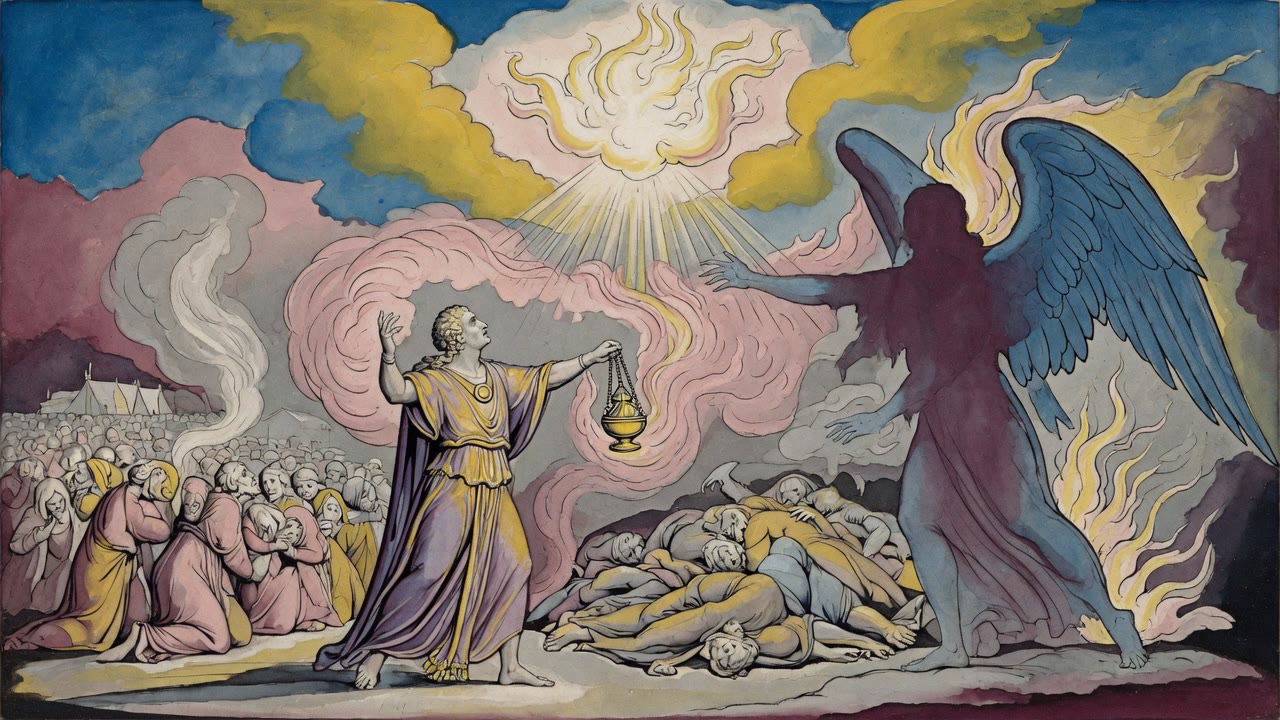
Aaron heard the notice and climbed. No ambush. No fever in a tent. A mountain path, a known end, a public stripping of garments so that Eleazar would wear what his father had worn. The priesthood moved from body to body in daylight, while Israel watched from below and understood that the man who had stood between them and plague was walking out of the world on purpose.

At Your Command the Presence Rests

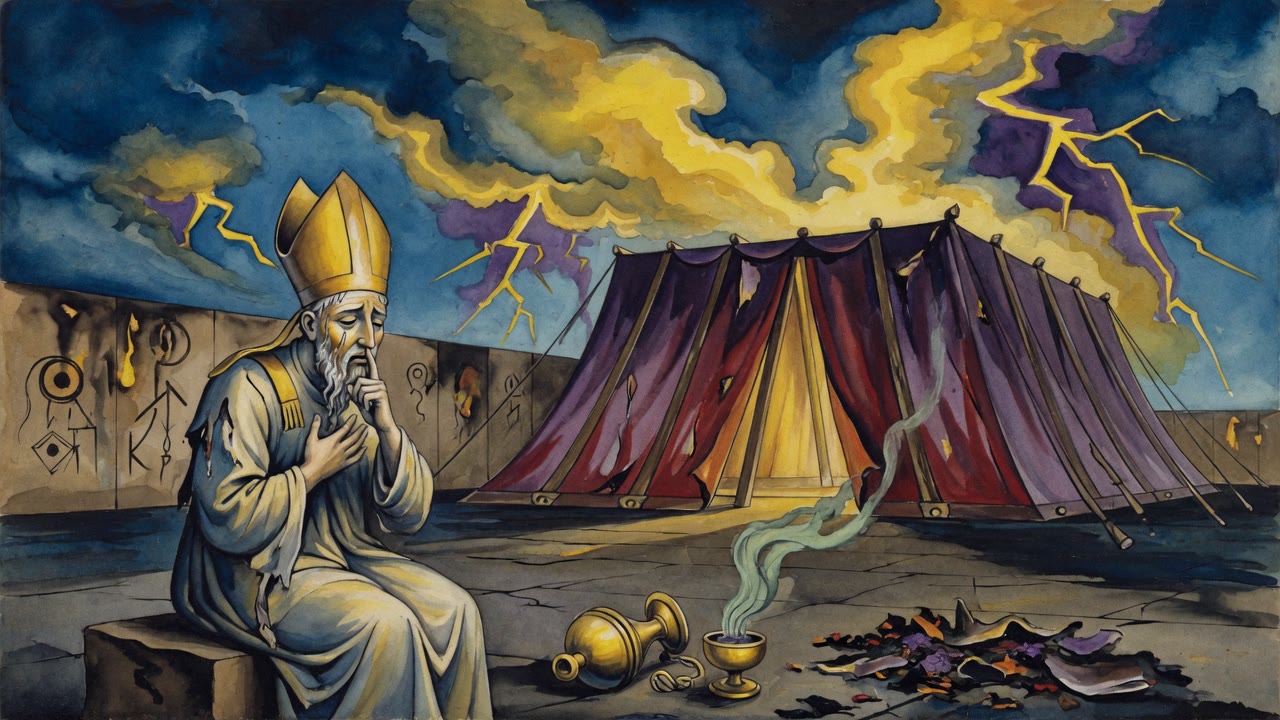
God once said to Aaron, as if answering Job's question about the eagle that mounts and nests on high: at your command I had My Divine Presence rest upon the ark, and at your command I removed it. The high priest's service was not theater. It was a lever on glory. When the first Temple held the Presence for a short lodging, and the second for a longer hold upon the Foundation Stone from which the world was founded, the man who entered still carried Aaron's office in his bones.

On the Day of Atonement that later heir would pray for rain and warmth and dew, for low prices and abundance, for a year when Israel would not be dependent on one another and would not grow arrogant. He watched the altar smoke. If it drifted south, the south would eat. If it rose straight, the whole world would have enough. Aaron's line read the weather of heaven from a column of ash. That line began its mortal turn on Mount Hor.

God Stands Behind the Hands

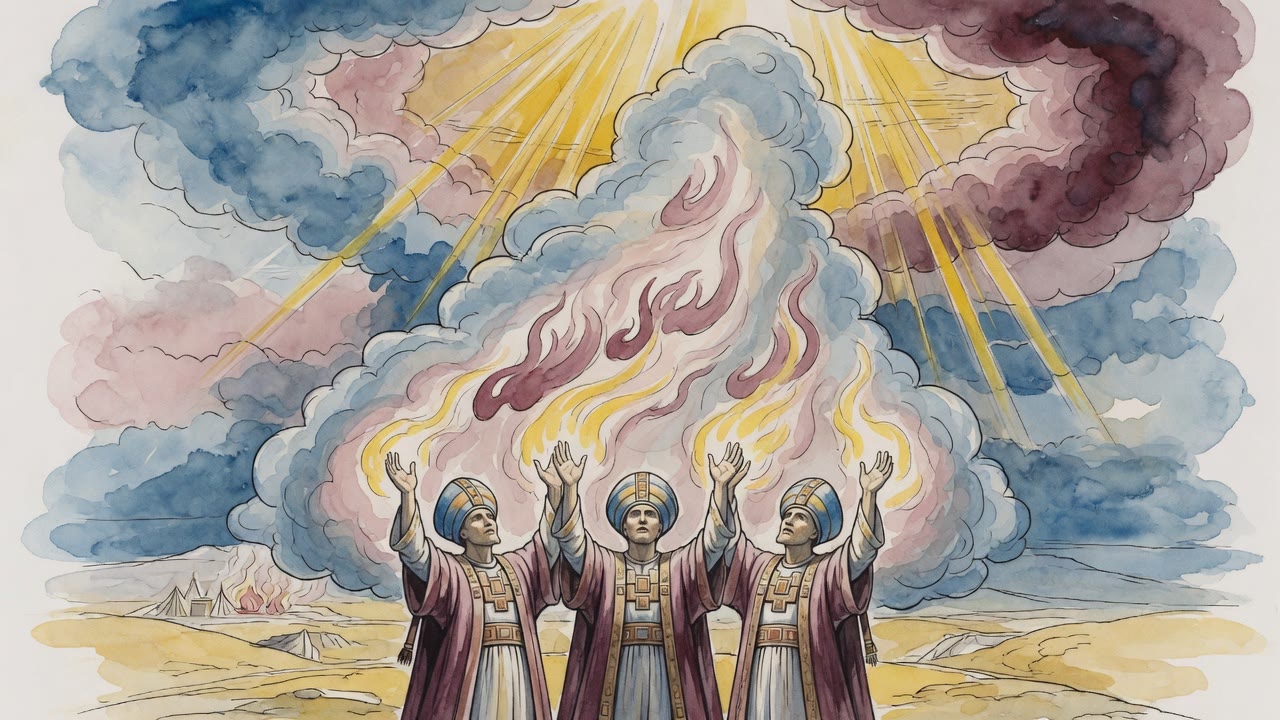
Before the mountain, God had already handed Aaron another kind of power. Speak to Aaron and his sons, He told Moses. Thus shall you bless the Children of Israel. Israel protested. We need Your blessing, not a human middle. God answered that He would stand with the priests and bless through them. That is why they spread their hands. The gesture says the Holy One stands behind us, gazing through the windows, peering through the lattice of fingers (Song of Songs 2:9).

A priest with blemished hands may not raise them, lest the people stare at the defect instead of the blessing. In towns where dyers stain every palm with purple, the rule softens, because no one gawks at what everyone shares. The office is careful about eyes. It is even more careful about the Presence that rides those raised hands.

Aaron climbed with that history on his shoulders. He had blessed a people who preferred God's direct gaze. He had worn garments that could be removed and given. He had stood so close to the ark that the Presence answered his service like an eagle answering a nest.

The Garments Come Off

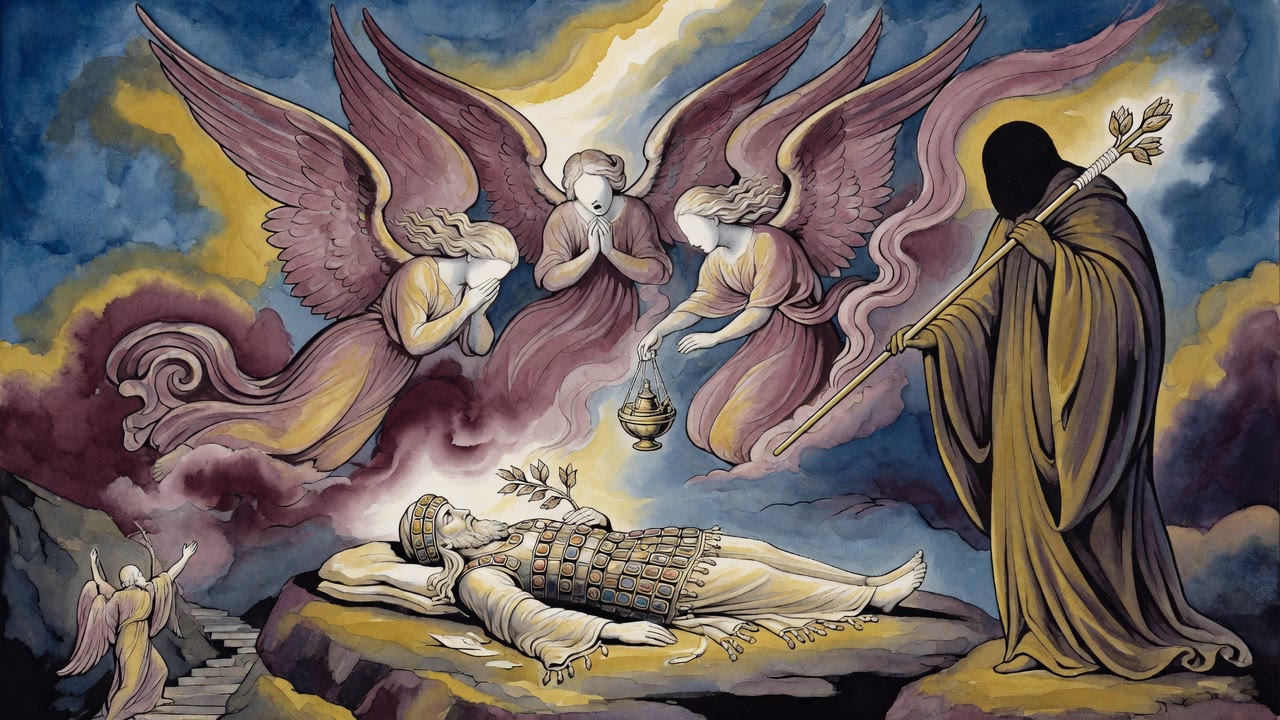
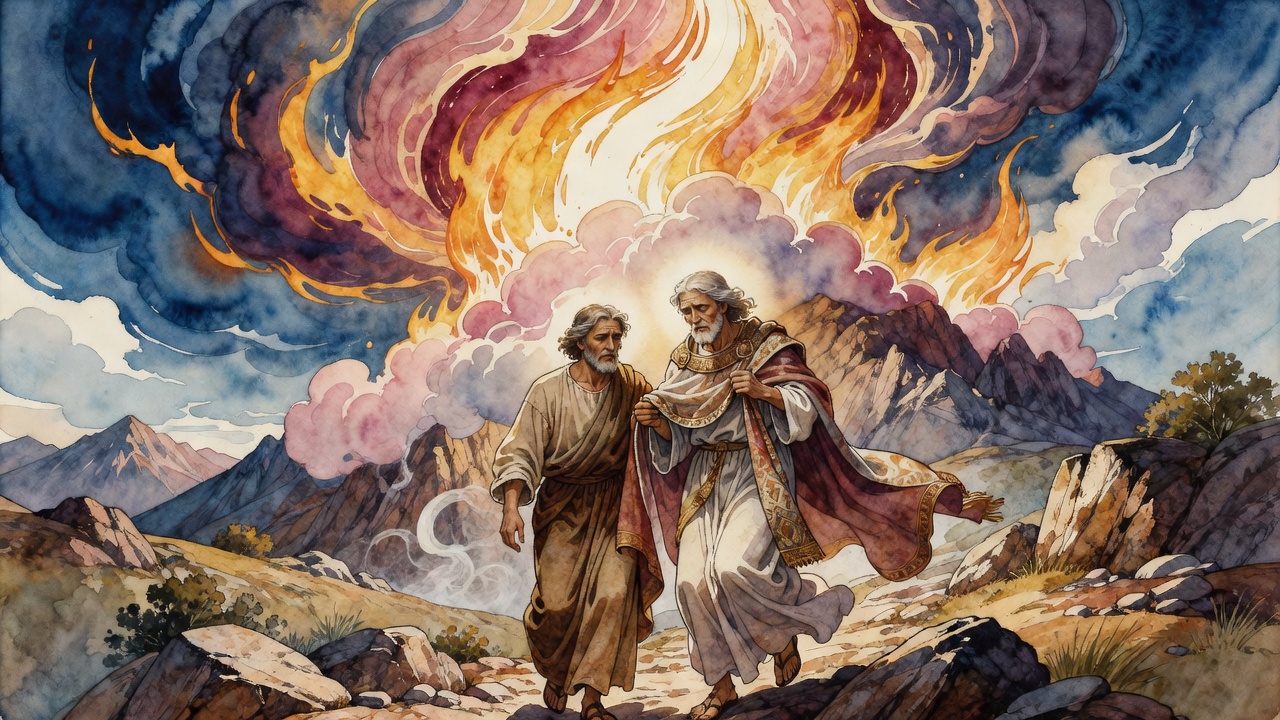
On the height, Moses stripped Aaron of the vestments and put them on Eleazar. Aaron died there. Moses and Eleazar came down. When the congregation saw that Aaron was dead, the house of Israel wept thirty days. The mountain kept the body. The camp kept the office. The man who had been told the day of his gathering had spent that day making sure the crown did not fall into dust with him.

Below, the tents waited for a priest who was not Aaron. Above, the path still held the prints of three men who went up and two who returned. The Land waited on the far side of a death that could not be postponed by love or argument.

Eleazar did not speak while the garments changed hands. The breastplate, the robe, the tunic that had smelled of incense and desert dust, all of it left Aaron's body while Aaron still stood. That order matters. The office moved while the man could still feel the weight lift. Israel below could not hear the fabric, only see three figures on the ridge become two, and understand the arithmetic of succession without a speech.

Moses' hands, which had once held a staff over a sea, now held a brother's vestments. He had asked for more years and been refused. He did the next faithful thing. He dressed the son and closed the father's eyes under an open sky that did not bargain.


← All myths
From the tradition

Sources

3 sources

The texts behind this telling. Some cards carry a translation of the source; others are our own retelling of it, and each card says which. Every card links out to the original.

Midrash Tanchuma, Chukat 15Midrash Tanchuma

Retold in our words. Read the original at the link below.Townsend 1989 translation of Midrash Tanhuma, S. Buber Recension · CC-BY

(Numb. 20:23-24:) “Then the Lord said unto Moses and unto Aaron on Mount Hor […], ‘Aaron will be gathered [unto his people.’” This passage] teaches that the righteous are informed of the day of their death, so that they may bequeath their crown to their children. So why did Aaron not die as Miriam died, since no mortal [knew] about her [death]? It was, however, told to Moses, “Aaron will be gathered [unto his people].” [The situation] is comparable to a king who had two ministers of finance, who did not act without the king's knowledge. One of them had a beautiful garment with the king, which the king needed for himself. The king said, “Although he is under my authority, I am not wearing the cloak until I inform him.” So also did the Holy One, blessed be He, say, “These two righteous men have done nothing without my knowledge. Now that I am taking them away, I shall not take them away until I inform them.” It is therefore stated (in Numb. 20:24), “Aaron will be gathered.” Moses said, “My Master, Leave Aaron [alive and have him stay on the other side of the Jordan] with the Children of Reuben and the Children of Gad.” He said to him (in Numb. 20:24, cont.), “’Which I have given to the Children of Israel,’ his death is required for the giving of the Land of Israel. ” Hence it is written (in Numb. 20:24), “which I have given to the Children of Israel.”

Full source
Midrash Tanchuma, Achrei Mot 3Midrash Tanchuma

Retold in our words. Read the original at the link below.Townsend 1989 translation of Midrash Tanhuma, S. Buber Recension · CC-BY

R. Judan of Gallia opened (with (Job 39:2)7), “Is it at your command that the eagle mounts up and makes its nest on high?” The Holy One, blessed be He, said to Aaron. “At your command I had my Divine Presence rest upon the ark. [Was it not] at your command that I removed my Divine Presence that was upon the ark?” In the case of the first Temple (according to (Job 39:2)8), “It dwells and lodges on the rock,” [i.e., the Divine Presence was there for] a lodging of one night. In the case of the second Temple (referred to in ibid., cont.), “on a rocky crag and a stronghold,” [ i.e., the Divine Presence was there for a lodging of many nights. Moreover,] we learn there (in Yoma 5:2), “When the ark had been taken away, there was a certain stone there from the days of the former prophets, and it was named Foundation. And why was it named Foundation? Because out of it the world was founded.” And how would a high priest pray on the Day of Atonement? May it be Your will, O Lord our God, that this year be one of rain, warmth, and dew, a year of low prices, a year of abundance, a year of grace, a year of blessing, a year of trade, a year when Your people Israel are not dependent on each other, a year when they will not be arrogant with each other. Now the rabbis of Caesarea said, “[It was] with reference to our brothers in Caesarea [that the high priest prayed] for them not to be arrogant with each other.” But [the rabbis of the south] say, “[It was] with reference to our brothers in the Sharon, lest their houses become their tombs.” (Job 39:29:) “From there it spies out food; and its eyes behold it from afar.” From there it prepares food for all the days of the year. He (i.e., the high priest) knew from the beginning of the year what would [happen] at the end [of the year]. How so? When he looked and saw smoke from the pile (of wood on the Temple altar) rising southward, he knew that one would have enough in the south. And it was the same for the north, the same for the west, and the same for the east. But when the smoke rose straight up towards the sky, he knew that the whole world would have enough. Then after all this advantage, (according to (Job 39:3)0) “Its nestlings suck (from 'l') up blood…. [Aaron] saw his nestlings wallowing (from g'g') in blood and (according to Lev. 10:3) kept silent. However (ibid., cont.), “where the slain (i.e. Nadab and Abihu) are, there (i.e. there is the Divine Presence) is.” R. Judan said in the name of R. Joshua ben Levi, [who spoke] in the name of R. Berekhyah, [who spoke] in the name of R. Hiyya bar Abba, “It is not written here (Lev. 10:4), ‘Draw near and carry your brothers away ‘from the sanctuary,’ but ‘from before the sanctuary.’ [The situation is] similar to someone who says to his colleague, ‘Remove the dead person from before his father. How long shall he look at his dead child?’” It is therefore written (in Lev. 16:1), “after the death of Aaron's two sons.”

Full source
Midrash Tanchuma, Nasso 8Midrash Tanchuma

Retold in our words. Read the original at the link below.Townsend 1989 translation of Midrash Tanhuma, S. Buber Recension · CC-BY

(Numb. 6:22–23:) “Then the Lord spoke unto Moses, saying, “Speak unto Aaron and unto his children, saying, ‘Thus shall you bless the Children of Israel.’” Let our master instruct us: In the case of priest with a blemish, is it right for him to raise his hands (in the priestly blessing)? Thus have our masters taught (in Meg. 4:7): A priest whose hands are blemished may not raise his hands. But Rabbi taught, “A priest who has blemishes anywhere at all may not raise his hands.” R. Judah says, “Also whoever has his hands stained with woad, madder, or rubia may not raise his hands. Why? Because it is customary for people to be looking at him.” R. Joshua the Great taught, “If the majority of the men in the town are in that business (i.e., of dying cloth), he is permitted to raise his hands; in the same way that in the South, there are [many] hides that are tanned purple and their hands [with which they bless] are dyed.” The Holy One, blessed be He, said, “From the beginning I have blessed My people; from now on the blessings are transmitted to you. You are to bless My children,” Therefore the Holy One, blessed be He, told Moses to caution Aaron and his children to bless Israel. How is this shown? From what they have read [on the matter] (in Numb. 6:23), “Speak unto Aaron and unto his children, saying, ‘Thus shall you bless.’” (Numb. 6:23:) “Thus shall you bless.” This text is related (to Deut. 26:15), “Look down from Your holy dwelling, from the heavens, and bless Your people.” The congregation of Israel said to the Holy One, blessed be He, “Master of the world, You tell the priests to bless us. We only need You to bless us, as stated (Deut. 26:15), ‘Look down from Your holy dwelling, [from the heavens, and bless Your people].’” The Holy One, blessed be He, said to them, “Although I have told the priests to bless you, I am standing along with them and blessing you.” For that reason the priests spread their hands. [They do so] to say, “The Holy One, blessed be He, is standing behind us.” So also it says (in allusion to the Holy One, blessed be He, in Cant. 2:9) “there he stands behind our wall, gazing through the windows, peering through the lattice,” [i.e. “gazing through the windows,”] from between the fingers of the priests; “peering through the lattice,” when they extend their hands. It is therefore stated (in Numb. 6:23), “Thus shall you bless.”

Full source