Parshat Chukat5 min read

Aaron Must Climb the Mountain to Hear His End

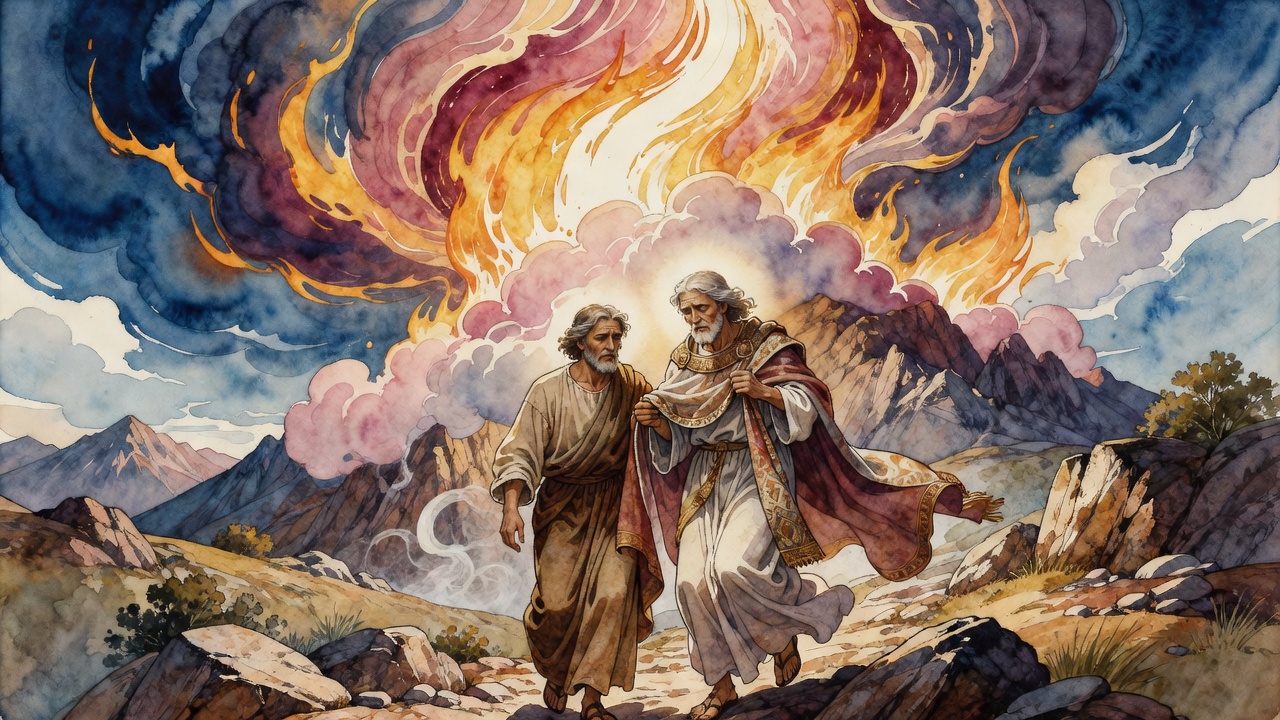
God tells Moses that Aaron will die for Meribah, so Moses leads his brother up the ridge with quiet words and a transfer of garments.

Curated by Arthur · Told by Maggid ·
Table of Contents
  1. The Word That Lands First on Moses
  2. How to Tell a Brother He Will Die
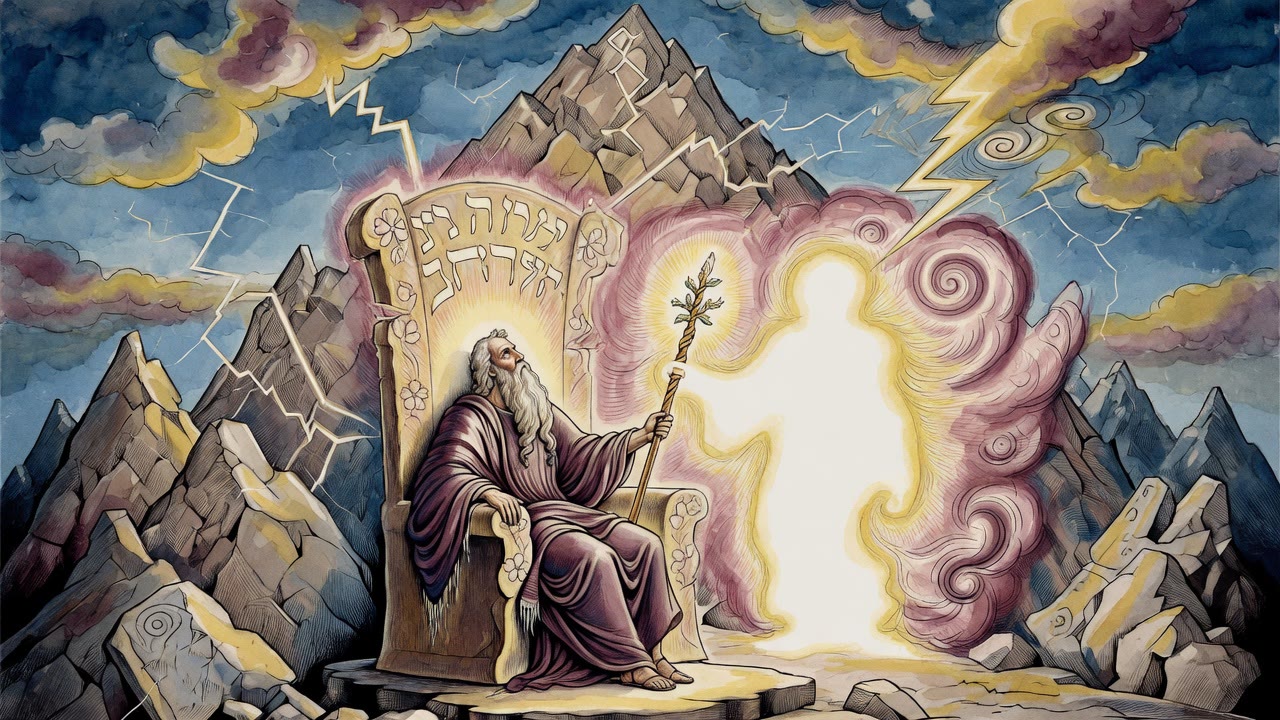
  3. When the Great Voice Speaks, Creation Hush
  4. Garments Leave Warm Skin
  5. What the Mountain Kept
Aaron Must Climb the Mountain to Hear His End Click for full size

The Word That Lands First on Moses

Moses stood where the wilderness wind cut between rock and sky, and God did not wait for a private hour after camp. The sentence came clean and heavy: Aaron would be gathered to his people. He would not enter the land sworn to Israel. The waters of Meribah still sat in the record like a stain that water itself could not wash, and the same rebellion that had marked Moses now closed the gate for his brother (Numbers 20:12).

Righteous men sometimes learn the day of their death so they may bless their children and set their houses in order. With Moses and Aaron the reason cut deeper. All their lives they had done nothing without consulting God. Therefore God would not pull them from the world without warning. The courtesy was not soft. It was exact.

Moses heard and did not argue the verdict. He argued for the manner of it. How does a brother carry such news without breaking the man who must still walk, still bless, still climb?

How to Tell a Brother He Will Die

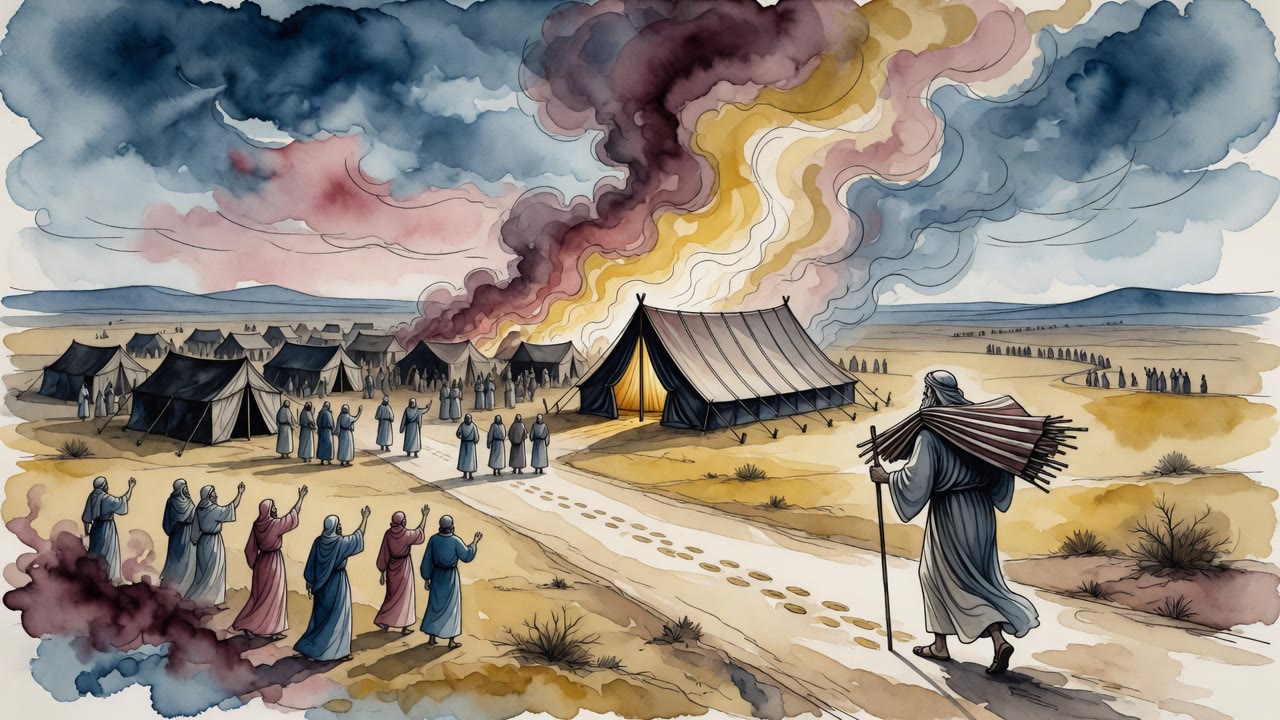
Moses went down among the tents with a face that tried to look ordinary and failed. Aaron saw him and rose. The high priest knew the look of a man who had just come from the cloud. Moses did not open with the word death. He spoke of inheritance, of garments, of the people who still needed a living priest for one more day. He led Aaron's mind up the slope before he led his feet.

On the path toward Mount Hor the truth came fully into the open. Aaron would not come down. Eleazar would wear the sacred clothes. The office would pass while the body still stood upright, so no vacancy would open in the camp. Aaron listened. The wind pulled at the blue fringe of his robe. Somewhere below, Israel cooked evening food without knowing the priesthood was about to change owners mid-climb.

Meribah returned in the silence between steps. A rock. A staff. Water that had come the wrong way. A people thirsty enough to make righteous ones snap. The price now walked on two legs beside Moses, breathing hard in the thin air.

When the Great Voice Speaks, Creation Hush

Scripture knows more than one kind of divine speech. At Sinai the mountain shook with voices and lightning, a greatness that filled the ear until no other sound had room (Exodus 19:16). Elsewhere a prophet meets a voice that is silent and thin, almost too fine for flesh to catch (I Kings 19:12). Both are real. Both belong to the same God.

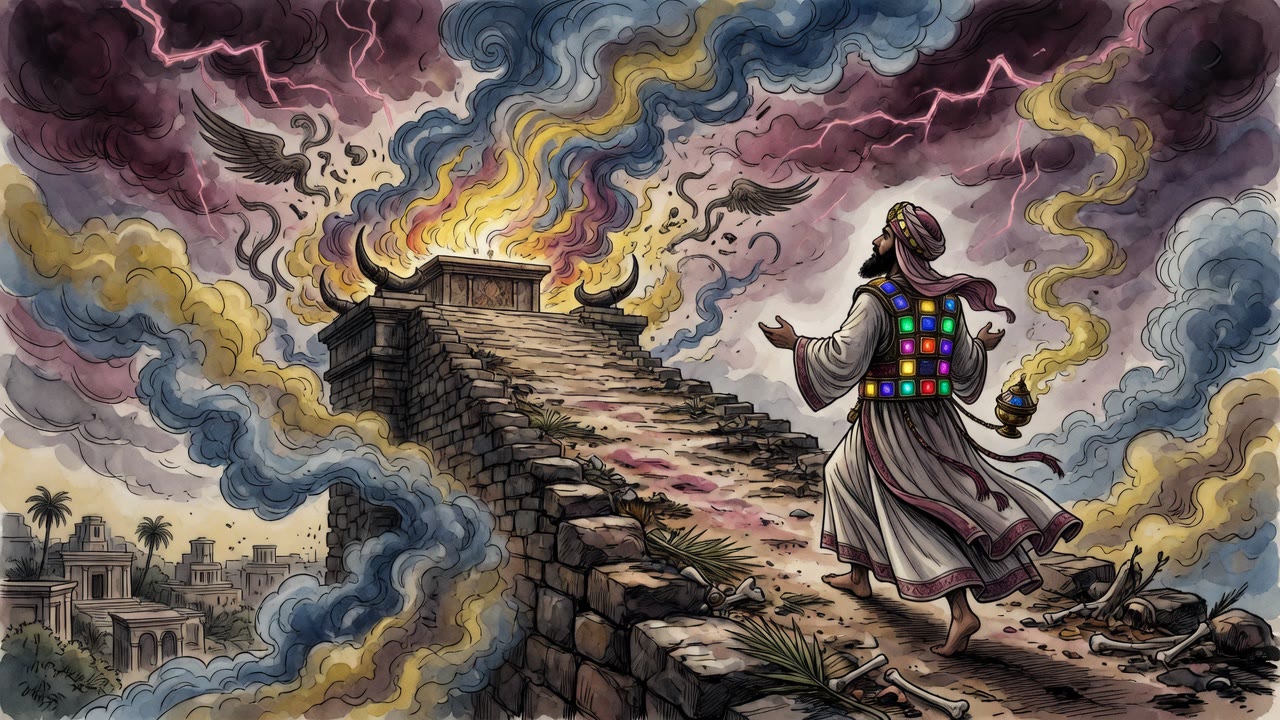
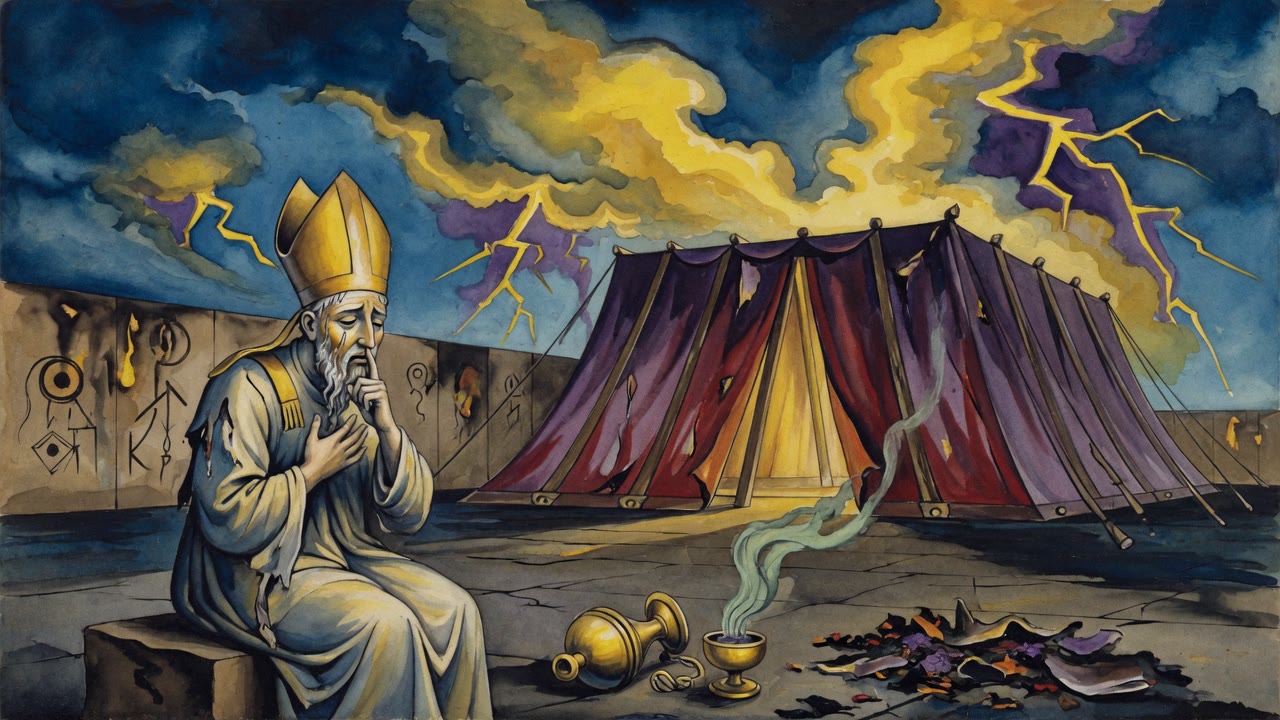
When the great voice speaks, the teachers said, all creation falls silent. Islands are told to hush. Aaron himself once stood silent when fire took his sons, and that silence was not emptiness but obedience under a weight no speech could lift (Leviticus 10:3). Now another silence waited for him on the ridge, not the silence of shock, but the silence of a man who has accepted the schedule of heaven.

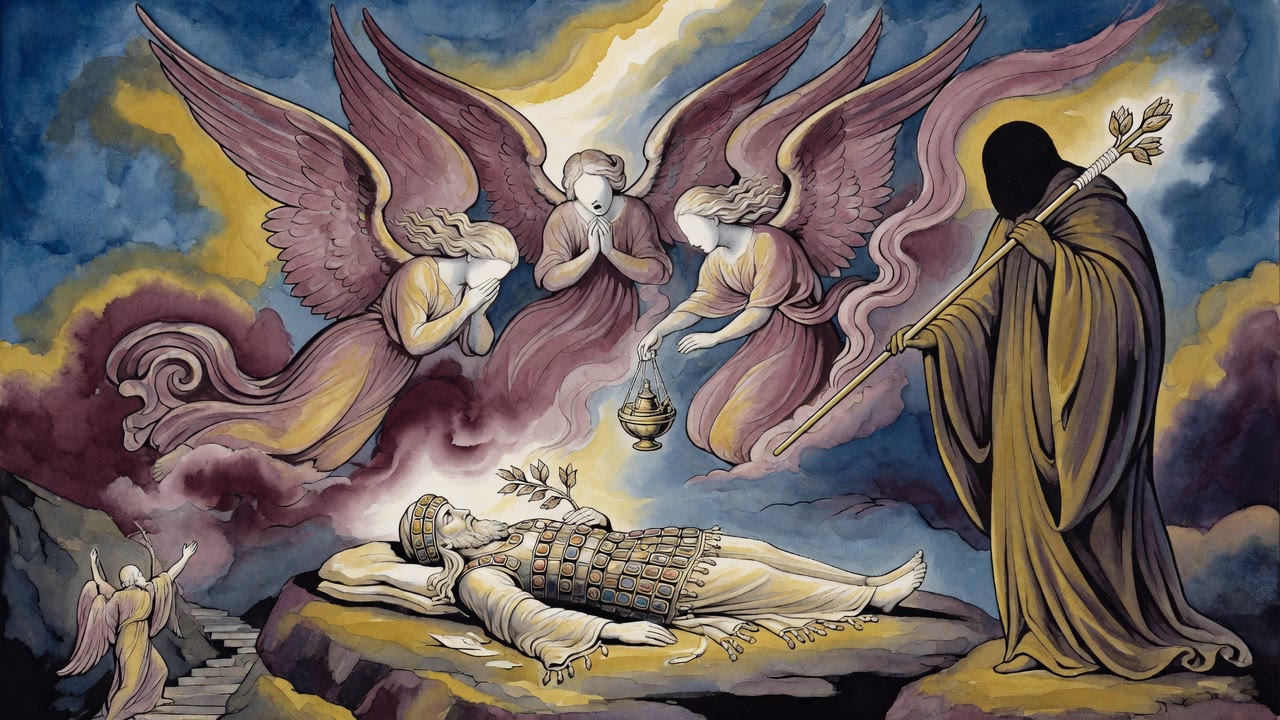
Angels answer the great voice with their own ranks of sound. Mortals answer by stopping. Moses climbed. Aaron climbed. The camp below kept its noise. Above them the air thinned toward a sentence already spoken.

Garments Leave Warm Skin

At the summit Moses stripped Aaron of the high priest's garments with hands that had once held the tablets and the staff. The gold and linen left Aaron's shoulders and settled on Eleazar. Heat still clung to the cloth. A living transfer, not a funeral inventory. Aaron stood in simpler dress, suddenly lighter, suddenly finished.

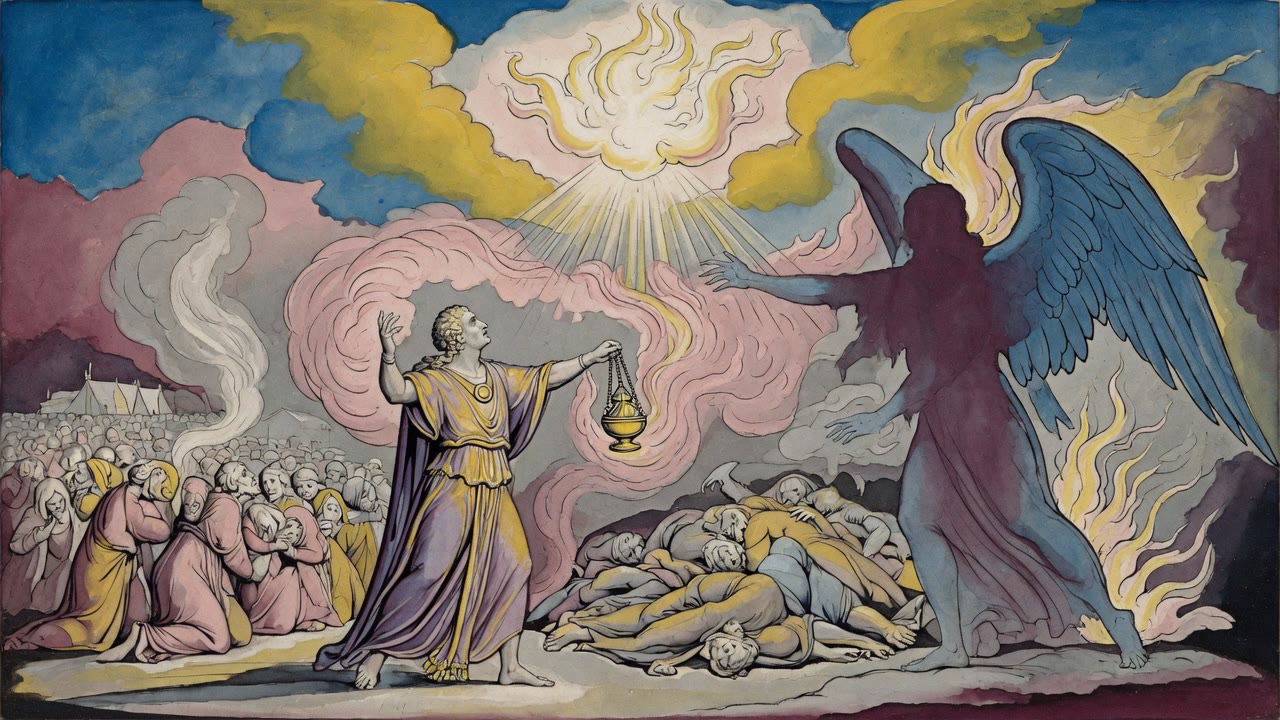
He did not rage. He had spent a lifetime standing between an angry people and an angrier decree, swinging incense, counting plagues, speaking peace. Now the work ended on stone that overlooked a land he would never touch. Moses kissed him. The stories say the death was a kiss as well, a gathering rather than a tear. The body did not fight the moment. It yielded the way a lamp yields when the oil is gone.

Below, when the camp learned, the weeping lasted thirty days. Above, the thin air kept the last conversation between brothers private, and the great voice that had ordered the climb did not need to shout again. The sentence had already been carried out in cloth, in steps, in a silence Aaron knew how to keep.

Eleazar felt the weight of gold settle on shoulders that had watched his father serve. A living transfer means the camp never lacks a priest for a single hour. Continuity can be tender and brutal in the same gesture. Moses' hands did both.

What the Mountain Kept

Moses came down without the man who had been his mouth in Egypt and his partner in every quarrel with heaven. Eleazar wore the garments. The cloud still led. The land still waited beyond a border Moses himself would not cross. Two brothers had consulted God in every hard hour; both would leave the world on notice, not by ambush.

On the ridge the wind erased footprints. The priesthood continued. The great voice and the thin voice both remained available to Israel, thunder for a nation and whisper for a prophet alone. Aaron's last gift was the climb itself: he died knowing, clothed then unclothed, brothered to the end, gathered without surprise.


← All myths
From the tradition

Sources

2 sources

The texts behind this telling. Some cards carry a translation of the source; others are our own retelling of it, and each card says which. Every card links out to the original.

Legends of the Jews 5:58Legends of the Jews

Retold in our words. Read the original at the link below.The Legends of the Jews by Louis Ginzberg (1909) · Public Domain

Jewish lore paints a picture of God showing special consideration for the righteous. The tradition teaches that God often reveals the day of death to the pious, allowing them to pass on their legacy to their children. But with Moses and Aaron, it was different. God felt a unique obligation. As we read in Legends of the Jews, God says that because "these two pious men throughout their lifetime did nothing without consulting Me, and I shall not therefore take them out of this world without previously informing them."

Being Moses, hearing these words from the Divine. It wasn't just about informing Aaron; it was about preparing him, easing him into the transition.

The moment is fraught with emotion. God approaches Moses with heavy words: "Aaron shall be gathered unto his people; for he shall not enter into the land which I have given unto the children of Israel, because ye rebelled against My word at the waters of Meribah."

Moses, ever the advocate, responds with a mix of acceptance and trepidation. He acknowledges God’s sovereignty, saying, "Lord of the world! It is manifest and known before the Throne of Thy glory. that we are in Thy hand, and in Thy hand it lies to do with us as Thou wilt." But he also voices his reluctance: "I am not, however, fit to go to my brother, and repeat to him Thy commission, for he is older than I. how then shall I presume to go up to my older brother and say, 'Go up unto Mount Hor and die there!'"

There's a beautiful tenderness in Moses’s hesitation. He's not just worried about delivering the message, but about the emotional impact on his brother.

God's response is both gentle and firm. "Not with the lip shalt thou touch this matter, but 'take Aaron and Eleazar his son, and bring them up unto Mount Hor.'" The instructions are specific. They’re about presence, about shared experience.

Moses, Aaron, and Eleazar, Aaron's son, are to ascend Mount Hor together. The command continues, "Ascend thou also with them, and there speak with thy brother sweet and gentle words, the burden of which will, however, prepare him for what awaits him." It’s a delicate dance of communication, a careful balance of truth and compassion. "Later when ye shall all three be upon the mountain, 'strip Aaron of his garments, and put them upon Eleazar his son, and Aaron shall be gathered unto his people, and shall die there.'"

Why this elaborate preparation? Why not simply tell Aaron directly? The text suggests it's out of respect. God says, "As a favor to Me prepare Aaron for his death, for I am ashamed to tell him of it Myself." This is an incredible statement! The Creator of the universe feels ashamed to deliver this news directly.

This passage from Legends of the Jews reveals a profound understanding of human relationships and divine compassion. It's a powerful evidence of the value of family, the burden of leadership, and the delicate way in which we approach life's most challenging transitions. What does it mean that even God, in a sense, needs help delivering difficult news? And what can we learn from this story about facing our own mortality, and helping those we love face theirs?

Full source
Sifrei Bamidbar 58:2Sifrei Bamidbar

Retold in our words. Read the original at the link below.Sifrei by Rabbi Shraga Silverstein · CC-BY

Sifrei Bamidbar turns to Isaiah, Life of Moses.

The passage grapples with a fascinating problem: scripture seems to contradict itself! One place describes God's voice as "great" (Devarim/(Deuteronomy 5:1)9), thundering even, like in Exodus (Shemot 19:16) where it says "there were thunders (lit. 'voices') and lightnings, etc." But then, in I (Kings 19:12), we encounter "a voice, silent, thin." So, which is it? A mighty roar or a gentle whisper?

R. Yoshiyah offers a beautiful resolution. He suggests that when God speaks in His great voice, all creation falls silent. If the Creator of the Universe is speaking, what else is there to do but listen? He points to (Isaiah 23:2), "Fall silent, you island dwellers," and Vayikra/(Leviticus 10:3), describing how Aaron "was silent." The sheer power and majesty of the divine voice commands stillness.

R. Yonathan offers a different, equally compelling perspective. He agrees that God speaks with a great voice. However, he adds that the angels respond in a "low voice." It’s almost like a call and response, a divine conversation. He cites (Isaiah 62:6-7), where the angels "are never silent" and "do not allow Him to be silent until He re-establishes Jerusalem." The angels are constantly reminding, imploring, advocating. Their voices, though quieter, are persistent and vital.

So, what do we make of all this? Is God's voice a thunderous roar that silences all, or is it a powerful call that inspires a chorus of angelic whispers? Perhaps it's both. Maybe the key lies in understanding the context, the moment, and the relationship between the speaker and the listener. The divine voice is many-sided, capable of awe-inspiring power and intimate gentleness.

What does the Voice mean for you, personally? How do you hear it in your life? Is it a shout that stops you in your tracks, or a gentle nudge that guides you forward? And are you listening?

Full source