Moses Desired Aaron's Death More Than His Own
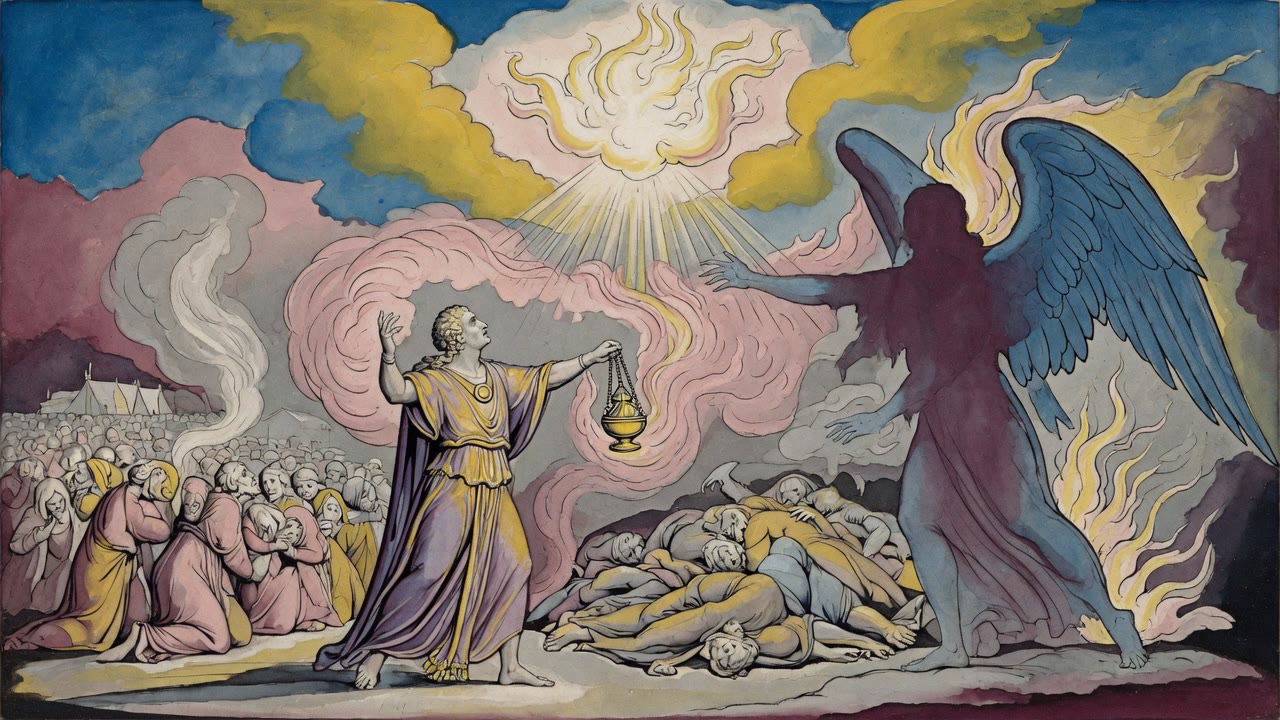
God tells Moses he will be gathered as Aaron was gathered. The rabbis heard desire: Moses wanted his brother's peaceful death, not his own.
Table of Contents
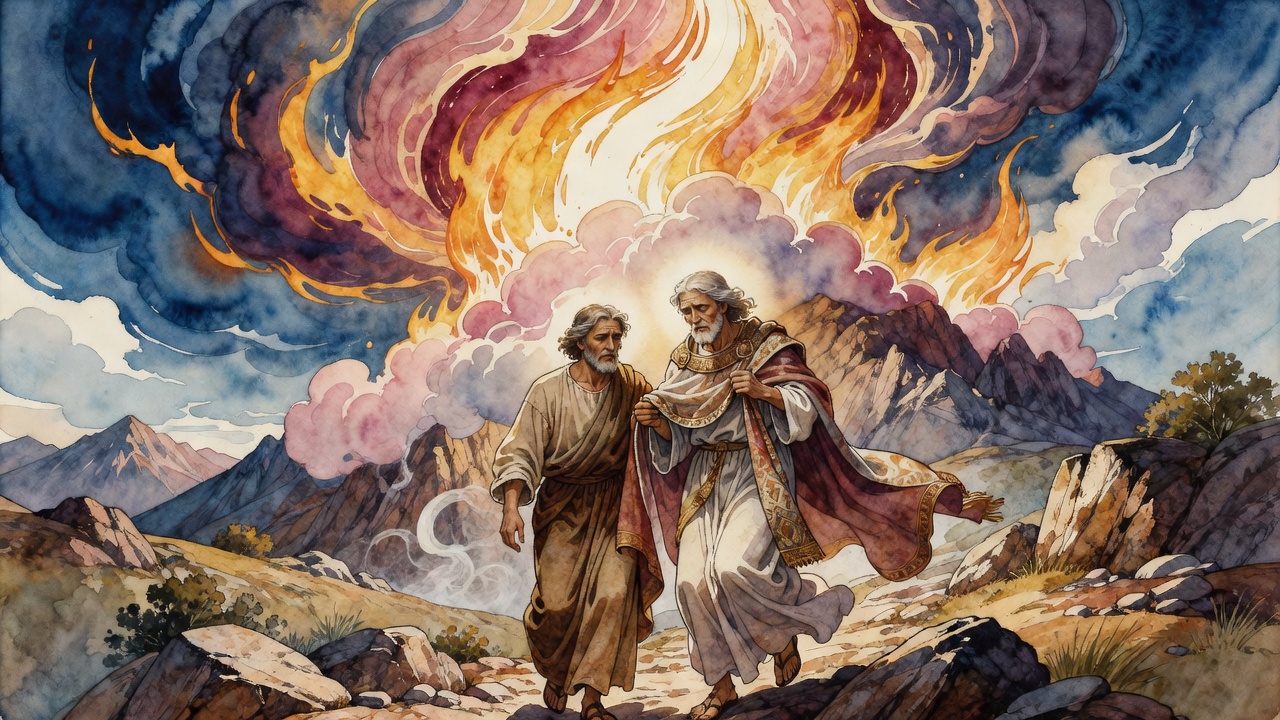
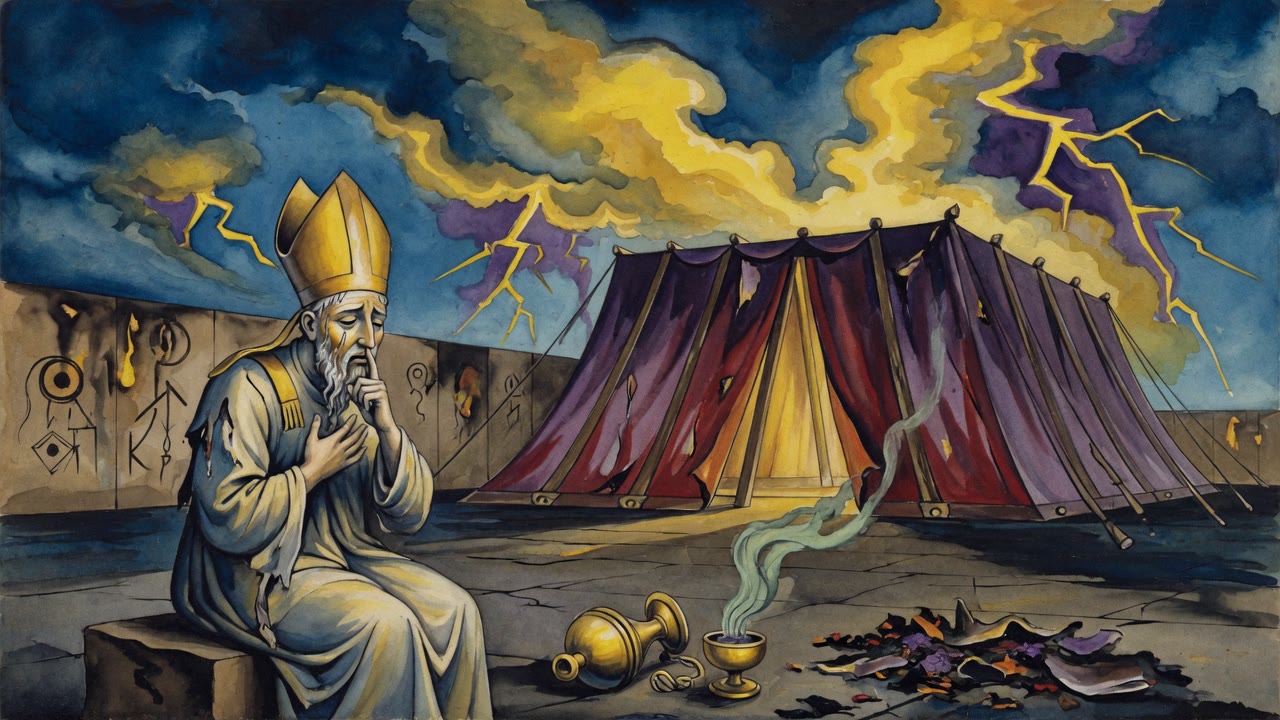
Three men went up Mount Hor in the morning, and only one of them knew what the climb was for.
 Click for full size
Moses had the order from God in his mouth the whole way up and could not get it out. Aaron walked beside him at the pace of a man in his hundred and twenties, still in the priestly garments because Moses had told him to wear them, and Eleazar came behind carrying nothing and asking nothing. Every time Moses turned to speak the words went sideways in his throat, because there is no sentence a man can build that tells his older brother his hour has come.
So he made it into a riddle instead. "The Holy One is holding a deposit in your hand," he said, "and He would like it back."
Aaron did not flinch at that. "Let the Master who entrusted it take what is His." Then he worked out what it must be, and his face changed, because he had two sons and one of them was walking ten paces behind them on the path. It is the boys, he said. Eleazar and Itamar.
"No," Moses said. "That is not the reckoning you have reckoned."
"Then what?"
Aaron Stopped on the Path
"He asks of you one lamp."
Aaron stopped on the path. He had spent forty years lighting lamps, trimming them, carrying oil, standing in a room where a lamp was the whole point of the room, so the word arrived already furnished. One lamp. Not his sons and not the vestments and not anything he could hand over with his hands. He understood it the way a man understands a knock at an hour when nobody knocks, and then he wept, standing there in the blue and gold with his brother watching him.
Moses got hold of him. "Do not grieve. Your sons stand in your place. The Omnipresent has told me to take your garments off you and put them on Eleazar, because he is going to fill the place you are leaving."
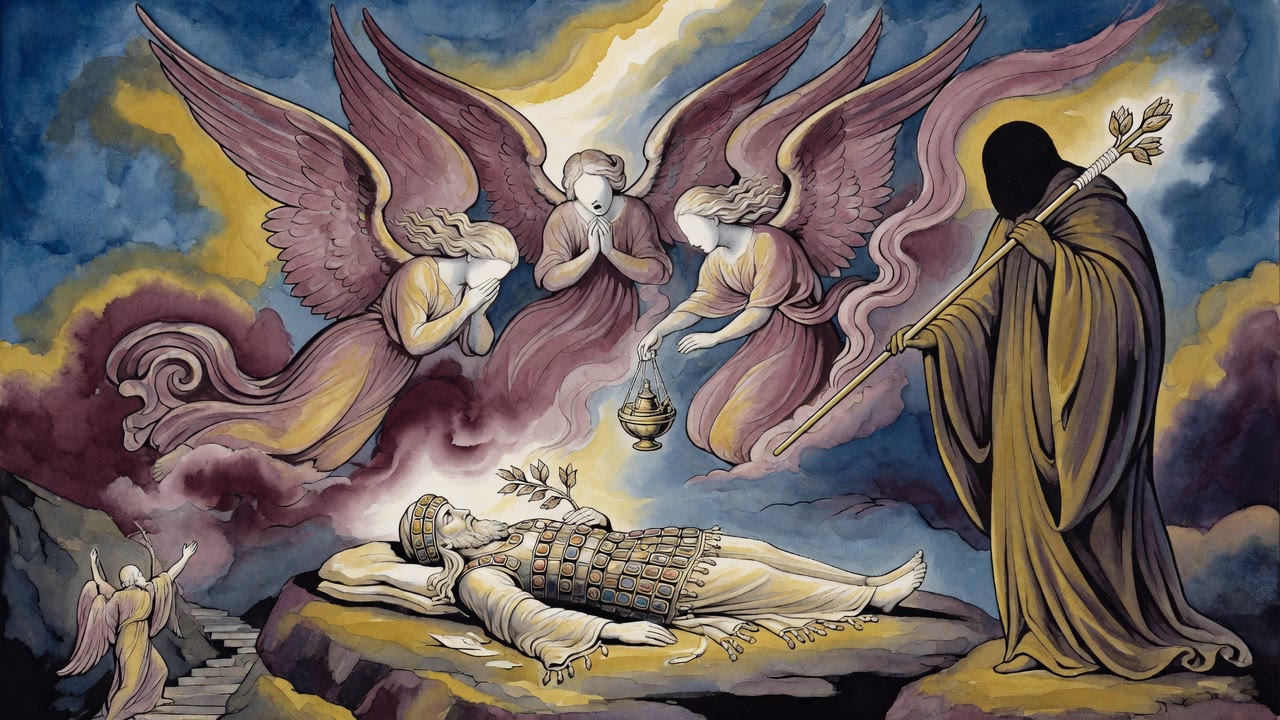
Aaron let out a breath and lifted his eyes, and up ahead of them, in the mouth of a cave, there was a couch already spread and a lamp already burning on it. Nobody had carried those up.
The Garments Came Off in Order
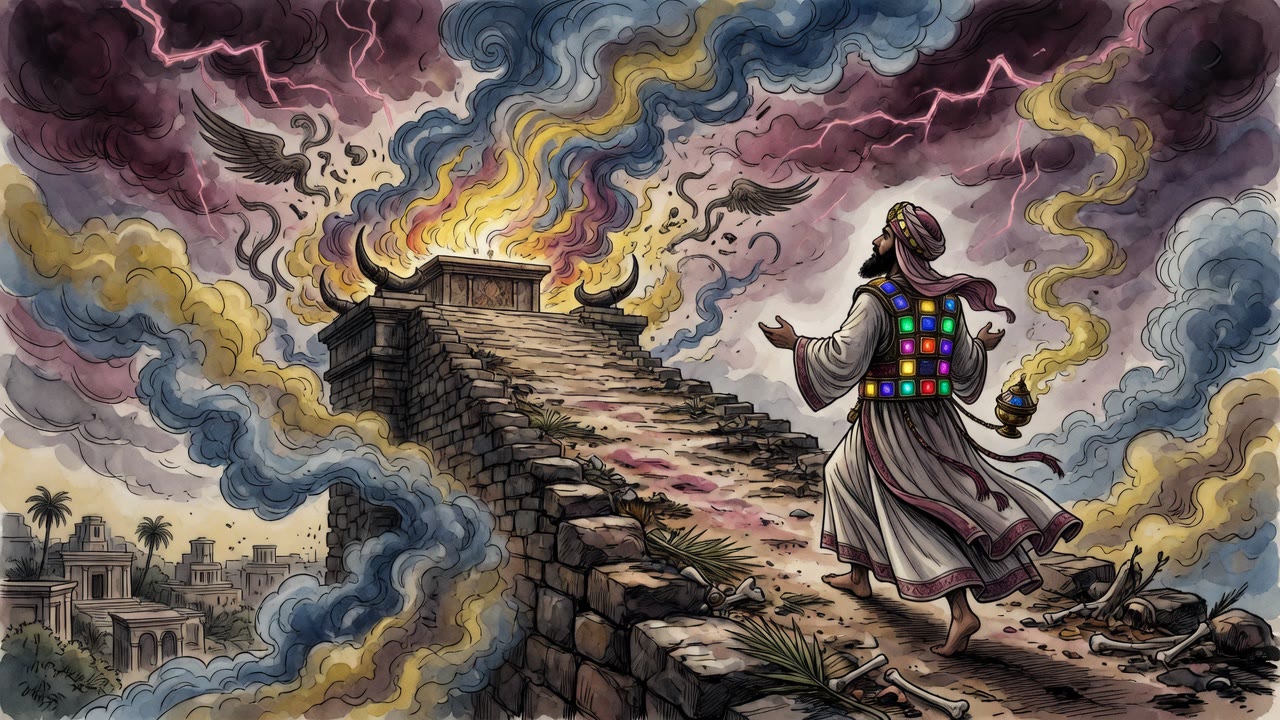
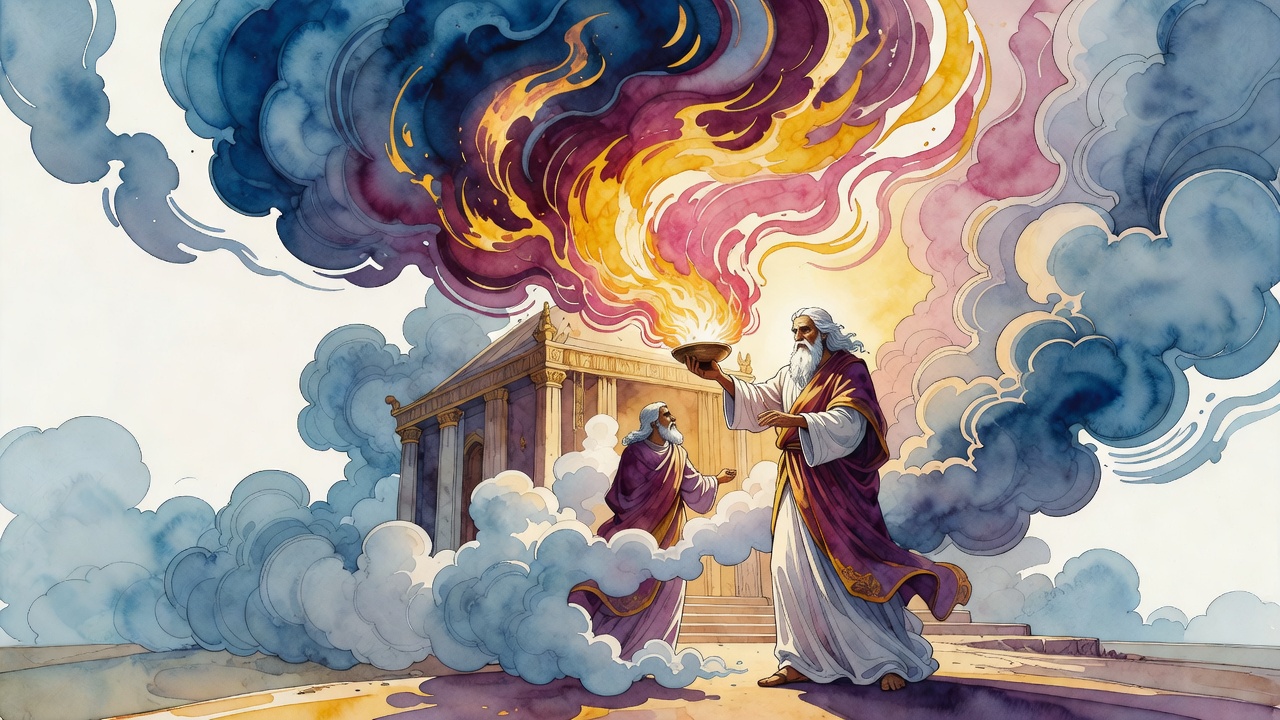
At the dedication of the Mishkan (the portable sanctuary Israel carried through the wilderness) it had been Moses who dressed him. The master of all Israel had taken the tunic in his own hands and laid it on his brother and bound the sash around him, an attendant to the High Priest in front of everybody, and the sages never got over the strangeness of that.
Now he had to do it backward, and the mechanics of it are impossible. The priestly garments go on in a fixed order, each one under the next. A man cannot draw off an outer robe and an inner robe together and leave the outer outer and the inner inner. Ordinary hands cannot do that, so ordinary hands were not what did it. Moses stood his brother on the rock and drew the garments off him, and as each one came away, garments of the Shekhinah (God's indwelling presence) were already on him underneath, so that Aaron was not left bare for the length of a breath. Then Moses turned and put the same garments on Eleazar in their proper order, outer over inner, nothing displaced. The priesthood moved from father to son on a mountainside with no vestry and no attendants.
God gave him more honor in his death than He had given him in his life.
Stretch Out Your Arms
Then Moses walked him into the cave and told him what to do, one thing at a time, the way a man talks to someone he is putting to bed.
Go in, he said, and Aaron went in. Lie down on the couch, and Aaron lay down on it. Stretch out your arms, and he stretched them out, and stretch out your legs, and he stretched those out too, and close your mouth, and he closed it, and close your eyes. He closed them. The Holy One came down and kissed him and his soul went out with the kiss, and there was no struggle in that cave at all, and Eleazar stood watching it in his father's clothes.
Moses came out onto the ledge and looked back in and said it out loud, in front of his nephew, without deciding first whether he ought to. "Happy is the man who dies a death like that."
The Death He Asked For
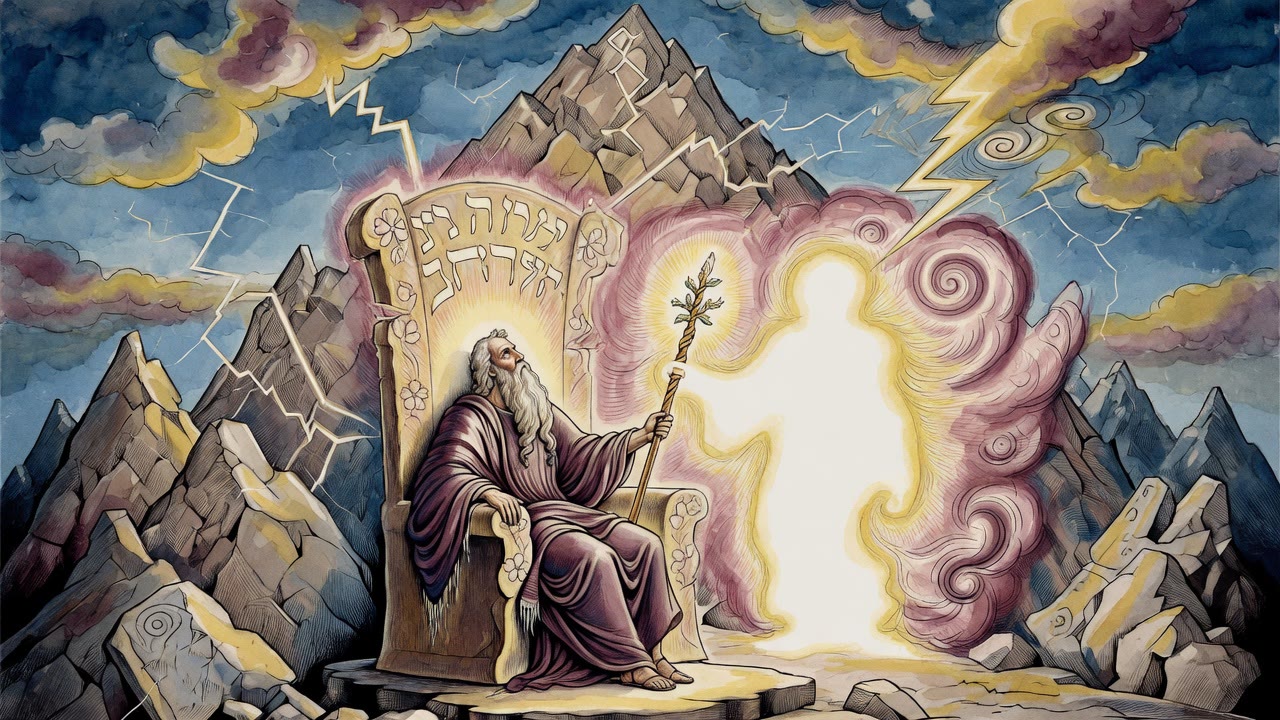
Years later God told Moses to go up another mountain, and the sentence He used had that morning folded into it. You will see the land, and you will be gathered to your people, as Aaron your brother was gathered. As Aaron. The wording gave him exactly the thing he had said he wanted on the ledge at Hor, and the next line gave him the reason he was being gathered at all: because you broke faith with Me at the waters of Merivah in the wilderness of Tzin, because you did not sanctify Me.
Rabbi Shimon ben Elazar would not soften that pairing. Both brothers, he said, died by cutting-off. Had you sanctified Me, your time to die would not have come.
So Moses got the death he had envied and the sentence that made it necessary in one breath, and the two halves of it never came apart afterward. He would be gathered to Abraham, to Isaac, to Jacob, to Kehat and Amram, to Aaron and to Miriam. It would be as painless as his brother's had been. That much was promised him in the plainest terms.
One thing was different. Eleazar had walked up Hor beside his father and stood in the cave and seen everything. Go up alone, God told Moses, and let no one go with you, because what was waiting for him at the top was too much honor for any living man to stand and watch.
He went up alone, then, and there was nobody on that mountain to tell him to close his eyes.
← All myths