Aaron Died on the Mountain and the Angels Mourned Before Moses Did
Moses asked his brother to step into a cave with him. Inside was a made bed, a burning lamp, a table set with food, and angels standing in attendance.
Table of Contents
 Click for full size
The Angel of Death Moved Like a Reaper
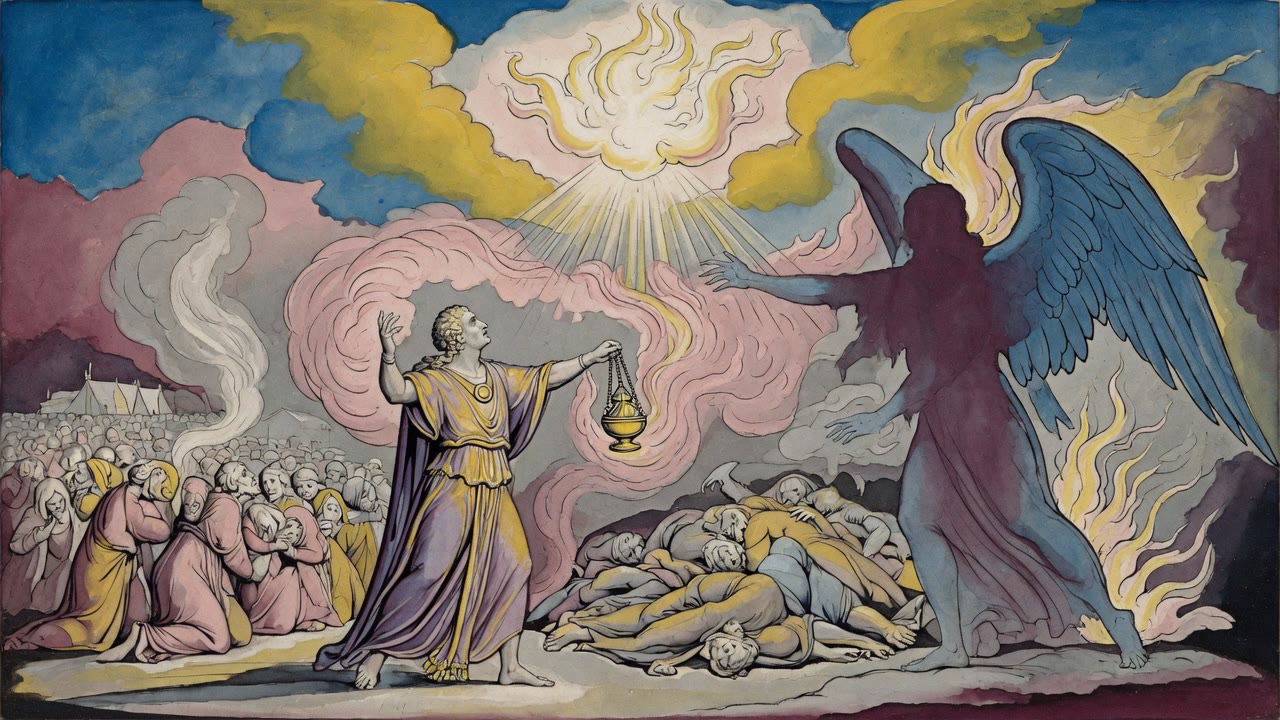
The Angel of Death moved through the world the way a reaper moves through grain: methodically, row by row, each life at its appointed time, neither early nor late, without mercy but without cruelty beyond what the commission required. Legends of the Jews, Louis Ginzberg's compilation from the early twentieth century, draws on centuries of Talmudic and midrashic sources to describe this movement. No one died before their time. No one was spared past it. The reaper's precision was the only comfort available in a system built around the inevitability of death.
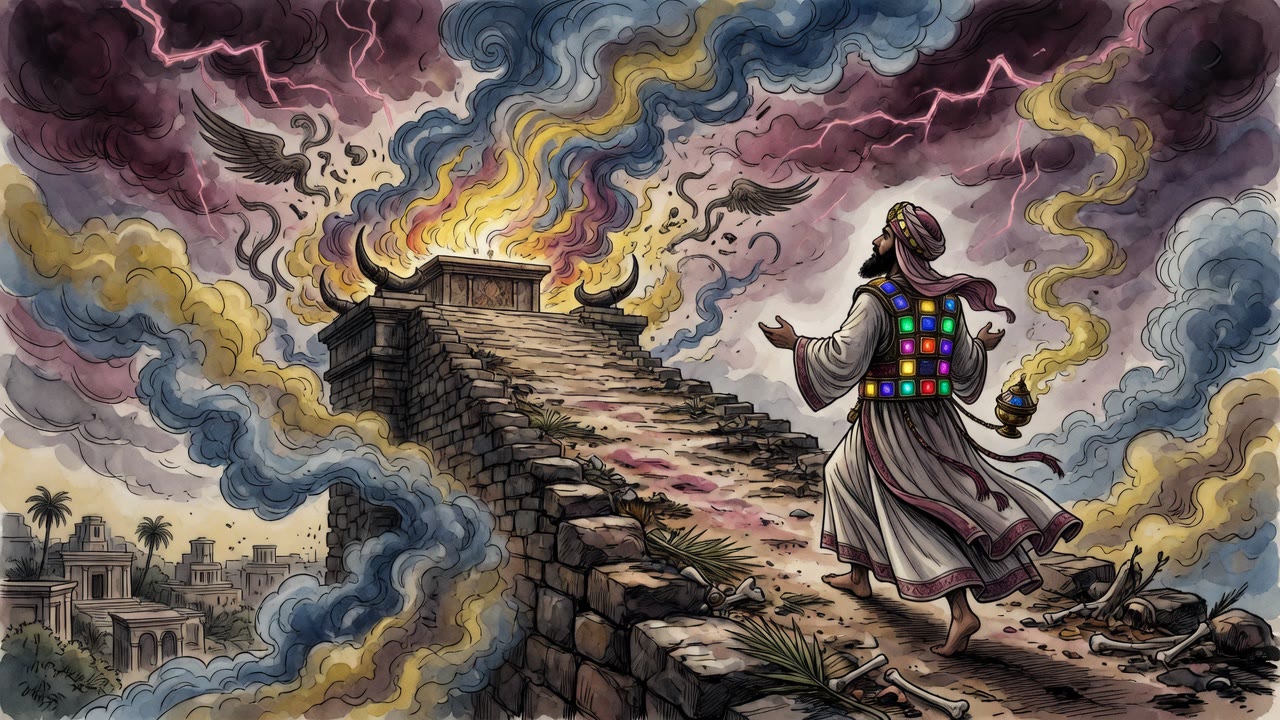
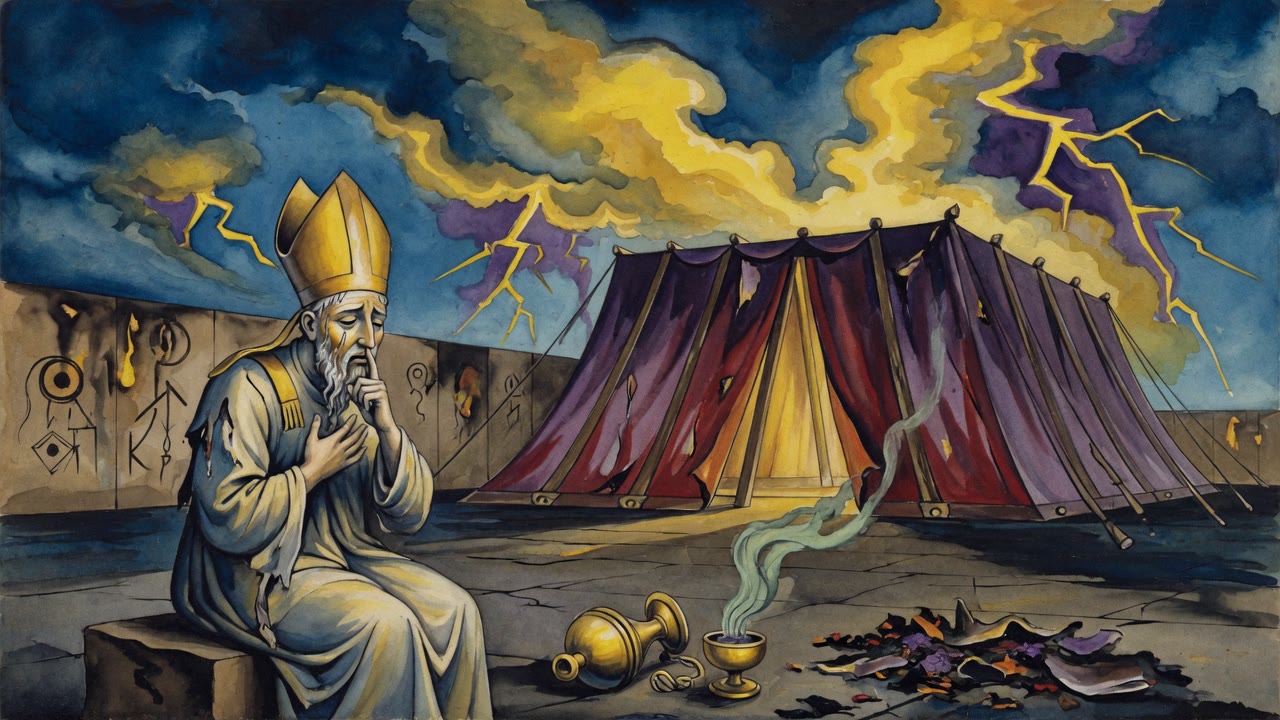
Then Aaron appeared, bearing a censer of burning incense, and stepped between the living and the Angel who was cutting through them. The plague that had erupted in the aftermath of the Korah rebellion was destroying the Israelite camp, and Aaron positioned himself in the gap between the dying and the dead, standing in the space through which the Angel was passing, holding the incense that would stop the spread. The Midrash records that the Angel of Death could not pass him. Aaron held the boundary between the living and the dead through the force of his priestly office and the smoke of the incense that represented the entire nation's approach to God.
Three Men Went Up the Mountain
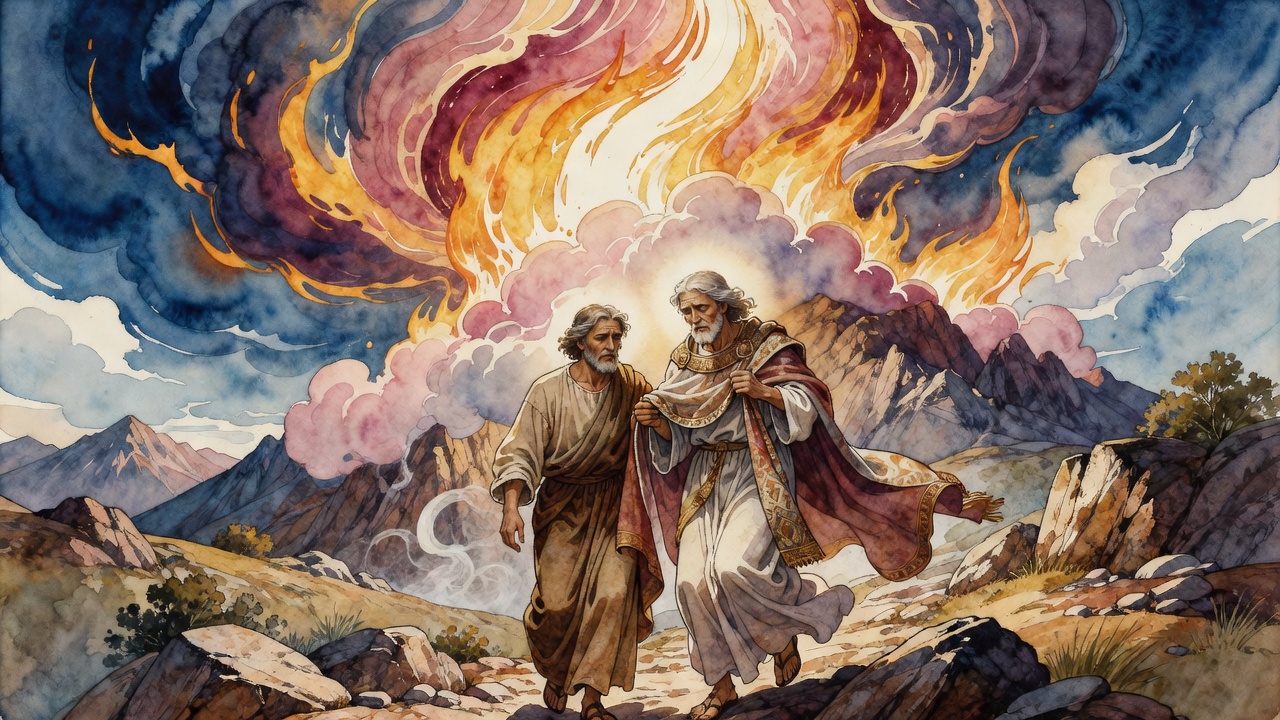
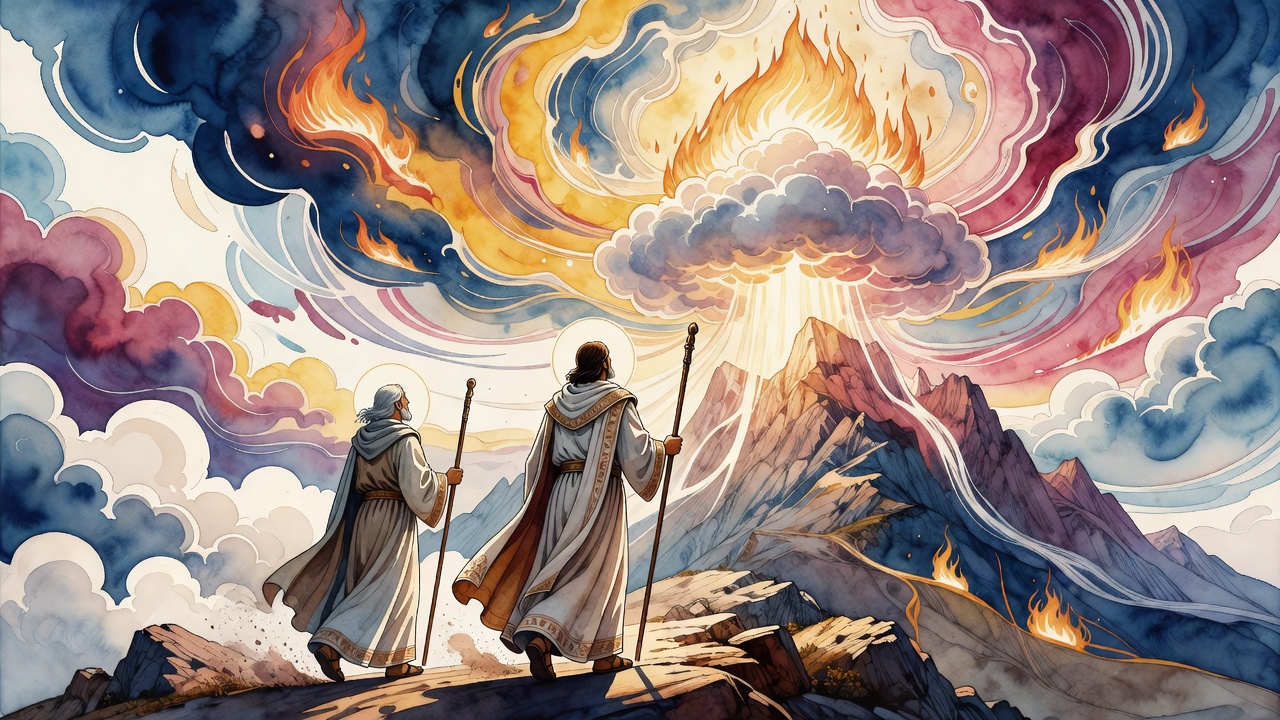
The Torah gives Aaron's death one verse. Moses and Aaron and Aaron's son Eleazar go up Mount Hor. Moses removes the priestly garments from Aaron and places them on Eleazar. Aaron dies. Moses and Eleazar come down. Three went up, two came down, and the text offers no eulogy, no final speech from Aaron, no last view of the land he will never enter (Numbers 20:22-29).
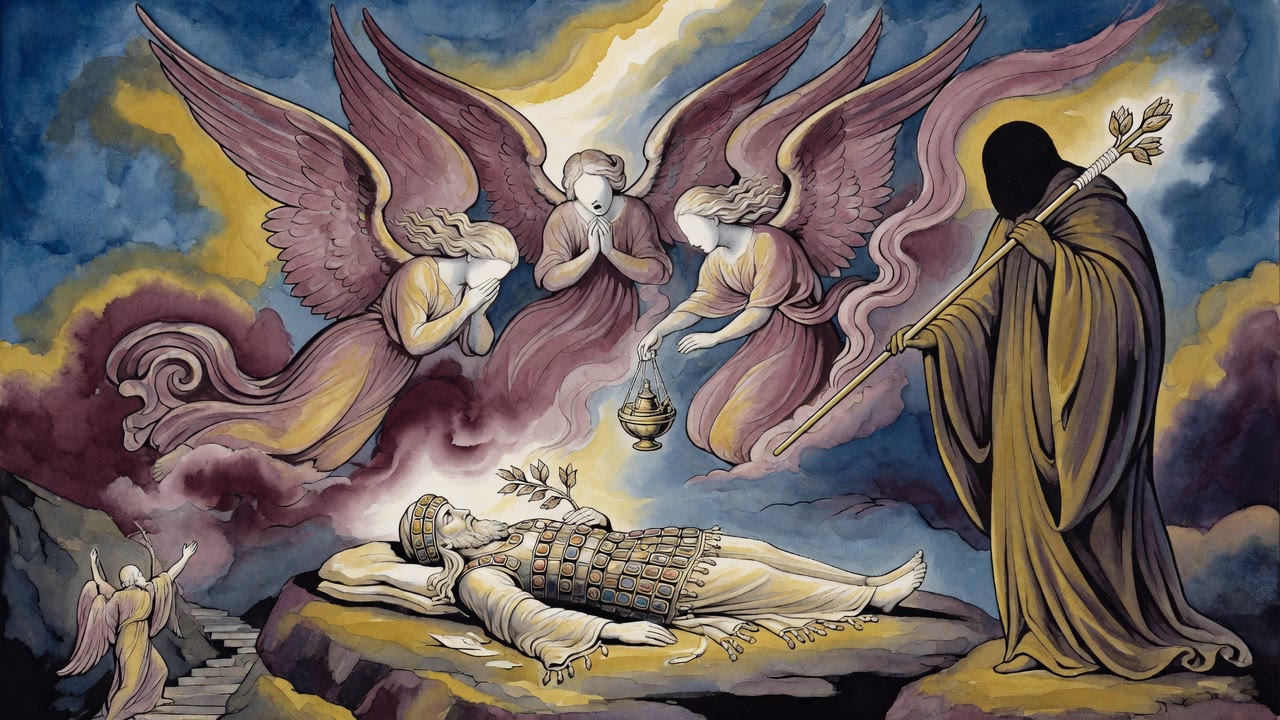
The rabbis found everything that the verse withheld. Legends of the Jews describes what happened inside that spare account. Moses could not simply remove the High Priest's garments from his living brother. He had to find a way to approach the subject that Aaron could accept. So Moses began: brother, did God perhaps reveal something to you about this cave in front of us? Aaron said no. Moses suggested they enter together and see. They went in and found a prepared bed, a burning lamp, a table set with food, ministering angels standing in attendance. Moses said: perhaps you should lie down on the bed, brother. Aaron lay down. The angels gathered around him. Moses began to leave, and the cave sealed behind him.
The Miracle of the Garments
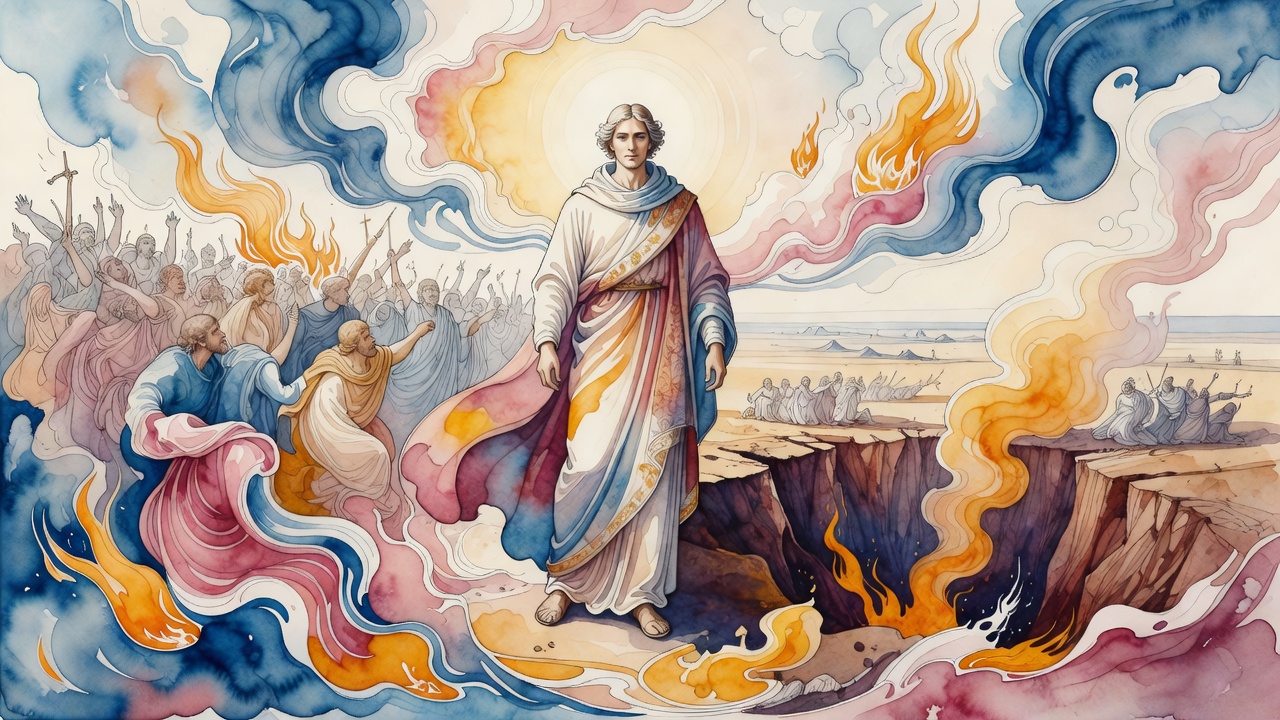
Moses had been commanded to remove the priestly vestments from Aaron and place them on Eleazar. But stripping a living man of the robes he has worn for forty years in the service of God is not a simple act, and stripping them from his dying brother was something Moses could barely execute. The tradition records that God intervened. As Moses removed each earthly garment, a corresponding celestial garment replaced it on Aaron's body. Aaron was not stripped. He was changed. The institutional continuity passed to Eleazar, but Aaron descended into death already clothed in something that did not need to be passed on because it was not institutional. It was his.
Who Wept When Aaron Was Gone
When Moses came down from Mount Hor alone, the Israelites saw him and understood. The mourning that followed was the largest Israel had held since leaving Egypt. Thirty days, all of Israel: men, women, adults, children. When Moses died, the text specifies that the men mourned. The distinction is significant. Aaron was the peacemaker, the one who moved between quarreling households and found the language that would allow reconciliation, who sat separately with a husband and wife who were destroying each other and came away each time with a path back. Women and children mourned Aaron because Aaron had been present in their lives in ways that a lawgiver never is.
Moses, standing alone with his grief at the foot of the mountain, said: woe to me, I have neither father nor mother, neither brother nor sister, who will weep for me? God answered: be not afraid, Moses. I Myself will bury you with great splendor, and as Aaron's burial place was hidden, so too will yours be.
The Covenant That Exceeded Kingship
Sifrei Bamidbar, the tannaitic legal midrash on Numbers compiled in the second or third century CE, draws a comparison between the covenant God made with Aaron and the covenant God made with David. Kingship is conditional, Sifrei observes: David's line holds the throne only if each generation keeps the covenant (Psalm 132:12). The priesthood is unconditional: a descendant of Aaron is a priest regardless of personal merit. The covenant with Aaron runs deeper than the covenant with David because it does not depend on the choices of each generation to remain intact. What Aaron received on the mountain was not a title that could be forfeited. It was a lineage that would persist as long as the priesthood itself existed.
← All myths