Parshat Chukat5 min read

Moses Stripped Aaron Before the Cave of Death

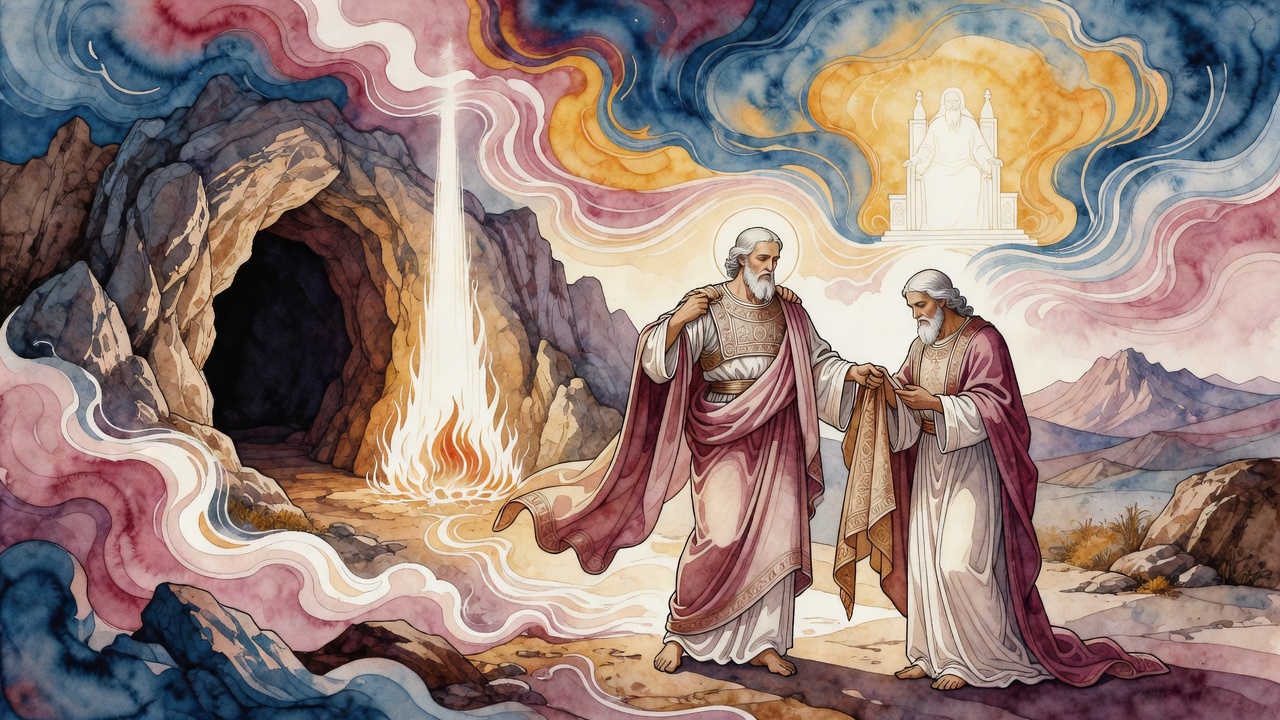
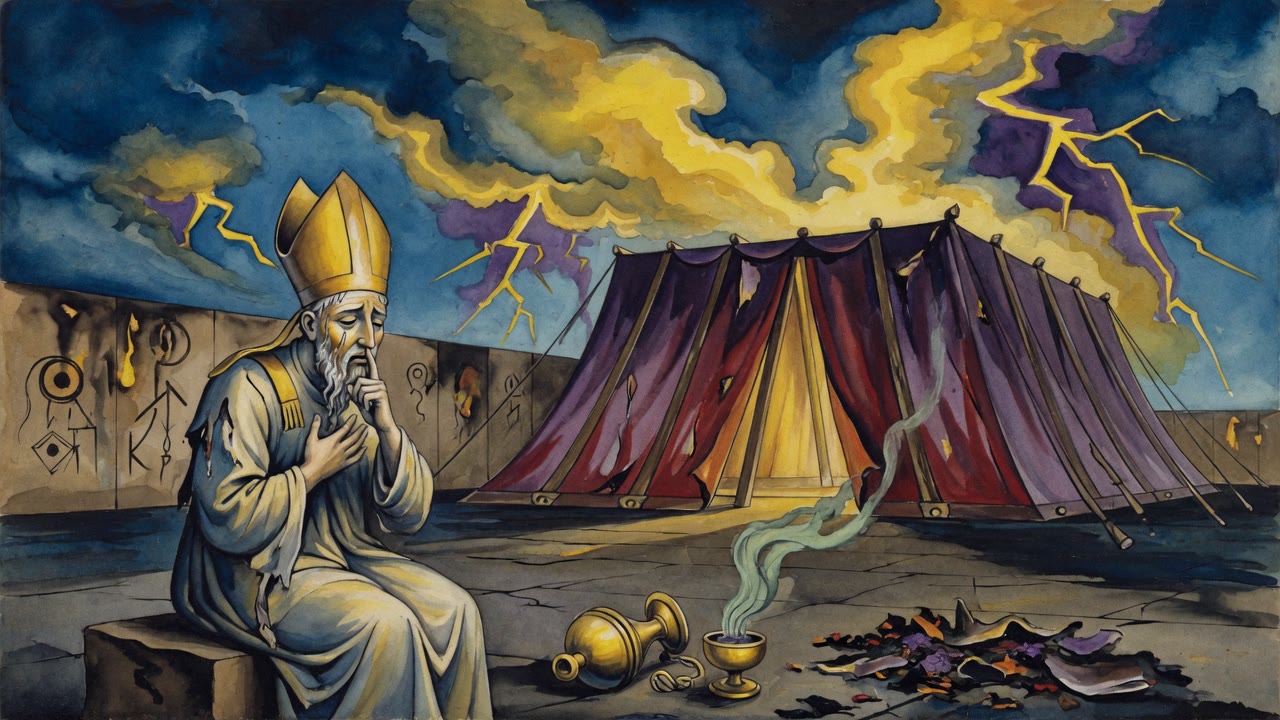
On Mount Hor a cave opened in the rock. Moses eased Aaron inside, then lifted the priestly garments from his brother's living shoulders for Eleazar.

Curated by Arthur · Told by Maggid ·
Table of Contents
  1. The Garments Came Off Piece by Piece
  2. How the Word Used to Reach Them Both
  3. A Leader Who Could Bear Every Temper
  4. Aaron Entered and Did Not Return

Moses saw the cave first. The rock wall on Mount Hor parted as if a mouth had opened in the stone, cool and deep, and the desert light stopped at the threshold. He did not tell Aaron what the opening meant. He only said they should go in and look, two brothers who had stood before God since Egypt still walking side by side while the decree waited inside the dark.

Moses Stripped Aaron Before the Cave of Death Click for full size

Aaron stepped toward the cool air. Moses held him back with a practical word, the kind brothers use when the truth would break the day open too fast. "My brother, it is not proper to enter this cave wearing the priestly garments. They might become unclean. There may be old graves inside."

Aaron trusted him. "Thou art right," he said, and raised his arms.

The Garments Came Off Piece by Piece

Moses' hands did the work. The breastplate, the robe, the ephod, each layer of glory left Aaron's body and passed to Eleazar, who stood where a son must stand when a father becomes history. The transfer was quiet. Cloth whispered. Metal clasps clicked. Outside, the camp of Israel still breathed without knowing that the high priest's office was changing owners on a mountain path.

God had commanded this. Moses obeyed with a brother's grief. He could not blurt the end. He could only undress the living man for death and dress the living son for the altar that would not wait. Aaron, bare of the holy fabric that had marked him for decades, looked smaller and more human than the nation had ever been allowed to see him.

The cave held them. No thunder. No argument. Only the knowledge that a life of speech for the people was finishing in silence. Eleazar's new weight of gold and blue cloth did not make him ready. It only made him next.

How the Word Used to Reach Them Both

Long before this mountain, in the land of Egypt, God had spoken the laws of Passover with a doubled address: "And the Lord spoke to Moses and to Aaron" (Exodus 12:1). The name of Aaron sat in the verse as if both brothers received the word at once. Another verse named Moses alone on the day God spoke in Egypt (Exodus 6:28). The tension was not a clerk's error. It was the shape of their partnership.

The direct channel ran through Moses. Aaron overheard. He was included as a man who stood close enough to catch what heaven poured into his brother, not as a second prophet with a separate wire to the throne. Deference to Moses set the order of speech across the Torah, except for a few places where the wording forced Aaron himself into the address. For most of their life together, glory belonged to Moses' mouth and service belonged to Aaron's hands.

That order held even now. Moses still spoke. Aaron still listened. The garments moved because Moses' hands still carried the command. The man who had overheard revelation in Egypt now overheard his own death arranged in careful excuses about unclean cloth and old graves.

A Leader Who Could Bear Every Temper

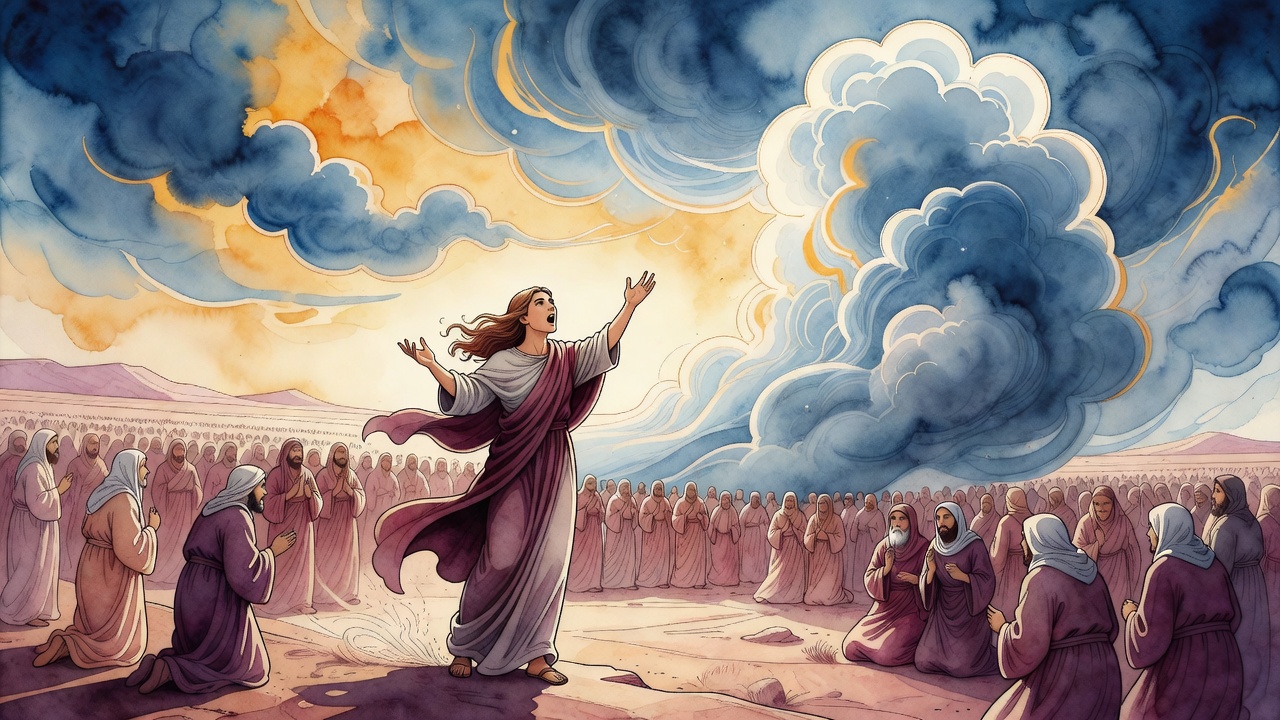
Later, when Moses' own death pressed near, he did not ask only for power to continue. He asked for a successor who could hold the different temperaments of Israel, each spirit weighted differently, faces unlike faces. "Let the Lord, the God of the spirits of all flesh, appoint someone over the congregation" (Numbers 27:16). He had watched Aaron carry a nation of complainers, singers, rebels, and faithful ones. He knew leadership that fails one temperament fails the flock.

Crowds of human beings show faces never the same, and spirits never the same. Moses had learned that truth beside Aaron through forty years of camp noise. Eleazar received the garments on Mount Hor. Joshua would later receive the charge of the people. Two transfers, two kinds of succession: priestly cloth and public burden. Moses stood at the hinge of both, the man who undressed his brother and then begged heaven for a leader soft enough and strong enough for every spirit.

The cave on Hor was not only a tomb. It was a school in how power leaves a body without leaving the covenant.

Aaron Entered and Did Not Return

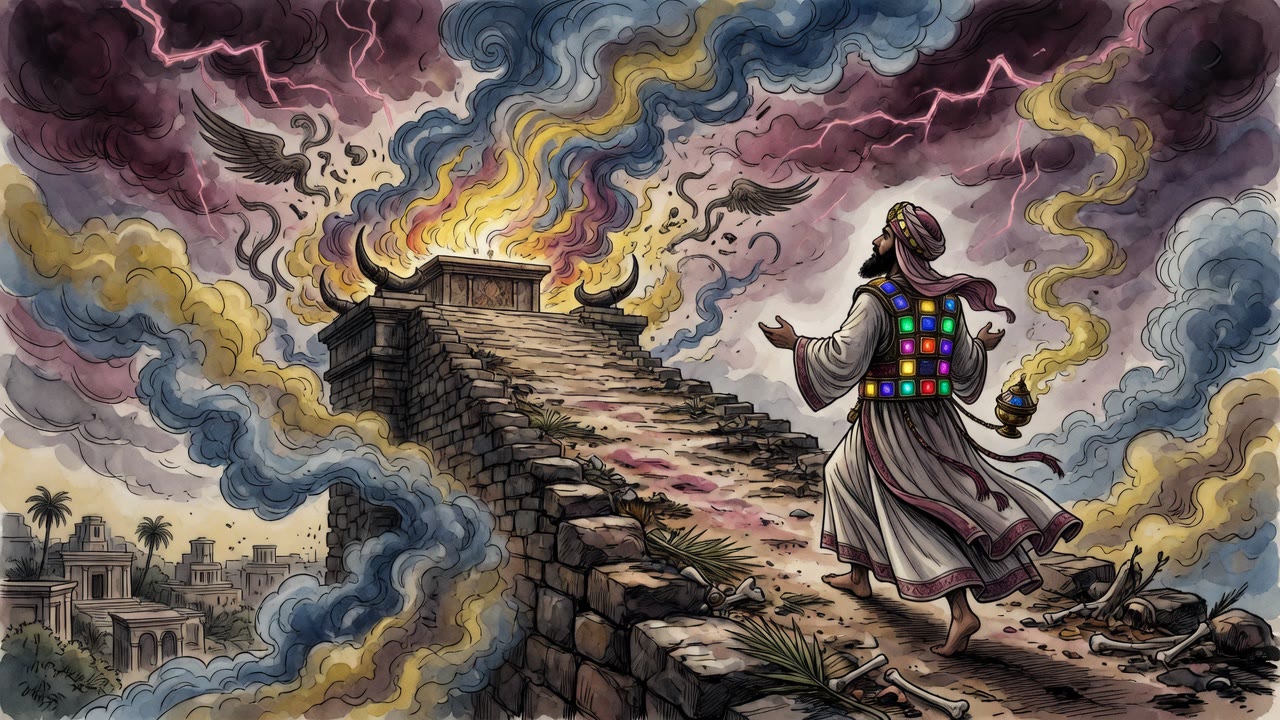
The legends fill the Torah's spare report (Numbers 20:22-29). Moses led Aaron in. The beauty of the cave was a kindness and a trap. Graves may have waited in the stone, or only the bed prepared for a priest who would sleep without waking. Eleazar wore what Aaron had worn. The nation would soon weep thirty days, but in the cave the weeping began in Moses' throat before any public wail.

Aaron died as he had lived beside his brother: trusting the man who guided him, clothed then unclothed by commandment, included in the work even when the word came through another mouth. The first high priest of Israel left the mountain without his garments and without his breath.

Moses came down with Eleazar shining in borrowed glory and with a silence that no speech of Egypt could fill. The camp saw the new priest and understood the old one was gone. The mountain kept its cool mouth shut.


← All myths
From the tradition

Sources

3 sources

The texts behind this telling. Some cards carry a translation of the source; others are our own retelling of it, and each card says which. Every card links out to the original.

Legends of the Jews 5:66Legends of the Jews

Retold in our words. Read the original at the link below.The Legends of the Jews by Louis Ginzberg (1909) · Public Domain

The Torah tells us Aaron died on Mount Hor (Numbers 20:22-29), but the how of it, well, that's where the legends fill in the gaps, adding layers of human emotion to a divine decree.

In Ginzberg's retelling in, Legends of the Jews, Moses and Aaron were walking along, perhaps deep in conversation, when a cave suddenly appeared before them. Moses, knowing what was about to happen, asked Aaron to enter.

Moses is faced with a terrible task. God has told him to remove Aaron's priestly garments and give them to his son, Eleazar. But how do you even begin to tell your brother, your lifelong companion, that his time is ending?

Moses, ever the leader, but also a loving brother, couldn't just blurt it out. He had to find a way to approach the subject with sensitivity. So, he says to Aaron, "My brother, it's not proper to enter this cave wearing the priestly garments. They might become unclean. It’s a beautiful cave, and there might be old graves inside." A practical excuse, a gentle way to ease into the inevitable.

Aaron, trusting his brother implicitly, replies, "Thou art right." And with that, Moses, following God’s command but undoubtedly with a heavy heart, removed the priestly garments from Aaron and placed them upon his son, Eleazar.

The weight of duty, the pain of loss, all wrapped up in this simple act of changing clothes.

Full source
Midrash Tanchuma, Pinchas 10Midrash Tanchuma

Retold in our words. Read the original at the link below.Townsend 1989 translation of Midrash Tanhuma, S. Buber Recension · CC-BY

(Numb. 27:15-16:), “And Moses spoke […], ‘Let the Lord, [the God of the spirits of all flesh], appoint….’” Let our master instruct us: What blessing does one say on seeing a human being that is different? Thus have our masters taught: On seeing a black person, one with white blotches, a hunchback, a pockmarked person or one afflicted with dropsy, one says, “Blessed is the One who makes mortals different.” On seeing an amputee, someone blind, or someone smitten with boils, one says, “Blessed is the true Judge.” When [should one recite this]? When they who were [once] whole have become different. But if they were like that from their mother's womb, one says, “Blessed is the One who makes mortals different.” On seeing good creatures and good trees, one says, “Blessed is the One who has created such things in his world.” But if he sees crowds of human beings, he says, “Blessed is the One who is learned in mysteries.” [As] just as their faces are unlike each other, so are they unlike in temperament. Rather each and every individual has his own individual temperament; and so it says (in (Job 28:2)5), “To fix a weight for the spirit,” [i.e.,] the [spiritual] weight of each and every individual. You yourself know that it is so, because of what Moses asked from the Holy One, blessed be He, at the time of his death, when he said to him, “Master of the world, the temperament of each and every person is revealed to You; and the temperament of one person is unlike the temperament of another. Now that I am departing from them, would You please, if You so desire to appoint a leader over them, appoint over them a person who will bear with each and every one of them according to his temperament.” Where is it shown? From what they have read on the matter (in Numb. 27:16), “Let the Lord, the God of the spirits of all flesh, appoint [someone over the congregation]….”

Full source
Mekhilta Tractate Pischa 1:1Mekhilta DeRabbi Yishmael

Retold in our words. Read the original at the link below.Mechilta, translated by Rabbi Shraga Silverstein · CC-BY

The opening of the laws of Passover begins (Exodus 12:1) "And the L-rd spoke to Moses and to Aaron in the land of Egypt, saying." The Mekhilta DeRabbi Yishmael, the school of Rabbi Yishmael's halakhic commentary on Exodus, refuses to read the doubled names casually. At first glance one might think both Moses and Aaron stood as equal recipients of the divine word. The rabbis test that assumption against another verse (Exodus 6:28) "And it was on the day that the L-rd spoke to Moses in the land of Egypt," which names Moses alone. From this they conclude that the direct address was to Moses and not to Aaron.

If so, the difficulty returns: why does our verse name Aaron at all? The sages answer that we are hereby taught that just as Moses was included in the words by having them spoken directly to him, so Aaron was included in the words by overhearing them as they were given. Aaron shared in the revelation even though the channel ran through his brother.

And why did God not speak directly to Aaron? The Mekhilta answers: in deference to Moses, to preserve the unique standing of the prophet through whom the Torah would come. The rabbis then generalize the principle across the whole Torah. Aaron is excluded from all the direct divine addresses except for three passages (Leviticus 10:8, (Numbers 18:1), Numbers 18:8), where the wording makes it impossible to understand the speech as having reached Aaron through Moses. In those three cases alone God addressed Aaron himself, and everywhere else the honor of Moses set the order of speech.

Full source