Gold from the Calf Becomes God's Own Dwelling
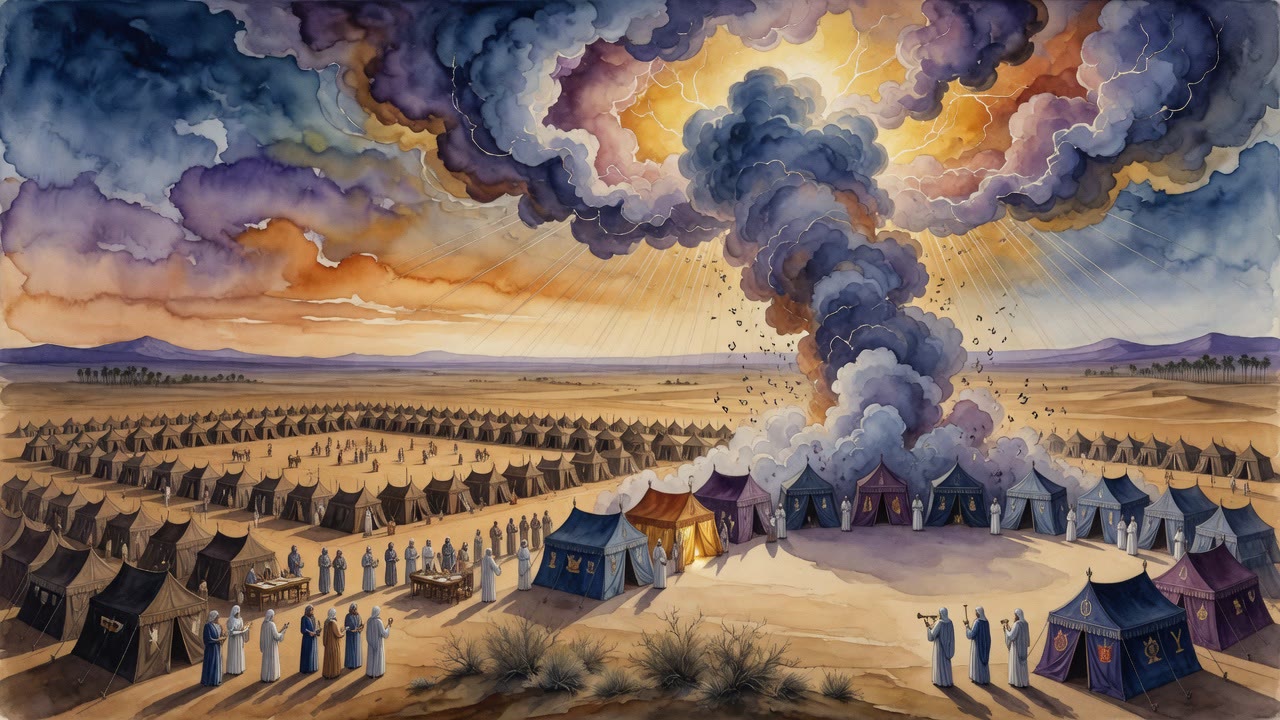
After the calf, God asks for gold again, the same metal of betrayal funding a sanctuary so the nations see Israel forgiven.
Table of Contents
 Click for full size
The Metal That Burned the Camp
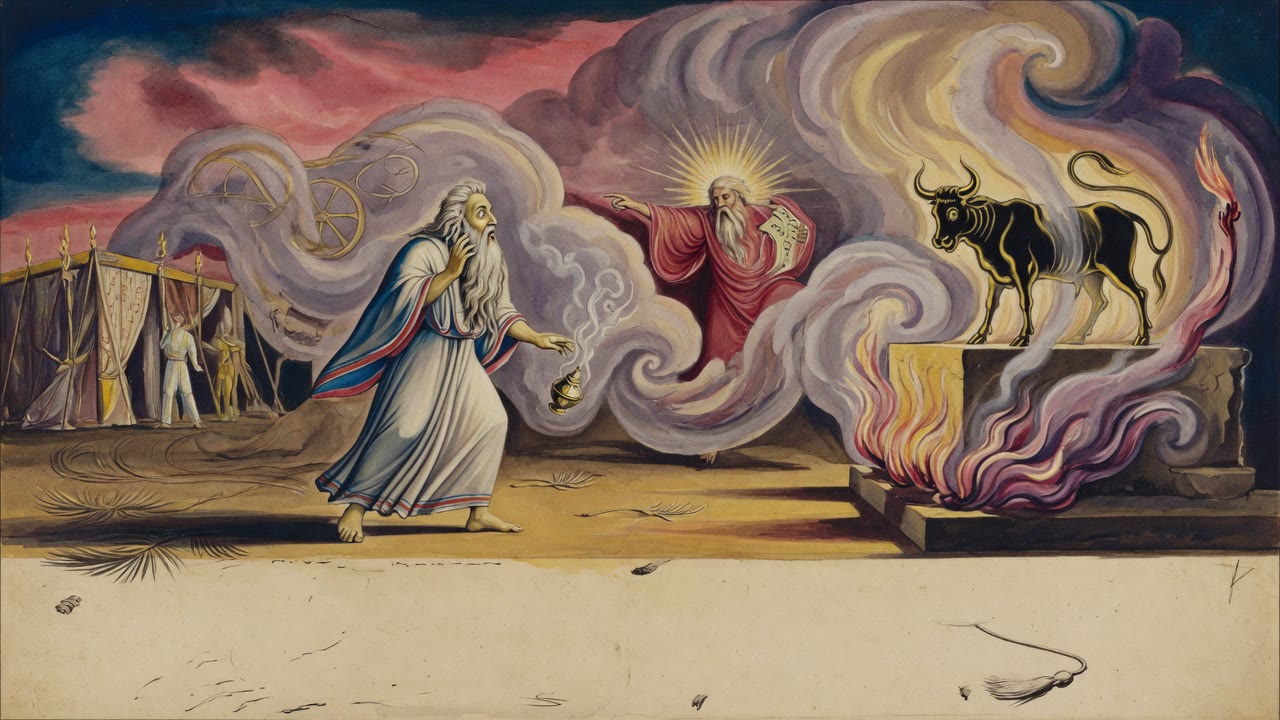
The calf still lived in the people's hands as a memory of heat. Earrings melted. A shape stood. Song turned ugly. Then tablets broke on stone, and ash of shame stuck to every finger that had given jewelry without asking what the fire was for.
Moses came down the mountain into a camp that smelled of idol and fear. Bodies still held the rhythm of a dance they now hated. Forgiveness would not arrive as a slogan. It would arrive as work, weight, and a second request for gold.
Some men buried their faces. Some blamed the delay on the mountain. Moses blamed no one aloud at first. He had intercession to finish and a people to keep from vanishing under wrath.
Take for Me
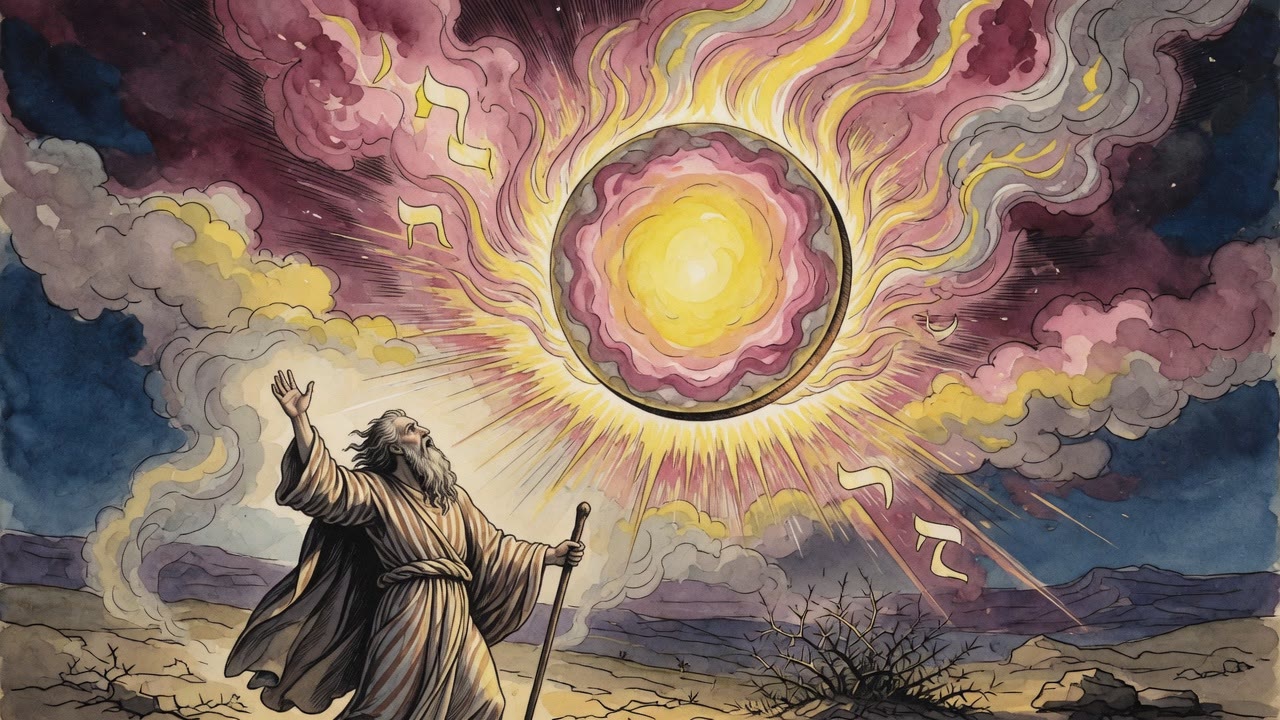
God spoke the remedy in the language of building. "Let them make Me a sanctuary, that I may dwell among them." Not far off on a peak only Moses could climb. Among them. In the middle of the dusty rows where the calf had danced.
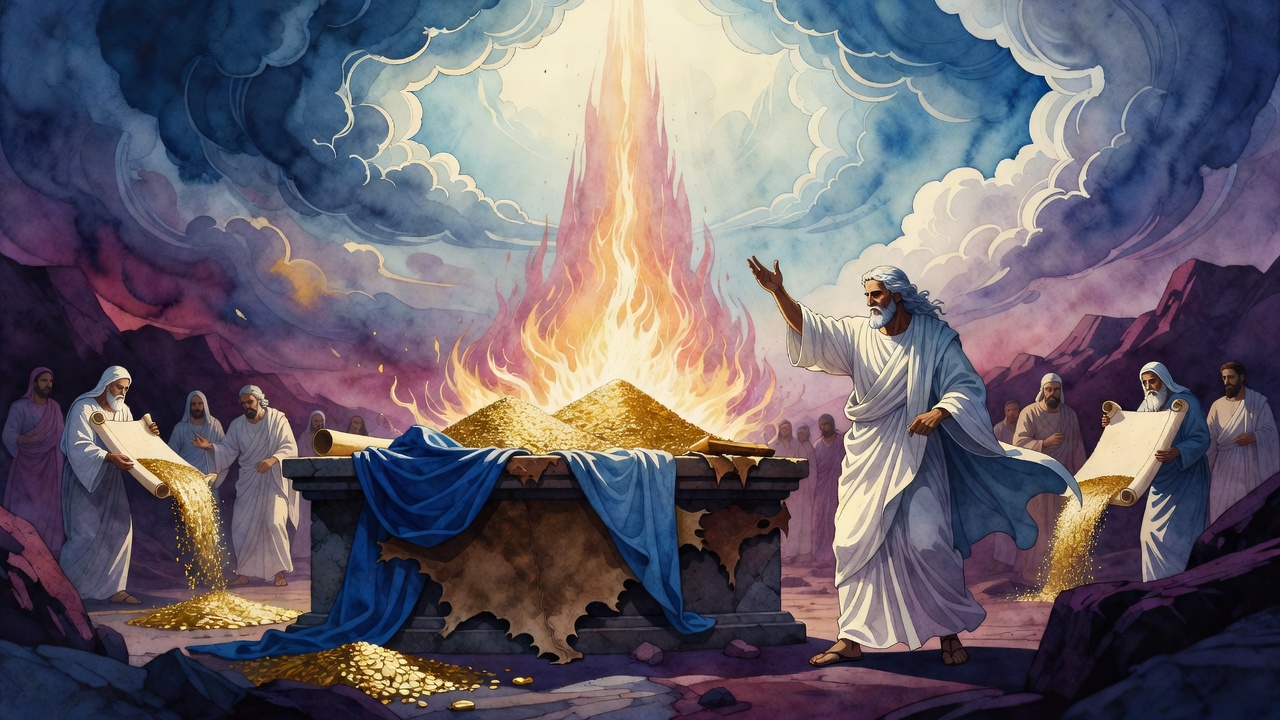
The prescription named the poison. "The gold of the Tabernacle shall serve as an expiation for the gold they employed in the construction of the Golden Calf." The same shine. A different obedience. Nations were meant to watch and understand: the people who stumbled were not discarded. They were given a dwelling to build for the One they had betrayed.
Gold, silver, brass, blue, purple, scarlet, linen, goats' hair, skins, wood, oil, spices: materials enough to empty chests and fill a courtyard with motion. Each gift was a chance to put the hand to service instead of spectacle. The offering was not a tax on guilt alone. It was a path for blessing to ride in on gifts given "for Me."
Moses repeated the words until even the stubborn heard the pivot: the metal that made a mute god would now frame rooms for the living God.
Two Mornings of Overflow
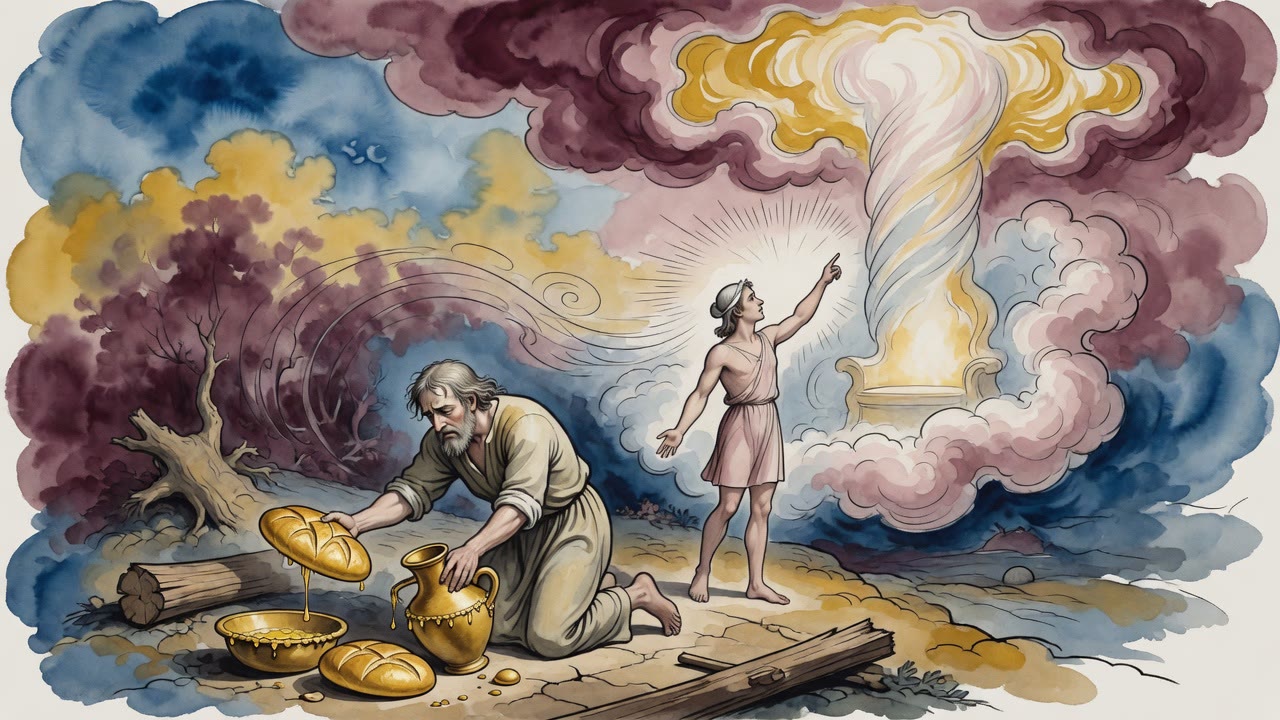
When the call went out, the camp did not trickle gifts. Freewill offerings arrived morning after morning until the phrase itself doubled: baboker baboker, every morning, every morning. In two mornings they brought what the work required, because blessing clung to gifts marked for God and not for show.
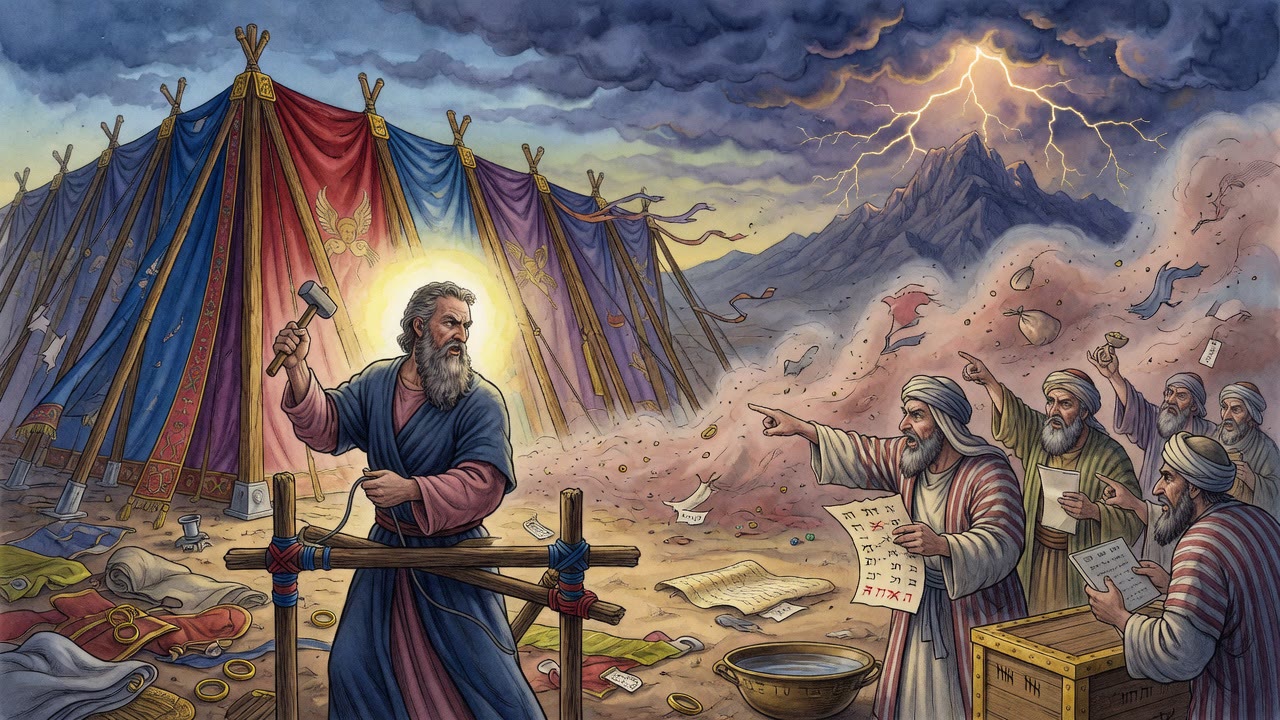
Women spun. Men cut. Children carried rings that had once been private pride. A man who held back a hundredth of a priestly portion was not cheating a clan only. He was stealing from the One who said the offering was "for Me." The sanctuary economy ran on that sentence. Ownership flipped. What left a tent toward the building site no longer belonged to private pride.
Bezalel and the craftsmen received more than skill. They received a flood of material that forced them to say, enough, the work is supplied. Generosity after betrayal has a special heat. It burns cleaner than the first fire.
Opposite the Glory
They counted the Tabernacle's accounts with care, boards and sockets and loops, because love of a house shows in inventory as much as in song. "Lord, I love the habitation of Your house, and the place where Your glory dwells" (Psalm 26:8). The earthly sanctuary stood opposite the heavenly one, mirror under mirror, so that dust and gold below answered fire and throne above.
A people who had once gathered gold for a mute idol now hammered gold for a place that would hold presence without reducing it to a statue. The difference was not decorative. It was the whole recovery. Curtains moved like slow water. The courtyard taught borders. The holy rooms taught silence that was not empty.
When Moses inspected the work, he saw more than craft. He saw a camp learning how to spend the same metal twice for opposite ends.
Dwelling After Betrayal
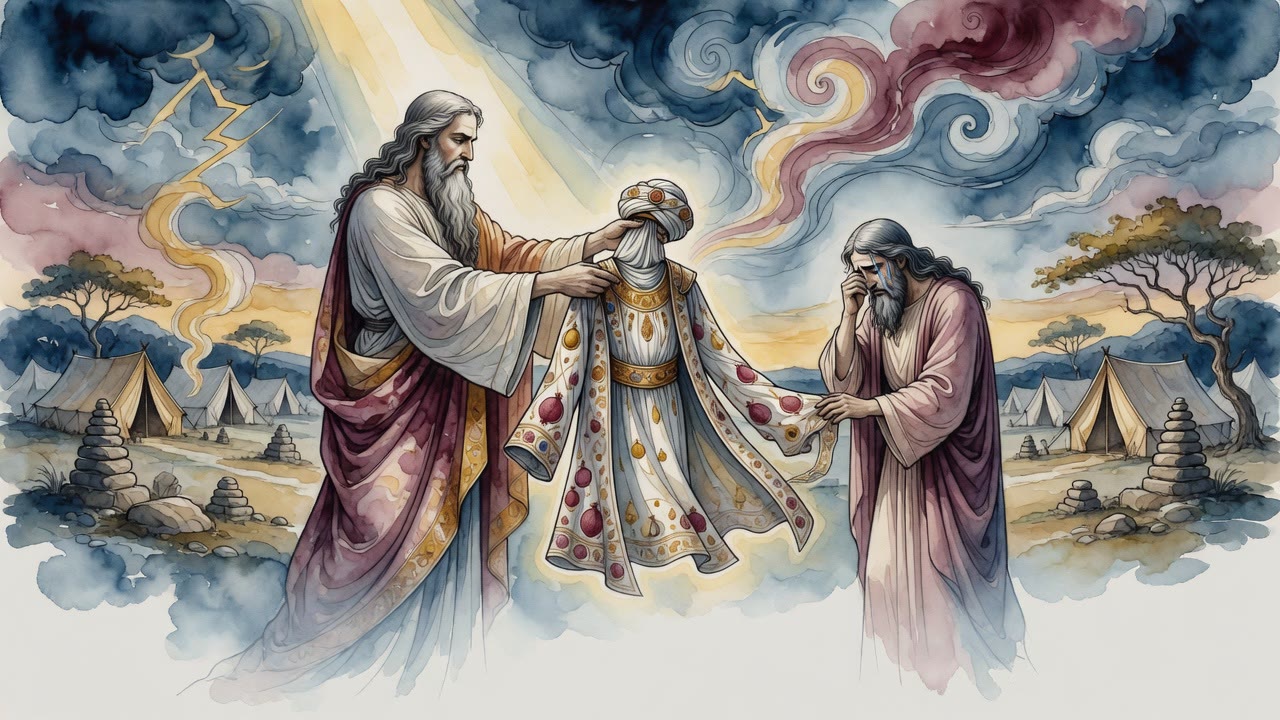
Moses watched the structure rise and knew the scandal of mercy by its architecture. God did not ask for a monument to the calf's defeat. God asked for a neighbor's house in the camp, curtains and court and holy rooms, so forgiveness could be walked through daily and not only remembered as a near-death on the mountain.
When the last peg held and the cloud could settle, the metal of the old sin had been spent into service. The nations, if they looked, would see more than craft. They would see a people still chosen after failure, still commanded to give, still trusted with an address for glory in their midst.
In the evenings, craftsmen washed dust from their arms and could still hear the calf's old song trying to return as a tune without words. They answered with hammer rhythms. Cloud and fire would later teach travel, but first the camp learned how to host. Forgiveness took up an address. Children would grow up knowing the courtyard path by foot.
Night came. Lamps waited for oil. The calf's gold had tried to make a god. The Tabernacle's gold made room for God. That reversal is the story's hinge, and it still turns whenever a hand offers the same gift twice, once for betrayal and once for dwelling.
← All myths