Tabernacle Gold Paid for the Calf's Crime
Weeks after the calf, so much gold came in that Bezalel reported more than the work could use. Moses raised both hands and shouted for the giving to stop.
Table of Contents
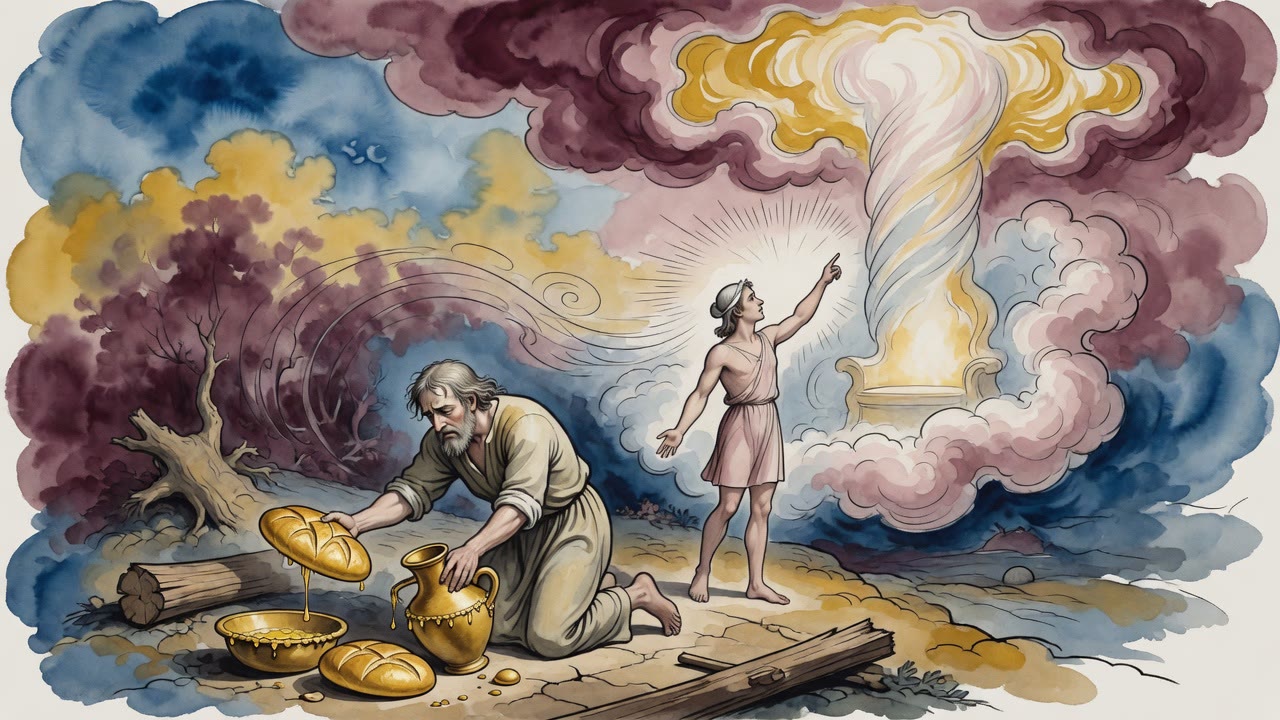
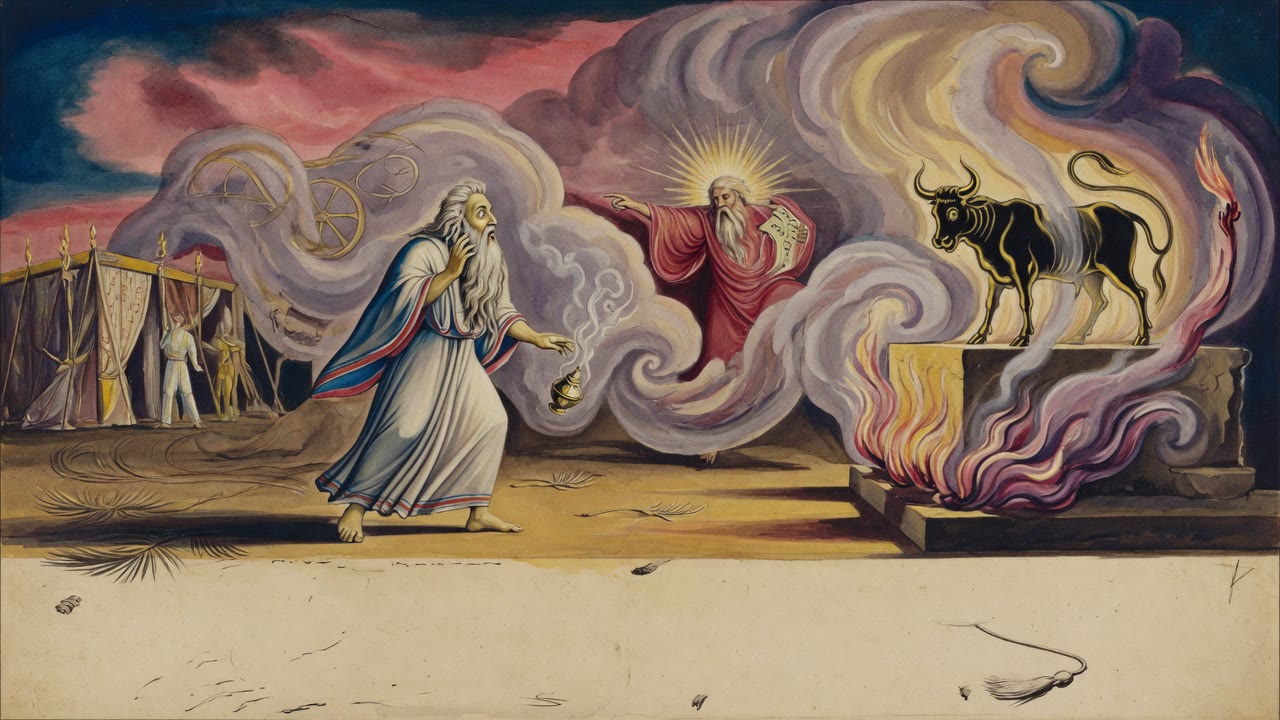
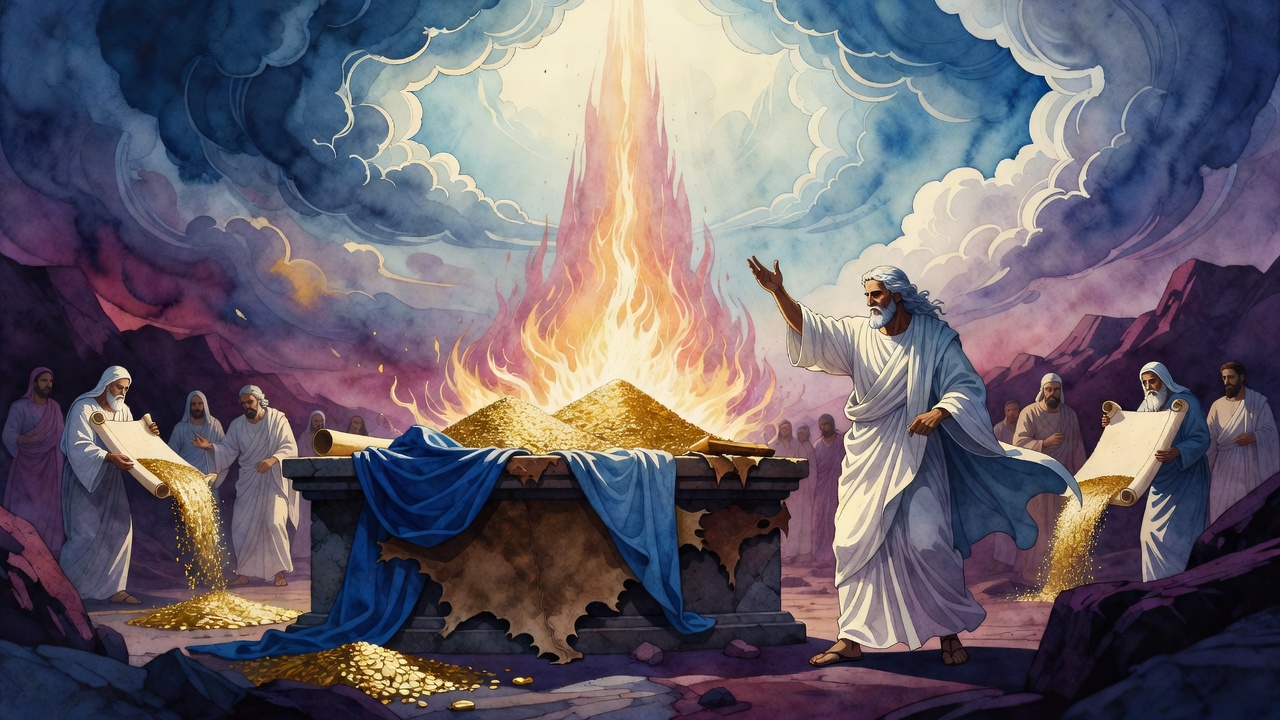
Moses raised both hands and shouted for the bringing to stop. Gold kept coming. Earrings, rings, plates of beaten metal, the camp's wealth walking itself into the collectors' baskets until Bezalel and Aholiab reported they had more than the work could swallow (Exodus 36:5-6).
 Click for full size
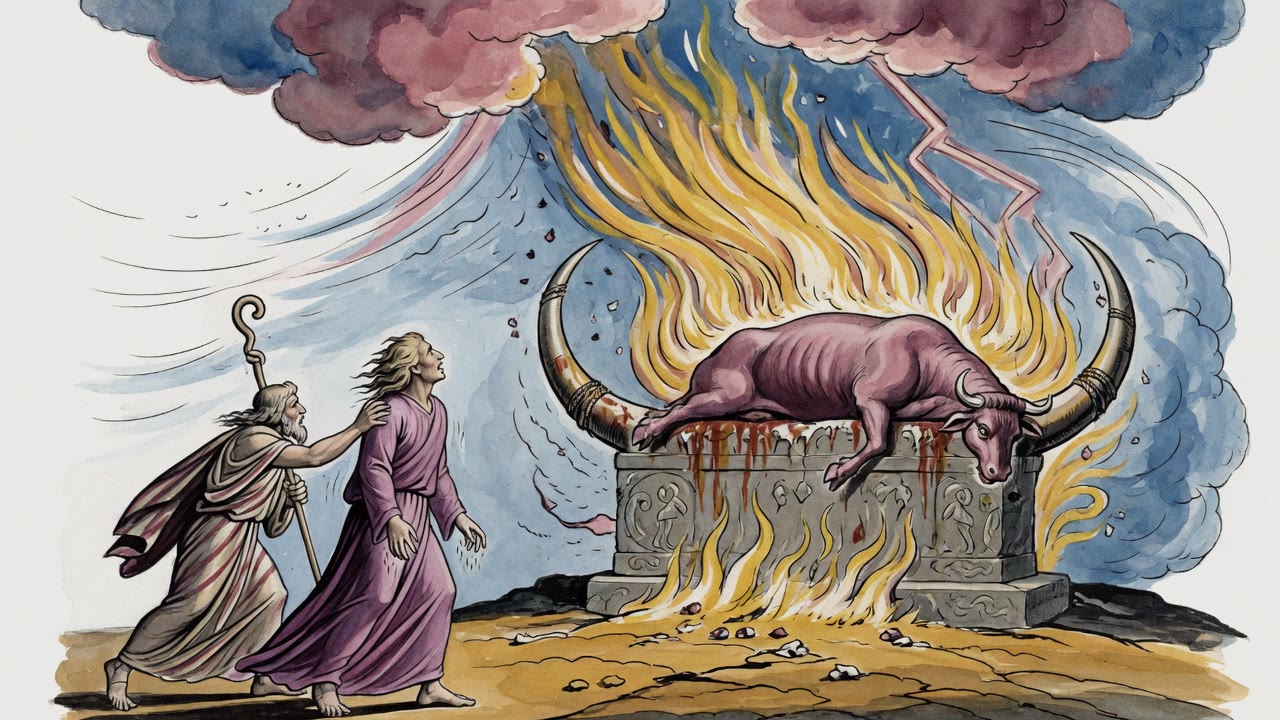
Only weeks earlier that same gold had poured into a calf. Now it poured into a dwelling.
A Portable Cosmos on Desert Stakes
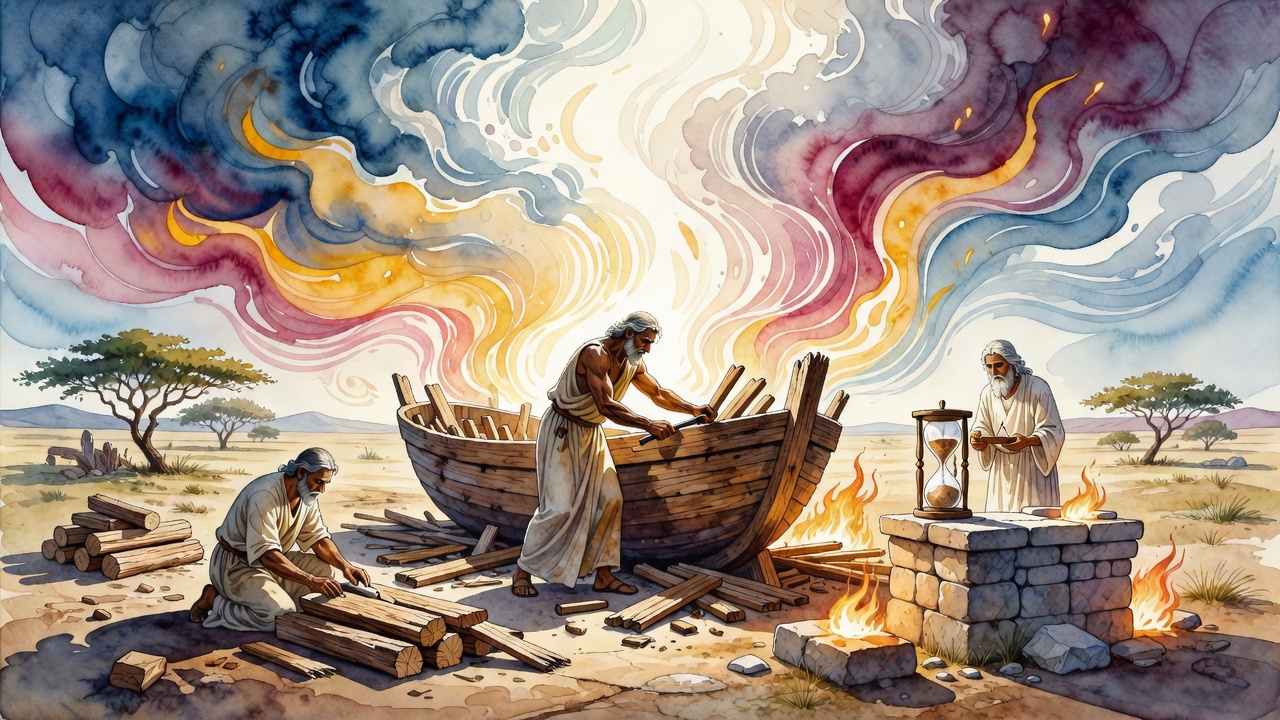
The courtyard ran a hundred cubits by fifty, bronze pillars, silver capitals, linen walls tugged taut by cords and stakes driven into sand. The gate burned with purple, scarlet, blue, and embroidery between silver posts. Inside waited the basin where priests washed before they stepped toward God.
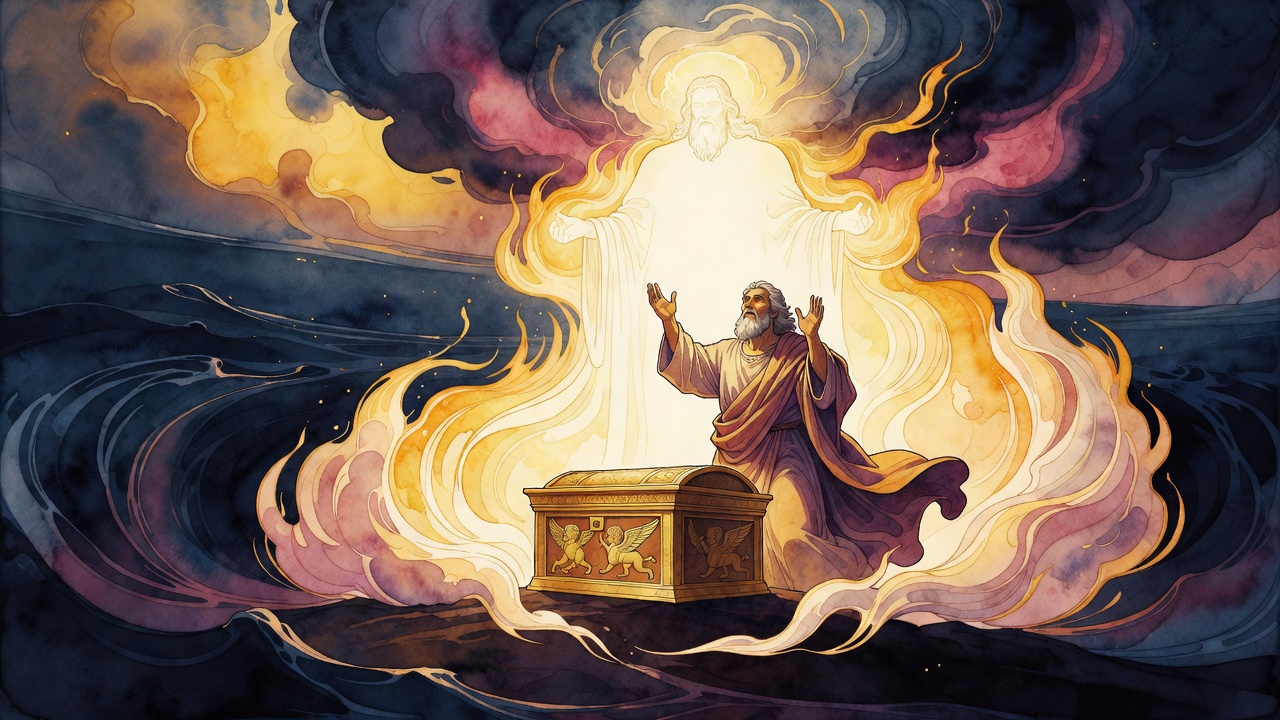
The Tabernacle itself faced east so first light would strike it. Thirty cubits long, twelve wide, wood sheathed in gold until the seams vanished into a single gleam. Holy Place for priests. Holy of Holies as a chamber of heaven reserved for God alone. The Menorah's seven branches for the seven planets. Twelve loaves for the twelve months. The Ark on priests' shoulders, never dragged by beasts, cherubim on the lid like forms Moses had seen near the throne.
Israel was not renting holiness. It was building a moving world that could break camp when the cloud lifted and still keep a center that did not move in the heart. Children ran between the stakes until someone scolded them back. The smell of acacia and oil mixed with desert wind. A nation of former brick-makers was learning joinery for the Presence.
Gold Against Gold
Heaven's prescription for the calf was gold answering gold. "The gold of the Tabernacle shall serve as an expiation for the gold they employed in the construction of the Golden Calf." Thirteen kinds of gift answered thirteen kindnesses done for Israel in Egypt. Do not imagine, the teaching warns, that you are enriching God. You are repaying a ledger already written in your favor: clothing, covering, adornment, rescue.
So every board and socket carried a double weight. Craft, yes. Atonement, also. The nations were meant to see a people forgiven enough for the Presence to dwell among them. "Let them make Me a sanctuary, that I may dwell among them" is not interior decoration. It is public proof that the calf did not get the last word.
Moses, who once ground the calf to powder, now oversaw gold that would not be danced around but carried in silence under covers when the camp moved. The metal remembered both uses. The people had to remember which use they were choosing each time a ring left a hand.
Blue Cloth, Tahash Hide, Separate Poles
When the cloud signaled travel, the golden altar of incense did not travel naked. First a cloth of sky-blue wool, tekhelet, then a covering of tahash hide, then the staves set for bearing (Numbers 4:11). The utensils of that service, spoon for incense and pan for coals, rode apart on their own blue cloth and hide, on their own pole (Numbers 4:12). The altar that stood in the holy place received layers because of where it had stood.
Packing was theology with knots. Holiness is not shoved into a sack. It is wrapped, counted, and kept from scraping against ordinary freight. The same generation that once melted gold in panic now handled gold with a liturgy of covers. That is how atonement looks in the hands: not a speech, but a careful fold of blue over metal that had learned a better use.
Levite shoulders took the weight. The spoon that had fed spice to coals rode like a small ark of its own. Anyone watching the march saw not clutter but ranked reverence, each object in its cloth, each cloth in its place, the calf's opposite: frenzy replaced by inventory under God.
A Girdle God Will Not Loosen
While the dwelling rose, another image held the relationship. The Holy One told Moses that Israel clings to Him as a girdle clings to a man's loins. Because of that love He came down from the heavenly sphere to dwell behind curtains of goats' hair. Moses cried out that the commands kept naming only the children of Israel, not the seventy nations. The answer came without apology. They are My treasure. I have chosen them.
The Tabernacle is that clinging made visible. Gold that once shaped a rival now shapes rooms for the Name. When later ages wrap the incense altar for the road, they are still protecting the place where a forgiven people and a dwelling God refuse to let go of each other. Moses' shout to stop the giving was not thrift. It was the sound of overflow meeting a blueprint, calf-guilt already being spent as sanctuary light.
Night after night the cloud stood. Day after day the work held. A people learning to pack blue cloth over gold was a people learning that forgiveness is not only a feeling after a disaster. It is carpentry, weaving, and the long discipline of carrying holy things without dropping them into the old panic that once made a calf.
← All myths