Parshat Vayakhel5 min read

Acacia Wood Atoned for the Sin at Shittim

The plating was pure gold. Underneath, Bezalel's boards came from a tree whose name matched the place where Israel would later fall to Moabite women.

Curated by Arthur · Told by Maggid ·
Table of Contents
  1. Wood Named for a Future Wound
  2. Make Me, Not Only Thou Shalt Do
  3. Three Crowns and a Stranger
  4. Only Certain Woods for the Fire
  5. On the Day, After the Anointing
  6. Repair Built into the Furniture
Acacia Wood Atoned for the Sin at Shittim Click for full size

Wood Named for a Future Wound

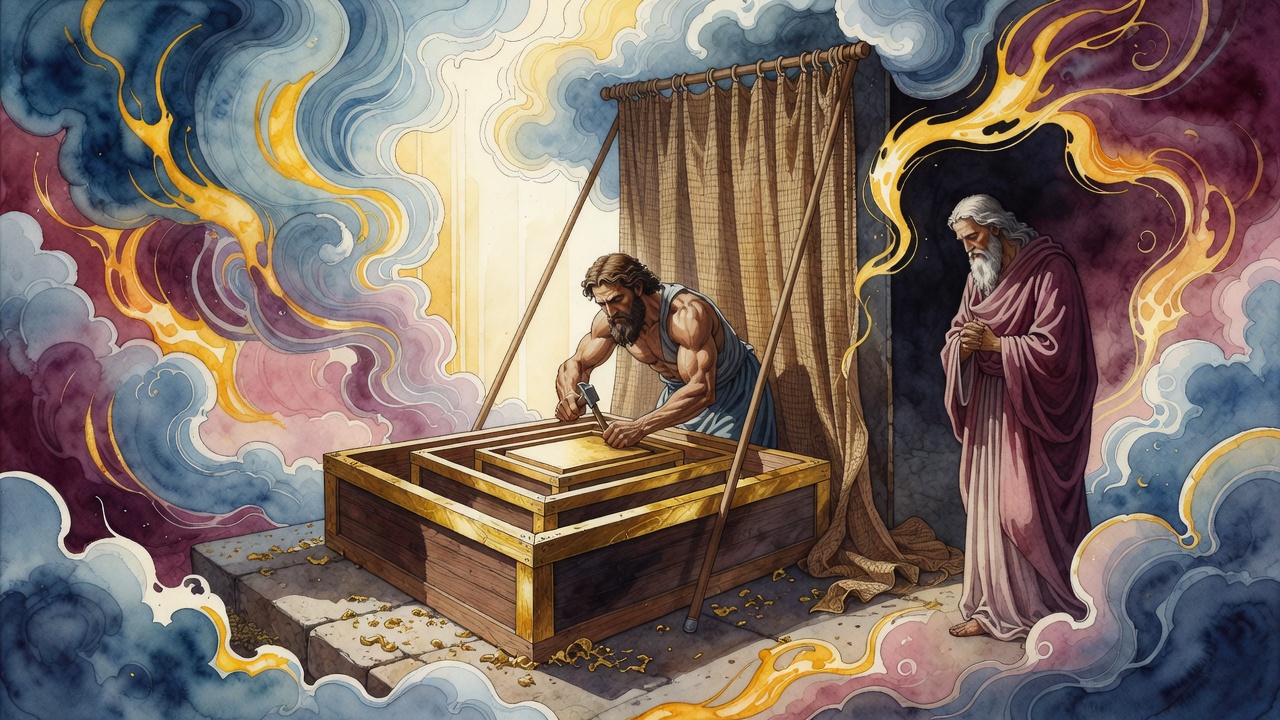
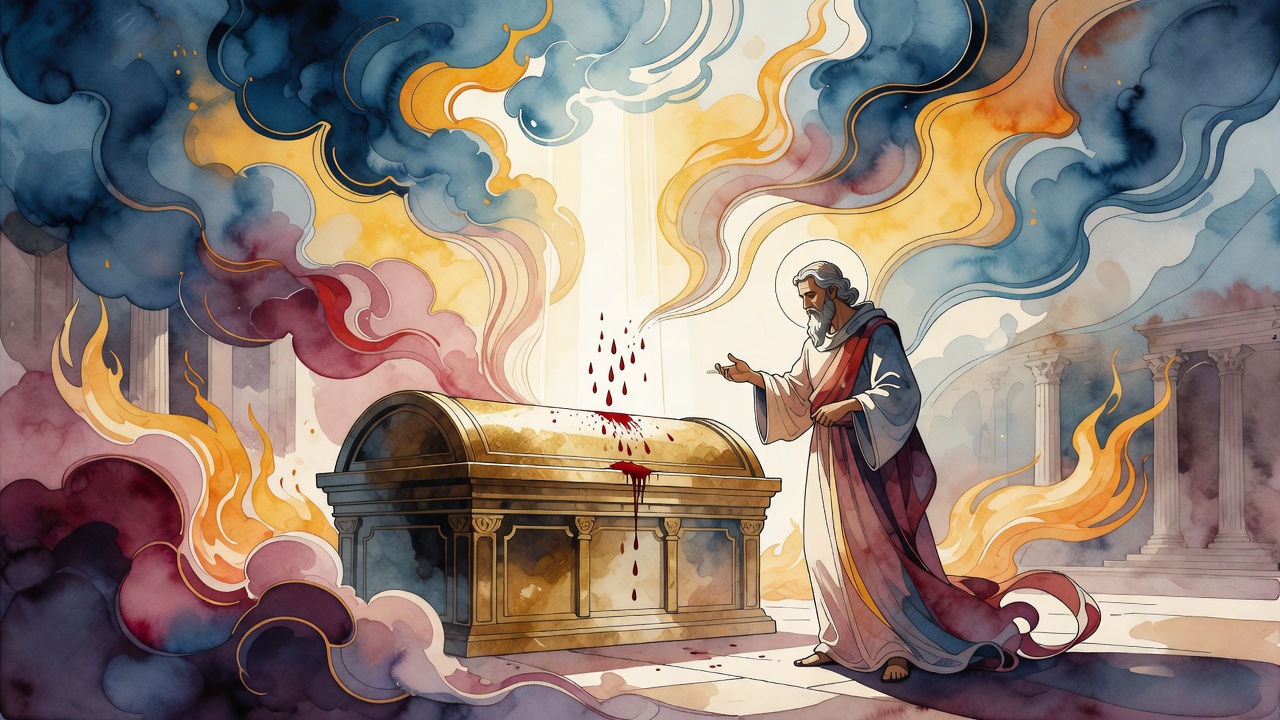
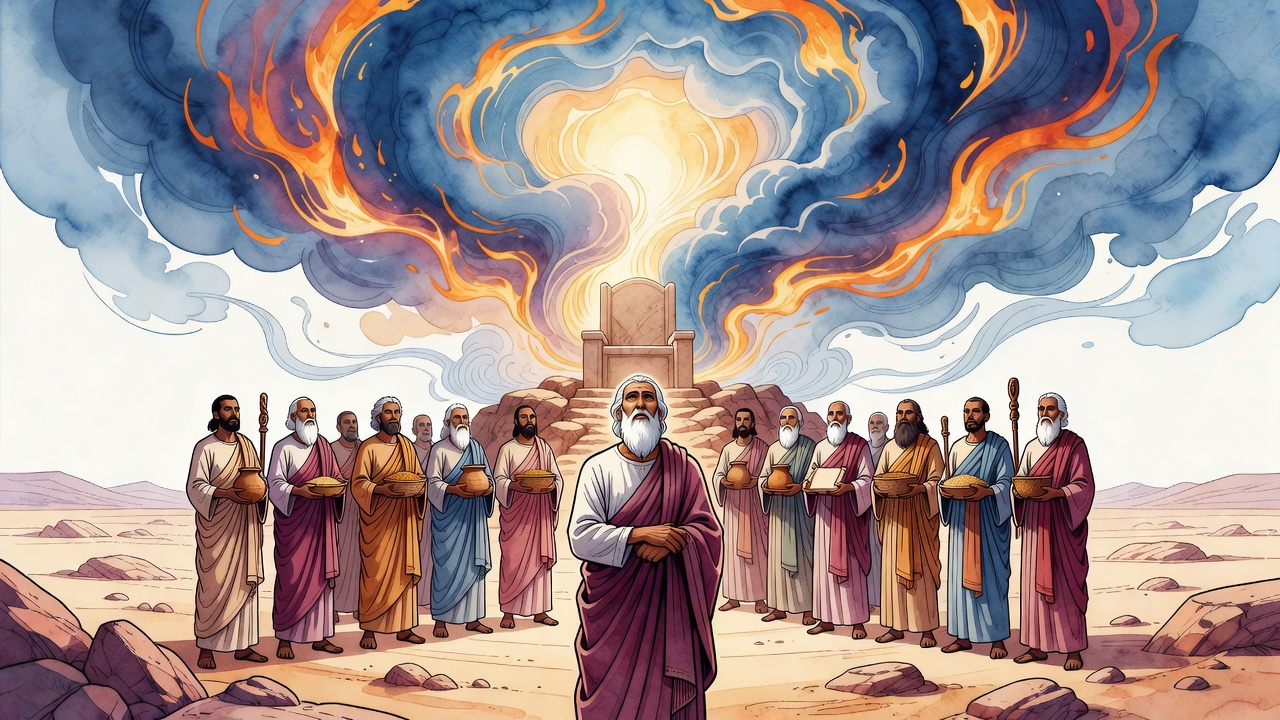
Bezalel made the ark of acacia wood (Exodus 37:1). Midrash Tanchuma hears a plan older than the carpenter's hand. Him-who-spoke-and-the-world-came-into-being already knew Israel would sin at Shittim, in the plains where Moabite snares waited (Numbers 25). So He prepared shittim, acacia, for the ark, that the same name might atone for the place of the fall. The holiest box in the camp is built from the word of the wound. Gold will cover it. The wood underneath still remembers a future failure and a prepared repair.

"And he overlaid it with pure gold" (Exodus 37:2). The midrash sees students of Torah in that plating. Wood adorned by gold. A body adorned by learning in the heart. Torah purifies heart and kidneys the way men praise pure gold (Psalms 19:11). The ark is furniture and figure at once.

Make Me, Not Only Thou Shalt Do

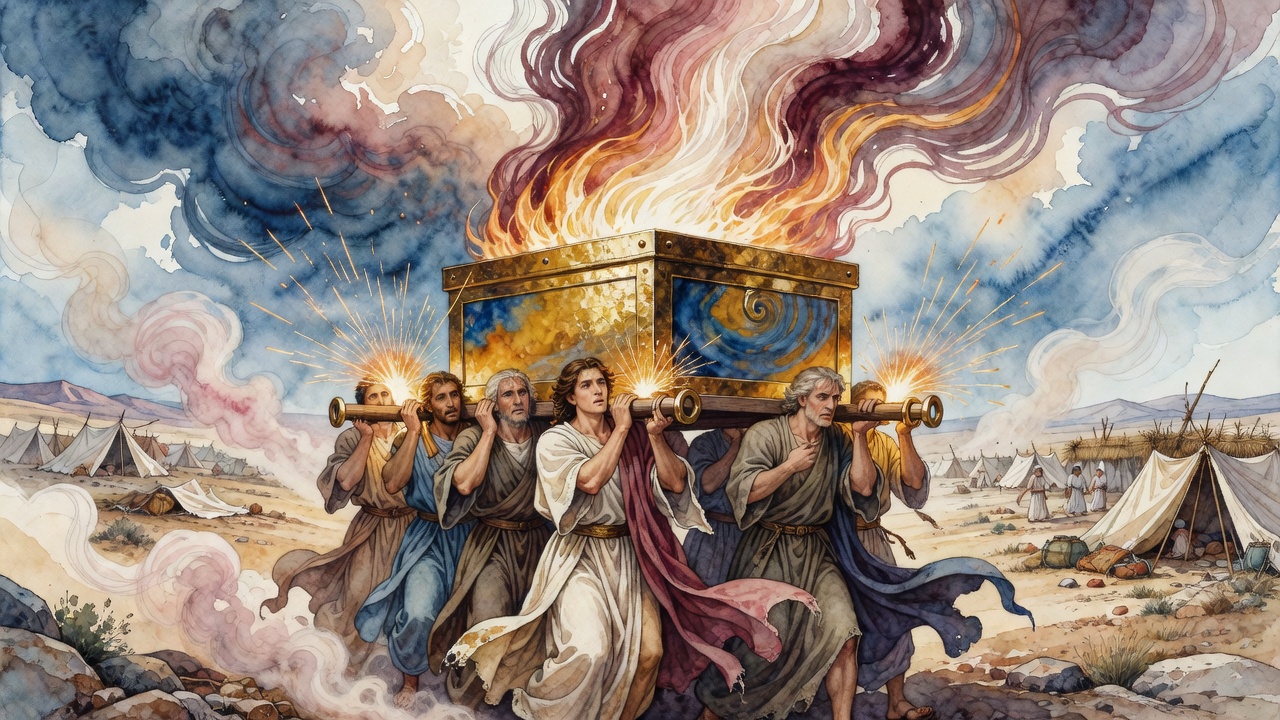
For the rest of the Tabernacle God told Moses, "Thou shalt do," detail by detail. For the ark He said, "Make Me." Why the shift? Because all Israel must have a share in the ark so that no one can sneer at his fellow. I gave more, so I own more Torah. You gave little, so stand outside. The Holy One blocks that mouth in advance. The ark is "Make Me" in the plural work of a whole people.

Torah is likened to water (Isaiah 55:1). No one is ashamed to ask for a drink. No one should be ashamed to ask a younger student to teach a line. Learning without price. Desert free for all who enter. Inheritance of the congregation of Jacob (Deuteronomy 33:4), including the outsider who joins the learning. The sons of Yitro sit in Chronicles as scribes at the gate, hearers and teachers, wrapped in the spirit, Kenites who took the law in public because the law was spoken to all the assembly (Deuteronomy 5:19).

Three Crowns and a Stranger

Rabbi Simeon son of Yohai counts three crowns. Torah on the ark. Priesthood on the altar. Kingship on the table. Each wears gold. On the ark the written word can be read as zar, stranger, or zer, crown. If a man is worthy, the Torah is his crown. If not, he is a stranger to what he touches. "And thou shalt make upon it" teaches that one who is worthy of Torah is worthy of the rest. Charge of ark and table and lamp and altar falls to those who hold the law, because no one outranks the person who stays with the teaching.

Shittim wood under gold is not only botany. It is a hierarchy with a mercy clause. The crown can become a stranger. The stranger can take up the crown by learning.

Only Certain Woods for the Fire

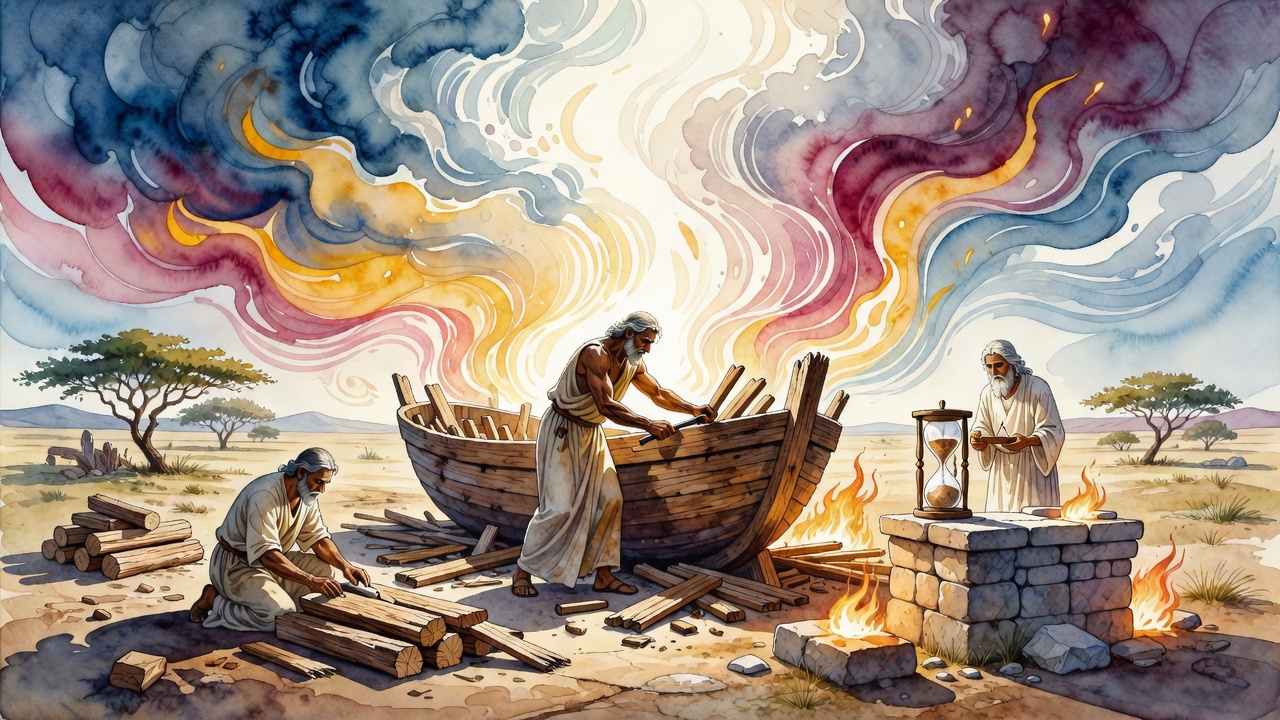
Abraham, in the Book of Jubilees, charges Isaac about the altar with the same kind of precision. Not every wood may go on the fire. Besides the listed kinds there is none other, for the fragrance of the wrong wood disperses and does not rise. Intentional fuel. Clean body. Wash before approach. Wash hands and feet before drawing near. Wash again when the offering is done. Let no blood stain clothes. "Observe this commandment and do it, my son, that thou mayst be upright in all thy deeds."

The ark's acacia and the altar's chosen woods speak one language. Materials are not neutral. Heaven smells the difference. Atonement prepared in shittim still wants a fire that knows which branches belong.

On the Day, After the Anointing

Sifrei Bamidbar turns from wood to time. "This is the inauguration of the altar on the day that it was anointed" (Numbers 7:84). A few verses later, "after it was anointed" (Numbers 7:88). Without the first phrase, one might think a long gap sat between oil and offering. Without the second, one might think offerings came before oil. Together they lock the day. Same day. After the anointing. The chiefs of Israel bring their gifts united in counsel and united in merit. The silver dishes are the very ones donated, still fit for service.

Aaron and his sons received priestly gifts on the day they were anointed, though the command to give those gifts had been spoken at Sinai earlier. Promise and possession are not the same hour. Anointing turns command into held portion. The Tabernacle's clock is as careful as its lumber.

Repair Built into the Furniture

Shittim waits inside the ark before Shittim the place ever stains the camp. Gold teaches the student. Water teaches the free gift of law. Jubilees refuses casual wood on the altar. Sifrei refuses a sloppy day of inauguration. Bezalel's hands work inside a plan that already included failure and already included the material of repair. The people who will sin are the people invited to build. The wood that will atone is the wood they lift together when God says "Make Me" and means all of them.


← All myths
From the tradition

Sources

3 sources

The texts behind this telling. Some cards carry a translation of the source; others are our own retelling of it, and each card says which. Every card links out to the original.

Midrash Tanchuma, Vayakhel 8Midrash Tanchuma

Retold in our words. Read the original at the link below.Townsend 1989 translation of Midrash Tanhuma, S. Buber Recension · CC-BY

And Bezalel made the ark of acacia-wood (Exod. 37:1). Because it was known to Him-who-spoke-and-the-world-came into-being that Israel will sin at Shittim, the Holy One, blessed be He, prepared shittim (acacia-wood) so that they might atone for what happened at Shittim. And he overlaid it with pure gold (ibid., v. 2). This alludes to the students of the Torah, for just as the wood was greatly adorned by the gold that overlaid it, so the students of the Torah are adorned by the Torah within their hearts. Just as men speak of pure gold, so the Torah purifies the heart and the kidneys of the scholar, as it is written: More to be desired are they than gold, yea, than much fine gold (Ps. 19:11). And Bezalel made the ark. We find that when the Holy One, blessed be he, told Moses to construct the Tabernacle, He described every detail to him, saying: Thou shalt do, but with reference to the ark, He said simply: Make Me. Why? The Holy One, blessed be He, commanded all the Israelites to make it, so that not one of them would be able to humiliate his fellow Israelite by saying: “I contributed more for the building of the ark than you, therefore I am more learned and have a greater right to it than you do. And since you contributed little to the ark, you will have no portion in the Torah.” That is why the Torah is likened to water, as it is said: Ho, everyone that thirsteth, come you for water (Isa. 55:1). Just as no one should be ashamed to say to his companion: “Give me a drink of water,” no one should be ashamed to say to a person younger than himself: “Teach me the law, instruct me in this matter.” And just as one who desires to drink should be able to drink without cost, so all who desire to learn the law should be able to learn without cost and without price, as it is said: Yea, come without money and without price (ibid.).

Why was the law given in the desert? To teach us that just as the desert is free to all men, so the words of the law are free to all who desire to learn them. Also, lest a man should say: “I am a student of the law that was given to me and my ancestors, while you and your ancestors are not students of the law; your ancestors were strangers”; hence it is written: An inheritance of the congregation of Jacob (Deut. 33:4). This tells us that the law was an inheritance for all who associate themselves with Jacob. Even outsiders who devote themselves to the law are equal to the high priest, as it is said: Which if a man do, he shall live by them: I am the Lord (Lev. 18:5). It does not refer to priest or Levite or Israelite but merely to man. Thus, One law and one ordinance shall be both for you and for the stranger that sojourneth with you (Num. 15:16). Observe what is written concerning the sons of Jethro: And the families of the scribes that dwelt at Jabez: the Tirathites, the Shimeathites, the Succathites (I Chron. 2:55). The name Tirathites (understood as derived from Aramaic tar’a, “gate”) indicates that they sat at the gate to the inner chamber of the Temple; Shimeathites (which includes the letters of the word shema, “hear”) implies that all the Israelites heard the law from their lips; and Succathites (which includes the word sukkah, “covered by”) suggests that they were enveloped by the Holy Spirit. Who were these? They were Kenites who came from The father of the house of Rechab (ibid.). The father-in-law of Moses was a Kenite, and Shemaiah and Abtalion and the descendants of Sisera were also Kenites. They studied the law in public like the men of the Great Synagogue. Why was that? Because the law was given to all Israel. Therefore it is written: These words that the Lord spoke unto all your assembly (Deut. 5:19).

It is written: And they shall make an ark of acacia-wood (Exod. 25:10). R. Simeon the son of Yohai said: There are three crowns, the crown of Torah, of priesthood, and of kingship. How do we know about the crown of Torah? It is written concerning the ark: And thou shalt overlay it with pure gold (ibid., v. 11); we know about the crown of priesthood because it is written concerning the altar: A crown of gold (Exod. 37:26); and we know about the crown of kingship from the fact that it is written concerning the table: And made thereto a crown of gold (ibid., v. 11). Why is the word (in the preceding verse) written as zar (“stranger”) but read as zer (“crown”)? To teach us that if a man is worthy, it is his crown of gold, but if he is unworthy, he is to be considered a stranger among you.

Why was it written about everything: And thou shalt make, except in the case of the ark, where it says: Thou shalt make upon it? It is to teach us that if a man is worthy of the Torah, he is worthy of everything. And it states also: And their charge the ark, and the table, and the candlesticks, and the altar (Num. 3:31) to teach you that no-one is more important for you than one who devotes himself to the law.

Full source
Book of Jubilees 21:22Book of Jubilees

Retold in our words. Read the original at the link below.Sefaria Community Translation · CC-BY

Specifically,

You’re preparing an offering. It’s not just about the act itself, but about the details. The Book of Jubilees insists on using specific types of wood for the altar. Why? Because, "Besides these kinds of wood there is none other that thou shalt place (on the altar), for the fragrance is dispersed, and the smell of its fragrance goeth not up to heaven.”

It's a pretty strong statement. It underlines the importance of intentionality and precision when connecting with the Divine. It's not just about burning any wood, but about selecting the right wood so that the offering is received in the right way.

It doesn't stop there. Cleanliness is next to godliness, as the saying (much later!) goes. The text continues, "And at all times be clean in thy body, and wash thyself with water before thou approachest to offer on the altar, and wash thy hands and thy feet before thou drawest near to the altar; and when thou art done sacrificing, wash again thy hands and thy feet."

So, purity isn't just an internal state, but a physical one too. Before and after the offering, you're instructed to cleanse yourself. This emphasis on washing hands and feet – a practice echoed in many traditions – suggests a ritual purification, a symbolic shedding of the mundane before engaging with the sacred.

And there’s more: "And let no blood appear upon you nor upon your clothes. This is not just about hygiene, but about presenting oneself in a state of utmost reverence, free from the visible marks of sacrifice.

Why all this emphasis on cleanliness and detail? Perhaps it's because ritual, at its heart, is about creating a space – both physical and mental – where the Divine can be encountered. By adhering to these specific instructions, you are not just performing an action, but embodying a state of being.

The Book of Jubilees emphasizes the importance of adhering to these commandments. It is not just a suggestion, but a directive: "Observe this commandment and do it, my son, that thou mayst be upright in all thy deeds."

These details, though seemingly small, speak to a larger truth. What if approaching the sacred is all about mindful action, intentionality, and striving for purity in all that we do? These ancient instructions still echo today, reminding us that even the smallest details can hold profound significance on our spiritual journeys.

Full source
Sifrei Bamidbar 53:1Sifrei Bamidbar

Retold in our words. Read the original at the link below.Sifrei by Rabbi Shraga Silverstein · CC-BY

It's rarely an accident. Often, these repetitions are clues, hints that there's something deeper going on, something we need to pay close attention to.

Consider the inauguration of the altar in the Book of Numbers, Bamidbar. We read (Numbers 7:84), "This is the (accounting of the) inauguration of the altar on the day that it was anointed." Then, just a few verses later (Numbers 7:88), we find, "This is the (accounting of the) inauguration of the altar after it was anointed." Seems repetitive. So, what's the deal? The Sifrei Bamidbar, a collection of legal interpretations on the Book of Numbers, dives into this apparent redundancy. It asks: why both "on the day that it was anointed" and "after it was anointed"?

The Sifrei suggests that without the phrase "on the day that it was anointed," we might assume a significant amount of time passed between the anointing and the inauguration. But then, if we only had "on the day that it was anointed," we might mistakenly think the offerings were brought before the anointing. The Torah, with its careful wording, ensures we understand: the offering was brought on the very same day, after the anointing. It’s about precision.

This idea of simultaneous action, of immediate consequence, is echoed elsewhere. The Sifrei draws a parallel to Leviticus (Vayikra) 7:35-36, which speaks of the anointment of Aaron and his sons into the priesthood. It states, "This is the (portion of the) anointment of Aaron and of the anointment of his sons… which the L-rd commanded to give to them on the day that he anointed them." The rabbis ask, did they only receive the gifts later? No! "On the day that they were anointed they merited receiving the (priestly) gifts."

But, the text continues, if they received the gifts on the day of their anointment, what's the meaning of "which the L-rd commanded to give to them on the day that he anointed them?" Here, the Sifrei Bamidbar offers a fascinating insight: "We are hereby taught that they (Israel) were commanded (to give them) on Mount Sinai, but they (the Cohanim, the priests) did not acquire them until they had been anointed with the oil of anointment." The command to give these gifts was given way back at Sinai, at the very foundation of the Israelite nation. But the priests only truly received them, only truly possessed them, upon their anointment. There's a crucial distinction between a commandment and its fulfillment, between a promise and its realization.

And then, there's the phrase "by the chiefs of Israel" (Numbers 7:84). The Sifrei understands this to mean: just as the chiefs were united in counsel to bring these offerings, so too were they united in merit. Unity in action, unity in reward. A powerful message about the importance of communal effort and shared destiny.

Finally, the text mentions "silver dishes, twelve". The Sifrei notes, these were the very same ones donated; they hadn't become unfit for service. This detail emphasizes the value placed on the original offering, its enduring worthiness and the lasting impact of a sincere contribution.

Perhaps it’s this: that the Torah's apparent repetitions are never accidental. They are invitations to look closer, to delve deeper, and to uncover the layers of meaning that lie beneath the surface. They remind us that timing matters, that intention matters, and that unity matters. And that even the smallest details, like the condition of a silver dish, can hold profound significance.

Full source