6 min read

Chiefs Stand While Moses Refuses the Altar

Twelve chiefs bring inauguration gifts and wait. Moses will not take them until heaven speaks, then will not rank them until Judah leads by the march.

Curated by Arthur · Told by Maggid ·
Table of Contents
  1. Two Ways to Line Up a Nation
  2. Same Day, Oil Still Wet
  3. What Aaron's Day Already Taught
  4. The Line That Would Not Unknot

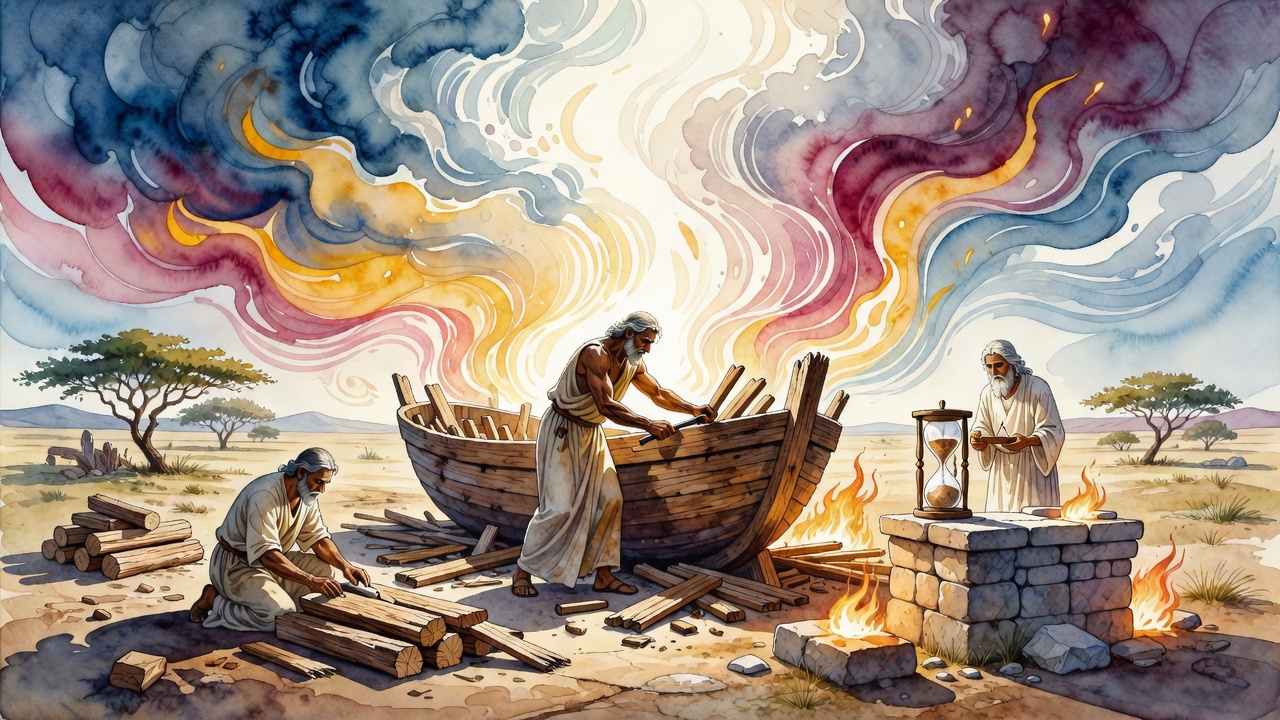
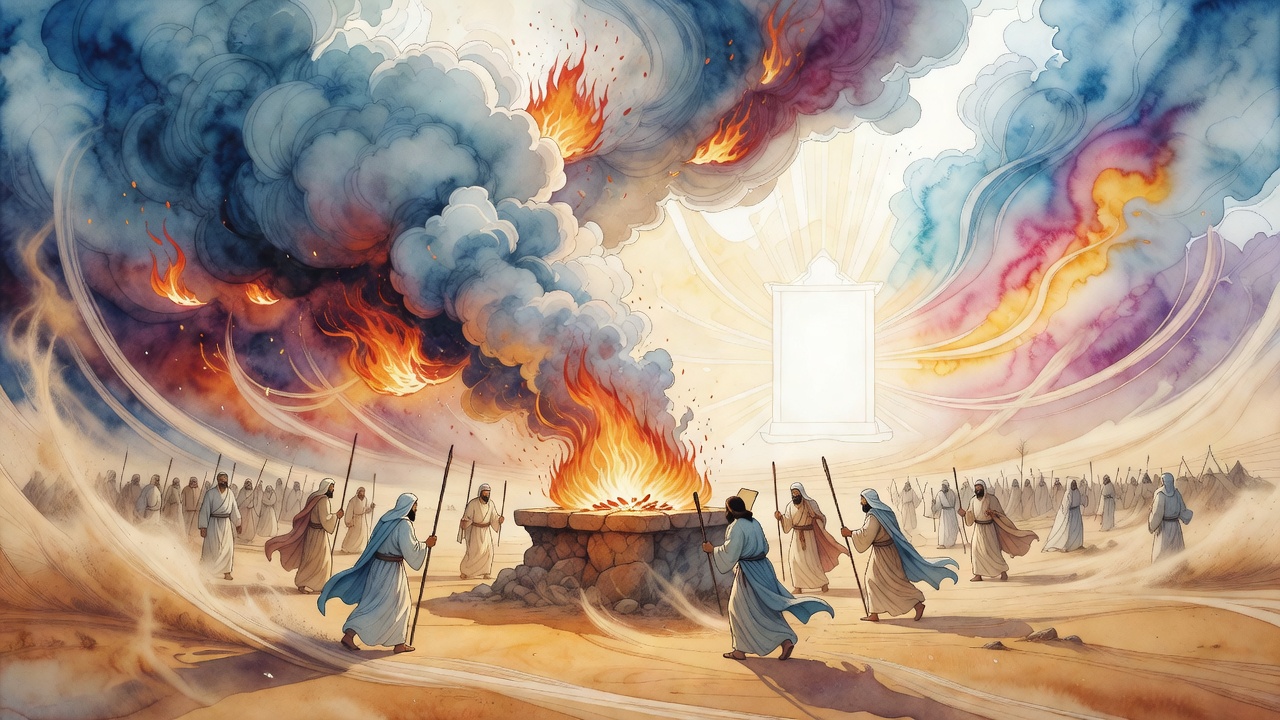
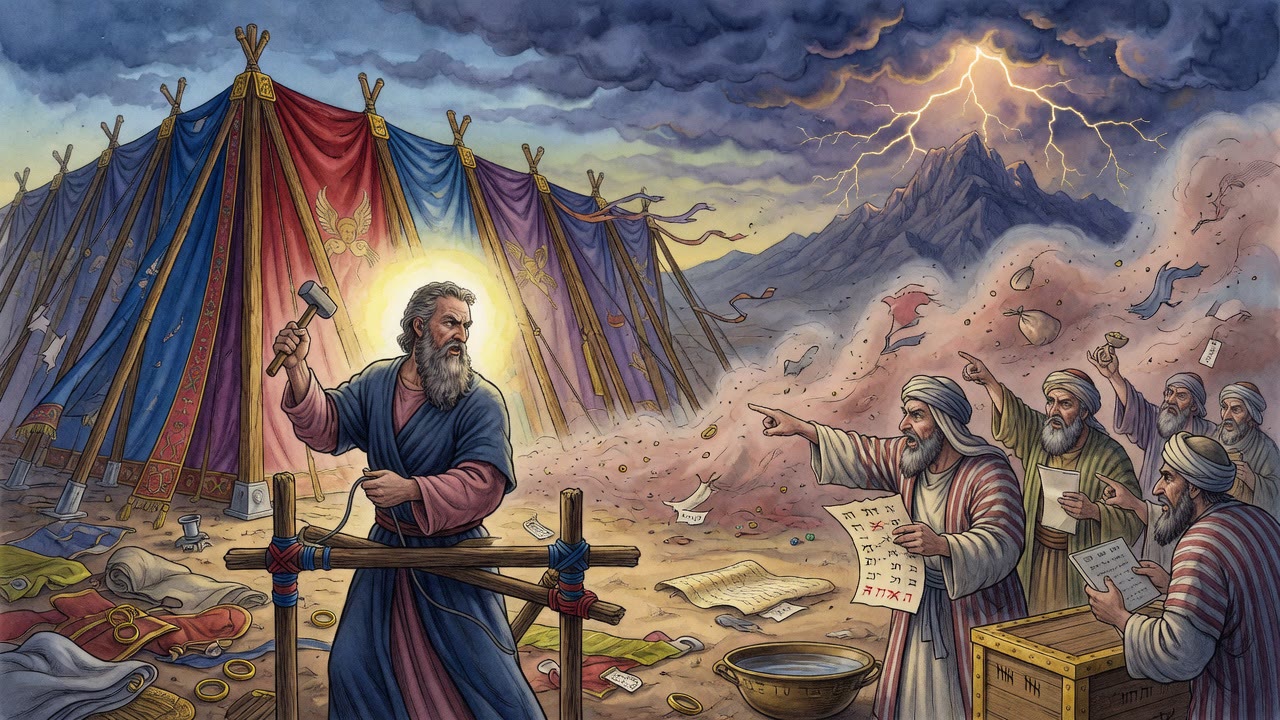
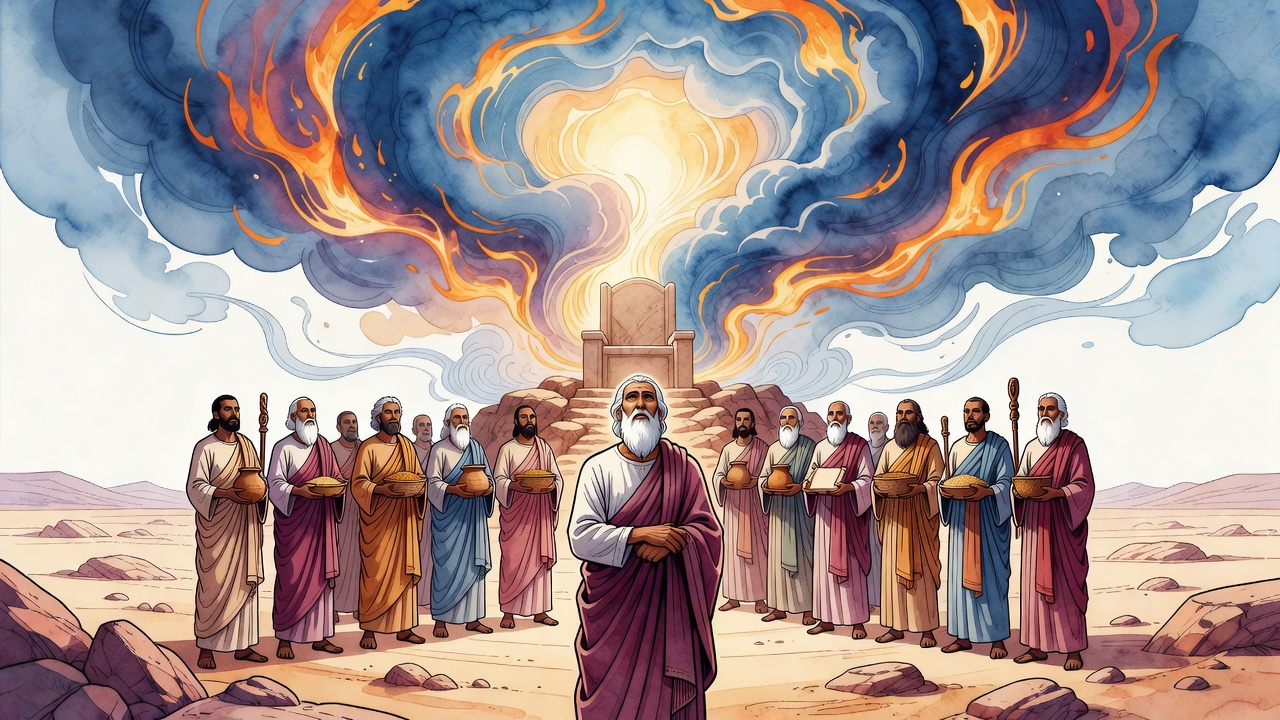
The chiefs stood before the altar with their hands full and nowhere to set the weight down. Silver, flour, oil, incense, animals for the day of inauguration. Dust stuck to their ankles. The wood of the altar still carried the smell of fresh anointing, oil worked into grain and horn until the sacred furniture smelled like a decision that had just been made.
Chiefs Stand While Moses Refuses the Altar Click for full size

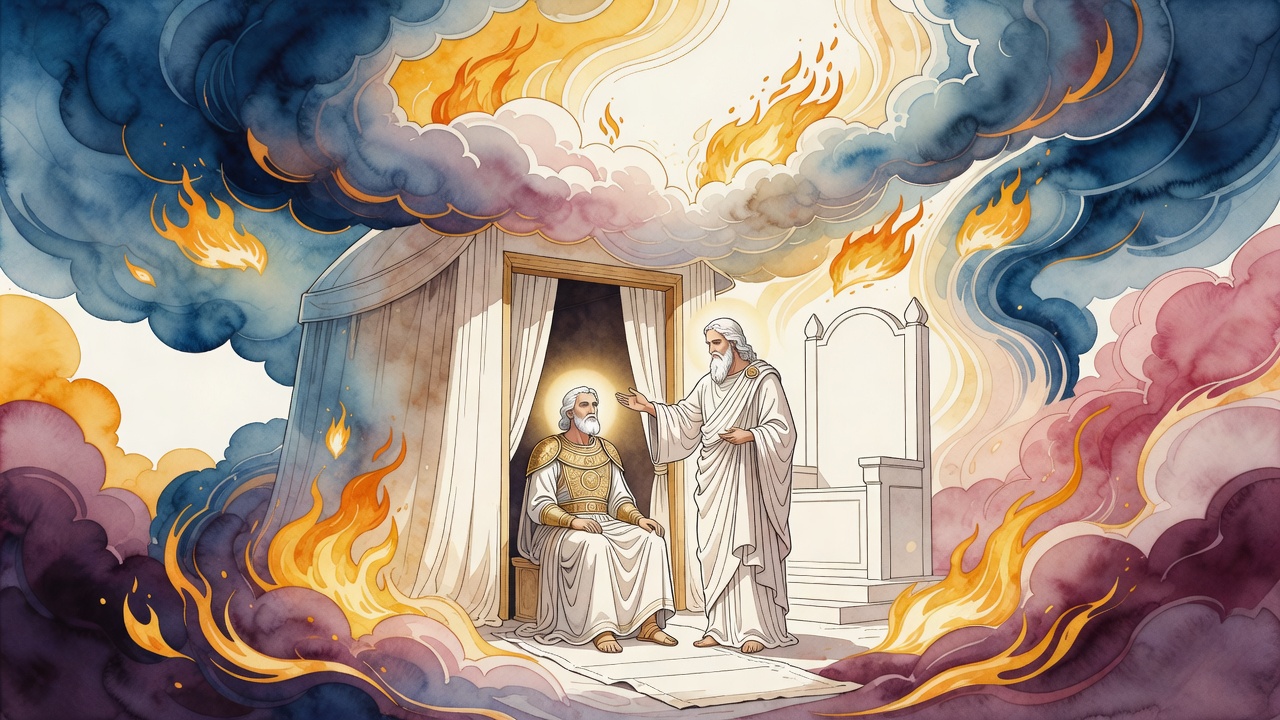
Moses did not reach for any of it.

They had already given for the work of the mishkan (משכן), the dwelling. They had watched boards rise and curtains hang. Now they came again for the altar's inauguration, the same men, the same rank, gifts meant to open a life of fire on that platform (Numbers 7:10). Moses looked at the pile of readiness and kept his hands at his sides until God spoke.

"Let them present their offerings for the inauguration of the altar."

Only then did Moses's shoulders drop a finger's width. Acceptance was not courtesy. It was permission with a date stamp from heaven.

Two Ways to Line Up a Nation

Permission solved one freeze and left another. Moses still did not know the order. Birth would put Reuven first, eldest of Jacob's sons, the old gravity of the family table. Travel would put Judah first, the banner that already led when the camps moved, the east-side strength that pulled the column into open ground.

Reuven's chief stood with the patience of a man who had practiced being first his whole life. Judah's chief stood with the patience of a man who had practiced leading marches. Neither spoke. The silence between them was louder than either name.

Moses waited again. He would not invent a hierarchy for the altar out of habit or politics. The Holy One answered with the order of the road, not the order of the birth tent. Let them present by traveling. Judah steps first. The nation that moves under cloud and fire will dedicate under the same sequence that keeps it alive in the dust.

Reuven's jaw worked once. He did not drop his gift. The birthright of the moment passed him without a quarrel he could win out loud. Judah moved forward, and the line behind him sorted itself into the shape of an army that already knew how to walk. A basalt chip cracked under Judah's heel. He did not look down. The other chiefs adjusted their loads and followed the sound of that step as if the chip itself had been a horn.

Moses stood where he could see both faces, Reuven's and Judah's, and kept his own blank. Rank at an altar is not a favor he was free to invent. Heaven had chosen the road's order, and the road's order now chose whose animal would bleed first while the oil was still a fact in the wood.

Same Day, Oil Still Wet

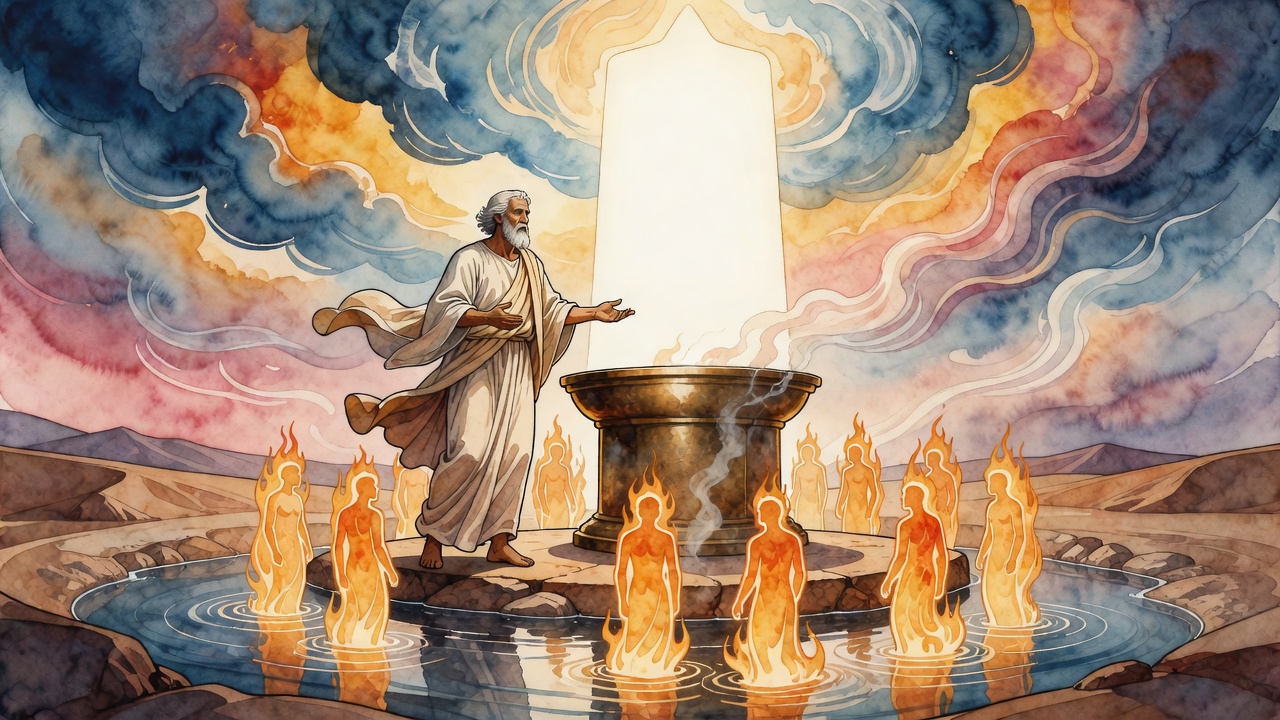
The Torah later counts the inauguration twice in close air: once "on the day that it was anointed," once "after it was anointed" (Numbers 7:84, 7:88). The double counting is not a scribe's stutter. Without the first phrase, weeks of lag could open in the mind, oil drying while gifts sat in tents waiting for a better calendar. Without the second, gifts could seem laid down before the oil, a dedication that tried to outrun its own consecration.

Together the phrases lock the day shut. Anointing happens. Offerings follow on that same day, after the oil, not before it, not a season later when the excitement has cooled into routine. The altar does not wait for a committee. The chiefs do not get to stage a second festival when the first one is inconvenient.

Moses watched the first animal approach while the smell of oil still sat in the wood. Fire would take what fire was owed before sunset could argue about tomorrow.

A young Levite shifted a basin and almost spilled water. Moses's eye cut to him and the basin steadied. Even the helpers felt the day's compression: no gap, no rehearsal, no "we will finish this next week."

What Aaron's Day Already Taught

The same pressure of same-day consequence had already marked Aaron and his sons. On the day they were anointed they merited the priestly gifts, not as a later paycheck for a ceremony already forgotten. Sinai had commanded the portion. The day of oil made the merit real in the body of the camp. Command on the mountain, receipt on the day of anointing, no long hallway of delay between heaven's word and a priest's hands.

The altar's inauguration rhymed with that pattern. Chiefs who had funded the building now funded the first fire, and heaven refused to let either act float free of the other. Construction and consecration stayed one story with two payments, both made while the work was still hot.

Reuven's chief, when his turn finally came after Judah and the line of travel, set his gift down without a speech. The wood received it the way wood receives anything: without interest in birth order. Only the fire would sort meaning later, in smoke.

The Line That Would Not Unknot

By evening twelve presentations had walked the same path Judah opened. Animals had bled. Basins had been carried. Moses's earlier refusal looked, in memory, like the only thing that had kept the day from becoming a scramble of pride. First he would not accept without God's word. Then he would not rank without God's map. Then he would not stretch the day across a gap the Torah refuses to open.

Night came down on an altar that had been oil and gift and fire in a single stretch of sun. Reuven slept as a man who had learned that eldest is not always first at the sacred table. Judah slept as a man who had led a dedication the way he led a march, one step that forces every other step to choose a place behind it.

In the dark the oil smell thinned. The blood smell stayed longer. Somewhere outside the court a child asked whether tomorrow would be another day of gifts, and a mother said no, today had finished what today was for. The chiefs had stood with full hands until heaven and Moses and the traveling order finished their work on the same clock, and the altar was no longer a new piece of furniture waiting for permission to burn.


← All myths
From the tradition

Sources

2 sources

The texts behind this telling. Some cards carry a translation of the source; others are our own retelling of it, and each card says which. Every card links out to the original.

Sifrei Bamidbar 47:1Sifrei Bamidbar

Retold in our words. Read the original at the link below.Sifrei by Rabbi Shraga Silverstein · CC-BY

It wasn't all smooth sailing, even with divine guidance! a fascinating passage from Sifrei Bamidbar, specifically concerning the dedication of the altar.

"(Bamidbar 7:10) "And the chiefs presented the inauguration (offerings) of the altar on the day that it was anointed": We are hereby apprised that just as the chiefs made donations for the work of the mishkan, so, they made donations for the inauguration of the altar." This verse tells us that these weren't just any donations. The tribal chiefs, the nesi'im, were deeply invested in both the construction and the consecration of the Tabernacle. They were all in.

The text continues: "And the chiefs presented": They came and stood before the altar and Moses did not accept (their offerings) from them until he was told by the Holy One: Let them present their offerings for the inauguration of the altar."

The scene: the chiefs, ready to offer their gifts, and Moses, hesitant, waiting for a clear sign from above. Why the pause? Why didn't Moses immediately accept their generous contributions? It highlights the importance of proper protocol and divine instruction in all matters relating to the sacred. Nothing was left to chance.

And the plot thickens! "And Moses still did not know in what order (of precedence) they should present them, if by (order of precedence in) the traveling (of the camps, in which instance Judah would present first) or by (order of) birth, (in which instance Reuven would present first), until he was told by the Holy One Blessed be He: Let them present by (the order of) traveling."

Think about the implications. Should the order be based on birthright, giving precedence to Reuven, the eldest? Or should it follow the order of the tribes as they traveled, placing Judah in the lead? It wasn't a trivial matter. Order and precedence were deeply significant, reflecting the social and spiritual hierarchy of the Israelite community. God instructs Moses to follow the traveling order.

But wait, there’s more! "And Moses still did not know how the chiefs would present, all together, or each in his day, until he was told by the Holy One: Let each one present in his day, as it is written (Ibid. 11) "each chief on his day": What is the intent of (the redundancy) "each chief on his day, each chief on his day"?"

One chief, every single day. Can you imagine the anticipation? The dedication wasn't a one-off event, but a sustained, day-by-day commitment.

And finally, the last piece of the puzzle: "Because Nachshon was (comparable to) a king, and he presented first, he should not say: Since I presented first, I should (also) present with each one on his day; it is, therefore, written "each chief on his day." Nachshon, chief of Judah, was the first to offer. This passage makes sure he, powerful as he was, didn't think he had the right to participate on every single day of the dedication. Each leader had their designated time, preventing any one individual from overshadowing the others.

It's a powerful reminder that even in moments of great generosity and dedication, humility and adherence to divine guidance are paramount. It shows us that even the most well-intentioned actions require careful consideration and a willingness to follow a higher purpose. The dedication of the altar wasn't just about offerings; it was about order, humility, and the importance of each individual playing their unique role in the service of the divine. It highlights that everyone had their place, their contribution, their day.

Full source
Sifrei Bamidbar 53:1Sifrei Bamidbar

Retold in our words. Read the original at the link below.Sifrei by Rabbi Shraga Silverstein · CC-BY

It's rarely an accident. Often, these repetitions are clues, hints that there's something deeper going on, something we need to pay close attention to.

Consider the inauguration of the altar in the Book of Numbers, Bamidbar. We read (Numbers 7:84), "This is the (accounting of the) inauguration of the altar on the day that it was anointed." Then, just a few verses later (Numbers 7:88), we find, "This is the (accounting of the) inauguration of the altar after it was anointed." Seems repetitive. So, what's the deal? The Sifrei Bamidbar, a collection of legal interpretations on the Book of Numbers, dives into this apparent redundancy. It asks: why both "on the day that it was anointed" and "after it was anointed"?

The Sifrei suggests that without the phrase "on the day that it was anointed," we might assume a significant amount of time passed between the anointing and the inauguration. But then, if we only had "on the day that it was anointed," we might mistakenly think the offerings were brought before the anointing. The Torah, with its careful wording, ensures we understand: the offering was brought on the very same day, after the anointing. It’s about precision.

This idea of simultaneous action, of immediate consequence, is echoed elsewhere. The Sifrei draws a parallel to Leviticus (Vayikra) 7:35-36, which speaks of the anointment of Aaron and his sons into the priesthood. It states, "This is the (portion of the) anointment of Aaron and of the anointment of his sons… which the L-rd commanded to give to them on the day that he anointed them." The rabbis ask, did they only receive the gifts later? No! "On the day that they were anointed they merited receiving the (priestly) gifts."

But, the text continues, if they received the gifts on the day of their anointment, what's the meaning of "which the L-rd commanded to give to them on the day that he anointed them?" Here, the Sifrei Bamidbar offers a fascinating insight: "We are hereby taught that they (Israel) were commanded (to give them) on Mount Sinai, but they (the Cohanim, the priests) did not acquire them until they had been anointed with the oil of anointment." The command to give these gifts was given way back at Sinai, at the very foundation of the Israelite nation. But the priests only truly received them, only truly possessed them, upon their anointment. There's a crucial distinction between a commandment and its fulfillment, between a promise and its realization.

And then, there's the phrase "by the chiefs of Israel" (Numbers 7:84). The Sifrei understands this to mean: just as the chiefs were united in counsel to bring these offerings, so too were they united in merit. Unity in action, unity in reward. A powerful message about the importance of communal effort and shared destiny.

Finally, the text mentions "silver dishes, twelve". The Sifrei notes, these were the very same ones donated; they hadn't become unfit for service. This detail emphasizes the value placed on the original offering, its enduring worthiness and the lasting impact of a sincere contribution.

Perhaps it’s this: that the Torah's apparent repetitions are never accidental. They are invitations to look closer, to delve deeper, and to uncover the layers of meaning that lie beneath the surface. They remind us that timing matters, that intention matters, and that unity matters. And that even the smallest details, like the condition of a silver dish, can hold profound significance.

Full source