Princes Who Waited While Israel Gave First
By your lives, God said, I do not need you. Two mornings later Moses had to make the camp stop bringing gold, yarn, and goats' hair.
Table of Contents
Moses stood up in front of the whole assembly and said, take from among you an offering for the Lord.
 Click for full size
The camp moved. Women came with bracelets and nose rings and signet rings still warm from their fingers. A woman who could spin sat down where she was and spun goats' hair straight off the animal and carried the yarn over in her lap. Men who owned one thing worth owning owned nothing by noon.
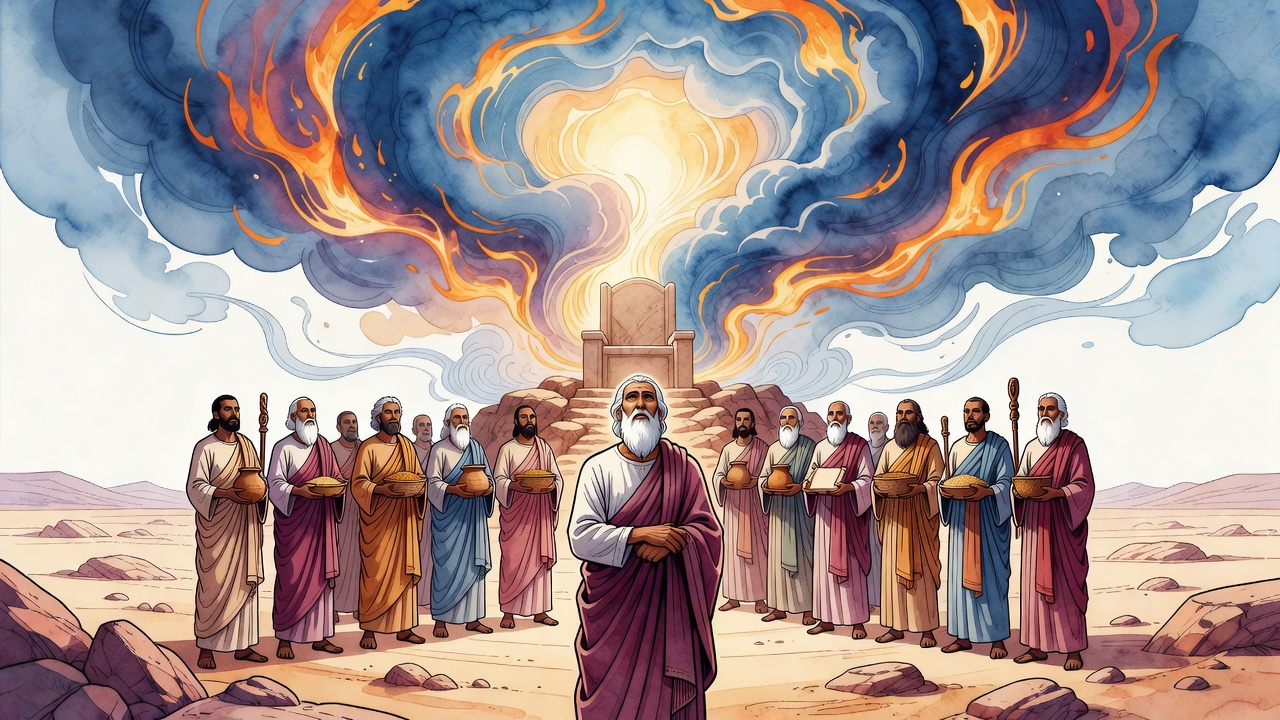
The princes of the tribes stayed where they were.
They had a reason, and they said it to each other rather than to Moses. He did not know enough to tell us the Tabernacle was being made. Look at them, doing the work already. And now he stands up and asks us for a freewill gift?
It was not stinginess. It was rank, waiting for a summons that matched it.
By Your Lives, I Do Not Need You
The answer came down before the delay had even finished being a delay.
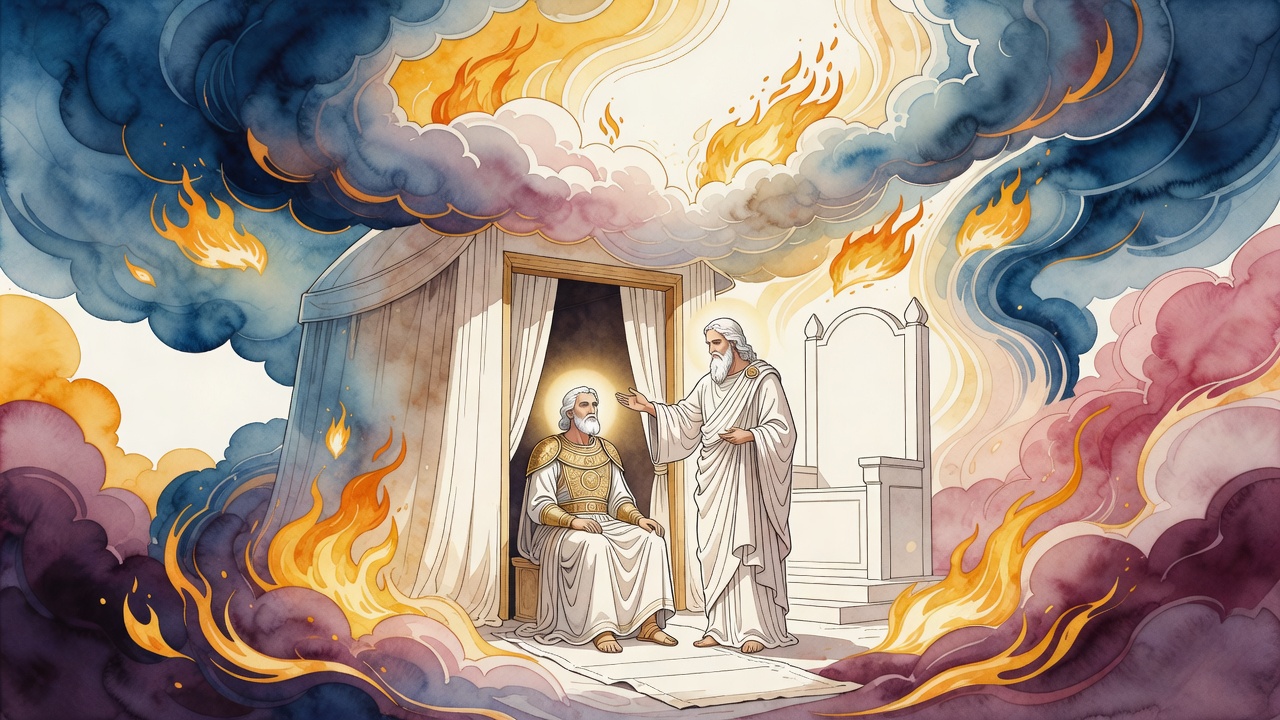
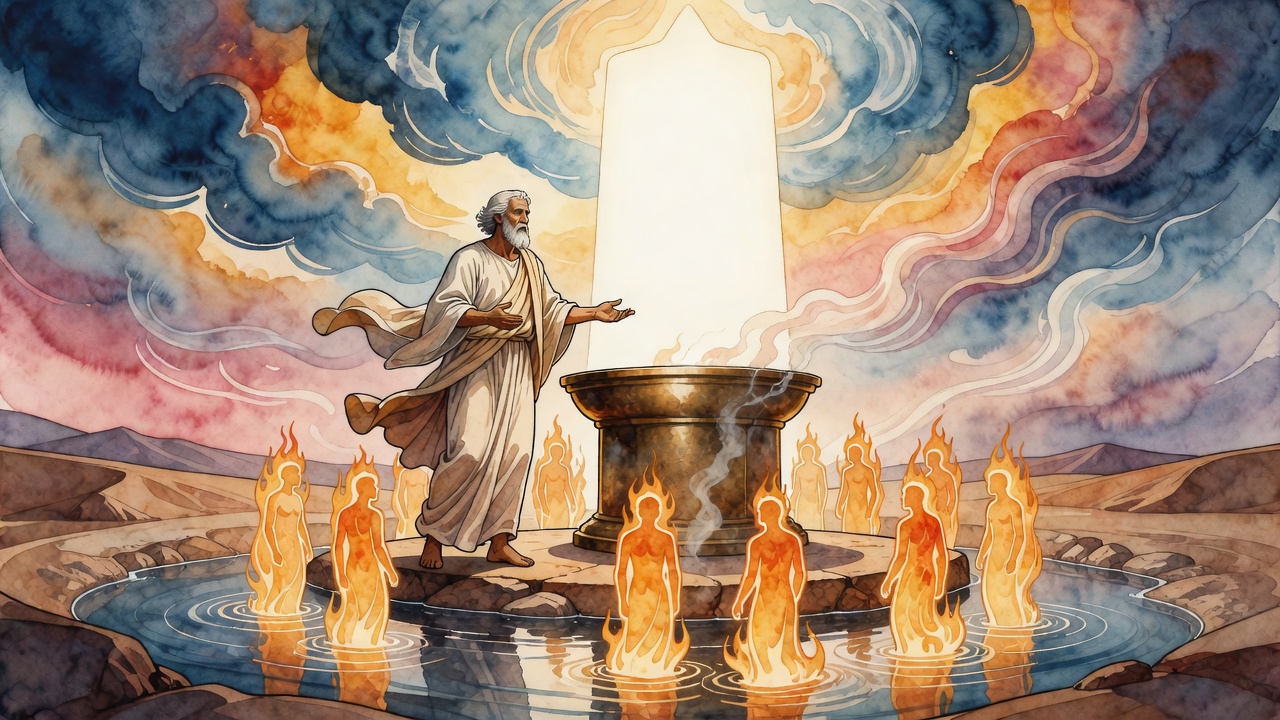
"By your lives," the Holy One said, "you should know that I do not need you."
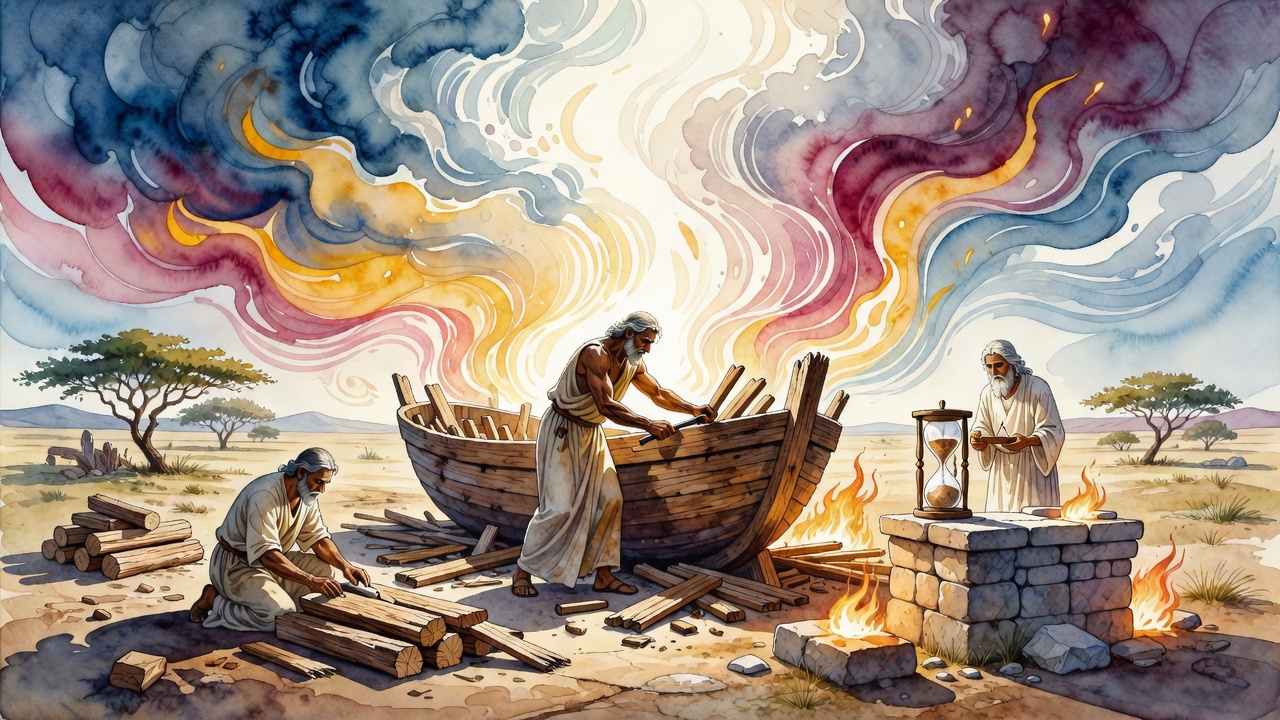
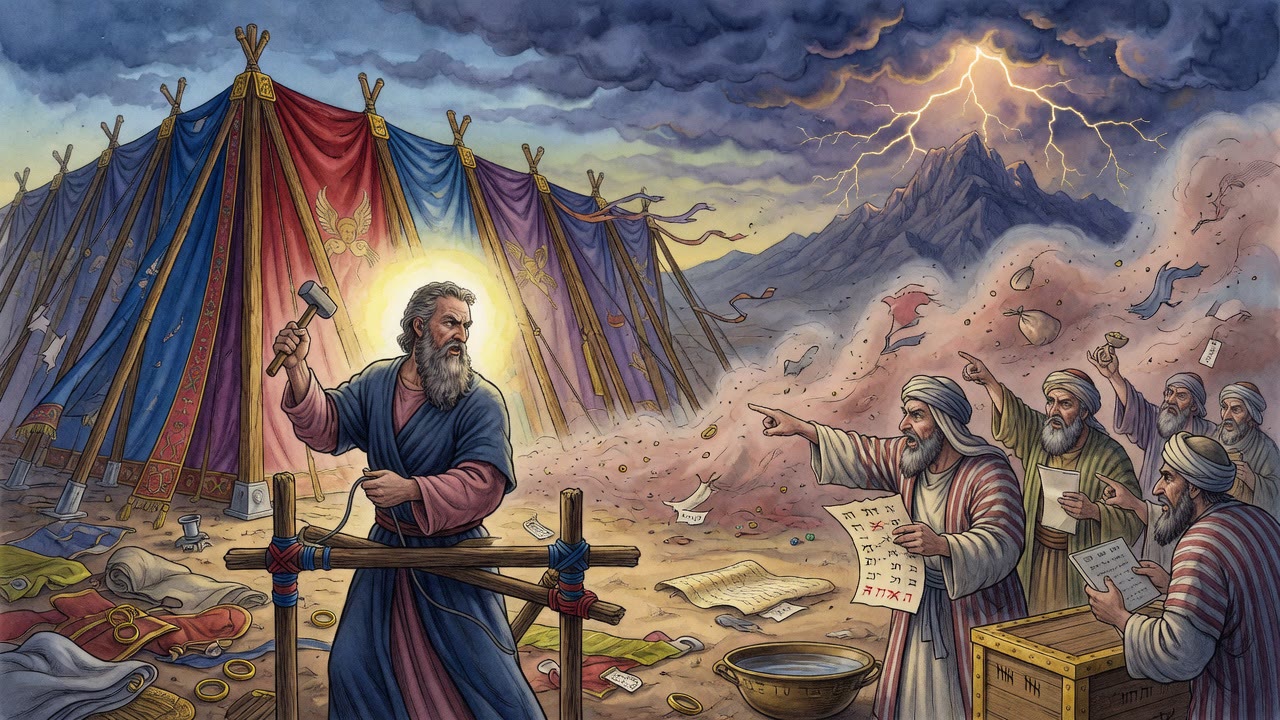
Meanwhile the ordinary people were still coming. They came morning after morning. Two mornings. In two mornings the common hands of Israel brought in every material the sanctuary required, and then kept bringing, until the men supervising the craftsmen put down their tools and walked over to Moses to tell him the people were bringing much more than enough for the work, and that he had to make them stop.
Moses sent a proclamation through the camp. Let no man or woman make anything further for the offering.
The princes were still standing there holding gold that nobody needed.
The Blessing Landed on Working Hands
When it was finished, Moses walked through the whole of it and looked at everything: the boards, the sockets, the curtains, the lamp, the ark with its poles through the rings.
Then he blessed the people who had made it. "May the Divine Presence dwell in the work of your hands."
That was the whole blessing. Not may you be honored. Not may your names be recorded. May the thing you built be the place God lives. The women who had spun and the men who had carved got that sentence, in this world, out of Moses' mouth. The chiefs got nothing to take home from that morning except the memory of what waiting had cost.
Full Hands at the Altar Door
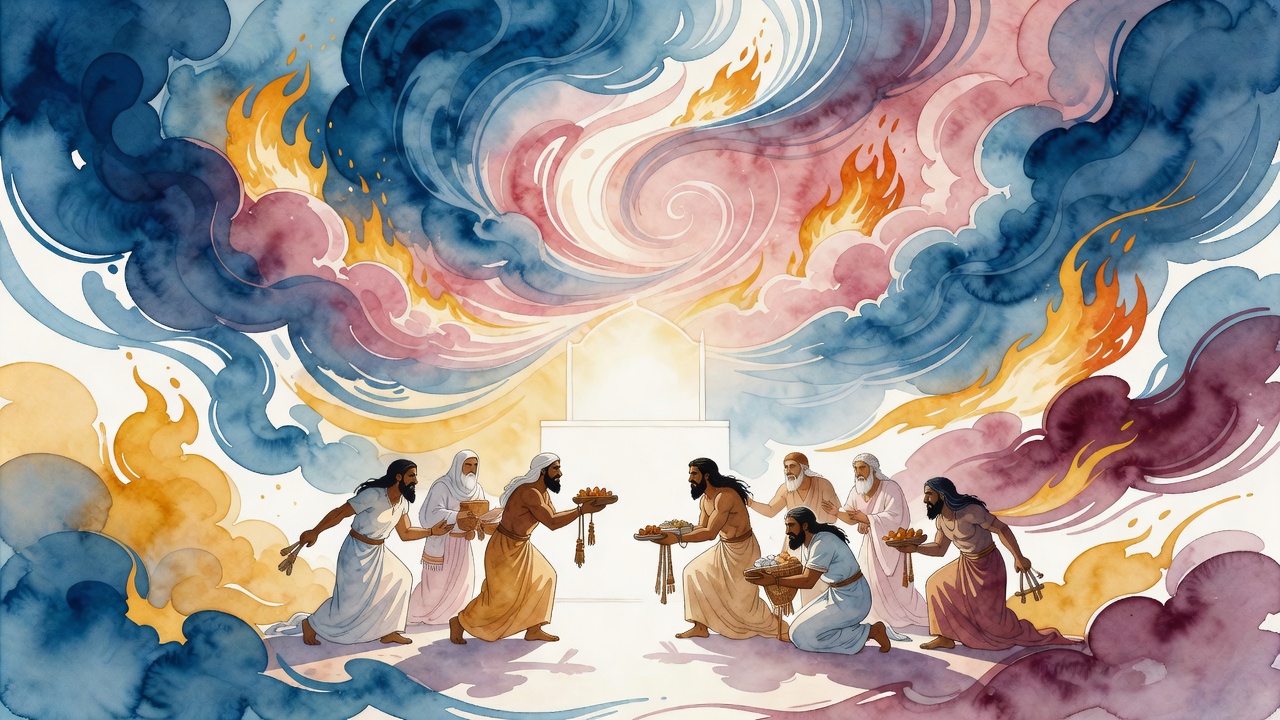
They learned. When the altar was anointed, the chiefs came in with everything they had: silver dishes, silver basins, gold spoons full of incense, bulls and rams and lambs, and six covered wagons with twelve oxen to pull them.
They came and stood in front of the altar and held it all out.
Moses did not take it.
He stood there with twelve of the most important men in Israel holding loaded arms in front of him and he would not put out a hand, because nothing had been said to him yet. They waited. He waited. Only when the Holy One told him to let them present did the first dish change hands.
The men who had once decided the invitation was not good enough for them now stood at an altar with their gifts getting heavy, learning that a yes from heaven cannot be assumed by anyone at any rank.
Nachshon Went First at the Altar
Then Moses did not know the order.
By birth it would be Reuben, the eldest, the firstborn of Jacob, and every man in Reuben's camp knew it. By the order the camps moved when the cloud lifted it would be Judah, who led the column. Moses waited again, and the word came back: by the order of traveling.
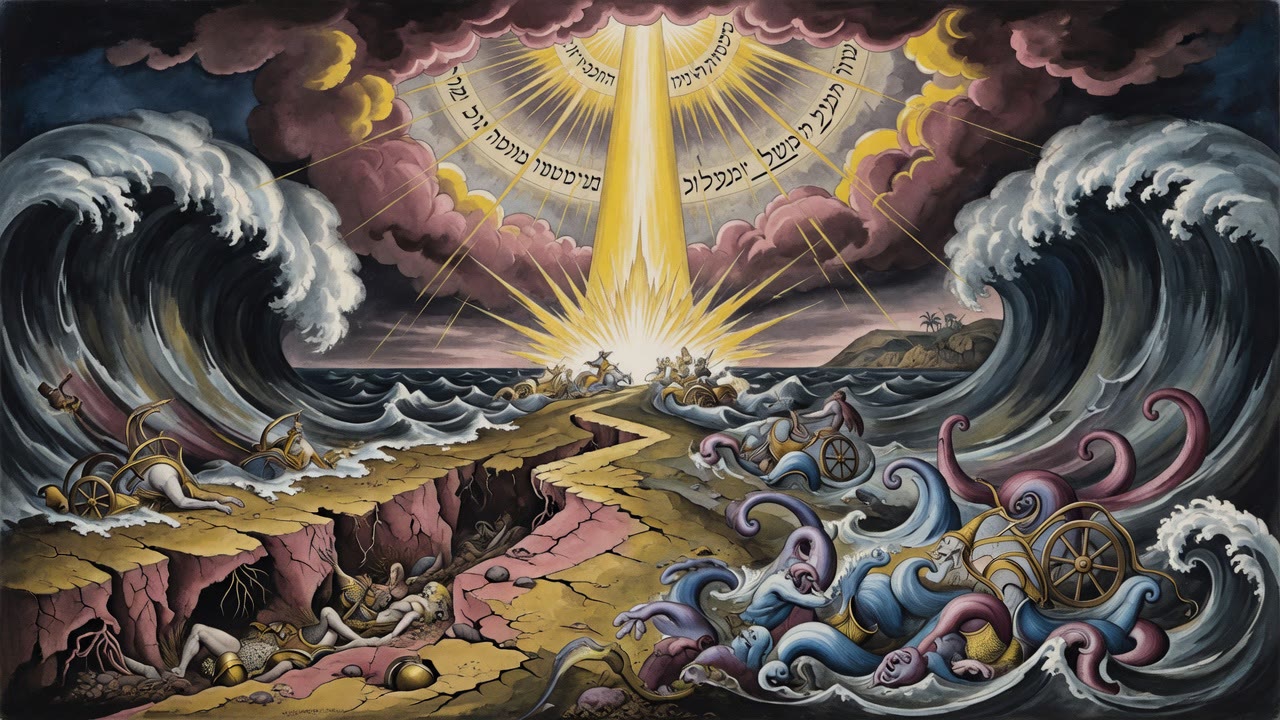
Nachshon went first. He had gone first into the sea, and now he went first at the altar, and among the chiefs he stood like a king.
Then the second question. All of them together, in one enormous morning, or one at a time? One at a time. Each chief on his day.
The verse says it twice. Because Nachshon presented first he might have said, since I opened it, I should stand with every brother on every day of it. Each chief on his day. First does not buy always.
So on the fourth morning the chief of Reuben, the eldest tribe in Israel, walked up to an altar that three younger tribes had already used, and set down his silver, and had his one day like everybody else.
← All myths